

P0300 on 1999-2003 GMC Savana: Random Misfire Causes & Fixes
On 1999-2002 Savana models with a distributor, a P0300 code is most often caused by a worn distributor cap and rotor or a failing 'spider' fuel injector assembly. For 2003 models with coil-on-plug ignition, suspect spark plugs or a vacuum leak from the intake manifold gasket. A basic ignition tune-up often resolves the issue on earlier models.
- For a 1999-2002 GMC Savana, the first part to inspect for a P0300 code is always the distributor cap and rotor.
- For a 2003 model, the diagnostic path is different; start with spark plugs and check for vacuum leaks from the intake manifold gaskets.
- A flashing check engine light means stop driving as soon as safely possible to prevent expensive catalytic converter damage.
- Low fuel pressure or a large vacuum leak can cause a P0300 on any year in this range.
- After major engine work, double-check wiring connections, as TSB PIP5169 points out that crossed injector wires can cause this code.
What's Unique About the 1999-2003 Gmc SAVANA

The 1999-2003 year range covers a major powertrain transition for the GMC Savana. Models from 1999-2002 use older Vortec V6 and V8 engines (e.g., 5.7L L31) equipped with a distributor-based ignition system. These distributors, particularly the cap and rotor, are notoriously prone to failure from moisture and corrosion, making them a primary suspect for a P0300 code. Equally common on the 1999 V8 models is the failure of the Central Sequential Fuel Injection (CSFI) 'spider' unit, which is known for leaking. In 2003, GMC introduced the newer generation of LS-based Vortec engines (e.g., 5.3L LM7), which use a more modern coil-on-plug ignition system, shifting the common failure points away from the distributor to individual coils, spark plugs, and shared systems like fuel delivery and vacuum.
Diagnostic Flowchart
Tap your situation to follow the diagnostic path that matches what you're seeing on this vehicle.
Generation note: This range covers two distinct powertrain setups. The 1999-2002 models use the first generation of Vortec engines (e.g., 5.7L L31 V8) with a distributor and a central 'spider' injector. The 2003 model year marked the switch to the Gen III Vortec engines (e.g., 5.3L LM7 V8) with a distributorless, coil-on-plug ignition system. Diagnostic approaches must account for this major difference.
Symptoms You May Notice
- Rough or shaking idle.
- Hesitation or stumbling during acceleration.
- Flashing Check Engine Light.
- Noticeable loss of engine power.
- Difficulty starting the engine.
- Poor fuel economy.
- Engine stalling unexpectedly.
- Replacing only the spark plugs on a 1999-2002 model without also replacing the distributor cap and rotor, which is the more likely culprit.
- Replacing individual ignition coils on a 2003 model when the actual cause is a vacuum leak or fuel pressure issue affecting all cylinders.
- Replacing oxygen (O2) sensors. While a bad O2 sensor can contribute to fuel trim issues, it's rarely the direct cause of a P0300 code. It's usually a symptom of the misfire.
- Replacing the original CSFI 'spider' injector with another CSFI unit instead of the more reliable MPFI upgrade kit on 1999 models.
Most Likely Causes

- Worn Distributor Cap and Rotor (1999-2002 models) 🔴 High Probability The distributor design on these Vortec engines is highly susceptible to moisture intrusion and internal corrosion/carbon tracking, causing spark to crossfire between terminals. This is one of the most common P0300 causes on these specific models.
How to confirm: Remove the distributor cap (two Torx screws) and inspect the inside terminals for white or green corrosion, black carbon tracks between posts, or excessive wear on the metal contacts. Check for any signs of moisture inside the cap.
Typical fix: Replace the distributor cap and rotor as a set. Using a quality part with brass terminals is recommended for longevity. ACDelco is the OEM supplier.
Est. part cost: $40-$90 - Failing "Spider" Fuel Injector Assembly (1999 models) 🔴 High Probability The 1999 models with 5.0L and 5.7L engines use a Central Sequential Fuel Injection (CSFI) unit, nicknamed the 'spider'. The original design uses poppet valves that are prone to clogging and leaking fuel internally into the intake manifold, causing rich running conditions, hard starts, and random misfires.
How to confirm: Check fuel pressure. With key-on, engine-off, pressure should jump to 60-66 psi and hold. If the pressure drops more than 5-10 psi in 5 minutes, the spider assembly or the fuel pressure regulator (part of the assembly) is likely leaking internally. A strong fuel smell in the oil is another indicator.
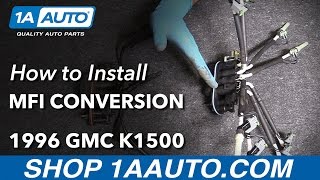
Typical fix: Replace the entire CSFI spider assembly with the upgraded Multi-Port Fuel Injection (MPFI) style unit. This is a permanent fix that replaces the problematic poppet valves with reliable modern injectors. Do not replace with another CSFI unit. 🎬 Watch: How to install the upgraded MPFI spider injector assembly.
Est. part cost: $250-$400 - Leaking Intake Manifold Gaskets 🟡 Medium Probability The intake manifold gaskets on all Vortec engines of this era are known to fail, creating a vacuum leak. A vacuum leak introduces unmetered air, which leans out the air/fuel mixture and causes random misfires, often worse at idle when engine vacuum is high.
How to confirm: Perform a smoke test on the intake system to see if smoke escapes from the gasket area. Alternatively, with the engine running, carefully spray brake cleaner or unlit propane around the intake manifold mating surfaces and listen for a change in engine idle RPM.
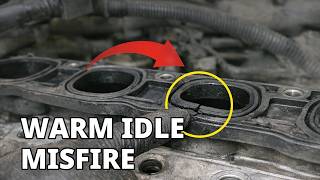
Typical fix: Replace the intake manifold gaskets. It is highly recommended to use the updated Fel-Pro problem-solver gaskets, which feature a more durable steel-core design. This is a labor-intensive job. 🎬 See how to diagnose and fix a leaking intake manifold gasket.
Est. part cost: $60-$100 - Worn Spark Plugs and/or Wires 🟡 Medium Probability These are standard maintenance items. Worn plugs have a wide gap that requires more energy to spark, and old wires (on 1999-2002 models) can have high resistance or leak voltage to ground, both causing weak or inconsistent spark.
How to confirm: Inspect spark plugs for wear, fouling, or an excessive gap. Inspect spark plug wires (on 1999-2002 models) for cracks, burns, or corrosion on the terminals. Test wire resistance with a multimeter; it should typically be under 5000 ohms per foot.
Typical fix: Replace spark plugs and, if applicable, spark plug wires. Use OEM-spec plugs like ACDelco Iridiums and check the gap.
Est. part cost: $50-$150 - Weak Fuel Pump or Clogged Fuel Filter ⚪ Low Probability A failing fuel pump or clogged filter will lower the overall fuel pressure, starving all cylinders of adequate fuel and leading to a lean condition and random misfires. This is more common on higher-mileage vans.
How to confirm: Connect a fuel pressure gauge to the Schrader valve on the fuel rail. For 1999-2002 models, pressure should be 60-66 psi with the key on, engine off. For 2003 models, it should be 55-62 psi. Pressure that is low or drops quickly indicates a problem.
Typical fix: Replace the fuel filter first, as it's a cheap and easy maintenance item. If pressure is still low, the fuel pump likely needs replacement.
Est. part cost: $20-$60 (filter), $150-$350 (pump)
Rare But Worth Checking
- Worn Camshaft Lobe(s): Mentioned in TSB #PIP4138R for 2003 models. If a cam lobe is worn down, the corresponding valves won't open fully, causing a persistent misfire in that cylinder that can contribute to a P0300. This is a significant mechanical failure often accompanied by a ticking or chirping noise.
- Crossed Fuel Injector Connectors: TSB #PIP5169 specifically warns that on 1999 models, the injector connectors for cylinders 5 & 7 and 6 & 8 can be accidentally swapped during repairs, leading to a P0300 code immediately after service.
- Crankshaft Position Sensor Variation Relearn Needed: Sometimes, especially after repairs like a new distributor or timing chain, the PCM's learned values for the crankshaft position sensor can be inaccurate, leading to false misfire detection. A shop with a high-end scan tool can perform a "CASE relearn" or "crank relearn" procedure to fix this.
- Corroded Coil Pack Ground Wire (2003+ models): On the coil-on-plug engines, the ground wire for an entire bank of ignition coils can corrode and break at the ring terminal where it attaches to the engine block or cylinder head. This will cause an entire bank of cylinders to stop firing, immediately triggering a P0300. The fix involves cleaning the ground point and installing a new ring terminal.
Diagnosis Steps
- Scan for any other DTCs. Codes like P0171/P0174 can point you toward a vacuum leak or fuel issue.
- For 1999-2002 models, perform a thorough visual inspection of the distributor cap, rotor, and spark plug wires. Look for cracks, corrosion, and carbon tracking. This is a top-tier suspect.
- Check fuel pressure. Connect a gauge to the fuel rail. For 1999-2002, look for 60-66 psi (key on, engine off). For 2003, look for 55-62 psi. Crucially, watch for a pressure drop after the pump primes; a rapid drop indicates a leak, likely the spider injector on a '99 or a bad fuel pump.
- Check for vacuum leaks. A smoke test is the most effective method. Pay close attention to the intake manifold gaskets, PCV hoses, and the brake booster
Parts You'll Likely Need

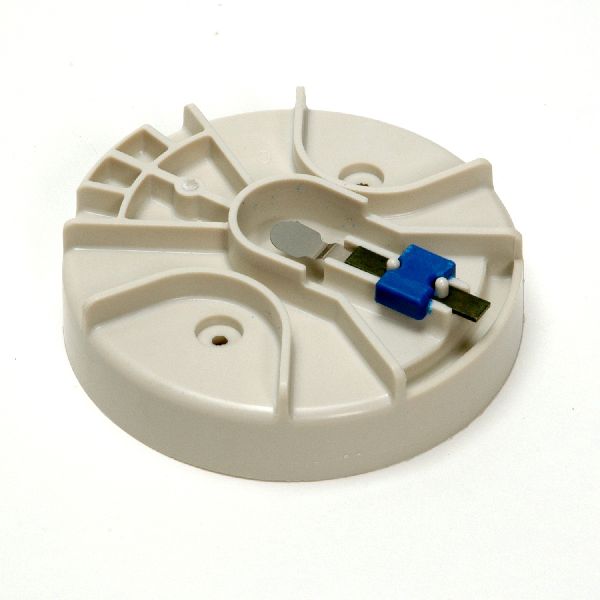
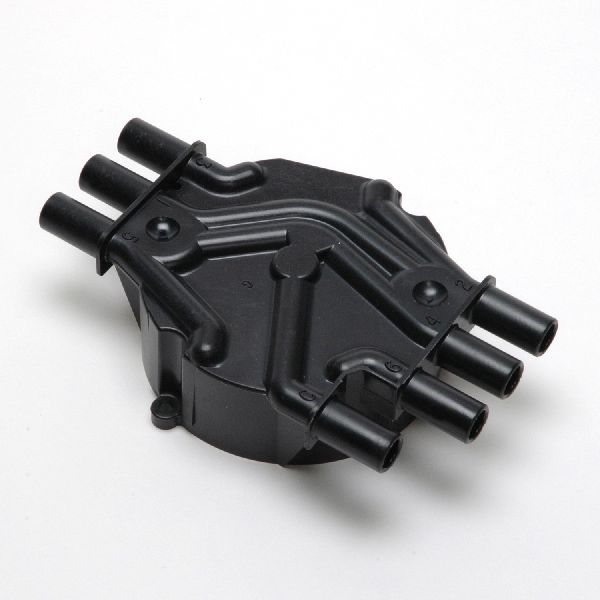
- Distributor Cap and Rotor Kit (1999-2002)
(OEM #ACDelco D329A (Cap), D465 (Rotor))— This is the most frequent failure point causing a P0300 on the distributor-equipped Vortec engines in these vans.
Trusted brands: ACDelco, Delphi, Standard Motor Products - Upgraded MPFI Fuel Injector Assembly (1999) — The original CSFI 'spider' injector is a known high-failure item. The upgraded MPFI unit is a permanent fix for leaking poppet valves that cause P0300.
Trusted brands: Standard Motor Products (FJ503), Delphi (FJ10565) - Intake Manifold Gasket Set — These gaskets are known to fail and cause vacuum leaks, a common source of P0300. The Fel-Pro steel-core version is a popular, durable replacement.
Trusted brands: Fel-Pro (MS 98000 T for 5.7L), ACDelco - Spark Plugs and Wires (1999-2002)
(OEM #ACDelco 41-993 (Plug))— Basic maintenance items that are a common cause of misfires when worn.
Trusted brands: ACDelco, NGK - Fuel Filter — A cheap and easy first step when diagnosing a potential fuel pressure issue before replacing the more expensive fuel pump.
Trusted brands: ACDelco, Wix
Related Codes That Often Appear With This One
- P0171, P0174 — These codes indicate "System Too Lean" on Bank 1 and Bank 2, respectively. They often appear with P0300 when the root cause is a large vacuum leak (like from an intake manifold gasket) or low fuel pressure.
- P0420, P0430 — These codes indicate "Catalyst System Efficiency Below Threshold." They are typically a consequence, not a cause, of a P0300. The long-term misfire allows unburned fuel to enter the exhaust and damage the catalytic converters.
- P0301-P0308 — A random misfire (P0300) may eventually become consistent enough for the PCM to identify specific cylinders, setting one or more of these codes alongside P0300.
Technical Service Bulletins (TSBs) & Recalls
- PIP5628G: Notes that diagnosing P0300-P0308 codes on 2003 models may require special information from GM's Technical Assistance Center (TAC).
- PIP5169: Warns technicians to check for crossed injector connectors (5-7 and 6-8) on 1999 models after engine repairs when a P0300 is present.
- PIP4138R: Suggests checking for a worn camshaft lobe on 2003 models if standard diagnostics do not resolve a P0300-P0308 misfire code.
Platform-Specific Known Issues
- Owner Story: The Multi-Step P0300 Chase: In a Chevrolet Forum thread, an owner of an '07 Express (similar Gen IV V8 architecture) detailed a frustrating P0300 journey. The misfire only appeared at highway speeds under load. The shop first replaced an O2 sensor (no fix), then did a full tune-up and injector cleaning (no fix), then replaced the Crankshaft Position Sensor and performed a relearn, which worked for two months before the code returned. A second shop replaced the CKP sensor again with an ACDelco part and did another relearn, which also provided only a temporary fix. This story illustrates how elusive the code can be and how even common fixes might not be the final answer, sometimes pointing to deeper issues like a clogged catalytic converter or wiring harness problems.
Mechanic-Grade Diagnostic Values
- Short & Long Term Fuel Trims (STFT/LTFT) at Idle — expected: Single-digit percentages (e.g., -8% to +8%). Failure: Consistently high positive double-digit fuel trims (e.g., +15% or more) strongly suggest a vacuum leak or fuel delivery issue, not an ignition problem. High negative trims suggest a leaking fuel pressure regulator or injector.
- Fuel Pressure Leak-Down Test (1999-2002 5.7L/5.0L) — expected: Pressure should hold steady above 55 psi for at least 5 minutes after the pump primes.. Failure: A pressure drop of more than 5-10 psi in 5 minutes indicates a leak. A rapid drop points to a leaking fuel pressure regulator or a poppet valve in the CSFI spider assembly.
- Engine Compression — expected: All cylinders should be within 15% of the highest reading cylinder.. Failure: A cylinder reading lower than 15% of the highest indicates a mechanical engine problem (e.g., piston rings, valves, head gasket). For example, if the highest cylinder is 150 PSI, the lowest should not be below 127 PSI.
Hidden / Shadow Codes Worth Checking
- Mode 6, Test ID $53 (or $A2-$AF on newer CAN bus systems): Provides raw misfire counts for each individual cylinder, even if no specific P030x code has been set. This allows a technician to see which cylinder(s) are contributing the most to the P0300 count. (see via Requires a scan tool capable of reading Mode $06 data. The specific Test ID (TID) and Component ID (CID) may vary by year and scan tool, but the data is part of the generic OBD-II standard.)
Scan Tool Commands That Help
- Tech2 / GDS2 or equivalent professional scan tool: Misfire Data / Misfire Graphic — When diagnosing a P0300, this function displays live and historical misfire counts for each cylinder. This is the fastest way to determine if the 'random' misfire is actually concentrated on one or two specific cylinders, pointing you to a component specific to that cylinder.
- Tech2 / GDS2 or equivalent professional scan tool: Crankshaft Position (CKP) Variation Relearn / CASE Relearn — This procedure must be performed after replacing a crankshaft position sensor, distributor, or PCM. Failure to do so can cause the PCM to misinterpret normal crankshaft speed variations as misfires, setting a false P0300.
- Tech2 / GDS2 or equivalent professional scan tool: Fuel Injector Balance Test — This test individually fires each injector and measures the corresponding fuel pressure drop. It can identify a clogged or weak injector that is causing a lean misfire on a specific cylinder, which may be contributing to the P0300 count.
Wiring & Ground Locations

- G102 (2003+ LS-based engines) — Located at the left rear of the engine/cylinder head.. This is a primary ground point for the ignition coils on one or both banks. A loose or corroded connection here can cause a weak or intermittent spark to multiple cylinders, leading to a P0300.
- G103 / G104 — G103 is often found at the rear of the left-hand engine head. G104 can be on the cylinder head or engine block.. These are main engine-to-chassis grounds. Poor connections at these points can affect the PCM and multiple sensor readings, including the crankshaft position sensor, leading to inaccurate misfire detection.
- Distributor Harness Connector (1999-2002) — The main electrical connector on the side of the distributor body.. The terminals inside this connector can become corroded or loose, causing intermittent loss of signal from the Camshaft Position Sensor (CMP) located inside the distributor. This can disrupt timing and cause random misfires.
Real Owner Repair Stories
- Chevrolet Forum user (2001 GMC Savana 2500 5.0L) — P0300 code with no noticeable driving symptoms. Later, a P0304 appeared. Scan tool showed ignition advance dropping to -64 degrees intermittently.
❌ Tried (didn't work) Initial component testing did not identify the issue.
✅ What actually fixed it The user replaced the entire distributor assembly. The final post implies this resolved the erratic timing advance and the P0304 code, which was contributing to the P0300 condition. The underlying cause was likely excessive wear in the distributor's internal components (shaft gear, bushings, or sensor). - YouTube channel 'The G Automotive and More' (GMC Sierra 5.3L (similar to 2003 Savana)) — Flashing check engine light, running very badly, P0300. Scan tool showed misfires on cylinders 1 and 3, but diagnostics revealed the entire driver's side bank had no spark.
❌ Tried (didn't work) Swapping ignition coils did not resolve the issue, as the problem was not the coil itself.
✅ What actually fixed it The main ground wire for the entire bank of ignition coils had corroded and broken at the ring terminal where it attaches to the engine. Repairing the ground wire by cleaning the contact point and installing a new ring terminal restored spark to the entire bank and fixed the misfire.
"I Checked Everything" — The Actual Cause
- A common scenario for the 1999-2002 models is passing a smoke test but still having a P0300 caused by a fuel system issue. The CSFI 'spider' injector assembly can have an internal fuel pressure regulator that leaks fuel directly into the intake plenum. This doesn't create a vacuum leak (so a smoke test is clean) but causes a rich condition and random misfires that are often worse during a hot restart. The definitive diagnosis is a fuel pressure leak-down test.
OEM Part Supersession History
Various ACDelco/Delphi CSFI (Central Sequential Fuel Injection) units for 1999 5.0L/5.7L→ACDelco 217-3029, Standard Motor Products FJ503, Delphi FJ10565— The original Central Sequential Fuel Injection (CSFI) 'spider' assembly used poppet valves that were highly prone to clogging and leaking. The superseding part is a true Multi-Port Fuel Injection (MPFI) upgrade that replaces the unreliable poppet valves with modern, reliable electronic fuel injectors, providing better fuel atomization, smoother idle, and improved performance.
Model Year Variations Within This Range
- 1999-2002: These models use a distributor-based ignition system. P0300 diagnosis must start with the distributor cap, rotor, and plug wires. They also use the CSFI 'spider' injector, a primary suspect for fuel-related misfires.
- 2003: This model year marked the switch to the LS-based engine architecture with a distributorless, coil-on-plug ignition system. For P0300, common causes shift from the distributor to individual ignition coils, their wiring, and their grounds. The fuel injection system is also a more conventional multi-port design, eliminating the 'spider' as a cause.
Helpful Videos

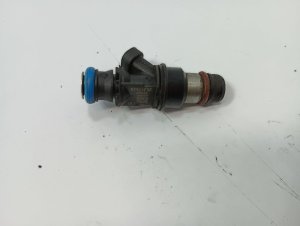
Used OEM Parts in Stock




New Aftermarket Parts Available


The information in this article is provided for general reference and educational purposes only. Vehicle specifications, procedures, and part compatibility can vary by production date, trim level, and region. Always consult your vehicle's factory service manual and verify part numbers before purchasing or performing repairs. Safety-critical components such as airbags, seat belts, and braking systems should be installed by a qualified professional.
- Gmc SAVANA:
- 🎬 Helpful Videos
- 🛍️ Shop This Part
- What's Unique About the 1999-2003 Gmc SAVANA
- Diagnostic Flowchart
- Symptoms You May Notice
- Most Likely Causes
- Rare But Worth Checking
- Diagnosis Steps
- Parts You'll Likely Need
- Related Codes That Often Appear With This One
- Technical Service Bulletins (TSBs) & Recalls
- Platform-Specific Known Issues
- Mechanic-Grade Diagnostic Values
- Hidden / Shadow Codes Worth Checking
- Scan Tool Commands That Help
- Wiring & Ground Locations
- Real Owner Repair Stories
- "I Checked Everything" — The Actual Cause
- OEM Part Supersession History
- Model Year Variations Within This Range
- 🎟️ Get 5% Off