

P0300 on 2001-2005 GMC Safari: Random Misfire Causes & Fixes (4.3L V6)
On a 2001-2005 GMC Safari, a P0300 code is most often caused by a worn-out distributor cap and rotor. This is a common maintenance item that costs about $30-$80 for quality parts and is a DIY-friendly fix. Other very common causes include a leaking fuel pressure regulator (part of the 'spider' injector) and failed lower intake manifold gaskets.
- For a P0300 on a 2001-2005 GMC Safari, the first and most likely part to check is the distributor cap and rotor for wear and corrosion.
- If the ignition system is good, the next most probable cause is a fuel delivery issue, specifically a leaking fuel pressure regulator or injector inside the intake manifold.
- A flashing check engine light means the misfire is severe and can quickly damage the expensive catalytic converter; driving should be minimized.
- Leaking lower intake manifold gaskets are another common cause, which can be identified by a vacuum leak test or by checking for milky, contaminated engine oil.
- Always use high-quality replacement parts, especially for the ignition and fuel systems, as this engine is known to be sensitive to cheap aftermarket components.
What's Unique About the 2001-2005 Gmc SAFARI
The GMC Safari and its twin, the Chevy Astro, are powered by the 4.3L Vortec V6 (LU3 version in most of this range), an engine with a few well-known weak points that directly cause a P0300 code. The distributor is mounted at the rear of the engine where it's susceptible to corrosion from moisture, and the plastic housing can develop play. The original Central Port Injection 'spider' fuel system on 2001 models is notorious for internal leaks from the fuel pressure regulator or the injector lines themselves. Finally, the lower intake manifold gaskets are a very common failure item, creating vacuum leaks that throw off the air-fuel mixture and often trigger lean codes (P0171/P0174) alongside the P0300.
Diagnostic Flowchart
Tap your situation to follow the diagnostic path that matches what you're seeing on this vehicle.
Symptoms You May Notice
- Rough or shaking idle
- Engine hesitates or stumbles during acceleration, sometimes described as a 'fishbite'
- Flashing Check Engine Light
- Noticeable loss of engine power
- Difficulty starting the engine, especially when warm
- Reduced fuel economy
- Misfire is worse under load, such as going uphill or accelerating.
- Replacing only the spark plugs without inspecting the distributor cap and rotor.
- Replacing the fuel pump when the actual problem is the fuel pressure regulator inside the intake manifold.
- Replacing individual ignition coils (this engine has a single coil and a distributor, not a coil-on-plug system).
- Replacing the MAF sensor, which rarely causes a P0300 on this platform unless other codes are present.
Most Likely Causes
- Worn Distributor Cap and Rotor 🔴 High Probability The distributor is located at the back of the engine, where moisture and condensation (sometimes from the A/C line dripping) can cause corrosion on the internal contacts, leading to weak or misdirected spark. The terminals inside the cap can build up white or green corrosion, and carbon tracks can form, creating a path for the spark to ground out. It is a very common wear item.
How to confirm: Remove the engine cover ('doghouse') inside the van. Remove the two screws holding the distributor cap. Inspect the inside of the cap and the metal tip of the rotor for white or green corrosion, carbon tracking (black lines), or significant wear. Check for moisture inside the cap.
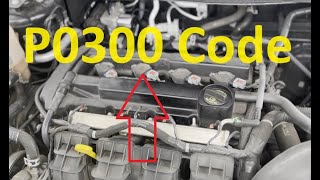
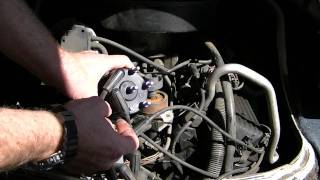
Typical fix: Replace the distributor cap and rotor as a set. 🎬 Watch: Step-by-step guide to replacing the cap and rotor. It's crucial to use quality parts (e.g., ACDelco, Delphi) as this engine is sensitive to poor-quality ignition components. Many owners report that aftermarket parts fail quickly.
Est. part cost: $30-$80 - Faulty Fuel Pressure Regulator or Leaking 'Spider' Injector Assembly Medium-high Probability The fuel pressure regulator is integrated into the Central Port Injection 'spider' assembly located under the upper intake manifold. Both the regulator diaphragm and the plastic injector lines ('fuel nutz') are known to develop leaks, dripping raw fuel into the intake plenum, causing a rich condition and random misfires. This is especially common on 2001 models with the older CSFI system.
How to confirm: Perform a fuel pressure test. The test port (Schrader valve) is on the fuel line near the distributor. Pressure should be 60-66 PSI with the key on, engine off (KOEO). Turn the key off; the pressure should hold steady and not drop more than 5 PSI in 10 minutes. If it drops quickly, the regulator or an injector is leaking internally. Another sign is a hard start when warm, as the leaked fuel floods the engine.
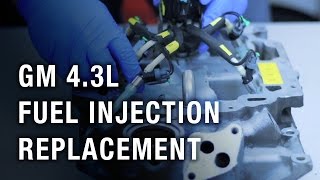
Typical fix: The best repair is to replace the entire original injector assembly with the updated Multi-Port Fuel Injection (MPFI) spider assembly (Delphi FJ10565 or ACDelco 19210688). This kit includes a new regulator and replaces the failure-prone poppet valves with more reliable electronic injectors. This involves removing the upper intake manifold. 🎬 See how to replace the spider injector assembly.
Est. part cost: $150-$300 - Leaking Lower Intake Manifold Gaskets 🟡 Medium Probability The original gasket design on the 4.3L V6 is prone to deteriorating over time, causing both vacuum leaks (unmetered air entering the engine) and coolant leaks. A vacuum leak creates a lean condition that the PCM cannot compensate for at idle, leading to misfires.
How to confirm: With the engine idling, carefully spray brake cleaner or unlit propane around the seam where the lower intake manifold meets the cylinder heads. If the engine's idle speed changes or stumbles, you have confirmed a vacuum leak. A professional can use a smoke machine to pinpoint the leak. Also check the engine oil for a milky, frothy appearance, which indicates a more severe failure with coolant contamination.
Typical fix: Replace the lower intake manifold gaskets. This is a labor-intensive job that requires draining the coolant and removing the upper and lower intake manifolds. Using an updated gasket set like the Fel-Pro MS98002T is recommended. 🎬 Watch: How to repair a leaking lower intake manifold gasket.
Est. part cost: $40-$100 - Worn Spark Plugs and/or Ignition Wires ⚪ Low Probability
How to confirm: If the distributor cap and rotor are new and the issue persists, inspect the spark plugs for wear, fouling, or an incorrect gap. Use a multimeter to test the resistance of the spark plug wires; it should be less than 8,000 ohms per foot. Visually inspect wires in a dark garage with the engine running for any visible arcing to ground.
Typical fix: Replace all six spark plugs and the set of ignition wires. AC Delco plugs are highly recommended by specialists for this engine.
Est. part cost: $50-$120
Rare But Worth Checking
- Worn Distributor Gear / Incorrect Camshaft Retard: The gear on the bottom of the distributor can wear down, or the entire distributor housing can develop play, causing erratic ignition timing. This can only be diagnosed accurately using a professional scan tool to read the 'Cam Retard' data PID. The spec is 0° +/- 2°. If it's off by several degrees (e.g., -9° or more), it will cause random misfires, often under load. Sometimes the distributor hold-down bolt can be modified (ground down) to allow for slight rotation to bring it back into spec, but replacement is often the correct fix.
- Clogged Catalytic Converter: If the misfire has been ignored for a long time, the catalytic converter can become clogged with unburned fuel, melting the internal substrate. This creates excessive exhaust backpressure, which chokes the engine and can cause a random misfire. A backpressure test using an oxygen sensor port can confirm this.
- Internal Engine Mechanical Problems: Though rare, a P0300 can be caused by serious mechanical issues. A compression test is the first step to check for this. If one cylinder is low, a leak-down test can determine if the issue is with piston rings, a head gasket, or valves. A stuck or failing lifter is another possibility on higher mileage engines.
- Chafed Wiring Harness: In one documented case, the main engine wiring harness was rubbing against the A/C compressor manifold. When the engine would rock under load (in Drive), the wire would short to ground, causing an immediate and severe misfire. The misfire would disappear in Reverse as the engine rocked the other way. This is a difficult 'phantom' misfire to diagnose.
Diagnosis Steps
- Read the trouble codes with an OBD-II scanner. Note if P0300 is alone or accompanied by other codes like P0171/P0174 (suggests vacuum leak) or P1345 (suggests timing/distributor issue).
- Observe the Check Engine Light. If it is flashing, avoid driving the vehicle to prevent catalytic converter damage.
- Remove the interior engine cover ('doghouse') to access the engine.
- Thoroughly inspect the distributor cap and rotor for corrosion, carbon tracking, or physical damage. This is the most likely cause. Replace with quality ACDelco parts if any doubt.
- If the ignition system looks good, connect a fuel pressure gauge. Check for 60-66 PSI KOEO (Key On, Engine Off) and ensure the pressure holds steady after the pump primes. A rapid drop indicates a leak in the spider assembly.
- Check for vacuum leaks by spraying brake cleaner or using an unlit propane torch around the intake manifold gaskets while the engine is running. Listen for any change in engine RPM.
- If a capable scan tool is available, check the 'Cam Retard' PID with the engine running above 1,000 RPM. The value should be 0° +/- 2°. If it is significantly out of spec, the distributor gear may be worn or it may have been installed incorrectly.
- If Cam Retard is correct and no other issues are found, perform a Crankshaft Position System Variation Learning procedure (CASE Relearn) with a scan tool. An unlearned sensor can falsely report misfires.
- As a final step for a persistent misfire, perform an engine compression test to rule out internal mechanical problems.
Parts You'll Likely Need
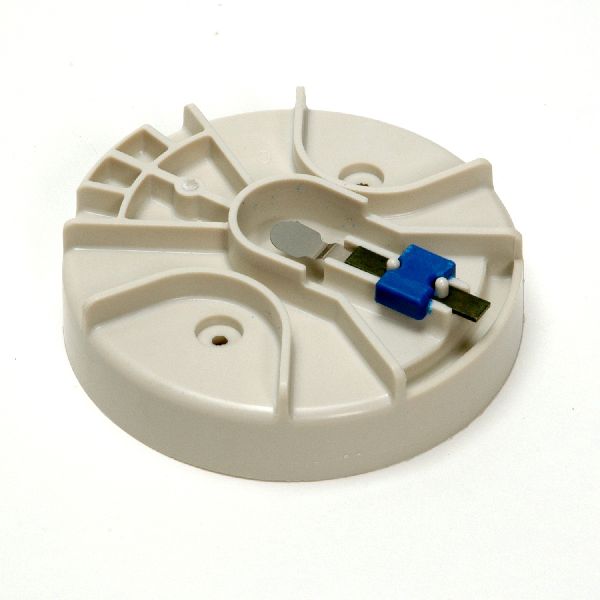
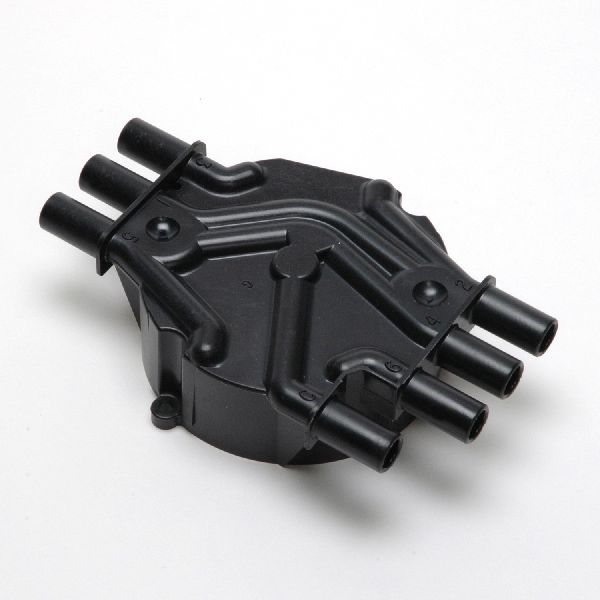
- Distributor Cap and Rotor Kit
(OEM #Cap: D328A, Rotor: D465)— This is the most frequent failure point for random misfires on the 4.3L V6 engine due to wear and corrosion. Using genuine ACDelco parts is highly recommended to avoid premature failure.
Trusted brands: ACDelco, Delphi
OEM price range: $40-$80
Aftermarket price range: $25-$50 - MPFI Fuel Injector Spider Assembly Upgrade
(OEM #ACDelco: 217-3028, Delphi: FJ10565)— This assembly, which includes the fuel pressure regulator, is the definitive fix for the common internal fuel leaks that plague the original CPI system. It upgrades the system to a more reliable multi-port design.
Trusted brands: Delphi, ACDelco, Standard Motor Products (SMP)
OEM price range: $250-$350
Aftermarket price range: $150-$250 - Intake Manifold Gasket Set (Lower)
(OEM #Fel-Pro: MS98002T)— Fixes vacuum leaks at the lower intake manifold, a common source of lean conditions and P0300 codes. The Fel-Pro updated design is considered superior to the original.
Trusted brands: Fel-Pro, ACDelco
OEM price range: $60-$100
Aftermarket price range: $40-$70
Related Codes That Often Appear With This One
- P0301-P0306 — If the random misfire begins to occur more frequently on a specific cylinder, the PCM may also store a code for that cylinder (e.g., P0302 for Cylinder 2) alongside the P0300.
- P0171 / P0174 — These codes indicate a 'System Too Lean' condition on Bank 1 and Bank 2. They are commonly caused by a vacuum leak, such as a bad intake manifold gasket, which allows unmetered air into the engine and is a primary cause of P0300 on this vehicle.
- P1345 — This code indicates a Crankshaft/Camshaft Correlation error. It is often set when the distributor gear is worn or the distributor has been installed incorrectly, which will also cause an incorrect Cam Retard reading and trigger a P0300.
Technical Service Bulletins (TSBs) & Recalls
- Bulletin #03-06-04-030F: Addresses various driveability symptoms, including P0300, due to clogged fuel injectors. It recommends a specific on-vehicle cleaning procedure using GM Upper Engine and Fuel Injector Cleaner and encourages the use of Top Tier Detergent Gasoline.
- Bulletin #PIP5628G: A preliminary information bulletin for technicians to gather specific data when diagnosing misfire codes P0300-P0308 to assist the Technical Assistance Center (TAC).
Platform-Specific Known Issues
- A known issue documented in TSB #03-06-04-041A involves condensation from the A/C accumulator dripping directly onto the distributor, accelerating corrosion and causing a P0300 code. The fix involves inspecting the distributor vents and potentially adding a foam sleeve to the A/C line.
Mechanic-Grade Diagnostic Values
- Camshaft Retard (CMP Retard) — expected: 0° +/- 2° (when checked above 1,000 RPM with a scan tool). Failure: A value consistently outside the +/- 2° range. Values of +/-8° or more can cause noticeable misfires and P0300. A P1345 code may set if the value is extremely off (e.g., > +/- 15°).
- Fuel Pressure (Key On, Engine Off) — expected: 60-66 PSI, holding steady (should not drop more than 5 PSI in 10 minutes). Failure: Pressure drops rapidly after the fuel pump primes, indicating a leak in the fuel pressure regulator or spider injector lines inside the manifold.
- Ignition Coil Resistance (Primary) — expected: 0.15 - 0.6 Ohms. Failure: A reading outside of this range indicates a faulty primary winding in the coil.
- Ignition Coil Resistance (Secondary) — expected: 3,000 - 10,000 Ohms (3k-10k Ω). Failure: A reading outside of this range indicates a faulty secondary winding in the coil.
- Short/Long Term Fuel Trims (Live Data) — expected: Close to 0% at idle on a healthy, warm engine.. Failure: If the cause is a vacuum leak, fuel trims will be high positive numbers at idle (e.g., > +15%) and will decrease as RPMs increase. If the cause is an ignition misfire, fuel trims will remain in the single digits.
Hidden / Shadow Codes Worth Checking
- Misfire Counters (Live Data): This is not a stored code, but a live data parameter on a capable scan tool. It shows the real-time count of misfires for each individual cylinder. This allows a technician to see which cylinder(s) are contributing to the P0300 code, even if they aren't misfiring frequently enough to set their own specific P030x code. (see via Professional scan tool (like GM's Tech2) under the engine data list or misfire data section.)
Scan Tool Commands That Help
- Tech2 / Professional Scan Tool: Crankshaft Position System Variation Learning (CASE Relearn) — This procedure is mandatory after replacing the crankshaft position sensor, the engine, or the PCM. It synchronizes the PCM with the precise position of the crankshaft reluctor wheel. If not performed, the PCM may misinterpret normal crankshaft speed variations as misfires and set a false P0300.
- Tech2 / Professional Scan Tool: Injector Balance Test — To diagnose a faulty fuel injector within the spider assembly without removing the intake manifold. The tool pressurizes the system and then fires each injector one by one, measuring the pressure drop. All cylinders should have a similar pressure drop. An injector with significantly less drop is likely clogged.
Wiring & Ground Locations
- G105 — On one of the thermostat housing bolts/studs, top-front of the engine.. This is a critical ground for the Powertrain Control Module (PCM) and the Ignition Control Module (ICM). A poor connection here can cause erratic behavior from both components, leading to random misfires and other codes.
- G107 — On the driver's side of the engine block, sharing a bolt with another ground wire. Requires removing the engine cover ('doghouse') to access.. This is another ground for the Ignition Control Module (ICM). A bad ground here can cause weak or inconsistent spark, leading directly to misfires.
- G103 — On the lower right (passenger) side of the engine block, near the crankshaft position sensor.. This is the main battery-to-engine-block ground. A corroded or loose connection here can cause a host of electrical issues, including low voltage to the ignition system and sensors.
- G104 — On the passenger side of the firewall, above the blower motor housing.. This ground serves the fuel pump relay and the oxygen sensors. A bad ground can cause intermittent fuel pump operation or incorrect O2 sensor readings, both of which can lead to a P0300.
Real Owner Repair Stories
- YouTube user Todd Ambroziak (1999 Chevy Astro 4.3L) — P0300 and P0304, misfire under load in Drive, but would disappear in Reverse.
❌ Tried (didn't work) Spark plugs, Wires, ACDelco cap and rotor, Ignition coil, EGR valve, MAP sensor, Spider injector assembly, New distributor
✅ What actually fixed it Found the main engine wiring harness was rubbing on the aluminum A/C compressor manifold. When the engine was put in Drive, it would rock and short a wire to ground, causing the misfire. In Reverse, the engine rocked the other way, breaking the short. The fix was to repair the chafed wire and reposition the harness. - Car Talk Community Forum (1997 GMC K1500 5.7L (similar Vortec architecture)) — P0300, slight random misfire at highway cruising speeds.
❌ Tried (didn't work) Full tune-up (plugs, wires, cap, rotor), Cleaned MAF, throttle body, and injectors
✅ What actually fixed it The suggested diagnosis, for a high-mileage engine, was a stretched timing chain. The test is to turn the crankshaft pulley bolt back and forth with a wrench while watching the distributor rotor. If the crank can be turned more than 5 degrees before the rotor begins to move, the chain has excessive slack and is the likely cause of the random misfire.
"I Checked Everything" — The Actual Cause
- A common point of confusion during a smoke test is seeing smoke exit the oil dipstick tube or oil fill cap. A novice may assume this indicates a severe internal engine problem like bad piston rings. However, this is often normal. If at least one intake or exhaust valve is open during the test, the smoke will fill that cylinder and can be forced past the piston rings into the crankcase under the low pressure of the test, especially if it takes a couple of minutes to appear. An actual internal leak (like from the lower intake manifold gasket into the lifter valley) would typically show smoke much more quickly and voluminously.
OEM Part Supersession History
GM 12568332 (for MPFI assembly)→GM 19210688— Standard part number update/revision.
Heads up: The Delphi FJ10565 is a widely used, high-quality aftermarket equivalent for this assembly.
Model Year Variations Within This Range
- 2001 (and earlier): These models used the L35 engine with the older Central Sequential Fuel Injection (CSFI) 'poppet valve' spider injector. This system is highly prone to failure (leaking regulator, sticking poppets) and is a primary P0300 suspect. The fix is to upgrade to the newer MPFI spider assembly.
- 2002-2005: These models used the LU3 engine, which came from the factory with the more reliable Multi-Port Fuel Injection (MPFI) spider assembly. While the fuel pressure regulator can still fail, the injectors themselves are much more robust than the old poppet valves. The EGR valve was also removed starting in 2002.
Helpful Videos
Used OEM Parts in Stock


New Aftermarket Parts Available


The information in this article is provided for general reference and educational purposes only. Vehicle specifications, procedures, and part compatibility can vary by production date, trim level, and region. Always consult your vehicle's factory service manual and verify part numbers before purchasing or performing repairs. Safety-critical components such as airbags, seat belts, and braking systems should be installed by a qualified professional.
- Gmc SAFARI:
- 🎬 Helpful Videos
- 🛍️ Shop This Part
- What's Unique About the 2001-2005 Gmc SAFARI
- Diagnostic Flowchart
- Symptoms You May Notice
- Most Likely Causes
- Rare But Worth Checking
- Diagnosis Steps
- Parts You'll Likely Need
- Related Codes That Often Appear With This One
- Technical Service Bulletins (TSBs) & Recalls
- Platform-Specific Known Issues
- Mechanic-Grade Diagnostic Values
- Hidden / Shadow Codes Worth Checking
- Scan Tool Commands That Help
- Wiring & Ground Locations
- Real Owner Repair Stories
- "I Checked Everything" — The Actual Cause
- OEM Part Supersession History
- Model Year Variations Within This Range
- 🎟️ Get 5% Off