

P0300 on 2004-2005 GMC Envoy XUV: Random Misfire Causes & Fixes
A P0300 code on a 2004-2005 GMC Envoy XUV indicates a random multiple cylinder misfire. The most common causes are worn or incorrect spark plugs and failing ignition coils. Owners and mechanics overwhelmingly recommend using only ACDelco Iridium spark plugs (P/N 41-103 for the 4.2L) to avoid persistent issues. Another frequent culprit is a leaking cowl seal allowing rain to drip onto ignition coil #4, causing it to fail. A full set of plugs and coils can cost between $150 and $400 for parts.
- Start with the basics: P0300 on this vehicle is most often fixed by replacing old spark plugs with ACDelco Iridium 41-103 plugs and inspecting the ignition coils.
- Check for leaks: Inspect for a water leak from the cowl seal onto the coils and for oil leaks from the valve cover gasket into the spark plug wells.
- Clean your intake: A dirty throttle body is a very common, easily fixed issue that causes rough idling and can contribute to a P0300 code.
- Don't ignore a flashing light: A flashing check engine light means pull over safely and shut off the engine to prevent catastrophic damage to your catalytic converter.
- Be aware of mechanical possibilities: If tune-up parts and vacuum leak checks don't solve the problem, be aware of the documented TSBs pointing to more serious issues like worn camshafts.
What's Unique About the 2004-2005 Gmc ENVOY XUV
The GMC Envoy platform, particularly with the 4.2L inline-6 engine, is known for being very sensitive to the brand of spark plugs used; non-OEM plugs are a frequent cause of P0300. Additionally, these vehicles have a widely-documented issue with a degraded cowl seal allowing water to drip directly onto the ignition coils (especially cylinder #4), causing them to short out and fail, particularly after rain or a car wash. While many causes are standard, official GM bulletins also point to more severe mechanical problems like worn camshafts, making a thorough diagnosis important. [Bulletin #PIP4138P]
Diagnostic Flowchart
Tap your situation to follow the diagnostic path that matches what you're seeing on this vehicle.
Symptoms You May Notice
- Rough or shaky idle.
- Hesitation or stumbling during acceleration.
- Flashing or solid Check Engine Light.
- Reduced fuel economy. 🎬 Watch: A real-world diagnosis of a P0300 random misfire.
- Engine feels sluggish or lacks power.
- Difficulty starting the engine.
- Smell of gasoline from the exhaust.
- Replacing oxygen (O2) sensors. O2 sensors will report the effects of a misfire (like a lean or rich condition), but they are rarely the root cause of the misfire itself.
- Replacing only one spark plug or coil. A P0300 code indicates a problem affecting multiple cylinders, so a single component is less likely to be the sole cause unless it's a shared part like a ground wire.
- Using non-ACDelco spark plugs. Many owners have chased a P0300 by installing other premium plug brands, only to fix it by switching back to the recommended ACDelco 41-103 plugs.
Most Likely Causes
- Worn or Incorrect Spark Plugs 🔴 High Probability The 4.2L I6 and 5.3L V8 engines are very sensitive to spark plug type. Using brands other than the OEM-recommended ACDelco Iridium plugs is a well-documented cause of persistent misfires, a fact repeated in countless owner forums.
How to confirm: Inspect all spark plugs for wear, fouling, oil contamination, and incorrect gap. Verify the part number. For the 4.2L, they should be ACDelco 41-103. The successor part, 41-110, may also be used. Many owners have resolved P0300 simply by replacing other brands with the correct ACDelcos.
Typical fix: Replace all spark plugs with the correct OEM-spec plugs, gapped properly (0.043" for 4.2L, 0.040" for 5.3L). Do not adjust the gap on new Iridium plugs as it can damage the fine tip.
Est. part cost: $50-$90 - Failing Ignition Coils 🔴 High Probability A common water leak from the cowl seal above the engine drips onto the coils, causing corrosion and failure, especially for cylinder #4. Oil leaks from the valve cover gasket can also foul the coil boots and plugs. Loose 10mm coil mounting bolts can also cause a poor ground connection and misfires.
How to confirm: Inspect coils for cracks, corrosion, or signs of water intrusion. Swap a suspected bad coil with one from a known good cylinder and see if the misfire code changes (e.g., from P0304 to P0302).
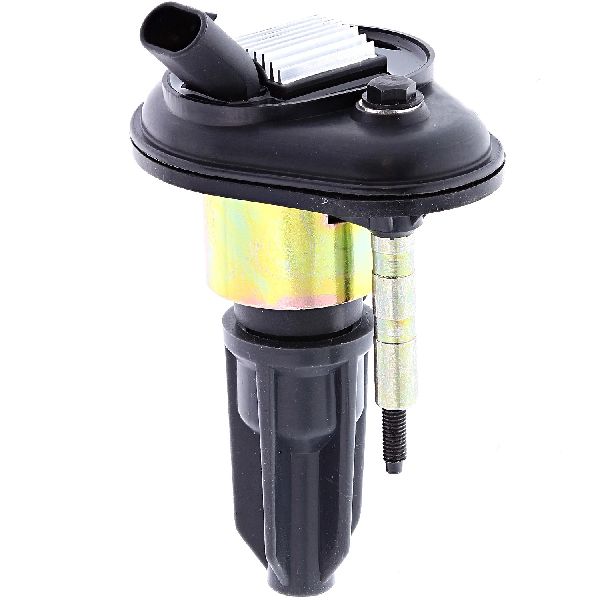
Typical fix: Replace the failed ignition coil(s). It is often recommended to replace all coils and spark plugs at the same time. The OEM part is ACDelco D585.
Est. part cost: $40-$70 per coil - Leaking Valve Cover Gasket / Spark Plug Tube Seals 🟡 Medium Probability The gasket and integrated spark plug tube seals can become brittle with age, allowing oil to leak into the spark plug wells, saturating the plugs and coil boots.
How to confirm: When removing the ignition coils and spark plugs, check for liquid oil in the spark plug tubes. A Reddit thread shows an example of plugs 3-6 being covered in oil from this failure.
Typical fix: Replace the valve cover gasket set (e.g., Fel-Pro VS50606R or GM 12609291). Clean the oil from the tubes and replace the oil-fouled plugs and coil boots.
Est. part cost: $40-$80 - Vacuum Leak (Intake Manifold Gasket) 🟡 Medium Probability The intake manifold gasket on these engines can fail or the bolts can loosen over time, allowing unmetered air to enter the engine, which leans out the air/fuel mixture and causes misfires.
How to confirm: Perform a smoke test to check for leaks around the intake manifold. Alternatively, carefully spray carburetor cleaner around the gasket area with the engine running and listen for a change in idle speed. Some owners have found the intake bolts loose enough to turn by hand.
Typical fix: Replace the intake manifold gasket (e.g., Fel-Pro MS92441). Ensure bolts are torqued to specification.
Est. part cost: $30-$60 - Dirty Throttle Body 🟡 Medium Probability Carbon buildup in the throttle body is very common on this platform and can disrupt airflow at idle, leading to instability and misfires.
How to confirm: Visually inspect the throttle body bore and plate for black carbon deposits.
Typical fix: Remove the throttle body and clean it thoroughly with a dedicated throttle body cleaner and a soft brush. Disconnect the battery for 30 minutes afterward to reset adaptations.
Est. part cost: $10-$15 for cleaner
Rare But Worth Checking
- Worn Camshaft Lobe: A GM Technical Service Bulletin (PIP4138P) specifically mentions that if standard diagnostics don't find the cause of a P0300, technicians should inspect for a worn camshaft lobe by measuring valve lift. This is a serious mechanical failure requiring significant engine work, often costing thousands to repair.
- Low Fuel Pressure: A weak fuel pump or clogged fuel filter can starve the engine for fuel, causing lean conditions and random misfires across all cylinders. Fuel pressure should be tested and be within 50-60 PSI. A failing regulator can also cause pressure to bleed down after shutoff, leading to long crank times.
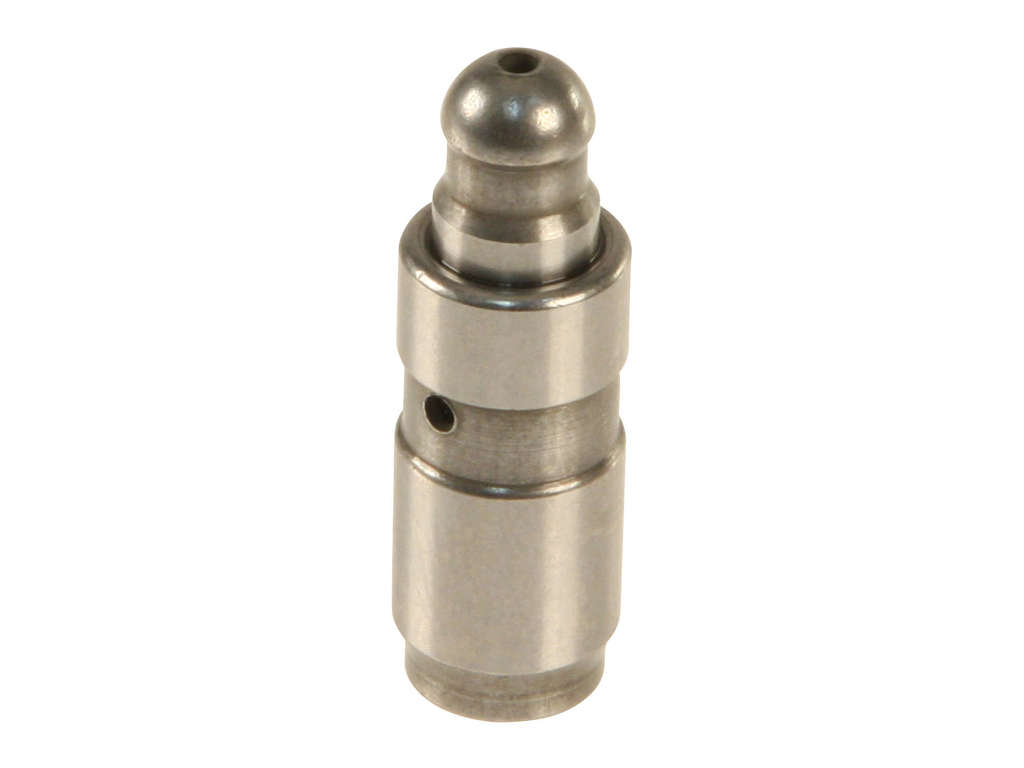
- Stuck or Collapsed Lifter: On the 5.3L V8 with Displacement on Demand (DOD) / Active Fuel Management (AFM), lifter failure is a known issue that can cause a misfire in a specific cylinder (often 1, 4, 6, or 7), sometimes presenting as a P0300 initially. This is a major repair requiring cylinder head removal.
- Broken Ignition Coil Ground Wire: On 5.3L V8 models, the main ground wire for an entire bank of ignition coils can corrode and break. This ground is often located on the back of the driver's side cylinder head (G102) and its failure will cause all four cylinders on that bank to stop firing, triggering a severe P0300.
- Crossed Fuel Injector Connectors: A GM TSB (PIP5169) warns that after engine repairs on the 5.3L V8, the injector connectors for cylinders 5-7 and 6-8 can be accidentally swapped due to their proximity, leading to a P0300 code.
Diagnosis Steps
- Read all stored fault codes with an OBD-II scanner. Note any other codes besides P0300 and check for any cylinder-specific misfire codes (P0301-P0308).
- Inspect the spark plugs. Remove them and check for wear, correct part number (ACDelco Iridium 41-103 is highly recommended), proper gap, and oil or water fouling.
- Inspect the ignition coils and boots for cracks, arcing, or corrosion. Check the spark plug wells for oil (indicating a bad valve cover gasket) or water (indicating a cowl leak). Ensure the 10mm coil hold-down bolts are tight.
- Check for vacuum leaks. Perform a smoke test or carefully spray starting fluid around the intake manifold gasket and vacuum hoses, listening for any change in engine idle. Physically check if the intake manifold bolts are loose. Also inspect the plastic intake resonator for cracks.
- Clean the throttle body and Mass Airflow (MAF) sensor. A dirty throttle body is a very common cause of idle issues and misfires on this platform.
- Test fuel pressure. Connect a fuel pressure gauge to the fuel rail's Schrader valve to ensure the fuel pump and filter are providing adequate pressure (51-54 PSI for the 4.2L).
- If the vehicle was recently repaired, double-check wiring connections, especially the fuel injector harnesses on V8 models as noted in TSB PIP5169.
- If all else fails, a mechanical issue should be suspected. Perform a compression test to check for internal engine problems like worn piston rings or a bad head gasket. If compression is good, consider the possibility of a worn camshaft lobe as per TSB PIP4138P.
Parts You'll Likely Need
- Iridium Spark Plugs
(OEM #ACDelco 41-103)— The 4.2L engine is notoriously sensitive to plug brand. OEM is strongly recommended as the first step. - Ignition Coil
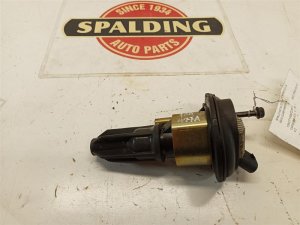
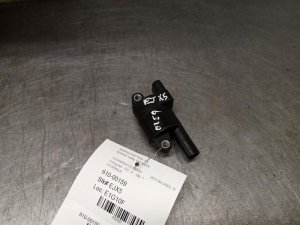
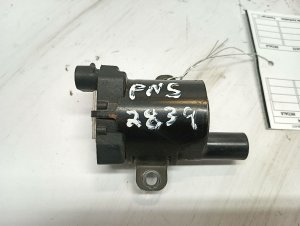
(OEM #ACDelco D585)— Coils fail from age and are frequently damaged by water from a leaking cowl seal or oil from a leaking valve cover gasket. - Valve Cover Gasket Set
(OEM #GM 12609291)— Becomes brittle with age, allowing oil to leak into spark plug wells, fouling plugs and coils. - Intake Manifold Gasket
(OEM #Fel-Pro MS92441)— A common source of vacuum leaks that cause lean conditions and misfires. - Camshaft Position Actuator Solenoid
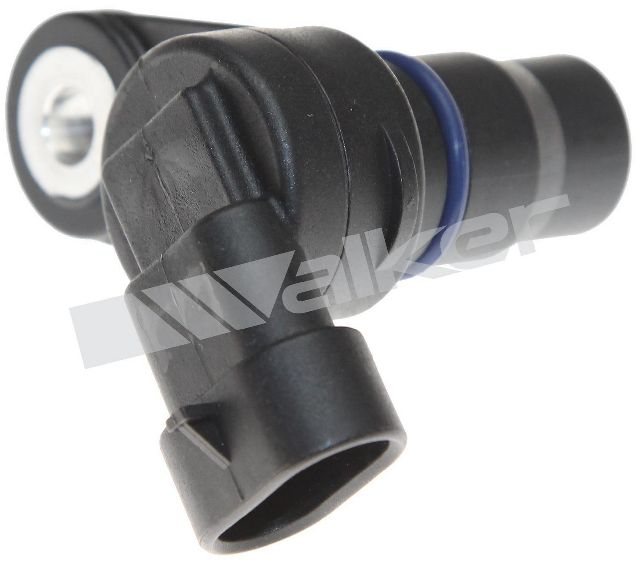
(OEM #GM 12615873)— A known failure point on the 4.2L engine that can cause timing-related misfires, often accompanied by code P0014.
Related Codes That Often Appear With This One
- P0301-P0308 — If the random misfire begins to occur more frequently in a specific cylinder, the PCM will set a cylinder-specific code (e.g., P0304 for Cylinder 4) in addition to P0300.
- P0171 or P0174 — These 'System Too Lean' codes often accompany a P0300 when the root cause is a vacuum leak, as the extra unmetered air creates a lean condition that leads to misfires.
- P0014 — This camshaft position timing code can appear with P0300 if the issue is related to a faulty or clogged Camshaft Position Actuator Solenoid (CPAS), which is another known issue on these engines that can affect timing and cause misfires.
Technical Service Bulletins (TSBs) & Recalls
- PIP5628C: Preliminary information request for diagnosing misfire codes P0300-P0308.
- PIP4138P: Instructs technicians to check for worn camshaft lobes if standard diagnostics do not resolve a P0300-P0308 misfire.
- PIP5169: Warns about the possibility of crossed fuel injector connectors for cylinders 5-7 and 6-8 on V8 models after repairs.
Platform-Specific Known Issues
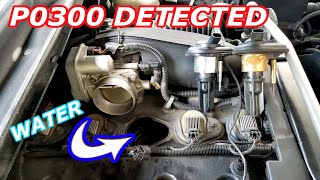
- Cowl Water Leak on Ignition Coils: The weatherstrip seal at the base of the windshield can get clogged with debris or degrade, allowing rainwater to drip directly onto the top of the engine. Due to the engine's angle, this water commonly lands on the #4 ignition coil, causing it to short out and fail. This often triggers a P0304 or P0300 code specifically after a car wash or heavy rain. The fix involves cleaning the debris from the cowl drain area or replacing the seal, in addition to replacing the damaged coil.
- Extreme Spark Plug Sensitivity (4.2L I6): The Atlas 4.2L inline-6 engine is famous in owner communities for being exceptionally picky about spark plugs. Using high-quality aftermarket plugs from brands like Bosch or NGK can, and often does, induce a P0300 misfire code. The issue is consistently resolved by installing the OEM-spec ACDelco Iridium 41-103 plugs.
- Loose Intake Manifold Bolts: Separate from a failed gasket, the bolts securing the intake manifold can work themselves loose over time. This creates a significant vacuum leak that causes a rough idle, lean codes (P0171), and a P0300 misfire. Owners have reported finding the bolts so loose they could be turned by hand. Checking the torque on these bolts is a crucial diagnostic step.
Mechanic-Grade Diagnostic Values
- Fuel Pressure (4.2L I6) — expected: 54 PSI (Key On, Engine Off), 51 PSI (at idle). Failure: Pressure significantly below 50 PSI, or pressure that bleeds off quickly after shutdown, indicates a weak pump or bad regulator.
- Ignition Coil Primary Resistance (4.2L Aftermarket) — expected: 0.3 - 0.5 Ohms. Failure: A reading of infinite resistance (OL) or significantly outside the expected range.
- Ignition Coil Secondary Resistance (4.2L Aftermarket) — expected: 5.9k - 6.1k Ohms. Failure: A reading of infinite resistance (OL) or significantly outside the expected range.
- Camshaft Position Actuator Solenoid Resistance (4.2L) — expected: 8 - 13 Ohms. Failure: A reading of 0 Ohms (short) or infinite resistance (open circuit) indicates a failed solenoid.
- Engine Compression (4.2L) — expected: 180-215 PSI per cylinder, with minimal variation between cylinders.. Failure: A cylinder reading significantly lower (e.g., below 130 PSI) than others indicates a mechanical engine problem like bad rings, valves, or a head gasket leak.
Scan Tool Commands That Help
- GM Tech2 / GDS2: Cylinder Power Balance Test — This function is used to view real-time misfire counts for each cylinder, helping to identify if the random misfire has a pattern or is more prevalent in certain cylinders, even if it hasn't set a cylinder-specific code yet.
- GM Tech2 / GDS2 (or capable aftermarket scanner): Crankshaft Position (CKP) Variation Learn / CASE Relearn — This procedure should be performed after replacing the PCM/ECM, crankshaft position sensor, or flexplate. It calibrates the PCM to minor variations in the crankshaft reluctor wheel, and failure to perform it can result in false P0300 codes being set.
- Professional Scan Tool: Fuel Injector Balance Test — This test commands each injector to fire for a set duration and measures the corresponding drop in fuel pressure. It can identify a weak or clogged injector that may be contributing to a random misfire.
Wiring & Ground Locations
- G102 — On the 5.3L V8, located on the rear of the driver's side (left) cylinder head. On the 4.2L I6, it's on the left side of the underhood compartment, near the rear of the fuse block.. This is a critical ground point. On the 5.3L V8, this is the primary ground for the entire driver's side bank of ignition coils. Corrosion or a break here will cause cylinders 1, 3, 5, and 7 to misfire simultaneously, logging a P0300.
- G103 — Located on the left front of the engine compartment, on the radiator support. Some diagrams also show a G103 on the right rear of the engine head used for ECM grounds.. This is a major chassis and engine component ground. A poor connection here can introduce electrical noise and unstable sensor readings for components related to the ignition and fuel system.
- G109 / G110 — Located on the lower left side of the engine block.. These are primary engine block grounds. A loose or corroded connection here can affect the grounding of multiple sensors, including the crankshaft position sensor, which is critical for misfire detection.
Real Owner Repair Stories
- YouTube user 'skiprope536' (2005 GMC Envoy, 4.2L, 265,000 miles) — Engine rumble, P0300 code.
❌ Tried (didn't work) Initial diagnosis was difficult due to multiple stored codes.
✅ What actually fixed it The owner identified the misfiring cylinder by unplugging coils one by one while the engine was running. The misfire was on cylinder #6. He swapped the #6 coil with the #5 coil and the misfire moved to cylinder #5, confirming a bad coil. Replacing the single faulty ignition coil resolved the P0300 code. - YouTube user 'That TALL Guy' (2004 GMC Envoy) — Shuttering, flashing check engine light, P0300 code, especially after heavy rain.
❌ Tried (didn't work) Initially checked for loose coil bolts, which had been a previous issue but was not the cause this time.
✅ What actually fixed it The owner found a pool of water in the #4 spark plug well. The cause was a degraded cowl seal allowing rainwater to drip directly onto the coil. The fix was to dry out the spark plug well and coil boot with paper towels and compressed air. The engine then ran smoothly with no codes. The permanent fix involved cleaning the cowl drain and applying sealant to prevent future leaks. - TrailVoy Forum user 'Mooseman' (2005 GMC Envoy, 4.2L) — P0300 code, rough idle.
❌ Tried (didn't work) Replaced spark plugs with correct ACDelco 41-103., Replaced all 6 ignition coils., Cleaned the throttle body.
✅ What actually fixed it The owner discovered a crack in the intake manifold resonator (the large plastic chamber connected to the air intake tube). This was causing an unmetered air leak. Replacing the cracked resonator (part of the upper intake duct assembly) finally resolved the P0300 code and rough idle. - YouTube user 'KLC Ken' (2007 GMC Envoy Denali, 5.3L V8, 169,000 miles) — Obvious engine stumble/hesitation, P0300 code.
❌ Tried (didn't work) Spraying cleaner into the cylinder, tapping on the rocker arms.
✅ What actually fixed it Diagnosis determined the issue was a collapsed lifter on cylinder #7, a common failure on the 5.3L V8 with Active Fuel Management (AFM/DOD). A compression test showed ~160 PSI on a good cylinder but only ~10 PSI on cylinder #7. The definitive fix, though not performed in the video, is a major mechanical repair to replace the lifters and often the camshaft.
"I Checked Everything" — The Actual Cause
- A cracked intake manifold resonator can cause a P0300. This is a plastic chamber on the intake duct that can develop hairline cracks. A standard smoke test focused on the engine block and vacuum lines may miss this leak, as the smoke may not be introduced far enough upstream or the crack may only open under specific engine vibrations. The fix is to replace the entire upper intake duct assembly.
OEM Part Supersession History
12568078→12615873— This is the supersession trail for the Camshaft Position Actuator Solenoid (VVT Solenoid) for the 4.2L I6 engine. The design was updated over the years to improve reliability and resistance to oil contamination.
Heads up: The latest part number, 12615873, is the recommended replacement for all previous versions.ACDelco 41-103→ACDelco 41-110— The 41-110 is a newer design intended to replace the 41-103 for many applications.
Heads up: While the 41-110 is often listed as a replacement, owner and mechanic consensus for the GMT360 platform strongly favors sticking with the original 41-103 plug to guarantee smooth operation and avoid introducing new misfire issues. Use 41-110 only if 41-103 is unavailable.
Model Year Variations Within This Range
- 2004 vs 2005: The 2004 models use a single Powertrain Control Module (PCM) that controls both the engine and the automatic transmission. The 2005 models split this into a dedicated Engine Control Module (ECM) and a separate Transmission Control Module (TCM). This affects wiring, diagnostics, and part compatibility for the main computer.
Helpful Videos
Used OEM Parts in Stock


New Aftermarket Parts Available



The information in this article is provided for general reference and educational purposes only. Vehicle specifications, procedures, and part compatibility can vary by production date, trim level, and region. Always consult your vehicle's factory service manual and verify part numbers before purchasing or performing repairs. Safety-critical components such as airbags, seat belts, and braking systems should be installed by a qualified professional.
- Gmc ENVOY XUV:
- 🎬 Helpful Videos
- 🛍️ Shop This Part
- What's Unique About the 2004-2005 Gmc ENVOY XUV
- Diagnostic Flowchart
- Symptoms You May Notice
- Most Likely Causes
- Rare But Worth Checking
- Diagnosis Steps
- Parts You'll Likely Need
- Related Codes That Often Appear With This One
- Technical Service Bulletins (TSBs) & Recalls
- Platform-Specific Known Issues
- Mechanic-Grade Diagnostic Values
- Scan Tool Commands That Help
- Wiring & Ground Locations
- Real Owner Repair Stories
- "I Checked Everything" — The Actual Cause
- OEM Part Supersession History
- Model Year Variations Within This Range
- 🎟️ Get 5% Off