

P0300 on 2004-2011 GMC Canyon: Random Misfire Causes and Fixes
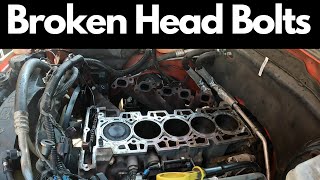
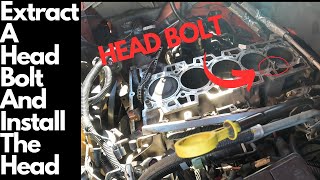
P0300 on a first-generation GMC Canyon, especially with the I4 or I5 engine, is very often caused by worn valve seats in the cylinder head, leading to a loss of compression. While standard tune-up parts like spark plugs and coils can be a cause, the cylinder head is a notorious weak point on these trucks requiring a costly repair.
- For I4 and I5 engines in this year range, P0300 is very frequently caused by a worn cylinder head, not just simple tune-up parts.
- A cylinder compression test and leak-down test are critical diagnostic steps and should not be skipped.
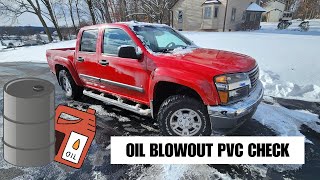
- Before suspecting major engine work, always inspect for cheaper, simpler fixes like a cracked PCV hose, which is a known issue.
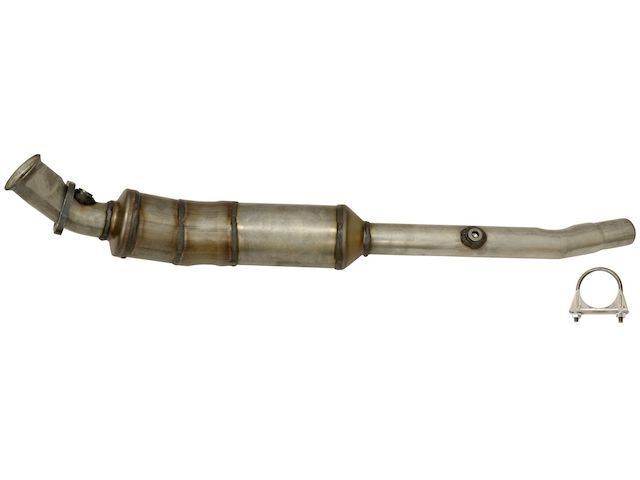
- Continuing to drive with a flashing check engine light can cause expensive damage to the catalytic converter.
- If cylinder head replacement is needed, ensure an updated part is used to permanently fix the valve seat problem.
What's Unique About the 2004-2011 Gmc CANYON

The 2004-2011 GMC Canyon and its sibling, the Chevy Colorado, are well-known for a specific mechanical flaw in the Atlas series I4 and I5 engines, particularly from 2004-2006. The valve seats within the cylinder head were made of a softer metal that could wear prematurely, leading to a loss of compression and causing persistent, random misfires that trigger the P0300 code. GM later issued an updated cylinder head to correct this problem, and a Technical Service Bulletin (TSB) acknowledges that misfires at idle can be caused by a damaged valve or valve seat. This makes internal engine problems a much more likely cause for P0300 on these trucks compared to many other vehicles.
Diagnostic Flowchart

Tap your situation to follow the diagnostic path that matches what you're seeing on this vehicle.
Symptoms You May Notice
- Rough or shaking idle
- Flashing Check Engine Light
- Hesitation or stumbling during acceleration
- Noticeable loss of engine power
- Difficulty starting the engine
- Smell of raw fuel from the exhaust
- Replacing only spark plugs and ignition coils when the true cause is a worn cylinder head. This is a common first step but often does not solve the problem on these specific engines.
- Replacing oxygen (O2) sensors. While a faulty O2 sensor can affect the air-fuel mixture, it is not a primary cause of a P0300 code on this platform.
Most Likely Causes

- Worn Valve Seats / Cylinder Head Failure (I4 & I5 Engines) 🔴 High Probability The original cylinder heads on the 2004-2006 Atlas I4 and I5 engines used softer valve seat material that is known to wear prematurely, causing a loss of compression. GM acknowledged this issue and released an updated head design for 2007 and later models.
How to confirm: A cylinder compression test followed by a cylinder leak-down test is required. The leak-down test will reveal if air is escaping through the intake or exhaust valves, confirming the failure.
Typical fix: The cylinder head must be removed and taken to a machine shop for a valve job (installing new, hardened valve seats) or replaced entirely with an updated OEM or aftermarket head assembly.
Est. part cost: $450-$1200 for a remanufactured or new cylinder head assembly. - Worn Spark Plugs or Failing Ignition Coils 🟡 Medium Probability
How to confirm: Inspect spark plugs for wear, fouling, or incorrect gap. To test a coil, swap it with a coil from a cylinder that is not misfiring (if you have other codes like P0301, P0304, etc.) and see if the misfire code follows the coil to the new cylinder.
Typical fix: Replace all spark plugs as a set. Replace the faulty ignition coil(s).
Est. part cost: $40-$100 for spark plugs, $30-$70 per ignition coil. - Vacuum Leak 🟡 Medium Probability The PCV hose at the back of the intake manifold can become brittle, crack, or collapse, creating a significant vacuum leak that can trigger a P0300 and a P0171 (System Too Lean) code.
How to confirm: Visually inspect all vacuum hoses for cracks or disconnection. A smoke test is the most effective way to find a leak by feeding smoke into the intake system and watching where it escapes.
Typical fix: Replace the cracked or broken vacuum hose or intake manifold gasket.
Est. part cost: $15-$50 for hoses, $50-$150 for an intake gasket set. - Dirty or Clogged Fuel Injectors ⚪ Low Probability
How to confirm: Testing fuel injectors requires checking their resistance with a multimeter or performing a flow test, which is best left to a professional shop. Clogged injectors are a common issue on many Chevrolet vehicles.
Typical fix: Professional fuel injector cleaning service or replacement of the clogged injectors.
Est. part cost: $50-$120 per injector. - Low Fuel Pressure ⚪ Low Probability While fuel pump failure can happen on any vehicle, it has been reported more than average on this truck platform.
How to confirm: Connect a fuel pressure gauge to the fuel rail test port. The pressure should meet the manufacturer's specification at idle and under load.
Typical fix: Replace the fuel filter first as it is inexpensive. If pressure is still low, the fuel pump module will likely need to be replaced.
Est. part cost: $20-$40 for a filter, $200-$400 for a fuel pump assembly.
Rare But Worth Checking
- Dirty Throttle Body: A very dirty throttle body can cause a low idle speed and trigger a P0506 code along with P0300. Cleaning it is a simple and inexpensive diagnostic step.
- Failed Camshaft Position Actuator Solenoid: This component controls the variable valve timing. If it fails, it can cause rough running and misfires similar to other issues.
Diagnosis Steps

- Scan for all stored trouble codes. Pay close attention to any cylinder-specific (P0301-P0305) or system lean (P0171) codes.
- Inspect the basics: Check the condition of the air filter and look for obvious cracks in the PCV hose or other vacuum lines.
- Inspect spark plugs and ignition coils. If a specific cylinder is misfiring, swap the coil with a known good one and see if the misfire follows.
- Perform a cylinder compression test. On the I4 and I5 engines, low compression in one or more cylinders is a strong indicator of the valve seat issue.
- Perform a cylinder leak-down test. This will confirm if the compression loss is due to intake/exhaust valves (pointing to the cylinder head), piston rings, or a head gasket.
- Check fuel pressure to rule out a weak fuel pump or clogged filter.
- If no issues are found, use a smoke machine to definitively check for intake manifold or vacuum leaks.
Parts You'll Likely Need
- Cylinder Head Assembly — This is the most common major failure leading to P0300 on the I4 and I5 engines due to the factory valve seat issue.
Trusted brands: ACDelco, General Motors
OEM price range: $800-$1500
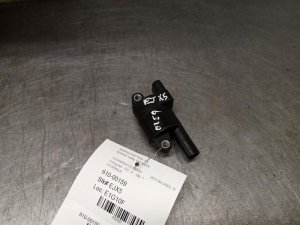
Aftermarket price range: $450-$900 - Ignition Coil — A common cause of misfires on any gasoline engine. They are a wear item and can fail over time.
Trusted brands: ACDelco, Delphi, NGK
OEM price range: $50-$90
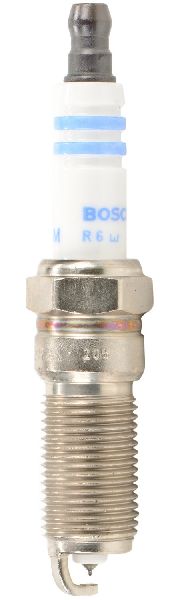
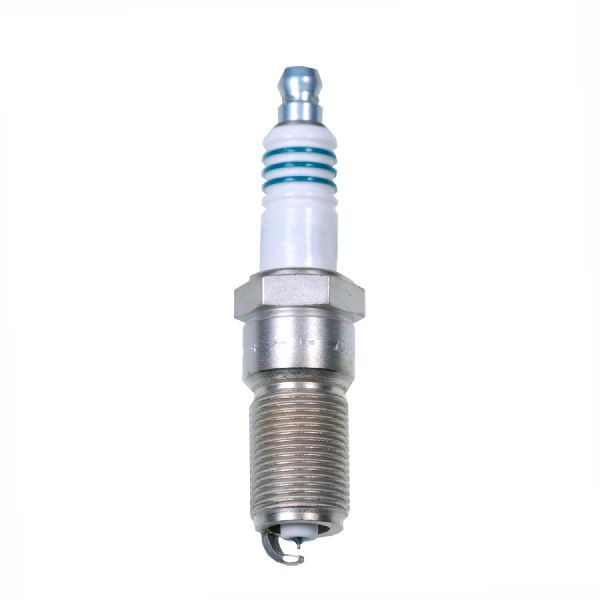
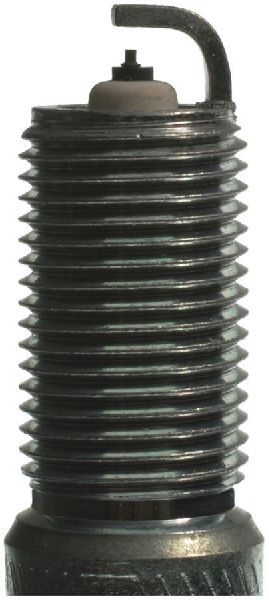
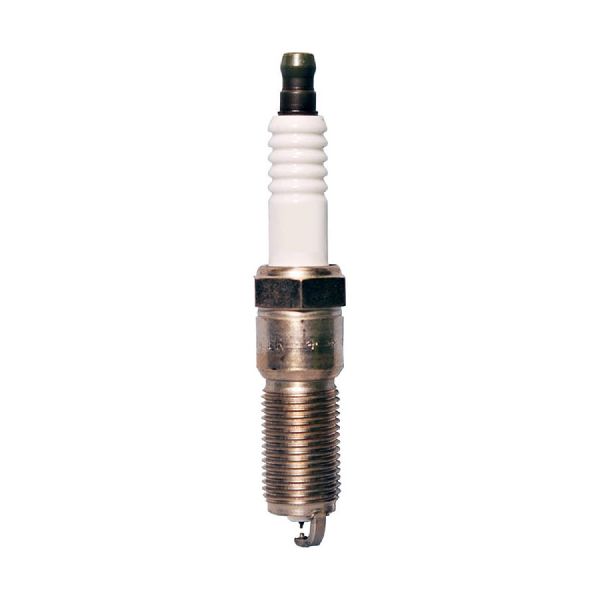
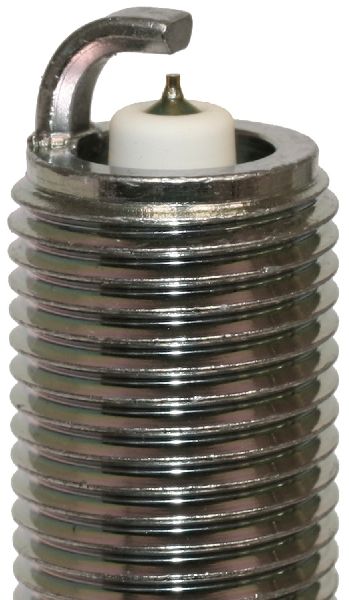
Aftermarket price range: $30-$70 - Spark Plugs — Worn or fouled spark plugs are a primary cause of weak spark and misfires. They are a routine maintenance item.
Trusted brands: ACDelco, NGK
OEM price range: $8-$15 per plug
Aftermarket price range: $5-$10 per plug - PCV Hose — A known failure point on this platform that causes a vacuum leak, leading to P0300 and P0171 codes.
Trusted brands: ACDelco, General Motors
OEM price range: $30-$60
Aftermarket price range: $15-$40
Related Codes That Often Appear With This One
- P0301, P0302, P0303, P0304, P0305 — If the random misfire begins to occur more frequently on specific cylinders, the ECM will log these cylinder-specific codes alongside P0300.
- P0171 — This code for 'System Too Lean' often appears with P0300 when the cause is a vacuum leak, such as a cracked PCV hose, 🎬 Watch: How to clean the PCV orifice to fix leaks. which allows unmetered air into the engine.
- P0106 — As seen in NHTSA complaint #10151176, this code for the Manifold Absolute Pressure (MAP) sensor can be triggered by vacuum leaks or erratic engine performance caused by misfires.
- P0506 — This code for 'Idle Air Control System RPM Lower Than Expected' can be caused by a very dirty throttle body or a vacuum leak, both of which can also cause a P0300.
Technical Service Bulletins (TSBs) & Recalls
- PIP5628G: Mentions diagnosing vehicles with misfire codes P0300 - P0308.
- PIP4013D: Discusses engine misfires at idle on 2006-2012 Canyon models (among others) and points to a damaged valve, valve seat, or piston ring as a potential cause, recommending a cylinder leakage test for diagnosis.
Platform-Specific Known Issues
- Cylinder Head Valve Seat Failure: The most significant issue for 2004-2007 models with the 2.8L I4 and 3.5L I5 engines. The intake valve seats were not properly hardened, leading to wear, loss of compression, and a P0300 code. GM issued a special extended warranty (7yr/100,000 miles) for this issue and later released an updated cylinder head part. A GM bulletin (PIP4013D) details diagnosing misfires at idle that may be caused by a damaged valve or valve seat.
Mechanic-Grade Diagnostic Values
- Fuel Pressure — expected: Check against manufacturer's specifications for the specific engine (2.8L/3.5L vs 2.9L/3.7L) at idle and under load.. Failure: Pressure below the specified range indicates a weak pump or clogged filter; pressure above the range can indicate a faulty regulator.
- Ignition Coil Resistance — expected: Consult the vehicle's service manual for the specific primary and secondary resistance values in ohms (Ω).. Failure: A reading that is significantly higher or lower than the specified range, or an open circuit (infinite resistance), indicates a failed coil.
- Long-Term and Short-Term Fuel Trims — expected: Ideally within +/- 5% at idle. Readings can be viewed on a capable OBD-II scanner.. Failure: Consistently high positive numbers (e.g., +10% or higher) strongly suggest a vacuum leak, as the PCM is adding fuel to compensate for unmetered air.
Hidden / Shadow Codes Worth Checking
- Misfire Graphic / History Counters: While not a hidden code, a GM Tech2 or equivalent high-end scan tool can display live misfire counters and a misfire history graph for each cylinder. This data is far more detailed than a simple P0300 code and can help pinpoint if the 'random' misfire is actually more frequent on one or two cylinders, even if it hasn't met the threshold to set a cylinder-specific code (e.g., P0301). (see via GM Tech2 or GDS2 dealer scan tool, or other professional-grade scanners with GM-specific software.)
Scan Tool Commands That Help
- GM Tech2 / GDS2: Crankshaft Position Variation Learn (Crank Relearn) — This procedure is required after replacing the crankshaft position sensor, PCM, or performing major engine work. It synchronizes the sensor with the actual position of the crankshaft reluctor wheel. Failure to perform this relearn can cause the PCM to incorrectly interpret minor rotational speed variations as misfires, setting a P0300 code when no mechanical misfire exists.
- Professional Scan Tool: Cylinder Power Balance Test — This bidirectional test allows the user to deactivate one cylinder at a time and observe the corresponding drop in engine RPM. A cylinder that causes little or no RPM drop when deactivated is the one that is misfiring or contributing less power.
Wiring & Ground Locations
- G102 — On the lower left (driver's) side of the engine block.. This is the primary ground connection for all of the ignition coils. A loose or corroded G102 ground can cause a weak or intermittent spark across multiple cylinders, directly leading to a P0300 code.
- G103 / G104 — G103 is on the cowl in the left rear of the engine compartment, above the brake booster. G104 is on the left side of the engine.. These points provide a ground path for the Powertrain Control Module (PCM). A poor connection here can cause erratic PCM behavior, leading to a wide range of phantom codes, including P0300.
- Splice Pack SP-105 and SP-106 — Under the hood on the inner fenders. SP-105 is on the driver's side near the battery; SP-106 is on the passenger side behind the airbox.. These splice packs are notorious failure points where multiple ground wires are joined by a simple comb connector. Corrosion builds up, causing high resistance and intermittent electrical issues for various components, including those monitored by the PCM. Cleaning these grounds and replacing the comb with individual ring terminals is a common fix for difficult-to-diagnose electrical problems.
Real Owner Repair Stories
- Reddit user in r/chevycolorado (2008 Canyon with 5-cylinder, 345k miles) — Not specified for P0300, but general reliability report.
✅ What actually fixed it Owner reported incredible longevity with only regular maintenance, but the transmission failed at 275k miles after a severe towing event. This demonstrates the engine's potential durability if the head issue is not present or has been fixed. - YouTube channel 'DIY with Michael Borders' (2005 Chevy Colorado) — Check engine light with P0300 and P0304.
❌ Tried (didn't work) Initial diagnosis pointed to ignition system.
✅ What actually fixed it The problem was resolved by replacing the ignition coil on the affected cylinder. The video creator noted that replacing just the one coil fixed the issue. - YouTube channel 'Fix It Now' (First-generation Chevy Colorado) — Blower motor, door locks, fuel gauge, and anti-theft system issues, which are often related to the same grounding problems that can cause P0300.
❌ Tried (didn't work) Chasing individual component failures.
✅ What actually fixed it The root cause was corrosion in the under-hood ground splice packs (SP-105 and SP-106). The fix was to cut the comb connector off and install dedicated ring terminals for the ground wires, bolting them directly to the chassis.
OEM Part Supersession History
e.g., UF303 (for 2004-2006 models)→e.g., UF497 (for 2007-2012 models)— Ignition coil design changed with the engine update in the 2007 model year.
Heads up: The ignition coils for 2004-2006 (2.8L/3.5L) and 2007-2012 (2.9L/3.7L) are not interchangeable. Using the wrong coil will result in a no-fit or no-spark condition.
Model Year Variations Within This Range
- 2004-2006: These years used the 2.8L LK5 I4 and 3.5L L52 I5 engines. These are the primary engines affected by the premature valve seat wear issue that leads to compression loss and P0300.
- 2007-2011: For 2007, the engines were updated to the 2.9L LLV I4 and 3.7L LLR I5. These engines feature variable valve timing (VVT) and a revised cylinder head design that is not prone to the same valve seat failure as the earlier models. While misfires can still occur, the infamous cylinder head issue is not a primary cause on these later trucks. Ignition coils and some sensors also differ from the earlier models.
- 2009-2011: A 5.3L V8 engine option was introduced. P0300 diagnosis on this engine would follow different procedures more common to GM V8s and is not related to the Atlas engine-specific issues.
Helpful Videos
Used OEM Parts in Stock



New Aftermarket Parts Available

The information in this article is provided for general reference and educational purposes only. Vehicle specifications, procedures, and part compatibility can vary by production date, trim level, and region. Always consult your vehicle's factory service manual and verify part numbers before purchasing or performing repairs. Safety-critical components such as airbags, seat belts, and braking systems should be installed by a qualified professional.
- Gmc CANYON:
- 🎬 Helpful Videos
- 🛍️ Shop This Part
- What's Unique About the 2004-2011 Gmc CANYON
- Diagnostic Flowchart
- Symptoms You May Notice
- Most Likely Causes
- Rare But Worth Checking
- Diagnosis Steps
- Parts You'll Likely Need
- Related Codes That Often Appear With This One
- Technical Service Bulletins (TSBs) & Recalls
- Platform-Specific Known Issues
- Mechanic-Grade Diagnostic Values
- Hidden / Shadow Codes Worth Checking
- Scan Tool Commands That Help
- Wiring & Ground Locations
- Real Owner Repair Stories
- OEM Part Supersession History
- Model Year Variations Within This Range
- 🎟️ Get 5% Off