

P0300 on 2023-2025 GMC Acadia: Random Misfire Causes and Fixes
P0300 on a 2023-2025 GMC Acadia indicates random cylinder misfires. For all years, the most common causes are worn spark plugs or faulty ignition coils. On 2023 models specifically, a known issue can cause cold start misfires, detailed in TSB #18-NA-115. A basic ignition system tune-up is the most likely fix, but carbon buildup on direct-injection engines is also a frequent cause.
- P0300 means random misfires are detected; it's not specific to one cylinder.
- For the 2023-2025 Acadia, start your diagnosis with the basics: spark plugs and ignition coils are the most likely culprits.
- A flashing Check Engine Light is a stop-driving-now warning to prevent expensive catalytic converter damage.
- Be aware of the generation change: the 2023 model has different engines than the 2024-2025 models.
- If you have a 2023 model and the misfire only happens on a cold start, be aware of TSB #18-NA-115, which points to a potentially serious engine issue.
What's Unique About the 2023-2025 Gmc ACADIA

The 2023-2025 year range for the GMC Acadia covers a critical generation change. The 2023 model is the last of the second generation, offered with the 2.0L Turbo LSY or 3.6L V6 LGX engines. The 2024 and 2025 models mark the beginning of the third generation, featuring a new 2.5L Turbo LK0 engine. This is significant because a P0300 code on a 2023 model has a documented history and a specific TSB (#18-NA-115) related to cold start misfires, which can, in rare cases, be caused by coolant leaking into the cylinder from a porous block. For the newer 2024-2025 models with the LK0 engine, data is still emerging, but early service bulletins are already active.
Diagnostic Flowchart

Tap your situation to follow the diagnostic path that matches what you're seeing on this vehicle.
Generation note: Yes, this range spans two generations. The 2023 model is the final year of the second generation (2017-2023) and came with either a 2.0L Turbo LSY or 3.6L V6 LGX engine. The 2024-2025 models are the first years of the third generation, equipped with a new 2.5L Turbo LK0 engine. Causes and parts will differ between these generations.
Symptoms You May Notice
- Rough or shaking idle
- Flashing or steady Check Engine Light
- Hesitation or stumbling during acceleration
- Noticeable loss of engine power
- Reduced fuel economy
- Engine may be hard to start
- Smell of raw fuel from the exhaust
- Replacing oxygen sensors. A misfire will often cause O2 sensor codes to appear because unburned fuel is entering the exhaust, but the O2 sensor is usually reporting the problem correctly, not causing it.
- Replacing only one spark plug or coil when multiple are near the end of their service life, especially on the V6 where accessing the rear bank is labor-intensive.
- Ignoring freeze-frame data. Knowing if the misfire happens when cold, hot, or under load is a critical clue, especially given the cold-start TSB.
- Assuming a tune-up will fix it. On direct-injection engines, significant carbon buildup on the intake valves can cause a P0300 that new plugs and coils won't solve.
Most Likely Causes

- Worn or Fouled Spark Plugs 🔴 High Probability Spark plugs are a primary wear item and the leading cause of misfires. On the 3.6L V6, the rear bank of plugs is difficult to access, requiring removal of the intake manifold, so their replacement is often deferred, leading to failure. Direct injection can also lead to fouling.
How to confirm: Remove and visually inspect the spark plugs for wear (worn electrode), damage (cracked insulator), or fouling (black carbon, white ash, or oil). Check the gap against manufacturer specifications.
Typical fix: Replace all spark plugs as a set. It is highly recommended to use OEM-spec (ACDelco) iridium plugs 🎬 Watch this step-by-step guide to replacing your spark plugs. for best performance and longevity.
Est. part cost: $50-$150 - Faulty Ignition Coil(s) 🔴 High Probability Ignition coils fail from heat and vibration. Since the 3.6L V6 requires intake manifold removal to access the rear bank, it's common for a single failing coil to be ignored until it causes a P0300. An owner complaint for a P0300 on an older Acadia was resolved by replacing a coil (ODI #10633743).
How to confirm: Use a scan tool with live data to identify which cylinders are misfiring. Swap the ignition coil from a misfiring cylinder with a coil from a non-misfiring cylinder. If the misfire code follows the coil (e.g., P0303 changes to P0301), the coil is bad.
Typical fix: Replace the faulty ignition coil. It is best practice to replace the corresponding spark plug at the same time, and many mechanics recommend replacing all coils on a bank 🎬 See how to access and replace the ignition coils. if they are original and high-mileage.
Est. part cost: $40-$100 per coil - Vacuum Leak 🟡 Medium Probability Plastic and rubber hoses and gaskets become brittle with age and heat cycles, allowing unmetered air to enter the engine. This leans out the air/fuel mixture and causes random misfires, often triggering P0171/P0174 codes alongside P0300.
How to confirm: A professional can perform a smoke test, which feeds pressurized smoke into the intake system to reveal leaks. A visual inspection of all vacuum hoses for cracks or loose connections is a good first step. Spraying carburetor cleaner near suspected areas and listening for a change in engine RPM can also pinpoint a leak.
Typical fix: Replace the cracked hose or leaking gasket. If the intake manifold was removed for other service, the intake manifold gaskets must be replaced.
Est. part cost: $10-$200 depending on the part - Fuel System Issues (Injectors, Pump) 🟡 Medium Probability Direct-injection engines use high-pressure fuel pumps and injectors that can fail or become clogged. A weak fuel pump won't supply enough fuel under load, while a dirty injector creates a poor spray pattern, both leading to lean misfires. A real-world repair story on a platform-mate Cadillac XT5 with the 3.6L engine traced a persistent misfire to a single faulty fuel injector after plugs and coils were eliminated as the cause.
How to confirm: Check fuel pressure with a gauge to ensure it's within spec for both the low-pressure and high-pressure systems. A professional scan tool can command an injector balance test to check for inconsistencies.
Typical fix: The fix can range from a professional fuel system cleaning, to replacing a clogged fuel injector, to replacing a failing high-pressure fuel pump (HPFP).
Est. part cost: $100-$1000+
Rare But Worth Checking
- Internal Engine Coolant Leak (Cylinder Block Porosity): TSB #18-NA-115 specifically addresses a cold start misfire with P0300. The bulletin outlines a diagnostic procedure to check for coolant intrusion into a cylinder, which can occur overnight due to porosity in the engine block or cylinder head. This is a severe issue that may require engine replacement.
- Stretched Timing Chain: While more common on older 3.6L V6 engines, a stretched timing chain can cause camshaft/crankshaft correlation to go out of sync, leading to misfires. This is usually accompanied by a rattling noise on startup and other codes like P0008, P0017, or P0018. 🎬 Watch a diagnosis of a P0300 caused by timing chain rattle.
- Loose or Corroded Ground Wire: A poor ground connection for the ignition coils can cause a weak, intermittent spark across an entire bank of cylinders. One mechanic on YouTube traced a P0300 on a 2015 Acadia to a loose 8mm ground bolt for the bank 2 ignition coils, which had been overlooked by others. The G102 ground point at the rear of the engine is a common location for ignition grounds.
- Active Fuel Management (AFM) Lifter Failure: On the 3.6L LGX V6, the AFM system deactivates cylinders to save fuel. A faulty AFM lifter or oil control valve solenoid can cause the lifter to become stuck, resulting in a persistent misfire. TSB #PIP5493E and #21-NA-036 address this issue, which can sometimes present as a P0300.
Diagnosis Steps
- Read the codes with an OBD-II scanner and note any other codes present besides P0300. Pay close attention to lean codes (P0171/P0174) or fuel pressure codes (P0087).
- Check the freeze-frame data to understand the engine conditions (speed, temperature, load) when the misfire occurred. This is critical for diagnosing cold-start vs. hot misfires.
- Note if the Check Engine Light is flashing. If so, avoid driving the vehicle to prevent catalytic converter damage.
- Inspect the basics: Check the engine air filter and look for any obvious disconnected or cracked vacuum hoses.
- Inspect the ignition system. Remove and examine the spark plugs for wear and proper gap. Inspect the ignition coil boots for any signs of carbon tracking or damage.
- If a specific cylinder is suspected from live data, swap the ignition coil with another cylinder to see if the misfire follows the coil.
- Check fuel pressure to rule out a weak fuel pump or clogged filter.
- If a vacuum leak is suspected, perform a smoke test to locate the source of the leak.
- For 2023 models with cold-start misfires, follow the diagnostic procedure in TSB #18-NA-115, which may involve checking for coolant intrusion.
- Inspect engine ground straps, particularly those connected to the cylinder heads, for tightness and corrosion.
Parts You'll Likely Need
- Spark Plugs (Iridium)
(OEM #ACDelco 41-130 (for 3.6L LGX), ACDelco 41-103IP (for 2.0L LSY), ACDelco 41-109 (for 2.5L LK0))— This is the most common wear item that causes misfires. They are relatively inexpensive and are a critical part of routine maintenance.
Trusted brands: ACDelco, NGK
OEM price range: $10-$25 per plug
Aftermarket price range: $5-$15 per plug - Ignition Coil
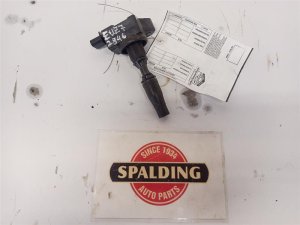
(OEM #ACDelco 12707304 (superseded, for 3.6L LGX), ACDelco 55515866 (for 2.0L LSY))— Ignition coils are the second most common failure point for a P0300 code. They are responsible for providing the high voltage for the spark.
Trusted brands: ACDelco, Delphi, NGK
OEM price range: $50-$90 per coil
Aftermarket price range: $30-$60 per coil - Intake Manifold Gasket Set
(OEM #ACDelco 12679529 (for 3.6L LGX))— This is a required replacement part anytime the intake manifold is removed on the 3.6L V6 to access the rear spark plugs and coils. Failure to replace it can cause a vacuum leak.
Trusted brands: ACDelco, Fel-Pro
OEM price range: $40-$60
Aftermarket price range: $20-$40
Related Codes That Often Appear With This One
- P0301-P0306 — If the random misfire begins to occur more frequently on specific cylinders, the ECM may also log a cylinder-specific code to help pinpoint the source.
- P0171/P0174 — These 'System Too Lean' codes often appear with P0300 when the root cause is a vacuum leak, which introduces too much unmetered air and affects all cylinders.
- P0087 — This 'Fuel Rail/System Pressure - Too Low' code points towards a fuel delivery problem (like a weak fuel pump) as the cause of the misfires.
- P050D — This code for 'Cold Start Rough Idle' is specifically mentioned in TSBs alongside P0300, indicating a known cold-start misfire condition often linked to carbon buildup or the rare block porosity issue.
Technical Service Bulletins (TSBs) & Recalls
- 18-NA-115: This service bulletin provides inspection/diagnosis/correction information on a cold start misfire and/or rough idle and DTC P0300 that may also be set.
Platform-Specific Known Issues

- Carbon Buildup on Intake Valves: As a direct-injection engine, fuel is sprayed directly into the cylinder, not over the intake valves. This means there is no fuel to clean the valves, and oil vapor from the PCV system can bake onto them, forming hard carbon deposits. This restricts airflow and can cause misfires, especially on a cold start. This is a very common issue on the LGX and related GM direct-injection engines.
- Moisture in Charge Air Cooler (Intercooler): In humid or cold climates, moisture from the PCV system can condense and pool in the charge air cooler. During acceleration, this water can be ingested by the engine, causing a significant stumble and triggering a P0300 code. This issue is documented in TSBs for similar GM turbo engines.
- New Engine Introduction Issues: As a brand-new engine for 2024, the LK0's long-term reliability is still being established. GM has already issued a service update (N242441680) for an immediate oil change on some new Acadias and Traverses to ensure engine cleanliness. Another bulletin (PIP6101) addresses a ticking noise caused by manufacturing debris in the cylinder head, affecting the LK0 and related 2.7L L3B engines. These early issues highlight the potential for unforeseen problems in the first model year.
Mechanic-Grade Diagnostic Values
- Ignition Coil Primary Resistance — expected: 0.4 - 2.0 Ohms. Failure: A reading of 0 ohms (short) or infinite/OL (open circuit). However, coils can test good for resistance and still be faulty under load.
- Ignition Coil Secondary Resistance — expected: 6,000 - 10,000 Ohms (6kΩ - 10kΩ). Failure: A reading significantly outside this range, or an open circuit. This test is more indicative of failure than the primary test.
- Fuel Injector Resistance (3.6L LGX) — expected: Approximately 1.5 - 2.2 Ohms. Failure: A reading of open (OL) or a significant deviation from the other injectors indicates a bad injector coil.
- High-Pressure Fuel Pump (HPFP) Pressure (All Engines) — expected: Can exceed 2,000 PSI under load.. Failure: A scan tool showing actual fuel rail pressure failing to meet desired pressure, often setting a P0087 code.
Hidden / Shadow Codes Worth Checking
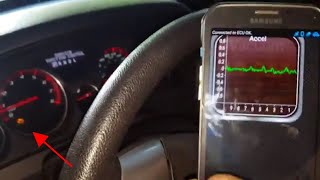
- Mode $06, Test ID $53 (Ford) / Misfire Counters (GM): The ECM tracks misfire events for each cylinder even if they don't meet the threshold to set a P030x code. Accessing this data can reveal which cylinder(s) are contributing to the P0300 count before a hard fault is logged. (see via A scan tool with Mode $06 capability or a dealer-level tool like GM GDS2. In some apps like Torque Pro, this may be found under 'Test Results'.)
Scan Tool Commands That Help
- GM GDS2 / Professional Scan Tool: Crankshaft Position Variation Learn — This procedure must be performed after replacing the crankshaft position sensor, the ECM, or performing major engine work. It synchronizes the sensor with the actual rotational variations of the crankshaft, and failing to do so can cause the ECM to falsely detect misfires and set a P0300 or P1336.
- GM GDS2 / Professional Scan Tool: Fuel Injector Balance Test — This function commands each injector to fire for a set duration and measures the corresponding drop in fuel pressure. It can identify a clogged or weak injector that is causing a lean misfire contributing to a P0300 code.
Wiring & Ground Locations

- G102 / G104 — Located on the rear of the cylinder heads. G104 is on the left (driver side) rear corner of the engine, often a strap from the head to the firewall. G102 is also at the rear of the engine.. These are the primary ground points for the ignition coils. A loose or corroded ground at G102 or G104 can cause an entire bank of cylinders to misfire intermittently, leading directly to a P0300 code.
- G103 — On the front of the passenger side cylinder head.. Provides a ground path for multiple engine components. While not the direct ignition coil ground, a poor connection here can introduce electrical noise and issues for the ECM and other sensors, indirectly causing driveability problems.
Real Owner Repair Stories
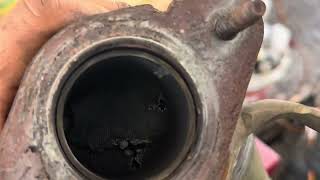
- YouTube channel 'The ASE Mechanic' (GMC Acadia (year not specified, but similar platform)) — Intermittent P0300, with misfires specifically on cylinders 2, 4, and 6 (Bank 2). Catalytic converter was found to be melted.
❌ Tried (didn't work) The mechanic checked all standard components and found them to be okay.
✅ What actually fixed it A loose 8mm ground bolt located at the left rear of the engine (likely G104) was found. This single loose ground was causing the entire bank of even-numbered cylinders to misfire intermittently. - YouTube channel 'Cold Start Garage' (2008 GMC Acadia 3.6L V6) — Severe P0300, violent engine shaking, flashing check engine light. Unplugging coils on cylinders 3 & 5 made no difference. A rattling/ticking noise appeared after clearing codes.
❌ Tried (didn't work) Swapping fuel injectors, Installing new spark plugs, Swapping known-good ignition coils
✅ What actually fixed it The root cause was determined to be a stretched timing chain, a known issue on this engine. The chain stretch caused incorrect cam/crank correlation, leading to the misfires.
"I Checked Everything" — The Actual Cause
- A faulty EVAP purge solenoid (vapor canister purge valve) can stick open, creating a vacuum leak that may not be obvious during a smoke test. This introduces unmetered fuel vapor into the intake manifold, disrupting the air/fuel ratio and causing random misfires. This often sets an EVAP code like P0496 alongside the P0300.
When the Usual Fixes Don't Work
- In one documented case involving a P0300 on a GM 3.6L engine, a mechanic traced an intermittent misfire on an entire cylinder bank (2, 4, 6) not to plugs, coils, or injectors, but to a single loose ground bolt for that bank's ignition coils. This highlights that even after a full tune-up, a simple, overlooked electrical connection can be the true root cause.
OEM Part Supersession History
12610560, 12661763→12690512— Updated design for the Vapor Canister Purge Valve.
Heads up: This is a common replacement part for GM vehicles to fix EVAP codes (like P0496) that can sometimes accompany a P0300. Using the most current part number ensures the latest revision.
Model Year Variations Within This Range
- 2024-2025: The 2024 model year introduced the third-generation Acadia with a completely new 2.5L Turbo LK0 engine (328 hp, 326 lb-ft torque) and an 8-speed automatic transmission, replacing the previous V6 and 2.0T options. All diagnostic procedures, parts, and known issues will be specific to this new powertrain and different from the 2023 model.
Helpful Videos
We Have This Part in Stock



The information in this article is provided for general reference and educational purposes only. Vehicle specifications, procedures, and part compatibility can vary by production date, trim level, and region. Always consult your vehicle's factory service manual and verify part numbers before purchasing or performing repairs. Safety-critical components such as airbags, seat belts, and braking systems should be installed by a qualified professional.
- Gmc ACADIA:
- 🎬 Helpful Videos
- 🛍️ Shop This Part
- What's Unique About the 2023-2025 Gmc ACADIA
- Diagnostic Flowchart
- Symptoms You May Notice
- Most Likely Causes
- Rare But Worth Checking
- Diagnosis Steps
- Parts You'll Likely Need
- Related Codes That Often Appear With This One
- Technical Service Bulletins (TSBs) & Recalls
- Platform-Specific Known Issues
- Mechanic-Grade Diagnostic Values
- Hidden / Shadow Codes Worth Checking
- Scan Tool Commands That Help
- Wiring & Ground Locations
- Real Owner Repair Stories
- "I Checked Everything" — The Actual Cause
- When the Usual Fixes Don't Work
- OEM Part Supersession History
- Model Year Variations Within This Range
- 🎟️ Get 5% Off