

P0300 on 2015-2022 GMC Acadia: Random Misfire Causes and Fixes
Code P0300 on a GMC Acadia most often points to failing ignition coils or worn spark plugs. On direct-injection engines (all 2017-2022 models), carbon buildup on intake valves is also a very common cause. Expect to pay $100-$300 for a DIY spark plug and coil replacement.
- P0300 indicates a random misfire affecting multiple cylinders; it's a general code that requires diagnosis.
- Start your diagnosis with the most common and affordable fixes: inspect and replace worn spark plugs and test ignition coils.
- On these direct-injection engines, carbon buildup on intake valves is a frequent cause of misfires that a simple tune-up won't fix. This requires professional cleaning.
- If the check engine light is flashing, pull over. Driving with a severe misfire can quickly destroy your catalytic converter, a very expensive repair.
- Check for vacuum leaks from cracked hoses or bad gaskets, as this is a common cause of lean conditions and misfires.
What's Unique About the 2015-2022 Gmc ACADIA

The 2015-2022 GMC Acadia spans two generations with different engines, both of which feature direct injection. The first generation (through 2016) used a 3.6L V6 (LFX), while the second generation (2017-2022) offered a 2.5L I4 (LCV) and a newer 3.6L V6 (LGX). A key issue with these direct-injection engines is their susceptibility to carbon buildup on intake valves, which can cause cold start misfires and trigger a P0300 code. Additionally, several Technical Service Bulletins (TSBs) point to specific issues like faulty oil control solenoids (TSB 21-NA-036), internal coolant leaks from engine block porosity (TSB 18-NA-115), or rocker arm problems that can lead to misfires on these particular engines.
Diagnostic Flowchart

Tap your situation to follow the diagnostic path that matches what you're seeing on this vehicle.
Generation note: This range covers the end of the first generation (2015-2016) and the majority of the second generation (2017-2022). First-gen models primarily use the 3.6L LFX V6. Second-gen models use a 2.5L I4 or an updated 3.6L LGX V6. While many causes are shared, carbon buildup is a known issue across all these direct-injection engines. Some TSBs are specific to the second-generation LGX V6 engine, such as those addressing valvetrain and Active Fuel Management (AFM) components.
Symptoms You May Notice
- Rough or shaking idle
- Hesitation or stumbling during acceleration
- Flashing or solid Check Engine Light
- Reduced engine power, sometimes entering 'limp mode'
- Poor fuel economy
- Engine noise, such as rattling, ticking, or knocking
- Smell of unburned gasoline from the exhaust
- Replacing oxygen (O2) sensors. A faulty O2 sensor can contribute to an incorrect air/fuel mixture, but it's more often a symptom of the misfire (from unburned fuel) rather than the root cause. Diagnose ignition, fuel, and air induction systems first.
Most Likely Causes

- Worn or Fouled Spark Plugs 🔴 High Probability Spark plugs are a primary wear item and a leading cause of misfires. The service interval is typically 60,000 to 80,000 miles. Fouling from oil or carbon is also common. A broken center insulator on a spark plug can also cause a P0300 code.
How to confirm: Remove the spark plugs and inspect them for wear (worn electrode), carbon tracking (black lines on the ceramic), oil fouling, or physical damage. A plug that is black and sooty can indicate a rich condition or incomplete combustion in that cylinder.
Typical fix: Replace all spark plugs as a set. It is highly recommended to use OEM-spec Iridium plugs, such as ACDelco 41-123, to ensure proper performance and longevity.
Est. part cost: $60-$150 for a set of 6 Iridium plugs - Failing Ignition Coil(s) 🔴 High Probability Coil-on-plug systems are a frequent failure point. Heat cycles cause the internal windings to break down. A leaking valve cover gasket can also allow oil into the spark plug tubes, shorting out the ignition coil and causing it to fail prematurely.
How to confirm: Use a scan tool to monitor live misfire data (Mode $06) 🎬 Watch: A professional diagnosis of a 3.6L misfire using live data. to identify which cylinder(s) are misfiring most. Swap the ignition coil from a misfiring cylinder with one from a cylinder that is firing correctly. If the misfire follows the coil (e.g., a misfire on cylinder 2 moves to cylinder 4 after the swap), the coil is bad.
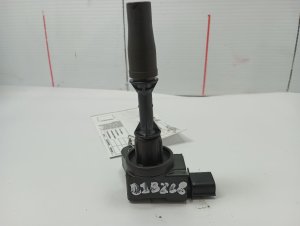
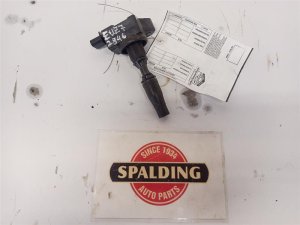
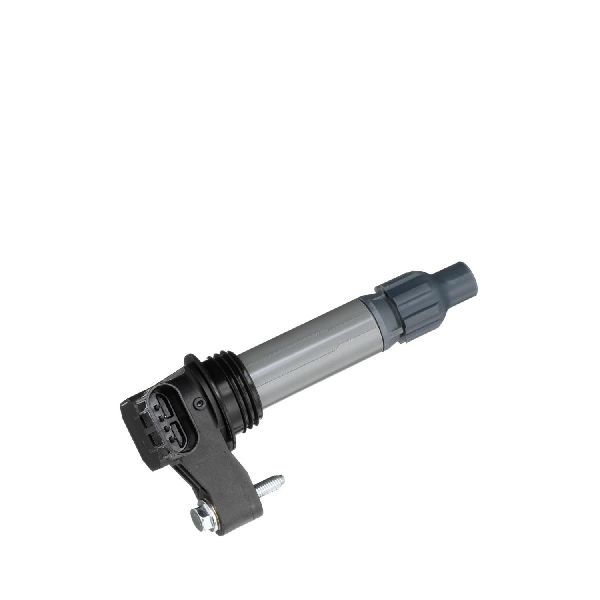
Typical fix: Replace the faulty ignition coil. The OEM part is often ACDelco D515C. If the coils are original and the vehicle has high mileage, it is wise to replace all of them at the same time as the spark plugs.
Est. part cost: $40-$90 per coil - Carbon Buildup on Intake Valves 🟡 Medium Probability All engines in this year range use direct injection (DI). In DI engines, fuel is injected directly into the cylinder, so it never washes over the intake valves. Oil vapor from the PCV system bakes onto the hot valves, causing carbon deposits that disrupt airflow and lead to misfires, especially on a cold start.
How to confirm: This requires a borescope to visually inspect the intake valves, which usually involves removing the intake manifold. Heavy, chunky black deposits on the valve stems and heads confirm the issue.
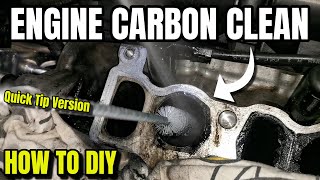
Typical fix: The valves must be physically cleaned. The most effective method is walnut shell blasting, a professional service that uses crushed walnut shells to scour the valves clean without damaging the metal. Chemical induction cleanings are less effective for heavy buildup. 🎬 Watch: A quick guide on how to remove carbon from your engine. Cost for walnut blasting typically ranges from $500-$900.
Est. part cost: $0 (service cost is labor) - Vacuum Leak 🟡 Medium Probability Aging plastic and rubber hoses in the intake and PCV system can crack, or intake manifold gaskets can fail, allowing unmetered air into the engine. A common failure point is the PCV hose/orifice, which can get clogged or brittle. This leans out the air/fuel mixture and causes misfires.
How to confirm: Perform a smoke test by introducing pressurized smoke into the intake system and watching for leaks. You can also monitor short-term and long-term fuel trims with a scan tool; high positive numbers (e.g., >10%) at idle that decrease with RPM suggest a vacuum leak.
Typical fix: Replace the cracked hose or failed gasket. The rear PCV orifice on the 3.6L V6 is notoriously difficult to access and can become seized in the valve cover.
Est. part cost: $20-$200 - Faulty Fuel Injectors ⚪ Low Probability Direct injectors operate under very high pressure and can become clogged with carbon or fail electronically. This leads to poor fuel atomization or incorrect fuel delivery to one or more cylinders, causing misfires.
How to confirm: Use a high-end scan tool (like a GM GDS2) to perform an injector balance test. Also, monitor fuel trims per bank; if one bank is significantly different from the other, it could point to an injector issue on that side. Swapping injectors between cylinders is another diagnostic step, but is very labor-intensive.
Typical fix: Replace the faulty fuel injector(s). This is a more complex and expensive job on direct-injection engines compared to port-injected engines.
Est. part cost: $70-$150 per injector
Rare But Worth Checking
- Damaged Oil Control Valve (OCV) / Solenoid: TSB #21-NA-036 specifically mentions that a damaged OCV solenoid can cause an oil leak and misfires, setting codes P0300, P0302, and/or P0305. The end of the solenoid can break off and get stuck in the camshaft cover bore. TSB #PIP5493B also points to the Rocker Arm Oil Control Valve for certain misfires on the 3.6L LGX engine.
- Stretched Timing Chain: More common on the first-generation 3.6L V6 (LFX), a stretched timing chain can cause camshaft/crankshaft correlation to be off, leading to random misfires. This is a major repair and is usually accompanied by a rattling noise on startup that lasts for a few seconds.
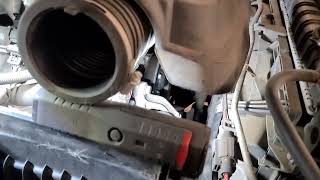
- Loose Ignition Coil Ground: A documented repair on a GMC Acadia showed that an entire bank of cylinders (2, 4, 6) was misfiring due to a single loose 8mm ground bolt for the ignition coils on that bank, located on the rear of the cylinder head. 🎬 See how a loose ground bolt caused misfires on cylinders 2, 4, and 6. Tightening the bolt resolved the P0300 code.
- Internal Coolant Leak (Porous Block): TSB #18-NA-115 describes a condition on 3.6L engines where porosity in the cylinder block can cause a tiny amount of coolant to leak into a cylinder when the engine is cold. This causes a cold-start-only misfire that disappears as the engine warms up and the metal expands. The fix is a complete engine replacement.
Diagnosis Steps
- Read all stored fault codes with an OBD-II scanner. Note any codes that accompany P0300, as they provide critical clues.
- Use the scanner's live data function, specifically Mode $06, to view misfire counts for each cylinder. This helps determine if the misfires are truly random or concentrated on one or two cylinders.
- Check fuel trims (Short Term and Long Term). High positive values at idle (>10%) often indicate a vacuum leak, while high negative values can suggest a leaking injector.
- Inspect the basics: Check the engine air filter for clogs and inspect all visible intake and PCV hoses for cracks or loose connections.
- Inspect spark plugs for wear, fouling, or damage. If they are near their service interval or look questionable, replace them with high-quality OEM parts (e.g., ACDelco Iridium).
- Test the ignition coils. Swap a coil from a frequently misfiring cylinder with a known good one and see if the misfire follows the coil.
Parts You'll Likely Need
- Spark Plugs
(OEM #ACDelco 41-123 (for 3.6L V6, verify by VIN))— This is the most common wear item that causes misfires. They are relatively inexpensive and a critical part of a tune-up. - Ignition Coils
(OEM #ACDelco D515C (for 3.6L V6, verify by VIN))— A very common failure point that directly causes misfires. Often replaced alongside spark plugs. - Intake Manifold Gaskets — Needed when removing the intake manifold for carbon cleaning, PCV service, or replacing rear bank spark plugs/coils. They are prone to leaking, causing vacuum leaks.
- PCV Valve/Orifice and Hoses — The PCV system can become clogged or cracked, leading to vacuum leaks and increased oil consumption, which contributes to carbon buildup.
Related Codes That Often Appear With This One
- P0301-P0306 — If the random misfire becomes consistent in one cylinder, the system will store a specific code for that cylinder (e.g., P0301 for cylinder 1).
- P0171/P0174 — These codes indicate a 'System Too Lean' condition on Bank 1 and Bank 2, respectively. They often appear with P0300 when the root cause is a large vacuum leak, a dirty MAF sensor, or a weak fuel pump.
- P050D — This code for 'Cold Start Rough Idle' is specifically mentioned in TSBs #PIP5628G and #18-NA-115 alongside P0300, often pointing to issues like carbon buildup or internal coolant leaks.
- P0087 — This code for 'Fuel Rail Pressure Too Low' can accompany a P0300 if the cause is a failing high-pressure fuel pump (on GDI engines) or a weak in-tank fuel pump, starving the engine of fuel.
Technical Service Bulletins (TSBs) & Recalls
- 18-NA-115: Cold start misfire and/or rough idle and DTC P0300.
- PIP5628G: Diagnostic aid for vehicles with misfire and DTC Codes P0300 - P0308 and/or P050D.
- 21-NA-036: Damaged OCV solenoid that may cause an oil leak and misfire, setting DTCs P0300, P0302 and/or P0305.
- 21-NA-278: Engine rattle, tick, or knock noise accompanied by DTC P0300.
- PIP5029D: Engine misfires due to major carbon deposits on the intake and or exhaust valves.
Platform-Specific Known Issues

- TSB #18-NA-115 addresses cold start misfires and rough idle that can set a P0300 code.
- TSB #21-NA-036 points to a damaged OCV (Oil Control Valve) solenoid that can leak oil and cause misfires, specifically P0300, P0302, and/or P0305.
- TSB #PIP5628G provides diagnostic information for technicians when encountering P0300-P0308 codes, indicating it's a known area of concern.
- TSB #21-NA-278 discusses engine noises (rattle, tick) that may be accompanied by P0300, pointing towards potential internal engine issues like timing components or carbon buildup on valves.
- TSB #PIP5029D specifically calls out heavy carbon deposits on intake valves as a cause for P0300-P0306 misfire codes on direct-injected GM engines, including the Acadia.
Mechanic-Grade Diagnostic Values
- Ignition Coil Primary Winding Resistance — expected: 0.4 to 2.0 ohms. Failure: A reading outside this range indicates a faulty coil.
- Ignition Coil Secondary Winding Resistance — expected: 6,000 to 10,000 ohms (6k-10k Ω). Failure: A reading outside this range suggests the coil needs replacement.
- Camshaft Position Actuator Solenoid Resistance — expected: 7 to 12 ohms. Failure: A reading outside this range, or any reading to the solenoid housing (short), indicates a bad solenoid.
- High Pressure Fuel System Pressure (3.6L V6) — expected: 290-725 PSI (2-5 MPa) at idle, increasing with engine speed.. Failure: Pressure that is significantly low, high, or erratic can indicate a failing high-pressure fuel pump or sensor, leading to misfires.
- Ignition Coil Hold-Down Bolt Torque — expected: 89 in-lb (10 Nm). Failure: Improper torque can lead to a poor ground or a loose coil, causing misfires.
Scan Tool Commands That Help
- GM GDS2, Tech 2, or equivalent professional scan tool: Crankshaft Position Variation Learning (CASE Relearn) — Required after replacing the ECM, crankshaft position sensor, or making major engine repairs. Failure to perform this relearn can cause the ECM to inaccurately detect misfires and set a false P0300 code.
- GM GDS2 or equivalent: Injector Balance Test — To identify a specific fuel injector that is clogged or failing electronically by measuring the pressure drop for each injector activation.
- GM GDS2 or equivalent: Cylinder Deactivation / AFM Control — On engines with Active Fuel Management (AFM), this allows a technician to command specific cylinders on and off to diagnose a faulty AFM lifter, which can collapse and cause a misfire on a specific cylinder.
Wiring & Ground Locations

- Ignition Coil Bank Ground — On the rear of the cylinder head for one of the banks. Often an 8mm or 10mm bolt securing a ground strap or ring terminal.. A loose ground for an entire bank of ignition coils will cause random misfires across those cylinders, directly leading to a P0300. This is often missed as individual coils are checked but their common ground is not.
- G115 (example from 2013 model) — On the left inner fender panel in the engine compartment.. This is a primary ground point for multiple engine components, including ignition coils on some models. Corrosion or a loose connection here can create intermittent electrical issues and misfires.
- Main Chassis Ground — Near the driver-side firewall, often behind the battery tray, with factory-designated bolt holes.. A poor main ground connection between the engine/body and the battery can cause a host of floating voltage issues, leading to erratic sensor readings and weak spark, which can trigger a P0300.
Real Owner Repair Stories
- Reddit user in r/AskMechanics (2013 GMC Acadia Denali) — A minor shudder at low RPM. After a transmission fluid drain-and-fill, the shudder got significantly worse, occurring as soon as 3rd gear engaged.
❌ Tried (didn't work) A standard transmission fluid drain and fill.
✅ What actually fixed it The issue was identified as a failing torque converter clutch. While not fixed at the time of posting, the user noted that the shudder does not occur in tow/haul mode. Another user with a 2015 Acadia confirmed their shudder was fixed by replacing the torque converter, though symptoms returned after 70k miles. This highlights that a driveline shudder can feel like an engine misfire. - Tahoe Yukon Forum user (GM truck with AFM V8 (similar lifter technology)) — Engine misfires (P0300) and other issues.
❌ Tried (didn't work) Disabling Active Fuel Management (AFM) via a software tune.
✅ What actually fixed it The user reported that even with AFM disabled in the tune, a lifter eventually failed mechanically two years later. This is a critical insight: a software tune does not remove the physical AFM lifters, which can still collapse and cause a P0300 misfire. The ultimate fix is a physical AFM delete kit and lifter replacement.
"I Checked Everything" — The Actual Cause
- In cases where a smoke test reveals no vacuum leaks, the P0300 is often caused by non-air-leak issues. A common scenario is a cold-start misfire that disappears when warm, which is a classic symptom of either carbon buildup on intake valves or the internal coolant leak described in TSB #18-NA-115. Neither of these issues would be found with a smoke test.
When the Usual Fixes Don't Work
- While pass 2 correctly identifies common causes like spark plugs and coils, a significant number of owner reports for the GMC Acadia, particularly higher mileage examples, point to issues that are not simple tune-up items. For instance, a transmission torque converter shudder can mimic the feeling of a random misfire, causing owners to chase ignition and fuel problems unnecessarily. In another case, a user found that even after disabling the problematic Active Fuel Management (AFM) system with a software tune, the physical lifters still failed mechanically years later, causing a P0300 code. This shows that some common 'fixes' may not address the underlying mechanical vulnerability.
OEM Part Supersession History
Varies by year (e.g., 12638530 for 2009-2011)→Varies (e.g., Standard Motor Products FJ994)— Standard design updates for improved durability and performance.
Heads up: Fuel injectors for the first generation (pre-2017, LFX engine) are not compatible with the second generation (2017+, LGX/LCV engines) due to different fuel system designs. Always verify by VIN.
Model Year Variations Within This Range
- 2015-2016 vs. 2017-2022: The 3.6L V6 engine changed from the LFX to the LGX in 2017. The LGX is a significant redesign with a rear-mounted timing chain, revised cylinder heads, and a variable displacement oil pump to address reliability concerns of the earlier LFX, such as timing chain stretch. While both are direct-injection, diagnostic procedures for camshaft components and some sensors may differ.
- 2017-2022 (LGX 3.6L V6): Bank 1 (the rear bank, cylinders 1-3-5) is near the firewall, while Bank 2 (the front bank, cylinders 2-4-6) is near the radiator. Accessing Bank 1 components like coils or VVT solenoids is significantly more labor-intensive.
Helpful Videos
Used OEM Parts in Stock




New Aftermarket Parts Available



The information in this article is provided for general reference and educational purposes only. Vehicle specifications, procedures, and part compatibility can vary by production date, trim level, and region. Always consult your vehicle's factory service manual and verify part numbers before purchasing or performing repairs. Safety-critical components such as airbags, seat belts, and braking systems should be installed by a qualified professional.
- Gmc ACADIA:
- 🎬 Helpful Videos
- 🛍️ Shop This Part
- What's Unique About the 2015-2022 Gmc ACADIA
- Diagnostic Flowchart
- Symptoms You May Notice
- Most Likely Causes
- Rare But Worth Checking
- Diagnosis Steps
- Parts You'll Likely Need
- Related Codes That Often Appear With This One
- Technical Service Bulletins (TSBs) & Recalls
- Platform-Specific Known Issues
- Mechanic-Grade Diagnostic Values
- Scan Tool Commands That Help
- Wiring & Ground Locations
- Real Owner Repair Stories
- "I Checked Everything" — The Actual Cause
- When the Usual Fixes Don't Work
- OEM Part Supersession History
- Model Year Variations Within This Range
- 🎟️ Get 5% Off