

P0300 on 2021-2024 Genesis G80: Random Misfire Causes and Fixes
For the 2.5L Turbo engine, a P0300 code is frequently caused by a software issue that requires an ECM update from a Genesis dealer, as noted in Service Campaign 914G. For both the 2.5T and 3.5T engines, other common causes include worn spark plugs, faulty ignition coils, or, increasingly, failing fuel injectors which may be replaced under warranty.
- For the 2.5L Turbo G80, your first step should be to check with a dealer about Service Campaign 914G for a free ECM update, which specifically targets this code.
- A flashing Check Engine Light indicates a severe misfire that can cause expensive catalytic converter damage; avoid driving the vehicle if this occurs.
- Outside of the ECM campaign, the most common DIY fixes are replacing worn spark plugs and testing/replacing faulty ignition coils.
- The 2021-2024 G80 belongs to the RG3 generation, so fixes are generally consistent across these model years, with the main difference being engine-specific issues (2.5T vs. 3.5T).
What's Unique About the 2021-2024 Genesis G80
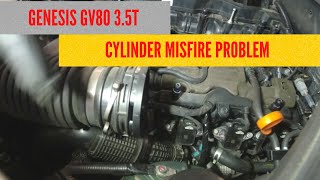
The 2021-2024 Genesis G80 with the 2.5L T-GDI engine is subject to a specific manufacturer service campaign (914G) to address misfire codes, including P0300, that may occur during a cold start. The official fix is a dealer-installed software update for the Engine Control Module (ECM). While standard ignition and fuel system issues can still cause P0300 on both the 2.5T and 3.5T engines, this documented software glitch is a unique and highly probable cause for the 2.5T model. Additionally, owner forums for the G80 and its platform mates (GV70, GV80) show a pattern of fuel injector failures on low-mileage vehicles, often presenting with misfire codes.
Diagnostic Flowchart
Tap your situation to follow the diagnostic path that matches what you're seeing on this vehicle.
Symptoms You May Notice
- Rough or shaky idle
- Engine hesitation or stumbling during acceleration
- Noticeable loss of power
- Flashing or solid Check Engine Light
- Reduced fuel economy
- Smell of raw fuel from the exhaust
- Engine takes longer than usual to start (extended crank)
- Vibration felt throughout the vehicle, especially when stopped
- Replacing oxygen sensors. While a faulty O2 sensor can affect the air/fuel mixture, it's less likely to be the direct cause of a P0300 code compared to ignition or fuel delivery components. However, a misfire can cause the O2 sensor to report unusual readings, leading to a misdiagnosis.
- Blaming 'bad gas'. While a tank of poor-quality fuel can cause issues, it's often used as a preliminary, unsubstantiated diagnosis. Owners have reported dealers initially blaming fuel quality before finding a faulty hardware component like a fuel injector.
Most Likely Causes
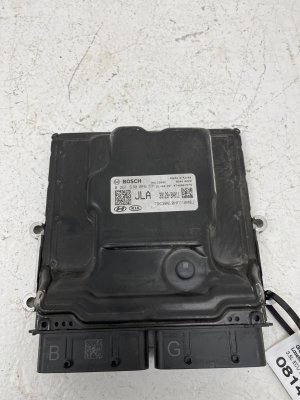
- Engine Control Module (ECM) Software Update Needed 🔴 High Probability Specifically for the 2.5L T-GDI engine, Genesis issued Service Campaign 914G to correct a software logic issue that causes misfire DTCs (P0300-P0304) during cold starts. This is a well-documented issue affecting a range of Genesis models with this engine.
How to confirm: A Genesis dealer can check your vehicle's VIN against open service campaigns. This is the primary step for any 2.5T G80 experiencing these codes, especially if they occur on cold starts.
Typical fix: The dealer will update the ECM software, which is covered under the campaign at no cost to the owner.
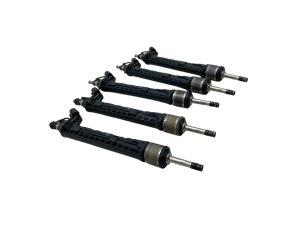
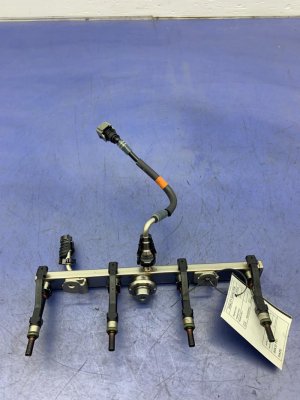
Est. part cost: $0 - Faulty or Clogged Fuel Injectors 🔴 High Probability Owner forums for the G80 and its platform-mate, the GV70, show a recurring pattern of fuel injector failures at relatively low mileage (e.g., under 30,000 miles). Symptoms often start with a single cylinder misfire (like P0301) but can escalate. One owner reported a dealer stated injector seals can get stuck due to temperature changes, causing irregular fuel flow. These are GDI engines, which can also be prone to carbon buildup on intake valves over time, though injector failure appears more common on these specific models.
How to confirm: Diagnosis often requires a dealer-level scan tool to monitor injector performance. A technician may perform a fuel injector balance test. In some forum-reported cases, dealers have replaced all injectors on a bank as a preventative measure even if only one failed.
Typical fix: Replacement of the faulty fuel injector(s). This is often covered under the factory warranty. In some cases, dealers may replace all injectors on the affected engine bank.
Est. part cost: $150-$400 per injector (often $0 under warranty) - Worn or Fouled Spark Plugs 🟡 Medium Probability Spark plugs are a regular maintenance item. The service interval for the G80 is typically every 42,000-48,000 miles, but plugs can fail earlier. As they wear, the spark they produce weakens, leading to incomplete combustion and misfires.
How to confirm: Remove and inspect the spark plugs for signs of wear, such as a rounded electrode, heavy carbon deposits, oil fouling, or a cracked porcelain insulator.
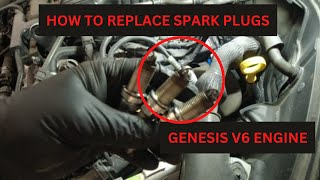
Typical fix: Replace all spark plugs as a set. It's recommended to use OEM-spec plugs for best performance. For the 2.5T, the OEM part number is 18875-09085. For the 3.5T, the OEM part number is 18877-09085.
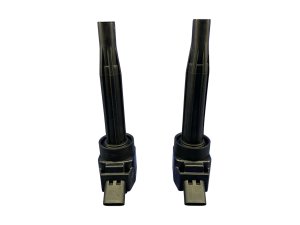
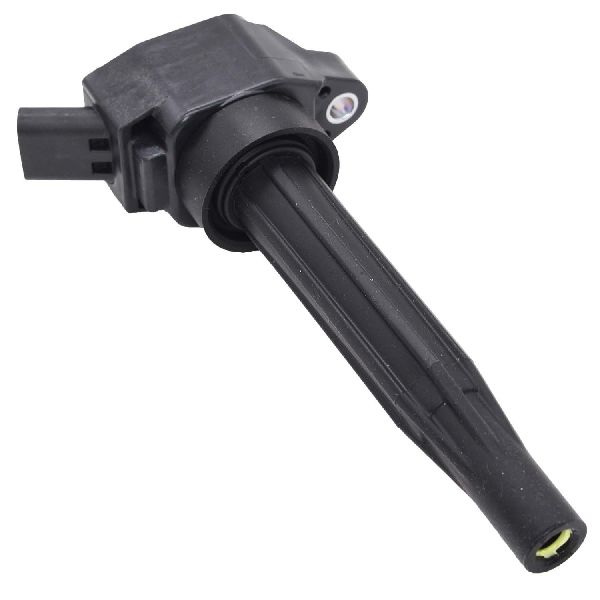
Est. part cost: $80-$180 - Faulty Ignition Coil(s) 🟡 Medium Probability Ignition coils can fail over time, failing to provide enough voltage to create a strong spark. A random misfire (P0300) can occur when one coil is failing intermittently or multiple coils are weak.
How to confirm: Use an OBD-II scanner with live data to watch for misfire counts on specific cylinders. Swap the ignition coil from a misfiring cylinder with one from a non-misfiring cylinder. If the misfire code changes to the new cylinder (e.g., P0302 becomes P0304), the coil is bad. 🎬 Watch this walkthrough on how to replace an ignition coil
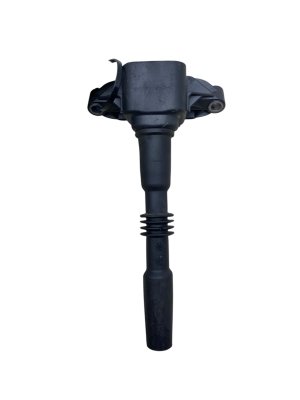
Typical fix: Replace the faulty ignition coil. It is often recommended to replace the spark plug at the same time. The OEM part number for the 2.5T is 27300-2T000.
Est. part cost: $70-$120 per coil - Low-Pressure Fuel Pump Failure ⚪ Low Probability A recall (NHTSA 23V630000) was issued for the low-pressure fuel pump on some 2022-2023 Genesis models. The pump's impeller can deform and fail, causing a loss of fuel pressure and potential stalling. While this typically causes a loss of power, it could also lead to misfires under certain conditions.
How to confirm: Check the vehicle's VIN for recall applicability on the NHTSA website or with a Genesis dealer. A fuel pressure test can confirm if the pump is delivering insufficient pressure.
Typical fix: Replace the fuel pump, which should be covered by the recall if the vehicle is affected.
Est. part cost: $0 if under recall
Rare But Worth Checking
- Vacuum Leak: A leak in a vacuum hose or intake manifold gasket can introduce unmetered air, leaning out the air/fuel mixture and causing random misfires. On GDI engines, this can sometimes be detected by spraying carb cleaner near gasket surfaces while listening for a change in engine idle.
- Internal Engine Issues: In rare cases, loss of compression from issues like piston ring failure or a faulty head gasket could cause misfires. This would typically be accompanied by other serious symptoms like heavy oil consumption, blue/gray exhaust smoke, or coolant loss.
- Carbon Buildup on Intake Valves: Gasoline Direct Injection (GDI) engines spray fuel directly into the cylinder, so gasoline detergents don't clean the intake valves. Over many miles, carbon can build up, restricting airflow and causing rough running and misfires. This is a less likely cause on newer, low-mileage vehicles but is a known long-term maintenance consideration for GDI engines.
Diagnosis Steps
- Check for Service Campaigns/Recalls: For 2.5T engines, first contact a Genesis dealer with your VIN to see if Service Campaign 914G (ECM update) is open for your vehicle. Also check for the fuel pump recall (NHTSA 23V630000).
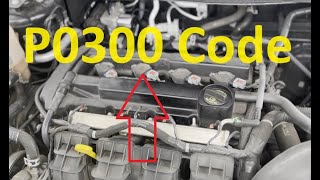
- Scan for Codes: Use an OBD-II scanner to confirm P0300 and check for any 🎬 Watch: Understanding the causes and fixes for the P0300 code other accompanying codes, especially cylinder-specific misfire codes (P0301-P0304) and fuel trim codes (P0171/P0174). Note any freeze-frame data.
- Analyze Live Data: Monitor misfire counts per cylinder in real-time to see if the misfire is truly random or concentrated on one or two cylinders. Observe short-term and long-term fuel trims; high positive numbers (e.g., >10%) suggest the engine is compensating for a lean condition (like a vacuum leak or clogged injector).
- Inspect Spark Plugs: Remove and inspect all spark plugs for wear, damage, or fouling. Replace if they are worn, past their service interval (approx. 48k miles), or show any signs of damage.
- Test Ignition Coils: If a specific cylinder shows high misfire counts, swap its ignition coil with a known good one and see if the misfire follows the coil.
- Check for Vacuum Leaks: Visually inspect all vacuum hoses for cracks or disconnection. Listen for hissing sounds around the intake manifold at idle. A smoke test is the most effective way to find small leaks.
- Consult a Professional: If the above steps do not reveal the cause, the issue may be with the fuel system (injectors, pump) or internal engine components, which often requires professional diagnostic tools and experience. Given the high incidence of injector issues, this should be a point of focus for a technician.
Parts You'll Likely Need
- Engine Control Module (ECM) Software Update — This is the specific fix for cold-start misfires on the 2.5L T-GDI engine, as per Genesis Service Campaign 914G.
Trusted brands: Genesis
OEM price range: $0 (under campaign)
Aftermarket price range: N/A - Spark Plugs
(OEM #18875-09085 (2.5T), 18877-09085 (3.5T))— Worn spark plugs are a primary cause of misfires on any gasoline engine and are a common maintenance item.
Trusted brands: Hyundai/Genesis OE, NGK, Denso
OEM price range: $120-$200
Aftermarket price range: $80-$150 - Ignition Coil
(OEM #27300-2T000 (2.5T))— An ignition coil provides the high voltage needed for spark. A weak or failing coil is a common cause of misfires.
Trusted brands: Hyundai/Genesis OE, Delphi
OEM price range: $90-$140
Aftermarket price range: $60-$100 - Fuel Injector — Forum reports indicate a notable rate of fuel injector failure on these engines, causing misfires that are often resolved under warranty.
Trusted brands: Hyundai/Genesis OE
OEM price range: $200-$450
Aftermarket price range: $150-$300
Related Codes That Often Appear With This One
- P0301, P0302, P0303, P0304, etc. — As the ECM narrows down the misfire to a specific cylinder, a P0300 code will often be accompanied by a cylinder-specific code (e.g., P0301 for Cylinder 1).
- P0171 (System Too Lean) or P0174 (System Too Lean Bank 2) — If the misfire is caused by a vacuum leak or a fuel delivery problem (like a clogged injector), the engine may run lean, triggering this code alongside P0300.
- P0201-P0208 (Injector Circuit Malfunction) — If the misfire is caused by a failing fuel injector, the ECM may also detect an electrical fault in the injector's circuit.
Technical Service Bulletins (TSBs) & Recalls
- 25-01-051G DN / 25-01-051G TSB (Service Campaign 914G): This TSB provides the procedure for dealers to update the ECM software on affected 2.5L T-GDI models to resolve cold-start misfire codes P0300-P0304.
Platform-Specific Known Issues
- Service Campaign 914G: Affects 2021-2024 G80 models with the 2.5L T-GDI engine, addressing misfire DTCs (P0300-P0304) during cold starts via an ECM software update.
- Fuel Pump Recall (NHTSA 23V630000): Affects some 2022-2023 G80 models. The low-pressure fuel pump can fail, leading to a loss of drive power.
- Fuel Tube Recall (NHTSA 21V208000): A small number of 2021 G80 models with the 2.5T engine were recalled for a fuel tube that may not seal properly, causing a fuel leak.
- Common Fuel Injector Failures: There is significant anecdotal evidence from owner forums (Reddit's r/GenesisGV70) of premature fuel injector failure on the 2.5T engine, causing misfires. Owners report dealers replacing injectors under warranty to resolve the issue.
Mechanic-Grade Diagnostic Values
- Low-Pressure Fuel System Pressure (at idle) — expected: 4.0 - 7.0 bar (approx. 58 - 101 PSI). Failure: Pressure should not drop below 4.0 bar (58 PSI) at idle. A pressure difference of more than 10% between desired and actual pressure under load can indicate a failing low-pressure pump.
- High-Pressure Fuel System Pressure (GDI) — expected: Approx. 600 PSI at idle, up to 2900 PSI under high load.. Failure: A significant and progressive difference between desired and actual fuel rail pressure, especially under load, points to an issue with the high-pressure fuel pump. A rapid drop in pressure after engine shutoff can indicate a leak in the high-pressure side.
Scan Tool Commands That Help
- Genesis Diagnostic System (GDS): Actuation Test — To individually test components like fuel injectors or solenoids to see if they are functioning correctly without having to remove them. This is useful for confirming if an injector is electronically sound.
- Genesis Diagnostic System (GDS): Resetting Adaptive Values — After replacing a major engine component like fuel injectors or sensors, this function resets the engine control module's learned fuel trims and other parameters to their factory defaults, allowing the system to relearn with the new parts.
- Advanced OBD-II Scanner (e.g., Launch, Autel): Misfire Counter Live Data — To monitor misfires on each specific cylinder in real-time. This helps determine if a P0300 'random' misfire is truly random or if it is concentrated on one or two cylinders, which would point towards a specific coil, plug, or injector.
Wiring & Ground Locations
- G01 — In the left fender area of the engine compartment.. This is a primary engine compartment harness ground. A loose or corroded connection here could cause intermittent electrical issues for various engine sensors and actuators, potentially leading to random misfires.
Real Owner Repair Stories
- Reddit user in /r/GenesisGV70 (2023 GV70 with 13,000 miles (2.5T engine platform mate)) — Check Engine Light on, engine in safety mode, code P030100 (misfire on cylinder 1).
❌ Tried (didn't work) Initial diagnosis was not specified, but the dealer was familiar with the issue.
✅ What actually fixed it The dealer replaced all 4 fuel injectors under warranty. The dealer stated they have seen cases where the injector seal gets stuck from temperature changes, causing irregular fuel flow. - Reddit user in /r/GenesisGV70 (2023 GV70 2.5T Sports Prestige (platform mate)) — Cylinder 3 misfire at 9,000 and 12,000 miles.
❌ Tried (didn't work) Not specified, but the issue recurred after the first dealer visit.
✅ What actually fixed it The user implies the issue is common and related to either the fuel pump (recall) or fuel injectors, corroborating other owner experiences.
Model Year Variations Within This Range
- 2024: All-wheel drive (AWD) became standard on all G80 models. While not directly related to the cause of P0300, it's a significant drivetrain change within the model year range.
Helpful Videos
Used OEM Parts in Stock

New Aftermarket Parts Available

The information in this article is provided for general reference and educational purposes only. Vehicle specifications, procedures, and part compatibility can vary by production date, trim level, and region. Always consult your vehicle's factory service manual and verify part numbers before purchasing or performing repairs. Safety-critical components such as airbags, seat belts, and braking systems should be installed by a qualified professional.
- Genesis G80:
- 🎬 Helpful Videos
- 🛍️ Shop This Part
- What's Unique About the 2021-2024 Genesis G80
- Diagnostic Flowchart
- Symptoms You May Notice
- Most Likely Causes
- Rare But Worth Checking
- Diagnosis Steps
- Parts You'll Likely Need
- Related Codes That Often Appear With This One
- Technical Service Bulletins (TSBs) & Recalls
- Platform-Specific Known Issues
- Mechanic-Grade Diagnostic Values
- Scan Tool Commands That Help
- Wiring & Ground Locations
- Real Owner Repair Stories
- Model Year Variations Within This Range
- 🎟️ Get 5% Off