

P0300 on 2017-2021 Ford GT: Random Misfire Causes and Fixes
P0300 on a Ford GT indicates a random misfire. Common causes include worn spark plugs, faulty ignition coils, or specific vehicle operating conditions as noted in Ford's Technical Service Bulletins. For the 2020 model year and newer, Ford introduced higher-energy ignition coils. Due to the vehicle's complexity and value, professional diagnosis is strongly recommended. Carbon buildup on intake valves is also a known issue on this direct-injection engine.
- P0300 on a Ford GT is a serious code indicating random engine misfires that requires prompt professional attention.
- Ford's own service bulletins suggest that specific vehicle operating conditions can trigger this code, which should be the first area of investigation.
- The most common physical causes are worn spark plugs and failing ignition coils, parts that experience high stress in this engine.
- Do not continue to drive the vehicle if the check engine light is flashing, as this can cause rapid and expensive damage to the catalytic converters.
- Due to the vehicle's mid-engine design and high value, all diagnostic and repair work should be entrusted to a qualified professional.
What's Unique About the 2017-2021 Ford GT
The 2017-2021 Ford GT uses a high-output version of the 3.5L EcoBoost V6, producing over 640 horsepower. This extreme performance puts significant stress on ignition and fuel components, leading to shorter service intervals for parts like spark plugs. Ford has issued multiple Technical Service Bulletins (TSBs) for the GT that specifically mention P0300 in conjunction with rough running or hard starting, pointing toward unique operating conditions (like short trips or fuel quality) that may need to be considered before standard diagnostic procedures. For the 2020 model year, the engine was updated with gallery-cooled pistons and higher-energy ignition coils, which could affect diagnosis and part selection.
Diagnostic Flowchart
Tap your situation to follow the diagnostic path that matches what you're seeing on this vehicle.
Symptoms You May Notice
- Check Engine Light (MIL) illuminated or flashing
- Rough running engine or rough idle
- Hard starting or extended cranking
- Hesitation or stumbling during acceleration
- Reduced engine power and performance, especially under boost
- Noticeable engine vibration or shaking
- Reduced fuel economy
- Replacing only one spark plug or coil when others are near the end of their service life.
- Replacing oxygen sensors, which are more likely to be a symptom of the misfire (due to unburnt fuel) rather than the cause.
- Overlooking a vacuum leak from a cracked hose or intake gasket, which can mimic ignition problems.
Most Likely Causes
- Worn or Fouled Spark Plugs 🔴 High Probability The high cylinder pressures and heat in the high-output EcoBoost engine can lead to faster spark plug wear. Service intervals can be as short as 20,000-30,000 miles, much shorter than in standard engines.
How to confirm: Visually inspect the spark plugs for wear, carbon fouling, oil fouling, or cracks in the porcelain. The spark plug gap must be precise; even small deviations can cause misfires under high boost. A typical gap is around 0.030-0.033 inches.
Typical fix: Replace all six spark plugs with the correct Motorcraft OEM parts. It is critical to use the specified iridium plugs and torque them to specification. 🎬 Watch: Expert tips for replacing EcoBoost spark plugs correctly. Use of indexed plugs may be required to ensure the ground strap does not interfere with the direct injector spray pattern.
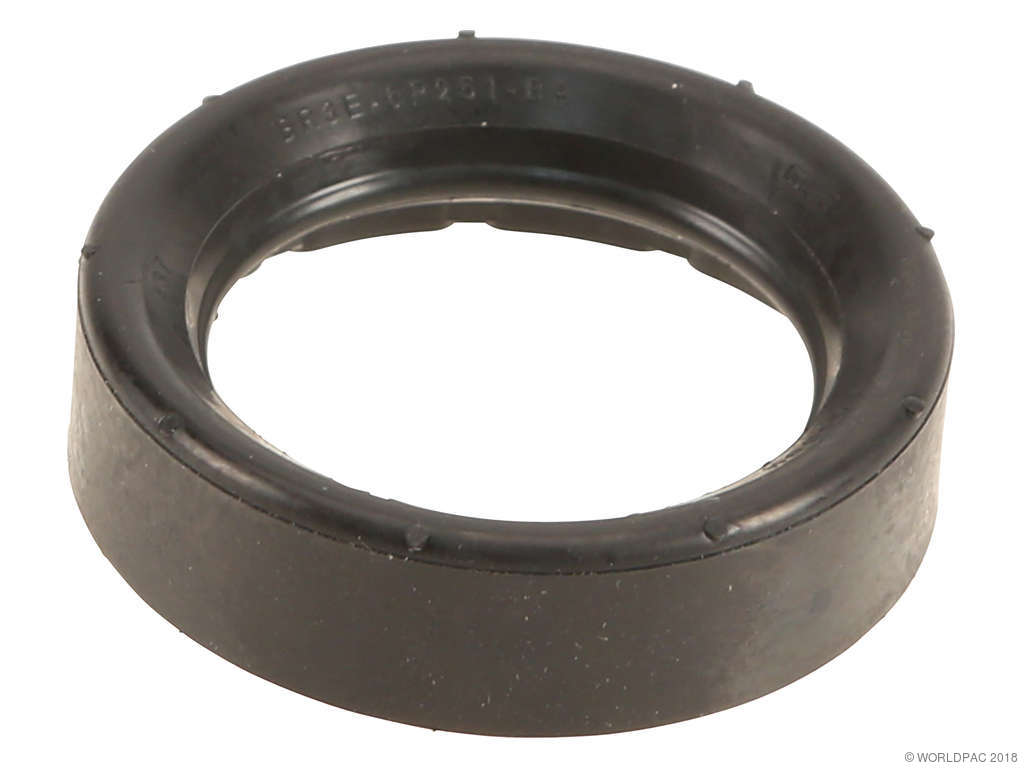
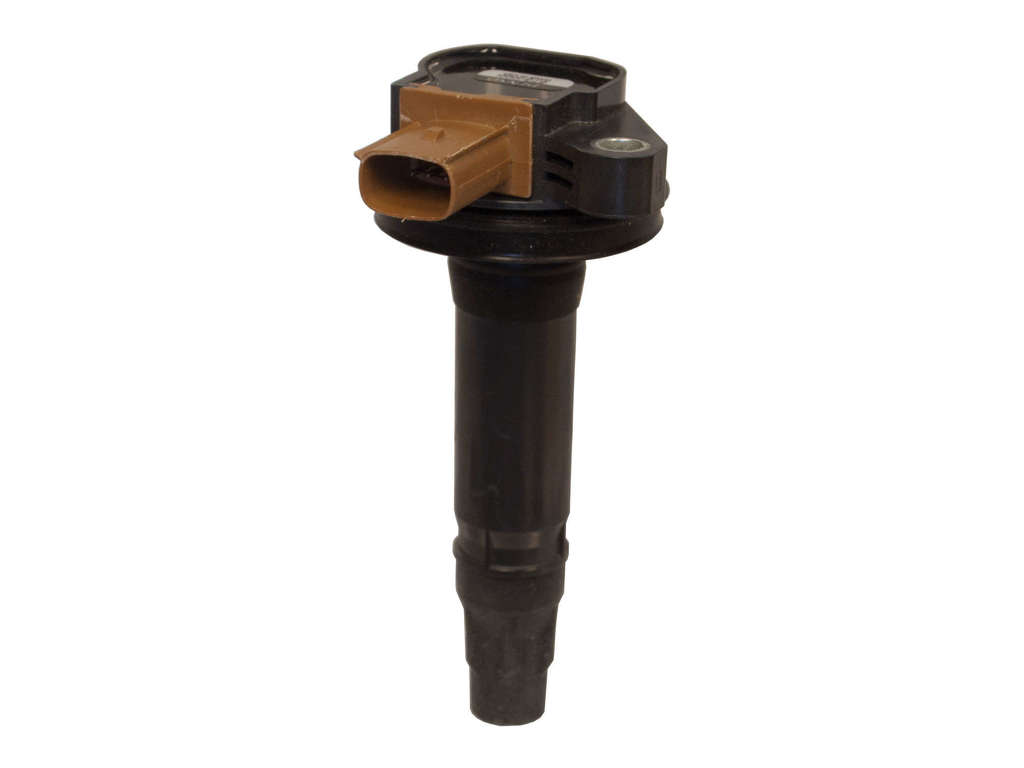
Est. part cost: $150-$300 - Faulty Ignition Coils or Boots 🟡 Medium Probability Heat is a major enemy of ignition coils, and the mid-engine layout of the Ford GT can create a high-heat environment, potentially leading to premature coil or boot failure. For the 2020 model year, Ford introduced upgraded, 'higher-energy' ignition coils. Often the rubber boot fails before the coil itself.
How to confirm: A technician can use a diagnostic scan tool to view misfire data (Mode 6) to see if certain cylinders are misfiring more than others. They may also swap a suspected bad coil with a known good one to see if the misfire follows the coil. Resistance can be tested with a multimeter; while specs for the DG-588 are not published, a typical primary resistance is 0.4-2.0 ohms and secondary is 6k-10k ohms.
Typical fix: Replace the faulty ignition coil(s) and boots. It is often recommended to replace them as a set, along with spark plugs, if they are original. Ensure the correct part is used for the vehicle's model year (pre- or post-2020).
Est. part cost: $70-$150 per coil - Vehicle Operating Conditions 🟡 Medium Probability Multiple TSBs (SSM 50616, SSM 49536, SSM 49028) for the Ford GT specifically state that before performing diagnostics for P0300, the technician should 'determine if the vehicle operating conditions may have' contributed. This often refers to frequent short trips without reaching full operating temperature, use of lower-octane or poor-quality fuel, or engine lugging.
How to confirm: This requires a discussion with the vehicle owner about recent driving habits and a review of freeze frame data by a technician to understand the conditions when the code was set.
Typical fix: The fix depends on the condition identified. It may involve changing to a higher-quality fuel, adjusting driving habits (e.g., proper warm-up), or a PCM software update if one is available from Ford.
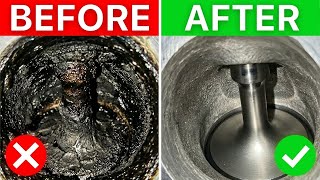
Est. part cost: $0 - $200 - Carbon Buildup on Intake Valves Low-to-medium Probability As a direct-injection (DI) engine, the 3.5L EcoBoost sprays fuel directly into the cylinder, not over the intake valves. This means there is no fuel to clean the valves, and oil vapor from the PCV system can bake onto them, forming carbon deposits that disrupt airflow and cause misfires.
How to confirm: This is difficult to confirm without using a borescope to visually inspect the intake ports and valves, which requires partial disassembly of the intake manifold.
Typical fix: The most effective fix is a professional 'walnut blasting' service, where crushed walnut shells are used to abrasively clean the valves without damaging the engine components. This is a labor-intensive job.
Est. part cost: $800-$1500 (Labor is the primary cost)
Rare But Worth Checking
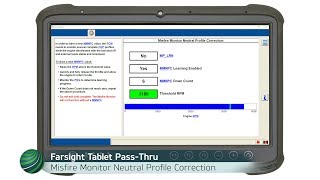
- Faulty Crankshaft Position Sensor: An erratic signal from the crankshaft position sensor can cause the ECM to misinterpret engine speed, leading to random misfires and stalling. A critical procedure called 'Misfire Monitor Neutral Profile Correction' may be needed via a Ford IDS scan tool 🎬 Watch: How to perform a Misfire Monitor Neutral Profile Correction. after major engine work to prevent false misfires.
- Vacuum Leak: A leak in the intake system after the mass airflow sensor can introduce unmetered air, leading to a lean condition and misfires across multiple cylinders. A smoke test is the most effective way to diagnose such a leak.
- Low Fuel Pressure: A weak high-pressure or low-pressure fuel pump or a faulty fuel pressure regulator can cause the entire engine to run lean, resulting in random misfires, particularly under load. The high-pressure side can exceed 2,150 PSI.
- Defective Muffler Assembly: On the same 3.5L H.O. engine in the F-150, TSB 19-2286 was issued for improperly assembled mufflers that created an exhaust restriction, leading to backpressure and misfire codes, including P0300. While not confirmed for the GT specifically, it's a possibility given the shared engine.
Diagnosis Steps
- Verify the code with a professional OBD-II scanner and document the freeze frame data to understand the conditions (RPM, load, temperature) when the code was set.
- Review the vehicle's service history and discuss operating conditions with the owner, as recommended by Ford TSBs SSM 50616, SSM 49536, and SSM 49028.
- Check for any other accompanying diagnostic trouble codes, especially P0301-P0306 and P0316, to help isolate the issue.
- Use a scan tool with Mode 6 capabilities to analyze misfire counts per cylinder. 🎬 See how to use Mode 6 to identify misfiring cylinders. This can often point to a failing plug or coil even if a cylinder-specific code has not been set.
- Based on mileage and service history, plan for the inspection and likely replacement of all six spark plugs and ignition coil boots. Check plug gaps meticulously.
- If ignition components are confirmed to be good, proceed with advanced diagnostics. Perform a smoke test to check for vacuum leaks in the intake manifold, charge pipes, and vacuum hoses.
- Test both low and high-side fuel pressure to rule out a failing fuel pump or regulator. Expect low-side pressure around 40-60 PSI at idle and high-side pressure over 2,000 PSI under load.
- If the vehicle has higher mileage (40,000+ miles), use a borescope to inspect the intake valves for carbon buildup.
- If the cause is still not apparent, investigate less common causes like the crankshaft position sensor signal or engine mechanical issues (compression test).
Parts You'll Likely Need
- Spark Plugs
(OEM #Motorcraft SP583 (also listed as CYFS092YPT3))— Spark plugs are a routine maintenance item and the most common cause of misfires on high-performance, turbocharged engines. The Ford GT requires specific iridium plugs.
Trusted brands: Motorcraft
OEM price range: $250-$350
Aftermarket price range: $180-$280 - Ignition Coil
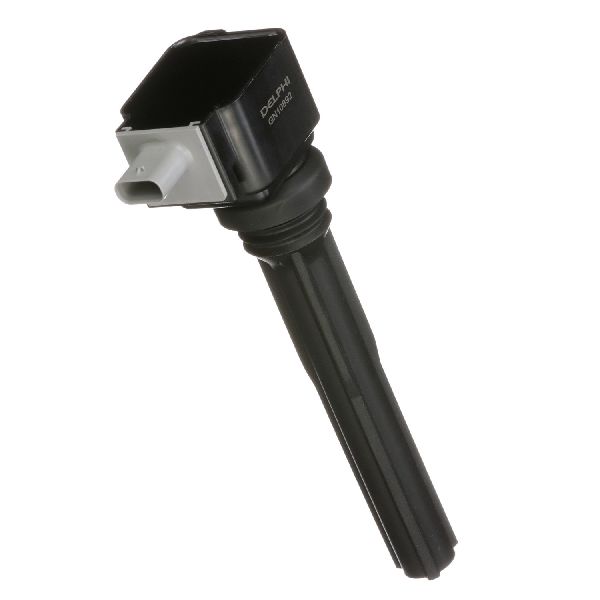
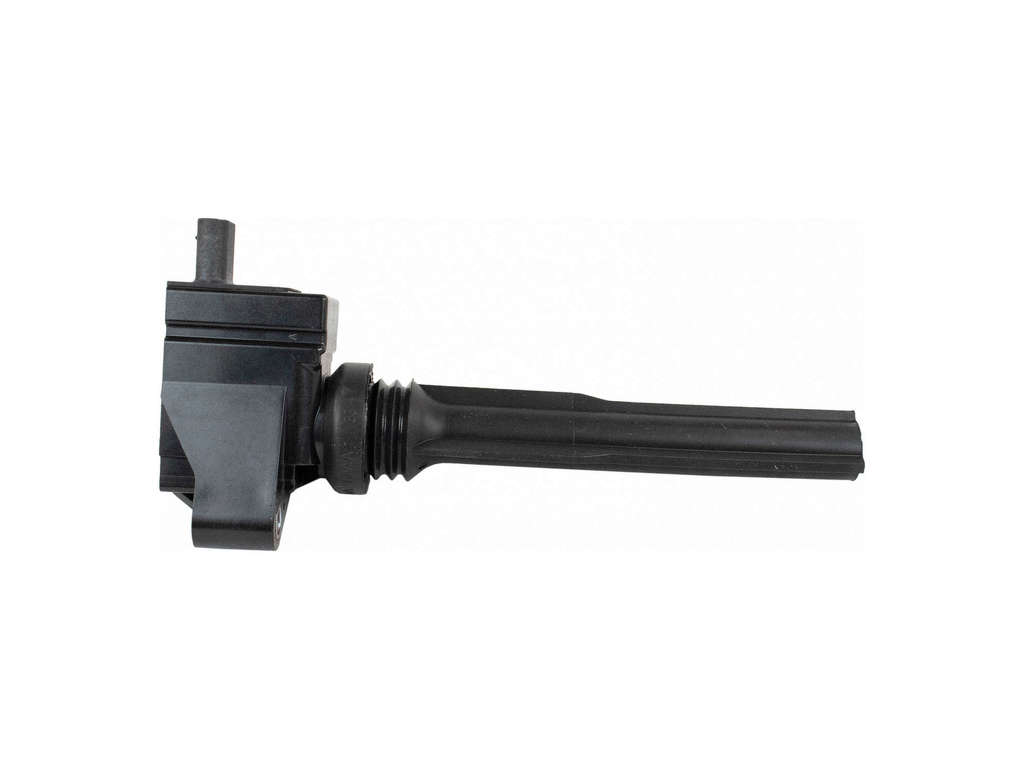
(OEM #Motorcraft DG-588 (Verification with dealer recommended))— Ignition coils are the second most likely cause of misfires, failing due to heat and electrical stress. Note that 2020+ models use a different, higher-energy coil.
Trusted brands: Motorcraft, Denso, Delphi
OEM price range: $90-$150
Aftermarket price range: $50-$100
Related Codes That Often Appear With This One
- P0301-P0306 — These are cylinder-specific misfire codes. P0300 often appears alongside one or more of these, as confirmed by the TSBs and owner reports.
- P0316 — This code indicates a Misfire Detected on Startup (First 1000 Revolutions). It is also explicitly mentioned in the Ford GT TSBs alongside P0300.
Technical Service Bulletins (TSBs) & Recalls
- SSM 50616: 'Some 2017-2022 Ford GT vehicles may exhibit a runs rough or hard start with or without an illuminated MIL with DTC P0300, P0301, P0302, P0303, P0304, P0305, P0306 and/or P0316. Prior to performing any diagnostics, determine if the vehicle operating conditions may have contributed...'
- SSM 49536: 'Some 2017-2021 Ford GT vehicles may exhibit a runs rough or hard start with or without an illuminated MIL with DTC P0300, P0301, P0302, P0303, P0304, P0305, P0306 and/or P0316. Prior to performing any diagnostics, determine if the vehicle operating conditions may have contributed...'
- SSM 49028: 'Some 2017-2020 Ford GT vehicles may exhibit a runs rough or hard start with or without an illuminated MIL with DTC P0300, P0301, P0302, P0303, P0304, P0305, P0306 and/or P0316. Prior to performing any diagnostics, determine if the vehicle operating conditions may have contributed...'
- TSB 19-2286: (For platform-mate F-150 H.O.) Addresses lack of power and misfire codes P0300-P0306 due to an improperly assembled muffler causing exhaust restriction.
Platform-Specific Known Issues
- Ford has issued multiple Technical Service Bulletins (TSBs) related to this code on the GT. Bulletins #SSM 50616, #SSM 49536, and #SSM 49028 all note that some 2017-2021 Ford GT vehicles may exhibit a rough run or hard start with DTC P0300. They advise technicians to investigate vehicle operating conditions before beginning diagnostics, suggesting external factors can be a cause.
- The high-output nature of the 3.5L EcoBoost engine leads to accelerated wear of ignition components. For the 2020 model year, Ford upgraded the engine with higher-energy ignition coils and other changes, increasing horsepower to 660. This part difference is critical during diagnosis.
Mechanic-Grade Diagnostic Values
- Low-Side Fuel Pressure (at idle) — expected: 40-60 PSI. Failure: Pressure significantly below 40 PSI indicates a potential low-pressure fuel pump or filter issue.
- High-Side Fuel Pressure (under load/WOT) — expected: 1,500 - 2,175 PSI (150 bar). Failure: If actual pressure lags requested pressure by more than 200 PSI on a scan tool, it may indicate a failing high-pressure fuel pump (HPFP).
- VCT Solenoid Resistance — expected: 5 - 15 Ohms. Failure: A reading of 0 Ohms (short) or OL/infinity (open circuit) indicates a failed solenoid.
- Ignition Coil Primary Winding Resistance — expected: ~0.4 - 2.0 Ohms. Failure: A reading significantly outside this range, or an open circuit (OL), suggests a faulty coil. This is a general specification.
Hidden / Shadow Codes Worth Checking
- Mode 6 Misfire Data (e.g., Test ID $A2-$AC, Component ID $01-$0C): Ford vehicles populate Mode 6 data with misfire counts for each cylinder from the last drive cycle. A technician can view these raw counts to see which cylinder(s) are misfiring, even if the count is not high enough to set a specific P030x code. This is crucial for diagnosing random misfires. (see via A professional OBD-II scan tool capable of displaying Mode 6 data. The data is presented as raw hexadecimal values and requires a lookup chart to decipher test and component IDs.)
Scan Tool Commands That Help
- Ford IDS (Integrated Diagnostic System): Power Balance Test — This function graphically displays the RPM contribution of each cylinder, allowing a technician to visually identify which cylinder(s) are weak or not contributing, directly pinpointing a misfire in real-time.
- Ford IDS (Integrated Diagnostic System): Misfire Monitor Neutral Profile Correction — This is a relearn procedure for the crankshaft position sensor's profile. It should be performed after any major engine work, such as engine or flexplate replacement. Failure to do so can cause the PCM to misinterpret crankshaft speed variations and set false misfire codes.
Wiring & Ground Locations
- PCM / Engine Grounds — While specific GT locations are not available, common Ford practice places critical grounds on the firewall, engine block, and from the battery negative terminal to the chassis. The mid-engine layout will have unique routing.. A poor or corroded ground can cause erratic voltage signals from critical sensors like the crankshaft position sensor or weak spark from the ignition coils, leading the PCM to incorrectly detect misfires.
Real Owner Repair Stories
- YouTube user comment on FordTechMakuloco (2017 F-150 3.5L EcoBoost (same engine family)) — Flashing check engine light with P0300, P0304 after a complete engine replacement.
❌ Tried (didn't work) The original repair shop was unable to diagnose the cause of the persistent misfire codes after installing the new engine.
✅ What actually fixed it A Ford dealer performed a 'Misfire Monitor Neutral Profile Correction' using the IDS scan tool. This forced the PCM to relearn the crankshaft position sensor profile for the new engine, which resolved all misfire codes. - Reddit user report (2019 F-150 5.0L (different engine, but relevant VCT system)) — P0300 code appearing only under Wide Open Throttle (WOT).
❌ Tried (didn't work) Initial diagnosis was inconclusive.
✅ What actually fixed it The cause was a failing Variable Camshaft Timing (VCT) solenoid. Replacing the faulty solenoid resolved the high-load misfire.
"I Checked Everything" — The Actual Cause
- On similar Ford platforms (F-150 5.0L), a P0300 with lean codes (P0171/P0174) that persists after a clean smoke test has been traced to a failing Intake Manifold Runner Control (IMRC) system. The internal flaps can break, causing an airflow disturbance that a smoke test may not detect.
OEM Part Supersession History
DG583, PB5Z12029A→Motorcraft DG-588— Part revision/update by the manufacturer.
Heads up: DG-588 is listed as interchangeable with DG583 for pre-2020 models. The 2020+ models use a different 'higher-energy' coil, so verifying the correct part number for the specific model year is critical.
Model Year Variations Within This Range
- 2020-2021: For the 2020 model year, Ford introduced an updated engine with several changes, including 'higher-energy ignition coils' and gallery-cooled pistons. This resulted in a power increase from 647 to 660 hp. When diagnosing a P0300, it is critical to know that the ignition coils on a 2020 or later model are different from the 2017-2019 models.
Helpful Videos

We Have This Part in Stock


The information in this article is provided for general reference and educational purposes only. Vehicle specifications, procedures, and part compatibility can vary by production date, trim level, and region. Always consult your vehicle's factory service manual and verify part numbers before purchasing or performing repairs. Safety-critical components such as airbags, seat belts, and braking systems should be installed by a qualified professional.
- Ford GT:
- 🎬 Helpful Videos
- 🛍️ Shop This Part
- What's Unique About the 2017-2021 Ford GT
- Diagnostic Flowchart
- Symptoms You May Notice
- Most Likely Causes
- Rare But Worth Checking
- Diagnosis Steps
- Parts You'll Likely Need
- Related Codes That Often Appear With This One
- Technical Service Bulletins (TSBs) & Recalls
- Platform-Specific Known Issues
- Mechanic-Grade Diagnostic Values
- Hidden / Shadow Codes Worth Checking
- Scan Tool Commands That Help
- Wiring & Ground Locations
- Real Owner Repair Stories
- "I Checked Everything" — The Actual Cause
- OEM Part Supersession History
- Model Year Variations Within This Range
- 🎟️ Get 5% Off