

P0300 on 2015-2018 Ford Focus: Random Misfire Causes and Fixes
P0300 means random cylinders are misfiring. On the Focus ST, this is a known issue, especially on cold starts, and is addressed by TSBs involving spark plugs and PCM updates. For all Focus models, the most common causes are worn spark plugs, faulty ignition coils, and a defective canister purge valve which was subject to a major recall.
- P0300 indicates a random misfire, not tied to a single cylinder.
- For the Focus ST, this code is very commonly caused by a known cold-start issue detailed in Ford TSB 18-2093. The fix involves specific spark plugs and a PCM update.
- For all Focus models, the most likely culprits are worn spark plugs or faulty ignition coils.
- Do not ignore a flashing check engine light, as it signals a severe misfire that can quickly damage your catalytic converter.
- Always check for other codes, especially P0316, which strongly points toward a startup-related misfire.
What's Unique About the 2015-2018 Ford FOCUS

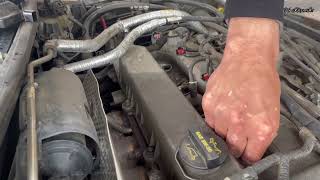
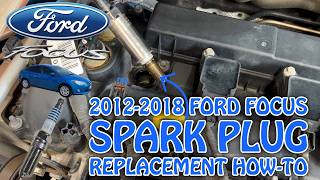
The 2015-2018 Ford Focus, particularly the high-performance ST model with the 2.0L EcoBoost engine, is uniquely susceptible to cold-start misfires that trigger a P0300 code. This issue is so well-documented that Ford issued multiple Technical Service Bulletins (TSBs) to address it. Owners often report a rough idle and a check engine light immediately after starting the car in cool weather, which may clear up as the engine warms. While standard Focus models (S, SE, SEL, Titanium) with the 2.0L GDI engine can also get a P0300 code from common causes, the ST's cold-start issue is a distinct, widely discussed problem. 🎬 Watch: A mechanic's guide to diagnosing Focus ST misfires. Additionally, all 2.0L engines in this range were part of a massive recall (18S32) for a faulty canister purge valve that can cause stalling, rough running, and trigger a P0300 code.
Diagnostic Flowchart

Tap your situation to follow the diagnostic path that matches what you're seeing on this vehicle.
Symptoms You May Notice
- Rough or shaky idle, especially on a cold start.
- Hesitation or stumbling during acceleration.
- Flashing or solid check engine light.
- Reduced engine power.
- Poor fuel economy.
- Engine stalling, sometimes after refueling.
- Slight backfire or popping from the exhaust.
- Replacing only one spark plug or ignition coil when the others are of similar age and condition.
- Replacing oxygen sensors, which are more likely to be a symptom of the misfire (due to unburned fuel) rather than the cause.
- Assuming a cold start misfire on an ST is a major mechanical issue before performing the TSB 18-2093 procedure for plugs and PCM programming.
Most Likely Causes

- Worn or Incorrectly Gapped Spark Plugs 🔴 High Probability Direct-injection engines are sensitive to spark plug condition. The Focus ST, in particular, has specific gapping requirements outlined in TSBs to resolve cold-start misfires. Many owners on forums report fixing sporadic misfires simply by checking and re-gapping the plugs.
How to confirm: Remove and inspect all four spark plugs for wear, fouling, or damage. Check the gap with a feeler gauge. For the Focus ST cold start issue, TSB 18-2093 specifies a gap of 1.0 mm (0.040 in). For tuned STs, a tighter gap around 0.026" is often recommended.
Typical fix: Replace all four spark plugs with high-quality iridium or platinum plugs (e.g., Motorcraft, NGK) and ensure they are gapped correctly before installation. Ford's official interval is 100,000 miles, but many owners, especially on tuned ST models, change them much sooner (10,000-12,000 miles).
Est. part cost: $40-$80 - Faulty Canister Purge Valve (EVAP Purge Valve) 🔴 High Probability A sticking purge valve was the cause of a massive Ford recall (18S32 / NHTSA 18V-735) affecting 2012-2018 Focus models with 2.0L engines. A stuck-open valve creates a vacuum leak, disrupting the air-fuel mixture and causing random misfires, stalling, and difficulty starting, especially after refueling.
How to confirm: The issue may be accompanied by code P1450. A common symptom is a rough idle or stalling immediately after filling the gas tank. You can test the valve by removing it and trying to blow through it; if air passes, it's stuck open and faulty. The recall involves a PCM software update to better detect the failure and, if necessary, valve replacement.
Typical fix: Replace the canister purge valve and its associated hoses. This is a common DIY repair. The recall action performed by dealers includes a PCM reprogram and valve replacement if DTCs are present.
Est. part cost: $30-$60 - Faulty Ignition Coils 🟡 Medium Probability
How to confirm: With the engine misfiring, use a scan tool with live data or Mode $06 capabilities (like FORScan) to monitor misfire counts per cylinder. Swap the ignition coil from a frequently misfiring cylinder with one from a known good cylinder. If the misfire count follows the coil (e.g., moves from cylinder 2 to cylinder 4), the coil is bad.
Typical fix: Replace the faulty ignition coil. It is often recommended to replace them as a set if they are original and the vehicle has high mileage.
Est. part cost: $30-$70 per coil - Cold Start Misfire (Focus ST) 🔴 High Probability A known issue on 2015-2018 Focus ST models, addressed by Ford TSB 18-2093. It occurs when engine coolant temperature is below 120°F (49°C). It is often accompanied by code P0316 (Misfire on Startup).
How to confirm: The P0300 and P0316 codes appear primarily or exclusively during a cold start and may disappear as the engine warms up. This is confirmed by the conditions described in TSB 18-2093.
Typical fix: Follow the procedure in TSB 18-2093: inspect the spark plugs, ensure they are part number CYFS-12-YEC and gapped to 1.0 mm (0.040 in), or replace them if incorrect/worn. The final step is reprogramming the PCM with the latest calibration using Ford's IDS software.
Est. part cost: $40-$80 for plugs - Vacuum Leak ⚪ Low Probability
How to confirm: Listen for a hissing sound from the engine bay at idle. Common leak points include cracked vacuum hoses, intake manifold gaskets, and a faulty PCV valve. You can carefully spray short bursts of carburetor cleaner or use a smoke machine around vacuum lines; a change in engine RPM or visible smoke being drawn in indicates a leak.
Typical fix: Replace the cracked or broken vacuum hose or leaking gasket. The PCV valve, located between cylinders 2 and 3, can also fail and cause a vacuum leak.
Est. part cost: $5-$100 - Faulty or Clogged Fuel Injectors ⚪ Low Probability Gasoline Direct Injection (GDI) engines, like the 2.0L GDI and EcoBoost, are prone to carbon buildup on intake valves and injector tips, which can disrupt fuel flow. This is because fuel is injected directly into the cylinder, so it doesn't wash over the intake valves as in older port-injection designs.
How to confirm: Listen to the injectors with a mechanic's stethoscope; they should all have a consistent clicking sound. A more advanced method involves using a scan tool to perform a fuel injector balance test or monitoring fuel trims. A professional cleaning or flow test can also confirm a faulty injector.
Typical fix: First, try a high-quality GDI-specific fuel system cleaner. If that fails, the injector may need to be professionally cleaned or replaced. For heavy carbon buildup on intake valves, a 'walnut blasting' service is the most effective cleaning method.
Est. part cost: $50-$150 per injector
Rare But Worth Checking
- Low Fuel Pressure: Could be caused by a weak fuel pump or a clogged fuel filter. The recall for the canister purge valve (18S32) could also cause fuel tank deformation, potentially affecting the fuel delivery module.
- Low Engine Compression: This indicates a more serious internal engine problem, such as worn piston rings, a bad head gasket, or even coolant intrusion on the 2.0L EcoBoost engine, a known issue on platform mates like the Ford Escape. A compression test is needed to confirm.
- Bad Oxygen Sensor: A faulty upstream O2 sensor can send incorrect data to the PCM, causing an improper air/fuel mixture and leading to misfires. However, it's more common for an O2 sensor to fail *because* of a misfire condition (due to raw fuel exposure) than to be the root cause.
Diagnosis Steps
- Read all stored DTCs with an OBD-II scanner. Note any other codes present besides P0300, especially P0316 or cylinder-specific misfire codes (P0301-P0304).
- Check the freeze frame data to see the engine conditions (RPM, load, temperature) when the code was set. This is crucial for identifying a cold-start issue.
- Use a capable scan tool like FORScan to view Mode $06 data, which shows misfire counts for each cylinder over the last 10 drive cycles. This can help isolate a cylinder even if no cylinder-specific code is set.
- Inspect the ignition system. Remove and examine all four spark plugs for wear, carbon fouling, or oil. Check the spark plug gaps against spec (TSB 18-2093 for ST models specifies 1.0mm / 0.040").
- Test the ignition coils. Swap coils between a high-misfire cylinder and a no-misfire cylinder to see if the misfire count follows the coil.
- Check for the faulty Canister Purge Valve, especially if you experience stalling after refueling or also have a P1450 code. Check if recall 18S32 was performed on your vehicle.
- Check for vacuum leaks using a smoke machine or by carefully spraying carburetor cleaner around potential leak points.
- Perform a fuel pressure test to ensure the fuel pump and filter are functioning correctly. Ford models typically require 35-60 PSI at idle.
- If all else fails, consider more advanced diagnostics like a compression test to check for internal engine issues or professional intake valve cleaning (walnut blasting) for carbon buildup.
Parts You'll Likely Need
- Spark Plugs
(OEM #CYFS-12-YEC)— Worn or improperly gapped spark plugs are the most frequent cause of P0300. TSB 18-2093 specifically calls out this part number and a 1.0mm (0.040") gap for the Focus ST cold start fix.
Trusted brands: Motorcraft, NGK
OEM price range: $10-$15 per plug
Aftermarket price range: $8-$12 per plug - Ignition Coil
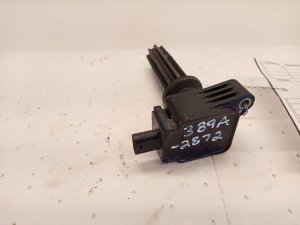
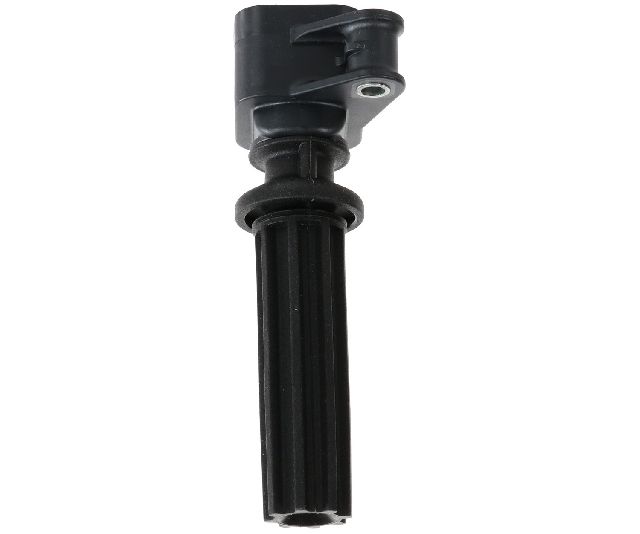
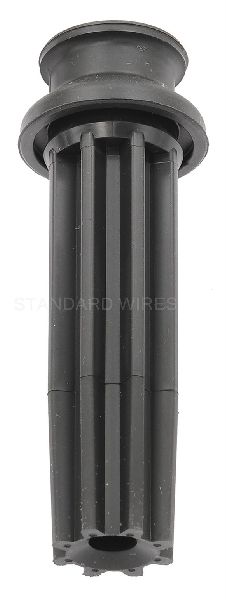
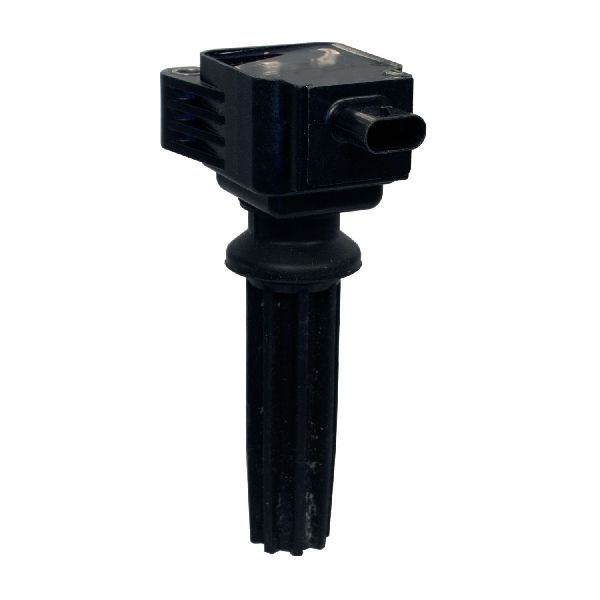
(OEM #DG-562 (Motorcraft))— Ignition coil failure is a common cause of misfires. If one fails, others may be near the end of their service life. This part number fits the 2.0L engines in the Focus.
Trusted brands: Motorcraft, Denso, NGK
OEM price range: $50-$70 per coil
Aftermarket price range: $30-$50 per coil - Canister Purge Valve / Hose Assembly
(OEM #BV6Z-9D289-D (or superseding parts like BV6Z-9D289-E/R))— This part is the subject of a major recall (18S32) for causing stalling and misfires. It's a very common failure point. The part number often includes the attached hoses.
Trusted brands: Motorcraft (OEM)
OEM price range: $30-$60
Aftermarket price range: $20-$40
Related Codes That Often Appear With This One
- P0316 — Stands for 'Misfire Detected On Startup (First 1000 Revolutions)'. This code is explicitly mentioned along with P0300 in all three cited TSBs for the Focus ST and both owner complaints, indicating the misfire is most prominent when the engine is first started.
- P0301, P0302, P0303, P0304 — If the random misfire begins to occur more frequently on a specific cylinder, the PCM may also log a cylinder-specific code in addition to P0300.
- P1450 — This code for 'Unable to Bleed Up Fuel Tank Vacuum' was reported by one owner alongside P0300. It strongly points to a problem in the evaporative emissions (EVAP) system, almost certainly the canister purge valve, which was part of a major recall (18S32) and can directly cause misfires.
Technical Service Bulletins (TSBs) & Recalls

- TSB18-2093: Addresses P0300/P0316 on 2015-2018 Focus ST during cold starts.
- SSM 46907: Notes P0300/P0316 on 2015-2018 Focus ST after a cold start.
- SSM 46539: Mentions P0300 and other misfire codes on 2015-2017 Focus ST after a cold start.
Platform-Specific Known Issues
- Cold Start Misfire on Focus ST: As documented in TSB 18-2093, some 2015-2018 Focus ST vehicles may exhibit a misfire condition with DTCs P0300 and/or P0316 when the engine coolant temperature is below 120°F (49°C). The fix involves spark plug inspection/replacement and a PCM reprogram. [Bulletin #TSB18-2093]
- Canister Purge Valve Failure: A recall (18S32) was issued for nearly 1.3 million 2012-2018 Focus vehicles for a faulty canister purge valve that could stick open, causing excessive vacuum, engine stalling, and potentially deforming the fuel tank. This can also contribute to misfire conditions.
Mechanic-Grade Diagnostic Values
- Fuel Pressure at Idle — expected: 35-60 PSI. Failure: Pressure below 35 PSI or fluctuating wildly indicates a weak pump or clogged filter.
- Ignition Coil Primary Resistance — expected: Typically 0.3 to 1.0 ohms. Failure: A reading outside the specification (significantly higher or an open circuit) indicates a faulty coil. This is a general value; refer to a service manual for exact specs.
- Spark Plug Gap (Focus ST for TSB 18-2093) — expected: 1.0 mm (0.040 in). Failure: A gap that is too wide or too narrow can cause inefficient spark and misfires, especially on cold starts.
Hidden / Shadow Codes Worth Checking
- Mode $06 Misfire Data: This is not a 'code' but a diagnostic monitor within the OBD-II system. It tracks misfire counts per cylinder over recent driving cycles, even before the count is high enough to trigger a specific P030x code. It can reveal which cylinder is the primary offender in a random misfire situation. (see via A capable scan tool like FORScan is required. Navigate to the 'Vehicle Test' or 'Mode 6' section. The data will show misfire counts for each cylinder for the last 10 driving cycles.)
Scan Tool Commands That Help
- FORScan: Mode $06 Test — Use this to view raw misfire counts per cylinder when you have a P0300 but no cylinder-specific codes (P0301-P0304). It helps identify a cylinder that is misfiring intermittently.
- FORScan: Neutral Misfire Monitor Profile Correction — This is a relearn procedure used after major engine work, such as replacing a clutch or flywheel, or if a P0315 (Crankshaft Position System Variation Not Learned) code is present. It helps the PCM relearn the crankshaft's rotational signature to accurately detect misfires.
- Ford IDS (or FORScan): Power Balance Test — This active test allows a technician to disable one cylinder at a time while observing the drop in engine RPM. A cylinder that causes little or no RPM drop when disabled is not contributing power, confirming a misfire on that cylinder in real-time.
- FORScan: Reset All Adaptations / Clear Transmission Adaptive Tables / Reset KAM — After replacing a component that affects the air/fuel mixture or engine operation (like a purge valve, O2 sensor, or performing a carbon cleaning), resetting the Keep Alive Memory (KAM) forces the PCM to discard its learned fuel trim and other values and start fresh. This can resolve running issues caused by the PCM trying to compensate based on old, incorrect data.
Wiring & Ground Locations
- Main Engine/Chassis Ground — Bolted to the chassis underneath the airbox, in front of the battery. The cable is often zip-tied to a radiator hose.. A poor ground connection can cause erratic voltage signals for the entire ignition and sensor system, leading to random, hard-to-diagnose electrical faults and misfires.
- PCM Connector C175B — This is one of the main multi-pin connectors plugging into the Powertrain Control Module (PCM).. This connector contains the pins for critical components like the starter motor control, vehicle speed output, and various sensors. Corrosion or a loose pin in this connector can interrupt signals and cause a variety of codes, including P0300.
- Canister Purge Valve Fuse — In the under-hood fuse box (Battery Junction Box). The specific fuse number can vary by year, but it is often shared with other engine management components like the crankshaft position sensor and variable valve timing solenoids.. A blown fuse for this circuit will disable the purge valve but can also affect other critical sensors, potentially leading to a P0300 code.
Real Owner Repair Stories
- Reddit user /u/Jamesbrady1975 (Ford Focus ST (year not specified)) — Random misfire codes (P0300, P0301-P0304).
❌ Tried (didn't work) Initial diagnosis pointed to spark plugs.
✅ What actually fixed it The final fix was replacing the ignition coils, spark plugs, and a leaking valve cover gasket that was allowing oil into the spark plug wells, causing the misfire. - Reddit user /u/cheddarvillains (Ford Focus ST (year not specified)) — Sporadic P0300 code, sometimes on startup or during warmup, with no other noticeable performance issues.
❌ Tried (didn't work) Checking and re-gapping the existing spark plugs would make the problem go away temporarily, but it would return after a few months.
✅ What actually fixed it Replacing both the spark plugs with a new set AND replacing the canister purge valve resolved the issue permanently. The user was unsure which of the two was the ultimate cause, but the combination fixed it. - YouTube channel Nickjoenap (Ford Focus ST with 86,000 miles) — Intermittent cylinder 2 misfire code, rough/fluctuating idle even after replacing the PCV valve.
❌ Tried (didn't work) Checking spark plug gap made the code go away temporarily., Replacing the PCV valve did not fully smooth out the idle.
✅ What actually fixed it Performing a walnut blasting service to clean carbon buildup from the intake valves. After the service, the idle became smooth and the misfire code did not return.
"I Checked Everything" — The Actual Cause
- In some cases, a P0300 that appears to be a vacuum leak (rough idle, lean codes) may pass a smoke test. The actual cause can be a faulty canister purge valve stuck open, which acts as an intermittent vacuum leak that a static smoke test might not always reveal, especially if the valve is not commanded open during the test.
- A leaking valve cover gasket allowing oil to foul the spark plug wells can cause random misfires. This is not a vacuum leak and will not be found with a smoke test, but it directly impacts ignition performance.
OEM Part Supersession History
Varies, multiple used prior to TSB→CYFS-12-YEC (Motorcraft SP-550)— Specified by Ford in TSB 18-2093 to address cold start misfire issues on the Focus ST.
Heads up: While other plugs may fit, using this specific part number and gapping it to 1.0mm (0.040") is the official first step in Ford's procedure to fix the P0300/P0316 cold start problem before a PCM reflash.NGK LTR6DI-8 (Stock ST plug)→NGK 6510 (LTR7IX-11 - One step colder)— Common upgrade for tuned Focus STs. The 'colder' heat range plug helps dissipate heat more effectively from the combustion chamber, reducing the risk of pre-ignition (knock) under higher boost and more aggressive tuning.
Model Year Variations Within This Range
- 2015+: 2015 and newer 2.0L Ti-VCT engines may have a cylinder head temperature (CHT) sensor located between spark plug wells 2 and 3, which was not present on earlier models. A failure of this sensor could potentially impact fuel and timing calculations, though it is not a common cause of P0300.
- 2015-2018: There were no major changes to the available engines or the core vehicle platform during this period that would significantly alter the common causes of a P0300 code. The 2015 model year marked a facelift for the third generation Focus, but the powertrain options relevant to this code (2.0L GDI, 2.0L EcoBoost ST) remained fundamentally the same.
Helpful Videos


Used OEM Parts in Stock

New Aftermarket Parts Available


The information in this article is provided for general reference and educational purposes only. Vehicle specifications, procedures, and part compatibility can vary by production date, trim level, and region. Always consult your vehicle's factory service manual and verify part numbers before purchasing or performing repairs. Safety-critical components such as airbags, seat belts, and braking systems should be installed by a qualified professional.
- Ford FOCUS:
- 🎬 Helpful Videos
- 🛍️ Shop This Part
- What's Unique About the 2015-2018 Ford FOCUS
- Diagnostic Flowchart
- Symptoms You May Notice
- Most Likely Causes
- Rare But Worth Checking
- Diagnosis Steps
- Parts You'll Likely Need
- Related Codes That Often Appear With This One
- Technical Service Bulletins (TSBs) & Recalls
- Platform-Specific Known Issues
- Mechanic-Grade Diagnostic Values
- Hidden / Shadow Codes Worth Checking
- Scan Tool Commands That Help
- Wiring & Ground Locations
- Real Owner Repair Stories
- "I Checked Everything" — The Actual Cause
- OEM Part Supersession History
- Model Year Variations Within This Range
- 🎟️ Get 5% Off