

P0300 on 2017-2021 Ford F-250 SD: Random Misfire Causes and Fixes
P0300 on a 2017-2021 Ford F-250 SD signifies a random or multiple cylinder misfire. On gas engines (6.2L, 7.3L), the most common causes are faulty spark plugs, ignition coils, or spark plug wires. For the 6.7L Power Stroke diesel, it often points to failing fuel injectors or PCM software issues addressed by TSBs. A fix can range from under $100 for spark plug wires to over $500 for a diesel injector replacement.
- P0300 means multiple cylinders are misfiring, and the cause depends heavily on your engine.
- For the 7.3L gas engine, start by inspecting the spark plug wires; they are a known weak point.
- For the 6.2L gas engine, the most likely culprits are worn spark plugs or faulty ignition coils.
- For the 6.7L Power Stroke diesel, check for TSBs related to PCM updates before suspecting more expensive fuel injector failures.
- Do not ignore a flashing check engine light, as it signals a severe misfire that can cause costly damage to your emissions system.
What's Unique About the 2017-2021 Ford F-250 SD

On the 2017-2021 F-250, the cause of a P0300 code is highly dependent on the engine. For the 7.3L "Godzilla" gas V8 (2020+), faulty spark plug wires are a known weak point due to heat from the exhaust manifold, even prompting a TSB and a part redesign. The 6.2L gas V8 has a history of issues like weak valve springs or moisture in the coil-on-plug boots causing corrosion and misfires. For the 6.7L Power Stroke diesel, P0300 is often linked to complex issues like failing piezoelectric fuel injectors or PCM software glitches that Ford has addressed with multiple Technical Service Bulletins (TSBs), such as TSB 21-2248.
Diagnostic Flowchart

Tap your situation to follow the diagnostic path that matches what you're seeing on this vehicle.
Symptoms You May Notice

- Rough or shaking idle.
- Hesitation or stumbling during acceleration.
- Reduced engine power and poor performance.
- Flashing or solid Check Engine Light.
- Decreased fuel economy.
- Engine backfiring or popping sounds, especially under load.
- Smell of raw fuel from the exhaust.
- Engine ticking noise, which on the 7.3L V8 can be an early sign of a more serious camshaft/lifter failure.
- Replacing oxygen sensors without checking for vacuum leaks or fuel delivery issues first. While a bad O2 sensor can contribute to fuel mixture problems, it's less likely to be the root cause of a P0300 than ignition or fuel system faults.
Most Likely Causes

- Faulty Spark Plug Wires (7.3L Gas Engine) 🔴 High Probability The original spark plug wires on the 2020+ 7.3L V8 are a known failure point, often due to heat degradation from the nearby exhaust manifold. Ford acknowledged this issue, issuing TSB 20-2370 for some chassis and releasing updated parts. The issue is widely reported by owners across the Super Duty platform.
How to confirm: With the engine running in a dark environment, look for visible arcing from the plug wires to the cylinder head or exhaust manifold. A more reliable method is to use a scan tool to identify misfiring cylinders, then swap the suspected bad wire with one from a non-misfiring cylinder to see if the specific misfire code (e.g., P0302) follows the wire.
Typical fix: Replace all eight spark plug wires with the updated Motorcraft parts (part number LC3Z-12286-C or the equivalent WR6170) or a quality aftermarket set with high-temp boots. It is critical to ensure you are not using the original failure-prone wires.
Est. part cost: $70-$150 - Worn Spark Plugs / Faulty Ignition Coils (6.2L & 7.3L Gas Engines) 🔴 High Probability Ignition coils and spark plugs are common wear items. On the 6.2L, which uses a coil-on-plug for the top plug and a wire for the bottom plug, moisture can get trapped in the coil boots, causing corrosion on the spring and a poor connection. This is a well-documented issue in owner forums.
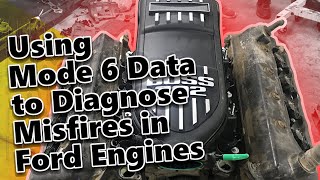
How to confirm: Use a scan tool with Mode $06 data to view misfire counts for each cylinder. 🎬 See how to use Mode 6 data to find hidden misfires Swap the ignition coil from a misfiring cylinder with a known good one. Clear the codes, run the engine, and see if the misfire code moves to the new cylinder. If it does, the coil is bad.
Typical fix: Replace the faulty ignition coil(s) and apply dielectric grease to the inside of the new boot to prevent future moisture intrusion. It is highly recommended to replace all spark plugs at the same time if they are near their service interval.
Est. part cost: $40-$80 per coil, $50-$150 for a set of spark plugs - Faulty Fuel Injector(s) (6.7L Power Stroke Diesel) 🔴 High Probability The high-pressure common rail fuel system on the 6.7L Power Stroke puts immense stress on the piezoelectric injectors, which can fail electronically or mechanically, causing misfires, rough idle, and excessive white smoke. This is one of the most common causes of misfire codes on the Power Stroke engine.
How to confirm: A high-level scan tool (like FORScan or the dealer's IDS) can perform a power balance or cylinder contribution test to identify a weak cylinder. A technician can then perform specific electrical tests, such as checking injector resistance, to confirm an electrical failure.
Typical fix: Replace the faulty fuel injector and the corresponding high-pressure fuel line, which is a single-use part. The new injector's IQA code must be programmed into the PCM. This is a complex job requiring extreme cleanliness and is best left to a professional.
Est. part cost: $300-$600 per injector - PCM Software Issue (6.7L Power Stroke Diesel) 🟡 Medium Probability Ford has issued multiple TSBs (e.g., TSB 21-2248, TSB 20-2336) for 2020-2021 models where a host of codes, including P0300-P0308, can be triggered by software glitches. The issue can sometimes cause the truck to enter a 'forced idle' condition.
How to confirm: A Ford dealership or a qualified shop with access to Ford's service database can check if your vehicle's VIN is covered by these TSBs and if the PCM has the latest software calibration. This is often the diagnosis when multiple, seemingly unrelated DTCs appear at once.
Typical fix: Reprogram the Powertrain Control Module (PCM) to the latest software version using a Ford diagnostic scan tool.
Est. part cost: $0 (if under warranty) - $200 - Vacuum Leak ⚪ Low Probability Hoses can crack and gaskets can fail over time, allowing unmetered air into the engine, which leans out the air/fuel mixture and can cause random misfires across multiple cylinders.
How to confirm: Perform a smoke test by introducing smoke into the intake system and watching for leaks from gaskets (intake manifold), vacuum lines, or the PCV system. Another method involves carefully spraying a non-flammable liquid like brake cleaner around suspected leak areas while monitoring for changes in engine idle.
Typical fix: Replace the leaking hose or gasket.
Est. part cost: $10-$100
Rare But Worth Checking
- Under-torqued Crankshaft Pulley Bolt (6.8L Engine): While the 6.8L V10 is not a common engine in the F-250 pickup, it is used in chassis cab models. TSB #SSM 46391 specifically notes that on some 2017 models, an under-torqued crankshaft pulley bolt can cause random misfire codes. This is a very specific mechanical issue worth checking if you have this engine.
- Broken Valve Spring (6.2L Gas Engine): Though less common than ignition issues, the 6.2L engine can suffer from broken valve springs, which will 🎬 Watch: Real-world diagnosis of a 6.2L random misfire cause a persistent misfire on one cylinder and may contribute to a P0300 code. This is a known issue discussed by owners in forums.
- Low Fuel Pressure: A weak fuel pump or clogged fuel filter can starve the entire engine for fuel, leading to lean conditions and random misfires across all cylinders. Some owners have reported needing fuel pump replacements to resolve persistent misfire issues.
- Camshaft/Valve Lifter Failure (7.3L Gas Engine): A serious and widely discussed issue on the 2020+ 7.3L 'Godzilla' engine is the premature failure of camshafts and valve lifters (tappets). The lifter rollers can delaminate, sending metal through the engine. This often starts as a single-cylinder misfire (e.g., P0307) accompanied by a ticking noise and can escalate to a P0300 before catastrophic failure. TSB 25-2200 applies to some cases of this failure.
Diagnosis Steps
- Read all fault codes with an OBD-II scanner. Note any other codes present, as they provide critical clues (e.g., lean codes, specific cylinder misfires, or the array of codes listed in diesel TSBs).
- If you have a gas engine, start with the ignition system. For the 7.3L, inspect the spark plug wires for arcing or heat damage. For the 6.2L, inspect the coil boots for moisture and corrosion.
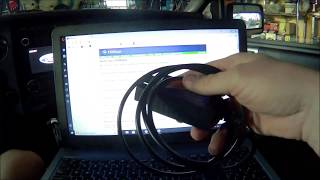
- Use a scan tool to monitor live misfire data (Mode $06) to identify the most problematic cylinders. 🎬 Watch: Using FORScan to perform advanced misfire diagnostics
- Swap ignition coils between a known misfiring cylinder and a good cylinder. If the misfire code follows the coil, you've found the faulty part.
- For 6.7L diesel engines, use a scan tool capable of Ford-specific functions like a Power Balance test to identify under-performing cylinders.
- Check fuel pressure. For gas engines, ensure the fuel pump is providing adequate pressure. For 6.7L diesels, monitor both low-side and high-side (rail) pressure with a scan tool; low rail pressure while cranking can indicate a leak or bad pump.
- If a vacuum leak is suspected on a gas engine, perform a smoke test to find the source.
- If no obvious cause is found, investigate less common issues like a clogged catalytic converter, mechanical engine problems (requiring a compression test), or VCT system faults.
Parts You'll Likely Need
- Spark Plug Wires (7.3L Gas)
(OEM #WR6170) - Ignition Coil (7.3L Gas)
(OEM #LC3Z-12029-B) - Ignition Coil (6.2L Gas)
(OEM #DG-571) - Fuel Injector (6.7L Diesel, 2017-2019)
(OEM #FC3Z-9H529-C) - Fuel Injector (6.7L Diesel, 2020-2021)
(OEM #LC3Z-9H529-A)
Related Codes That Often Appear With This One
- P0301-P0308 — These codes pinpoint a misfire on a specific cylinder (e.g., P0301 for Cylinder 1). They often accompany P0300 when the misfire is frequent on certain cylinders but also occurs randomly on others.
- P0171 / P0174 — These codes indicate a "System Too Lean" condition on Bank 1 and Bank 2, respectively. They often appear with P0300 when the cause is a vacuum leak or low fuel pressure, as the unmetered air or lack of fuel affects all cylinders.
- P0603, P203B, P2201, etc. — On 6.7L diesel models, TSBs 21-2248 and 20-2336 list a wide array of electrical and emissions codes that can appear alongside P0300, pointing to a PCM software issue rather than a specific mechanical fault.
- P0316 — Indicates a misfire was detected within the first 1,000 engine revolutions. It frequently appears with other P030x codes and is common with ignition-related misfires, especially the 7.3L spark plug wire issue.
Technical Service Bulletins (TSBs) & Recalls
- TSB 21-2248: For 2020-2021 6.7L diesels, addresses a wide range of DTCs including P0300-P0308 that can be fixed with a PCM reprogram.
- TSB 20-2336: Predecessor to TSB 21-2248, covering similar issues on 2020 6.7L diesels.
- TSB 20-2370: For 2020 7.3L gas engines (specifically F-53 chassis, but relevant to all), recommends replacing all 8 spark plug wires for misfires due to heat damage.
- SSM 46391: Notes an under-torqued crankshaft pulley bolt can cause multiple misfire codes on early 2017 models with the 6.8L engine.
- TSB 18-2188: For 2017-2018 6.2L gas engines, addresses a PCM reflash for misfire codes that can occur in cold weather due to spark plug fouling.
- TSB 25-2572: Acknowledges that on some 7.3L engines, misfire codes can be caused by excessive wear on the camshaft and/or valve tappets (lifters).
Platform-Specific Known Issues
- engine: 7.3L Gas V8 ('Godzilla') | issues: ['Spark Plug Wires: Extremely common failure point due to heat from the exhaust manifold degrading the boots, causing arcing. Addressed by TSB 20-2370 and an updated part (LC3Z-12286-C).', 'Camshaft/Lifter Failure: A serious mechanical defect where lifter rollers delaminate, causing ticking, misfires (P0300 and specific cylinders), and eventual catastrophic engine failure. Acknowledged in TSB 25-2572.']
- engine: 6.2L Gas V8 ('Boss') | issues: ['Coil Boot Moisture/Corrosion: Moisture can enter the spark plug wells, causing the coil-on-plug boots and springs to corrode, leading to weak spark and misfires. Applying dielectric grease is a common preventative measure.', 'Broken Valve Springs: A known, though less common, failure point that will cause a dead miss on one cylinder and can contribute to a P0300 code.']
- engine: 6.7L Diesel V8 ('Power Stroke') | issues: ['Fuel Injector Failure: Piezoelectric injectors are a very common cause of misfires. Diagnosis requires a power balance test.', 'PCM Software Glitches: TSBs 21-2248 and 20-2336 were issued to correct software issues that could falsely trigger P0300 and a host of other codes on 2020-2021 models.']
Mechanic-Grade Diagnostic Values
- 6.7L Power Stroke Low-Pressure Fuel System — expected: 53 - 73 PSI. Failure: Pressure below 52 PSI will trigger a 'low' reading on a scan tool and prevent starting.
- 6.7L Power Stroke High-Pressure Fuel Rail (cranking) — expected: At least 5,000 PSI. Failure: If rail pressure does not reach ~5,000 PSI, the injectors will not fire.
- Gas Engine Ignition Coil Primary Resistance (Coil-on-Plug) — expected: ~0.55 Ohms. Failure: A significantly higher or open reading indicates a faulty primary winding.
- Gas Engine Ignition Coil Secondary Resistance (Coil-on-Plug) — expected: 5,500 - 11,500 Ohms (5.5 - 11.5 kΩ). Failure: A reading outside this range indicates a faulty secondary winding.
- 6.7L Power Stroke Fuel Injector Solenoid Resistance — expected: ~3 - 6 Ohms. Failure: A reading outside this range suggests a damaged injector solenoid.
Hidden / Shadow Codes Worth Checking
- Mode $06 Misfire Data (TID $A2-$AB, CID $01-$0C): This function on an OBD-II scan tool shows raw misfire counts for each cylinder over the current and previous 10 drive cycles, even if a P030x code has not been set. It is invaluable for identifying which cylinders are contributing to a P0300. (see via Use a scan tool with Mode $06 capability, such as FORScan. For the data to be valid on a Ford, the 'maximum limit' value for the test must be a number other than zero, otherwise the monitor has not completed its test.)
Scan Tool Commands That Help
- Ford IDS / FORScan: Power Balance / Cylinder Contribution Test — This is the primary diagnostic tool for a P0300 on any engine. It graphically displays the RPM drop from each cylinder, immediately showing which one(s) are not contributing power. A negative value indicates a misfire.
- Ford IDS / FORScan: Injector Quantity Adjustment (IQA) Programming — This is a mandatory step after replacing a fuel injector on a 6.7L Power Stroke. Each new injector has a unique 10-digit code that must be entered into the PCM to calibrate fuel delivery for that cylinder.
- Ford IDS / FORScan: Relative Compression Test — Use this when a mechanical issue like low compression is suspected. It's a quick, non-invasive test that measures crankshaft speed variations during cranking to detect a weak cylinder without needing a manual compression gauge.
- Ford IDS / FORScan: Keep Alive Memory (KAM) Reset — After performing repairs, a KAM reset clears learned fuel trims and other adaptive strategies. This is often necessary for the PCM to relearn with the new components. After a reset, the misfire monitor profile must be relearned.
Wiring & Ground Locations
- PCM Connectors (2020+ 7.3L Gas) — Passenger side of the firewall in the engine bay.. The PCM has three main connectors: C175B (90 pins), C175E (126 pins), and C175T (90 pins). Knowing these helps pinpoint specific wires for the ignition coils or fuel injectors when diagnosing a persistent misfire.
- G104 / G10x Grounds — Typically located on the passenger side inner fender, near the battery or PCM.. The PCM and ignition system rely on clean, tight ground connections. A corroded or loose G104 ground can cause erratic behavior, including random misfires that are difficult to trace.
- Ignition Coil Connector — Directly on top of each ignition coil.. The connector or its wiring can become brittle from heat. If a coil is good but the misfire persists on that cylinder, the pigtail may need replacement. Motorcraft pigtail kit 3U2Z-14S411-DFA is a common service part.
Real Owner Repair Stories
- Ford Truck Enthusiasts Forum (2020 F-250 with 7.3L Gas Engine, 38,000 miles) — Rough running under acceleration (worse when cool), backfiring sounds, codes P0300 and P0302.
❌ Tried (didn't work) Owner considered a full tune-up but was quoted $900.
✅ What actually fixed it The confirmed fix for this common issue is replacing the faulty spark plug wires with the updated Motorcraft design (WR6170 or LC3Z-12286-C). The user was advised to swap the wire from the misfiring cylinder (#2) with another to see if the code followed, confirming the wire was the cause. - Reddit r/F250 (2021 F-250 with 7.3L Gas Engine, 91,000 miles) — Upper engine ticking/rattling noise, multiple misfire codes, low compression in cylinder 7.
❌ Tried (didn't work) Regular maintenance and oil changes did not prevent the failure.
✅ What actually fixed it The root cause was diagnosed by a Ford dealer as a catastrophic camshaft and valve lifter/tappet failure, a known issue for this engine (related to TSB 25-2200). The only fix was a complete engine replacement, estimated at $15,000. - Ford Truck Enthusiasts Forum (2017 F-250 with 6.2L Gas Engine, 50,000 miles) — Solid check engine light with code P0300. A mechanic was unable to diagnose the cause after 3 hours.
❌ Tried (didn't work) Initial diagnostics by a general mechanic found misfires on all cylinders but could not identify a root cause.
✅ What actually fixed it The strong consensus from multiple experienced forum members was moisture intrusion into the coil-on-plug boots, causing corrosion and a poor connection to the spark plugs. The recommended fix was to remove all coil packs, clean the connections and boots thoroughly, apply dielectric grease, and reinstall.
"I Checked Everything" — The Actual Cause
- In cases where a P0300 is accompanied by lean codes (P0171/P0174) but a smoke test reveals no vacuum leaks, the PCV (Positive Crankcase Ventilation) system itself may be at fault. A stuck-open PCV valve can create a large, unmetered air leak that is difficult to detect with a low-pressure smoke test, leading to random misfires.
OEM Part Supersession History
LC3Z-12286-A (or similar)→LC3Z-12286-C (also sold as Motorcraft WR6170)— The original spark plug wires for the 2020+ 7.3L V8 were prone to heat damage from the exhaust manifold, causing premature failure and misfires.
Heads up: The original design wires should be considered defective. If replacing, it is critical to use the updated 'C' revision or a quality aftermarket equivalent with high-temperature boots to prevent a repeat failure.
Model Year Variations Within This Range
- 2020-2021: The 2020 model year introduced the 7.3L 'Godzilla' gas V8 and a significantly updated 3rd-generation 6.7L Power Stroke diesel. Misfire causes like faulty spark plug wires and lifter failure are specific to the 7.3L engine. The PCM software-related TSBs for the 6.7L (TSB 21-2248, TSB 20-2336) apply to these newer diesel engines.
- 2017-2019: These models used the 6.2L gas V8 and the 2nd-generation 6.7L Power Stroke. They are not susceptible to the 7.3L-specific issues. Common causes for the 6.2L include moisture in coil boots and valve spring issues. The 6.7L diesel in these years has different fuel system components and software than the 2020+ models.
Helpful Videos
We Have This Part in Stock


The information in this article is provided for general reference and educational purposes only. Vehicle specifications, procedures, and part compatibility can vary by production date, trim level, and region. Always consult your vehicle's factory service manual and verify part numbers before purchasing or performing repairs. Safety-critical components such as airbags, seat belts, and braking systems should be installed by a qualified professional.
- Ford F-250 SD:
- 🎬 Helpful Videos
- 🛍️ Shop This Part
- What's Unique About the 2017-2021 Ford F-250 SD
- Diagnostic Flowchart
- Symptoms You May Notice
- Most Likely Causes
- Rare But Worth Checking
- Diagnosis Steps
- Parts You'll Likely Need
- Related Codes That Often Appear With This One
- Technical Service Bulletins (TSBs) & Recalls
- Platform-Specific Known Issues
- Mechanic-Grade Diagnostic Values
- Hidden / Shadow Codes Worth Checking
- Scan Tool Commands That Help
- Wiring & Ground Locations
- Real Owner Repair Stories
- "I Checked Everything" — The Actual Cause
- OEM Part Supersession History
- Model Year Variations Within This Range
- 🎟️ Get 5% Off