

P0300 on 2021-2025 Ford Bronco: Random Misfire Causes and Fixes
On a 2021-2025 Ford Bronco, especially with the 2.3L EcoBoost engine, a P0300 code is frequently caused by a software issue requiring a PCM update, as noted in multiple Ford TSBs. For 2025 models, this often occurs after a cold start and is a known software glitch. Other common causes include faulty ignition coils or spark plugs. For the 2.7L V6, while less common, P0300 can be a symptom of internal engine issues like valvetrain failure. Always check for TSBs before replacing parts.
- For the 2021-2025 Bronco, especially with the 2.3L engine, P0300 is very often a software issue, not a hardware failure.
- Always check with a Ford dealer for open TSBs or required software updates before you start replacing parts.
- If the check engine light is flashing, stop driving immediately to prevent costly damage to the catalytic converter.
- If not a software issue, the most likely physical causes are worn spark plugs or a faulty ignition coil.
What's Unique About the 2021-2025 Ford BRONCO

The 2021-2025 Ford Bronco, particularly with the 2.3L EcoBoost engine, is highly prone to P0300 codes caused by software calibration issues. Ford has issued several Technical Service Bulletins (TSBs) to address this specific problem, where the PCM incorrectly detects misfires, especially after a cold start. [TSB #SSM 54451] This is different from many vehicles where P0300 is almost always a physical part failure. While ignition components can still be a cause, the high likelihood of a software-related fix makes checking for TSBs the most critical first step for any Bronco owner seeing this code. The 2.7L V6 engine, while also susceptible to ignition-related misfires, has a documented history of valvetrain issues that can present as a misfire code, a more severe potential cause.
Diagnostic Flowchart
Tap your situation to follow the diagnostic path that matches what you're seeing on this vehicle.
Symptoms You May Notice
- Flashing or solid Check Engine Light
- Rough or vibrating idle
- Hesitation or stumbling during acceleration
- Reduced engine power and performance
- Poor fuel economy
- Buck/jerk sensation while driving between 35-55 mph (on 2.3L models with 10R60 transmission) [TSB #SSM 53869]
- Smell of raw fuel from the exhaust
- Replacing oxygen sensors before diagnosing the root cause. While a bad O2 sensor can theoretically cause a P0300, it's a much less common cause than ignition or software issues.
- Replacing catalytic converters. A misfire can damage the converter, but the converter itself is not the cause of the misfire. The misfire must be fixed first.
Most Likely Causes

- Powertrain Control Module (PCM) Software/Configuration 🔴 High Probability Multiple TSBs (TSB 21-2262, SSM 54451) confirm that the PCM software on 2.3L EcoBoost engines can incorrectly interpret data and set false P0300 codes, especially after cold starts. [TSB #SSM 54451, TSB #TSB 21-2262] This is a widely discussed issue in owner forums.
How to confirm: Check with a Ford dealership to see if your vehicle's VIN is eligible for a PCM software update related to misfires. This is especially relevant if the code appears only on cold starts, is accompanied by P0316, and no physical cause is found. The TSB for 2025 models explicitly states no parts should be replaced for this condition. [TSB #SSM 54451]
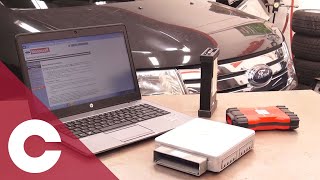
Typical fix: Reprogramming the PCM with the latest software calibration. This must be done by a Ford dealer or a qualified shop with the proper equipment. For TSB 21-2262, 🎬 Watch this quick tip on how Ford flash reprogramming works. the update corrects fuel injector operation parameters. [TSB #TSB 21-2262]
Est. part cost: $0-$150 - Faulty Ignition Coil(s) 🟡 Medium Probability Coil-on-plug systems are a common failure point on many modern engines, and Ford's EcoBoost line is no exception. Forum discussions frequently cite bad coils as the culprit for misfires.
How to confirm: If a specific cylinder misfire code (P0301-P0304) is also present, swap the ignition coil from the misfiring cylinder to a known good cylinder. Clear the codes and drive the vehicle. If the misfire code follows the coil to the new cylinder (e.g., P0301 becomes P0302), the coil is bad. This is the standard DIY diagnostic step.
Typical fix: Replace the faulty ignition coil. It is often recommended to replace the corresponding spark plug at the same time. Applying a small amount of dielectric grease to the inside of the new coil boot is a best practice.
Est. part cost: $40-$80 per coil - Worn or Fouled Spark Plugs 🟡 Medium Probability EcoBoost engines, being direct-injected and turbocharged, are sensitive to spark plug condition and gap. Worn electrodes or carbon fouling can easily lead to a weak spark and misfires. This is often the first part replaced when troubleshooting a misfire.
How to confirm: Remove and visually inspect the spark plugs. Look for wear on the electrode, carbon buildup, oil fouling, or cracks in the porcelain. The correct gap is critical; even new plugs should be checked.
Typical fix: Replace all spark plugs as a set. 🎬 Watch this walkthrough on changing spark plugs in the 2.3L engine. Using the OEM-specified plugs (e.g., Motorcraft) and ensuring they are gapped correctly is crucial for EcoBoost engines.
Est. part cost: $60-$120 for a set - Leaking or Clogged Fuel Injectors ⚪ Low Probability Direct injection (GDI) systems operate under very high pressure and can be sensitive to fuel quality. TSB 21-2262 specifically points to fuel injector *operation* as a cause for misfires on 2021 models, which is fixed by a software update. [TSB #TSB 21-2262] However, physical injector failure has also been reported by owners.
How to confirm: This is more difficult to diagnose. A professional may need to perform a fuel injector balance test. Sometimes this is found after eliminating all ignition-related causes.
Typical fix: Replace the faulty fuel injector(s). This is a more involved and costly repair on GDI engines and may require special tools.
Est. part cost: $100-$250 per injector
Rare But Worth Checking
- Vacuum Leak: A leak in a vacuum hose, PCV system, or the intake manifold can introduce unmetered air, leaning out the air/fuel mixture and causing random misfires. A smoke test is the best way to find these leaks.
- Internal Engine Mechanical Failure (2.7L V6): While rare, the 2.7L EcoBoost has a known issue with valvetrain components (lifters, rocker arms) that can fail. Early symptoms often include a single-cylinder misfire code that doesn't resolve with ignition or fuel system repairs. NHTSA Campaign 24S55 was issued for fracturing intake valves on some 2021-2022 models, 🎬 See expert insights on the 2.7L engine recall and valve issues. which can lead to catastrophic engine failure.
- Water Intrusion in Spark Plug Wells (2.3L): A known issue on the platform-mate Ford Ranger with the 2.3L engine is water leaking past the cowl and pooling in the spark plug wells, shorting out the coils. While less commonly reported on the Bronco, it's a possibility to consider if the misfire occurs after a heavy rain or car wash.
Diagnosis Steps

- Read the OBD-II codes with a scanner. Note any other pending or active codes and look at the freeze frame data to see the conditions under which the code was set.
- Check for any applicable Technical Service Bulletins (TSBs) for your vehicle's VIN. For this specific vehicle, this is the most critical first step. Contact a dealer or use an online TSB database.
- If the code only appears on cold starts on a 2025 2.3L model, reference TSB #SSM 54451 and consult a dealer about the software fix. Do not replace parts. [TSB #SSM 54451]
- Perform a visual inspection of the engine bay. Look for any cracked or disconnected vacuum hoses, damaged wiring, or signs of water/oil in the spark plug wells.
- If specific cylinder misfire codes are present (e.g., P0301), swap the ignition coil from the misfiring cylinder with a known good one (e.g., from cylinder 2). Clear the codes and drive. If the code changes to P0302, the coil is faulty.
- If the coil swap doesn't isolate the issue, inspect all spark plugs for wear, fouling, and correct gap. Replace as a set if they are worn or if their condition is questionable.
- If ignition and software are ruled out, the fuel system should be investigated. This may require professional diagnosis, including a fuel pressure test and injector balance test.
- If a vacuum leak is suspected, perform a smoke test to locate the source of the leak. Pay attention to the PCV system and intake manifold gaskets.
Parts You'll Likely Need

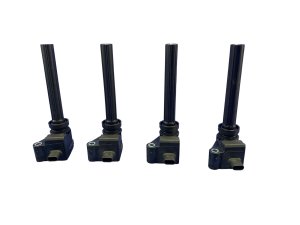
- Ignition Coil
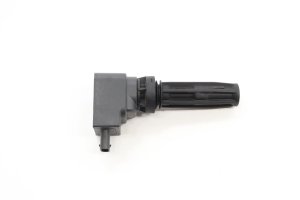
(OEM #P2GZ-12029-A (fits 2.3L, check VIN for supersessions))— A common failure point leading to misfires. If the misfire is isolated to one cylinder, a bad coil is a high-probability cause.
Trusted brands: Motorcraft, NGK, Bosch
OEM price range: $60-$90
Aftermarket price range: $40-$70 - Spark Plugs
(OEM #Motorcraft SP-594 (supersedes SP-578) for 2.3L EcoBoost. Verify with VIN.)— Worn, fouled, or improperly gapped spark plugs are a primary cause of misfires on EcoBoost engines. They are a routine maintenance item and the first parts to check.
Trusted brands: Motorcraft, NGK
OEM price range: $15-$25 per plug
Aftermarket price range: $10-$20 per plug
Related Codes That Often Appear With This One
- P0316 — Misfire Detected on Startup (First 1000 Revolutions). TSB #SSM 54451 specifically links P0300 and P0316 on 2025 2.3L models as a software issue after a cold soak. [TSB #SSM 54451]
- P0301, P0302, P0303, P0304 — These codes indicate a misfire on a specific cylinder (1, 2, 3, or 4). They often accompany P0300 when the misfire is frequent enough on one cylinder but also occurring randomly on others. TSBs 21-2262 and SSM 53869 both list these codes alongside P0300. [TSB #SSM 53869, TSB #TSB 21-2262]
Technical Service Bulletins (TSBs) & Recalls
- SSM 54451: Notes false P0300/P0316 codes on 2025 2.3L engines after cold soak, requires a software fix.
- SSM 53869: Links P0300-P0304 codes with a buck/jerk sensation on 2.3L models with the 10R60 transmission.
- TSB 21-2262: States that P0300-P0304 on 2021 2.3L engines can be caused by PCM configuration and requires a reprogram.
Platform-Specific Known Issues
- TSB #SSM 54451: Some 2025 models with the 2.3L engine may set P0300 and P0316 after a cold start due to a software issue. Ford is developing a fix expected in Q2 2026. No parts should be replaced for this specific condition.
- TSB #TSB 21-2262: Some 2021 models with the 2.3L engine may set P0300-P0304 codes due to PCM configuration related to fuel injector operation. The fix is a PCM reprogram.
- TSB #SSM 53869: On 2.3L models with the 10R60 automatic transmission, P0300-P0304 codes may be accompanied by a buck/jerk sensation at highway speeds (35-55 mph). [TSB #SSM 53869]
- 2.7L V6 Valvetrain Issues: A number of owners on forums have reported engine failures related to valve lifters and rocker arms on the 2.7L engine. This often starts as a persistent misfire code before progressing.
Mechanic-Grade Diagnostic Values
- Mode $06 Misfire Data — expected: A value of '0' or very low counts for each cylinder under Test ID $53 (may appear as $A2 through $AB on some scanners).. Failure: A high count value for a specific cylinder ID (e.g., CID $01 for cylinder 1) indicates misfires are occurring on that cylinder even without a P030x code being set. The value may need to be multiplied by a factor (e.g., 0.0015) to get a percentage on some models.
- Low-Side Fuel Pressure (2.7L EcoBoost) — expected: Refer to Ford's specific workshop manual for the exact PSI range, as it is model-year specific. The test requires a special fuel pressure test kit.. Failure: Pressure below the specified range can indicate a weak fuel pump or clogged filter, leading to lean conditions and random misfires.
Hidden / Shadow Codes Worth Checking
- Mode $06, Test ID $53: This is not a DTC but a non-continuous monitor test result stored in the PCM. It tracks misfire counts per cylinder. A technician can view this data to see which cylinder(s) are misfiring before the count is high enough to trigger a specific code like P0301 or P0304. On some scanners, these may be listed as Test IDs $A2-$AB. (see via A scan tool capable of reading Mode $06 data. This is available on many professional and some high-end consumer-grade scanners.)
Scan Tool Commands That Help
- Ford IDS, FORScan, or equivalent professional scanner: Misfire Monitor Neutral Profile Correction — This procedure MUST be performed after replacing a PCM, crankshaft sensor, or performing major internal engine repairs (e.g., timing chain, engine replacement). Failure to do so can cause the misfire monitor to be disabled or to report false misfires, potentially leading to a P0300 code. The procedure involves revving the engine and letting it coast down to allow the PCM to learn the crankshaft's rotational profile.
- Ford IDS or equivalent: Power Balance Test — This test allows a technician to disable one cylinder at a time and observe the corresponding drop in RPM. If disabling a cylinder causes little or no change in RPM, that cylinder is not contributing power (i.e., it is misfiring). This is a highly effective way to isolate a misfiring cylinder when only a P0300 code is present.
Wiring & Ground Locations

- Engine Bay Body Grounds — Inside the engine compartment, along the seam between the cowl and the firewall, there are body grounds screwed into welded nuts on each side.. The ignition coils and PCM rely on solid ground connections. A loose or corroded ground in this area can cause intermittent electrical issues, leading to weak spark and random misfires.
- Fuse F24 (Engine Bay Fuse Box) — In the engine compartment fuse box, fuse position 24 (typically a 20A fuse).. This fuse supplies power to the ignition coils. While a blown fuse would cause a no-start, a poor connection at this fuse could cause intermittent power loss to the coils, resulting in random misfires.
- PCM Connector C1551E (Example) — This is a specific connector on the Powertrain Control Module. Pin locations vary by engine and year.. Technicians may need to test the coil control wires directly at the PCM connector to determine if a fault is in the wiring harness or the PCM itself. For example, on some Ford models, the control wire for coil #5 is pin 58 and for coil #6 is pin 73. A wiring diagram for the specific Bronco year and engine is essential for this level of diagnosis.
Real Owner Repair Stories
- Bronco6G Forum (2021 Ford Bronco 2.7L V6) — Catastrophic engine failure, loss of motive power while driving.
❌ Tried (didn't work) Not applicable, as failure was sudden and complete.
✅ What actually fixed it Complete engine replacement. The cause was determined to be a dropped intake valve, consistent with the issue described in NHTSA investigation EA23002. Ford acknowledged the issue was due to intake valves made from 'Silchrome Lite' alloy becoming brittle.
OEM Part Supersession History
Motorcraft SP-578→Motorcraft SP-594— SP-594 is the latest revision for many EcoBoost applications, including the Bronco's 2.3L and 2.7L engines.
Heads up: While SP-594 is the correct replacement, there are forum discussions about heat range differences between early factory plugs and newer service parts. Some early 2.7L EcoBoost engines came with NGK-made plugs equivalent to a '7' heat range, while the replacement Motorcraft plugs are closer to a '6' (hotter). Using the correct, current OEM part (SP-594) is recommended unless the engine is heavily modified.
Model Year Variations Within This Range
- 2021-2022: Models with the 2.7L and 3.0L V6 engines built between May and October 2021 are at a higher risk for intake valve failure due to a specific batch of defective valves. This led to NHTSA investigation EA23002 and eventual recall 24S55.
- 2025: TSB #SSM 54451 specifically addresses P0300 and P0316 codes appearing after a cold start on 2025 models with the 2.3L engine. This is identified as a software glitch that requires a PCM update, not parts replacement. [TSB #SSM 54451]
- 2018+: Second-generation 2.7L EcoBoost engines (used in the Bronco) added a port fuel injection system to the existing direct injection. This helps clean carbon buildup from the back of the intake valves, reducing a potential cause of misfires that was more common on the first generation (pre-2018) of this engine.
Helpful Videos
We Have This Part in Stock



The information in this article is provided for general reference and educational purposes only. Vehicle specifications, procedures, and part compatibility can vary by production date, trim level, and region. Always consult your vehicle's factory service manual and verify part numbers before purchasing or performing repairs. Safety-critical components such as airbags, seat belts, and braking systems should be installed by a qualified professional.
- Ford BRONCO:
- 🎬 Helpful Videos
- 🛍️ Shop This Part
- What's Unique About the 2021-2025 Ford BRONCO
- Diagnostic Flowchart
- Symptoms You May Notice
- Most Likely Causes
- Rare But Worth Checking
- Diagnosis Steps
- Parts You'll Likely Need
- Related Codes That Often Appear With This One
- Technical Service Bulletins (TSBs) & Recalls
- Platform-Specific Known Issues
- Mechanic-Grade Diagnostic Values
- Hidden / Shadow Codes Worth Checking
- Scan Tool Commands That Help
- Wiring & Ground Locations
- Real Owner Repair Stories
- OEM Part Supersession History
- Model Year Variations Within This Range
- 🎟️ Get 5% Off