

P0300 on 2011-2015 Dodge Grand Caravan: Misfire Causes, Cylinder Head Issues, and Fixes
P0300 on a 2011-2015 Grand Caravan often points to a serious, known issue with the left cylinder head, especially on 2011-2013 models. The root cause was identified as overheating valve seats and guides which were not properly hardened. While standard ignition problems like spark plugs or coils are possible, the cylinder head problem is a high-probability cause that requires professional diagnosis and can be a costly repair if outside of the extended warranty.
- For 2011-2013 models, P0300 is very likely caused by a defective left cylinder head, an issue covered by a 10-year/150,000-mile warranty extension (X56) from Chrysler.
- Diagnosis must include a cylinder leak-down test, especially if codes P0302, P0304, or P0306 are also present.
- Do not simply replace spark plugs and coils without ruling out the cylinder head issue, as this can be a costly misdiagnosis.
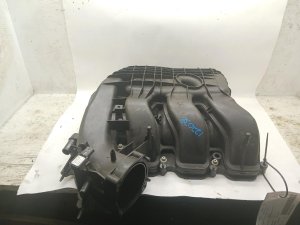
- Accessing the rear bank of spark plugs and coils requires removing the upper intake manifold, adding labor time and cost.
- Driving with a persistent misfire can cause expensive damage to the catalytic converter.
What's Unique About the 2011-2015 Dodge GRAND CARAVAN

The 2011-2015 Grand Caravan uses the 3.6L Pentastar V6 engine. Early versions of this engine, particularly from 2011 to mid-2013, are widely known for a specific defect causing premature wear of the valve guides and seats on the left-side cylinder head. The problem was traced to overheating of the valve seats, particularly on cylinder #2. This defect was so well-documented that Chrysler issued a warranty extension (X56) covering the left cylinder head for 10 years or 150,000 miles. As a result, a P0300 code on this vehicle, especially when accompanied by codes for the left bank cylinders (P0302, P0304, P0306), has a high probability of being caused by this serious mechanical issue rather than more common ignition or fuel system faults.
Diagnostic Flowchart

Tap your situation to follow the diagnostic path that matches what you're seeing on this vehicle.
Symptoms You May Notice
- Flashing or solid Check Engine Light
- Rough or shaky engine idle
- Engine stumbling or hesitating during acceleration
- Noticeable loss of engine power
- Reduced fuel economy
- Engine stalling in some cases
- Audible ticking or tapping sound from the engine, which could indicate rocker arm failure or valve train issues.
- Replacing only spark plugs and ignition coils without performing a cylinder leak-down test, especially on 2011-2013 models. Many owners replace these parts only to have the P0300 code return because the root cause was the cylinder head.
- Replacing a single ignition coil when a P0300 is present. While one coil could be the cause, a random misfire code often points to a more systemic issue affecting multiple cylinders, such as fuel delivery or a major mechanical fault.
Most Likely Causes

- Defective Left Cylinder Head 🔴 High Probability Early 3.6L Pentastar engines (2011-2013) had a manufacturing defect with valve guides and seats on the left cylinder head (affecting cylinders 2, 4, 6), causing a loss of compression and misfires. The issue was specifically due to overheating valve seats that were not properly hardened. This is confirmed by Chrysler's TSB #09-002-14 REV. B.
How to confirm: A professional mechanic should perform a cylinder leak-down test on cylinders 2, 4, and 6. Per the TSB, a leakage of 25% or more confirms the failure and necessitates head replacement.
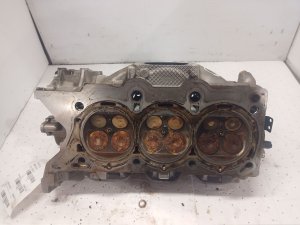
Typical fix: Replacement of the left cylinder head with an updated part. Chrysler extended the warranty to 10 years/150,000 miles for this specific issue under warranty extension X56. The updated head can be identified by a manufacturing date stamp of 2062 (the 206th day of 2012) or higher.
Est. part cost: $1000-$1500 - Worn Spark Plugs 🟡 Medium Probability Spark plugs are a standard maintenance item with a replacement interval of around 100,000 miles. The 3.6L engine requires iridium plugs, and using incorrect or worn plugs can cause a weak spark and misfires.
How to confirm: Visually inspect the spark plugs for wear, fouling, or an incorrect gap. The rear plugs (on the bank against the firewall) are difficult to access as the upper intake manifold must be removed.
Typical fix: Replace all six spark plugs. 🎬 See this walkthrough for changing spark plugs on your Caravan. It is highly recommended to also replace the upper and lower intake plenum gaskets at the same time. The OEM recommended plugs are from Mopar, with Champion and NGK being common high-quality alternatives.
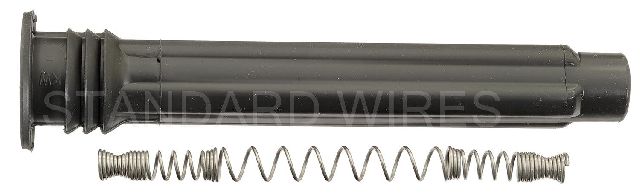
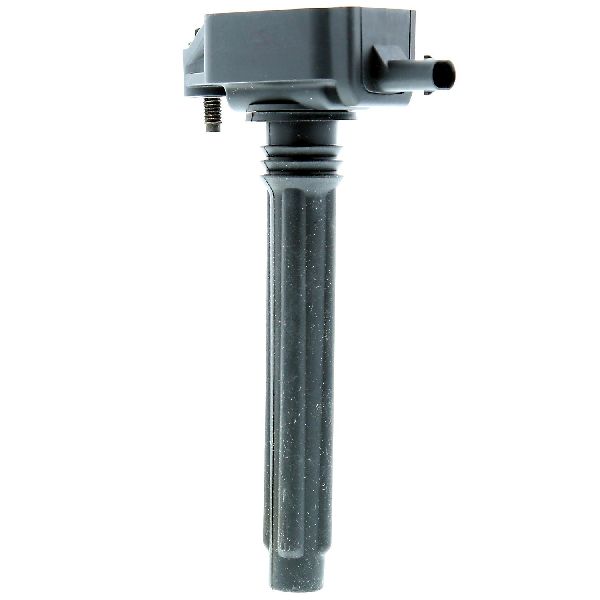
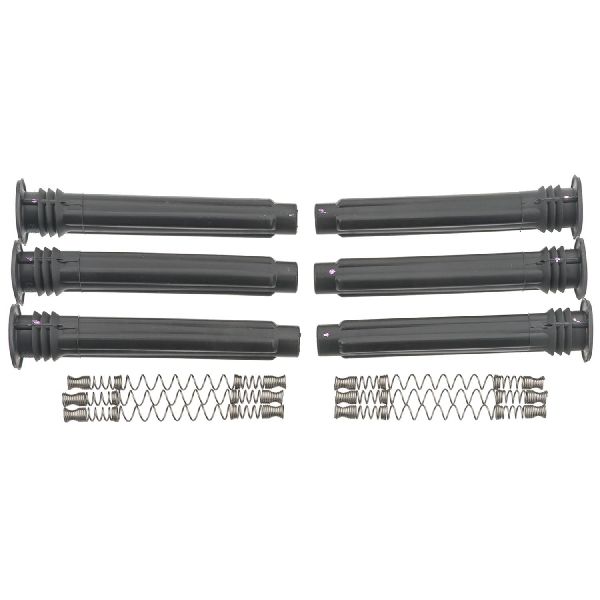
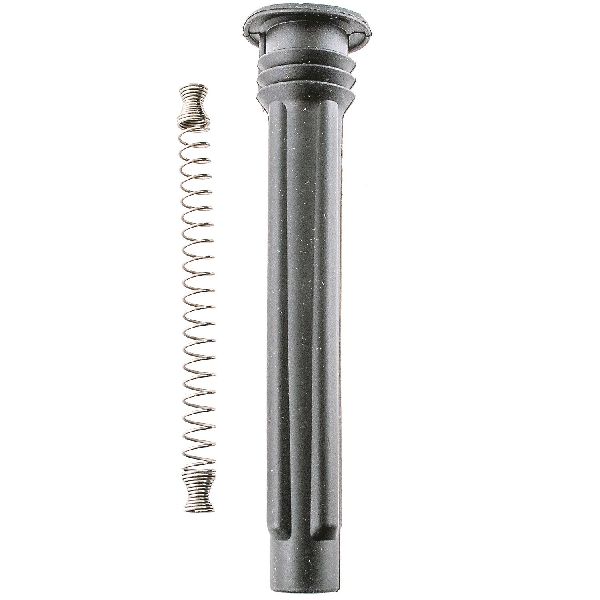
Est. part cost: $50-$120 - Faulty Ignition Coils 🟡 Medium Probability Ignition coils can fail over time due to heat and vibration. A failing coil produces a weak or inconsistent spark. Sometimes the rubber boot can develop a crack or carbon track, allowing the spark to arc to the cylinder head instead of the plug, which can be visually identified.
How to confirm: If a specific cylinder misfire code (e.g., P0304) is present, swap the ignition coil from the misfiring cylinder with a known good one from another cylinder. If the misfire code follows the coil, the coil is bad. For a random P0300, visual inspection for cracks or damage is a starting point.
Typical fix: Replace the faulty ignition coil(s). Many owners choose to replace all three coils on one bank, or all six, as a preventative measure. It's also possible to replace just the coil boot if that is the point of failure.
Est. part cost: $30-$70 per coil - Faulty Fuel Injectors ⚪ Low Probability
How to confirm: Requires testing fuel pressure and may involve a professional injector balance test. In some cases, damaged wiring to the injector can be the cause, which can be found with a visual inspection of the harness.
Typical fix: Clean or replace the faulty fuel injector(s) or repair the wiring harness.
Est. part cost: $40-$100 per injector
Rare But Worth Checking
- Failed Rocker Arms / Cam Followers: The 3.6L Pentastar is also known for rocker arm bearing failures, which create a distinct ticking noise. A worn-out roller on the rocker arm can damage the camshaft lobe, leading to improper valve lift and causing misfires. This is a complex mechanical repair.
- Faulty Camshaft or Crankshaft Position Sensor: A failing crankshaft position sensor can cause intermittent stalling and no-start conditions, sometimes triggering a P0300 before a specific sensor code appears.
- Electrical or PCM Issue: TSB #18-001-15 mentions P0300 setting at cold idle in conjunction with a U0140 (Lost Communication With Body Control Module), suggesting a potential underlying electrical or module communication problem.
- Low Quality Fuel: TSB #18-007-13 REV. A notes that a P0300 and rough running could occur with the factory fill fuel, indicating a sensitivity to fuel quality.
- Casting Sand in Cooling System: A widely discussed issue involves residual casting sand from the manufacturing process circulating in the engine. This sand can clog coolant passages, leading to localized overheating that could potentially contribute to head or other component failure, though direct causation for P0300 is less documented.
Diagnosis Steps
- Scan for all DTCs. 🎬 Watch: Understanding Pentastar misfire codes and diagnostic steps. Note if any specific cylinder misfire codes (P0301-P0306) or other codes are present with P0300. Pay close attention to codes P0302, P0304, and P0306.
- If you have a 2011-2013 model and see codes for the left bank (P0302, P0304, P0306), prioritize a cylinder leak-down test. Per TSB #09-002-14 REV. B, leakage over 25% on these cylinders confirms a failed cylinder head. Check vehicle history for warranty extension X56 eligibility.
- Listen for a ticking noise from the upper engine. A distinct tick could point to a failing rocker arm, another known Pentastar issue that can cause misfires.
- If no cylinder-specific codes are present, start with basic ignition system checks. Inspect and replace spark plugs if they are due (100k miles). The rear bank requires removing the upper intake manifold, so be sure to have new intake gaskets on hand.
- Inspect ignition coils for cracks, carbon tracking, or other damage. If a specific cylinder misfire is logged, swap that coil with one from a non-misfiring cylinder to see if the code follows the coil.
- Check for vacuum leaks around the intake manifold, PCV system, and other vacuum hoses. Low manifold vacuum at idle can indicate a significant leak or timing issue.
- If ignition and vacuum systems are good, proceed to fuel system diagnosis. Check fuel pressure to ensure it's within specification. Inspect injector wiring for damage.
- If all else fails, the issue could be more complex, such as a failing camshaft phaser, stretched ti
Parts You'll Likely Need
- Left Cylinder Head Assembly
(OEM #RL141353AC (remanufactured) or 68141353AC (new))— This is the updated part from Chrysler to fix the inherent defect in 2011-2013 models that causes P0300. It features hardened valve guides and seats. Note that this part number supersedes several previous versions.
Trusted brands: Mopar
OEM price range: $1000-$1400
Aftermarket price range: $800-$1200 - Spark Plugs
(OEM #SP149125AF)— Worn spark plugs are a common cause of misfires and are a routine maintenance item. Iridium plugs are required.
Trusted brands: Mopar (SP149125AF), NGK Laser Iridium (SILZKR7B11), Champion Iridium (9407)
OEM price range: $15-$25 per plug
Aftermarket price range: $8-$15 per plug - Ignition Coil
(OEM #5149168AJ)— Ignition coils fail over time and are a primary cause of misfires on most vehicles. This part number fits 2011-2020 models.
Trusted brands: Mopar, Delphi (GN10616), NGK, Denso (673-5203)
OEM price range: $60-$90
Aftermarket price range: $30-$60 - Intake Manifold Gasket Kit
(OEM #Mopar 5184562AC (Upper) & 5184331AC (Lower))— These gaskets must be replaced when removing the upper intake manifold to access the rear bank of spark plugs and coils. TSB 09-002-14 REV. B lists these as required parts for the cylinder head job.
Trusted brands: Mopar, Fel-Pro
OEM price range: $20-$40
Aftermarket price range: $15-$30
Related Codes That Often Appear With This One
- P0302, P0304, P0306 — These codes indicate misfires on cylinders 2, 4, and 6, which are all on the left cylinder bank. Their presence strongly points to the known cylinder head issue as detailed in TSB 09-002-14 REV. B.
- U0140 — As per TSB #18-001-15, this communication code can appear alongside P0300, suggesting a possible electrical or control module fault.
- P000A / P000B — These codes for slow camshaft position response were also mentioned in TSB #18-001-15, indicating a potential timing or VVT system issue occurring with the misfire.
- P0305 — While the primary cylinder head issue affects the left bank (2, 4, 6), misfires can occur on any cylinder. A P0305 (Cylinder 5 Misfire) could point towards a failing VVT actuator or other timing issues on Bank 1.
Technical Service Bulletins (TSBs) & Recalls
- 09-002-14 REV. B: Outlines the diagnosis (cylinder leakage test) and repair (replace left cylinder head) for P0300, P0302, P0304, or P0306 under the X56 Warranty Extension.
- 18-001-15: Mentions P0300 setting at cold idle along with communication and camshaft position codes.
- 0900214: An earlier version of the TSB related to the X56 Warranty Extension for P0300 and other left-bank misfire codes.
- 18-007-13 REV. A: Connects P0300 and rough running to the factory fill fuel, suggesting a fix by adding more fuel.
- D-14-12: The warranty bulletin announcing the 10-year/150,000-mile extended warranty (X56) for the 3.6L left cylinder head on select 2011-2013 vehicles.
Platform-Specific Known Issues
- A major known issue is the failure of the left cylinder head on 2011-2013 models due to excessive valve guide and seat wear. This was addressed by Chrysler's warranty extension X56 (TSB D-14-12), extending coverage to 10 years/150,000 miles. The diagnostic procedure is outlined in TSB 09-002-14 REV. B, which calls for a cylinder leak-down test.
Mechanic-Grade Diagnostic Values
- Fuel Pressure (Key On, Engine Off) — expected: 400 kPa +/- 14 kPa (58 psi +/- 2 psi). Failure: Significantly lower pressure indicates a weak fuel pump, clogged filter, or leak. Significantly higher pressure could point to a faulty fuel pressure regulator.
- Fuel Pressure Leak-Down — expected: Pressure drop should not exceed 138 kPa (20 psi) within 30 minutes after engine shutdown.. Failure: A pressure drop greater than 20 psi in 30 minutes suggests a leaking fuel injector or a faulty check valve in the fuel pump module.
- Ignition Coil Secondary Resistance (Aftermarket Example) — expected: Approximately 15.70 kOhms. Failure: A reading significantly outside this range (open circuit or short) indicates a failed coil winding. Note: This is for a RIPP aftermarket coil; OEM values may differ but the test principle is the same.
- Ignition Coil Primary Resistance (Aftermarket Example) — expected: Approximately 0.46 Ohms. Failure: A reading significantly outside this range indicates a fault in the primary winding.
- Live Data Fuel Trims (STFT/LTFT) — expected: Within +/- 10% at idle and under load.. Failure: High positive trims (e.g., +25%) suggest the engine is compensating for a lean condition (vacuum leak, low fuel pressure). High negative trims suggest a rich condition (leaking injector). A random misfire may cause trims to fluctuate wildly.
Hidden / Shadow Codes Worth Checking
- Mode 6 Misfire Counters: Even with a generic P0300 code, Mode 6 data on a capable scan tool can show raw misfire counts for each individual cylinder. This allows a technician to see which cylinder(s) are misfiring the most, even if the count isn't high enough to trigger a cylinder-specific code (like P0302). (see via An advanced OBD-II scan tool with Mode 6 capability. The data will be listed under specific Component IDs and Test IDs, which vary by manufacturer.)
Scan Tool Commands That Help
- wiTECH (Dealer Tool): Cylinder Contribution Test / Power Balance Test — This is a crucial function for diagnosing a P0300. The tool electronically disables one cylinder at a time (by cutting fuel or spark) and measures the corresponding drop in RPM. If disabling a cylinder causes little or no RPM drop, it confirms that cylinder was not contributing power, helping to isolate the fault without manually swapping parts.
- wiTECH or advanced aftermarket: Actuate Fuel Injector — This command allows the technician to manually fire a specific injector while monitoring fuel pressure. A sharp drop in pressure confirms the injector is opening. This is used to test injector electrical function and can help identify a clogged or dead injector when combined with a pressure gauge.
Wiring & Ground Locations
- Engine to Chassis Ground Strap — On the upper passenger side of the engine, there is a braided ground strap that connects from the engine block or a bracket near the motor mount to the vehicle's frame/chassis.. This strap provides the primary ground path for the engine block. If it is broken, corroded, or loose, the ignition system and various sensors may seek ground through other, less reliable paths. This can create electrical noise and intermittent issues, including random misfires that are difficult to trace. A visual inspection of this strap is a quick and important check.
- G302 (Ground) — A common chassis ground point mentioned in wiring diagrams for various components.. Wiring diagrams show that components related to the engine control system, such as solenoids, may use this ground. A fault at this shared ground point could potentially cause issues for multiple systems, although it's a less direct cause for P0300 than the main engine ground.
Real Owner Repair Stories
- YouTube user comment/story (Dodge with P0300) — Persistent P0300 check engine light.
❌ Tried (didn't work) Replacing spark plugs, Replacing ignition coils, Checking fuel pressure (it was normal)
✅ What actually fixed it The problem was ultimately traced to a faulty wiring connector for the camshaft position sensor. Even though there was no specific code for the cam sensor, a poor connection was causing erratic signals to the ECU, leading to a random misfire code. Re-seating and securing the connector resolved the P0300. - YouTube video diagnosis (2013 Dodge Grand Caravan with P0300) — Engine stutter, random misfire code.
❌ Tried (didn't work) Initial assumption was a major mechanical issue.
✅ What actually fixed it Upon inspection of the ignition coils on the rear bank (which requires intake manifold removal), one of the ignition coil boots showed a small, visible carbon track or burn mark. This indicated the spark was arcing to the cylinder head instead of the spark plug. Replacing just the faulty coil boot (or the entire coil assembly) fixed the misfire.
OEM Part Supersession History
05184445A1 (and others)→68141353AC (and subsequent revisions)— This is the left side cylinder head. The original heads on 2011-2013 models were prone to premature valve guide and seat wear. The updated part numbers feature hardened valve components to resolve the issue that led to the X56 warranty extension.5184296AD, AE, AF, AG→5184296AH— This is the part number for the rocker arms (cam followers). The earlier versions were prone to needle bearing failure. The 'AH' revision is the updated design intended to be more durable. When addressing a rocker arm failure, it is critical to use the latest superseded part.
Model Year Variations Within This Range
- 2011-mid 2013: These model years are equipped with the original left cylinder head design that is prone to failure and is the subject of TSB #09-002-14 REV. B and warranty extension X56. A P0300, especially with P0302/P0304/P0306, has a very high probability of being the head issue.
- Mid 2013-2015: These vehicles were manufactured with the revised cylinder head, making the specific 'left head failure' a much less likely cause for P0300. On these later models, diagnosis should focus more on standard causes like ignition components, fuel delivery, and other mechanical issues like rocker arms.
Helpful Videos
Used OEM Parts in Stock


New Aftermarket Parts Available



The information in this article is provided for general reference and educational purposes only. Vehicle specifications, procedures, and part compatibility can vary by production date, trim level, and region. Always consult your vehicle's factory service manual and verify part numbers before purchasing or performing repairs. Safety-critical components such as airbags, seat belts, and braking systems should be installed by a qualified professional.
- Dodge GRAND CARAVAN:
- 🎬 Helpful Videos
- 🛍️ Shop This Part
- What's Unique About the 2011-2015 Dodge GRAND CARAVAN
- Diagnostic Flowchart
- Symptoms You May Notice
- Most Likely Causes
- Rare But Worth Checking
- Diagnosis Steps
- Parts You'll Likely Need
- Related Codes That Often Appear With This One
- Technical Service Bulletins (TSBs) & Recalls
- Platform-Specific Known Issues
- Mechanic-Grade Diagnostic Values
- Hidden / Shadow Codes Worth Checking
- Scan Tool Commands That Help
- Wiring & Ground Locations
- Real Owner Repair Stories
- OEM Part Supersession History
- Model Year Variations Within This Range
- 🎟️ Get 5% Off