

P0300 on 2019-2026 Dodge Durango: Random Misfire Causes & Fixes
P0300 on a Dodge Durango indicates random cylinder misfires. The most common causes are worn spark plugs and faulty ignition coils. On 3.6L V6 models, a known issue is a failing intake camshaft and associated rocker arms, often preceded by an engine 'tick' and noted in manufacturer service information. Expect to pay $150-$400 for plugs and coils, but a camshaft/rocker arm repair can cost over $2,500.
- P0300 means your engine is misfiring on multiple cylinders, which requires prompt attention.
- Start your diagnosis with the cheapest and most common fixes: inspecting and replacing worn spark plugs and ignition coils.
- If you have the 3.6L V6 engine, be aware that a known camshaft issue could be the root cause, which is a more complex and expensive repair.
- Do not ignore a flashing check engine light; it's a warning of potential, imminent damage to your catalytic converter.
- Check for other diagnostic codes, as they can provide crucial clues to the underlying problem (e.g., fuel pressure or specific cylinder codes).
What's Unique About the 2019-2026 Dodge DURANGO

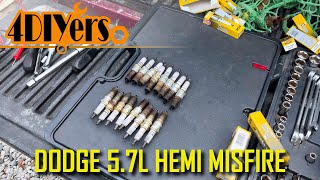
For the 2019-2026 Dodge Durango, the P0300 code can be straightforward on the HEMI V8 engines, often pointing to standard ignition or fuel system maintenance. 🎬 See how to diagnose and fix a P0300 on the 5.7L Hemi. However, on models with the 3.6L Pentastar V6 engine, this code is a critical indicator of a potentially serious mechanical issue. Manufacturer technical service bulletins and numerous owner complaints identify failing intake camshafts and rocker arms as a primary cause for random misfires on this engine. This makes it essential to listen for an engine tick and consider this mechanical failure before spending money on repeated ignition component replacements. A flashing check engine light accompanying this code is a serious warning of potential catalytic converter damage due to unburned fuel entering the exhaust.
Diagnostic Flowchart

Tap your situation to follow the diagnostic path that matches what you're seeing on this vehicle.
Symptoms You May Notice

- Rough or shaky idle.
- Engine hesitation or stumbling during acceleration.
- Flashing or solid Check Engine Light.
- Reduced engine power and performance.
- Poor fuel economy.
- A noticeable smell of fuel from the exhaust.
- Audible engine 'ticking' noise, especially on 3.6L V6 models, that may increase with RPM.
- Replacing only one spark plug or coil when others are near the end of their service life.
- Replacing oxygen sensors when they are correctly reporting a problem (the misfire) rather than being the cause of it. A misfire allows unburned oxygen into the exhaust, which an O2 sensor will report as a lean condition.
- On 3.6L V6 models, repeatedly replacing spark plugs and coils without investigating the audible 'tick' that points to the much more likely mechanical camshaft/rocker arm failure.
- Mistaking a vacuum leak for a fuel system problem, or vice-versa, without checking fuel trims or performing a smoke test.
Most Likely Causes

- Worn Spark Plugs or Faulty Ignition Coils 🔴 High Probability Spark plugs are a routine maintenance item and ignition coils can fail with age and heat cycles. These are the most frequent culprits for any misfire code and should be the first items checked. Letting spark plugs go too long with a large gap can put extra strain on the ignition coils, causing them to fail prematurely.
How to confirm: Inspect spark plugs for wear, fouling, or incorrect gap. Test ignition coils by swapping a coil from a misfiring cylinder (if identifiable with an advanced scan tool using Mode $06) to a known good cylinder to see if the misfire follows the coil.
Typical fix: Replace all spark plugs as a set. 🎬 Watch this walkthrough for replacing spark plugs on the 3.6L engine. Replace the faulty ignition coil(s). Using OEM or quality aftermarket brands is recommended.
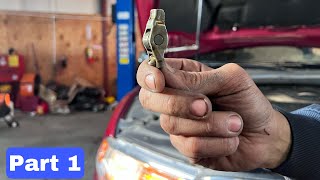
Est. part cost: $80-$300 - Right Intake Camshaft and/or Rocker Arm Failure (3.6L Pentastar V6) 🔴 High Probability A well-documented failure point on the 3.6L Pentastar engine involves the rocker arm bearings seizing, causing the roller to stop spinning and grind a groove into the intake camshaft lobe. This is often heard as a 'tick'. Dodge internal case #9100143 🎬 Watch: Step-by-step guide to replacing Pentastar rocker arms and lifters. specifically addresses this, advising replacement of the intake camshaft and all intake rocker arms if excessive wear is found.
How to confirm: This requires advanced diagnosis. Listen for a persistent ticking noise from the top of the engine. A technician will use a scan tool to confirm misfires and then physically remove the valve cover to inspect the camshaft lobes and rocker arms for scoring and wear.
Typical fix: Replace the faulty right intake camshaft and all associated intake rocker arms (6) and lifters in that cylinder head. The TSB specifies part number 05047913AA/AB, which has been superseded by 05047913AC and 05047913AD.
Est. part cost: $350-$700 for camshaft and a full set of rocker arms/lifters. - Faulty or Clogged Fuel Injectors 🟡 Medium Probability Fuel injectors can become clogged with deposits over time, leading to an improper fuel spray pattern and a lean misfire. Bad quality or contaminated fuel can accelerate this process.
How to confirm: A professional can perform a fuel injector balance test. An advanced scan tool can also monitor fuel trims; if one bank is showing significantly different values, it could point to an injector issue. Swapping injectors between cylinders can also help diagnose, but is more labor-intensive.
Typical fix: Professionally clean the fuel injectors or replace the ones that are faulty.
Est. part cost: $70-$200 per injector - Vacuum Leaks ⚪ Low Probability The plastic intake plenum can crack, or gaskets can fail, allowing unmetered air into the engine and disrupting the air-fuel ratio. The PCV valve and its hoses are also common sources of leaks.
How to confirm: Visually inspect all vacuum lines for cracks or disconnections. A smoke test is the most effective method, pressurizing the intake system with smoke to reveal hard-to-see leaks.
Typical fix: Replace the leaking vacuum hose, PCV valve, or gasket.
Est. part cost: $10-$150
Rare But Worth Checking
- Low Fuel Pressure: TSB #18-044-26 links P0300 with fuel pressure codes. A weak fuel pump or clogged filter can starve the engine for fuel, causing random misfires across all cylinders.
- PCM Failure or Software Issue: TSBs #18-039-26 and #18-033-26 mention P0300 occurring during specific conditions like warm-up or cold start, which can sometimes be resolved with a PCM software update. In rarer cases, a faulty PCM driver for an injector or O2 sensor heater can cause persistent, hard-to-diagnose misfires.
- Low Engine Compression: Internal engine problems like a leaking head gasket, worn piston rings, or bad valves can cause a loss of compression and lead to misfires. This is less common and more severe, often requiring a compression test to diagnose.
- Clogged Catalytic Converter: While a misfire can damage a catalytic converter, a severely clogged converter can also cause a misfire. The excessive backpressure prevents the engine from breathing properly, leading to a P0300 code.
Diagnosis Steps
- Read all stored trouble codes with an OBD-II scanner. Note any codes that accompany P0300, especially cylinder-specific ones (P0301-P0308).
- Use an advanced scanner that can access Mode $06 data to view live misfire counts for each cylinder, which can identify problem cylinders before a specific code is set.
- Listen for an audible 'ticking' noise from the engine, particularly on the 3.6L V6, which is a strong indicator of rocker arm/camshaft wear.
- Inspect the ignition system. Remove and check the spark plugs for wear, damage, or fouling. Ensure they are gapped correctly.
- If specific cylinder misfire codes are present, swap the ignition coil from that cylinder with a known good one and see if the code follows the coil.
- Check for vacuum leaks by inspecting all hoses connected to the intake manifold. A smoke test is the most effective method to find hidden leaks.
- If driving a 3.6L V6 and a tick is present, prioritize inspecting the right-side intake camshaft and rocker arms for wear, per Dodge case #9100143.
- Test fuel pressure to ensure the fuel pump and filter are functioning correctly. Compare readings to the manufacturer's specifications.
- If all else fails, perform an engine compression test to check for mechanical issues like bad valves or head gasket failure.
Parts You'll Likely Need
- Spark Plugs — These are a standard maintenance item and the most common cause of misfires. They should be replaced as a full set.
Trusted brands: NGK, Champion
OEM price range: $10-$20 per plug
Aftermarket price range: $5-$15 per plug - Ignition Coil — Ignition coils provide the high voltage needed to create a spark. A failing coil is a very common cause of misfires.
Trusted brands: Mopar, Denso, NGK
OEM price range: $50-$90 per coil
Aftermarket price range: $30-$70 per coil
Related Codes That Often Appear With This One
- P0301-P0308 — These codes indicate a misfire on a specific cylinder (e.g., P0301 for cylinder 1). P0300 often appears with one or more of these codes, helping to narrow down the problem area.
- P00C6-00 — As per TSB #18-044-26, this code for 'Fuel Rail Pressure Too Low - Engine Cranking' can appear alongside P0300, pointing towards a fuel delivery issue as the root cause.
- P2097 — This code for 'Post Catalyst Fuel Trim System Too Rich' can appear with P0300, sometimes indicating a faulty upstream O2 sensor is causing incorrect fueling, which in turn leads to misfires.
Technical Service Bulletins (TSBs) & Recalls
- 18-039-26: Notes P0300 can be set during the engine warm-up period.
- 18-033-26: Mentions P0300 may set during cold start catalyst heating.
- 18-044-26: Links P0300 with fuel pressure DTCs like P00C6-00.
- 9100143: Identifies the right intake camshaft (PN 05047913AA/AB) as a potential cause for P0300 on the 3.6L Pentastar Upgrade engine.
- 1400322REVA: Confirms P0300 can be set along with a range of single-cylinder misfire codes (P0301-P0305).
Platform-Specific Known Issues
- The 'Pentastar Tick' and Camshaft/Rocker Arm Failure: A widely recognized issue with the 3.6L Pentastar engine is a ticking noise, often from the passenger side of the engine. This 'Pentastar Tick' is a strong audible symptom of a failing rocker arm, where the bearing seizes and the roller grinds against the camshaft lobe. This damage quickly leads to a P0300 and/or specific cylinder misfire codes. TSB/Case #9100143 directly addresses this, instructing technicians to inspect the right intake camshaft and all intake rocker arms for wear if a P0300 is present. Ignoring the tick can lead to a destroyed camshaft and potentially catastrophic engine failure.
- HEMI Lifter Failure: While less common than the Pentastar's camshaft issue, the 5.7L HEMI can also throw a P0300 code due to valvetrain problems. A common failure point is the lifters, particularly in engines with the Multi-Displacement System (MDS). A collapsed or seized lifter will fail to actuate the valve correctly, causing a misfire. This can also lead to camshaft damage if not addressed. The symptoms are very similar to the Pentastar issue: a ticking or knocking noise followed by a rough idle and misfire codes.
Mechanic-Grade Diagnostic Values
- Fuel Pressure (Key On, Engine Running) — expected: 3.6L V6: 400 kPa +/- 14 kPa (58 psi +/- 2 psi). 5.7L HEMI V8: 407 kPa +/- 34 kPa (59 psi +/- 5 psi).. Failure: Pressure below the specified range indicates a potential weak fuel pump, clogged filter, or faulty regulator.
- Ignition Coil Primary Resistance — expected: Typically 0.4 to 2.0 ohms.. Failure: A reading of 0 ohms (short circuit) or OL/infinity (open circuit) indicates a failed coil. A reading significantly outside the expected range also suggests a problem.
- Ignition Coil Secondary Resistance — expected: Typically 6,000 to 15,000 ohms (6k-15k Ω).. Failure: A reading outside the manufacturer's specified range indicates a faulty coil.
- Fuel Injector Resistance (High-Impedance/Saturated type) — expected: Approximately 11-16 ohms.. Failure: A reading of 0 ohms indicates a shorted injector, while a very high or infinite (OL) reading indicates an open coil. All injectors should have similar resistance values.
- Live Data Fuel Trims (STFT and LTFT) at Idle — expected: Should be close to 0%, ideally within +/- 5%.. Failure: High positive fuel trims (e.g., > +10%) on both banks suggest unmetered air (vacuum leak) is entering the engine, causing a lean condition that the PCM is trying to correct by adding fuel.
Hidden / Shadow Codes Worth Checking
- Mode $06 Misfire Counters: This is not a specific code, but a function within advanced OBD-II scanners. It provides raw data from the PCM's onboard monitoring, including a running count of misfire events per cylinder. This allows a technician to see which cylinder(s) are misfiring in real-time, even if the misfire count is not yet high enough to set a specific P030x code. (see via Requires an advanced scan tool that supports Mode $06 data display. The dealer tool, wiTECH, has a dedicated monitor for 'Which cylinder is misfiring'.)
Scan Tool Commands That Help
- wiTECH (or equivalent advanced scan tool): OBD II Monitors > 'Which cylinder is misfiring' — This function is crucial when only a P0300 (random misfire) code is present without any specific cylinder codes (P0301-P0308). It allows the technician to view live misfire counts for each individual cylinder, helping to isolate the problem to a specific cylinder or bank that is misfiring more frequently than others, but not enough to set a dedicated code.
- wiTECH (or equivalent advanced scan tool): Fuel System Test / Injector Balance Test — Used to test the functionality of the fuel injectors. The command can individually fire injectors to check for a corresponding drop in fuel pressure, helping to identify a clogged or non-functioning injector that could be the source of the misfire.
Wiring & Ground Locations
- G102 / G111 — Typically located on the left inner fender or on the left side of the engine block.. These are primary engine and chassis grounds. A loose or corroded ground at these points can cause intermittent electrical issues for the ignition coils, fuel injectors, and PCM, leading to erratic behavior and random misfire codes.
- G305 — Frame ground located near the left fender area.. This ground is part of the main chassis grounding scheme. Poor connection here can affect the fuel pump module, which is located in the rear of the vehicle, potentially causing intermittent low fuel pressure and misfires.
- Ignition Coil Connector — Directly on top of each ignition coil.. The plastic connectors and their wiring can become brittle from engine heat cycles. A loose pin, cracked connector, or chafed wire can cause an intermittent connection to a coil, resulting in a misfire on that cylinder that may contribute to a P0300 code.
Real Owner Repair Stories
- YouTube video by 'T Automotive' (2015 Dodge Durango 3.6L) — Check engine light on, codes P0300 and P0301 (Cylinder 1 misfire).
❌ Tried (didn't work) The initial diagnosis involved swapping the ignition coil from cylinder 1 to cylinder 3 to see if the misfire code would follow the coil.
✅ What actually fixed it The spark plugs were found to be extremely worn with excessive gaps. The video concludes that replacing all the spark plugs was the correct fix.
"I Checked Everything" — The Actual Cause
- In some cases, a P0300 can be set with no vacuum leaks found during a smoke test. The root cause may be a weak fuel pump providing inconsistent pressure that drops under load, or a failing crankshaft position sensor that sends erratic signals to the PCM, causing it to misinterpret engine speed and falsely log misfires.
OEM Part Supersession History
5145585AC→5145585AE— Revision/update to the fuel pump module assembly.68154305AB→68154305AC— Revision/update to the fuel pump/level unit module kit.
Model Year Variations Within This Range
- 2019-2026: The 3.6L Pentastar V6 is the standard engine on lower trims (SXT, GT). The 5.7L HEMI V8 is standard on the R/T and optional on the Citadel. The 6.4L HEMI V8 is exclusive to the SRT 392, and the Supercharged 6.2L HEMI V8 is for the SRT Hellcat. The root cause of P0300 is more likely to be the camshaft/rocker arm issue on the 3.6L V6, while on the V8s, it more commonly points to standard ignition/fuel maintenance.
- 2021, 2023-Present: The SRT Hellcat with the Supercharged 6.2L V8 was available in 2021, discontinued for 2022 due to emissions regulations, and then brought back for 2023 and later model years.
Helpful Videos
We Have This Part in Stock



The information in this article is provided for general reference and educational purposes only. Vehicle specifications, procedures, and part compatibility can vary by production date, trim level, and region. Always consult your vehicle's factory service manual and verify part numbers before purchasing or performing repairs. Safety-critical components such as airbags, seat belts, and braking systems should be installed by a qualified professional.
- Dodge DURANGO:
- 🎬 Helpful Videos
- 🛍️ Shop This Part
- What's Unique About the 2019-2026 Dodge DURANGO
- Diagnostic Flowchart
- Symptoms You May Notice
- Most Likely Causes
- Rare But Worth Checking
- Diagnosis Steps
- Parts You'll Likely Need
- Related Codes That Often Appear With This One
- Technical Service Bulletins (TSBs) & Recalls
- Platform-Specific Known Issues
- Mechanic-Grade Diagnostic Values
- Hidden / Shadow Codes Worth Checking
- Scan Tool Commands That Help
- Wiring & Ground Locations
- Real Owner Repair Stories
- "I Checked Everything" — The Actual Cause
- OEM Part Supersession History
- Model Year Variations Within This Range
- 🎟️ Get 5% Off