

P0300 on 2011-2018 Dodge Charger: Random Misfire Causes and Fixes
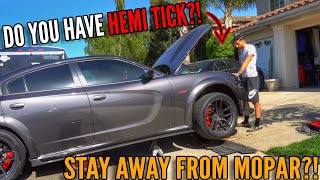
P0300 on a 2011-2018 Dodge Charger means multiple cylinders are misfiring. The most common causes are worn spark plugs and faulty ignition coils. For HEMI V8 engines, this code can also be an early sign of a serious internal engine issue involving the camshaft and lifters, often called the 'HEMI tick'. For the 3.6L Pentastar V6, it can indicate worn rocker arms.
- P0300 indicates a random or multiple cylinder misfire; do not ignore it, especially if the check engine light is flashing.
- For all engines, start diagnosis with the cheapest and most common parts: spark plugs and ignition coils.
- If you have a HEMI V8 (5.7L or 6.4L) and hear a ticking noise with the P0300, suspect a serious camshaft and lifter problem.
- If you have a Pentastar V6 (3.6L) and hear a ticking noise, suspect a worn rocker arm.
- Continuing to drive with a misfire can cause expensive damage to your catalytic converters.
What's Unique About the 2011-2018 Dodge CHARGER

For the 2011-2018 Dodge Charger, the cause of a P0300 code can differ significantly based on the engine. While standard ignition issues are common across all engines, the 5.7L and 6.4L HEMI V8s are known for a specific, serious problem: camshaft and lifter failure. The needle bearings in the roller lifters can fail, causing the roller to stop spinning and grind down the camshaft lobes. This is often preceded by a distinct ticking noise, sometimes called the 'HEMI tick of death'. The 3.6L Pentastar V6 has its own known issue with premature rocker arm wear, especially on earlier 2011-2013 models, which can also create a ticking noise and lead to misfires.
Diagnostic Flowchart

Tap your situation to follow the diagnostic path that matches what you're seeing on this vehicle.
Symptoms You May Notice
- Flashing or solid Check Engine Light
- Rough or shaky idle
- Engine hesitation or stumbling during acceleration
- Noticeable loss of power
- Reduced fuel economy
- Engine may be hard to start
- Smell of unburnt fuel from the exhaust
- Audible engine 'ticking' noise, especially on HEMI V8s and Pentastar V6s
- Replacing only spark plugs when the underlying cause is a failing HEMI camshaft. The misfire will return quickly, as experienced by users on Charger forums.
- Replacing oxygen sensors. While a faulty O2 sensor can affect fuel trim, it's less likely to be the primary cause of a P0300 compared to ignition or mechanical issues.
- Confusing the 'HEMI tick' of lifter failure with a less severe exhaust manifold leak tick or normal fuel injector clicking.
Most Likely Causes

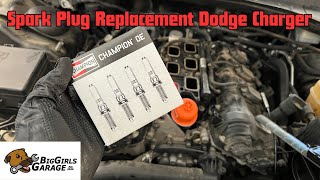
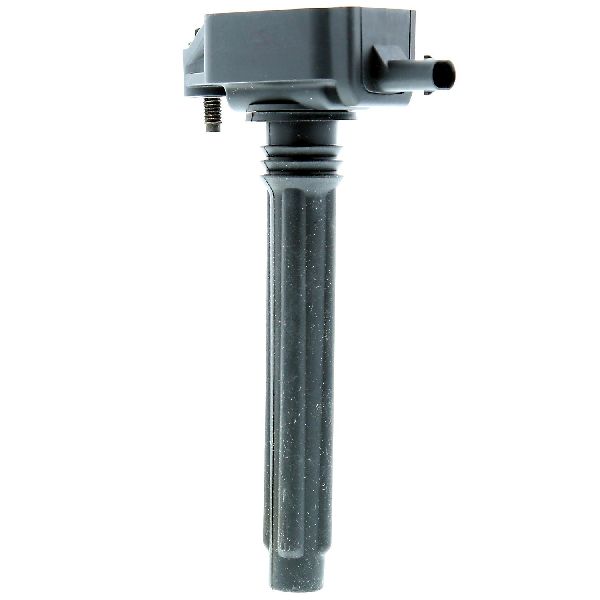
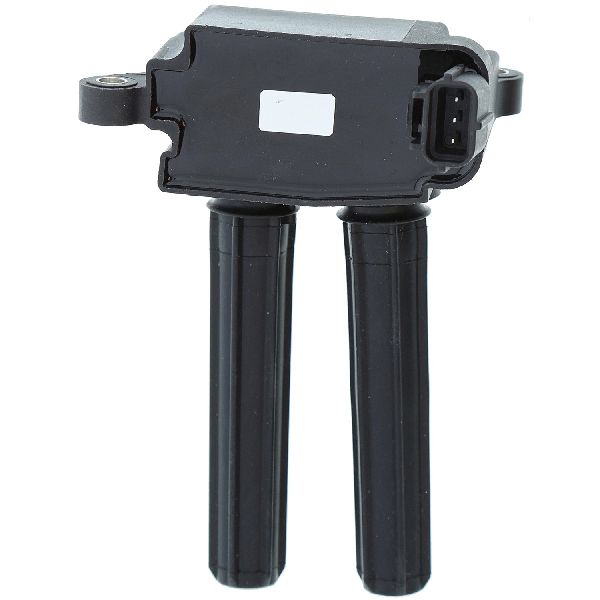
- Worn Spark Plugs or Faulty Ignition Coils 🔴 High Probability This is the most common cause for misfires on any gasoline engine. HEMI engines have two spark plugs per cylinder (16 total), increasing the chance of a failure and the cost/complexity of a tune-up. Over time, plugs wear out and coils can fail or develop corrosion on the contact points, producing a weak or inconsistent spark.
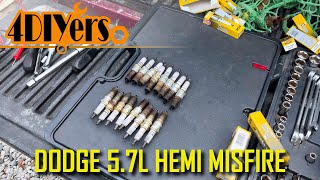
How to confirm: Inspect spark plugs for wear, fouling, or incorrect gap. Test ignition coils by swapping a suspected bad coil with a known good one to see if the misfire follows the coil 🎬 Watch: How to diagnose and fix a 5.7L Hemi misfire. (requires a scan tool with live data to track misfires per cylinder). For the 3.6L V6, the upper intake manifold must be removed to access the driver-side coils and plugs.
Typical fix: Replace all spark plugs as a set. Replace the faulty ignition coil(s). It's recommended to use OEM or high-quality aftermarket parts.
Est. part cost: $50-$200 for spark plugs, $40-$80 per ignition coil. - Camshaft and Lifter Failure (5.7L & 6.4L HEMI V8) 🟡 Medium Probability The roller lifters, particularly on cylinders with Multi-Displacement System (MDS), are a known failure point. The roller's needle bearings can disintegrate, causing the lifter to seize or wear improperly, which then grinds down the corresponding lobe on the camshaft. This is often attributed to periods of extended idling (common in ex-police vehicles) or potential oil starvation issues. The failure reduces valve lift and causes a persistent misfire that a standard tune-up will not fix.
How to confirm: Listen for a distinct 'HEMI tick' from the engine, which is different from the normal, quieter injector tick. A compression test may show low readings on the affected cylinders. Definitive diagnosis requires removing the valve covers and intake manifold to visually inspect the camshaft lobes for wear (they will appear rounded or 'wiped') and check the lifters for seized rollers.
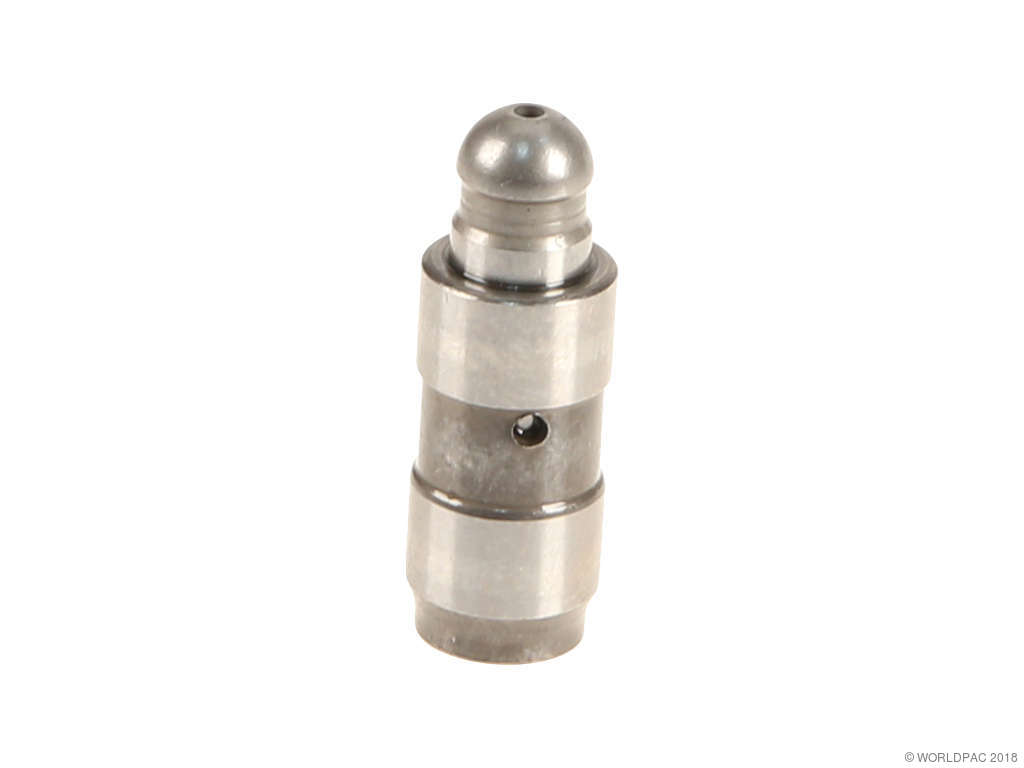
Typical fix: This is a major engine repair requiring replacement of the camshaft, all lifters, head gaskets, and associated seals. Many owners and shops opt to install non-MDS lifters and an MDS delete kit during the repair to prevent recurrence. The OEM camshaft part number is often cited as 53022263AF.
Est. part cost: $800-$1500 for a camshaft, lifters, and gasket set. - Worn Rocker Arms (3.6L Pentastar V6) 🟡 Medium Probability Early versions of the 3.6L Pentastar engine (2011-2013) are known for premature wear of the rocker arms due to issues with needle bearings, which can cause a ticking noise and lead to a misfire.
How to confirm: Listen for a ticking noise from the upper part of the engine (valve cover area). Diagnosis requires removing the valve cover(s) to visually inspect the rocker arms for excessive play or damage to the roller/bearing.
Typical fix: Replace the failed rocker arms and associated lifters. It is critical to use the correct, updated OEM part (Mopar part # 5184296AH), as it supersedes several previous, less reliable versions. The camshaft lobes should also be inspected for any corresponding damage.
Est. part cost: $150-$300 for a set of rocker arms and lifters for one cylinder head. - Vacuum Leak ⚪ Low Probability Aging rubber hoses and plastic intake manifold gaskets can crack and leak, allowing unmetered air into the engine. A common culprit can be a faulty or stuck-open PCV valve, which can cause a significant vacuum leak and P0300 code. The PCV valve on the 5.7L HEMI is located on the rear passenger side of the intake manifold.
How to confirm: Perform a smoke test by introducing smoke into the intake system and watching for where it escapes. You can also carefully spray brake cleaner or listen for hissing sounds around gasket areas and vacuum hoses with the engine running; a change in engine idle indicates a leak.
Typical fix: Replace the leaking vacuum hose, intake manifold gasket, or PCV valve. The OEM part number for the PCV valve is often 53032940AA or 68061029AA.
Est. part cost: $10-$150 depending on the source of the leak. - Faulty Fuel Injectors ⚪ Low Probability
How to confirm: Use a scan tool to monitor fuel trims and misfire data. A Reddit user with a 6.4L HEMI experiencing a P0300 tried swapping an injector to a different cylinder, but the misfire did not follow, helping to rule out the injector. A more definitive test involves checking the resistance of each injector or having them professionally cleaned and flow-tested.
Typical fix: Replace the clogged or failed fuel injector(s).
Est. part cost: $50-$120 per injector.
Rare But Worth Checking
- Low Fuel Pressure: A weak fuel pump or clogged fuel filter can starve the engine for fuel, causing misfires across all cylinders, especially under load.
- Faulty Crankshaft Position Sensor: A failing crankshaft sensor can send erratic signals to the PCM, disrupting ignition and injection timing and causing random misfires.
- Clogged Catalytic Converter: A blocked catalytic converter creates excessive exhaust backpressure, which can lead to misfires and a significant loss of power. This can sometimes be isolated to one bank, causing misfires on only one side of the engine.
- Internal PCM Failure: As noted in TSB #1807320, an internal control processor fault (P0606) can occur alongside a P0300, indicating a potential issue with the PCM itself. Several TSBs also call for a PCM software update to resolve various issues that could contribute to misfire detection.
Diagnosis Steps
- Read all stored fault codes with an OBD-II scanner. Note any codes accompanying P0300 and check for relevant TSBs.
- If the check engine light is flashing, stop the engine immediately to prevent catalytic converter damage.
- Use a scan tool with live data to monitor the misfire count for each cylinder. This can help turn a random P0300 into a specific cylinder misfire. A Reddit user noted misfires on cylinders 1, 5, and 7 on their 6.4L HEMI.
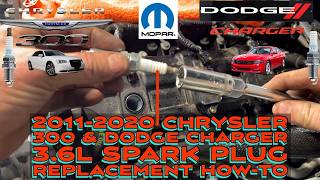
- Start with the basics: Inspect and replace spark plugs if they are due. The HEMI V8 has 16 plugs, and accessing the plugs on the 3.6L V6 requires removing the intake manifold. 🎬 Watch: Step-by-step guide to replacing spark plugs on the 3.6L V6.
- Test the ignition coils. Swap the coil from a misfiring cylinder (identified via live data) to a non-misfiring cylinder. If the misfire code changes to the new cylinder, the coil is bad.
- If you have a HEMI V8 or Pentastar V6, listen carefully for a 'ticking' sound at idle, which is a classic symptom of valvetrain failure.
- Check for vacuum leaks using a smoke machine. Pay close attention to the PCV valve and hose, as well as the brake booster and its vacuum line.
Parts You'll Likely Need
- Spark Plugs
- Ignition Coil
- Camshaft and Lifter Kit (HEMI V8)
- Rocker Arm & Lifter Kit (Pentastar V6)
- PCV Valve
- Intake Manifold Gaskets
Related Codes That Often Appear With This One
- P0301-P0308 — These codes specify which cylinder is misfiring (e.g., P0301 for Cylinder 1). They often appear with P0300 to help pinpoint the problem.
- P219A / P219B — These codes indicate an air-fuel ratio imbalance on Bank 1 or Bank 2, respectively. A vacuum leak or fuel delivery issue causing a P0300 can also trigger these codes, as seen in TSB #1807320 and #18-084-16.
- P0456 — This code for a small EVAP system leak is mentioned alongside P0300 in TSB #18-094-16, which involves a PCM software update for a list of potential DTCs.
Technical Service Bulletins (TSBs) & Recalls
- TSB #1807320: Mentions P0300 alongside several other codes including P0606 (Internal Control Processor), suggesting a PCM-related fault.
- TSB #18-094-16: Involves a PCM software update to address a list of DTCs, including P0300 and others like P0456 (EVAP Leak). This suggests some misfire flags could be software related.
- TSB #18-061-17: Lists P0300 as a possible code related to other system diagnostics.
- TSB #18-052-15 REV A: Notes P0300 can occur on vehicles using a block heater in certain temperatures, pointing to another specific software-related trigger.
Platform-Specific Known Issues

- 5.7L/6.4L HEMI V8 Camshaft/Lifter Failure: The most significant issue for V8 models. The roller on a lifter can fail, scoring the camshaft lobe. This is a major and expensive repair that presents as a P0300 and a ticking noise.
- 3.6L Pentastar V6 Rocker Arm Failure: These engines can suffer from premature wear on the rocker arms, leading to ticking noises and misfires.
Mechanic-Grade Diagnostic Values
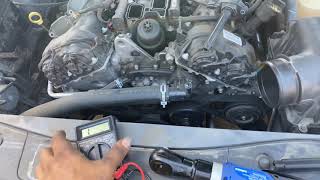
- Ignition Coil Primary Resistance — expected: 0.4 to 0.6 Ohms. Failure: A reading outside this range indicates a faulty coil winding.
- Ignition Coil Secondary Resistance — expected: 5.0 to 7.2 kOhms (5,000 to 7,200 Ohms). Failure: A reading outside this range indicates a faulty secondary winding.
- Engine Coolant Temperature for Cam/Crank Relearn — expected: Above 158°F (70°C). Failure: The relearn procedure may not initiate or complete successfully if the engine is not at operating temperature.
Hidden / Shadow Codes Worth Checking
- Mode $06 Misfire Data: While not a 'hidden code,' Mode $06 on an advanced scan tool provides raw data from the PCM's onboard diagnostic monitors, including misfire counts for each individual cylinder. This allows a technician to see which cylinders are misfiring before the count is high enough to set a specific P030x code. (see via Use an OBD-II scanner with Mode $06 capability or a professional tool like WiTech. Some apps like JScan can also display live misfire counts.)
Scan Tool Commands That Help
- wiTech, Appcar DiagFCA, or other advanced scanner: Cam Crank Relearn — This function must be performed after replacing the camshaft, crankshaft, timing components, or their respective position sensors. It synchronizes the PCM's understanding of the relationship between the two, and failure to perform it can cause misfires or a no-start condition.
- HP Tuners or similar ECU tuning software: Disable DTC P0300 — This is an advanced technique used after installing an aggressive aftermarket camshaft. The increased valve overlap can cause crankshaft speed variations that the PCM misinterprets as a misfire. Disabling the code prevents a false check engine light, but should only be done when a true misfire has been ruled out.
Wiring & Ground Locations
- Engine Harness Chafe Points — Check the driver's side of the engine bay where the main harness may contact the ECM/TCM bracket, the upper control arm, and the shock tower bolt.. Vibration can cause the harness to rub through, shorting wires for ignition coils, fuel injectors, or sensors, leading to intermittent and random misfires.
- Main Chassis Ground (Trunk) — In the trunk, near the battery, there is a main ground cable that anchors to the vehicle's chassis.. A loose or corroded main ground can cause widespread electrical issues, including weak spark and erratic sensor readings, leading to a P0300. A 2016 Charger SRT owner traced major electrical problems, including misfires, to this bolt having come loose.
- PCM Grounds — On some models, PCM ground wires (often black/tan) are secured to a stud on top of the alternator bracket.. A poor ground connection for the PCM itself can cause it to make incorrect calculations for fuel and spark timing, leading to misfires.
Real Owner Repair Stories
- Reddit user in r/AskMechanics (2012 Ram 1500 5.7L HEMI (mechanically similar to Charger)) — P0300, jerky operation, and stalling after warming up.
❌ Tried (didn't work) Confirmed timing was correct., Plugs were only 2k miles old., Coils and injectors were not an issue prior to repair.
✅ What actually fixed it Reinstalling the MDS solenoids. The owner had performed a cam/lifter replacement using the stock MDS cam and lifters but had installed plugs to block off the MDS solenoids while disabling MDS with a tuner. The theory was that without oil pressure from the solenoids, the MDS lifters were collapsing at idle, causing the misfire. Reinstalling the solenoids, even with MDS electronically 'off', resolved the P0300 code. - Reddit user in r/autorepair (2015 Dodge Charger SRT 392 with tune and high-flow cats) — Flashing check engine light with P0300 only at high RPM or wide-open throttle. Smooth cruising.
❌ Tried (didn't work) Replaced all spark plugs and ignition coils., Swapped a fuel injector on a misfiring cylinder, but the misfire did not move.
✅ What actually fixed it The user's diagnosis pointed towards a clogged high-flow catalytic converter on Bank 1, as live data showed misfires primarily on cylinders 1, 5, and 7. The excessive backpressure from the clogged cat was likely causing the misfires under heavy engine load. The burble tune was suspected of damaging the catalytic converter.
"I Checked Everything" — The Actual Cause
- A large vacuum leak in the power brake booster can cause a P0300 code, rough idle, or stalling when the brakes are applied. This is often missed by a standard intake smoke test because the leak is in the booster's internal diaphragm or the check valve on the vacuum hose leading to it. The key symptom is a distinct hissing sound from the pedal area when the brakes are pressed.
OEM Part Supersession History
5184296AD, 5184296AE, 5184296AF, 5184296AG→5184296AH— The original rocker arms on the 3.6L Pentastar V6 were prone to premature failure of the needle bearings. The updated part number represents a revised, more durable design.
Heads up: Using older stock or incorrect aftermarket rocker arms can cause immediate misfire codes due to improper valve lift. It is critical to use the latest OEM revision for repairs.
Model Year Variations Within This Range
- 2011-2015 (Pre-Update Pentastar V6): The 3.6L V6 engines in these years were more susceptible to rocker arm failure and, in 2011-2013 models, cylinder head issues. These engines use a 2-wire ignition coil.
- 2016-2018 (Updated Pentastar V6): For the 2016 model year, the 3.6L V6 was significantly updated with two-stage variable valve lift (VVL), a higher compression ratio (11.3:1), and other internal improvements for better efficiency and longevity, making the valvetrain more robust. These may use a different, 3-wire ignition coil design.
Helpful Videos
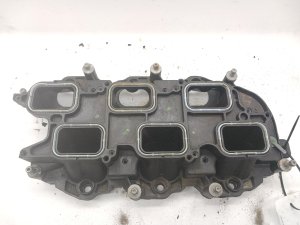
Used OEM Parts in Stock
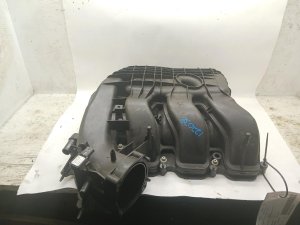


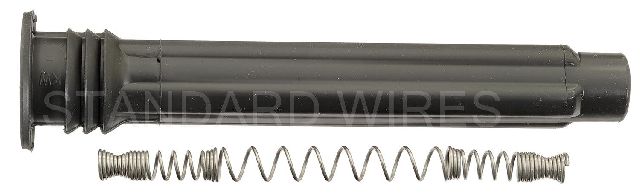
New Aftermarket Parts Available



The information in this article is provided for general reference and educational purposes only. Vehicle specifications, procedures, and part compatibility can vary by production date, trim level, and region. Always consult your vehicle's factory service manual and verify part numbers before purchasing or performing repairs. Safety-critical components such as airbags, seat belts, and braking systems should be installed by a qualified professional.
- Dodge CHARGER:
- 🎬 Helpful Videos
- 🛍️ Shop This Part
- What's Unique About the 2011-2018 Dodge CHARGER
- Diagnostic Flowchart
- Symptoms You May Notice
- Most Likely Causes
- Rare But Worth Checking
- Diagnosis Steps
- Parts You'll Likely Need
- Related Codes That Often Appear With This One
- Technical Service Bulletins (TSBs) & Recalls
- Platform-Specific Known Issues
- Mechanic-Grade Diagnostic Values
- Hidden / Shadow Codes Worth Checking
- Scan Tool Commands That Help
- Wiring & Ground Locations
- Real Owner Repair Stories
- "I Checked Everything" — The Actual Cause
- OEM Part Supersession History
- Model Year Variations Within This Range
- 🎟️ Get 5% Off