

P0300 on 2017-2024 Chrysler Pacifica: Random Misfire Causes & Fixes
On the 2017-2024 Chrysler Pacifica, a P0300 code is often more than just bad spark plugs. It frequently points to a failure in the 3.6L Pentastar's valvetrain, like faulty rocker arms or camshaft issues. Listen for a ticking noise, as this is a key symptom of this more serious and costly mechanical problem, often referred to as the 'Pentastar tick'.
- A P0300 code on a Pacifica is serious and should be addressed immediately to prevent damage to the catalytic converter.
- Listen for a ticking or rattling noise from the engine. This is a strong sign of a common and serious mechanical valvetrain failure (rocker arms/camshafts), not just a simple spark plug issue.
- Always check for other trouble codes. Codes related to camshafts, fuel pressure, or specific cylinders are vital clues to the root cause.
- While spark plugs and coils are possible causes, do not assume they are the fix, especially if a ticking noise is present or if replacing them does not solve the problem.
- Due to the high probability of a complex mechanical issue, professional diagnosis is highly recommended if basic checks don't resolve the misfire.
What's Unique About the 2017-2024 Chrysler PACIFICA

The Chrysler Pacifica uses the 3.6L Pentastar V6 engine, which has a known history of valvetrain issues across many Chrysler, Dodge, and Jeep vehicles. While common misfire causes like spark plugs and coils are possible, a P0300 on this van is frequently a symptom of a deeper mechanical problem, such as failing rocker arms, lifters, or camshafts. Several Technical Service Bulletins (TSBs) and numerous owner complaints confirm that a ticking or rattling noise from the engine top-end is a strong indicator of this more severe issue, which can lead to camshaft damage if not addressed.
Diagnostic Flowchart

Tap your situation to follow the diagnostic path that matches what you're seeing on this vehicle.
Symptoms You May Notice
- Flashing or solid Check Engine Light
- Rough or shaky idle
- Engine hesitation or stumbling during acceleration
- Noticeable loss of engine power
- Engine ticking or rattling noise, especially from the top of the engine (the 'Pentastar tick')
- Reduced fuel economy
- Difficulty starting or hard starting
- Replacing only spark plugs and coils when a mechanical ticking noise is present. This ignores the more likely and serious underlying rocker arm or camshaft failure.
Most Likely Causes

- Failed Rocker Arms / Lifters 🔴 High Probability The 3.6L Pentastar engine is notorious for rocker arm bearing failures, which cause the arm to seize or break, leading to a loss of valve actuation and a misfire. This is often heard as a distinct ticking noise. An owner complaint (ODI #11598602) directly links a P0300 code to faulty and broken roller rockers. The issue is widely discussed across forums for all vehicles with this engine.
How to confirm: Listen for a distinct ticking or tapping noise from the valve cover area. A mechanic will need to remove the valve cover(s) for a visual inspection of the rocker arms and camshaft lobes for wear, scoring, or broken components.
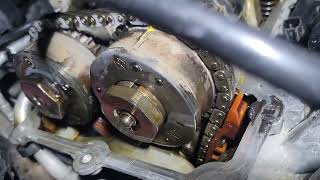
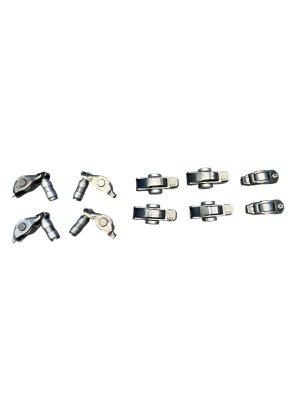
Typical fix: Replace all rocker arms (PN 5184296AH 🎬 Watch: Complete walkthrough for fixing the Pentastar tick and rocker arms. or similar) and lifters (PN 5184332AA or similar) on the affected cylinder head. If the camshaft is damaged, it must also be replaced. This is a labor-intensive job requiring new valve cover gaskets.
Est. part cost: $200-$800 - Worn or Faulty Spark Plugs 🔴 High Probability Spark plugs are a regular maintenance item. A Chrysler TSB (#09-013-20 REV. A) specifically addresses misfires (including P0301-P0306) on 2020-2021 models due to internal cracks in a specific batch of spark plugs, requiring the replacement of all six.
How to confirm: Inspect spark plugs for wear, damage, carbon fouling, or oil contamination. A diagnostic swap (moving a plug from a misfiring cylinder to a non-misfiring one) can help isolate a single bad plug if cylinder-specific codes (P0301-P0306) are also present.
Typical fix: Replace all six spark plugs. It is recommended to use OEM-spec plugs. The rear three plugs require removal of the upper intake manifold. 🎬 See this step-by-step DIY guide for replacing plugs and coils.
Est. part cost: $50-$120 - Faulty Ignition Coils 🟡 Medium Probability Ignition coils can fail over time due to heat and vibration. While typically causing a single-cylinder misfire (e.g., P0302), a weak or intermittently failing coil, or a cracked coil boot, can contribute to a P0300 code.
How to confirm: Swap the ignition coil from a known misfiring cylinder (if a specific code is present) with a coil from a good cylinder. If the misfire code follows the coil, the coil is bad.
Typical fix: Replace the faulty ignition coil. It's often recommended to replace all coils if they are original and the vehicle has high mileage.
Est. part cost: $40-$90 per coil - Camshaft or VVT System Failure 🟡 Medium Probability TSBs directly link P0300 to camshaft issues. TSB #9100143 points to replacing the intake camshaft, and TSB #0901220 links P0300 with camshaft position sensor and stuck valve codes. A video shows a P0300 and P000A on a 2018 Pacifica fixed by replacing a broken oil control valve and phaser. 🎬 Watch: How to fix P0300 and P000A codes on a Pacifica.
How to confirm: Scan for related codes like P000A, P0365, or P105C. Diagnosis requires checking cam/crank correlation with a scan tool and may involve inspecting the camshafts, phasers, and VVT solenoids for physical damage or looseness.
Typical fix: Replacement of the faulty camshaft, VVT solenoid, or cam phaser. TSB #9100143 specifies replacing the right intake camshaft (PN 05047913AA or AB) in certain situations.
Est. part cost: $150-$500 per camshaft/phaser
Rare But Worth Checking
- Low Fuel Pressure: TSB #18-044-26 connects P0300 with a P00C6-00 (Fuel Rail Pressure Too Low) code, suggesting a potential issue with the fuel pump or injectors affecting multiple cylinders.
- Vacuum Leak: A significant leak in the intake manifold or a vacuum hose can lean out the air-fuel mixture for all cylinders, causing random misfires. A faulty PCV valve is a common source of unmetered air and can be associated with P0300.
- Carbon Buildup on Intake Valves: Although the 3.6L Pentastar is port-injected, which helps keep valves clean, significant carbon buildup can still impede airflow and cause misfires, especially on higher mileage engines.
- Clogged Catalytic Converter: A restricted exhaust can create backpressure that leads to misfires across multiple cylinders. This is often a result of a long-term misfire condition, not the initial cause.
- Rodent Damage to Wiring: A Reddit user reported P0300 and P0303 codes after discovering rats had chewed through the ignition coil wiring harness, a surprisingly common issue.
Diagnosis Steps
- Scan for all DTCs. Note any codes accompanying P0300, as they provide critical clues (e.g., specific cylinder codes, camshaft codes, fuel pressure codes).
- Listen carefully to the engine at idle. A distinct, rhythmic ticking or tapping noise ('Pentastar tick') strongly suggests a mechanical valvetrain issue (rocker arms, lifters).
- Use a scan tool with live data (Mode $06) to monitor misfire counts per cylinder. This can help identify the problematic cylinders even if only a P0300 code is present.
- If no ticking is present, start with basic ignition maintenance. Inspect and/or replace all six spark plugs, especially if near the 100,000-mile service interval or if the vehicle falls under a relevant TSB.
- Inspect ignition coils. If a specific cylinder misfire is identified, swap the coil with another cylinder and see if the code follows.
- Check for vacuum leaks. Inspect all hoses connected to the intake manifold for cracks or disconnections. A smoke test is the most effective way to find a leak. Pay close attention to the PCV valve and its hose.
- If a ticking noise is present or ignition/vacuum checks don't solve the issue, professional diagnosis is required. This involves removing the valve covers to inspect the rocker arms, lifters, and camshafts for wear or damage.
- Further diagnostics may include a fuel pressure test and a cylinder compression/leak-down test to rule out fuel delivery or internal engine sealing problems.
Parts You'll Likely Need
- Rocker Arms & Lifters
(OEM #5184296AH (Rocker Arm), 5184332AA (Lifter))— A very common failure point on the 3.6L Pentastar engine leading to P0300 and a ticking noise. Usually replaced as a set per head.
Trusted brands: Mopar, Melling, DNJ
OEM price range: $300-$500 (set for one head)
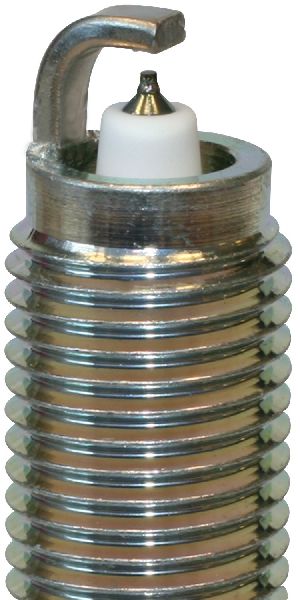
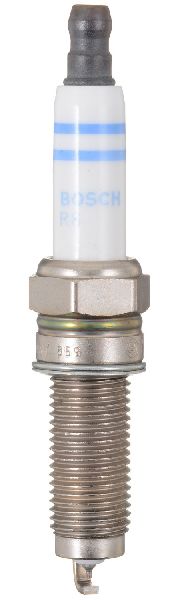
Aftermarket price range: $150-$300 (set for one head) - Spark Plugs — Standard maintenance item and a known cause of misfires on this engine, as noted in TSBs for similar models.
Trusted brands: NGK, Champion
OEM price range: $80-$150 (set of 6)
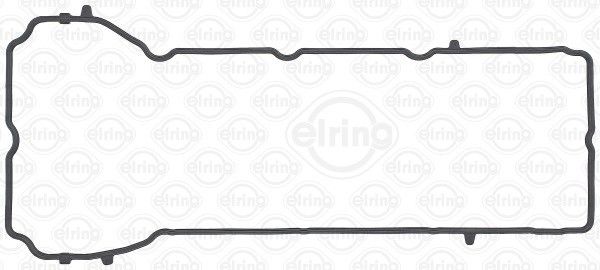
Aftermarket price range: $50-$100 (set of 6) - Valve Cover Gaskets — Must be replaced when removing the valve covers to inspect or replace rocker arms and camshafts.
Trusted brands: Mopar, Fel-Pro, Mahle
OEM price range: $70-$120 (set)
Aftermarket price range: $40-$80 (set)
Related Codes That Often Appear With This One
- P0301-P0306 — These are cylinder-specific misfire codes. A P0300 is often accompanied by one or more of these, which can help narrow down the location of the problem.
- P000A — Bank 1 Camshaft 1 Position Slow Response. TSB #0901220 lists this with P0300, indicating a valvetrain timing issue. A loose or broken VVT oil control valve can also cause this.
- P105C — Intake Valve Stuck In Low Lift Position. Also listed in TSB #0901220, pointing to a mechanical problem in the cylinder head, often related to the valvetrain.
- P00C6 — Fuel Rail Pressure Too Low. TSB #18-044-26 links this with P0300, suggesting a fuel delivery problem as the root cause.
Technical Service Bulletins (TSBs) & Recalls

- Bulletin #18-044-26: Links P0300 to low fuel pressure (P00C6-00) and high oil level warnings.
- Bulletin #0901220: Connects P0300 with camshaft sensor codes (P000A, P0365) and stuck intake valve codes (P105C).
- Bulletin #9100143: Advises replacing the right intake camshaft for a P0300 code on certain Pentastar engines.
- Bulletin #18-054-17 REV. A: Shows P0300 appearing with various other codes on hybrid models, suggesting complex diagnostic paths.
Platform-Specific Known Issues
- The Rocker Arm Failure Pattern: On the Pacifica's 3.6L engine, a P0300 code is very frequently preceded by a light, rhythmic ticking noise from the top of the engine, often called the 'Pentastar tick'. This noise is the sound of a failing rocker arm bearing. Ignoring this sound and only replacing spark plugs is a common mistake. The failed rocker arm will eventually seize or break, causing a persistent misfire and potentially damaging the camshaft, turning a moderate repair into a very expensive one. One owner complaint (ODI #11598602) directly links a P0300 code to faulty and broken roller rockers after an initial, less severe repair attempt failed.
- Diagnostic Pitfall: Ignoring the Ticking Noise: A common owner experience involves a shop first replacing spark plugs and/or ignition coils to address the P0300 code. While this may temporarily resolve a minor misfire, if the underlying cause is a mechanical rocker arm failure (indicated by a ticking sound), the code will inevitably return, often more severely. A proper diagnosis must begin with listening for this specific valvetrain noise.
Mechanic-Grade Diagnostic Values
- Ignition Coil Primary Resistance — expected: 0.49 - 0.57 Ohms. Failure: A reading outside this range indicates a faulty coil.
- Ignition Coil Secondary Resistance — expected: 9.5 - 11.1 kOhms. Failure: A reading outside this range indicates a faulty coil.
- VVT Solenoid Resistance — expected: 5 - 20 Ohms (check service manual for exact spec). Failure: Infinite resistance (Open Loop) or very low resistance (<2 Ohms) indicates a failed solenoid.
- Fuel Pressure (System) — expected: Rated at 58 psi (400 kPa). Failure: Significantly lower pressure indicates a weak pump or clogged filter, which can cause misfires.
Scan Tool Commands That Help
- wiTech (Chrysler Dealer Tool): VVT Exhaust/Intake Solenoid Actuation — To test the mechanical function of a VVT solenoid. A technician can command the solenoid 'ON' and use a test light to verify the PCM is sending the signal, helping to distinguish between a wiring and a component failure.
- wiTech (Chrysler Dealer Tool): Misfire Monitor (Mode $06) — To view raw misfire counts for each individual cylinder, even when only a general P0300 code is set. This is crucial for identifying which cylinder(s) are contributing most to the random misfire count.
- wiTech (Chrysler Dealer Tool): PCM Reprogramming/Flash — When a Technical Service Bulletin (TSB), such as #18-001-19 REV B, indicates that a software update is available to correct issues like rough idle or false DTCs that could be related to a P0300 condition.
Real Owner Repair Stories
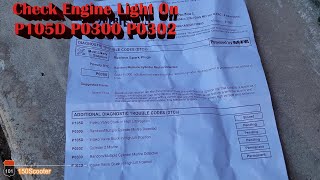
- YouTube user '150SCOOTER' (2018 Chrysler Pacifica) — Check Engine Light with codes P0300, P0302, and P105D. Engine shaking and misfiring.
❌ Tried (didn't work) Initially suspected bad spark plugs or ignition coils.
✅ What actually fixed it The retaining bolt for the VVT solenoid on cylinder #2 was found to be loose, likely from a previous dealer service. Tightening the bolt resolved all codes and the misfire. - Reddit user in r/ChryslerPacifica (2018 Chrysler Pacifica) — P0300 and P0303 codes that would return immediately after clearing, even with the engine off. Also had a P105D code.
❌ Tried (didn't work) Replaced all spark plugs., Swapped ignition coils between cylinders., Swapped fuel injectors between cylinders., Verified continuity of wiring from coils/injectors to the PCM.
✅ What actually fixed it The initial cause was rodent damage to the wiring harness for the #3 and #5 ignition coils. After repairing the wires, the user noted that on 2018+ models, a security bypass cable is required for many aftermarket scan tools to successfully clear codes from the PCM. - YouTube user 'Ziad Automotive' (2018 Chrysler Pacifica) — Codes P0300 and P000A, rattling noise, ticking noise, occasional stalling.
✅ What actually fixed it The oil control valve for the intake camshaft on the right bank was broken internally, causing it to stick out. Replacing the oil control valve and the camshaft phaser resolved the issue and the engine ran smoothly.
"I Checked Everything" — The Actual Cause
- In a case reported on Reddit involving P0300 and a P0171 (Bank 1 Lean) code, the owner performed a smoke test which revealed no vacuum leaks. They also cleaned the throttle body and MAP sensor without success. This points towards causes that a smoke test would miss, such as a failing fuel injector on Bank 1 or an exhaust leak before the O2 sensor, which can trick the sensor into reporting a lean condition.
OEM Part Supersession History
5184296AD, AE, AF, AG→5184296AH— The 'AH' revision is noted to have improved durability, potentially through better heat treatment or a hardened roller tip, to address the common ticking and failure issue.68548886AA, 68548886AB→68548886AC— Updated part for the PCV Valve.
Heads up: It is important to visually verify the flange hole locations before purchasing, as variations may exist.
Model Year Variations Within This Range
- 2016+: Some Pacificas are equipped with the 'Pentastar Upgrade' (PUG) engine. This version features two-stage variable valve lift (VVL), cooled EGR, and a higher compression ratio (11.3:1 vs 10.2:1). While the original Pentastar was known for roller bearing failure in the rocker arms, the PUG engine's failure mode is different; the high-lift portion of the follower, which has no roller, can wear against the cam lobe, causing similar ticking symptoms but from a different root cause.
- 2018+: Starting in 2018, Chrysler implemented a Secure Gateway Module (SGW). This requires many aftermarket scan tools to use a specific bypass cable to perform bidirectional controls or clear diagnostic trouble codes. Without the bypass, the tool may only be able to read codes.
Helpful Videos
Used OEM Parts in Stock
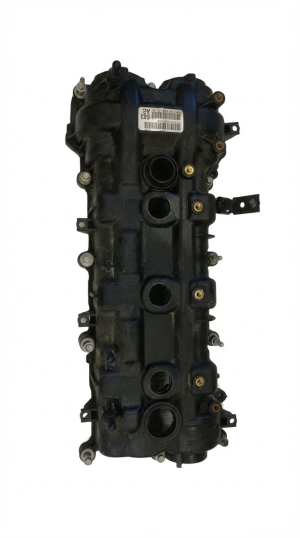
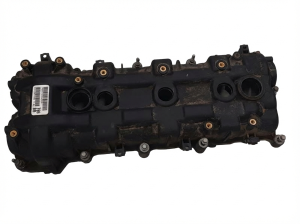
New Aftermarket Parts Available

The information in this article is provided for general reference and educational purposes only. Vehicle specifications, procedures, and part compatibility can vary by production date, trim level, and region. Always consult your vehicle's factory service manual and verify part numbers before purchasing or performing repairs. Safety-critical components such as airbags, seat belts, and braking systems should be installed by a qualified professional.
- Chrysler PACIFICA:
- 🎬 Helpful Videos
- 🛍️ Shop This Part
- What's Unique About the 2017-2024 Chrysler PACIFICA
- Diagnostic Flowchart
- Symptoms You May Notice
- Most Likely Causes
- Rare But Worth Checking
- Diagnosis Steps
- Parts You'll Likely Need
- Related Codes That Often Appear With This One
- Technical Service Bulletins (TSBs) & Recalls
- Platform-Specific Known Issues
- Mechanic-Grade Diagnostic Values
- Scan Tool Commands That Help
- Real Owner Repair Stories
- "I Checked Everything" — The Actual Cause
- OEM Part Supersession History
- Model Year Variations Within This Range
- 🎟️ Get 5% Off