

P0300 on 2017-2024 Chevrolet Traverse: Random Misfire Causes and Fixes
P0300 on a Chevy Traverse indicates random engine misfires. The most common causes are worn-out iridium spark plugs or failing ignition coils. Replacing spark plugs costs around $60-$120 for parts and is a common DIY fix. For direct-injection engines in this range, carbon buildup on intake valves is also a very frequent culprit requiring professional cleaning.
- P0300 means random misfires are detected; it's not specific to one cylinder.
- Start your diagnosis with the most common and affordable fixes: inspect and replace spark plugs and ignition coils.
- If the check engine light is flashing, pull over as soon as it is safe to do so to prevent expensive catalytic converter damage.
- On these direct injection engines, carbon buildup and dirty fuel injectors are common causes for misfires, especially on cold starts.
- Be aware of specific TSBs for your model year and engine, especially the 2.0L Turbo, which has known issues related to moisture and ignition components.
What's Unique About the 2017-2024 Chevrolet TRAVERSE

The 2017-2024 Traverse spans two different generations with different direct-injection engines, which influences the common causes for a P0300 code. The 2017 model (first generation, Lambda platform) uses the 3.6L LLT V6, which is known for timing chain stretch issues that can cause misfires. The 2018-2024 models (second generation, C1 platform) use the updated 3.6L LFY V6, which is less prone to timing chain failure but is still highly susceptible to carbon buildup on intake valves—a known issue with all direct injection engines. The second generation also briefly offered a 2.0L Turbo (LTG) engine, which has specific TSBs related to misfires from moisture in the charge air cooler. A rare but serious issue documented in TSB 18-NA-115 affects both the LLT and LFY engines, where block porosity can cause coolant to leak into a cylinder, leading to a cold-start misfire that often resolves when the engine warms up.
Diagnostic Flowchart

Tap your situation to follow the diagnostic path that matches what you're seeing on this vehicle.
Generation note: This range covers two generations. The 2017 Traverse is the last year of the first generation (Lambda platform) with the 3.6L LLT engine. The 2018-2024 models are the second generation (C1 platform) primarily with the 3.6L LFY engine. While many P0300 causes are similar, the 1st Gen LLT is more known for timing chain issues, while some 2nd Gen models have specific TSBs for rocker arm oil control valves or issues with the 2.0L Turbo engine offered in 2018-2019 models.
Symptoms You May Notice

- Rough or shaky idle
- Hesitation or stumbling during acceleration
- Noticeable loss of engine power
- Flashing or solid Check Engine Light
- Reduced fuel economy
- Engine stalling in some cases
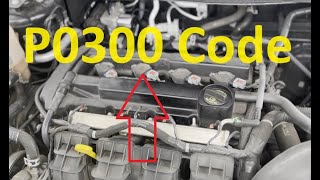
- A fuel smell from the exhaust 🎬 Watch: A helpful guide on common P0300 causes and fixes. due to unburned gasoline
- Replacing only one spark plug or coil when others are near the end of their service life, especially when the intake manifold must be removed for access.
- Replacing oxygen sensors when lean codes (P0171/P0174) are actually caused by a vacuum leak introducing unmetered air.
- Assuming the cause is ignition-related without checking for common direct-injection issues like carbon buildup on intake valves.
- Replacing fuel pumps without first verifying fuel pressure with a gauge.
Most Likely Causes

- Worn or Fouled Spark Plugs 🔴 High Probability GM's 3.6L direct-injection engines have a 100,000-mile service interval for spark plugs, but real-world conditions, fuel quality, and short trips can cause them to wear or foul much sooner, leading to a weak spark. This is often the first and most common cause of a P0300 code.
How to confirm: Remove and inspect the spark plugs. Look for worn electrodes, heavy carbon deposits, oil fouling, or white ash, which indicate various combustion problems. A plug that is wet with fuel can indicate a lack of spark or a leaking injector.
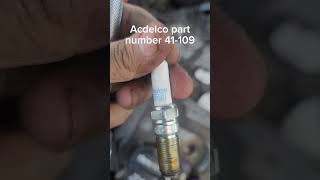
Typical fix: Replace all six spark plugs as a set. 🎬 Watch: Detailed spark plug replacement walkthrough for the 3.6L V6. Use the specified OEM Iridium plugs (e.g., ACDelco 41-109 for 1st Gen, ACDelco 41-125 or 12683541 for 2nd Gen) to ensure proper performance and longevity.
Est. part cost: $60-$120 - Failing Ignition Coil(s) 🔴 High Probability Ignition coils deliver the high voltage needed to fire the spark plugs. Over time, heat and vibration cause them to fail. While one failing coil usually triggers a cylinder-specific code (e.g., P0301), multiple weak or intermittently failing coils can create a random P0300 condition before one fails completely.
How to confirm: With the engine running, use a scan tool with live data to view misfire counts per cylinder. If you can identify a cylinder with higher counts, swap its coil with a known good cylinder's coil. Clear the codes and drive the vehicle. If the misfire code follows the coil (e.g., P0301 becomes P0303 after swapping coils from cylinder 1 to 3), the coil is bad.
Typical fix: Replace the faulty ignition coil. It is often recommended to replace the spark plug at the same time. Due to the labor involved in removing the intake manifold to access the rear bank of coils, many owners and shops recommend replacing all three rear coils and all six spark plugs at once. 🎬 See how to replace both spark plugs and coil packs.
Est. part cost: $50-$120 per coil - Carbon Buildup on Intake Valves 🔴 High Probability This is a very common issue on the Traverse's direct injection (DI) engines (both LLT and LFY). Since fuel is injected directly into the cylinder, it doesn't wash over the intake valves. Oil vapor from the PCV system bakes onto the hot valves, creating hard carbon deposits. This buildup can disrupt airflow, especially when the engine is cold, causing the valve to not seal properly and leading to misfires.
How to confirm: Requires a borescope inspection of the intake ports and valves, which involves removing the intake manifold. The deposits will be visible as thick, black crust on the valve stems and heads.
Typical fix: Manual cleaning of the valves, most effectively done through walnut shell blasting. Chemical soak methods can also be used but may be less effective on heavy buildup. This is a labor-intensive job.
Est. part cost: $50 (for gaskets/seals), but shop labor cost is high ($600-$1200). - Dirty or Clogged Fuel Injectors 🟡 Medium Probability Direct injection (DI) engines operate at very high fuel pressures, and injector tips are exposed to extreme in-cylinder temperatures. Carbon can build up on the injector tips, disrupting the precise fuel spray pattern. This leads to an improper air/fuel mixture and can cause random misfires.
How to confirm: This is more difficult to diagnose. A professional can perform a fuel injector balance test with a high-level scan tool. Another method is to identify a misfiring cylinder via live data, then swap the suspect injector with one from a good cylinder. If the misfire follows the injector, the injector is faulty.
Typical fix: Professional fuel system cleaning or replacement of the faulty injectors. Replacement is often necessary if an injector is electronically or mechanically failed.
Est. part cost: $50-$150 per injector (rebuilt), higher for new OEM - Intake Manifold Vacuum Leak 🟡 Medium Probability The plastic intake manifold and its associated gaskets can develop leaks over time due to heat cycles. PCV hoses and other vacuum lines can also become brittle and crack. This allows unmetered air to enter the engine, leaning out the air/fuel mixture and causing random misfires across multiple cylinders, often accompanied by P0171/P0174 codes.
How to confirm: Perform a smoke test by introducing smoke into the intake system with the engine off and watching for leaks from gaskets, hoses, or the manifold body. Alternatively, with the engine running, carefully spray carb cleaner or a propane torch (unlit) around gasket areas and listen for a change in engine idle speed.
Typical fix: Replace the leaking gasket(s) or hose. If the intake manifold itself is cracked, it will need to be replaced.
Est. part cost: $20-$100
Rare But Worth Checking
- Low Fuel Pressure: A weak in-tank fuel pump or a failing high-pressure fuel pump (HPFP) specific to direct injection engines can starve the engine for fuel, especially under load, causing misfires. This may also set codes like P0087 (Fuel Rail/System Pressure - Too Low) or P0191 (Fuel Rail Pressure Sensor Circuit Range/Performance).
- Internal Engine Issues (Block Porosity): A rare but documented issue in TSB 18-NA-115 describes a cold-start specific misfire that disappears as the engine warms up. This can be caused by porosity in the engine block casting, allowing a tiny amount of coolant to seep into a cylinder overnight. Diagnosis involves adding dye to the coolant, pressure testing the system, and using a borescope to look for coolant inside the cylinder. The official fix is engine replacement.
- Moisture in Charge Air Cooler (2.0L LTG Engine): Specific to 2018-2019 models with the 2.0L Turbo engine, TSB 18-NA-020 notes that moisture can collect in the charge air cooler during humid or rainy conditions and be drawn into the engine on heavy acceleration, causing a temporary but significant misfire event that logs a P0300.
- Stretched Timing Chain (Primarily 1st Gen): The first-generation 3.6L LLT engine is known for premature timing chain stretching. If the chains stretch, camshaft timing becomes erratic, which can lead to a P0300 code, often with a rattling noise on startup. This is a major mechanical repair.
Diagnosis Steps
- Check for a flashing Check Engine Light. If it's flashing, pull over and avoid driving to prevent expensive catalytic converter damage.
- Use an OBD-II scanner to confirm the P0300 code and check for any other stored codes (e.g., P0301-P0306, P0171, P0174, P050D). Note the freeze-frame data to see the conditions (engine temp, RPM) when the code was set.
- Use the scanner's live data function to monitor misfire counts on each cylinder. Watch for counts to increase during idle, under load, or specifically during a cold start. This can help narrow the search from 'random' to a few suspect cylinders.
- Inspect the ignition system. Start with the easiest components. Remove and inspect all spark plugs for wear, fouling, or damage. Check ignition coil boots for carbon tracking or oil contamination from a leaking valve cover gasket.
- If a cylinder shows high misfire counts, perform a 'swap test'. Swap the ignition coil with a known good cylinder. If the misfire follows the coil, the coil is bad. If it stays, swap the spark plug. If it still stays, the issue is likely fuel or mechanical.
- Test for vacuum leaks. A smoke test is the most effective method. Introduce smoke into the intake system and look for leaks around the intake manifold gaskets, PCV hoses, and throttle body.
- Check fuel pressure. For these DI engines, you need to check both the low-pressure side (from the in-tank pump) and the high-pressure side (from the HPFP). A scan tool can read the desired vs. actual pressure from the fuel rail sensor.
- If the misfire is worst on cold starts and disappears when warm, and all else checks out, consider the possibility of carbon buildup or the rare coolant leak from TSB 18-NA-115. A borescope inspection of the intake valves and cylinders is the next step.
Parts You'll Likely Need
- Iridium Spark Plugs (Set of 6)
(OEM #ACDelco 41-109 (for 1st Gen 3.6L LLT); ACDelco 41-125 or 12683541 (for 2nd Gen 3.6L LFY))— Spark plugs are a maintenance item and the most common cause of misfires. Using the correct OEM Iridium plug is critical for the performance and longevity of the direct injection ignition system.
Trusted brands: ACDelco, NGK
OEM price range: $10-$20 per plug
Aftermarket price range: $8-$15 per plug - Ignition Coil
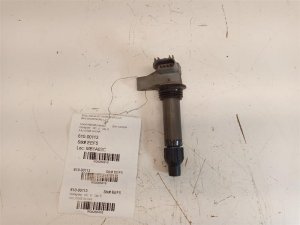
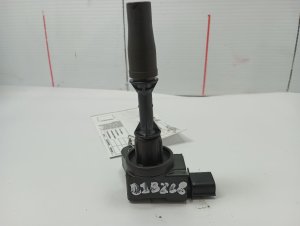
(OEM #ACDelco D515C (12632479) (for 1st Gen 3.6L LLT); ACDelco D521C (12674754) (for 2nd Gen 3.6L LFY))— Ignition coils are the second most common failure point for a P0300. When one fails, it's often wise to replace them in sets, especially the three on the rear bank that require removing the intake manifold.
Trusted brands: ACDelco, Delphi, NGK
OEM price range: $50-$90 per coil
Aftermarket price range: $30-$60 per coil - Intake Manifold Gasket Set
(OEM #Fel-Pro MS 97224 (for 2nd Gen 3.6L LFY))— Required whenever the intake manifold is removed to service the rear bank of spark plugs/coils, or to clean carbon buildup from the intake valves. Reusing old gaskets is a primary cause of vacuum leaks.
Trusted brands: Fel-Pro, ACDelco, Mahle
OEM price range: $40-$60
Aftermarket price range: $20-$40
Related Codes That Often Appear With This One
- P0301-P0306 — If the random misfire begins to occur more frequently on a specific cylinder, the ECM may also log a cylinder-specific misfire code, which is helpful for diagnosis.
- P0171 / P0174 — These 'System Too Lean' codes often appear with P0300 when the root cause is a vacuum leak, which introduces too much unmetered air, causing misfires across all cylinders.
- P050D — This code for 'Cold Start Rough Idle' is specifically mentioned alongside P0300 in TSB PIP5628G and TSB 18-NA-115, indicating a known cold-start misfire condition often linked to carbon buildup or the rare block porosity issue.
- P0087 — This 'Fuel Rail/System Pressure - Too Low' code can accompany a P0300 if the cause is a failing high-pressure fuel pump (HPFP) or low-pressure in-tank pump.
Technical Service Bulletins (TSBs) & Recalls
- 18-NA-115: Addresses cold start misfire (P0300) and rough idle, potentially caused by engine block porosity allowing coolant into a cylinder.
- PIP5628G: Preliminary information for diagnosing P0300-P0308 and P050D (Cold Start Rough Idle).
- 18-NA-020: Pertains to the 2.0L LTG engine, where moisture in the charge air cooler can cause misfires under acceleration.
- PIP5493E: Diagnostic aid for P0300 and cylinder-specific misfires on 3.6L LGX engines, suggesting checking for ECM calibrations and inspecting rocker arms.
- PIP5029A: Discusses engine misfires (P0300-P0306) resulting from major carbon deposits on intake and/or exhaust valves in direct injection engines.
Platform-Specific Known Issues
- TSB #18-NA-115 mentions a cold start misfire and rough idle that may set a P0300. A rare but possible cause is engine block porosity allowing coolant to enter a cylinder overnight, which burns off as the engine warms up.
- TSB #PIP5661A specifically addresses a misfire and P0300 on some 2019 Traverse models equipped with the 2.0L LTG engine.
- A GM technical article highlights that on the 2.0L LTG engine, talc powder used in the factory on ignition coil boots could lead to arcing, carbon tracking on the spark plug, and an eventual misfire. The fix is to replace plugs/coils and use dielectric grease.
Mechanic-Grade Diagnostic Values
- High-Pressure Fuel System (3.6L LFY) — expected: 750 psi (5,171 kPa) at idle, up to 2,250 psi (15,513 kPa) at wide-open throttle.. Failure: Pressure that is significantly below spec at idle or does not rise with engine RPM can indicate a failing high-pressure fuel pump (HPFP).
- Fuel Injector Resistance (Port and Direct Injection) — expected: Typically 12-17 Ohms for standard port injectors. Direct injectors may have lower resistance.. Failure: A reading far outside the expected range, or an open/short circuit, indicates a failed injector coil.
- Fuel Injector Balance Test (Pressure Drop) — expected: When pulsing each injector with a specialized tool, the pressure drop for each cylinder should be within 1.5 PSI (10 kPa) of the others.. Failure: A cylinder with a significantly smaller or larger pressure drop indicates a clogged or leaking injector.
- Spark Plug Gap (ACDelco 41-125 Iridium) — expected: 0.035 in (0.9 mm). These plugs are pre-gapped and should not be adjusted.. Failure: An incorrect gap can cause a weak spark. If the gap is wrong out of the box, the plug should be replaced, not gapped.
Hidden / Shadow Codes Worth Checking
- Misfire Current Counters (Live Data): While not a 'code,' professional scan tools (like GM's GDS2) provide a live data parameter showing the real-time misfire count for each individual cylinder. A P0300 is often triggered when these counters exceed a threshold on multiple cylinders. (see via Use a professional-grade scan tool with access to GM-specific live data PIDs. This is the primary tool for turning a 'random' P0300 into an actionable diagnosis by seeing which cylinders are the worst offenders.)
- Mode 6, Test ID $A2-$A7: Mode 6 data provides raw test results from the ECM's onboard diagnostics. Test IDs $A2 through $A7 typically correspond to misfire counts for cylinders 1 through 6. This can reveal which cylinder is misfiring even if a specific P030x code has not yet been set. (see via An advanced scan tool capable of displaying Mode 6 test data is required.)
Scan Tool Commands That Help
- GDS2 / High-Level Scan Tool: Injector Balance Test — Used to identify a clogged or poorly flowing fuel injector. The tool commands the fuel pump on, then fires a single injector for a set duration, measuring the resulting pressure drop in the fuel rail. Comparing the drop between cylinders helps isolate a faulty injector.
- GDS2 / High-Level Scan Tool: Crankshaft Position (CKP) Variation Relearn — This procedure is required after replacing a crankshaft, balancer, or ECM. It calibrates the CKP sensor to accurately detect misfires. If this calibration is corrupt, the ECM can falsely report misfires and set a P0300. It should be performed if major engine work was recently done.
- HP Tuners / Advanced Scanner: Disable Torque Converter Lock-Up — This is a diagnostic step for an edge-case scenario. If a P0300 is suspected to be caused by torque converter shudder, a technician can use a scanner to temporarily disable the lock-up clutch. If the misfire code and symptom disappear with the clutch disabled, it points to the torque converter as the root cause, not the engine.
Wiring & Ground Locations
- G103 — Located at the left rear of the engine compartment on the cowl, often above the brake booster.. This is a critical ground point that serves the Engine Control Module (ECM), Body Control Module (BCM), and instrument panel cluster. A loose or corroded G103 can cause erratic ECM behavior, leading to false misfire detection or other phantom electrical issues.
- Engine Harness Chafe Points — Common chafe points noted in GM TSBs include the front corner of the left cylinder head, the drive belt idler pulley bracket, and where the harness passes the shock tower.. Vibrations can cause the engine wiring harness to rub against sharp metal edges, eventually wearing through the insulation and causing intermittent shorts to ground on critical circuits like those for ignition coils or fuel injectors, leading to a P0300.
- G110 / G114 — On similar GM truck platforms, these grounds are located on the engine block or frame rails in the front of the engine bay.. GM issued Engineering Information (PIE0548) for loose ground connections at G110/G114 on 2019-2020 truck platforms causing a variety of issues. While for a different model, the principle of checking major engine and chassis grounds is a critical step in diagnosing a persistent P0300.
Real Owner Repair Stories
- CorvetteForum & Yukon Forum user reports (GM vehicles (Yukon XL, Corvette) with P0300, applicable to Traverse due to shared system logic) — Persistent P0300 random misfire code, sometimes with a slight jolt or shudder feeling during gear shifts or steady cruising.
❌ Tried (didn't work) Replacing spark plugs, Replacing ignition coils, Replacing knock sensors, Swapping fuel injectors, Performing a crankshaft variation relearn
✅ What actually fixed it The issue was not an engine misfire, but a faulty torque converter clutch causing a shudder. The crankshaft position sensor was misinterpreting the drivetrain vibration as an engine misfire. Disabling the torque converter lock-up with a scan tool made the code disappear, confirming the diagnosis. The final fix was replacing the torque converter. - YouTube user comment (Vehicle with persistent P0300) — Random misfire that could not be traced for months.
❌ Tried (didn't work) Replacing all ignition coils and wires, Replacing spark plugs, Replacing MAF sensor, Replacing MAP sensor, Replacing PCV valve, Checking for vacuum leaks (presumably with spray, not a smoke test)
✅ What actually fixed it The final cause was a leaking intake manifold gasket that was not obvious during initial checks.
"I Checked Everything" — The Actual Cause
- A common scenario is a P0300 accompanied by lean codes (P0171/P0174) where a smoke test of the intake system shows no leaks. The actual cause can be a faulty torque converter clutch. The shudder from the converter locking/unlocking is detected by the crankshaft position sensor as rapid fluctuations in engine speed, which the ECM interprets as a misfire. Technicians focused on the engine will find no faults with fuel, spark, or air.
When the Usual Fixes Don't Work
- In several documented cases across GM platforms, owners and technicians have replaced the entire ignition system (plugs, coils), fuel system components (injectors, pumps), and performed intake cleaning without resolving a P0300 code. The final resolution was often found in systems external to the engine's core combustion process. A notable example is a faulty torque converter, where drivetrain shudder was misinterpreted by the crankshaft sensor as an engine misfire. This highlights the importance of considering how drivetrain components can influence engine management sensors, especially when all standard engine-related diagnostics come back clean.
OEM Part Supersession History
ACDelco 41-125 (and others)→N/A - Current Part— This is the specified OEM Iridium spark plug for many second-generation Traverse engines (2.0L LTG and some 3.6L LFY applications).
Heads up: ACDelco GM OE Iridium plugs are pre-gapped at the factory. Never attempt to adjust the gap on an iridium plug, as this can damage the fine-wire center electrode. If the gap is incorrect, the plug should be replaced.
Model Year Variations Within This Range
- 2017: The 2017 model uses the first-generation 3.6L LLT engine, which is port-injected and more widely known for timing chain stretch issues that can cause a P0300.
- 2018-2024: These models use the second-generation 3.6L LFY engine, which features direct injection. This makes carbon buildup on intake valves a much more common cause for P0300 than on the earlier LLT engine. Fuel pressure diagnostics are also different, requiring checks of both a low-pressure and high-pressure system.
- 2018-2019: An optional 2.0L Turbo (LTG) engine was available. This engine has a specific TSB (18-NA-020) related to P0300 caused by moisture accumulating in the charge air cooler, a problem not present on the V6 models.
Helpful Videos

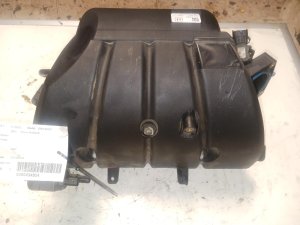
We Have This Part in Stock




The information in this article is provided for general reference and educational purposes only. Vehicle specifications, procedures, and part compatibility can vary by production date, trim level, and region. Always consult your vehicle's factory service manual and verify part numbers before purchasing or performing repairs. Safety-critical components such as airbags, seat belts, and braking systems should be installed by a qualified professional.
- Chevrolet TRAVERSE:
- 🎬 Helpful Videos
- 🛍️ Shop This Part
- What's Unique About the 2017-2024 Chevrolet TRAVERSE
- Diagnostic Flowchart
- Symptoms You May Notice
- Most Likely Causes
- Rare But Worth Checking
- Diagnosis Steps
- Parts You'll Likely Need
- Related Codes That Often Appear With This One
- Technical Service Bulletins (TSBs) & Recalls
- Platform-Specific Known Issues
- Mechanic-Grade Diagnostic Values
- Hidden / Shadow Codes Worth Checking
- Scan Tool Commands That Help
- Wiring & Ground Locations
- Real Owner Repair Stories
- "I Checked Everything" — The Actual Cause
- When the Usual Fixes Don't Work
- OEM Part Supersession History
- Model Year Variations Within This Range
- 🎟️ Get 5% Off