

P0300 on 2012-2019 Chevrolet Sonic: Causes, Fixes for Random Misfire
On a 2012-2019 Chevy Sonic, code P0300 is most often caused by a failed ignition coil pack. It's a common failure item that becomes brittle and cracks over time. A leaking valve cover gasket that allows oil to foul the spark plugs is another primary cause. Replacing the coil pack, spark plugs, and potentially the valve cover gasket is the most likely fix, costing around $70-$200 for parts.
- P0300 on a Chevy Sonic is most commonly caused by a faulty ignition coil pack and/or worn spark plugs.
- Before replacing parts, perform a visual inspection: check the coil pack for cracks and the spark plug tubes for oil from a leaking valve cover gasket.
- If the Check Engine Light is flashing, stop driving immediately to prevent costly damage to the catalytic converter.
- Replacing the ignition coil and spark plugs is a straightforward DIY job that can be done with basic tools in under an hour.
- Always use quality replacement parts, such as those from ACDelco or NGK, to ensure a lasting repair.
What's Unique About the 2012-2019 Chevrolet SONIC

The Chevrolet Sonic, along with its platform mates the Chevy Cruze and Buick Encore, is known for specific failure points that trigger a P0300 code across both the 1.8L and 1.4L Turbo engines. The single ignition coil pack that covers all four cylinders is a very common culprit, prone to developing hairline cracks in its plastic housing that cause high-voltage sparks to arc to the engine head instead of the spark plug. Additionally, the valve cover and its integrated gasket are frequent failure points; the gasket leaks oil directly into the spark plug tubes, soaking the coil boots and plugs, which degrades them and causes misfires. On the 1.4L Turbo engine, the PCV system is integrated into the valve cover, and its failure can also contribute to oil consumption and misfires.
Diagnostic Flowchart

Tap your situation to follow the diagnostic path that matches what you're seeing on this vehicle.
Symptoms You May Notice

- Rough idle or shaking engine, sometimes only when warm or under load.
- Blinking or solid Check Engine Light (CEL).
- Hesitation, stumbling, or lack of power during acceleration.
- Loss of engine power.
- Reduced fuel economy.
- Difficulty starting the engine.
- Fuel smell from the exhaust.
- On 1.4L turbo models, a sucking or blowing sound under acceleration followed by smoke can occur if the PCV system has failed.
- Replacing only the spark plugs without inspecting the ignition coil pack. A cracked coil will quickly foul new plugs or continue to misfire.
- Replacing oxygen sensors or the MAF sensor before checking the ignition system and for oil leaks, which are the most common points of failure for this code on the Sonic.
- Using cheap, aftermarket ignition coils. Owners report that some aftermarket coils can be faulty out of the box or fail prematurely, leading to a repeat of the P0300 code.
Most Likely Causes

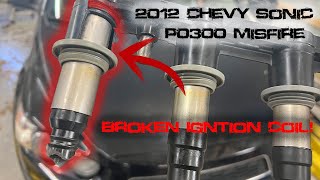
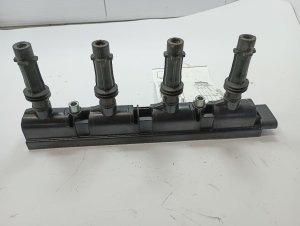
- Faulty Ignition Coil Pack 🔴 High Probability The plastic housing of the single coil-on-plug rail becomes brittle with engine heat cycles and age. This leads to hairline cracks that allow the high-voltage spark to arc to the cylinder head instead of firing the spark plug. This is the most well-documented failure for P0300 on this platform.
How to confirm: Remove the two T40 Torx bolts holding the coil pack. Lift the coil pack off and carefully inspect the plastic housing and rubber boots for cracks, white residue, or carbon tracks (burn marks) indicating an electrical arc. A crack may be hard to see; sometimes the misfire only occurs when the engine is hot and the crack expands.
Typical fix: Replace the entire ignition coil pack assembly. 🎬 Watch this easy DIY guide to replace your coil and plugs. It is highly recommended to replace all four spark plugs at the same time.
Est. part cost: $50-$120 - Leaking Valve Cover Gasket 🔴 High Probability The gasket material degrades over time, allowing engine oil to leak from the camshaft area directly into the spark plug tubes. This oil soaks the ignition coil boots and spark plugs, causing the insulation to fail, which leads to misfires.
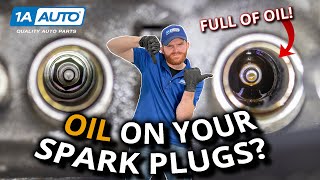
How to confirm: When you remove the ignition coil pack, look down into the spark plug wells with a flashlight. The presence of liquid oil is a definitive sign that the valve cover gasket 🎬 Watch how to diagnose and fix oil leaking into spark tubes. is leaking and must be replaced.
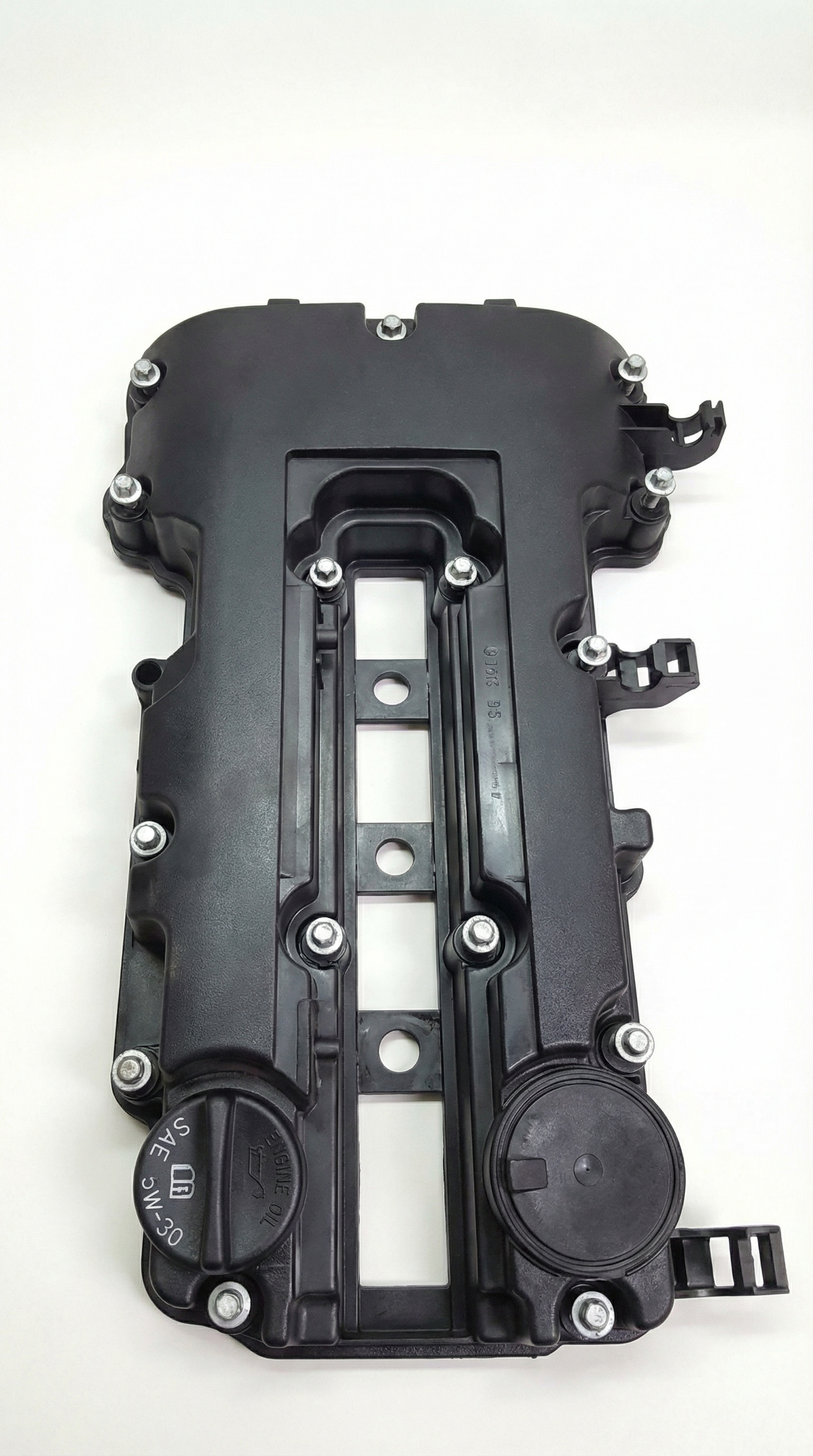
Typical fix: Replace the valve cover gasket. On the 1.4L Turbo, it is common practice to replace the entire valve cover, as it contains an integrated and non-serviceable PCV valve that also fails. Clean all oil from the tubes before installing new plugs and the coil.
Est. part cost: $20-$50 (gasket only), $80-$150 (full valve cover assembly) - Worn or Fouled Spark Plugs 🔴 High Probability Often replaced as a set with a failed coil pack. A cracked coil or oil from a leaking valve cover gasket will quickly foul the plugs. Standard wear also increases the gap, requiring more voltage to fire, which stresses the coil pack and can cause a misfire, especially under load.
How to confirm: Remove the spark plugs after removing the coil pack. Inspect for a wet, black appearance (oil-fouled), heavy carbon buildup, or excessive wear on the electrode. The recommended spark plug gap for the 1.4L and 1.8L engines is typically 0.028 inches (0.7mm), but always verify for the specific plug used.
Typical fix: Replace all four spark plugs. Use the recommended OEM-spec ACDelco Iridium plugs and ensure they are gapped correctly.
Est. part cost: $25-$60 - Vacuum Leak ⚪ Low Probability Cracked hoses or a leaking intake manifold gasket can introduce unmetered air into the engine, leaning out the air-fuel mixture and causing random misfires. On the 1.4L Turbo, a failed check valve in the PCV system (part of the valve cover) can act as a vacuum leak.
How to confirm: Visually inspect all vacuum hoses for cracks or loose connections. A smoke test is the most effective method, where smoke is forced into the intake system to reveal the source of any leaks. Checking fuel trims with a scan tool can also indicate a leak (high positive trims).
Typical fix: Replace the leaking hose or gasket. If the PCV system in the valve cover has failed on a 1.4L, the entire valve cover must be replaced. 🎬 See this walkthrough on how to replace the full valve cover.
Est. part cost: $10-$150 - Faulty Fuel Injectors ⚪ Low Probability Injectors can become clogged over time, leading to an improper fuel spray pattern and a lean misfire. One owner on a forum suspected clogged injectors after replacing ignition components did not solve the issue.
How to confirm: This is more difficult to diagnose. A professional may use a scan tool to perform a fuel injector balance test. Listening for the clicking of each injector with a mechanic's stethoscope is a basic check. TSB #PIP5353F mentions checking injector control circuits.
Typical fix: Clean or replace the faulty fuel injector(s).
Est. part cost: $40-$100 per injector
Rare But Worth Checking
- PCV System Failure (1.4L Turbo): The 1.4L engine has a check valve in the intake manifold and a diaphragm in the valve cover that can fail, causing excessive oil consumption, vacuum leaks, and misfires. A common symptom is a sucking noise from the engine bay. The entire valve cover often needs replacement.
- Faulty Negative Battery Cable/Ground: A known issue on this GM platform involves a poor ground connection at the negative battery terminal or at the under-hood fuse box. This can cause a host of random electrical problems, including erratic ECU behavior that may manifest as a P0300 code. Check that all ground connections are clean and tight.
- Low Engine Compression: This is a more serious mechanical engine problem, possibly due to worn piston rings, a bad head gasket, or valve train issues. A compression test is needed to confirm.
- Internal Coolant Leak: A GM Service Bulletin (PIP5498M) notes that P0300 on a cold start can be caused by coolant leaking into the cylinders, which may require significant engine repair or replacement.
Diagnosis Steps
- Read the DTCs with an OBD-II scanner. Note any other codes present besides P0300, like P0171 or P0301-P0304.
- If the check engine light is flashing, avoid running the engine to prevent catalytic converter damage.
- Pop the hood and remove the plastic 'ECOTEC' engine cover (it pulls straight up).
- Remove the two T40 Torx bolts securing the ignition coil pack.
- Disconnect the electrical connector and carefully lift the coil pack off the valve cover.
- Inspect the underside of the coil pack for hairline cracks, white arcing marks, or corrosion inside the boots.
- Look down into the spark plug tubes with a flashlight. If you see standing oil, the valve cover gasket is leaking and must be replaced.
- If the coil pack is cracked or oil is present, this is the most likely cause. Replace the coil pack, all four spark plugs, and the valve cover gasket if it was leaking.
- If the ignition system looks okay, check for vacuum leaks. Inspect hoses connected to the intake manifold. On the 1.4L, check the PCV system integrated into the valve cover for signs of failure (e.g., sucking noises).
- Check battery terminal connections, especially the negative cable ground, to ensure they are clean and tight.
- If all else fails, consider more complex issues like fuel injector problems or perform an engine compression test to check for mechanical engine problems.
Parts You'll Likely Need
- Ignition Coil Pack
(OEM #25186687 (Superseded by 55579072 for 1.8L))— This is the most frequent cause of P0300 on the Chevy Sonic. The original part is prone to cracking.
Trusted brands: ACDelco, Delphi, NGK
OEM price range: $80-$130
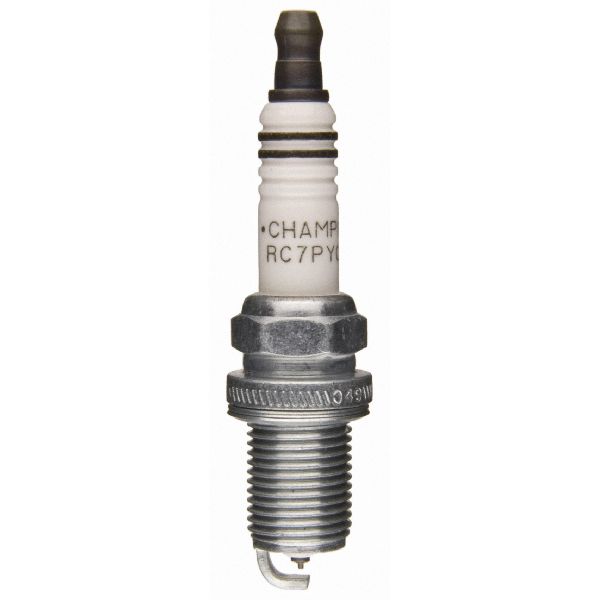
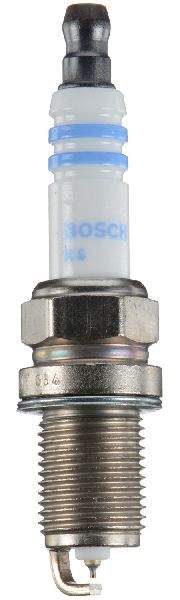
Aftermarket price range: $50-$90 - Spark Plugs
(OEM #ACDelco 41-122 (Iridium))— Should always be replaced with the ignition coil. Worn or fouled plugs are a primary cause of misfires.
Trusted brands: ACDelco, NGK
OEM price range: $30-$50
Aftermarket price range: $25-$40 - Valve Cover Gasket
(OEM #55354237 (1.8L) or 25198753 (1.4L))— A common source of oil leaks into the spark plug tubes, which destroys the ignition coil and causes misfires.
Trusted brands: ACDelco, Fel-Pro
OEM price range: $30-$60
Aftermarket price range: $20-$40 - Valve Cover (1.4L Turbo)
(OEM #55573747 (or kit including gasket 25198753))— For the 1.4L Turbo engine, the PCV system is integrated into the cover and is a common failure point. It's often replaced as a complete assembly.
Trusted brands: ACDelco, Dorman
OEM price range: $100-$160
Aftermarket price range: $70-$120
Related Codes That Often Appear With This One
- P0301-P0304 — These are cylinder-specific misfire codes. P0300 often appears with one or more of these, helping to narrow down the problem, though a failing coil pack can cause misfires to jump between cylinders.
- P0171 — This code for 'System Too Lean' often accompanies P0300 when the cause is a vacuum leak, such as a failed PCV system or cracked intake hose.
- P0299 — This code for 'Turbocharger Underboost' can appear on 1.4L models alongside a P0300, as a significant misfire can affect the turbo's operation and vice-versa.
- P050D — This code for 'Cold Start Rough Idle' is mentioned alongside P0300 in TSB #PIP5628G, indicating a potential diagnostic link, especially on cold starts.
Technical Service Bulletins (TSBs) & Recalls
- PIP5628G: Mentions P0300 and P050D (Cold Start Rough Idle) and requests diagnostic information be provided to GM's Technical Assistance Center (TAC).
- PIP5353F: Advises technicians to check fuel injector control circuit wire colors when diagnosing a P0300 with a rough idle.
- PIP5498M: Notes that a cold-start P0300 can be caused by an internal coolant leak into the cylinders, a severe mechanical issue.
Platform-Specific Known Issues
- A cracked ignition coil was identified as the cause of a P0300 misfire in a 2012 Sonic with over 80,000 miles.
- TSB #PIP5628G provides preliminary information for diagnosing P0300-P0308 and P050D codes.
- TSB #PIP5353F guides technicians to check fuel injector control circuit wiring for rough idle or misfire with a P0300 code.
- TSB #16NA383 suggests that decarbonizing the intake valves can correct conditions like rough idle and misfire.
Mechanic-Grade Diagnostic Values
- Fuel Pressure (Key On, Engine Off) — expected: 276-448 kPa (40-65 PSI). Failure: Pressure below 276 kPa (40 PSI) indicates a weak fuel pump or leak. Pressure should not drop more than 34 kPa (5 PSI) in one minute.
- Fuel Pressure (Engine Idling) — expected: 276-324 kPa (40-47 PSI). Failure: Pressure outside this range at idle can indicate a problem with the fuel pump control module or fuel pressure sensor.
- Fuel Injector Resistance — expected: 10.0 to 16.0 Ohms (for high impedance injectors, common in this vehicle). Failure: A reading of 0.0 (shorted) or infinite/OL (open). All injectors should have readings within 0.5 Ohms of each other for a balanced set.
Scan Tool Commands That Help
- GDS2 / Tech2: Crankshaft Position Variation Learn — Required after replacing the ECM, crankshaft position sensor, crankshaft, or performing major engine work. Failure to perform this relearn can cause the ECM to falsely detect misfires and set a P0300 or P0315 code.
- GDS2 / Tech2: Misfire Graphic / Misfire Counters — To view live and historical misfire counts for each cylinder. This helps determine if the misfire is truly random or if it's concentrated on specific cylinders, even if only a P0300 is set.
Wiring & Ground Locations
- G105 — Under the battery tray, on the left frame rail.. This ground is for the Engine Control Module (ECM) and Transmission Control Module (TCM). A poor connection here due to corrosion, paint, or weld slag can cause numerous erratic electrical issues, including false misfire detection. A GM service bulletin specifically advises inspecting this ground for various electrical complaints.
- G107 — Lower left rear of the engine block.. This is another critical engine block ground. A loose or corroded connection here can affect sensor readings and contribute to random electrical faults that may be interpreted as misfires by the ECM.
- Ignition Coil Connector — 7-pin connector on the ignition coil pack (1.4L engine).. GM TSB 16-NA-015 notes that fretting corrosion at this connector can cause a poor connection, leading to hesitation or stalling, which can be associated with a P0300 code. The fix involves inspecting the terminals and potentially replacing the connector pigtail.
Real Owner Repair Stories
- Reddit user in r/ChevySonic (2014 Sonic LTZ 1.4L Turbo) — Rough running for a minute after filling with gasoline, eventually leading to a flashing Check Engine Light and a P0300 code.
❌ Tried (didn't work) The user immediately sought advice before trying repairs.
✅ What actually fixed it The community identified the symptoms as classic for a failing EVAP Purge Valve. When this valve sticks open, it creates a vacuum leak after refueling, causing a temporary rough idle and misfires until the ECM can compensate. - Reddit user in r/MechanicAdvice (2012 Sonic LT 1.8L) — Started with a P0302 (Cylinder 2 Misfire), then after changing spark plugs, it became a P0300 (Random Misfire). Oil was found in the cylinder 2 spark plug well.
❌ Tried (didn't work) Replacing only the spark plugs.
✅ What actually fixed it The confirmed problem was a leaking valve cover gasket (causing the oil in the plug well) and a failed ignition coil pack. The advice was to replace the coil pack as a unit and the valve cover gasket to prevent the new parts from being fouled by oil. - Sonic Owners Forum user '2014 Blue RS' (2014 Sonic RS 1.4L Turbo with 45k miles) — Flashing CEL, traction control light on, rough running, and heavy smoke from exhaust. Sucking/blowing sound under hard acceleration followed by a cloud of smoke.
❌ Tried (didn't work) Replacing the valve cover gasket (thinking it was PCV)., Replacing spark plugs and wires.
✅ What actually fixed it The root cause was a failed PCV system within the valve cover, which led to oil being sucked into the cylinders, fouling the plugs and causing the misfire and smoke. The user also identified a failed ignition coil by unplugging it and noticing no change in how the engine ran. The final fix required replacing the valve cover assembly and the ignition coil pack.
"I Checked Everything" — The Actual Cause
- In cases where a P0300 appears after refueling, a smoke test may show no leaks, but the actual cause can be a faulty EVAP purge solenoid valve sticking open. This introduces fuel vapors at the wrong time, leaning out the mixture and causing a temporary misfire that resolves as the engine runs.
OEM Part Supersession History
55579072, 25195107→25198623— Part revision and consolidation for the 1.4L Turbo ignition coil assembly.96476983, 55561655→12735943— Part revision and consolidation for the 1.8L ignition coil assembly.
Heads up: The 1.4L and 1.8L coil packs are not interchangeable.
Model Year Variations Within This Range
- 2012-2014: Early model years are reported by owners to have more recalls and general reliability issues. While the core engine design remained consistent, later models (2015+) are perceived to have benefited from minor revisions to components like water pumps and valve covers, potentially improving reliability.
- 2012-2020: All Sonics from 2012-2020 with the 1.4L Turbo engine use the same 'Gen I' port-injected version. This is different from the Chevy Cruze, which switched to a 'Gen II' direct-injected 1.4L engine in 2016. These engines are not interchangeable.
Helpful Videos

Used OEM Parts in Stock
New Aftermarket Parts Available



The information in this article is provided for general reference and educational purposes only. Vehicle specifications, procedures, and part compatibility can vary by production date, trim level, and region. Always consult your vehicle's factory service manual and verify part numbers before purchasing or performing repairs. Safety-critical components such as airbags, seat belts, and braking systems should be installed by a qualified professional.
- Chevrolet SONIC:
- 🎬 Helpful Videos
- 🛍️ Shop This Part
- What's Unique About the 2012-2019 Chevrolet SONIC
- Diagnostic Flowchart
- Symptoms You May Notice
- Most Likely Causes
- Rare But Worth Checking
- Diagnosis Steps
- Parts You'll Likely Need
- Related Codes That Often Appear With This One
- Technical Service Bulletins (TSBs) & Recalls
- Platform-Specific Known Issues
- Mechanic-Grade Diagnostic Values
- Scan Tool Commands That Help
- Wiring & Ground Locations
- Real Owner Repair Stories
- "I Checked Everything" — The Actual Cause
- OEM Part Supersession History
- Model Year Variations Within This Range
- 🎟️ Get 5% Off