

P0300 on 2001-2008 Chevrolet Silverado 3500: Random Misfire Causes & Fixes
P0300 on a 2001-2008 Silverado 3500 indicates a random engine misfire. The most common causes are simple maintenance items like worn spark plugs, wires, or a bad ignition coil. However, it can also be caused by a failing fuel pump, a vacuum leak from the intake manifold gasket, or more serious mechanical issues. A flashing check engine light indicates a severe misfire that can damage the catalytic converters and requires immediate attention.
- P0300 means multiple cylinders are misfiring, not just one.
- Start with the basics: inspect spark plugs, wires, and coils, as these are the most common culprits.
- A very common cause on these specific trucks is a vacuum leak from the intake manifold gaskets. Check for this before replacing expensive parts.
- Test fuel pressure to rule out a failing fuel pump or clogged filter.
- Do not drive if the check engine light is flashing to avoid catastrophic damage to your catalytic converters.
What's Unique About the 2001-2008 Chevrolet SILVERADO 3500
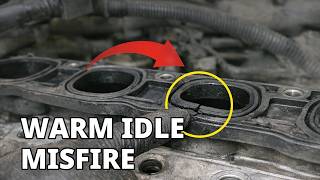
On the V8 engines in this generation of Silverado, a P0300 code can be more than just a simple tune-up issue. These trucks are known for developing vacuum leaks at the intake manifold gaskets, which causes a lean condition and random misfires, especially when the engine is warm. 🎬 Watch: Diagnosing rough idle from intake gasket leaks when warm. Furthermore, official GM Technical Service Bulletins (TSBs) point to more severe, though less common, mechanical problems like worn camshaft lobes that can trigger this code. Another issue specific to these trucks can be corroded ground wires for the ignition coil banks, leading to a weak or no spark condition on multiple cylinders.
Diagnostic Flowchart
Tap your situation to follow the diagnostic path that matches what you're seeing on this vehicle.
Generation note: This range covers two generations: the first generation GMT800 (2001-2006 and 2007 'Classic') and the early second generation GMT900 (2007.5-2008). While many causes for P0300 are shared, such as ignition components and fuel system issues, parts like intake manifold gaskets and some sensors may differ between the platforms. The GMT800 trucks are particularly known for the intake gasket and fuel pressure regulator issues, while some early GMT900s can have issues related to the Active Fuel Management (AFM) system lifters, which can also present as a P0300.
Symptoms You May Notice
- Rough or shaking idle.
- Hesitation or stumbling during acceleration.
- Noticeable loss of engine power.
- Flashing or solid Check Engine Light.
- Reduced fuel economy.
- Smell of raw fuel from the exhaust.
- Engine ticking or squealing noise, which could indicate a valvetrain issue like a worn camshaft.
- Replacing only one spark plug when the entire set is old.
- Replacing oxygen sensors, which are more likely to be a symptom of the misfire (due to unburned fuel) rather than the cause. A bad O2 sensor can cause a P0300, but it's less common than ignition or fuel issues.
- Replacing ignition coils without first testing them or swapping their positions to confirm the failure.
- Replacing the Crankshaft Position Sensor without performing the required 'crankshaft variation relearn' procedure afterward.
Most Likely Causes
- Worn Spark Plugs and/or Ignition Wires 🔴 High Probability These are standard maintenance items that wear out over time, leading to a weak or inconsistent spark. Carbon tracking on the spark plug's porcelain is a common sign of failure.
How to confirm: Inspect the spark plugs for wear, fouling (black, oily, or white deposits), and correct gap. A white, ashy appearance can indicate a lean condition or overheating. Inspect wires for cracks, corrosion, or damage. Check for carbon tracks inside the boots.
Typical fix: Replace all spark plugs and spark plug wires as a set. Using quality OEM-spec brands like ACDelco is recommended. For 2006 and older models, GM recommends ACDelco Platinum plug 41-962. For 2007 and newer, Iridium plug 41-110 is often specified.
Est. part cost: $50-$150 - Leaking Intake Manifold Gaskets 🔴 High Probability The original intake manifold gaskets on the Vortec V8 engines are a well-known failure point. The plastic carrier and sealing material degrade from heat and exposure to coolant/oil, causing a vacuum leak that lets unmetered air into the engine.
How to confirm: With the engine running, spray short bursts of brake cleaner or unlit propane around the area where the intake manifold meets the cylinder heads. A change in engine idle speed indicates a leak. A smoke test is a more definitive diagnostic method.
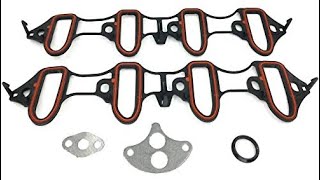
Typical fix: Replace the intake manifold gaskets. The updated Fel-Pro gasket set (part number MS 9801 T) uses a metal carrier and improved sealing material for better durability.
Est. part cost: $40-$100 - Faulty Ignition Coil(s) 🟡 Medium Probability Ignition coils can fail with age and heat, producing a weak or no spark. While one failing coil might trigger a specific cylinder code, multiple weak coils or a bad ground for the coil bank can contribute to a P0300.
How to confirm: Use a scan tool to check for misfire data on specific cylinders. Swap the suspected coil with a known good one from another cylinder and see if the misfire follows the coil. Inspect the coil packs for cracks or signs of carbon arcing.
Typical fix: Replace the faulty ignition coil. It is often recommended to replace them in sets if they are original and high-mileage. Also, check the main ground wire for the coil packs, often located on the front of the driver's side cylinder head, for corrosion or looseness.
Est. part cost: $40-$80 per coil - Low Fuel Pressure 🟡 Medium Probability A weak fuel pump or a clogged fuel filter restricts fuel flow, starving all cylinders and causing random misfires, especially under load. The fuel pressure regulator can also fail.
How to confirm: Connect a fuel pressure gauge to the Schrader valve on the fuel rail. Check that the pressure is within the manufacturer's specification (typically 55-62 PSI with key on, engine off). Pressure should hold steady and not drop quickly. Removing the vacuum line from the fuel pressure regulator should cause pressure to rise.
Typical fix: Replace the fuel filter first, as it's inexpensive. If pressure is still low, the fuel pump or fuel pressure regulator is the likely culprit.
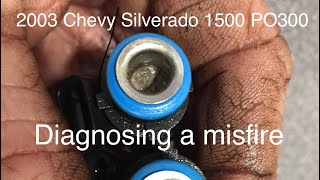
Est. part cost: $20-$50 (filter), $200-$400 (pump) - Dirty or Clogged Fuel Injectors ⚪ Low Probability Fuel injectors can become clogged with deposits over time, leading to poor fuel atomization and misfires. This can be exacerbated by using lower-quality gasoline.
How to confirm: Listen to each injector with a mechanic's stethoscope to ensure it's clicking. A more advanced method is to use a scan tool to perform a fuel injector balance test, which measures the pressure drop for each injector.
Typical fix: Run a quality fuel injector cleaner (like those with Polyetheramine, or PEA) through the system. If this doesn't work, the injectors may need to be professionally cleaned or replaced.
Est. part cost: $15-$30 (cleaner), $50-$100 per injector
Rare But Worth Checking
- Worn Camshaft Lobe(s): A GM Technical Service Bulletin (PIP4138P, later superseded by PIP4138Q) specifically mentions that if diagnostics don't isolate another cause, a worn camshaft lobe should be investigated. This can cause a consistent misfire on one cylinder that still logs a P0300, often accompanied by a ticking or squeaking noise at half of engine speed. This is a major mechanical failure requiring significant engine work.
- Crossed Fuel Injector Connectors: According to TSB PIP5169, this can occur after engine repairs. Specifically, the connectors for cylinders 5 and 7, or 6 and 8, can be accidentally swapped, leading to a P0300 code. The engine will run, but will misfire randomly.
- Faulty Crankshaft Position Sensor (CKP): The CKP sensor tells the PCM the engine's speed and position. If it sends erratic signals, the PCM can misinterpret them as misfires. After replacing the sensor, a 'crankshaft variation relearn' procedure must be performed with a capable scan tool for the PCM to recognize the new sensor's signal properly. Failure to do the relearn can cause a P0300 code to persist.
- Corroded Ignition Coil Ground: A corroded or broken ground wire for an entire bank of ignition coils can cause multiple cylinders to misfire simultaneously. A common location for this ground is on the front of the driver-side cylinder head. A visual inspection may reveal green corrosion or a broken wire inside the terminal lug.
Diagnosis Steps
- Scan the PCM for any other trouble codes. Codes for specific systems (like fuel, O2 sensors, or MAF sensor) can provide valuable clues.
- Use a scan tool with live data to monitor misfire counts per cylinder (Mode $06 data). Even with a P0300, one or two cylinders may show significantly more misfires, pointing you to a specific coil, plug, or injector.
- Perform a basic visual inspection. Look for cracked vacuum hoses, loose electrical connectors, and signs of damage. Pay special attention to the coil pack ground wires.
- Inspect the ignition system. Remove and check spark plugs for wear, proper gap, and signs of oil/coolant fouling or lean conditions (white deposits). Inspect spark plug wires and coil packs.
- Test fuel pressure. Connect a gauge to the fuel rail and verify pressure is within spec (typically 55-62 PSI KOEO - Key On, Engine Off).
- Check for vacuum leaks. With the engine running, spray a flammable substance like brake cleaner or propane in short bursts around the intake manifold gaskets and vacuum hose connections. Any change in engine idle indicates a leak. A smoke test is a safer and more effective method.
Parts You'll Likely Need
- Spark Plugs
(OEM #ACDelco 41-962 (Platinum, for pre-2007) or 41-110 (Iridium, for 2007+))— This is the most common and fundamental cause of misfires. They are a routine maintenance item. GM issued bulletins updating the recommended plug over the years.
Trusted brands: ACDelco, NGK
OEM price range: $6-$12 per plug
Aftermarket price range: $4-$10 per plug - Intake Manifold Gasket Set
(OEM #Fel-Pro MS 9801 T (Updated design))— A very common failure point on these GM V8 engines, causing vacuum leaks that trigger a P0300. The Fel-Pro MS 9801 T is a popular, improved replacement part.
Trusted brands: Fel-Pro, ACDelco
OEM price range: $60-$100
Aftermarket price range: $30-$70 - Ignition Coil
(OEM #ACDelco D585 (or 10457730))— Coils provide the spark. A failing coil is a frequent cause of misfires. The D585 is a common coil for this platform.
Trusted brands: ACDelco, Delphi, Standard Motor Products
OEM price range: $40-$80 per coil
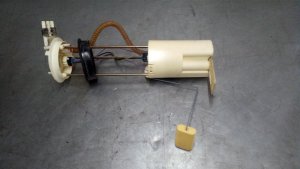
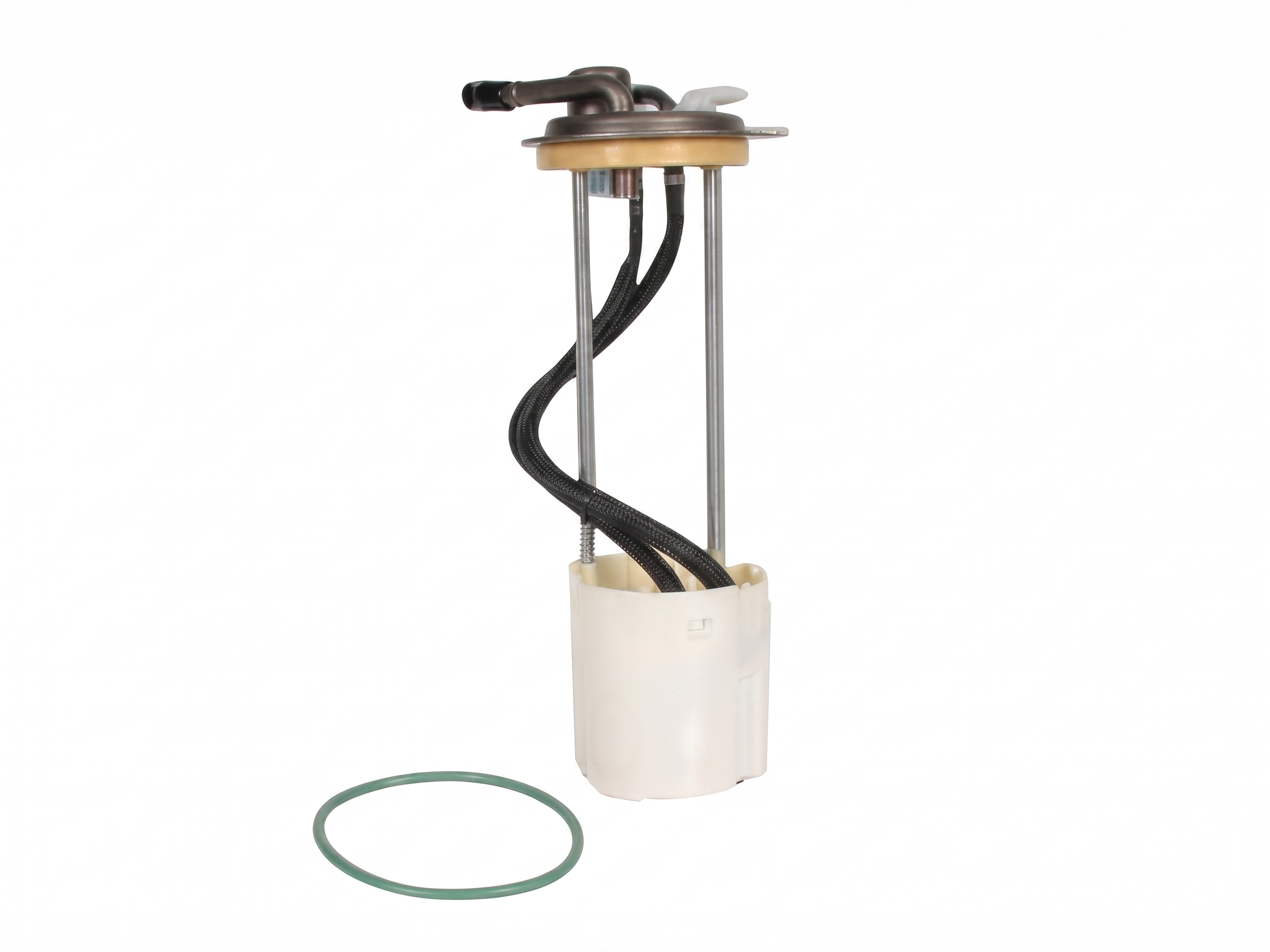
Aftermarket price range: $25-$60 per coil - Fuel Pump Module Assembly — A weak fuel pump fails to deliver the required pressure, causing lean conditions and random misfires under load.
Trusted brands: ACDelco, Delphi
OEM price range: $250-$400
Aftermarket price range: $150-$300
Related Codes That Often Appear With This One
- P0301-P0308 — If the random misfire begins to occur more frequently on a specific cylinder, the PCM will log a corresponding code (e.g., P0301 for Cylinder 1). A scan tool's live data can often show misfire counts per cylinder even if only a P0300 is stored.
- P0171 / P0174 — These codes mean 'System Too Lean' on Bank 1 and Bank 2, respectively. They often appear with P0300 when the root cause is a vacuum leak (like from an intake manifold gasket) or a fuel delivery problem that affects both banks of the engine.
Technical Service Bulletins (TSBs) & Recalls
- PIP5628F: Preliminary information for diagnosing P0300-P0308 and P050D.
- PIP4138P (superseded by PIP4138Q): Points to worn camshaft lobes as a potential cause for P0300 after other diagnostics fail.
- PIP5169: Warns of crossed fuel injector connectors (5-7 and 6-8) after engine service causing a P0300.
Platform-Specific Known Issues
- Worn Camshaft Lobes: TSB #PIP4138P indicates that after ruling out other causes, technicians should inspect for worn camshaft lobes, which can cause misfires.
- Crossed Injector Wiring: TSB #PIP5169 warns technicians to ensure injector connectors for cylinders 5-7 and 6-8 are not swapped after engine repairs, as this will set a P0300.
- Diagnostic Information Request: TSB #PIP5628F is a bulletin requesting that technicians gather specific information before contacting GM's Technical Assistance Center for P0300 codes, suggesting the diagnosis can be complex.
Mechanic-Grade Diagnostic Values
- Fuel Pressure (KOEO - Key On, Engine Off) — expected: 55-62 PSI for standard returnless systems (2004+); 48-54 PSI for Flex Fuel (L59) engines.. Failure: Pressure below the specified range indicates a weak fuel pump or clogged filter. Pressure that drops quickly after the pump primes can indicate a leaking injector or faulty check valve in the pump.
- Fuel Injector Coil Resistance — expected: 11-14 Ohms.. Failure: A reading significantly outside this range, or a large variance between injectors (more than 3 Ohms), points to a faulty injector coil.
- Long-Term Fuel Trims (LTFT) at Idle — expected: Within +/- 10%.. Failure: Sustained positive values above +10% on both banks strongly suggest a vacuum leak, as the PCM is adding excess fuel to compensate for unmetered air.
- Spark Plug Center Electrode Resistance — expected: Should not exceed 8,000 Ohms.. Failure: Resistance above this value indicates a worn-out or faulty spark plug that needs replacement.
Hidden / Shadow Codes Worth Checking
- Mode $06, Test ID $A2-$AF: This is not a specific code, but a function within a generic OBD-II scan tool. These Test IDs correspond to misfire monitor data for cylinders 1 through 8. Accessing this data allows a technician to see the raw misfire count for each cylinder during the current and previous drive cycles, even if a cylinder-specific code (P0301-P0308) has not been set. (see via A scan tool that supports Mode $06 diagnostics. The misfire counts can help pinpoint if the 'random' misfire is actually concentrated on one or two cylinders.)
- P1336: Crankshaft Position (CKP) System Variation Not Learned. This code often appears with or causes a P0300 after a crankshaft position sensor, PCM, or engine has been replaced. It means the PCM has not learned the minor manufacturing variations of the crankshaft reluctor wheel. (see via Standard OBD-II scan tool. It is a direct indicator that the 'Crankshaft Variation Relearn' procedure must be performed.)
Scan Tool Commands That Help
- GM Tech2 / GDS2 or equivalent professional scan tool: Crankshaft Position Variation Learn (CASE Relearn) — This procedure is mandatory after replacing the crankshaft position sensor, the PCM, or major engine components like the flexplate. The function commands the PCM to learn the specific pattern of the crankshaft reluctor wheel. Failure to perform this can cause the PCM to falsely detect misfires and set a P0300 or P1336 code.
- GM Tech2 / GDS2 or equivalent professional scan tool: Fuel Injector Balance Test — This test helps diagnose a single faulty or clogged injector that may be contributing to a random misfire code. The scan tool individually fires each injector and measures the corresponding drop in fuel pressure. A cylinder whose pressure drop is significantly different from the others indicates a problematic injector.
- GM Tech2 / GDS2 or equivalent professional scan tool: Cylinder Power Balance — This function deactivates one cylinder at a time (by cutting spark or fuel) and measures the drop in engine RPM. A cylinder that produces little or no RPM drop when deactivated is not contributing power, pointing to a problem with that specific cylinder's ignition, fuel, or compression.
Wiring & Ground Locations
- Ignition Coil Pack Grounds — Commonly located on the front or rear of the cylinder heads. For example, a common ground point is a bolt on the front of the driver-side cylinder head.. Each bank of ignition coils shares a common ground. If this ground becomes loose or corroded, it can cause a weak or intermittent spark on all cylinders of that bank, leading to a random misfire P0300 code.
- Engine Wiring Harness Chafe Points — Inspect the harness for rubbing at the front corner of the left-hand cylinder head, near the drive belt idler pulley bracket, and at the back of the intake manifold near the firewall.. Vibrations can cause the wiring harness to rub through on sharp metal edges, potentially shorting out injector control wires or sensor signal wires. A shorted wire can cause erratic behavior and misfires that are difficult to trace.
Real Owner Repair Stories
- Chevrolet Forum user (2004 Silverado 2500 6.0L, 102,000 miles) — P0300 code would only appear after 10-15 minutes of highway driving (71 mph / ~2300 rpm). No noticeable miss or performance issue.
❌ Tried (didn't work) Initial diagnosis was difficult as the misfire was not apparent during in-town driving or dealer test drives.
✅ What actually fixed it The owner replaced the crankshaft position sensor and then paid a dealer to perform the 'crankshaft variation relearn' procedure. This resolved the P0300 code. - PerformanceTrucks.net Forums user (GMT800 Truck) — Flashing P0300 code and truck was 'acting retarded'.
❌ Tried (didn't work) The user notes that common advice pointed to spark plugs, fuel system, etc., but those were not the cause.
✅ What actually fixed it The root cause was a wiring harness issue leading to the PCM. Repairing the damaged wiring fixed the problem. - ScannerDanner Forum user with 2007 Silverado 5.3L (2007 Silverado 5.3L, 220k miles) — P0300 with a concentration of misfires on cylinder #3. Rough idle, Service Stabilitrak light.
❌ Tried (didn't work) Swapped plugs, coils, and injectors with no change. Compression test was good. Fuel pressure was good.
✅ What actually fixed it A professional shop used a PicoScope (lab scope) to perform an in-cylinder pressure analysis. The waveform showed a valve sealing problem on Cylinder 3, indicating a mechanical issue requiring head removal. This confirmed the issue was internal to the engine, not a simple bolt-on part.
"I Checked Everything" — The Actual Cause
- In some cases, a P0300 is caused by a cracked or failing fuel pressure regulator diaphragm, which is often mounted on the fuel rail in return-style systems (pre-2004). This allows raw fuel to be sucked directly into the intake manifold through the vacuum line, causing an overly rich condition and random misfires that a smoke test for vacuum leaks would not find.
- A failing torque converter clutch (TCC) can shudder during lock-up or release, creating a vibration that the crankshaft position sensor misinterprets as an engine misfire, setting a P0300 code. The driver may feel a shudder at highway speeds that feels like a misfire, but there is no actual combustion problem.
OEM Part Supersession History
GM 12537903 (and others)→Fel-Pro MS 9801 T (Aftermarket Upgrade)— The original GM intake manifold gaskets used a plastic frame that would become brittle and crack from heat cycles, leading to vacuum and coolant leaks. The updated Fel-Pro design uses a more durable steel carrier frame with improved rubber seals.
Model Year Variations Within This Range
- 2001-2003: These model years typically used a return-style fuel system with a vacuum-referenced fuel pressure regulator mounted on the fuel rail. A failing regulator can leak fuel directly into the vacuum line, causing a P0300. Fuel pressure spec is typically 55-62 PSI.
- 2004-2008: These model years switched to a returnless fuel system where the fuel pressure regulator is integrated with the fuel pump module inside the tank. This eliminates the possibility of the regulator leaking fuel into the intake. Fuel pressure spec is typically 55-62 PSI, but is not vacuum referenced.
- 2007.5-2008 (GMT900): Some V8 engines in this range were equipped with Active Fuel Management (AFM). A failing AFM lifter can become stuck, causing a misfire on that cylinder. While this often sets a specific cylinder code, it can sometimes present as a P0300 initially, especially if the lifter is intermittently sticking.
Helpful Videos
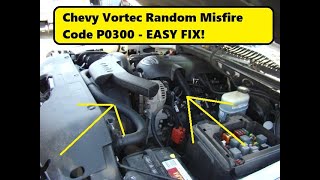
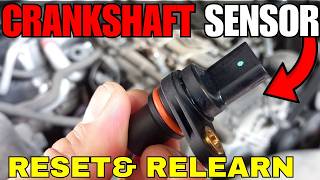
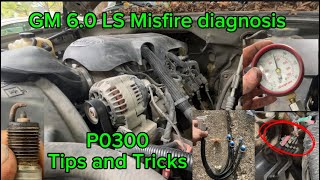
Used OEM Parts in Stock



New Aftermarket Parts Available



The information in this article is provided for general reference and educational purposes only. Vehicle specifications, procedures, and part compatibility can vary by production date, trim level, and region. Always consult your vehicle's factory service manual and verify part numbers before purchasing or performing repairs. Safety-critical components such as airbags, seat belts, and braking systems should be installed by a qualified professional.
- Chevrolet SILVERADO 3500:
- 🎬 Helpful Videos
- 🛍️ Shop This Part
- What's Unique About the 2001-2008 Chevrolet SILVERADO 3500
- Diagnostic Flowchart
- Symptoms You May Notice
- Most Likely Causes
- Rare But Worth Checking
- Diagnosis Steps
- Parts You'll Likely Need
- Related Codes That Often Appear With This One
- Technical Service Bulletins (TSBs) & Recalls
- Platform-Specific Known Issues
- Mechanic-Grade Diagnostic Values
- Hidden / Shadow Codes Worth Checking
- Scan Tool Commands That Help
- Wiring & Ground Locations
- Real Owner Repair Stories
- "I Checked Everything" — The Actual Cause
- OEM Part Supersession History
- Model Year Variations Within This Range
- 🎟️ Get 5% Off