

P0300 on 2008-2010 Chevrolet Silverado 2500: Random Misfire Causes & Fixes
P0300 on a 2008-2010 Silverado 2500 with the 6.0L V8 gas engine most often points to worn or oil-fouled spark plugs and bad spark plug wires. These are affordable DIY fixes, typically costing under $150. A thorough tune-up is the first step before suspecting less common but known issues like intake manifold gasket leaks or, in rare cases, camshaft wear. On Duramax diesels, this code is rarer and usually indicates a fuel system problem, such as failing injectors.
- For the 6.0L V8, P0300 is most often caused by a basic ignition tune-up issue: worn spark plugs and bad wires.
- Always inspect spark plugs for signs of oil fouling, which points to an oil consumption issue noted in a GM service bulletin.
- Unlike the Silverado 1500, the 2500 HD's 6.0L engine does not have the problematic AFM system, so you can rule out AFM lifter failure.
- If the check engine light is flashing, stop driving immediately to prevent catastrophic damage to the catalytic converters.
- If basic ignition and fuel system checks don't solve the problem, the cause could be a more serious mechanical issue like a worn camshaft, as documented in TSBs.
What's Unique About the 2008-2010 Chevrolet SILVERADO 2500
For the 2008-2010 Silverado 2500, this code is most common on the 6.0L V8 gasoline engine (LY6). General Motors has issued several Technical Service Bulletins (TSBs) that point to specific, common failures. These include oil consumption leading to fouled spark plugs (TSB #PIP4525D), failing spark plug wires (TSB #PIP4819A), and in more severe cases, worn camshaft lobes (TSB #PIP4138P). It's important to note that the 6.0L LY6 V8 in these HD trucks does NOT have the Active Fuel Management (AFM) system that is a notorious cause of P0300 on the 1500-series trucks with the 5.3L V8. Therefore, AFM lifter failure is not a cause on these specific trucks, a common point of confusion. The LY6 engine in this range does, however, feature Variable Valve Timing (VVT), and issues with the VVT system can sometimes contribute to misfires.
Diagnostic Flowchart
Tap your situation to follow the diagnostic path that matches what you're seeing on this vehicle.
Symptoms You May Notice
- Rough or shaking idle.
- Engine hesitation or stumbling during acceleration.
- Flashing or solid Check Engine Light.
- Noticeable loss of engine power, especially under load or going uphill.
- Reduced fuel economy.
- Engine noise, such as a tick, chirp, or squeal (in cases of mechanical wear like a worn camshaft).
- Fuel smell from the exhaust.
- Replacing only the spark plugs without also replacing the wires. Wires are a very common failure point and should be replaced with the plugs as a set.
- Assuming an Active Fuel Management (AFM) lifter failure. While this is a very common cause for P0300 on 1500-series trucks with the 5.3L V8, the 6.0L V8 in the 2008-2010 2500 HD does not have AFM.
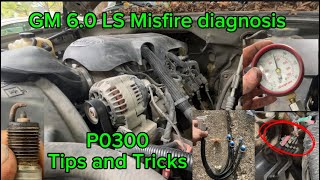
- Replacing parts without diagnosis. Owners in forums often replace plugs, wires, and coils only to find the issue was a vacuum leak or fuel pressure problem. A systematic approach is key. 🎬 See how a pro diagnoses a 6.0L misfire.
Most Likely Causes
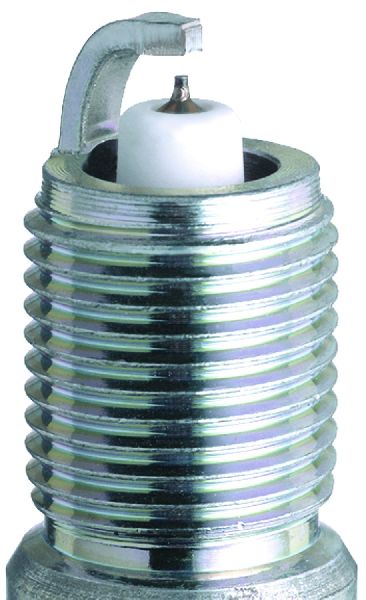
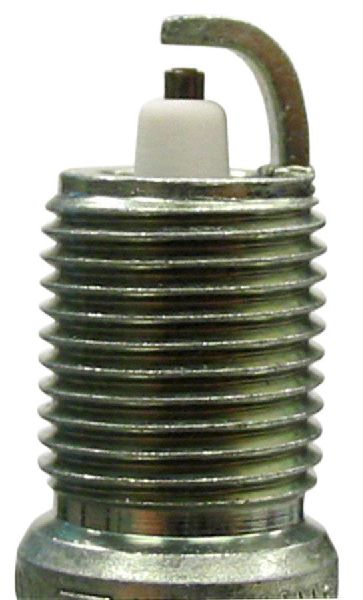
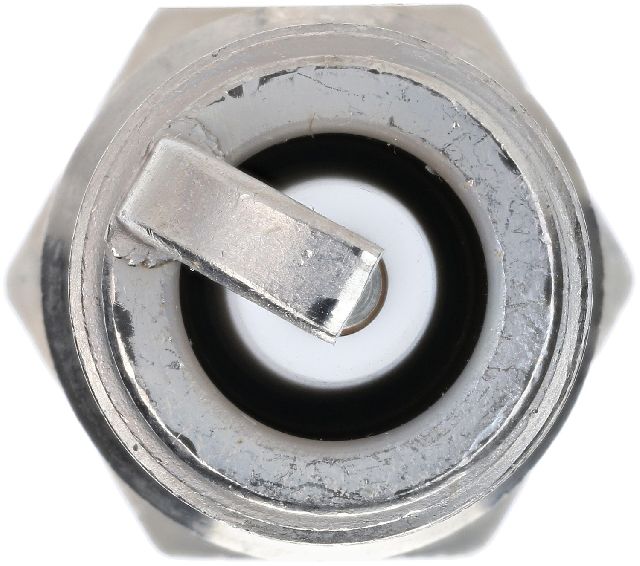
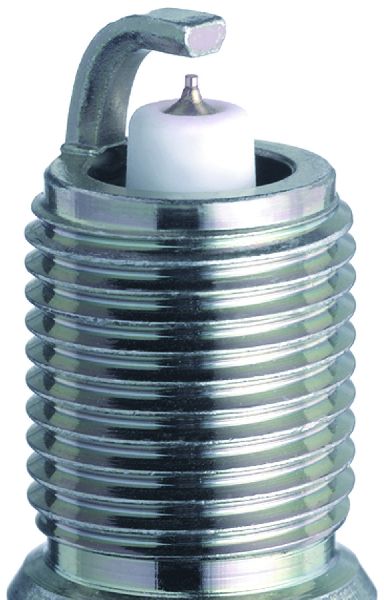
- Worn or Oil-Fouled Spark Plugs 🔴 High Probability TSB #PIP4525D specifically calls out inspecting spark plugs for oil fouling and cracks on these trucks. The 6.0L V8 can consume oil, which contaminates the plugs and prevents a strong spark. Even without oil issues, plugs are a primary wear item and a top cause of misfires.
How to confirm: Remove the spark plugs and inspect them. Look for black, oily deposits, heavy carbon buildup, or a worn-down center electrode. A normal plug should be a light tan color. Check the gap to see if it has widened far beyond spec (0.040 inches).
Typical fix: Replace all eight spark plugs. It is highly recommended to replace the spark plug wires at the same time. Use of quality ACDelco Iridium plugs (OEM P/N 12621258) is recommended by many owners for longevity.
Est. part cost: $40-$100 - Faulty Spark Plug Wires 🔴 High Probability TSB #PIP4819A directly points to inspecting and replacing spark plug wires for a P0300 code. The high-heat engine environment degrades the wire insulation over time, causing the spark to weaken or arc to the engine block, especially under load.
How to confirm: Visually inspect wires for cracks, burns, or corrosion on the terminals. A definitive test is to run the engine in complete darkness and look for any visible arcing (blue sparks) around the wires. You can also test resistance with a multimeter.
Typical fix: Replace the complete set of spark plug wires. Many owners recommend applying dielectric grease to the inside of the boots to ease future removal and prevent moisture intrusion.
Est. part cost: $50-$120 - Vacuum Leak 🟡 Medium Probability The intake manifold gaskets on the 6.0L V8 are a known failure point. Over time, the original orange gaskets become brittle and crack, allowing unmetered air into the engine and disrupting the air-fuel ratio, causing lean misfires (often with P0171/P0174). This is often worse on a cold start and may improve as the engine warms and parts expand.
How to confirm: A smoke test is the most effective method. A DIY method involves spraying brake cleaner or unlit propane around the intake manifold sealing surfaces with the engine running; a change in idle RPM indicates a leak. High positive short-term fuel trims (STFT) at idle that decrease with RPM are a strong indicator.
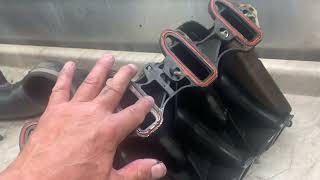
Typical fix: Replace the intake manifold gaskets. 🎬 Watch: How to replace leaking intake manifold gaskets. The updated GM part is a green-colored gasket set which is more durable than the original orange version.
Est. part cost: $30-$150 - Clogged or Failing Fuel Injectors 🟡 Medium Probability Fuel injectors can become clogged with deposits over time, leading to an improper spray pattern and a lean fuel condition in one or more cylinders. This is a common issue on many Chevrolet vehicles.
How to confirm: Use a scan tool to monitor fuel trims per bank. A more definitive test involves a fuel injector balance test, which measures the pressure drop for each injector. In some cases, a quality fuel system cleaner has resolved minor injector-related misfires for some owners.
Typical fix: Replace the faulty fuel injectors. They are often replaced as a complete set to ensure balanced flow.
Est. part cost: $200-$500 - Weak Ignition Coil(s) ⚪ Low Probability While coils are robust, they can fail. A P0300 is more likely if multiple coils are weak or if there's a wiring issue affecting the coils on one bank. Heavy rust on the coil packs is a visual clue that they may be original and nearing end-of-life.
How to confirm: Use a scan tool to identify which cylinders are misfiring most. Swap a coil from a misfiring cylinder with one from a known good cylinder. If the misfire follows the coil, the coil is bad.
Typical fix: Replace the faulty ignition coil. If multiple coils are original and show signs of corrosion, some owners elect to replace all eight as preventative maintenance.
Est. part cost: $30-$70 per coil
Rare But Worth Checking
- Worn Camshaft Lobe / Lifter Roller: TSB #PIP4138P suggests this as a cause if other diagnostics fail. This is a significant mechanical failure that often produces a distinct ticking or chirping noise from the engine that does not go away when disabling injectors. It requires major engine work to repair, involving replacement of the camshaft and all lifters.
- Crossed Fuel Injector Connectors: TSB #PIP5169 warns that after engine repairs, it's possible to cross the injector connectors for cylinders 5 & 7 and 6 & 8, which will cause a P0300 code. This is a human-error issue but worth checking if work was recently performed.
- Low Fuel Pressure: A failing fuel pump or clogged fuel filter can starve the entire engine for fuel, causing random misfires, especially under load or when going uphill. This can be checked with a fuel pressure gauge connected to the fuel rail's Schrader valve. Expected pressure at idle is typically 55-62 PSI.
- Corroded Engine Ground (G103): A GM service bulletin (#06-06-04-046) highlights that a corroded main engine ground terminal (G103), located on the right side cylinder head, can cause random misfires. Cleaning the terminal, cylinder head surface, and fastener to bare metal and applying a dielectric sealant can resolve this issue.
- Crankshaft Position Sensor Relearn Needed: After certain repairs, like replacing the sensor or performing major engine work, the PCM may need to perform a 'crankshaft position variation learn' procedure. Without this, the PCM can misinterpret normal crankshaft fluctuations as misfires, setting a P0300. This procedure requires a capable bidirectional scan tool.
Diagnosis Steps
- Scan the PCM for any other stored trouble codes. Address those first, as they can provide clues to the P0300's root cause.
- Using a scan tool with live data, monitor the misfire counters for each cylinder (Mode $06 data) to see if the misfires are concentrated on one bank or are truly random. Also, check Short Term and Long Term Fuel Trims (STFT/LTFT). High positive numbers at idle point towards a vacuum leak.
- Perform a thorough visual inspection of the engine bay. Look for cracked vacuum hoses (especially the PCV hose), loose electrical connectors, damaged wiring, and signs of rodents.
- Inspect the spark plugs and spark plug wires. This is the most common cause. Look for wear, corrosion, cracks, and signs of oil fouling on the plugs.
- Test the ignition coils. Swap a suspected bad coil with a known good one and see if the misfire moves to the new cylinder.
- Check for vacuum leaks using a smoke machine. Pay close attention to the intake manifold gasket area and the PCV system hoses.
- Test fuel pressure at the fuel rail's test port to rule out a weak fuel pump or clogged filter.
Parts You'll Likely Need
- Spark Plugs
(OEM #12621258)— Worn and oil-fouled spark plugs are a primary cause of P0300 on this engine, as documented in TSB #PIP4525D.
Trusted brands: ACDelco, NGK
OEM price range: $6-$10 per plug
Aftermarket price range: $4-$8 per plug - Spark Plug Wire Set
(OEM #9748RR)— Degraded spark plug wires are another top cause, as noted in TSB #PIP4819A. They fail to deliver sufficient voltage to the plugs.
Trusted brands: ACDelco, NGK, Delphi
OEM price range: $80-$120
Aftermarket price range: $50-$90 - Intake Manifold Gasket Set
(OEM #12533587 (Original Orange Style), 89017589 (Updated Green/Teal Style))— These gaskets can fail and cause a significant vacuum leak, leading to lean conditions and random misfires. The updated green/teal design is recommended.
Trusted brands: Fel-Pro, ACDelco
OEM price range: $60-$100
Aftermarket price range: $30-$60
Related Codes That Often Appear With This One
- P0301-P0308 — These codes indicate a misfire on a specific cylinder (e.g., P0301 for Cylinder 1). They often accompany P0300 as the PCM tries to isolate the problem, or a single-cylinder misfire may be the root cause that the PCM flags as random.
- P0171 / P0174 — These codes indicate a 'System Too Lean' condition on Bank 1 or Bank 2. A vacuum leak, most commonly from the intake manifold gasket, is a frequent cause for both lean codes and a P0300, as the unmetered air affects multiple cylinders.
Technical Service Bulletins (TSBs) & Recalls
- PIP4525D
- PIP4819A
- PIP4138P
- PIP5169
- PIP5628F
- 06-06-04-046
Platform-Specific Known Issues
- Intake Manifold Gasket Leaks: A very common issue where the original orange intake gaskets fail, causing a vacuum leak. Symptoms are often a rough idle when cold that improves as the engine warms up, accompanied by P0171/P0174 codes. A user on BAT Auto Technical forums described the classic symptom: 'on a cold startup, it runs super lean, causing a lean misfire... as the vehicle warms up and things start to expand, it runs better as it starts to seal better.' The fix is to replace them with the updated green/teal gaskets.
- Owner Experience: Chasing P0300: On Chevroletforum.com, a user with an '03 3500 with a 6.0L engine described a frustrating P0300 chase. After initial codes for MAF, O2, and coils, clearing them left only P0300. He replaced the spark plugs, but the flashing check engine light and lack of power returned immediately. This highlights the importance of systematic diagnosis, as other users suggested checking fuel pressure (a dying pump) or performing a crank relearn before throwing more parts at it.
- Camshaft/Lifter Wear: A more severe, but documented, cause is a worn camshaft lobe and/or lifter roller, detailed in TSB PIP4138P. This typically presents with a persistent ticking or chirping noise along with the misfire code. This is a major mechanical repair and should only be considered after all other ignition, fuel, and vacuum-related causes have been definitively ruled out.
Mechanic-Grade Diagnostic Values
- Fuel Pressure (Key on, engine off or at idle) — expected: 55-62 PSI. Failure: Pressure below 55 PSI indicates a potential weak fuel pump or clogged filter.
- Ignition Coil Primary Resistance — expected: 0.4 to 2 ohms. Failure: A reading of 0 ohms (short) or infinite/OL (open) indicates a bad coil.
- Ignition Coil Secondary Resistance — expected: 6,000 to 10,000 ohms (6k-10k Ω). Failure: A reading significantly outside this range suggests a faulty coil winding.
- Fuel Injector Resistance (LY6 engine) — expected: 12 to 17 ohms. Failure: A reading outside this standard range for high-impedance injectors indicates a faulty injector coil.
- Fuel Trims (STFT/LTFT) in Freeze Frame Data — expected: Single-digit corrections (e.g., -9% to +9%). Failure: Double-digit positive corrections (e.g., +15% or higher) strongly suggest a lean condition like a vacuum leak; double-digit negative corrections suggest a rich condition.
Hidden / Shadow Codes Worth Checking
- Mode $06 Misfire Data: This is not a typical DTC but a data monitoring function within the PCM. It stores historical and current misfire counts for each individual cylinder, even if they haven't reached the threshold to set a specific P0301-P0308 code. This is invaluable for seeing if a 'random' P0300 is actually biased towards one or two cylinders. (see via A professional-level scan tool or an advanced DIY scanner with Mode $06 capabilities is required. The data is usually found under 'Misfire Data' or 'On-Board System Tests'.)
Scan Tool Commands That Help
- Tech2, GDS2, or capable aftermarket scanner: Crankshaft Position Variation Learn — This procedure must be performed after replacing the crankshaft position sensor, the PCM, or performing major engine work. It synchronizes the sensor's signal with the PCM's reference, and failure to do so can cause the PCM to falsely detect misfires and set a P0300 or P1336 code.
- Tech2, GDS2, or capable aftermarket scanner: Fuel Injector Balance Test — This test helps diagnose a suspected faulty or clogged fuel injector when fuel trims point to a problem on one bank. The tool commands the PCM to fire each injector individually while monitoring the fuel pressure drop on the rail. An injector with a significantly different pressure drop compared to the others is likely faulty.
Wiring & Ground Locations
- G103 — On the front of the right (passenger side) cylinder head.. This is a primary engine ground. TSB #06-06-04-046 specifically mentions that corrosion at this point can cause intermittent electrical issues, including random misfires. It provides a ground path for critical sensors and modules. Cleaning this connection to bare metal is a key diagnostic step for unexplained electrical faults.
- Injector Connectors (Cylinders 5, 7, 6, 8) — On the passenger side of the engine (Cylinders 6 & 8) and driver's side (Cylinders 5 & 7).. TSB #PIP5169 explicitly warns that the connectors for cylinders 5 and 7 (driver side) and 6 and 8 (passenger side) can be easily swapped during reassembly after engine repairs. The wiring harness layout makes this a common mistake. This cross-connection will immediately cause a P0300 code as the wrong cylinders are being fueled at the wrong time in the firing order.
Real Owner Repair Stories
- PerformanceTrucks.net Forums (2004 Chevrolet Silverado 2500 6.0L) — P0300 code that would only appear after 10-15 minutes of highway driving. No noticeable miss, engine ran great with plenty of power.
❌ Tried (didn't work) Replacing intake manifold gaskets, Replacing fuel filter, Replacing fuel pressure regulator, Cleaning MAF sensor, Replacing spark plugs and wires
✅ What actually fixed it The user discovered the flexplate was cracked around the crankshaft bolts. Replacing the cracked flexplate resolved the P0300 code. The theory is that at highway RPMs, the crack would cause a wobble that the crankshaft position sensor misinterpreted as a misfire.
"I Checked Everything" — The Actual Cause
- In a documented case on a 6.0L V8, a persistent P0300 with high positive fuel trims on one bank was not resolved by replacing plugs, wires, or coils, and a smoke test showed no vacuum leaks. The ultimate cause was found to be a cracked flexplate. The crack would cause a slight wobble at certain RPMs, which the crankshaft position sensor would interpret as random misfires, even though no vacuum or ignition fault existed.
When the Usual Fixes Don't Work
- While ignition components and vacuum leaks are the most common culprits, numerous owner accounts confirm that after replacing plugs, wires, coils, and intake gaskets without success, the P0300 was finally resolved by addressing less common issues. One notable case involved a cracked flexplate, which caused the crankshaft position sensor to generate false misfire signals at highway speeds. Another pattern involves a failing fuel pump that provides just enough pressure at idle to seem okay, but causes lean misfires under load. This highlights the importance of testing fuel pressure under load and not just at idle.
OEM Part Supersession History
GM 12580579 (and others)→GM 19256623 (Fel-Pro MS 96918)— The original orange/red intake manifold gaskets were prone to becoming brittle and cracking from heat cycles, causing vacuum leaks. The updated design uses a more durable green rubber material.
Model Year Variations Within This Range
- 2010: The 2010 model year 6.0L LY6 engine was updated with Variable Valve Timing (VVT). While the 2008-2009 models did not have VVT, a failing VVT solenoid or phaser on a 2010 model can cause erratic engine timing and lead to misfires, adding another potential diagnostic path for that specific year.
- 2009 (mid-year) and newer: General Motors changed the fuel rail design in mid-2009. Vehicles built after February 2009 may have a different fuel rail than earlier models, which is important to note if replacing injectors or the rail itself.
Helpful Videos
Used OEM Parts in Stock


New Aftermarket Parts Available


The information in this article is provided for general reference and educational purposes only. Vehicle specifications, procedures, and part compatibility can vary by production date, trim level, and region. Always consult your vehicle's factory service manual and verify part numbers before purchasing or performing repairs. Safety-critical components such as airbags, seat belts, and braking systems should be installed by a qualified professional.
- Chevrolet SILVERADO 2500:
- 🎬 Helpful Videos
- 🛍️ Shop This Part
- What's Unique About the 2008-2010 Chevrolet SILVERADO 2500
- Diagnostic Flowchart
- Symptoms You May Notice
- Most Likely Causes
- Rare But Worth Checking
- Diagnosis Steps
- Parts You'll Likely Need
- Related Codes That Often Appear With This One
- Technical Service Bulletins (TSBs) & Recalls
- Platform-Specific Known Issues
- Mechanic-Grade Diagnostic Values
- Hidden / Shadow Codes Worth Checking
- Scan Tool Commands That Help
- Wiring & Ground Locations
- Real Owner Repair Stories
- "I Checked Everything" — The Actual Cause
- When the Usual Fixes Don't Work
- OEM Part Supersession History
- Model Year Variations Within This Range
- 🎟️ Get 5% Off