

P0300 on 2000-2007 Chevrolet Silverado 2500: Random Misfire Causes & Fixes
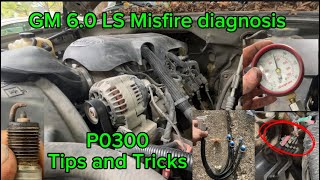
P0300 on a GMT800 Silverado 2500 usually means it's time for a tune-up (spark plugs and wires) or you have a vacuum leak from a bad intake manifold gasket. A basic tune-up is affordable, while an intake gasket job can cost several hundred dollars. In rarer cases, it can point to a failing fuel pump or serious internal engine wear.
- P0300 means multiple cylinders are misfiring, not just one.
- Start with the basics: A tune-up with new spark plugs (ACDelco recommended) and wires fixes this code a majority of the time.
- If the truck idles rough only when warm, you almost certainly have a vacuum leak from the intake manifold gaskets.
- A flashing check engine light is a serious warning. Pull over and shut off the engine to avoid destroying your catalytic converters.
- If you hear a persistent ticking or chirping noise with the misfire, be aware that a more serious internal engine problem like a worn camshaft is a possibility, as noted in GM service bulletins.
What's Unique About the 2000-2007 Chevrolet SILVERADO 2500

On the Vortec V8 engines (like the 6.0L LQ4 and 8.1L L18) common in these trucks, P0300 is frequently caused by a vacuum leak at the intake manifold gaskets. The original plastic-and-rubber gaskets are notorious for becoming brittle from heat cycles, causing unmetered air to enter the engine and creating a lean condition, which often results in a rough idle when warm. More seriously, GM has issued Technical Service Bulletins (TSBs) for this engine family, like #PIP4138P, warning that a P0300 code, sometimes with a ticking or chirping noise, can be a symptom of a worn camshaft lobe, a much more severe mechanical issue.
Diagnostic Flowchart

Tap your situation to follow the diagnostic path that matches what you're seeing on this vehicle.
Generation note: This range covers the first generation of Silverado HD (GMT800), but the 2007 model year was an overlap. You could have a 2007 'Classic' (GMT800) or the new body style second-generation (GMT900). While many causes are similar, be sure to verify parts for your specific 2007 model, as some ignition and fuel system components differ.
Symptoms You May Notice
- Rough or shaking idle, especially when the engine is warm
- Hesitation or stumbling during acceleration
- Flashing or solid Check Engine Light
- Noticeable loss of engine power
- Reduced fuel economy
- Engine stalling
- Smell of raw fuel from the exhaust
- A consistent ticking or chirping noise from the engine (may indicate cam/lifter issue)
- Replacing oxygen (O2) sensors. While a misfire will cause O2 sensor codes to appear due to the unburned oxygen in the exhaust, the O2 sensor is almost never the root cause of a P0300. The O2 sensor is reporting the problem, not causing it.
- Replacing the Mass Airflow (MAF) sensor without proper diagnosis. While a dirty MAF can contribute to fuel mixture issues, it's less common than ignition or vacuum problems for this code. Cleaning it is a reasonable step, but replacement should be based on diagnostic data.
Most Likely Causes


- Worn Spark Plugs and/or Defective Spark Plug Wires 🔴 High Probability These are standard maintenance items that wear out over a 100,000-mile interval. Wires can degrade, causing spark to arc to the block, and plugs can foul. Carbon tracking on the spark plug's ceramic insulator is a common failure point that causes the spark to ground out.
How to confirm: Inspect spark plugs for wear, fouling, or carbon tracking. Inspect wires for cracks, brittleness, or damage. A tune-up is often the first and most effective diagnostic step.
Typical fix: Replace all spark plugs and spark plug wires as a set. Using original equipment brands like ACDelco is highly recommended for GM trucks.
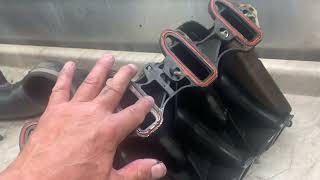
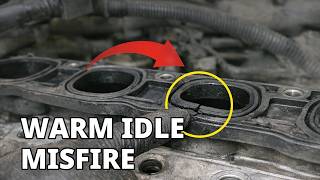
Est. part cost: $50-$150 - Intake Manifold Gasket Leak 🔴 High Probability The original plastic/rubber gaskets on Vortec engines are known to become brittle and fail, creating a vacuum leak. This often causes a rough idle that is noticeably worse only when the engine is fully warm. 🎬 See how an intake gasket leak causes rough idle when warm.
How to confirm: With the engine running, carefully spray short bursts of brake cleaner or unlit propane around the seam where the intake manifold meets the cylinder heads. A change in engine RPM confirms the leak. A professional smoke test is the safest and most definitive method.
Typical fix: Replace the intake manifold gaskets. It is highly recommended to use an updated metal/rubber gasket design, such as the Fel-Pro MS 98016 T, which is more durable than the OEM plastic design.
Est. part cost: $40-$100 - Low Fuel Pressure 🟡 Medium Probability The fuel pump or fuel pressure regulator can weaken with age, failing to supply adequate pressure for all cylinders under load. The fuel pressure regulator, located on the fuel rail on these models, is a frequent failure point.
How to confirm: Connect a fuel pressure gauge to the Schrader valve service port on the fuel rail. Check that the pressure is within the manufacturer's specification (typically 55-62 PSI for these trucks with the engine running).
Typical fix: If pressure is low, first replace the fuel filter as it's inexpensive and may be clogged. If pressure remains low, the fuel pump assembly in the tank likely needs to be replaced.
Est. part cost: $20 (filter) - $300+ (pump) - Clogged or Defective Fuel Injectors 🟡 Medium Probability Fuel injectors can become clogged with deposits over time, leading to a poor spray pattern and an improper air/fuel mixture. This can sometimes be triggered by using strong in-tank fuel system cleaners that dislodge debris.
How to confirm: A professional can perform a fuel injector balance test. A DIY method is to listen to each injector with a mechanic's stethoscope; they should all have a consistent, rhythmic clicking sound. A scan tool with live data can also help identify which cylinders are misfiring.
Typical fix: Replace the faulty fuel injector(s). It is often recommended to replace them as a complete set to ensure balanced engine performance, especially on high-mileage vehicles.
Est. part cost: $40-$90 per injector - Defective Ignition Coil(s) ⚪ Low Probability While durable, the individual coil packs can fail, developing cracks that allow the spark to arc to the engine block or mounting bracket instead of firing the plug.
How to confirm: If you have a scan tool that shows misfire data (Mode $06), you can identify the misfiring cylinder. Swap the coil from a misfiring cylinder with a coil from a good cylinder. If the misfire code follows the coil (e.g., P0301 moves to P0304), the coil is bad.
Typical fix: Replace the single faulty ignition coil.
Est. part cost: $30-$70
Rare But Worth Checking
- Worn Camshaft Lobe / Failed Lifter: Per TSB #PIP4138P/Q, if standard diagnostics don't find the cause and you hear a consistent ticking or chirping noise, a worn camshaft lobe or failed lifter could be the culprit. This requires removing the valve covers and potentially the cylinder heads to inspect the lifters and camshaft lobes, often through the lifter bores with a boroscope. 🎬 Watch this diagnostic walkthrough for lifter and camshaft issues. This is a major mechanical repair.
- Faulty Crankshaft Position Sensor (CKP): The PCM uses the CKP sensor to detect misfires by monitoring crankshaft speed variations. A faulty sensor can send erratic signals, causing the PCM to incorrectly report a P0300 code. A replacement often requires a 'crankshaft variation relearn' procedure with a capable scan tool.
- Contaminated Fuel: Water or other contaminants in the fuel can cause widespread misfiring across all cylinders. This often happens after filling up at a questionable gas station.
- Bad Engine Ground: A corroded or loose engine-to-chassis ground strap can cause a host of electrical issues, including erratic sensor readings and weak ignition spark, leading to a P0300. Check the main ground straps from the engine block to the frame and firewall.
Diagnosis Steps
- Scan for all stored DTCs. Note if any cylinder-specific (P0301-P0308) or lean codes (P0171/P0174) are present. Use a scan tool with live data to view misfire counts per cylinder (often found in Mode $06).
- If the check engine light is flashing, stop the engine immediately to prevent catalytic converter damage.
- Perform a full visual inspection of the engine bay. Look for cracked or disconnected vacuum hoses (especially the small one on the driver's side of the intake manifold), loose electrical connectors, or signs of arcing around ignition components.
- Inspect and replace spark plugs and wires if they are due for service or show signs of wear. This is the most common fix. Use ACDelco plugs gapped correctly.
- Test for vacuum leaks, focusing on the intake manifold gaskets. Use a smoke machine for best results, or carefully use carb cleaner or propane to listen for an RPM change.
- Check fuel pressure using a gauge on the fuel rail to rule out a weak fuel pump or faulty regulator. The pressure should be 55-62 PSI.
- Test ignition coils by swapping a suspected bad coil (identified via scan tool misfire data) with a known good one to see if the misfire follows the coil.
- If all else fails, investigate mechanical causes. Perform a compression test to check for internal engine issues. If a persistent ticking noise is present, refer to TSB #PIP4138P and inspect the camshaft and lifters.
Parts You'll Likely Need
- Spark Plugs
(OEM #ACDelco 41-962 (Platinum, for many 6.0L LQ4))— This is the most common cause of misfires and a routine maintenance item. GM engines are often sensitive to plug brands.
Trusted brands: ACDelco, NGK
OEM price range: $6-$12 per plug
Aftermarket price range: $4-$9 per plug - Spark Plug Wires
(OEM #ACDelco 9748GG (for many 6.0L LQ4))— Wires degrade over time and can cause spark to leak, preventing a full ignition.
Trusted brands: ACDelco, NGK/NTK
OEM price range: $60-$90 per set
Aftermarket price range: $40-$70 per set - Intake Manifold Gasket Set
(OEM #Fel-Pro MS 98016 T (Upgraded design))— The original plastic gaskets are a very common failure point. The Fel-Pro metal/rubber design is a widely recommended upgrade.
Trusted brands: Fel-Pro, ACDelco
OEM price range: $60-$110
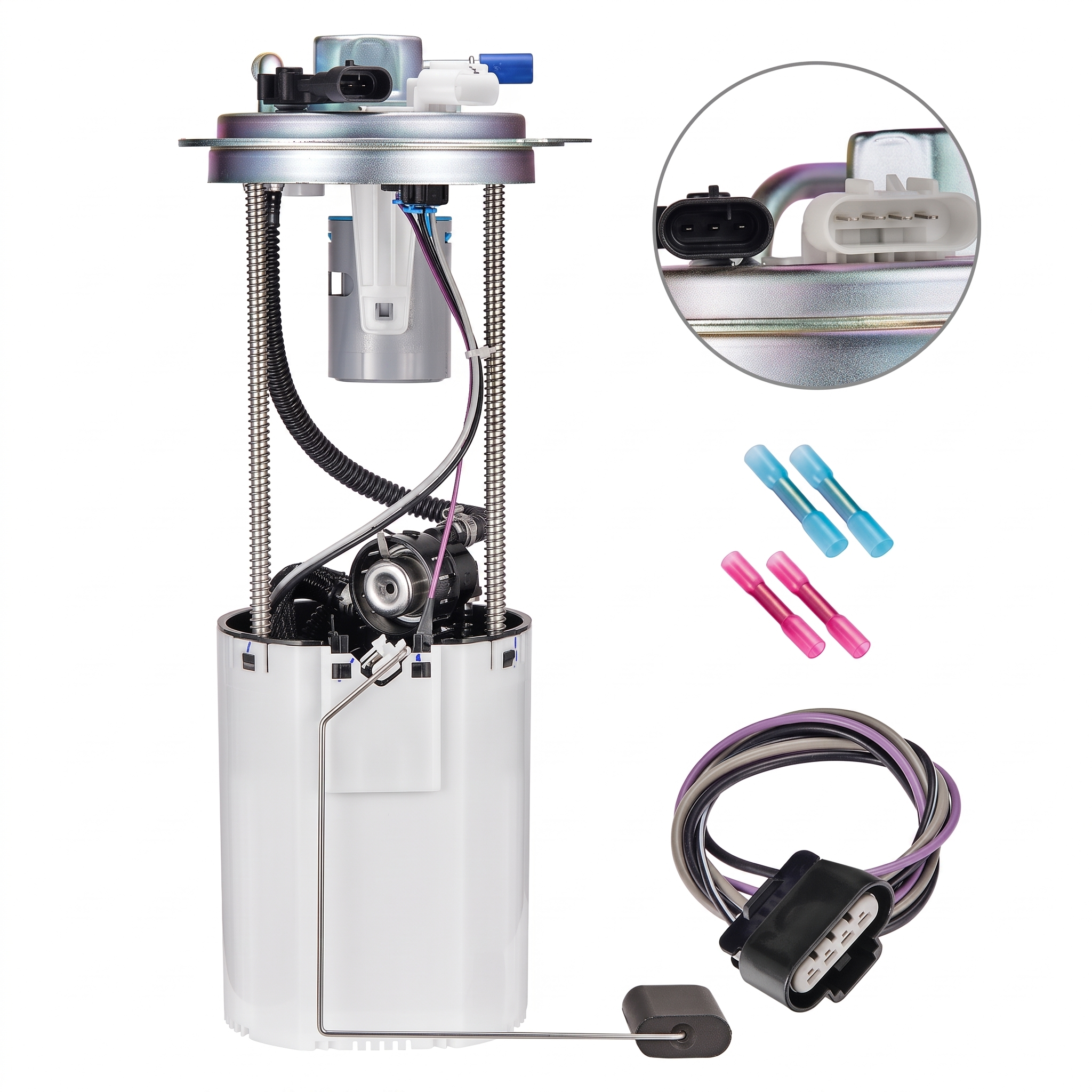
Aftermarket price range: $40-$80 - Fuel Pump Assembly — A weak fuel pump will starve the engine for fuel under load, causing random misfires.
Trusted brands: Delphi, ACDelco, Carter
OEM price range: $250-$400
Aftermarket price range: $150-$250
Related Codes That Often Appear With This One
- P0301-P0308 — If the random misfire begins to occur more frequently on a specific cylinder, the PCM will log a cylinder-specific code alongside P0300. A scan tool can often show pending misfires on specific cylinders before the code is set.
- P0171, P0174 — These codes mean 'System Too Lean' on Bank 1 and Bank 2, respectively. They strongly indicate a vacuum leak, such as a failed intake manifold gasket, as the source of the misfire.
- P050D — This code for 'Cold Start Rough Idle' is mentioned alongside P0300-P0308 in TSB #PIP5628F, indicating a potential link that requires specific dealer diagnostics.
Technical Service Bulletins (TSBs) & Recalls

- TSB #PIP4138P / PIP4138Q: Warns that a P0300-P0308 code accompanied by a consistent chirp, squeak, or tick noise can indicate a worn camshaft lobe or lifter roller, a major mechanical failure.
- TSB #PIP5628F: Instructs technicians to gather specific information for GM's Technical Assistance Center (TAC) when diagnosing P0300-P0308 and/or P050D, suggesting a complex diagnostic path for certain misfire conditions.
Platform-Specific Known Issues
- Worn Camshaft Lobes: TSB #PIP4138P highlights that a P0300 code, especially with a persistent engine tick or chirp, can be caused by a worn camshaft lobe. This requires significant engine disassembly to inspect and repair.
- Intake Gasket Leaks When Hot: A classic symptom on these trucks is an engine that idles fine when cold but develops a rough idle and P0300 code once it reaches operating temperature. This is almost always due to the intake manifold gaskets leaking.
Mechanic-Grade Diagnostic Values
- Ignition Coil Primary Resistance — expected: 0.500 ohms. Failure: A reading significantly higher or lower than the specification indicates a faulty coil.
- Ignition Coil Secondary Resistance — expected: 6.1k ohms. Failure: A reading outside this value suggests the secondary windings are compromised.
- Fuel Injector Resistance (Vortec V8) — expected: 11-14 ohms. Failure: An injector with resistance outside this range may be shorted or open and should be replaced.
- Fuel Pressure (Key on, Engine Running) — expected: 55-62 PSI. Failure: Pressure below 55 PSI can indicate a weak fuel pump, clogged filter, or faulty regulator, leading to lean misfires across all cylinders.
- Live Data Fuel Trims (STFT/LTFT) — expected: Within +/- 10% at idle and under load.. Failure: Long Term Fuel Trims consistently above +10% (e.g., +25%) strongly suggest a vacuum leak, as the PCM is adding fuel to compensate for unmetered air.
Hidden / Shadow Codes Worth Checking
- Mode $06 Misfire Data: This is not a 'code' but a specific data monitoring mode on advanced scan tools. It provides raw misfire counts for each individual cylinder, even before the count is high enough to set a specific P0301-P0308 code. This is invaluable for seeing which cylinders are contributing most to the P0300 count. (see via Use a scan tool that supports Mode $06 diagnostics. A GM Tech2 or equivalent will display this as 'Misfire Data'.)
Scan Tool Commands That Help
- GM Tech2 / GDS2 or equivalent professional scanner: Crankshaft Position Variation Learn (CASE Relearn) — This procedure is required after replacing the crankshaft position sensor (CKP), PCM, or crankshaft balancer. It synchronizes the CKP sensor with the actual rotational variations of the crankshaft. Failure to perform this can cause the PCM to misinterpret normal variations as misfires, setting a P0300 or P0315.
- GM Tech2 / GDS2 or equivalent professional scanner: Fuel Injector Balance Test — This bidirectional test allows the technician to fire each injector individually and measure the corresponding fuel pressure drop. It's the most definitive way to identify a clogged or weak injector that isn't flowing enough fuel, which could cause a misfire on that cylinder.
- GM Tech2 / GDS2 or equivalent professional scanner: Clear Misfire Counters — After performing a repair (like swapping a coil), it's useful to clear the historical misfire counts. This allows you to see if new misfires accumulate on the same or a different cylinder during a test drive, confirming if the fix was successful.
Wiring & Ground Locations
- G102 — On the left (driver's) side of the engine block, often a primary connection point for a large ground cable from the battery.. This is a critical ground for the ignition system. A loose or corroded G102 ground can cause weak or intermittent spark across multiple cylinders, leading to a classic P0300. One forum user found a loose ground wire on the back of the driver's side cylinder head that solved their P0300 after replacing many other parts.
- Ignition Coil Harness Ground — Both banks of ignition coils tie into a harness ground which then connects to the engine block. On some diagrams, this is also tied to G102.. A fault in this specific ground can affect an entire bank of cylinders, causing misfires that might initially present as random before settling on one side of the engine.
- Engine Harness Chafe Point — On GMT800 trucks, a common chafe point for the main engine harness is against the front corner of the left (driver's side) cylinder head or nearby brackets.. Vibration can cause the harness to rub through, shorting various circuits. If ignition control or sensor wires are damaged, it can lead to erratic signals and misfires. A visual and physical inspection of the harness in this area is crucial.
Real Owner Repair Stories
- Chevrolet Forum user (2004 Silverado 2500 6.0L, 102,000 miles) — P0300 code appeared, but with no noticeable miss or rough idle.
❌ Tried (didn't work) Initial diagnosis showed no obvious performance issue.
✅ What actually fixed it The owner found a loose ground wire on the back of the driver's side cylinder head. After tightening it, the P0300 code did not return. - YouTube channel 'Fast Dad Garage' (2003 Silverado 1500 5.3L) — P0300, truck would barely run. The entire passenger side bank of cylinders was cold, measured with an infrared temp gun on the exhaust manifold.
❌ Tried (didn't work) Checking for spark., Checking for catalytic converter blockage.
✅ What actually fixed it The fuel injectors on the passenger side were completely clogged with a gel-like substance. Replacing the injectors and the fuel pressure regulator resolved the issue.
"I Checked Everything" — The Actual Cause
- A user on a forum reported chasing a P0300 for months. After passing a smoke test and replacing plugs, wires, and coils, the cause was found to be a loose ground wire on the back of the driver's side cylinder head. This caused an electrical issue mimicking a vacuum leak or ignition component failure.
Model Year Variations Within This Range
- 2003-2004: In 2004, GM began phasing in a 'returnless' fuel system on some truck models, which became standard on the Silverado SS in 2004. Earlier models (2000-2003) typically have a fuel return line from the fuel rail back to the tank, with the pressure regulator mounted on the rail. The returnless systems have the regulator inside the fuel tank as part of the pump assembly. This is critical for diagnosis, as a fuel pressure issue on a 2003 might be the rail-mounted regulator, while on a 2005 it would necessitate checking the in-tank pump module.
- 2003+: Starting around 2003, GM switched from a drive-by-cable throttle body to a drive-by-wire (DBW) system. While not a direct cause of P0300, a faulty throttle position sensor or DBW system can cause erratic engine behavior and stalling that might be confused with misfires.
- 2005+: Starting in 2005, these trucks came from the factory with electric cooling fans (e-fans) instead of a clutch fan. This has no direct impact on P0300 but is a key identifier for model years.
Helpful Videos
We Have This Part in Stock



The information in this article is provided for general reference and educational purposes only. Vehicle specifications, procedures, and part compatibility can vary by production date, trim level, and region. Always consult your vehicle's factory service manual and verify part numbers before purchasing or performing repairs. Safety-critical components such as airbags, seat belts, and braking systems should be installed by a qualified professional.
- Chevrolet SILVERADO 2500:
- 🎬 Helpful Videos
- 🛍️ Shop This Part
- What's Unique About the 2000-2007 Chevrolet SILVERADO 2500
- Diagnostic Flowchart
- Symptoms You May Notice
- Most Likely Causes
- Rare But Worth Checking
- Diagnosis Steps
- Parts You'll Likely Need
- Related Codes That Often Appear With This One
- Technical Service Bulletins (TSBs) & Recalls
- Platform-Specific Known Issues
- Mechanic-Grade Diagnostic Values
- Hidden / Shadow Codes Worth Checking
- Scan Tool Commands That Help
- Wiring & Ground Locations
- Real Owner Repair Stories
- "I Checked Everything" — The Actual Cause
- Model Year Variations Within This Range
- 🎟️ Get 5% Off