

P0300 on 2008-2015 Chevrolet Silverado 1500: Random Misfire Causes & Fixes
P0300 on a 2008-2015 Silverado is a random misfire code. While it can be caused by simple issues like worn spark plugs or coils ($100-$300), it's frequently a sign of a failed Active Fuel Management (AFM) lifter, a common and expensive repair ($2,000-$4,000+) specific to these GM trucks. Disabling the AFM system via a tuner is a common workaround attempted by owners before committing to mechanical repair.
- P0300 indicates a random misfire, a serious issue that should be addressed promptly.
- Do not drive if the check engine light is flashing, as this can cause expensive catalytic converter damage.
- While simple fixes like spark plugs are possible, be highly suspicious of a failed Active Fuel Management (AFM) lifter, a very common and costly problem on these V8 engines.
- If P0300 appears with P050D (Cold Start Rough Idle), the cause is very likely leaking fuel injectors or a coolant leak, as documented in GM TSBs.
- Due to the high cost of AFM lifter repair, many owners choose to install an 'AFM Delete Kit' as a permanent solution.
What's Unique About the 2008-2015 Chevrolet SILVERADO 1500

On this generation of Silverado, P0300 is notoriously linked to the Active Fuel Management (AFM) system. This system deactivates cylinders to improve fuel economy, but the specialized hydraulic lifters are a known major failure point. These lifters can collapse, get stuck, or suffer internal damage from oil aeration, leading to a persistent misfire that the ECM registers as a P0300 code. Additionally, on 2014+ models with direct injection, P0300 is frequently paired with P050D (Cold Start Rough Idle), a combination that strongly points to leaking high-pressure fuel injectors 🎬 See how to diagnose P0300 and P050D codes on 2014+ models., another well-documented issue.
Diagnostic Flowchart

Tap your situation to follow the diagnostic path that matches what you're seeing on this vehicle.
Generation note: This range covers two Silverado generations: the 2nd Gen (GMT900, 2008-2013) and the early 3rd Gen (K2XX, 2014-2015). Both generations feature V8 engines with Active Fuel Management (AFM), and the associated lifter failure is a common cause for P0300 across this entire year span. The 2014+ models introduced new EcoTec3 direct-injected engines, which are also susceptible to AFM lifter failure but are particularly known for the P0300/P050D combination caused by leaking fuel injectors.
Symptoms You May Notice

- Flashing or solid Check Engine Light
- Engine shaking, stuttering, or vibrating, especially at idle
- Rough or unstable idle
- Noticeable loss of power and poor acceleration
- Hesitation during acceleration
- Increased fuel consumption
- Engine ticking, chirping, or squealing noise, especially from the top end
- White smoke or coolant odor from exhaust on cold start (when seen with code P050D)
- Service StabiliTrak warning light may appear alongside the CEL
- Replacing oxygen (O2) sensors. O2 sensors report on the composition of the exhaust gas; they measure the result of combustion but rarely cause a random misfire themselves. A faulty O2 sensor will typically set its own specific code.
- Replacing only one ignition coil or spark plug when multiple are worn or fouled, leading to the misfire returning on a different cylinder.
Most Likely Causes

- Failed Active Fuel Management (AFM) Lifter 🔴 High Probability The AFM system deactivates cylinders 1, 4, 6, and 7 under light load. The special lifters used for this process are a well-documented weak point, prone to mechanical collapse, sticking in their bores, or internal pin damage due to oil aeration. This failure is so common it has prompted class-action lawsuits and numerous technical service bulletins.
How to confirm: Diagnosis starts with listening for a characteristic top-end engine tick. A mechanic will confirm by removing the valve cover and observing the rocker arms on the AFM cylinders while the engine is running. A rocker arm that is not moving or has limited movement indicates a collapsed lifter. A compression test on the affected cylinders may also show low or zero compression.
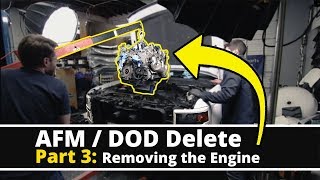
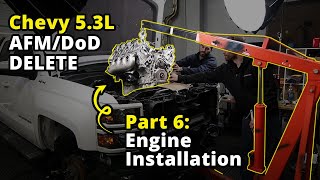
Typical fix: Requires replacing all AFM and non-AFM lifters, lifter guides, and often the camshaft which gets damaged 🎬 Watch this step-by-step guide to replacing failed AFM lifters. by the failed lifter. Many owners and shops opt for an 'AFM Delete Kit' which replaces the failure-prone components with standard, more robust LS7-style lifters and a non-AFM camshaft, then electronically disables the AFM system via ECU tuning. This is considered a more permanent repair.
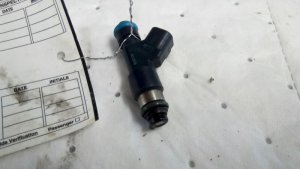
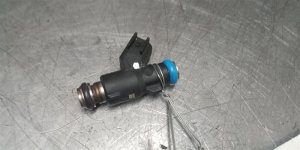
Est. part cost: $500-$1500 for parts (lifters, gaskets, camshaft, delete kit) - Leaking/Clogged Fuel Injectors 🔴 High Probability On the 2014-2015 models with direct injection, this is a very common cause, especially when P0300 is paired with code P050D (Cold Start Rough Idle). The high-pressure injectors can leak fuel into the cylinder after the engine is shut off, causing a rich condition and misfires upon the next cold start.
How to confirm: A technician can use a scan tool to monitor fuel rail pressure after the engine is turned off. On a healthy direct injection system, pressure should hold steady. A steady drop in pressure indicates a leak. An injector balance test can also pinpoint the faulty injector(s).
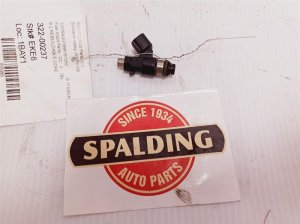
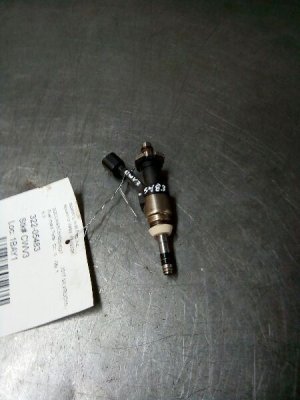
Typical fix: Replace the faulty fuel injector(s). Due to the labor involved in accessing them under the intake manifold, it is often recommended to replace all eight injectors at once. The high-pressure fuel lines are single-use and must also be replaced.
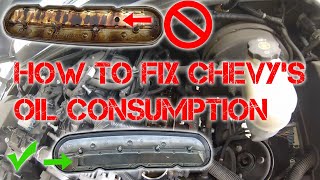
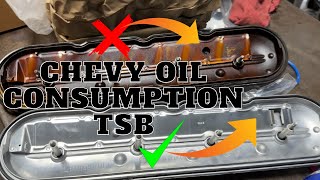
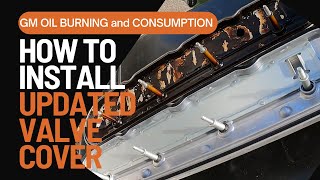
Est. part cost: $50-$120 per injector, plus gaskets and fuel lines - Worn Spark Plugs and/or Defective Ignition Wires 🟡 Medium Probability These are standard maintenance items. The V8 engine's oil consumption, sometimes exacerbated by the PCV system on pre-2011 models 🎬 Learn how to swap the valve cover to fix oil consumption., can foul spark plugs, leading to misfires. A less common but documented issue is a cracked porcelain insulator on a spark plug, which can cause an intermittent misfire that is hard to trace.
How to confirm: Visually inspect all spark plugs for wear, oil or carbon fouling, and cracks in the porcelain. Check ignition wires for cracks, burns, or corrosion. Test resistance of wires with a multimeter to ensure they are within OEM spec.
Typical fix: Replace all spark plugs and/or ignition wires. It is strongly recommended to use high-quality OEM parts (e.g., ACDelco Iridium plugs) as these engines can be sensitive to aftermarket components.
Est. part cost: $80-$200 - Faulty Ignition Coil(s) 🟡 Medium Probability
How to confirm: Use a scan tool with live data to identify which cylinder is logging the most misfires. Swap the ignition coil from the misfiring cylinder with one from a known good cylinder. If the misfire follows the coil (e.g., a P0301 becomes P0303 after swapping coils on cylinders 1 and 3), the coil is bad. In some cases, rodents chewing on the coil wiring harness can cause shorts and misfires, sometimes accompanied by a coil-specific code.
Typical fix: Replace the faulty ignition coil. If wiring is damaged, repair or replace the connector pigtail.
Est. part cost: $40-$80 per coil - Intake Manifold Vacuum Leak ⚪ Low Probability
How to confirm: Listen for a hissing or whistling sound at idle. A key symptom is a rough idle that appears only when the engine is warm. A mechanic will use a smoke machine to feed pressurized smoke into the intake system and watch for where it escapes, typically around the intake manifold gaskets. Live data on a scan tool will show high positive short-term fuel trims (STFT) at idle that decrease significantly when RPMs are raised.
Typical fix: Replace the intake manifold gaskets.
Est. part cost: $40-$100
Rare But Worth Checking
- Coolant Intrusion into Cylinder: Documented in TSB #PIP5498M, this occurs on cold starts and is often accompanied by code P050D, white exhaust smoke, and a coolant smell. This points to a potential cylinder head or head gasket issue, which is less common than injectors but shares similar symptoms.
- Low Fuel Pressure: A weak fuel pump or clogged fuel filter can starve the engine for fuel, causing random misfires under load. This is confirmed with a fuel pressure test at the fuel rail.
- Crankshaft Position Sensor Relearn: Sometimes, after a repair or due to electrical interference, the ECM can lose its learned crankshaft position variation. This can cause false misfire detection. A 'crank relearn' procedure using a capable scan tool is required to recalibrate the sensor.
Diagnosis Steps
- Check if the Check Engine Light is flashing. If it is, stop driving immediately to prevent catalytic converter damage.
- Scan the ECM for any other stored codes. Pay close attention to cylinder-specific misfire codes (P0301-P0308) or P050D, as they provide critical clues.
- Use a scan tool to view live misfire data and freeze frame data to see which cylinders are misfiring and under what conditions (e.g., cold start, idle, under load).
- If AFM lifter failure is suspected (common on all V8s), listen for a distinct ticking sound from the valve covers. A definitive test is to remove the valve covers and visually inspect rocker arm movement while the engine is running.
- For 2014+ models with P050D, perform a fuel rail pressure leak-down test with a scan tool to check for leaking injectors.
- Inspect basic ignition components. Check all spark plugs for wear, fouling, and correct gap. Inspect spark plug wires and coil boots for damage.
- If a specific cylinder is misfiring, swap its ignition coil with a known good one and see if the misfire follows the coil.
- Check for vacuum leaks, especially if the idle is rough only when warm. A smoke test is the most effective method.
- As a final step for mechanical issues, perform an engine compression test to check for internal damage like bad valves, head gasket failure, or piston ring issues.
Parts You'll Likely Need
- Active Fuel Management (AFM) Lifters
(OEM #12645725 (a common superseded number, check VIN for latest))— This is the most common major failure causing P0300 on this platform. The original lifters are prone to collapsing or sticking.
Trusted brands: ACDelco, Delphi, Melling
OEM price range: $30-$50 per lifter
Aftermarket price range: $20-$40 per lifter - AFM Delete Kit — A popular, more permanent solution to prevent repeat AFM lifter failure. Includes non-AFM lifters, new camshaft, gaskets, and often a new valley cover.
Trusted brands: Texas Speed & Performance, Brian Tooley Racing, Michigan Motorsports
OEM price range: N/A
Aftermarket price range: $600 - $1200 for a complete kit - Fuel Injector (Direct Injection, 2014+)
(OEM #12656931 (Check VIN))— A primary cause of P0300/P050D on EcoTec3 engines due to leaking.
Trusted brands: ACDelco, Bosch
OEM price range: $80-$120 per injector
Aftermarket price range: $50-$90 per injector - Spark Plugs
(OEM #ACDelco 41-162 (Iridium, for 2014+ 5.3L, check application))— Standard maintenance item. Can become fouled from oil consumption, leading to misfires.
Trusted brands: ACDelco, NGK
OEM price range: $8-$15 per plug
Aftermarket price range: $6-$12 per plug
Related Codes That Often Appear With This One
- P0301-P0308 — If the random misfire begins to occur more frequently on a specific cylinder, the ECM will set a cylinder-specific code in addition to P0300. This helps narrow down the diagnosis.
- P050D — This code for 'Cold Start Rough Idle' is very commonly seen with P0300 on 2014+ models. According to GM TSB #PIP5498M and numerous owner reports, this combination most often points to leaking high-pressure fuel injectors, but can also indicate coolant intrusion.
Technical Service Bulletins (TSBs) & Recalls
- TSB #PIP5498M: Addresses P0300 with P050D on cold starts, pointing to either coolant intrusion or leaking fuel injectors.
- TSB #PIP5628G: Provides a diagnostic template for technicians to follow when encountering misfire codes P0300-P0308 and/or P050D, emphasizing data collection before contacting technical assistance.
- TSB #15-06-01-002 (series): A frequently updated bulletin that directly addresses engine misfire/tick noise and P0300 caused by failed AFM lifters due to various issues including oil aeration or mechanical failure.
- TSB #PIP5298B: Preliminary information for technicians when a P0300 is set with a rough running engine and standard diagnostics do not find a cause.
Platform-Specific Known Issues
- Real-World Repair Story: AFM Lifter Failure: A user on a Yukon forum with a 2012 6.2L engine chased a P0300 code by replacing the oil pressure sensor, plugs, wires, and crankshaft sensor with no success. They discovered the misfire only occurred when the vehicle entered 4-cylinder (AFM) mode. The final solution was to pay for an ECU tune to permanently disable AFM, which resolved the code, though others in the thread warned the mechanical lifters could still fail later.
- Real-World Repair Story: Leaking Injectors (2014+): A YouTube video by 'Last Chance Auto Restore' demonstrates diagnosing a 2014 Silverado with P0300 and P050D. Using a scan tool, they show the fuel rail pressure dropping significantly after the truck is shut off, confirming leaking injectors. The repair involved replacing all 8 injectors, which resolved the cold start misfire.
- Real-World Repair Story: Rodent Damage to Wiring: A 2011 Silverado presented with P0300 and a specific P0352 (Ignition Coil #2 Control Circuit) code. Upon inspection, a technician found that rodents had chewed through the wiring harness leading to the ignition coil, causing a short. The coil itself had also melted. Repairing the chewed wires and replacing the damaged coil fixed the misfire.
Mechanic-Grade Diagnostic Values
- Ignition Coil Primary Resistance — expected: 0.4 to 2.0 ohms, depending on coil style. A common value is ~0.8 ohms.. Failure: A reading outside the specified range (e.g., OL for open circuit) indicates a faulty coil.
- Ignition Coil Secondary Resistance — expected: 5,000 to 10,000 ohms (5k-10k Ω). A common range is 5,000 to 7,200 ohms.. Failure: A reading significantly outside this range points to a bad coil.
- High-Pressure Fuel Rail Pressure (2014+ DI Engines) — expected: Pressure should hold steady for several minutes after the engine is shut off.. Failure: A steady drop in fuel rail pressure viewed on a scan tool after shutdown indicates a leaking high-pressure fuel pump or, more commonly, one or more leaking fuel injectors.
- Mode 6 Misfire Counts — expected: Near-zero misfire counts on all cylinders on a healthy engine.. Failure: A scan tool capable of reading Mode 6 data will show raw misfire counts for each cylinder, even before they are high enough to set a P030x code. This can help identify which cylinders are contributing to the P0300 count.
Scan Tool Commands That Help
- GDS2 / Tech2 / Capable Aftermarket Scanner: Crankshaft Position Variation Learn — Required after replacing the crankshaft position sensor, ECM, or sometimes after major engine work or a dead battery. Failure to perform the relearn can cause the ECM to falsely detect misfires and set a P0300 or P1336.
- GDS2 / Capable Aftermarket Scanner: Injector Balance Test — To diagnose a suspected faulty fuel injector. The tool commands each injector to fire for a set duration and measures the corresponding drop in fuel pressure, allowing comparison between cylinders to find a weak or clogged injector.
- GDS2 / Capable Aftermarket Scanner: Cylinder Deactivation (AFM) — To test the Active Fuel Management system. A technician can command individual AFM cylinders on and off to verify the function of the valve lifter oil manifold (VLOM) solenoids and observe the engine's response, helping to isolate a stuck lifter or faulty solenoid.
Wiring & Ground Locations
- G103 — On GMT900 (2008-2013) models, located on the front of the passenger side cylinder head. On some earlier models, it may be on the left front of the engine block.. This is a primary ground for the Engine Control Module (ECM). A loose or corroded connection here can cause erratic ECM behavior, leading to numerous phantom codes, including P0300.
- G102 — On GMT900 models, located on the rear of the driver's side of the engine block, sometimes difficult to see.. This ground is for the ignition coils. A poor connection can cause weak spark across multiple cylinders, resulting in random misfires.
- G104 / G108 — A ground strap running from the rear of the driver's side cylinder head (G104) to the firewall (G108).. This is a critical engine-to-body ground. A broken or corroded strap forces the ignition system's ground path through other, smaller circuits, which can cause weak spark and misfires.
Real Owner Repair Stories
- YouTube user Chris Arnau (2013 Chevrolet Silverado 5.3L) — Engine misfire, initially on cylinder 6 (P0306), leading to a general P0300.
❌ Tried (didn't work) Initial diagnosis pointed directly to the lifter.
✅ What actually fixed it Replacement of a collapsed AFM lifter on cylinder 6. The video clearly shows the failed lifter physically compressed compared to a new one. - YouTube user Trailblazer Films (2017 Chevrolet Silverado 5.3L EcoTec3) — Check engine light with codes P0300 and P050D (Cold Start Rough Idle).
❌ Tried (didn't work) The dealer quoted $2,000-$3,000 for the repair, prompting a DIY fix.
✅ What actually fixed it Replacement of all eight high-pressure direct fuel injectors. This is the common and accepted fix for the P0300/P050D combination on these direct-injection engines. - Chevrolet Forum user OtherCarASaab (2002 Chevrolet Suburban (similar Vortec engine and grounds)) — Persistent P0300 random misfire code.
❌ Tried (didn't work) Replaced knock sensors, Replaced spark plugs and wires, Replaced a coil pack, Replaced cam sensor, Replaced intake manifold gaskets, Swapped fuel injectors, Performed compression and leak-down tests (both were good)
✅ What actually fixed it The issue was traced to a poor ground connection. The user was focused on finding and cleaning the main ECM ground (G103) after exhausting all common mechanical and ignition-related causes.
"I Checked Everything" — The Actual Cause
- In cases where a smoke test reveals no vacuum leaks, a P0300 can be caused by electrical issues that mimic air/fuel problems. A common culprit is a loose or corroded main engine ground (G103) or ignition coil ground (G102). This creates unstable voltage for the ECM and/or coils, leading to erratic spark and misfires that the ECM cannot attribute to a single cylinder.
- A cracked flexplate can cause the crankshaft to send erratic speed signals to the CKP sensor. The ECM interprets these minor, sharp decelerations as engine misfires, setting a P0300 code even though combustion is normal. This is a mechanical issue that presents as an electronic or ignition problem.
OEM Part Supersession History
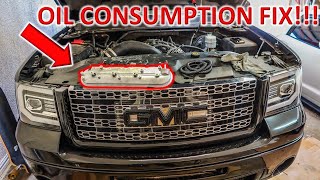
12571595, 12619820, 12632143, 12645725→12680871 -> 12698946 -> 12740071 (latest known)— Multiple revisions to the AFM/DOD lifter to improve reliability and prevent mechanical collapse or sticking, which is the primary cause of AFM-related P0300 codes.Original driver-side valve cover on pre-2011 models→Updated valve cover (per TSB 10-06-01-008K)— The original valve cover had a fixed PCV orifice that was prone to clogging, leading to excessive oil consumption and fouling of spark plugs, particularly on AFM cylinders. The updated cover has an improved design.
Heads up: Vehicles built after this date should already have the updated cover.
Model Year Variations Within This Range
- 2008-2013 (GMT900): The PCV system features a fixed, non-serviceable orifice integrated into the driver-side valve cover. This orifice can clog, causing excessive oil consumption and fouling spark plugs, which contributes to P0300. The TSB fix is to replace the entire valve cover with an updated design.
- 2014-2015 (K2XX EcoTec3): The PCV system was redesigned. The PCV valve is a separate, serviceable component located on the intake manifold, not integrated into the valve cover. While still a maintenance item, it is diagnosed and replaced differently.
Helpful Videos
Used OEM Parts in Stock


New Aftermarket Parts Available


The information in this article is provided for general reference and educational purposes only. Vehicle specifications, procedures, and part compatibility can vary by production date, trim level, and region. Always consult your vehicle's factory service manual and verify part numbers before purchasing or performing repairs. Safety-critical components such as airbags, seat belts, and braking systems should be installed by a qualified professional.
- Chevrolet SILVERADO 1500:
- 🎬 Helpful Videos
- 🛍️ Shop This Part
- What's Unique About the 2008-2015 Chevrolet SILVERADO 1500
- Diagnostic Flowchart
- Symptoms You May Notice
- Most Likely Causes
- Rare But Worth Checking
- Diagnosis Steps
- Parts You'll Likely Need
- Related Codes That Often Appear With This One
- Technical Service Bulletins (TSBs) & Recalls
- Platform-Specific Known Issues
- Mechanic-Grade Diagnostic Values
- Scan Tool Commands That Help
- Wiring & Ground Locations
- Real Owner Repair Stories
- "I Checked Everything" — The Actual Cause
- OEM Part Supersession History
- Model Year Variations Within This Range
- 🎟️ Get 5% Off