

P0300 on 2000-2007 Chevrolet Silverado 1500: Random Misfire Causes and Fixes
P0300 on a GMT800 Silverado is most often caused by failing intake manifold gaskets causing a vacuum leak, or a simple tune-up need like worn spark plugs and wires. Start by checking for vacuum leaks and inspecting ignition components. If those are good, check fuel pressure and consider less common causes like a faulty ground or the need for a crankshaft position sensor relearn.
- A P0300 code on a 2000-2007 Silverado is very frequently caused by failed intake manifold gaskets creating a vacuum leak.
- Before replacing any parts, perform a simple diagnostic test for vacuum leaks using propane or brake cleaner around the intake manifold.
- Always start with the basics: inspect spark plugs and wires for wear, as they are common and inexpensive failure points.
- A flashing check engine light is a critical warning to stop driving to prevent expensive damage to your catalytic converters.
- If simple fixes don't work, be aware of more serious platform-specific issues like a failing fuel pump or worn camshaft lobes.
What's Unique About the 2000-2007 Chevrolet SILVERADO 1500

On the 2000-2007 (GMT800) Silverado platform, the P0300 code is notoriously linked to specific weak points. The Vortec V8 engines (4.8L, 5.3L, 6.0L) are well-known for intake manifold gasket failures, where the original plastic/rubber gaskets become brittle and cause vacuum leaks. This unmetered air throws off the air-fuel ratio, leading to random misfires that are often worse once the engine warms up. Additionally, as highlighted in official GM technical service bulletins, these engines can suffer from worn camshaft lobes, a more severe mechanical issue that also presents as a P0300 misfire. Finally, issues like corroded engine grounds and the need for a crankshaft position sensor relearn after component replacement are common real-world causes of a persistent P0300 on these trucks.
Diagnostic Flowchart

Tap your situation to follow the diagnostic path that matches what you're seeing on this vehicle.
Generation note: This range primarily covers the first-generation Silverado (GMT800 platform), sold from 1999-2006. For the 2007 model year, Chevrolet sold both the outgoing GMT800 model under the "Classic" nameplate and the brand-new second-generation (GMT900) model. While many causes are similar, the GMT900 introduced Active Fuel Management (AFM) on the 5.3L V8, which can have its own unique misfire issues related to lifters as noted in TSBs. This guide focuses on the more common GMT800 platform.
Symptoms You May Notice
- Rough or uneven idle
- Engine hesitation or stumbling during acceleration
- Flashing Check Engine Light
- Solid (non-flashing) Check Engine Light
- Reduced engine power
- Poor fuel economy
- Noticeable engine shaking or vibrating
- Engine noise described as a chirp, squeak, or tick (can indicate camshaft wear)
- Smell of fuel from the exhaust
- Replacing only one spark plug or wire instead of the full set.
- Replacing oxygen (O2) sensors. A bad O2 sensor can cause a P0300, but more often the misfire itself causes the O2 sensor to read incorrectly, leading to it being replaced unnecessarily.
- Replacing the Mass Airflow (MAF) sensor without proper diagnosis. While a dirty MAF can cause issues, it's less common for P0300 on this truck than vacuum leaks or ignition faults.
Most Likely Causes

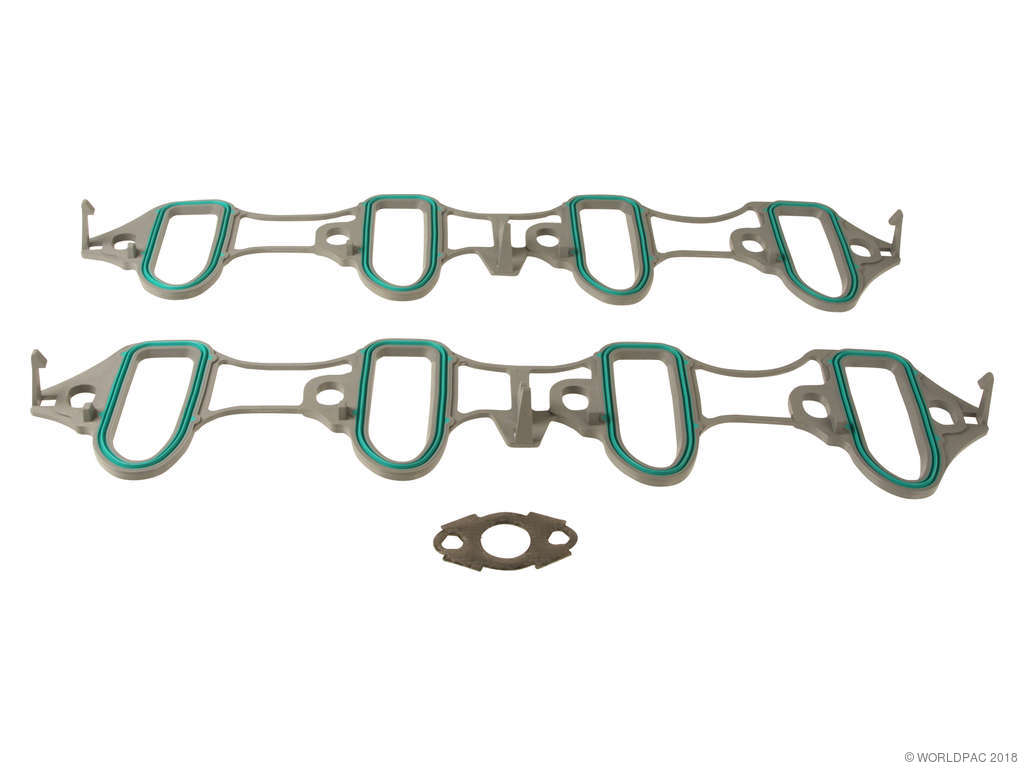
- Leaking Intake Manifold Gaskets 🔴 High Probability The original gaskets on the Vortec V8s use a plastic carrier that becomes brittle and cracks from heat cycles, causing vacuum and/or coolant leaks. This is a very common failure on the GMT800 platform.
How to confirm: With the engine idling, spray short bursts of brake cleaner or unlit propane along the seam where the intake manifold meets the cylinder heads. A sudden change in engine RPM (either stumbling or smoothing out) confirms a leak. A professional can also use a smoke machine for a more precise diagnosis.
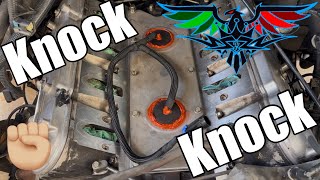
Typical fix: Replace the intake manifold gaskets. It is highly recommended to use an upgraded gasket set with a metal carrier, such as Fel-Pro P/N MS98016T. While the intake is off, it is critical to also replace the two knock sensors and the knock sensor wiring harness (Example P/N: 1AZWH00060) located in the valley under the manifold, as they are a common failure point due to moisture intrusion.
Est. part cost: $50-$120 for gaskets and knock sensor kit - Worn Spark Plugs and/or Wires 🔴 High Probability These are standard maintenance items. Worn electrodes, incorrect gaps, or cracked insulators on spark plugs, along with degraded ignition wires, are a primary cause of weak spark and misfires.
How to confirm: Remove and inspect the spark plugs for wear, fouling (oil, carbon, or ash), or damage. Inspect wires for cracks, burns, or corrosion. Test wire resistance with a multimeter.
Typical fix: Replace all spark plugs and wires as a set. For the Vortec engines, ACDelco Iridium plugs (P/N 41-110 or 41-162, gapped to .040") are highly recommended for longevity and performance over the original platinum plugs (P/N 41-962).
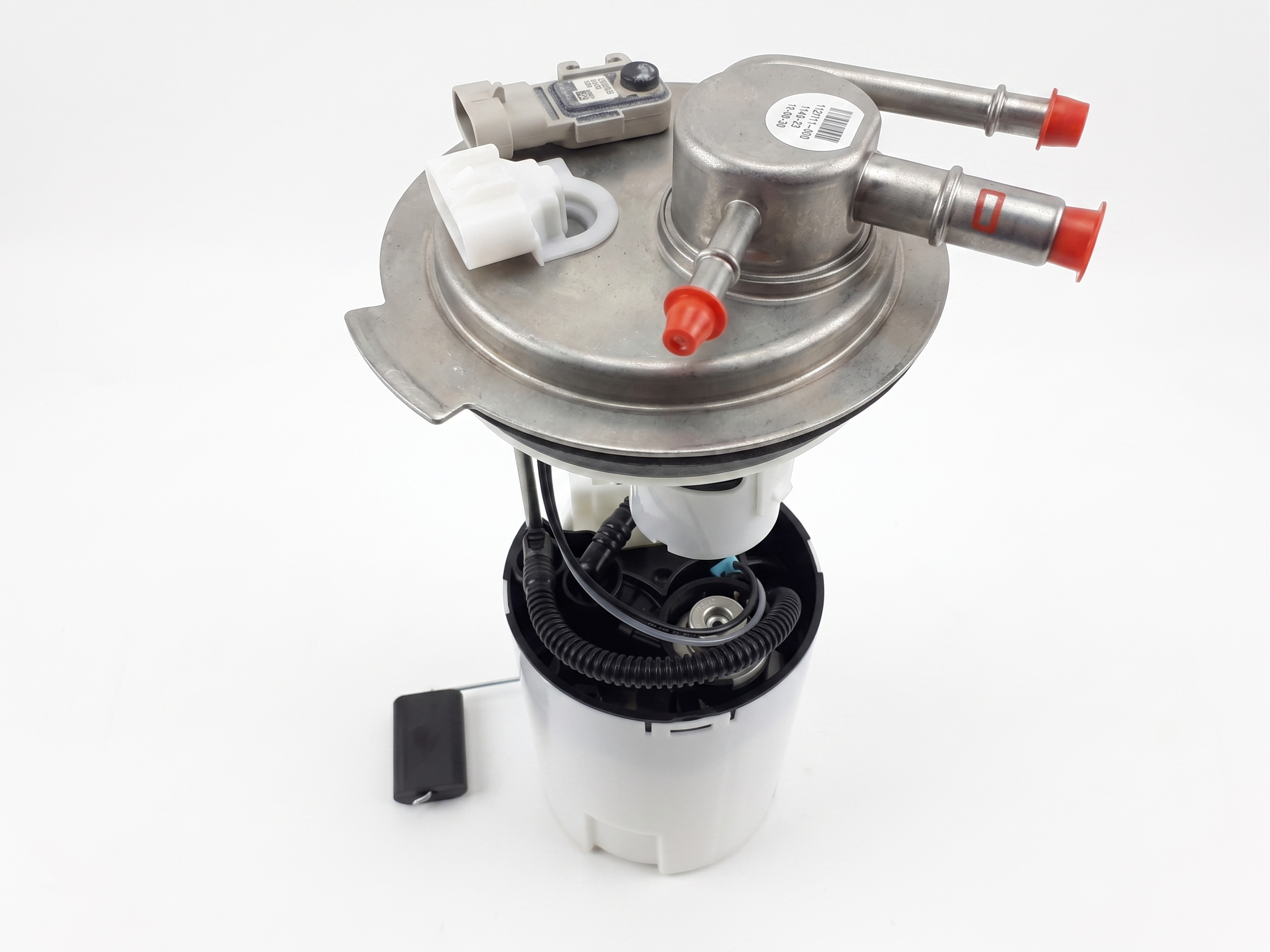
Est. part cost: $80-$170 for iridium plugs and quality wires - Low Fuel Pressure or Failing Fuel Pump 🟡 Medium Probability The fuel pump is a common wear item. A weak pump cannot supply the consistent pressure needed under all load conditions, starving the engine of fuel and causing lean misfires across all cylinders.
How to confirm: Connect a fuel pressure gauge to the Schrader valve on the fuel rail. With the key on and engine off (KOEO), pressure should be 55-62 PSI. If it's low, or if it drops significantly under load, the pump or fuel filter is suspect. Note that on 2004 and newer models, the fuel filter is often integrated into the fuel pump module inside the tank and is not a separate, easily serviceable part.
Typical fix: Replace the fuel pump module. If the vehicle has an external fuel filter, it should always be replaced at the same time.
Est. part cost: $150-$400 - Faulty Ignition Coil(s) 🟡 Medium Probability While generally reliable, individual coil packs can fail with age and heat exposure, leading to a lack of spark for their corresponding cylinder. A weak coil that only fails under load (higher RPM) can contribute to a random misfire code before it fails completely.
How to confirm: If you have a scan tool that shows live misfire data, you can identify which cylinders are misfiring most. Swap the ignition coil from a misfiring cylinder with one from a non-misfiring cylinder. If the misfire follows the coil, the coil is bad.
Typical fix: Replace the faulty ignition coil. It's often wise to replace the spark plug for that cylinder at the same time.
Est. part cost: $30-$60 per coil - Dirty or Clogged Fuel Injectors ⚪ Low Probability Over time, deposits can build up and restrict fuel flow through one or more injectors, causing a lean condition and misfire in the affected cylinders. This can be exacerbated by long periods of sitting, where fuel can varnish inside the injectors.
How to confirm: A professional can perform an injector balance test. A DIY method is to use a scan tool to disable injectors one by one while the engine is running; a cylinder that shows no change in RPM when its injector is disabled has a problem. You can also swap injectors between cylinders to see if the misfire moves.
Typical fix: Professionally clean or replace the faulty fuel injectors.
Est. part cost: $40-$90 per injector
Rare But Worth Checking
- Worn Camshaft Lobe(s): A serious mechanical issue detailed in GM TSB #PIP4138R. A worn cam lobe prevents the valves for a cylinder from opening fully, causing a persistent misfire that won't be fixed by ignition or fuel system repairs. Diagnosis involves listening for a consistent tick or chirp noise that doesn't disappear when disabling injectors, and may require measuring valve lift at the pushrod to confirm reduced movement on the affected cylinder.
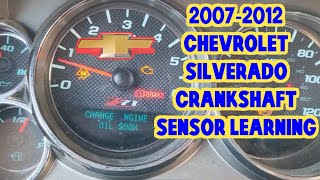
- Faulty Crankshaft Position Sensor (CKP) or Relearn Needed: The CKP sensor is what the PCM uses to detect misfires. A failing sensor can send erratic signals, causing the PCM to incorrectly report a P0300. Critically, after replacing the sensor or even after some other major repairs, a 'crankshaft variation relearn' procedure must be performed with a capable scan tool. Failure to perform the relearn can cause a persistent P0300 code even with a perfectly healthy engine.
- Bad or Corroded Engine Ground: The ignition coils for each bank are grounded to the engine block or cylinder head. A corroded, loose, or broken ground strap can cause an entire bank of cylinders to have weak or no spark, leading to a severe random misfire. This is often found on a ground point at the front or rear of a cylinder head.
- Clogged Catalytic Converter: A clogged or failing catalytic converter can create excessive exhaust backpressure, choking the engine and causing a random misfire, especially under load. This is often accompanied by other codes like P0420 or P0430 and a noticeable loss of power at high RPM. You can test for this with a backpressure gauge in the upstream O2 sensor port or by checking for a significant temperature drop across the converter with an infrared thermometer.
Diagnosis Steps

- Check for a flashing Check Engine Light. If it's flashing, avoid driving to prevent catalytic converter damage.
- Scan for all stored trouble codes. Note any other codes besides P0300, as they provide critical clues (e.g., P0171/P0174 for lean conditions, P1336 for crank sensor relearn).
- Check for vacuum leaks. Visually inspect all vacuum hoses. Perform a smoke test or carefully use brake cleaner around the intake manifold gaskets to check for leaks. A change in idle RPM confirms a leak.
- Inspect the ignition system. Remove and examine all spark plugs for wear and fouling. Inspect spark plug wires for damage. Use a scan tool to monitor live misfire data to see if misfires are concentrated on one cylinder or bank.
- Test ignition coils. Swap coils between a known misfiring cylinder and a good cylinder to see if the misfire follows the coil.
- Test fuel pressure. Connect a fuel pressure gauge to the fuel rail. Pressure should be 55-62 PSI (KOEO). A low reading points to a weak fuel pump or clogged filter.
- Inspect Engine Grounds. Check the main ground straps from the engine to the chassis and the smaller ground wires attached to the cylinder heads, as they are a known failure point for causing misfires on an entire bank.
- Consider a Crankshaft Variation Relearn. If the CKP sensor, timing components, or transmission have been replaced, or if you've exhausted other options, a relearn procedure with a capable scan tool is often the fix.
- Investigate Mechanical Issues. If all else fails, investigate deeper mechanical problems like a worn camshaft lobe (listen for ticking noises) or low compression in one or more cylinders.
Parts You'll Likely Need
- Intake Manifold Gasket Set
(OEM #89060413)— This is the most common failure point on GMT800 V8s leading to vacuum leaks and a P0300 code.
Trusted brands: ACDelco, Fel-Pro
OEM price range: $60-$90
Aftermarket price range: $30-$60 - Spark Plugs — A fundamental part of the ignition system and a common cause of misfires due to wear.
Trusted brands: ACDelco, NGK
OEM price range: $8-$15 per plug
Aftermarket price range: $4-$10 per plug - Spark Plug Wire Set — Wires degrade over time, causing weak spark and misfires.
Trusted brands: ACDelco, NGK/NTK
OEM price range: $60-$100
Aftermarket price range: $40-$80 - Fuel Pump Module Assembly — A failing fuel pump causes low fuel pressure, leading to lean misfires across all cylinders.
Trusted brands: Delphi, ACDelco
OEM price range: $300-$450
Aftermarket price range: $150-$250
Related Codes That Often Appear With This One
- P0171 — System Too Lean (Bank 1) - Often appears with P0300 when a vacuum leak (like from an intake manifold gasket) is introducing unmetered air, affecting all cylinders on that bank.
- P0174 — System Too Lean (Bank 2) - Same as P0171, but for the opposite cylinder bank. Seeing both P0171 and P0174 with P0300 strongly points to a vacuum leak affecting the entire engine.
- P0301-P0308 — Cylinder-specific misfire codes. P0300 is a general code; if the PCM can identify the specific cylinder(s) causing the problem, it will set these additional codes.
- P1336 — Crankshaft Position (CKP) System Variation Not Learned. This code will appear if a CKP relearn procedure was attempted but failed, or is required. It's a major clue that the P0300 is related to the CKP sensor's calibration.
Technical Service Bulletins (TSBs) & Recalls
- PIP4138R: SES Light, Misfire, DTC P0300, And/or A Chirp, Squeak, Squeal, Or Tick Noise
- PIP5628G: Preliminary Information For Misfire And DTC Codes P0300 - P0308 And/or P050D
Platform-Specific Known Issues

- Intake Manifold Gasket Failure: The original plastic-carrier gaskets are prone to cracking, causing both vacuum and coolant leaks. This is a hallmark issue for the 4.8L, 5.3L, and 6.0L Vortec engines in this generation.
- Worn Camshaft Lobes: As documented in TSB #PIP4138R, a worn camshaft can cause a P0300 code that is difficult to diagnose through conventional means. This is a more severe, internal engine problem.
Mechanic-Grade Diagnostic Values
- Fuel Pressure (KOEO) - Return-Style System (2000-2003) — expected: 55-62 PSI. Failure: Pressure below 55 PSI indicates a weak pump or clogged filter. Pressure that bleeds off quickly suggests a leaking regulator or injector.
- Fuel Pressure (KOEO) - Returnless System (2004-2007) — expected: 55-62 PSI. Failure: Pressure below 55 PSI points to a failing in-tank pump module.
- Fuel Pressure (KOEO) - Flex Fuel (L59 VIN Z) — expected: 48-54 PSI. Failure: Pressure outside this range suggests a fuel pump or regulator issue specific to the Flex Fuel system.
- Fuel Injector Resistance — expected: 11-14 Ohms. Failure: A reading significantly outside this range indicates a failed injector coil.
- Live Data Fuel Trims (STFT/LTFT) at Idle — expected: Within +/- 10%. Failure: Consistently positive values (e.g., +15% or higher) on both banks strongly suggest a vacuum leak, as the PCM is adding fuel to compensate for unmetered air.
Hidden / Shadow Codes Worth Checking
- Mode $06 Misfire Counters: This is not a DTC, but a function in most OBD-II scan tools that shows raw misfire counts for each cylinder. The PCM tracks these counts before they reach the threshold to set a P0301-P0308 code. It's invaluable for identifying which cylinder(s) are the primary offenders when only a P0300 is present. (see via A scan tool with Mode $06 diagnostic capabilities.)
Scan Tool Commands That Help
- Tech 2 / High-End Scan Tool: Crankshaft Position System Variation Learn — This procedure is mandatory after replacing the crankshaft position sensor, PCM, or performing major engine work like replacing the flexplate. It calibrates the PCM to the minor imperfections of the CKP reluctor wheel, and failure to perform it is a very common cause of a persistent P0300 after repairs.
- Tech 2 / High-End Scan Tool: Fuel Injector Balance Test — This function allows the technician to fire each injector for a set duration and measure the corresponding drop in fuel pressure. It is the most accurate way to identify a clogged or partially functioning fuel injector that could be causing a lean misfire.
Wiring & Ground Locations
- PCM Ground — A small black wire from the main harness attached to a bolt on the top rear of the engine block, often on the passenger side.. This is the primary ground for the Powertrain Control Module. If it's loose, corroded, or broken, it can cause erratic sensor readings and misfire codes that are impossible to diagnose elsewhere. It is considered the most critical ground to check for mysterious electrical issues.
- G102 / G103 — Grounds located on the front or rear of the cylinder heads. G103 is often on the front of the passenger side cylinder head. G102 is often on the driver's side.. These are the main grounding points for the ignition coil packs for each bank. A poor connection at G102 could cause misfires on the driver's side bank, while a poor G103 connection affects the passenger side, contributing to a P0300.
- Engine Block to Firewall Strap — A braided metal strap connecting the back of the engine/cylinder head to the vehicle's firewall.. Ensures the engine block has a solid ground connection to the chassis. A broken or corroded strap can force grounding current through other, smaller paths, leading to weak spark and other electrical gremlins.
- Frame Ground (Fuel Pump) — Located on the driver's side frame rail, near the driver's side tire.. This is the ground for the fuel pump. Corrosion here can lead to low voltage at the pump, causing reduced fuel pressure and a lean condition that results in a P0300 code.
Real Owner Repair Stories
- SilveradoSierra.com forum user (2005 Silverado 5.3L) — P0300, rough idle, stalling.
❌ Tried (didn't work) Replaced spark plugs and wires, Replaced ignition coils, Cleaned MAF sensor, Replaced fuel filter
✅ What actually fixed it The vacuum hose for the brake booster had a failed internal check valve, creating a massive, hard-to-detect vacuum leak. Replacing the brake booster check valve resolved the issue. - GMTrucks.com forum user (2002 Silverado 1500 4.8L) — Persistent P0300, slight engine knock noise, misfire felt under load.
❌ Tried (didn't work) Full tune-up (plugs, wires), Intake manifold gaskets, Fuel pump, Crankshaft position sensor (without relearn)
✅ What actually fixed it A cracked flexplate. The crack was causing the reluctor ring to wobble slightly, sending an erratic signal from the crankshaft position sensor to the PCM, which incorrectly interpreted it as a random misfire.
"I Checked Everything" — The Actual Cause
- A common scenario is a negative smoke test, but the actual cause is a failing brake booster or a bad check valve in the vacuum line going to it. The booster can hold a large volume of unmetered air and the leak may only manifest when the brake pedal is applied, making it difficult to find with a static smoke test.
When the Usual Fixes Don't Work
- While intake gaskets and tune-ups are the most frequent fixes, many owners report chasing a P0300 for months after performing these common repairs. In a significant number of these cases, the ultimate cause was found to be electrical, not mechanical or vacuum-related. Corroded ground straps, particularly the main PCM ground on the back of the engine block, are a recurring 'final fix' in forum discussions after all other common causes were addressed without success. Similarly, failure to perform a crankshaft variation relearn after replacing a sensor or even the battery can leave the P0300 code active despite the engine running perfectly.
OEM Part Supersession History
GM 89017465→Fel-Pro MS98016T (popular upgrade)— The original GM intake manifold gaskets used a plastic frame that would become brittle and crack with heat cycles. The upgraded Fel-Pro design uses a steel frame for improved durability and longevity.GM 89017343→GM 89017539— Part number consolidation and minor design updates for the intake manifold gasket kit over the years.
Model Year Variations Within This Range
- 2000-2003: These models typically used a return-style fuel system, where a vacuum-referenced fuel pressure regulator is located on the fuel rail and excess fuel is returned to the tank. This adds the regulator and return line as potential failure points.
- 2004-2007: GM switched to a returnless fuel system. The fuel pressure regulator is located inside the fuel tank as part of the fuel pump module. This simplifies the engine bay but makes fuel pressure diagnosis slightly different, as pressure is not vacuum-referenced.
- Flex Fuel (L59 Engine, VIN 'Z'): Flex Fuel models have different fuel injectors to handle E85 and may have different fuel pressure specifications (typically slightly lower, around 48-54 PSI) compared to gasoline-only engines.
Helpful Videos

Used OEM Parts in Stock




New Aftermarket Parts Available


The information in this article is provided for general reference and educational purposes only. Vehicle specifications, procedures, and part compatibility can vary by production date, trim level, and region. Always consult your vehicle's factory service manual and verify part numbers before purchasing or performing repairs. Safety-critical components such as airbags, seat belts, and braking systems should be installed by a qualified professional.
- Chevrolet SILVERADO 1500:
- 🎬 Helpful Videos
- 🛍️ Shop This Part
- What's Unique About the 2000-2007 Chevrolet SILVERADO 1500
- Diagnostic Flowchart
- Symptoms You May Notice
- Most Likely Causes
- Rare But Worth Checking
- Diagnosis Steps
- Parts You'll Likely Need
- Related Codes That Often Appear With This One
- Technical Service Bulletins (TSBs) & Recalls
- Platform-Specific Known Issues
- Mechanic-Grade Diagnostic Values
- Hidden / Shadow Codes Worth Checking
- Scan Tool Commands That Help
- Wiring & Ground Locations
- Real Owner Repair Stories
- "I Checked Everything" — The Actual Cause
- When the Usual Fixes Don't Work
- OEM Part Supersession History
- Model Year Variations Within This Range
- 🎟️ Get 5% Off