

P0300 on 2000-2007 Chevrolet Monte Carlo: Random Misfire Causes and Fixes
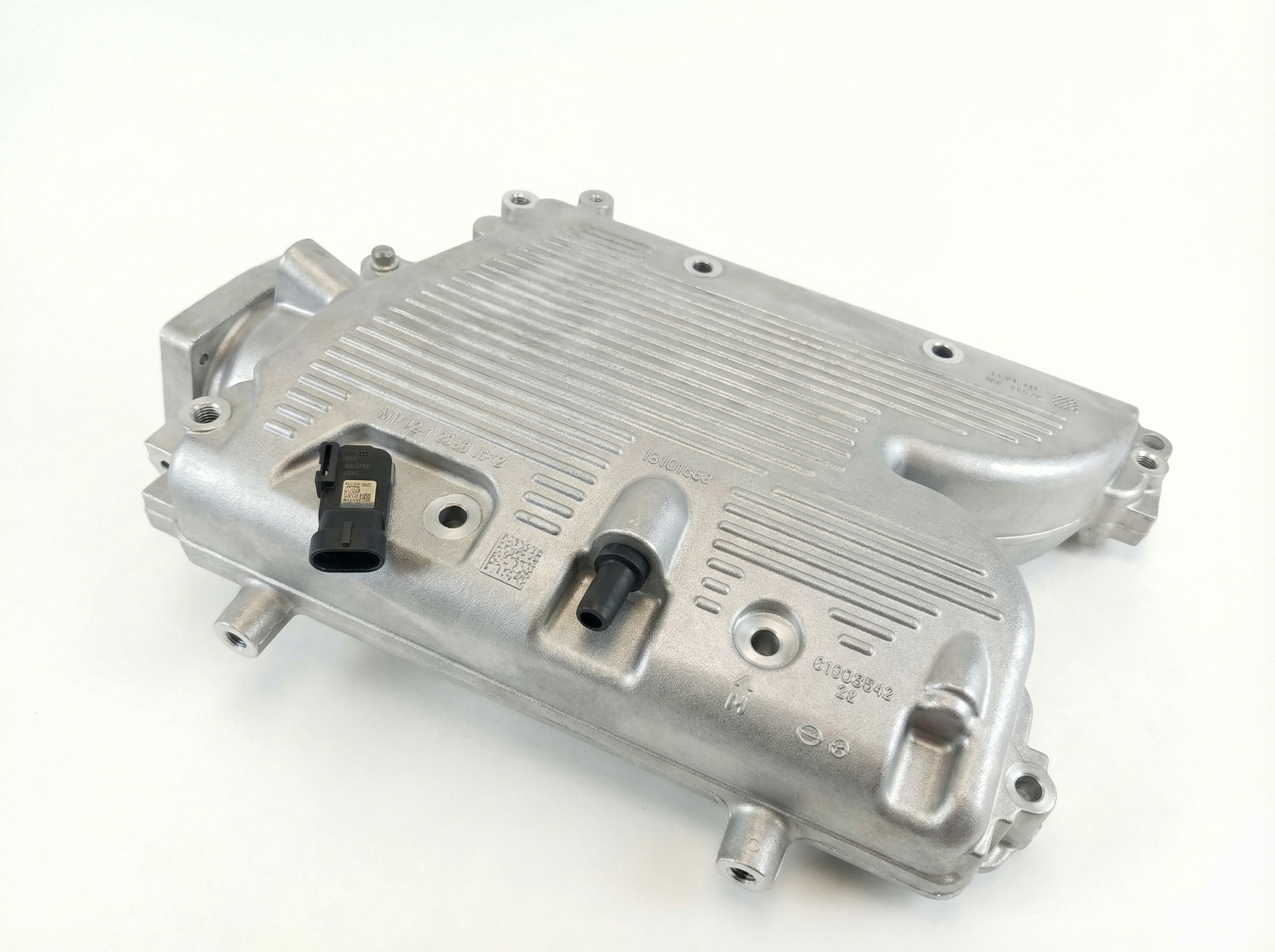
P0300 on a 2000-2007 Monte Carlo often points to a failed ignition component or, on V6 models, leaking intake manifold gaskets. For V6 engines, expect to replace the intake gaskets ($50-$100 in parts) with an upgraded metal-frame design like the Fel-Pro MS98014T. For all engines, a basic ignition tune-up (plugs and wires) is a common starting point. On 5.3L V8 models, this code is a strong indicator of a failed AFM lifter.
- P0300 means random misfires are detected, not tied to a single cylinder.
- For 2000-2005 V6 models, the most likely cause is a failed lower intake manifold gasket; use an upgraded metal-frame gasket for the repair.
- For 2006-2007 V8 models, be aware of potential Active Fuel Management (AFM) lifter issues.
- Always start with the basics: check spark plugs and wires, as they are common, inexpensive failure points.
- A flashing check engine light is serious. Stop driving immediately to prevent expensive damage to the catalytic converter.
What's Unique About the 2000-2007 Chevrolet MONTE CARLO

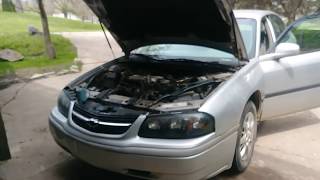
The 2000-2007 Monte Carlo spans two generations with different engine families, leading to distinct common causes for a P0300 code. The 2000-2005 models with the 3.4L and 3.8L V6 engines are notorious for lower intake manifold (LIM) gasket failures, which cause coolant to leak and induce misfires. The original nylon-based gaskets degrade, and the repair involves replacing them with an updated metal-carrier design. The later 2006-2007 models, especially the SS with the 5.3L LS4 V8, can suffer from issues related to the Active Fuel Management (AFM) system, where faulty lifters cause misfires, often accompanied by a ticking noise. This AFM issue is well-documented in GM Technical Service Bulletins.
Diagnostic Flowchart

Tap your situation to follow the diagnostic path that matches what you're seeing on this vehicle.
Generation note: This guide covers the fifth (2000-2005) and sixth (2006-2007) generations. The 5th gen primarily used the 3.4L LA1 and 3.8L L36/L67 V6 engines, which are known for intake gasket failures. The 6th gen introduced the 3.5L LZE, 3.9L LZ9, and 5.3L LS4 V8 engines. The LS4 V8 has specific, well-documented issues with its Active Fuel Management (AFM) system that can cause this code.
Symptoms You May Notice

- Rough or shaky idle, sometimes with a wandering tachometer needle
- Hesitation or stumbling during acceleration
- Flashing or solid Check Engine Light
- Reduced engine power, feeling sluggish
- Poor fuel economy
- Difficulty starting the engine
- Engine stalling
- Smell of rotten eggs or sulfur from the exhaust, indicating catalytic converter issues
- Replacing only one spark plug or wire instead of the full set.
- Replacing fuel injectors when the issue is a failing fuel pump or clogged filter.
- Assuming a major engine failure on V6 models when the common intake gasket leak is the actual culprit.
- Replacing coil packs on a 3.8L V6 when the underlying Ignition Control Module is the real point of failure.
Most Likely Causes

- Leaking Lower Intake Manifold (LIM) Gaskets (V6 Engines) 🔴 High Probability The original factory gaskets on the 3.4L and 3.8L V6 engines used a nylon carrier with silicone seals that degrades from exposure to coolant, particularly Dex-Cool. This allows coolant to leak into the intake ports and cylinders, causing misfires. This is one of the most common major repairs on the 3800 Series II engine.
How to confirm: Check for a slow, unexplained loss of coolant. Inspect the engine oil and oil cap for a milky, frothy appearance, which indicates coolant contamination. A cooling system pressure test can confirm an internal leak. In some cases, the leak is external, visible near the ends of the cylinder heads.
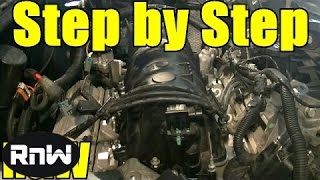
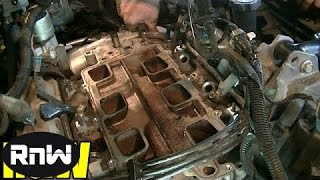
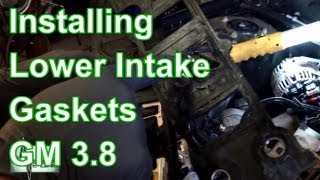
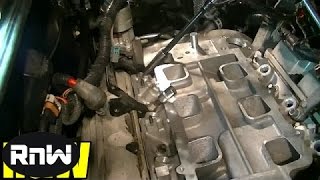
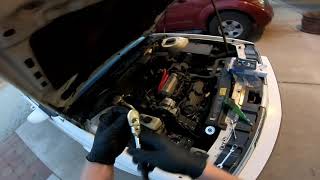
Typical fix: Replace the lower intake manifold gaskets with an updated metal-frame design. 🎬 Watch: Step-by-step guide to replacing the lower intake gaskets. The Fel-Pro MS98014T is a popular and highly recommended aftermarket solution with a steel carrier that prevents this failure.
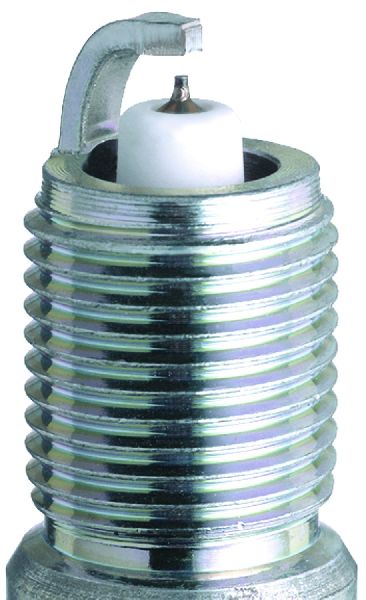
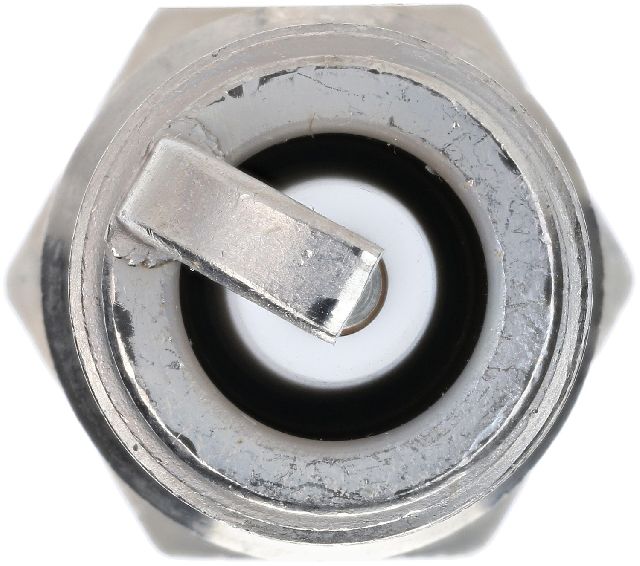
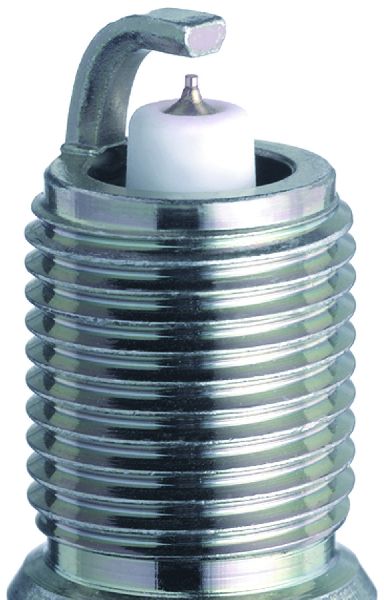
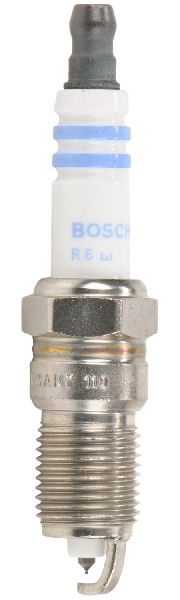
Est. part cost: $50-$100 - Worn Spark Plugs and/or Wires 🔴 High Probability These are standard maintenance items. Owners on forums frequently report that using non-ACDelco plugs, especially Bosch, can cause immediate misfire issues on the 3.8L V6.
How to confirm: Inspect spark plugs for wear, fouling (black, oily, or white deposits), and incorrect gap. Inspect wires for cracks, brittleness, or corrosion at the terminals. A simple test is to run the engine in the dark and look for arcing along the wires.
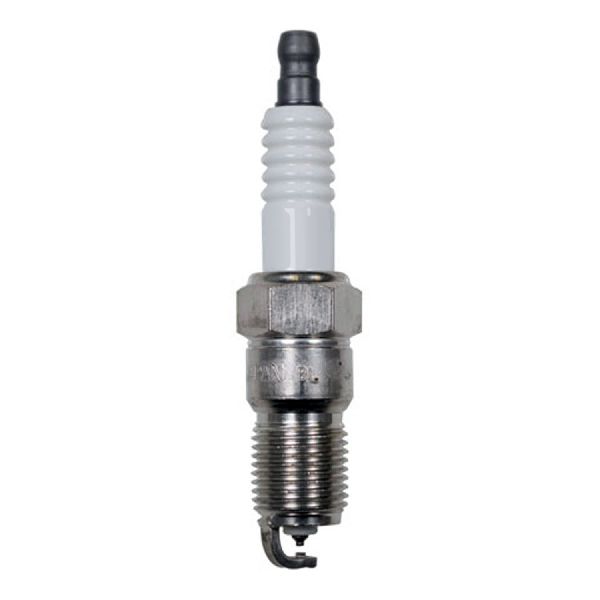
Typical fix: Replace all spark plugs and spark plug wires as a set. It is strongly recommended to use OEM ACDelco Iridium or Platinum plugs and ACDelco wires to avoid compatibility issues.
Est. part cost: $60-$150 - Faulty Ignition Coil Pack(s) or Ignition Control Module (ICM) 🟡 Medium Probability The ICM on the 3.8L V6 is a very common failure point and will produce random misfire symptoms. It's located under the three coil packs and is subjected to significant heat, which eventually causes it to fail. Failure of a single channel in the ICM can cause misfires on two cylinders at once (e.g., 1 and 4).
How to confirm: Use a scan tool to monitor misfire data. Swap a suspected bad coil pack with a known good one and see if the misfire code follows the coil. The ICM itself can be tested at many auto parts stores, but testing is not always conclusive. A common diagnostic step is to swap coils; if the misfire stays in the same position, the ICM is the likely culprit.
Typical fix: Replace the faulty coil pack(s) or the ignition control module. When replacing the ICM, it is critical to apply thermal paste between the new module and its mounting plate to ensure proper heat dissipation and prevent premature failure.
Est. part cost: $50-$150 per coil, $70-$200 for ICM - Faulty Active Fuel Management (AFM) Lifters (5.3L LS4 V8) 🟡 Medium Probability The 2006-2007 SS models with the LS4 V8 have special AFM lifters that deactivate cylinders to save fuel. These lifters are known to fail, either by becoming mechanically stuck/collapsed or by failing to unlock electronically. This is a widely documented issue covered by multiple GM Preliminary Information Bulletins (e.g., PIP4568).
How to confirm: A persistent ticking or chirping noise from the top of the engine is a primary symptom. A scan tool can monitor AFM system status and misfire counts, which will typically be isolated to AFM cylinders (1, 4, 6, or 7). A compression test may show low readings on the affected cylinder. Diagnosis is complex and often requires a professional.
Typical fix: Requires replacing the faulty AFM lifters. The official GM procedure recommends replacing all AFM lifters (8), the Valve Lifter Oil Manifold (VLOM), and all plastic lifter guides at the same time to prevent repeat failures. This is a significant, labor-intensive repair.
Est. part cost: $300-$750 - Clogged or Faulty Fuel Injectors ⚪ Low Probability
How to confirm: Listen to each injector with a mechanic's stethoscope; they should have a consistent, rhythmic clicking sound. A professional fuel system cleaning or a fuel injector balance test can confirm a clogged or failing injector.
Typical fix: Clean or replace the faulty fuel injectors. Sometimes running a high-quality fuel system cleaner through the tank can resolve minor clogs.
Est. part cost: $40-$100 per injector - Vacuum Leak ⚪ Low Probability Aside from the intake gaskets, vacuum hoses can become brittle and crack with age. The PCV valve and its grommet are also common sources of vacuum leaks.
How to confirm: Visually inspect all vacuum lines for cracks. A smoke test is the most effective method, where smoke is introduced into the intake system to reveal leaks. You can also carefully spray carburetor cleaner around suspected leak points with the engine running; a change in idle RPM indicates a leak.
Typical fix: Replace the cracked or broken vacuum hose or leaking component.
Est. part cost: $5-$30
Rare But Worth Checking
- Low Fuel Pressure: A weak fuel pump or clogged fuel filter can starve the engine of fuel, causing random misfires, especially under load. Check fuel pressure with a gauge at the fuel rail's Schrader valve. The filter is a common maintenance item that is often overlooked.
- Faulty Crankshaft Position Sensor: A failing crankshaft position sensor can send erratic signals to the PCM, disrupting spark and fuel timing and causing random misfires. Often, after replacing a crankshaft, a "CASE Relearn" or "Crankshaft Position System Variation Learn Procedure" must be performed with a dealer-level scan tool to sync the sensor with the PCM, or a P0300 code may persist. 🎬 Watch: How to perform a crankshaft variation relearn procedure.
- Clogged Catalytic Converter: A clogged exhaust creates excessive backpressure, choking the engine and leading to poor performance and misfires. This is often a consequence of long-term misfires (like from bad intake gaskets) that have destroyed the converter. Symptoms include a sulfur smell and a glowing red converter after driving.
Diagnosis Steps
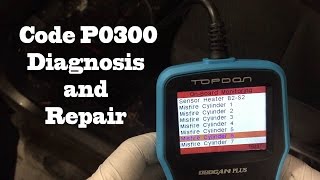
- Read all stored fault codes with an OBD-II scanner. Note any other codes present and check freeze-frame data.
- Use the scanner's live data to view misfire counts for each cylinder (Mode $06 data). This can help narrow down the problem even without a specific P030x code.
- Perform a thorough visual inspection. Look for cracked vacuum hoses, damaged wiring, signs of coolant leaks (especially around the intake manifold on V6s), and listen for vacuum hissing.
- Inspect the ignition system. Check the condition of spark plugs, wires, and coil packs. On 3.8L V6s, consider the ICM a primary suspect if plugs, wires, and coils are good.
- For V6 models, carefully inspect for signs of a leaking intake manifold gasket (low coolant, milky oil, external coolant stains below the throttle body).
- Test fuel pressure using a fuel pressure gauge connected to the test port on the fuel rail to rule out a weak pump or clogged filter.
- If a vacuum leak is suspected, perform a smoke test to pinpoint the source.
- For 5.3L V8 models, listen for a distinct ticking noise from the valve covers that could indicate an AFM lifter issue.
- Check for a clogged catalytic converter. An infrared thermometer can be used to check temperatures before and after the converter; the outlet should be significantly hotter. An exhaust backpressure test is a more definitive method.
- If a crankshaft position sensor was replaced or major engine work was done, a CASE relearn procedure may be required.
- If all else fails, perform a compression test to check for mechanical engine problems like worn piston rings or bad valves.
Parts You'll Likely Need

- Lower Intake Manifold Gasket Set (V6 Engines)
(OEM #ACDelco 89017825)— This is the most common major failure causing P0300 on the 3.4L and 3.8L V6 engines due to the flawed original plastic gasket design.
Trusted brands: Fel-Pro (PermaDryPlus MS98014T is the widely recommended upgrade), ACDelco (updated metal design)
OEM price range: $70-$120
Aftermarket price range: $40-$80 - Spark Plugs
(OEM #ACDelco 41-101 (Iridium for 3.8L))— Worn or fouled spark plugs are a primary cause of incomplete combustion and misfires. Using the correct OEM plug type is critical on these engines.
Trusted brands: ACDelco, NGK
OEM price range: $8-$15 per plug
Aftermarket price range: $4-$10 per plug - Spark Plug Wire Set
(OEM #ACDelco 9746T (3.8L V6))— Wires degrade over time, causing weak spark and misfires. Quality wires are essential for proper engine operation.
Trusted brands: ACDelco, NGK
OEM price range: $50-$90
Aftermarket price range: $30-$60 - Ignition Control Module (3.8L V6)
(OEM #ACDelco D555)— A very common failure item on the 3.8L V6 that directly causes random misfires when it overheats and internal circuits fail.
Trusted brands: ACDelco, Delphi
OEM price range: $100-$200
Aftermarket price range: $70-$150 - AFM Valve Lifters (5.3L V8)
(OEM #GM 12648846 (replaces older versions))— A known defect in the 5.3L LS4 engine where these specialized lifters collapse or stick, causing a persistent misfire on an AFM cylinder.
Trusted brands: GM Genuine, ACDelco
OEM price range: $25-$40 per lifter
Aftermarket price range: $20-$30 per lifter
Related Codes That Often Appear With This One
- P0301-P0306 — If the PCM is able to isolate the misfire to a specific cylinder, it will set a corresponding code (e.g., P0301 for Cylinder 1) in addition to or instead of P0300.
- P0171 — System Too Lean (Bank 1). A vacuum leak is a common cause for both P0171 and P0300, as unmetered air disrupts the air/fuel ratio, leading to misfires.
- P0420 — Catalyst System Efficiency Below Threshold. This often appears after a P0300 has been active for a long time, indicating the misfires have damaged the catalytic converter.
Technical Service Bulletins (TSBs) & Recalls
- SES Light, Engine Misfire on Cylinder 1, 4, 6, or 7 and/or Tick Noise: A series of Preliminary Information bulletins from GM that address engine misfires (P0300) and noise caused by failed or stuck Active Fuel Management (AFM) lifters on V8 engines, including the 5.3L LS4. It details diagnostic steps and recommends replacing the VLOM, all AFM lifters, and lifter guides.
- Engine Misfire/Tick Noise, Malfunction Indicator Lamp (MIL) Illuminated with DTC P0300 Set: A technical service bulletin addressing P0300 and ticking noises caused by mechanically collapsed or stuck AFM lifters due to issues like oil aeration or internal pin damage.
- Preliminary Information for Misfire and DTC Codes P0300 - P0308 and/or P050D: A GM bulletin communicating diagnostic information needed for vehicles presenting with engine misfires, including the P0300 code. This was cited in the initial prompt.
Platform-Specific Known Issues
- Intake Manifold Gasket Failure (2000-2005 V6): The most well-known issue for the 3.4L and 3.8L engines. The original plastic-carrier gaskets fail, causing coolant to leak and create misfires. Upgraded metal-frame gaskets are the permanent solution.
- Active Fuel Management (AFM) Lifter Failure (2006-2007 5.3L V8): The LS4 V8 can suffer from collapsed or stuck AFM lifters, which will cause a persistent misfire and often a P0300 code. This was also mentioned in Preliminary Information Bulletin PIP4138Q.
Mechanic-Grade Diagnostic Values
- Ignition Control Module (ICM) Power Supply Voltage (3.8L V6) — expected: 10-12 Volts (Battery Voltage). Failure: Significantly lower or no voltage indicates a power supply issue to the module, not a faulty module itself.
- Ignition Control Module (ICM) Ground Circuit Check (3.8L V6) — expected: 10-12 Volts (Battery Voltage). Failure: No voltage indicates a bad ground connection for the ICM.
- 3X CKP Sensor Signal (at ICM connector) (3.8L V6) — expected: Voltage should switch from 0V to 5-6V as the engine is cranked by hand.. Failure: If the voltage does not switch, and the sensor has power, the crankshaft position sensor is likely faulty.
- Fuel Pressure (V6 Engines) — expected: 48-55 PSI with key on, engine off.. Failure: Pressure below this range indicates a weak fuel pump or clogged filter, causing lean misfires.
Hidden / Shadow Codes Worth Checking
- Mode $06 Misfire Counters: Even if only a P0300 is set, a capable scan tool can access Mode $06 data to view the raw misfire count for each individual cylinder. This can reveal which cylinder(s) are the primary offenders, turning a 'random' misfire into a targeted diagnosis. (see via An OBD-II scan tool with Live Data or Mode $06 functionality.)
Scan Tool Commands That Help
- Tech 2 or equivalent professional scanner: Crankshaft Position System Variation Learn Procedure (CASE Relearn) — This procedure is required after replacing the crankshaft, crankshaft position sensor, or the PCM. Failure to perform the relearn can cause the PCM to misinterpret crankshaft speed variations, leading to a persistent P0300 code even with all new parts.
- Tech 2 or equivalent professional scanner: Misfire Graph — To visually identify which cylinders are misfiring and how frequently, even when only a general P0300 code is present. This helps focus diagnostic efforts on the cylinders that are actually causing the problem.
Wiring & Ground Locations
- ICM Connector (3.8L V6) — Under the three ignition coil packs, on top of the Ignition Control Module.. This is the central point for testing power, ground, and signals from the crankshaft position sensor to diagnose a no-spark or random misfire condition.
- ICM Power (Pin 'P') — The PINK wire on the 3.8L V6 ICM connector.. This pin must have battery voltage with the key on for the ignition system to function. Probing this wire is the first step in diagnosing the ICM.
- ICM Ground (Pin 'K') — The BLACK with WHITE stripe wire on the 3.8L V6 ICM connector.. A poor ground at this pin will prevent the ICM from operating correctly, causing misfires. It can be tested by checking for voltage between this pin and the positive battery terminal.
- Crankshaft Position Sensor Signals (Pins 'G' and 'H') — Pin G (YELLOW wire) is the 18X signal, Pin H (LIGHT BLUE with WHITE wire) is the 3X signal on the 3.8L V6 ICM connector.. The ICM needs these two signals from the crankshaft sensor to calculate engine speed and position to fire the coils. A loss of these signals will cause a no-start or random misfire. They can be tested with a multimeter or LED test light.
Real Owner Repair Stories
- Monte Carlo Forum user 'Curtis24682007' (2001 Monte Carlo SS) — Persistent P0300 code for 3 weeks after an engine block swap. No specific cylinder misfire was identified by the code.
❌ Tried (didn't work) Initial diagnosis was inconclusive. The dealer service person was unfamiliar with the CASE relearn procedure.
✅ What actually fixed it The owner instructed the dealer to perform a 'Crankshaft Position System Variation Learn Procedure' (CASE Relearn) for $99.30. This cleared the P0300 and identified misfires on cylinders 1 and 4. The owner then replaced the corresponding coil pack, which fully resolved the issue.
OEM Part Supersession History
GM 12569223 (Nylon Gasket Set)→GM 89017825 (Metal Gasket Set), Fel-Pro MS98014T (Aftermarket Metal Set)— The original nylon/plastic lower intake manifold gaskets on the 3.4L and 3.8L V6 engines were prone to rapid degradation and failure when exposed to Dex-Cool coolant.
Heads up: Using a new nylon-style gasket set is not recommended as it will likely fail again. The updated metal-frame gaskets are a permanent solution to the design flaw.
Helpful Videos
Used OEM Parts in Stock



New Aftermarket Parts Available


The information in this article is provided for general reference and educational purposes only. Vehicle specifications, procedures, and part compatibility can vary by production date, trim level, and region. Always consult your vehicle's factory service manual and verify part numbers before purchasing or performing repairs. Safety-critical components such as airbags, seat belts, and braking systems should be installed by a qualified professional.
- Chevrolet MONTE CARLO:
- 🎬 Helpful Videos
- 🛍️ Shop This Part
- What's Unique About the 2000-2007 Chevrolet MONTE CARLO
- Diagnostic Flowchart
- Symptoms You May Notice
- Most Likely Causes
- Rare But Worth Checking
- Diagnosis Steps
- Parts You'll Likely Need
- Related Codes That Often Appear With This One
- Technical Service Bulletins (TSBs) & Recalls
- Platform-Specific Known Issues
- Mechanic-Grade Diagnostic Values
- Hidden / Shadow Codes Worth Checking
- Scan Tool Commands That Help
- Wiring & Ground Locations
- Real Owner Repair Stories
- OEM Part Supersession History
- 🎟️ Get 5% Off