

P0300 on 2016-2020 Chevrolet Impala: Random Misfire Causes and Fixes
P0300 on a 2016-2020 Impala means the engine is misfiring on multiple cylinders. The most common causes are worn spark plugs and faulty ignition coils. For the 3.6L V6, carbon buildup on intake valves is also a notable cause. A full set of spark plugs is a relatively inexpensive first step, often resolving the issue.
- P0300 means your engine is misfiring on multiple cylinders, but it doesn't specify which ones.
- Start your diagnosis with the most likely and cheapest fixes: inspect and replace worn spark plugs and test the ignition coils.
- Do not drive if the Check Engine Light is flashing, as you risk severe damage to your catalytic converter.
- While ignition parts are the most common fix, be aware of vehicle-specific TSBs that mention cold start misfires and potential coolant leaks as a cause for this code on the Impala.
What's Unique About the 2016-2020 Chevrolet IMPALA

For the 2016-2020 Impala, which features either the 2.5L I4 or the 3.6L LFX V6 direct-injection engine, the P0300 code is often a straightforward ignition maintenance issue. However, due to the direct-injection design of the LFX V6, it is susceptible to carbon buildup on the intake valves, which can cause misfires. Additionally, Chevrolet has issued Technical Service Bulletins (TSBs) that point to more specific, nuanced problems. These include cold start misfires due to engine block porosity allowing coolant to leak into a cylinder, a condition that requires careful diagnosis. This means that while standard ignition parts are the primary suspects, issues like carbon buildup and rare mechanical faults cannot be immediately ruled out.
Diagnostic Flowchart

Tap your situation to follow the diagnostic path that matches what you're seeing on this vehicle.
Symptoms You May Notice
- Rough idle
- Engine hesitation or stumbling during acceleration
- Flashing or solid Check Engine Light
- Loss of power
- Reduced fuel economy
- Vehicle shaking or vibrating
- Hard starting
- Fuel smell from exhaust
- Replacing oxygen sensors first. While a faulty O2 sensor can contribute to fuel mixture problems, it's less likely to be the root cause of a P0300 than ignition components, carbon buildup, or vacuum leaks.
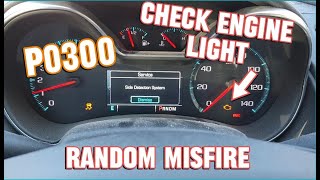
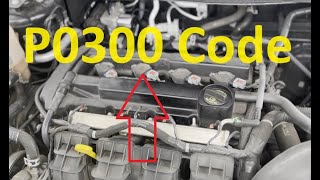
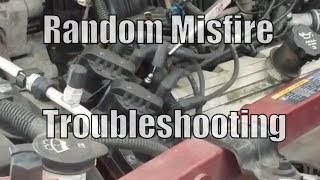
- Assuming a major engine failure without checking the basics. Always start with spark plugs and ignition coils 🎬 Watch this overview of common P0300 causes and fixes., as they are the most frequent culprits and easiest to check.
Most Likely Causes

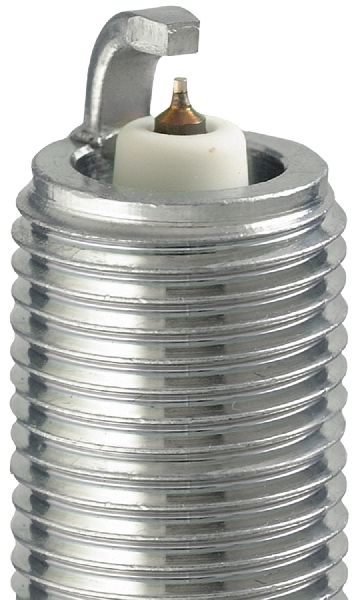
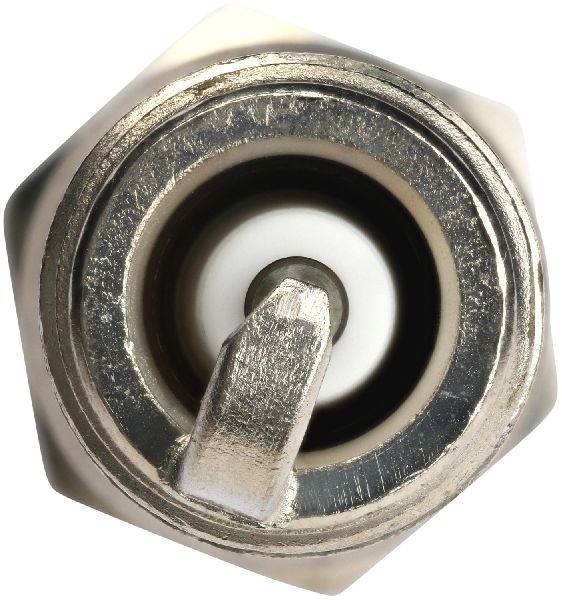
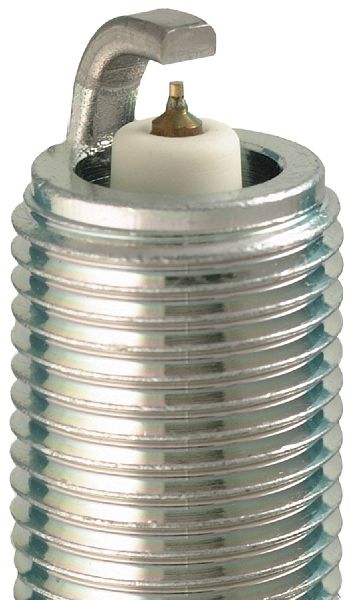
- Worn or Fouled Spark Plugs 🔴 High Probability Spark plugs are a routine maintenance item with a finite lifespan. Misfires are a primary symptom of plugs that have exceeded their service life or have become fouled by carbon or oil. This is the most common starting point for a P0300 diagnosis.
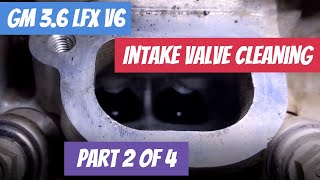
How to confirm: Visually inspect the spark plugs for wear on the electrode, cracks in the ceramic, or heavy carbon/oil deposits. A scan tool may show high misfire counts on multiple cylinders. For the 3.6L V6, accessing the rear three plugs requires removing the intake manifold. 🎬 See how to remove the intake and clean the valves.
Typical fix: Replace all spark plugs as a set. It is recommended to use high-quality OEM (ACDelco) or equivalent iridium plugs. Do not adjust the gap on iridium plugs as the tip is fragile.
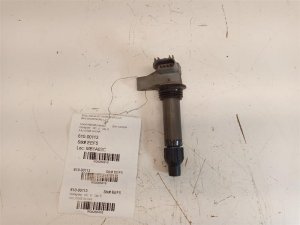
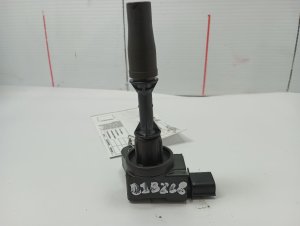
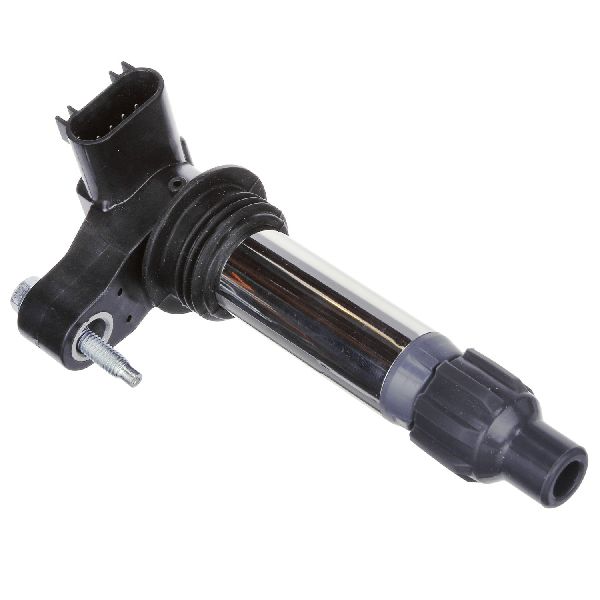
Est. part cost: $40-$120 - Faulty Ignition Coils 🔴 High Probability Ignition coils provide the high voltage needed to fire the spark plugs. Over time, heat cycles and vibration can cause them to fail, leading to a weak or non-existent spark.
How to confirm: Use a scan tool with live data to identify which cylinders are misfiring. Swap the ignition coil from a misfiring cylinder with one from a cylinder that is not misfiring. If the misfire follows the coil to the new cylinder, the coil is bad.
Typical fix: Replace the faulty ignition coil. While you only need to replace the failed coil, if the vehicle has high mileage or if accessing the coils is labor-intensive (like the rear bank of the V6), it may be wise to replace them as a set or bank.
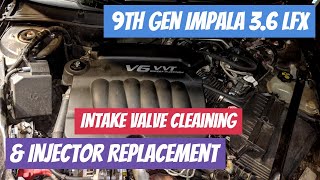
Est. part cost: $40-$80 per coil - Carbon Buildup on Intake Valves (3.6L LFX) 🟡 Medium Probability The 3.6L LFX is a direct-injection engine. Fuel is sprayed directly into the cylinder, so it never flows over the intake valves to clean them. Over time, oil vapor from the PCV system can bake onto the hot valves, restricting airflow and causing misfires, especially on cold starts.
How to confirm: This is difficult to confirm without some disassembly. A borescope inserted into the intake runners is the best way to visually inspect the valves for heavy carbon deposits. This is typically diagnosed after ruling out ignition and fuel system issues.
Typical fix: Manual cleaning of the intake valves, often through walnut blasting. This is a labor-intensive professional job. Some chemical cleaning methods exist but are often less effective for heavy buildup.
Est. part cost: $0 (for cleaning), but labor can be $500-$1000+ - Clogged or Faulty Fuel Injectors 🟡 Medium Probability Fuel injectors can become clogged with deposits over time, disrupting the fuel spray pattern and causing a lean misfire. This is a known issue on many direct-injection vehicles.
How to confirm: A professional can perform a fuel injector balance test to measure the flow from each injector. A scan tool showing lean conditions on one bank could also point to injector issues. Listening with a stethoscope for a consistent clicking sound from each injector is a basic check.
Typical fix: Professional fuel system cleaning or replacement of the faulty injector(s).
Est. part cost: $50-$120 per injector - Vacuum Leak ⚪ Low Probability Vacuum leaks from cracked hoses or a leaking intake manifold gasket introduce unmetered air into the engine, throwing off the air-fuel ratio and causing random misfires, often at idle.
How to confirm: A smoke test is the most effective way to find a vacuum leak. You can also visually inspect all vacuum hoses for cracks or disconnections and listen for a hissing sound around the intake manifold.
Typical fix: Replace the leaking hose or gasket.
Est. part cost: $10-$200
Rare But Worth Checking
- Internal Coolant Leak (Engine Block Porosity): While rare, TSB #18-NA-115 (which supersedes #PIP4959G) details a specific cause for P0300 on cold starts. Engine block porosity can create a pinhole leak, allowing coolant to seep into a cylinder overnight. The misfire is present when cold and often disappears as the engine warms up. Diagnosis involves adding UV dye to the coolant, pressurizing the system, and checking the cylinders with a borescope and black light. If confirmed, the official GM fix is engine replacement.
- Low Fuel Pressure: A weak fuel pump or clogged fuel filter can starve the engine of fuel, causing misfires across all cylinders, especially under load. This can be checked with a fuel pressure gauge connected to the fuel rail's Schrader valve.
Diagnosis Steps

- Read the codes with an OBD-II scanner and check for any other stored codes. Note the freeze-frame data to see the conditions when the code was set.
- If the check engine light is flashing, stop driving immediately to prevent catalytic converter damage.
- Inspect the ignition system. Remove and examine the spark plugs for wear, fouling, and proper gap. Look for cracks in the ceramic or carbon tracking on the ignition coil boots.
- Test the ignition coils. The easiest method is to swap a coil from a misfiring cylinder (identified via a scan tool's live data) with a coil from a non-misfiring cylinder. If the misfire code changes to the new cylinder, the coil is faulty.
- Check for vacuum leaks. Visually inspect all vacuum hoses for cracks and listen for hissing sounds. A smoke test is the most reliable method to find leaks.
- Test fuel pressure. Connect a fuel pressure gauge to the fuel rail's Schrader valve to ensure the fuel pump and filter are providing adequate pressure according to manufacturer specifications.
- If basic checks don't reveal the issue, and especially if you experience misfires on a cold start that go away when warm, consider the possibility of a coolant leak as mentioned in TSB #18-NA-115. This requires a cooling system pressure test with UV dye and a borescope inspection.
- For the 3.6L V6, if ignition and fuel are ruled out, investigate carbon buildup on intake valves, especially on higher-mileage vehicles. This may require a borescope for visual confirmation.
Parts You'll Likely Need
- Spark Plugs
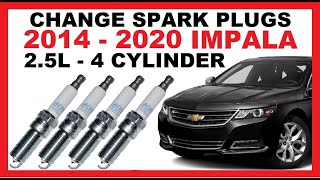
(OEM #ACDelco 41-115 (for 2.5L LCV) 🎬 Watch: Step-by-step spark plug replacement for the 2.5L engine., ACDelco 41-109 (for 3.6L LFX))— This is the most common cause of P0300. They are a standard wear item and are relatively inexpensive to replace.
Trusted brands: ACDelco, NGK
OEM price range: $8-$15 per plug
Aftermarket price range: $5-$12 per plug - Ignition Coil
(OEM #ACDelco D521C (or GN10682) for 2.5L LCV, ACDelco D515C (or 12632479) for 3.6L LFX)— The second most common cause. Heat and vibration cause these to fail over time, resulting in misfires.
Trusted brands: ACDelco, Delphi, NGK
OEM price range: $60-$100 per coil
Aftermarket price range: $40-$80 per coil
Related Codes That Often Appear With This One
- P0301-P0306 — If the PCM can identify that the misfire is predominantly on certain cylinders, it will set these specific codes alongside P0300. For example, P0301 for cylinder 1, P0302 for cylinder 2, etc.
- P0171/P0174 — These codes indicate a lean condition (too much air, not enough fuel). They often appear with P0300 if the root cause is a vacuum leak or a fuel delivery problem like a weak fuel pump.
- P050D — This code for 'Cold Start Rough Idle' is specifically mentioned alongside P0300 in GM's preliminary information bulletin #PIP5628G, indicating they are tracking this combination of issues.
Technical Service Bulletins (TSBs) & Recalls
- 18-NA-115: Addresses diagnosis and correction for a cold start misfire and/or rough idle with DTC P0300, caused by engine block porosity.
- PIP5628G: Provides information for diagnosing misfire codes P0300-P0308.
- PIP4959G: Details a specific issue of cold start misfires with P0300, often on cylinder #1, related to coolant intrusion. This TSB was superseded by 18-NA-115.
Platform-Specific Known Issues

- A known issue documented in TSB #18-NA-115 involves a cold start misfire and/or rough idle that can set a P0300. The cause may be engine block porosity allowing coolant to seep into a cylinder. Diagnosis requires using coolant dye and a borescope inspection.
Mechanic-Grade Diagnostic Values
- Ignition Coil Primary Resistance — expected: 0.4 - 2.0 ohms. Failure: A reading of 0 (short) or infinity/OL (open).
- Ignition Coil Secondary Resistance — expected: 9.5 - 11.1 kOhms. Failure: Readings significantly outside this range indicate a faulty coil winding.
- Short Term Fuel Trim (STFT) at idle — expected: Within +/- 10%. Failure: Sustained readings above +10% suggest a vacuum leak or under-reporting MAF; readings below -10% suggest a leaking injector or other rich condition.
- Engine Coolant Temperature for Crank Relearn — expected: Above 70°C (158°F). Failure: The scan tool will reject the relearn command if the engine is too cold.
Hidden / Shadow Codes Worth Checking
- P1336: Crankshaft Position (CKP) System Variation Not Learned. This GM-specific code indicates that the mandatory 'case relearn' procedure has not been completed or has failed after a component replacement. (see via Most professional-grade OBD-II scanners and GM-specific tools like GDS2/Tech2.)
- Mode $06 Misfire Data: This is not a code, but a diagnostic function that allows viewing of raw, non-continuous monitor data, including misfire counts for each individual cylinder, even before they are high enough to set a specific P0301-P0306 code. (see via Any scan tool that supports Mode $06 diagnostics.)
Scan Tool Commands That Help
- GDS2 / Professional Scan Tool: Crankshaft Position Variation Learn (also known as Case Relearn or Cam/Crank Relearn) — This procedure is mandatory after replacing the crankshaft position sensor, timing chain, or the Engine Control Module (ECM). It synchronizes the CKP sensor's signal with the physical variations of the crankshaft, ensuring accurate misfire detection. Failure to perform this can be a root cause of a P0300 code.
Wiring & Ground Locations
- G101 / G106 — On the front center of the frame cross rail, located under the crank pulley.. This is a primary ground point for the Engine Control Module (ECM) and Transmission Control Module (TCM). A poor connection here can cause erratic ECM behavior, leading to false misfire codes and other drivability issues.
- G102 — Typically located at the left rear of the engine block.. This ground is specifically for the ignition coils. A loose or corroded G102 can cause a weak spark across multiple cylinders, directly leading to a P0300 code.
- Ignition Coil Connector (3.6L V6) — On top of each ignition coil.. Knowing the wire colors allows for testing the trigger signal, power, and ground at the coil. For cylinder 1, the trigger wire is Blue with a Violet stripe; for cylinder 2, it is Blue with a White stripe; for cylinder 3, it is Green with a Blue stripe; for cylinder 4, it is Yellow with a Blue stripe; for cylinder 5, it is Blue with a Gray stripe; and for cylinder 6, it is Brown with a Blue stripe.
"I Checked Everything" — The Actual Cause
- A clogged catalytic converter can cause a P0300 code that only appears under load (e.g., accelerating or climbing a hill). Standard diagnostic tests at idle, including a smoke test for vacuum leaks, may come back clean. The misfire is caused by excessive exhaust backpressure choking the engine, preventing cylinders from evacuating exhaust gas efficiently.
OEM Part Supersession History
ACDelco 41-109 (Spark Plug)→N/A— N/A
Heads up: An equivalent GM part number is 12622561.ACDelco D515C (Ignition Coil)→N/A— N/A
Heads up: Equivalent GM part numbers include 12632479, 12610626, and 12618542.
Helpful Videos
Used OEM Parts in Stock
New Aftermarket Parts Available

The information in this article is provided for general reference and educational purposes only. Vehicle specifications, procedures, and part compatibility can vary by production date, trim level, and region. Always consult your vehicle's factory service manual and verify part numbers before purchasing or performing repairs. Safety-critical components such as airbags, seat belts, and braking systems should be installed by a qualified professional.
- Chevrolet IMPALA:
- 🎬 Helpful Videos
- 🛍️ Shop This Part
- What's Unique About the 2016-2020 Chevrolet IMPALA
- Diagnostic Flowchart
- Symptoms You May Notice
- Most Likely Causes
- Rare But Worth Checking
- Diagnosis Steps
- Parts You'll Likely Need
- Related Codes That Often Appear With This One
- Technical Service Bulletins (TSBs) & Recalls
- Platform-Specific Known Issues
- Mechanic-Grade Diagnostic Values
- Hidden / Shadow Codes Worth Checking
- Scan Tool Commands That Help
- Wiring & Ground Locations
- "I Checked Everything" — The Actual Cause
- OEM Part Supersession History
- 🎟️ Get 5% Off