

P0300 on 2000-2007 Chevrolet Impala: Random Misfire Causes and Fixes
P0300 on a 2000-2007 Impala indicates random cylinder misfires. The most common causes are worn spark plugs, faulty ignition coils, or bad spark plug wires. On 3.4L and 3.8L V6 engines (2000-2005), failed intake manifold gaskets are a very frequent culprit, requiring an updated metal-frame gasket for a permanent fix. For 2006-2007 V6 and V8 models, issues with the Active Fuel Management (AFM) system, such as failed lifters, can also trigger this code.
- P0300 means multiple cylinders are misfiring randomly, and you should not drive if the Check Engine Light is flashing to avoid catalytic converter damage.
- For all years, start your diagnosis with the basics: inspect spark plugs, spark plug wires, and ignition coils. These are the most common culprits.
- If you have a 2000-2005 Impala with a 3.4L or 3.8L V6, a failed intake manifold gasket is a highly probable cause and should be investigated with a smoke test or visual inspection for leaks.
- Don't immediately assume the worst. A systematic approach, starting with the cheapest and most common parts, can save you from unnecessarily expensive repairs.
What's Unique About the 2000-2007 Chevrolet IMPALA

The 2000-2007 Impala spans two generations with different engines, each with its own quirks. The earlier 8th generation models (2000-2005) with the 3.4L LA1 and 3.8L L36/L67 V6 engines are notorious for intake manifold gasket failures. The original gaskets use a plastic frame that degrades from heat and interaction with Dex-Cool coolant, causing vacuum and/or coolant leaks that directly lead to a P0300 code. The 9th generation models (2006-2007) introduced the 3.5L, 3.9L, and the 5.3L LS4 V8 engines, which often feature Active Fuel Management (AFM), also known as Displacement on Demand (DOD). This system, designed to improve fuel economy, uses special lifters that are a known failure point, leading to misfires and a P0300 code.
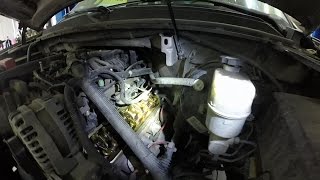
🎬 Watch: How to diagnose lifter issues on the 5.3L engine.Diagnostic Flowchart

Tap your situation to follow the diagnostic path that matches what you're seeing on this vehicle.
Generation note: This range covers the 8th generation (2000-2005) and the start of the 9th generation (2006-2007). The 8th gen used the 3.4L LA1 V6 and 3.8L L36/L67 V6 engines, which are well-known for intake manifold gasket issues. The 9th gen introduced the 3.5L LZE V6, 3.9L LZ9 V6, and the 5.3L LS4 V8. The V6 and V8 engines in these later models can suffer from failures in the Active Fuel Management (AFM) system, often causing P0300.
Symptoms You May Notice

- Rough or shaking idle.
- Hesitation or stumbling during acceleration.
- Noticeable loss of engine power.
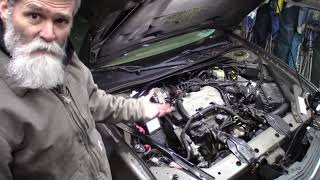
- Flashing Check Engine Light, especially under load. 🎬 See a real-world diagnosis of a flashing engine light misfire.
- Reduced fuel economy.
- Engine running rough and vibrating the car.
- Engine stalling, especially when coming to a stop.
- Hard starting, where the engine cranks longer than usual.
- Replacing only one spark plug or coil when a full tune-up is needed.
- Replacing oxygen sensors. While a bad O2 sensor can affect the air-fuel mixture, it's less likely to be the primary cause of a P0300 than ignition components or a major vacuum leak.
- Assuming a major engine failure before checking basic ignition and fuel system components.
- On 2000-2005 V6 models, overlooking the intake manifold gaskets as the root cause and instead replacing numerous other parts first.
Most Likely Causes

- Leaking Intake Manifold Gaskets 🔴 High Probability This is a very common failure on the 3.4L and 3.8L V6 engines (2000-2005). The original plastic-framed gaskets degrade from heat and Dex-Cool coolant, causing vacuum leaks (lean mixture) or coolant leaks into the cylinders, both of which cause misfires. The plastic can become brittle and crack, leading to significant leaks.
How to confirm: Visually inspect for coolant leaks (orange Dex-Cool residue) around the top of the engine where the intake manifold meets the cylinder heads. Perform a smoke test to check for vacuum leaks. A critical check is to inspect the engine oil and oil cap for a milky, light-brown appearance, which indicates coolant has contaminated the oil. This is a sign of a severe internal leak.
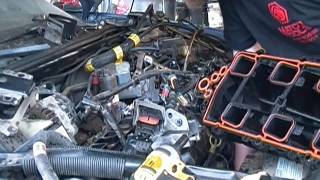
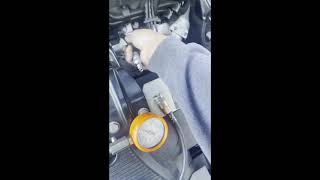
Typical fix: Replace the upper and lower intake manifold gaskets with an updated metal-frame design. The most commonly recommended part is the Fel-Pro PermaDryPlus gasket set, part number MS 98014 T. 🎬 Watch: Step-by-step guide to replacing the intake manifold gaskets. This is a labor-intensive job but provides a permanent solution.
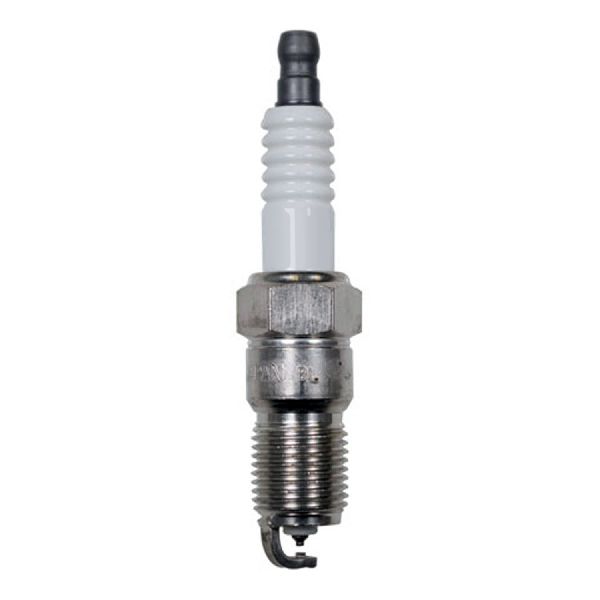
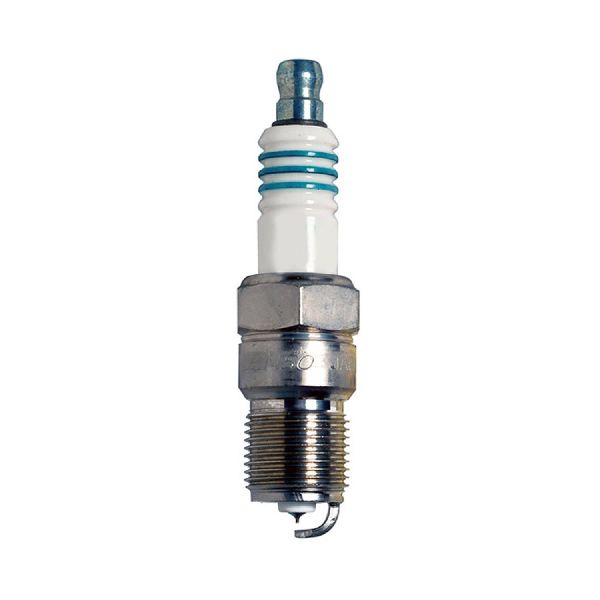
Est. part cost: $60-$130 for the gasket set - Worn or Fouled Spark Plugs 🔴 High Probability Spark plugs are a standard maintenance item. After 100,000 miles, factory plugs are often very worn. The rear bank of plugs on the transverse V6 engines is difficult to access, leading some owners to neglect them, increasing the chance of misfires.
How to confirm: Remove and inspect the spark plugs. Look for worn electrodes, wide gaps, or fouling (black soot, white deposits, or oil). The condition of the plug can indicate the health of the cylinder and whether it's running rich, lean, or burning oil.
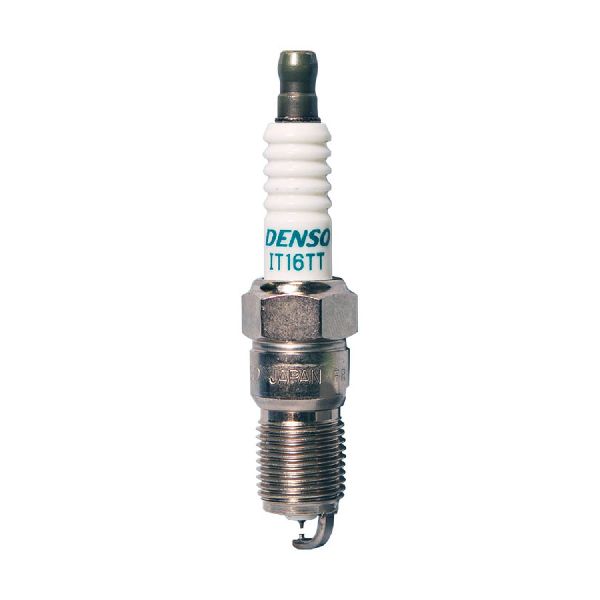
Typical fix: Replace all spark plugs as a set. Use the specified ACDelco Iridium or Platinum plugs for your engine. It's also wise to replace the spark plug wires at the same time.
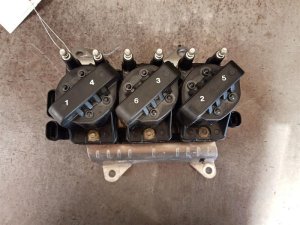
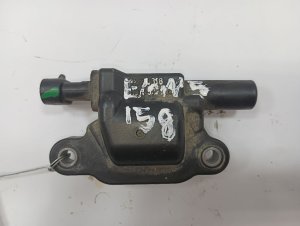
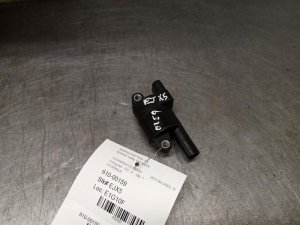
Est. part cost: $30-$80 - Faulty Ignition Coil Pack(s) 🔴 High Probability The waste-spark ignition system on V6 models uses one coil for two cylinders. When a coil fails, it typically causes misfires on two cylinders but can sometimes present as a random P0300 code initially. Age and heat cycles cause the epoxy to crack and the internal windings to fail.
How to confirm: Use a multimeter to test the primary and secondary resistance of each coil and compare the readings; a faulty coil will often show a reading that is out of spec or significantly different from the others. A common DIY method is to swap a suspected bad coil with a known good one and see if the misfire moves to the other cylinders. A spark tester can also be used to check for a strong, blue spark from each coil tower.
Typical fix: Replace the faulty ignition coil pack. Many owners choose to replace all three as a preventative measure. ACDelco is the OEM supplier.
Est. part cost: $40-$70 per coil - Defective Spark Plug Wires 🟡 Medium Probability Wires degrade over time, and the insulation can crack or wear from heat and abrasion, causing the spark to arc to the engine block instead of reaching the spark plug. The routing for the rear wires can cause them to rub or get damaged.
How to confirm: Visually inspect wires for cracks, burns, or corrosion on the terminals. With the engine running in a dark environment, look and listen for any visible arcing along the wires or near the boots.
Typical fix: Replace all spark plug wires as a set with a quality brand like ACDelco or Delphi.
Est. part cost: $40-$90 - Clogged or Faulty Fuel Injectors 🟡 Medium Probability Fuel injectors can become clogged with deposits over time, preventing them from delivering the correct amount of fuel. GM issued a TSB (03-06-04-030F) regarding various driveability issues, including P0300, caused by restricted injectors due to fuel quality. This affects all engines in this range.
How to confirm: Use a mechanic's stethoscope or a long screwdriver to listen to each injector; they should all make a consistent, rapid clicking sound. A scan tool with live data can show fuel trim values that may indicate a problem. A fuel injector balance test is a more definitive diagnostic. A resistance test with a multimeter can also identify an electrically failed injector.
Typical fix: First, try a high-quality fuel system cleaner. If that fails, the injectors may need to be professionally cleaned or replaced. It is often recommended to replace all injectors as a set.
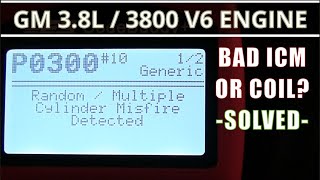
Est. part cost: $50-$100 per injector - Faulty Ignition Control Module (ICM) ⚪ Low Probability The ICM, located under the coil packs on V6 models, can fail due to constant heat cycles, causing intermittent or no spark to one or more coils. This was a more common issue on the 3.8L V6.
How to confirm: Diagnosis can be tricky. If new coils and wires don't solve a spark issue on specific cylinders, the ICM is the next logical culprit. Swapping coils around can help point to the ICM; if the misfire stays on the same cylinders regardless of which coil is in that position, the ICM is likely at fault. Some auto parts stores can test these modules off the vehicle.
Typical fix: Replace the ignition control module. It is mounted on a plate under the three ignition coils.
Est. part cost: $80-$150
Rare But Worth Checking
- Low Fuel Pressure: A weak fuel pump or clogged fuel filter can starve the entire engine for fuel, causing random misfires under load. Check fuel pressure at the Schrader valve on the fuel rail with a gauge. For the 3.5L V6, pressure should be 56-62 psi with the key on, engine off.
- Faulty Crankshaft Position Sensor (CKP): The CKP sensor provides the primary timing signal. A failing sensor can send erratic signals, causing random misfires without always setting a specific CKP code. After replacement, a "crankshaft variation relearn" procedure must be performed with a capable scan tool for the engine to run correctly.
- Clogged Catalytic Converter: A clogged catalytic converter creates excessive backpressure, which can cause random misfires, especially under load. A symptom is a lack of power that gets worse at higher RPMs. A backpressure gauge can be used to test it, or by checking the temperature difference between the inlet and outlet of the converter.
- Failed Active Fuel Management (AFM) Lifters: On 2006-2007 models with 3.5L, 3.9L, and 5.3L engines, the AFM lifters can become stuck or collapse. This leads to a loss of compression and a misfire on the affected cylinders (1, 4, 6, or 7). This often presents with a ticking noise and can be caused by issues with oil pressure or sludge. A permanent fix involves replacing the lifters or installing an AFM delete kit.
Diagnosis Steps
- Check for other stored trouble codes with an OBD-II scanner. Codes like P0301-P0306, P0171, or P0016 can provide valuable clues to narrow down the search.
- Analyze Freeze Frame Data. Note the engine conditions (RPM, load, temperature) when the P0300 code was set. This can help replicate the issue.
- Perform a full visual inspection. Look for cracked vacuum hoses, coolant residue around the intake manifold (especially on 2000-2005 V6 models), and damaged wiring.
- Check Ignition System. Inspect spark plugs for wear and fouling. Inspect wires for damage. Test ignition coils by checking resistance or swapping them to see if the misfire follows the coil.
- Check Fuel System. Verify fuel pressure at the fuel rail with a gauge to rule out a weak pump or clogged filter. Listen to injectors to ensure they are all clicking.
- Test for Vacuum Leaks. A smoke test is the most effective method to find leaks from gaskets or hoses that aren't visually obvious.
- Check for Specific Platform Issues. If you have a 2000-2005 V6, strongly suspect the intake manifold gaskets. If you have a 2006-2007 V6/V8, research AFM/DOD lifter issues.
- Perform a Crankshaft Variation Relearn if the CKP sensor was replaced. This requires a bi-directional scan tool.
- If all else fails, perform a mechanical engine health test. A compression test can identify issues like bad rings, valves, or head gaskets.
Parts You'll Likely Need
- Spark Plugs — This is the most common and fundamental cause of misfires. They are a routine wear item.
Trusted brands: ACDelco, NGK
OEM price range: $6-$15 per plug
Aftermarket price range: $4-$10 per plug - Ignition Coil Pack — Coils are a frequent failure point due to heat and age, directly causing a lack of spark.
Trusted brands: ACDelco, Delphi
OEM price range: $60-$90
Aftermarket price range: $40-$70 - Intake Manifold Gasket Set — A notorious failure point on 2000-2005 3.4L and 3.8L V6 engines, causing vacuum and coolant leaks that lead to misfires.
Trusted brands: Fel-Pro, ACDelco
OEM price range: $80-$120
Aftermarket price range: $50-$90 - Spark Plug Wire Set — Wires wear out over time, causing weak or misdirected spark.
Trusted brands: ACDelco, NGK
OEM price range: $60-$100
Aftermarket price range: $40-$90
Related Codes That Often Appear With This One
- P0301-P0306 — These codes specify which cylinder is misfiring (e.g., P0301 for Cylinder 1). They often appear with P0300 when the misfire is frequent on certain cylinders but still occurs randomly on others.
- P0171 — This code means 'System Too Lean (Bank 1)'. It's commonly triggered alongside P0300 when a large vacuum leak, such as from a failed intake manifold gasket, allows unmetered air into the engine, disrupting the air-fuel ratio and causing misfires.
- P0420 — This code means 'Catalyst System Efficiency Below Threshold'. It can appear if the misfires from P0300 have been happening long enough to dump raw fuel into the exhaust and damage the catalytic converter.
- P0016 — Crankshaft Position - Camshaft Position Correlation. On 2006-2007 models with the 3.5L or 3.9L V6, this code can appear with P0300, sometimes related to issues with cam phasers or timing.
Technical Service Bulletins (TSBs) & Recalls
- PIP5628G: A general diagnostic aid for technicians encountering misfire codes P0300-P0308, providing a template for collecting data.
- 03-06-04-030F: Addresses various driveability symptoms, including P0300, due to clogged fuel injectors across many GM engines. Recommends on-vehicle cleaning and using Top Tier gasoline.
- PIP4568P: Discusses engine misfires (P0300) on cylinders 1, 4, 6, or 7 in V8 engines with Active Fuel Management (AFM), pointing to failed or stuck AFM lifters as the cause.
- PIP5064B: Pertains to rough running and P0300 on 3.5L and 3.9L engines, sometimes after engine replacement, and points to checking valve springs and camshaft actuator components.
Platform-Specific Known Issues
- On 2000-2005 models with the 3.4L and 3.8L V6, the factory plastic intake manifold gaskets are a primary suspect for P0300. They are known to fail, causing vacuum leaks or internal coolant leaks. Upgrading to a metal-framed gasket set is the recommended permanent fix.
- On the 3.8L V6, a severe engine backfire can sometimes crack the plastic upper intake manifold itself, creating a massive vacuum leak and causing a P0300 code.
- The TSB #PIP5628G for the 2007 model indicates that diagnosing misfire codes from P0300-P0308 can be complex enough to require factory technical assistance, suggesting that even on newer generations, the cause is not always straightforward. [Bulletin #PIP5628G]
Mechanic-Grade Diagnostic Values
- Ignition Coil Secondary Resistance (3.8L V6) — expected: 7,800 Ohms (7.8k Ohms). Failure: A reading significantly different from other coils or a major deviation from the specification.
- Ignition Coil Primary Resistance (3.8L V6) — expected: 0.35 Ohms. Failure: A reading significantly different from other coils.
- Fuel Injector Resistance (General) — expected: 10 - 18 Ohms. Failure: A reading outside of this range, or a reading that is significantly different from the other injectors, indicates a faulty injector.
- Fuel Pressure (3.5L V6, 2006-2007) — expected: 56-62 psi (key on, engine off). Failure: Pressure below this range indicates a weak fuel pump or clogged filter.
- Ignition Control Module (ICM) 3x Sync Signal Test (3.8L V6) — expected: Voltage should switch between 0V and 5-6V as the engine is cranked by hand.. Failure: No voltage change indicates a faulty crankshaft position sensor or ICM.
Hidden / Shadow Codes Worth Checking
- P1336: Crankshaft Position System Variation Not Learned. This code often appears alongside P0300 after a crankshaft position sensor, ECM, or major engine component has been replaced without performing the relearn procedure. (see via Standard OBD-II scan tool.)
Scan Tool Commands That Help
- Tech 2 / GDS2 or equivalent professional scan tool: Crankshaft Position Variation Learn (CASE Relearn) — This procedure is mandatory after replacing the crankshaft position sensor, the ECM/PCM, or major rotating assembly components. Failure to perform the relearn will result in the ECM's inability to accurately detect misfires, often causing a persistent P0300 or setting a P1336.
- Professional scan tool with bidirectional controls: Fuel Injector Balance Test — This test allows the technician to command each fuel injector to fire for a specific duration and measures the corresponding drop in fuel pressure. It is a definitive way to identify a clogged or weak injector that may be causing a misfire.
Wiring & Ground Locations
- G111 — Top right of the engine, below the ignition control module (applies to 3.8L V6).. This is a primary ground point for components on the engine. A loose or corroded connection here can cause erratic behavior in the ignition system, leading to random misfires.
- G113 — On a transaxle stud, near the starter motor.. This ground is critical for the starter and transaxle, but poor connections can introduce electrical noise that may affect nearby sensor readings, including the crankshaft position sensor.
- G101 — Top left front of the radiator support.. Grounds the Mass Air Flow (MAF) sensor and other components. A bad ground here can cause incorrect MAF readings, leading to improper fuel mixture and misfires.
- ICM Connector (3.8L V6) — The main connector on the Ignition Control Module, under the three coil packs.. Testing specific pins on this connector is essential for diagnosing the ICM and Crankshaft Position Sensor. For example, the PINK wire (Pin P) should have 12V power, and the BLACK/WHITE wire (Pin K) is the main ground.
Real Owner Repair Stories
- Reddit r/MechanicAdvice (2012 Impala (3.6L LFX, newer than range but relevant ICM issue pattern)) — Started with a P0302 (Cylinder 2 misfire), then after replacing plugs and coils, it changed to a P0300 with very rough running.
❌ Tried (didn't work) Replacing spark plugs, Replacing all ignition coils
✅ What actually fixed it The user did not report a final fix, but another user with an '07 model reported that replacing the Ignition Control Module (ICM) fixed an identical P0300 issue after new plugs, wires, and coils failed to solve it. - YouTube - "How to fix AFM misfire on 5.3 Chevy" (GM Truck with 5.3L V8 with AFM (similar to Impala SS)) — P0300 code with a specific misfire on an AFM cylinder (Cylinder 4).
❌ Tried (didn't work) Swapping ignition coil, Replacing spark plug and wire, Swapping fuel injectors
✅ What actually fixed it The owner identified a failed AFM lifter. As a 'hack' fix, they disconnected the AFM solenoid connector (VLOM harness) to force the engine to stay in V8 mode, which stopped the misfire. This confirms the issue was the AFM system itself. - Chevrolet Forum (Chevrolet Van (platform unspecified, but P0300 cause is universal)) — Persistent P0300 random misfire.
❌ Tried (didn't work) Initial diagnostics for ignition and fuel systems.
✅ What actually fixed it The owner discovered a clogged catalytic converter by measuring temperature (hot inlet, cold outlet). Replacing the clogged converter resolved the P0300 code, as the excessive backpressure was causing the random misfires.
"I Checked Everything" — The Actual Cause
- In some cases, a P0300 is caused by a clogged catalytic converter. A smoke test for vacuum leaks will come back clean, and ignition/fuel tests may seem fine at idle. The misfire only appears under load when exhaust backpressure builds up, choking the engine and preventing cylinders from evacuating exhaust gas properly, leading to random misfires.
Model Year Variations Within This Range
- 2000-2005: These 8th generation models primarily use the 3.4L LA1 and 3.8L L36/L67 V6 engines. The most dominant and unique cause of P0300 in this group is the failure of the plastic-framed upper and lower intake manifold gaskets.
- 2006-2007: These 9th generation models introduced the 3.5L LZE, 3.9L LZ9, and 5.3L LS4 engines, many equipped with Active Fuel Management (AFM). A primary cause of P0300 unique to these years is the failure of AFM lifters and related components like the VLOM. Intake gasket issues are less common than on the earlier models.
Helpful Videos
Used OEM Parts in Stock



New Aftermarket Parts Available



The information in this article is provided for general reference and educational purposes only. Vehicle specifications, procedures, and part compatibility can vary by production date, trim level, and region. Always consult your vehicle's factory service manual and verify part numbers before purchasing or performing repairs. Safety-critical components such as airbags, seat belts, and braking systems should be installed by a qualified professional.
- Chevrolet IMPALA:
- 🎬 Helpful Videos
- 🛍️ Shop This Part
- What's Unique About the 2000-2007 Chevrolet IMPALA
- Diagnostic Flowchart
- Symptoms You May Notice
- Most Likely Causes
- Rare But Worth Checking
- Diagnosis Steps
- Parts You'll Likely Need
- Related Codes That Often Appear With This One
- Technical Service Bulletins (TSBs) & Recalls
- Platform-Specific Known Issues
- Mechanic-Grade Diagnostic Values
- Hidden / Shadow Codes Worth Checking
- Scan Tool Commands That Help
- Wiring & Ground Locations
- Real Owner Repair Stories
- "I Checked Everything" — The Actual Cause
- Model Year Variations Within This Range
- 🎟️ Get 5% Off