

P0300 on 2014-2018 Chevrolet Express: Random Misfire Causes and Fixes
P0300 on a Chevy Express indicates random cylinder misfires. The most common causes are worn spark plugs, bad plug wires, or failing ignition coils. However, be aware of GM Technical Service Bulletins that point to more serious mechanical issues like worn camshaft lobes or failed Active Fuel Management (AFM) lifters on these V8 engines.
- P0300 means random misfires are detected; start your diagnosis with the basics: spark plugs, wires, and ignition coils.
- A flashing check engine light means STOP driving to prevent expensive catalytic converter damage.
- Listen for any ticking or chirping noises from the engine, as this could point to a more serious camshaft/lifter issue specific to these GM V8s.
- If basic ignition and fuel system checks don't solve the problem, consider a vacuum leak or have a professional investigate potential mechanical engine problems.
- Always use a scan tool to check for other codes, as they can provide valuable clues to the root cause.
What's Unique About the 2014-2018 Chevrolet EXPRESS

The Chevrolet Express vans in this year range are workhorses, typically equipped with robust V8 engines (4.8L, 5.3L, 6.0L). While a P0300 code is often due to standard ignition maintenance items like plugs and coils, these specific GM V8s have a documented history of more severe mechanical issues. Manufacturer bulletins confirm that a persistent P0300 code, especially if accompanied by a ticking or chirping noise, can be caused by a worn camshaft lobe or a failed lifter. On engines equipped with Active Fuel Management (AFM), collapsed lifters are a known problem that can lead to camshaft damage if not addressed promptly.
Diagnostic Flowchart

Tap your situation to follow the diagnostic path that matches what you're seeing on this vehicle.
Symptoms You May Notice
- Rough or shaky engine idle
- Engine hesitation or stumbling during acceleration
- Flashing or solid Check Engine Light
- Reduced engine power
- Worse than usual fuel economy
- Engine noise described as a chirp, squeak, or tick, especially at half of crankshaft speed
- Misfire is worse when the engine is fully warmed up
- Replacing only one spark plug or coil when a full tune-up is needed.
- Replacing oxygen sensors when they are correctly reporting a problem (the misfire) rather than being the cause of it.
- Assuming a major mechanical failure before thoroughly checking the ignition, fuel, and for vacuum leaks.
- Replacing the Crankshaft Position Sensor without performing the required 'crank relearn' procedure.
Most Likely Causes

- Worn Spark Plugs or Faulty Spark Plug Wires 🔴 High Probability Spark plugs and wires are regular maintenance items that wear out over time from heat and high voltage. On V8 models, the rear plugs can be difficult to access and are sometimes neglected.
How to confirm: Visually inspect the spark plugs for wear, fouling, or an incorrect gap. Check for carbon tracking on the porcelain insulator. Check spark plug wires for physical damage or high resistance with a multimeter.
Typical fix: Replace all spark plugs and spark plug wires as a set. Using OEM-quality parts like ACDelco is highly recommended. For the 6.0L V8, ACDelco 41-162 (or 41-962) Iridium plugs are a common choice. For the 5.3L V8, ACDelco 41-110 is often used.
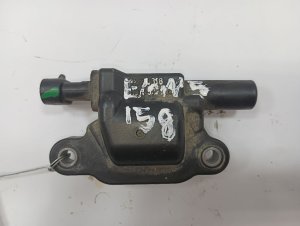
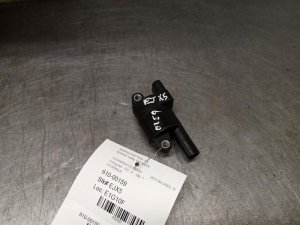
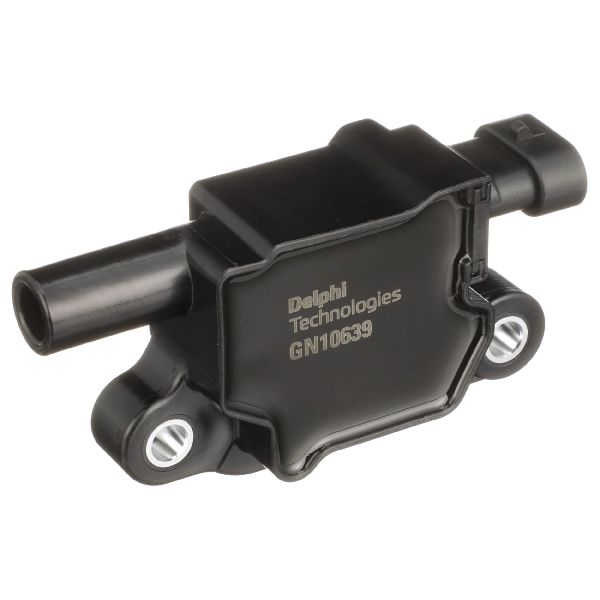
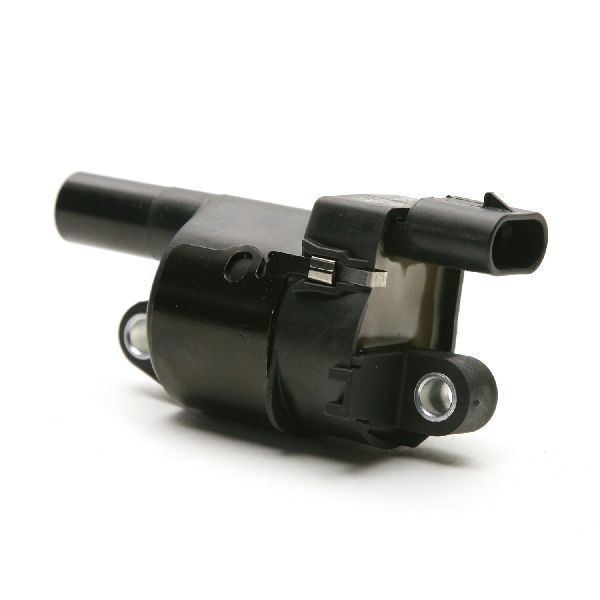
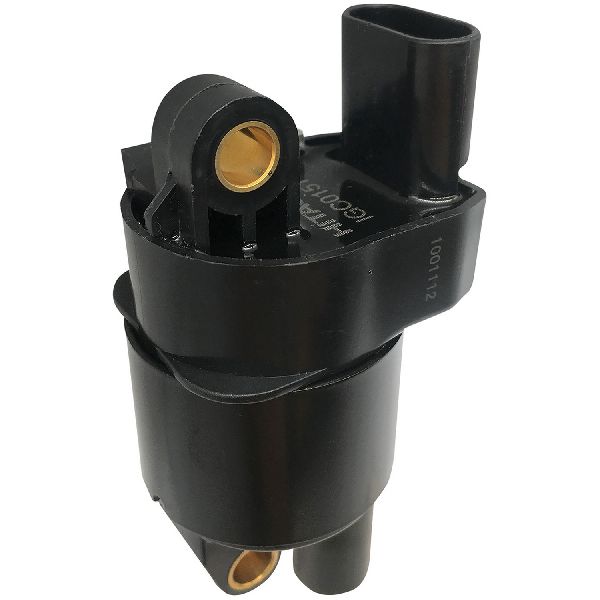
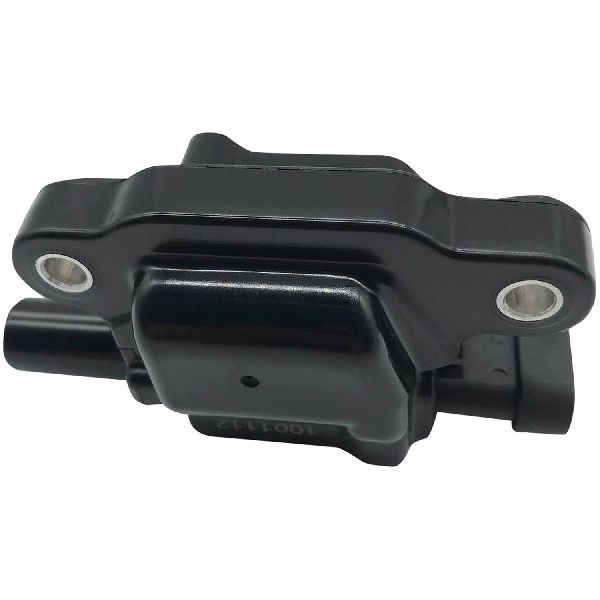
Est. part cost: $50-$150 - Failing Ignition Coil(s) 🔴 High Probability These engines use a coil-on-plug system with an individual coil for each cylinder. Heat and vibration can cause them to fail over time, and a corroded ground wire for a bank of coils can also cause multiple misfires.
How to confirm: Use a scan tool with live data to identify which cylinders are misfiring most frequently (Mode 6 data). Swap the ignition coil from a misfiring cylinder with one from a cylinder that is firing correctly. If the misfire code follows the coil (e.g., P0301 moves to P0305), the coil is bad.
Typical fix: Replace the faulty ignition coil. It is often wise to replace them in sets if they are original and high-mileage. A common OEM part number is ACDelco 12699382 (which supersedes 12611424 and others).
Est. part cost: $30-$70 per coil - Fuel System Issues (Clogged Injectors, Weak Fuel Pump) 🟡 Medium Probability Fuel injectors can become clogged over time, and fuel pumps can weaken, especially on high-mileage work vans. This leads to a lean condition and misfires under load.
How to confirm: Check fuel pressure at the fuel rail with a gauge to ensure it's within spec (typically 55-62 PSI for these GM engines). Listen to injectors with a mechanic's stethoscope for a consistent clicking sound.
Typical fix: Replace clogged or failed fuel injectors, often recommended as a full set on high-mileage vehicles. Replace a weak fuel pump and fuel filter.
Est. part cost: $40-$100 per injector, $200-$400 for a fuel pump - Vacuum Leak (Intake Manifold Gasket) 🟡 Medium Probability The intake manifold gaskets on GM V8s are a very common failure point. They can become brittle and crack from age and heat cycles, allowing unmetered air to enter the engine, causing a lean condition and misfires.
How to confirm: Perform a smoke test to find the source of the leak. A key symptom is a rough idle that only appears when the engine is warm. A DIY method is to watch Short Term Fuel Trim (STFT) values on a scanner at idle; if they are very high (e.g., >+15%) but return to near zero when you raise the RPM to ~2000, it strongly indicates a vacuum leak.
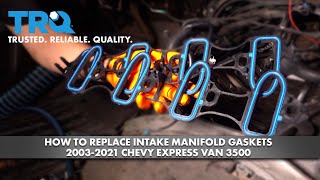
Typical fix: Replace the intake manifold gaskets. It is critical to also replace the throttle body seal at the same time. 🎬 See this step-by-step walkthrough for replacing your intake manifold gaskets.
Est. part cost: $50-$200 - Worn Camshaft Lobe and/or Lifter (AFM) ⚪ Low Probability This is a known, serious issue documented in GM TSB #19-NA-219 (which supersedes PIP4138R). It particularly affects V8 engines with Active Fuel Management (AFM), where specific lifters can collapse or get stuck due to issues like oil aeration, leading to a misfire and subsequent damage to the camshaft lobe.
How to confirm: This is an advanced diagnosis. A persistent ticking or chirping noise from the top of the engine is a key symptom. A mechanic will need to remove the valve covers to observe the valvetrain in operation. A collapsed lifter will result in a rocker arm that is not moving or has very little travel.
Typical fix: Requires replacing the camshaft, all lifters (both AFM and standard), and related gaskets. Many owners opt to install an 'AFM delete kit' at this time to prevent recurrence. This is a significant, labor-intensive repair.
Est. part cost: $500-$1200
Rare But Worth Checking
- Clogged Catalytic Converter: A clogged exhaust can create excessive backpressure, leading to random misfires, especially under load. This is often accompanied by a P0420 or P0430 code and a significant loss of power.
- Faulty Crankshaft Position Sensor (CKP): While less common, a failing CKP sensor can send erratic signals to the ECM, causing it to misinterpret engine speed and trigger a P0300 code. A 'crank relearn' or 'CASE learn' procedure using a capable scan tool is required after replacement to sync the new sensor with the ECM.
- Poor Ground Connection: On some GM trucks with similar engines, a poor or corroded engine ground strap, specifically the ground for the ignition coil banks, has been found to cause an entire bank of cylinders to misfire, triggering a P0300 code. Cleaning and securing the main engine-to-chassis and cylinder head grounds is a worthwhile check.
Diagnosis Steps
- Scan for any other trouble codes to get more clues.
- Use a scan tool's live data to check misfire counters for each cylinder (Mode 6) to see if the misfires are truly random or concentrated on a few cylinders.
- Check Short Term Fuel Trims (STFT) at idle and at 2000 RPM. High positive trims at idle that normalize at higher RPM strongly suggest a vacuum leak.
- Perform a full visual inspection of the engine bay. Look for obvious issues like disconnected vacuum hoses, damaged wiring, or loose connectors.
- Inspect the ignition system. Remove and check spark plugs, wires, and coils. Swap coils to see if the misfire follows.
- Test the fuel system. Connect a fuel pressure gauge to the fuel rail and verify pressure is within specification (55-62 PSI).
- Check for vacuum leaks using a smoke machine, especially around the intake manifold gasket seams.
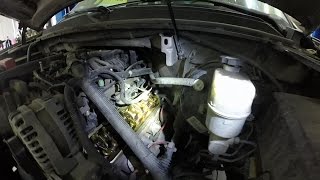
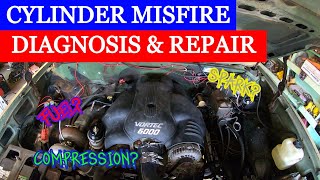
- If a mechanical noise (ticking, chirping) is present, remove the valve covers to inspect the valvetrain for collapsed lifters or worn camshaft lobes, as indicated by TSB #19-NA-219. 🎬 Watch this diagnostic guide for identifying lifter and camshaft issues.
Parts You'll Likely Need
- Spark Plugs
(OEM #ACDelco 41-110 (5.3L) / 41-162 (6.0L))— These are a primary wear item and a leading cause of misfires.
Trusted brands: ACDelco, NGK
OEM price range: $8-$12 per plug
Aftermarket price range: $4-$10 per plug - Ignition Coil
(OEM #ACDelco 12699382)— Individual coil failures are very common on these engines and a frequent cause of misfires.
Trusted brands: ACDelco, Delphi
OEM price range: $50-$90
Related Codes That Often Appear With This One
- P0301-P0308 — These codes indicate a misfire on a specific cylinder (e.g., P0301 is Cylinder 1). They often appear with P0300 if the misfire is happening on multiple cylinders but is sometimes more concentrated on one or two, which can point to a developing mechanical issue like a failing lifter.
- P0171 / P0174 — These codes mean 'System Too Lean' on Bank 1 and Bank 2, respectively. They commonly appear with P0300 if the root cause is a vacuum leak or a fuel delivery issue that affects the entire engine.
- P050D — This code for 'Cold Start Rough Idle' can appear alongside P0300 codes and is mentioned in GM TSBs, pointing towards a potential valvetrain or internal engine issue that requires dealer-level diagnostics.
Technical Service Bulletins (TSBs) & Recalls

- 19-NA-219
- PIP4138R
- PIP5628G
- 15-06-01-002F
Platform-Specific Known Issues
- The P0300 That Only Appears Uphill: In a forum thread, an Express owner detailed a frustrating P0300 case where the check engine light would only start flashing when driving up a steep hill at highway speeds. After maintaining speed, the light would go from flashing to solid. When coasting downhill, the light would turn off completely. This specific behavior, occurring only under heavy engine load, pointed away from a constant vacuum leak and led the owner and community to suspect either a failing fuel pump unable to meet demand, or a clogged catalytic converter creating excessive backpressure under load.
Mechanic-Grade Diagnostic Values
- Ignition Coil Primary Resistance — expected: 0.4 to 2.0 Ohms. Failure: A reading of 0 ohms indicates a short; an infinite or significantly higher reading indicates an open circuit.
- Ignition Coil Secondary Resistance — expected: 6,000 to 15,000 Ohms (6 to 15 kOhms). Failure: Readings outside this range suggest a faulty coil winding.
- Long Term Fuel Trim (LTFT) at idle — expected: Close to 0%, typically within +/- 5%. Failure: Sustained high positive values (e.g., +12.5% to +16.5%) suggest the ECM is compensating for a vacuum leak or low fuel pressure.
- Fuel Pressure (Key on, Engine off) — expected: 55-62 PSI. Failure: Pressure below this range indicates a weak fuel pump, clogged filter, or faulty regulator.
Hidden / Shadow Codes Worth Checking
- Mode $06, Monitor ID $A2-$AF, Test ID $0B-$0C: These are not typical DTCs but are hexadecimal identifiers within the Mode $06 diagnostic data. They allow viewing of current and historical misfire counts for each individual cylinder, even if a specific P030x code has not been set. For example, Monitor $A9 and Test $0B may correspond to Cylinder 8 misfire counts. (see via A professional scan tool capable of displaying Mode $06 data. The exact IDs may vary slightly by specific engine and year, but they will be labeled as 'Misfire Cylinder X Data'.)
Scan Tool Commands That Help
- GDS2 / Tech2 / Professional Scan Tool: Crankshaft Position Variation Learn (CASE Learn) — This procedure is mandatory after replacing the crankshaft position sensor, ECM, engine, or flywheel. Failure to perform the relearn can cause the ECM to inaccurately detect misfires and set a P0300 or P1336 code. The procedure typically involves warming the engine, then accelerating to a specific RPM (e.g., 4000 RPM) until fuel cut-off occurs to allow the ECM to learn the minute variations of the crankshaft reluctor wheel.
- GDS2 / Professional Scan Tool: Fuel Injector Balance Test — This test allows the technician to individually fire each injector for a set amount of time and measure the corresponding drop in fuel pressure. It can identify a clogged or weak injector that is contributing to random misfires, which may not be obvious from resistance tests alone.
- GDS2 / Professional Scan Tool: EVAP Vent Solenoid Command — If EVAP codes (like P0446 or P0449) are present with a P0300, a technician can use the scan tool to command the EVAP vent solenoid on and off to verify its operation. A faulty EVAP system component can, in rare cases, cause driveability issues that manifest as a misfire code.
- GDS2 / Professional Scan Tool: Throttle Body Idle Air Flow Compensation Reset — After cleaning or replacing the throttle body, this reset function recalibrates the idle airflow position. An incorrect idle calibration can contribute to rough running and misfires at idle.
Wiring & Ground Locations
- G103 / G104 — Typically located on the engine block or cylinder heads, near the front of the engine. For example, on the front of the driver's side cylinder head.. These are primary engine ground points. A loose or corroded connection at these locations can cause erratic behavior in sensors and, specifically, the ignition coils, leading to random misfires across one or more banks.
- ECM Connector X1, Pins 72-77 — At the Engine Control Module (ECM).. These specific pins are the individual control circuits for the ignition coils (e.g., Pin 75 for Coil 5, Pin 76 for Coil 4). A poor connection or damaged wire at these specific pins can cause a misfire on the corresponding cylinder.
- Crankshaft Position (CKP) Sensor — On the right (passenger) side of the engine block, above the starter motor.. This is the primary sensor for detecting misfires. Damage to its wiring harness from heat or physical contact can cause a loss of signal and trigger a P0300 code.
- Ignition Coil Connectors — On top of each valve cover, one for each cylinder.. The plastic connectors and their pigtail wiring can become brittle from heat and vibration, leading to poor connections at the coil. A bad connection on a single coil can cause a specific cylinder misfire (P030x), but if multiple connectors or the main bank harness ground are compromised, it can result in a P0300.
Real Owner Repair Stories
- Chevrolet Forum user (2007 Chevrolet Express 3500, 57,000 miles) — Persistent P0300, but only after driving for an hour at highway speeds, especially when going uphill. Check engine light would flash under load, then go out when coasting downhill.
❌ Tried (didn't work) Replaced O2 sensor, Full tune-up (plugs, wires), Replaced MAF sensor, Replaced crankshaft position sensor (twice, once non-OEM, once OEM) and performed relearn, Professional fuel injector cleaning, Cleaned ECU ground
✅ What actually fixed it The final diagnosis pointed to a clogged catalytic converter. The increased backpressure under high engine load (going uphill at speed) was causing the misfires. When the load was removed (coasting), the backpressure dropped and the misfire stopped. - ScannerDanner Forum user (2007 Chevrolet Express 3500, 57,000 miles) — P0300 with steady check engine light, sometimes appearing on cold starts, along with EVAP codes P0446 and later P0449.
❌ Tried (didn't work) Replaced B1S2 O2 sensor, Tune-up with new plugs and wires, Cleaned and replaced MAF sensor, Cleaned throttle body, Replaced Crankshaft Position Sensor (CKP) with relearn, Cleaned ECU ground
✅ What actually fixed it The issue was traced to the EVAP system. Replacing the Fuel Tank Pressure (FTP) sensor (which required dropping the fuel tank) and the EVAP vent control solenoid finally resolved the P0300 code. The failing sensors were sending erratic voltage signals that caused a driveability issue interpreted by the ECM as a random misfire.
"I Checked Everything" — The Actual Cause
- In one documented case, a persistent P0300 was not caused by a typical intake vacuum leak that a smoke test would find. The root cause was a faulty Fuel Tank Pressure (FTP) sensor and EVAP vent solenoid. This created an issue within the closed-loop fuel vapor system that the ECM interpreted as a misfire, demonstrating that causes can exist outside the intake manifold and its immediate vacuum lines.
When the Usual Fixes Don't Work
- While the most common causes for P0300 are ignition system components like spark plugs and coils, several owner-documented repairs show that after these common parts were replaced without success, the actual cause was far less obvious. In one case, a P0300 that only occurred under heavy engine load was ultimately traced to a clogged catalytic converter creating excessive backpressure. In another, a persistent P0300 accompanied by EVAP codes was finally resolved by replacing a faulty Fuel Tank Pressure (FTP) sensor and EVAP solenoid, components not typically associated with engine misfires. These cases highlight the need to look beyond a basic tune-up if the problem persists, and to pay close attention to when the misfire occurs and what other codes are present.
OEM Part Supersession History
Elgin HL-7011 (or GM equivalents like 12571595, 12639516)→Elgin HL-7025 (or GM equivalent 12698946)— The newer HL-7025 lifter is designed for Dynamic Fuel Management (DFM) engines but is backward-compatible with older Active Fuel Management (AFM) engines.
Heads up: The new DFM lifter (HL-7025) WILL work in older AFM applications. However, the original AFM-only lifter (HL-7011) will ONLY fit AFM applications and not the newer DFM engines.N/A→GM Valve Lifter Oil Manifold (VLOM) #12571609— GM released an updated VLOM to improve oil delivery and pressure to the AFM lifters, addressing a common cause of their failure.
Heads up: When replacing failed AFM lifters, it is highly recommended to also install this updated VLOM to help prevent repeat failures.
Model Year Variations Within This Range
- 2014-2018: The most common V8 engines in the Express 2500/3500 vans, the 4.8L (L20) and 6.0L (L96), do NOT use Active Fuel Management (AFM). The camshaft/lifter failure TSBs are primarily applicable to the 5.3L V8 (LC9) which was available in some light-duty models and does have AFM. While camshaft wear can occur on any engine, the specific lifter collapse issue is an AFM-related problem.
- 2014: Some 2014 models equipped with the 6.0L V8 designed for Compressed Natural Gas (CNG), engine code LC8, were subject to a recall (GM #14321) for a high-pressure fuel regulator. This does not apply to standard gasoline engines but is an important distinction for diagnosing fuel-related issues on CNG-equipped vans.
Helpful Videos
Used OEM Parts in Stock


New Aftermarket Parts Available


The information in this article is provided for general reference and educational purposes only. Vehicle specifications, procedures, and part compatibility can vary by production date, trim level, and region. Always consult your vehicle's factory service manual and verify part numbers before purchasing or performing repairs. Safety-critical components such as airbags, seat belts, and braking systems should be installed by a qualified professional.
- Chevrolet EXPRESS:
- 🎬 Helpful Videos
- 🛍️ Shop This Part
- What's Unique About the 2014-2018 Chevrolet EXPRESS
- Diagnostic Flowchart
- Symptoms You May Notice
- Most Likely Causes
- Rare But Worth Checking
- Diagnosis Steps
- Parts You'll Likely Need
- Related Codes That Often Appear With This One
- Technical Service Bulletins (TSBs) & Recalls
- Platform-Specific Known Issues
- Mechanic-Grade Diagnostic Values
- Hidden / Shadow Codes Worth Checking
- Scan Tool Commands That Help
- Wiring & Ground Locations
- Real Owner Repair Stories
- "I Checked Everything" — The Actual Cause
- When the Usual Fixes Don't Work
- OEM Part Supersession History
- Model Year Variations Within This Range
- 🎟️ Get 5% Off