

P0300 on 2009-2013 Chevrolet Express: Random Misfire Causes and Fixes
P0300 on a 2009-2013 Chevy Express indicates random engine misfires. The most common fixes are a basic tune-up (spark plugs, wires, ~$100-$200) or replacing a leaking intake manifold gasket (~$150-$300 in parts). However, be aware of more serious, documented issues like worn camshafts from failed Active Fuel Management (AFM) lifters, especially on V8 engines.
- P0300 means multiple cylinders are misfiring, pointing to a systemic engine problem.
- Start your diagnosis with the basics: inspect spark plugs and wires, as they are the most common culprits.
- A vacuum leak from the intake manifold gasket is a very common problem on these GM V8 engines and a likely cause for P0300.
- If you hear a ticking noise from the engine, be aware that a more serious mechanical failure like a worn camshaft is a documented possibility (TSB #PIP4138R).
- Do not ignore a flashing check engine light, as it signals a severe misfire that can quickly damage your catalytic converters.
What's Unique About the 2009-2013 Chevrolet EXPRESS

The V8 engines (4.8L, 5.3L, 6.0L) in these workhorse vans are known for their durability, but they have specific weak points that often lead to a P0300 code. While basic tune-up items are a common cause, these engines are particularly prone to intake manifold gasket leaks, which create a vacuum leak that the computer can't compensate for at idle. More critically, as documented by GM's own Technical Service Bulletins, engines with Active Fuel Management (AFM) can suffer from lifter failure that leads to a worn camshaft, a severe mechanical issue that also presents as a random misfire. Another known issue is a poor ground connection for an entire bank of ignition coils, often due to a corroded ground wire on the cylinder head, which can cause half the cylinders to misfire at once.
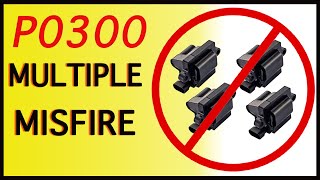
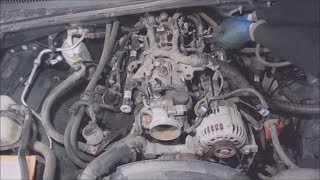
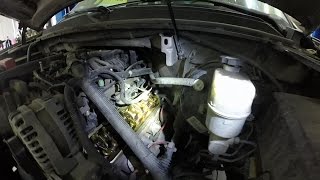
🎬 See how to fix multiple coils not firing.Diagnostic Flowchart
Tap your situation to follow the diagnostic path that matches what you're seeing on this vehicle.
Symptoms You May Notice
- Rough or shaking idle
- Hesitation or stumbling during acceleration
- Flashing or solid Check Engine Light
- Noticeable loss of engine power
- Reduced fuel economy
- Engine may be hard to start
- Ticking, chirping, or squealing noise from the engine, which can indicate a worn cam lobe or failing lifter
- Replacing only one spark plug or coil when a full tune-up is needed.
- Replacing oxygen sensors when high fuel trims are actually caused by a vacuum leak from the intake manifold gaskets.
- Replacing the Mass Airflow (MAF) sensor without first checking for vacuum leaks, which are far more common on these engines.
- Assuming a P0300 after an intake gasket replacement is a new problem, when it is often caused by an installation error, such as a pinched wire or an improperly seated gasket.
Most Likely Causes

- Worn Spark Plugs and/or Wires 🔴 High Probability These are standard maintenance items that wear out over time. As work vehicles, many Express vans accumulate high mileage, making wear and tear on ignition components the most likely starting point. Old wires can develop high resistance, leading to a weak spark.
How to confirm: Inspect spark plugs for wear, fouling, or incorrect gap. Test spark plug wires with a multimeter for resistance; high resistance indicates they are faulty. A visual inspection may reveal cracks or carbon tracking on plug boots.
Typical fix: Replace all spark plugs and spark plug wires as a set. Use of OEM-spec parts like ACDelco is recommended.
Est. part cost: $80-$200 - Leaking Intake Manifold Gaskets 🟡 Medium Probability The plastic/rubber intake manifold gaskets on GM's V8 engines are a very common failure point, known to harden, crack, and fail over time, creating a vacuum leak. This is a prevalent issue on the 4.8L, 5.3L, and 6.0L engines used in the Express and its platform mates.
How to confirm: With the engine running, spray short bursts of brake cleaner or use unlit propane from a torch around the seam where the intake manifold meets the cylinder heads; a change in engine idle indicates a leak. A smoke test is the most definitive method. High positive long-term fuel trims (e.g., >+15%) at idle that decrease at higher RPMs are also a strong indicator.
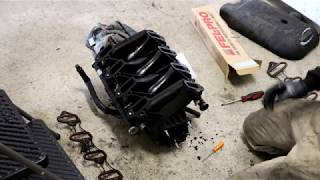
Typical fix: Replace the intake manifold gaskets. It is also recommended to replace the throttle body gasket at the same time. A popular aftermarket option is from Fel-Pro (e.g., MS98016T), while the GM OEM part is 19207929.
Est. part cost: $50-$150 - Faulty Ignition Coil(s) or Ground Issue 🟡 Medium Probability Each cylinder has its own coil. While reliable, heat and vibration can cause them to fail. More specific to these vans, a corroded or broken ground wire for an entire bank of coils can cause four cylinders to misfire, triggering a P0300. This ground is often located on the rear of the cylinder head.
How to confirm: Use a scan tool to check for misfire counts on specific cylinders. Swap a suspected bad coil with a known good one from another cylinder and see if the misfire follows the coil. Check for 12V power at the pink wire on the coil connectors. Inspect and clean the main ground wires for the coil banks.
Typical fix: Replace the faulty ignition coil. If a ground wire is broken or corroded, it must be cleaned and repaired to restore a solid connection.
Est. part cost: $40-$80 per coil - Worn Camshaft Lobe / Faulty Lifter (AFM) ⚪ Low Probability As cited in multiple GM TSBs (e.g., #PIP4138R, 19-NA-219), V8 engines with Active Fuel Management (AFM), like the 5.3L and 6.0L, are susceptible to lifter failure. A lifter can become stuck or collapse due to issues like oil aeration or internal wear, which then quickly wears down the corresponding lobe on the camshaft, preventing the valve from opening correctly.
How to confirm: This is an advanced diagnosis. Listen for a persistent top-end ticking or chirping noise. A compression test may show low compression on an AFM cylinder (1, 4, 6, or 7). Final confirmation requires removing the valve covers to inspect valve movement and, ultimately, the camshaft itself.
Typical fix: Requires replacement of the camshaft, all lifters (often with an AFM-delete kit), and related gaskets. This is a major and expensive engine repair.
Est. part cost: $500-$1500+ - Fuel System Issues (Injectors, Pump, Filter) ⚪ Low Probability Dirty or clogged fuel injectors are a common cause of misfires on many Chevy vehicles. A weak fuel pump or clogged fuel filter can also reduce fuel pressure, causing a lean condition and misfires across all cylinders, especially under load.
How to confirm: Perform a fuel pressure test at the fuel rail to check the health of the pump and filter. Clogged injectors can sometimes be identified by analyzing fuel trims or performing an injector balance test with a capable scan tool.
Typical fix: Replace the fuel filter first as it's an inexpensive maintenance item. If pressure is still low, the fuel pump may need replacement. Clogged injectors may be cleaned or replaced.
Est. part cost: $20 (filter) - $400+ (pump)
Rare But Worth Checking
- Clogged Catalytic Converter: A clogged exhaust can create excessive backpressure, leading to misfires. This is often a consequence of long-term misfires, not the initial cause. You may see other codes like P0420 or P0430.
- Faulty Crankshaft Position Sensor (CKP): While this sensor usually has its own trouble code (like P0315), a failing one can send erratic signals to the ECM, causing misfire detection issues. A 'CASE relearn' procedure using a bi-directional scan tool is required after replacement. Attempting a manual relearn via drive cycles is not reliable on these newer models.
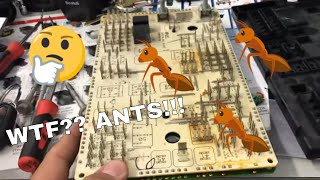
- Under-hood Fuse Block Electrical Issues: Some Chevy Express vans are known for issues within the under-hood fuse block, where a poor internal connection or corrosion can cut power to an entire bank of ignition coils or injectors, causing multiple cylinders to misfire at once. Tapping on the fuse box may cause the engine to change behavior, indicating an internal fault.
Diagnosis Steps
- Check for any other stored DTCs. Codes like P0171/P0174 strongly suggest a vacuum leak. Injector circuit codes point to an electrical issue.
- Inspect all spark plugs, wires, and ignition coils. Look for obvious wear, damage, or corrosion. Test wire resistance.
- Check fuel trims with a scan tool. High positive numbers at idle (e.g., >+15%) that improve with RPM point towards a vacuum leak.
- Inspect engine grounds, especially the ground wires for the ignition coil banks, which are typically located on the cylinder heads.
- Perform a fuel pressure test to rule out a weak fuel pump or clogged filter.
- Test for vacuum leaks using a smoke machine or by carefully spraying carb cleaner around the intake manifold gaskets.
- If a specific cylinder is suspected, perform a compression test to check for mechanical engine health.
- If a ticking noise is present and other tests are inconclusive, investigate the valvetrain for a potential worn camshaft and lifters, as per TSBs #PIP4138R and #19-NA-219.
Parts You'll Likely Need

- Spark Plug Wire Set
(OEM #ACDelco 9748UU)— Wires are a primary wear item and a leading cause of misfires. High resistance in old wires leads to a weak spark.
Trusted brands: ACDelco, NGK, Standard Motor Products
OEM price range: $60-$90
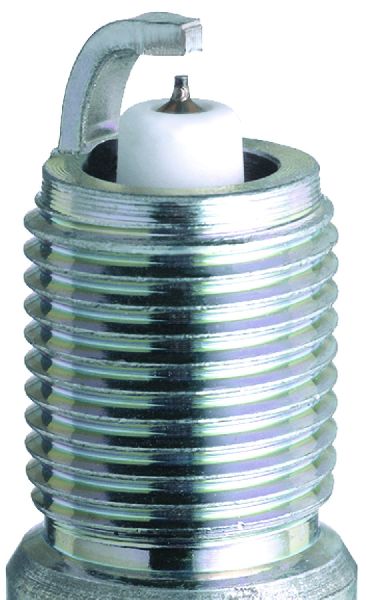
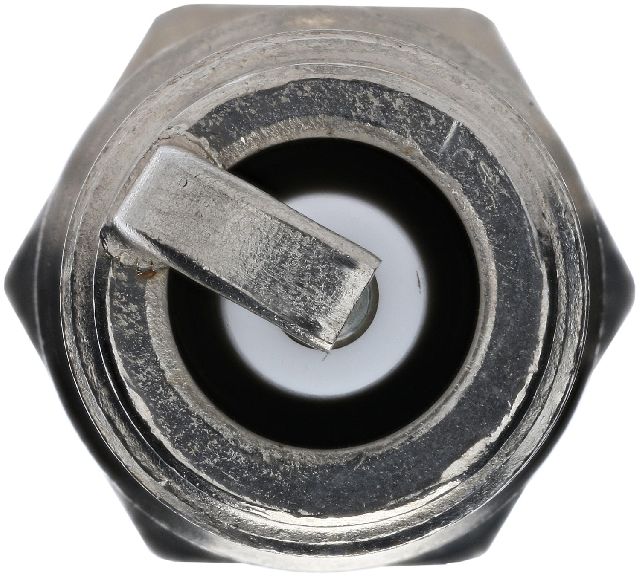
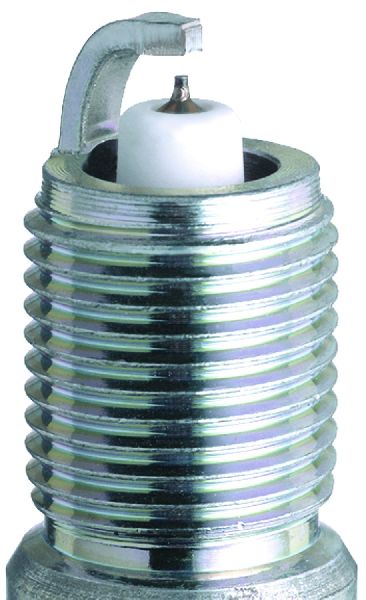
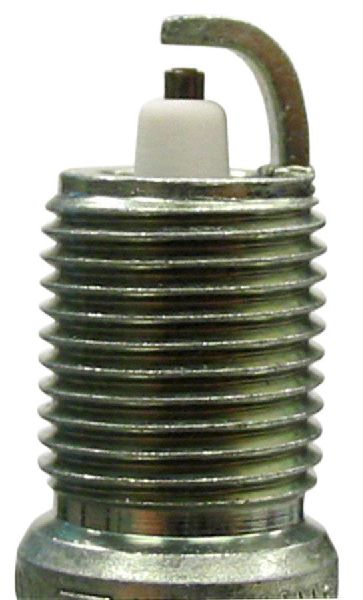
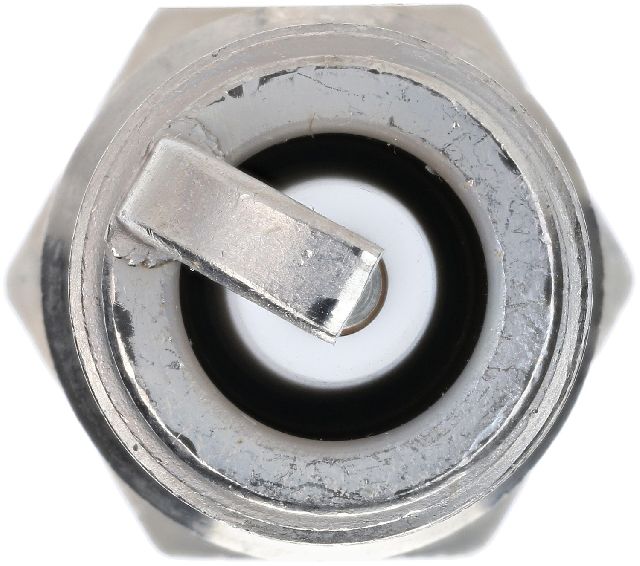
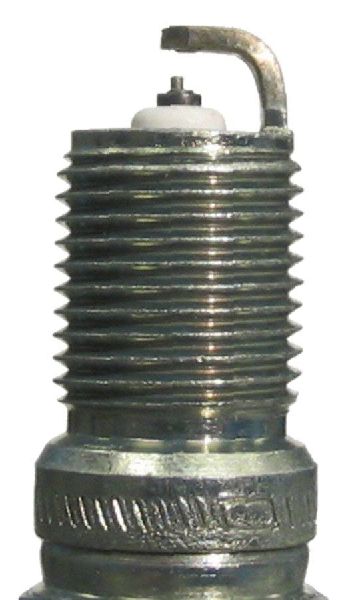
Aftermarket price range: $40-$70 - Iridium Spark Plugs
Related Codes That Often Appear With This One
- P0301-P0308 — If the misfire becomes consistent on one cylinder, the general P0300 code will be accompanied by a specific cylinder code (e.g., P0301 for Cylinder 1). This can point towards a failing coil or a mechanical issue like a bad lifter.
- P0171 / P0174 — These codes indicate a 'System Too Lean' condition on Bank 1 and Bank 2, respectively. They frequently appear with P0300 when the root cause is a vacuum leak, such as a bad intake manifold gasket.
- P0201-P0208 — These are injector circuit codes. If an entire bank of these codes appears (e.g., P0201, P0203, P0205, P0207), it strongly suggests a power or ground issue to that bank of injectors, possibly from the fuse block.
Technical Service Bulletins (TSBs) & Recalls

- PIP4138R: Addresses engine misfire and noise, pointing to worn camshaft lobes and/or lifter issues when other diagnostics fail.
- PIP5628G: Preliminary information for diagnosing P0300-P0308 codes.
- 19-NA-219: Details various causes for misfires and engine noises, including worn cam lobes, sticking valves, and collapsed AFM lifters as potential culprits for P0300.
- PIP4568P (Superseded): Discusses misfires on AFM cylinders (1, 4, 6, 7) due to stuck or collapsed lifters, leading to P0300.
Platform-Specific Known Issues
- Worn Camshaft Lobes: TSB #PIP4138R notes that a worn camshaft and/or lifters can cause P0300-P0308 codes. This is a significant mechanical failure requiring extensive repair.
- Active Fuel Management (AFM) Lifter Failure: On 5.3L and 6.0L engines with AFM, the specialized lifters are a common failure point. They can collapse or stick, leading to misfires and eventual camshaft damage.
- Intake Manifold Gasket Leaks: The design of the intake gaskets makes them prone to drying out and cracking, causing a significant vacuum leak that is a very common cause for P0300 on these vans.
Mechanic-Grade Diagnostic Values
- Ignition Coil Primary Winding Resistance — expected: 0.5 to 0.9 Ohms. Failure: A reading outside this range, especially 0 or infinite (OL), indicates a bad coil.
- Ignition Coil Secondary Winding Resistance — expected: 5,000 to 10,000 Ohms (5k-10k Ω). Failure: A reading significantly outside this range suggests the coil's secondary winding has failed.
- Fuel Pressure (Key On, Engine Off) — expected: 55-62 PSI. Failure: Pressure below this range indicates a weak fuel pump, clogged filter, or leak.
- Short-Term Fuel Trim (STFT) at Idle with Vacuum Leak — expected: Highly positive (e.g., > +15%). Failure: This indicates the ECM is adding a large amount of fuel to compensate for unmetered air. The trim will typically drop towards 0% when RPMs are raised.
Hidden / Shadow Codes Worth Checking
- Misfire History Data (not a DTC): A function within a professional scan tool (like a Tech2) that shows a cumulative count of misfires per cylinder, even if they weren't frequent enough to set a specific P030x code. This is invaluable for identifying which cylinders are the primary offenders in a P0300 situation. (see via Use a GM Tech2 or equivalent professional scan tool and navigate to the Misfire Data or Misfire Graph section within the engine control module data.)
Scan Tool Commands That Help
- GM Tech2 / GDS2 or equivalent: Crankshaft Position (CKP) Variation Learn — This procedure is mandatory after replacing the Crankshaft Position Sensor, the ECM, or sometimes after major engine work. Failure to perform the 'CASE relearn' can cause the ECM to incorrectly interpret crankshaft speed variations and falsely detect misfires, setting a P0300 or P0315 code.
- GM Tech2 / GDS2 or equivalent: Misfire History / Misfire Graph — When only a P0300 is present, this function helps pinpoint which specific cylinder(s) are contributing the most misfires, guiding diagnosis toward a specific coil, plug, wire, or injector instead of a whole-engine problem.
- GM Tech2 / GDS2 or equivalent: Injector Balance Test — To identify a clogged or failing fuel injector. The tool commands each injector to fire for a set duration and measures the corresponding drop in fuel pressure, allowing comparison between cylinders.
Wiring & Ground Locations

- G103 — On the front of the passenger side (right-hand) cylinder head.. This is a primary engine-to-chassis ground. A poor connection here can cause a host of electrical issues, including erratic sensor readings and weak ignition performance that can contribute to random misfires. A GM service bulletin for other electrical issues specifically calls out ensuring G103 is clean and tight.
- G104 — On the rear of the driver's side (left-hand) cylinder head.. This is a critical ground point, often grounding an entire bank of ignition coils. Corrosion or a loose connection at G104 is a known cause for multiple cylinders on one bank to misfire simultaneously, directly leading to a P0300 code.
- Ignition Coil Power Supply — The pink wire at each ignition coil connector. Power is supplied via a fuse in the under-hood fuse block (e.g., Fuse 55 on some '09 models).. If an entire bank of coils is not firing, a common cause is a loss of the 12V power supply to that bank. This can be due to a blown fuse or a fault within the under-hood fuse block itself, rather than a bad ground.
Real Owner Repair Stories
- Chevy Express Forum user (2007 Chevy Express 3500, 57,000 miles) — Persistent P0300 with steady Check Engine Light.
❌ Tried (didn't work) Replaced downstream O2 sensor., Full tune-up (plugs, wires)., Professional injector cleaning., Replaced MAF sensor., Cleaned throttle body., Replaced Crankshaft Position Sensor (CKP) with non-OEM part, then again with OEM part., Multiple CKP relearn procedures., Cleaned ECU ground., Replaced Camshaft Position Sensor (CPS).
✅ What actually fixed it The dealer eventually diagnosed a P0334 (CKP/CPS mismatch) and recommended a timing chain replacement. The owner later found and fixed a P0449 (EVAP Vent Control Solenoid) and replaced the Fuel Tank Pressure (FTP) sensor, which required dropping the fuel tank. After this fuel system work and adding a bottle of GM Techron, the issue was resolved, suggesting the misfire was fuel-system related despite the many ignition and sensor parts replaced.
"I Checked Everything" — The Actual Cause
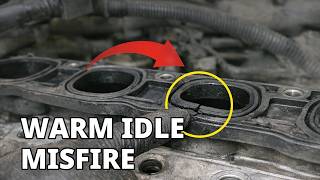
- In some cases, a smoke test may not reveal a leak if the crack in the intake manifold gasket only opens up when the engine is hot and materials have expanded. The misfire may only appear after the engine reaches operating temperature, while it runs smoothly when cold. This is because the cold engine runs in 'Open Loop' with a richer fuel mixture that masks the lean condition.
- Smoke appearing from the oil dipstick tube during a smoke test is not necessarily a sign of a major problem. If an intake valve is open, smoke can travel past the piston rings into the crankcase and vent through the dipstick tube. This can be normal, especially if it takes a few minutes to appear. A true intake gasket leak into the lifter valley would likely show smoke much faster.
Model Year Variations Within This Range
- 2010+: On models from 2010 and newer, a manual 'drive cycle' relearn for the Crankshaft Position Sensor is not a reliable method. A proper 'CASE relearn' using a scan tool command is required to prevent false misfire detection.
Helpful Videos


We Have This Part in Stock

The information in this article is provided for general reference and educational purposes only. Vehicle specifications, procedures, and part compatibility can vary by production date, trim level, and region. Always consult your vehicle's factory service manual and verify part numbers before purchasing or performing repairs. Safety-critical components such as airbags, seat belts, and braking systems should be installed by a qualified professional.
- Chevrolet EXPRESS:
- 🎬 Helpful Videos
- 🛍️ Shop This Part
- What's Unique About the 2009-2013 Chevrolet EXPRESS
- Diagnostic Flowchart
- Symptoms You May Notice
- Most Likely Causes
- Rare But Worth Checking
- Diagnosis Steps
- Parts You'll Likely Need
- Related Codes That Often Appear With This One
- Technical Service Bulletins (TSBs) & Recalls
- Platform-Specific Known Issues
- Mechanic-Grade Diagnostic Values
- Hidden / Shadow Codes Worth Checking
- Scan Tool Commands That Help
- Wiring & Ground Locations
- Real Owner Repair Stories
- "I Checked Everything" — The Actual Cause
- Model Year Variations Within This Range
- 🎟️ Get 5% Off