

P0300 on 2013-2020 Chevrolet Equinox: Random Misfire Causes & Fixes
P0300 on a Chevy Equinox indicates a random engine misfire. On 2013-2017 models with the 2.4L engine, this is often due to oil-fouled spark plugs from excessive oil consumption. On 2018-2020 turbo models, it's commonly caused by moisture in the charge air cooler. Basic fixes like spark plugs are under $100, while engine or turbo system repairs can exceed $1,500.
- P0300 means your Equinox has a random misfire that needs prompt attention.
- If the check engine light is flashing, stop driving immediately to avoid destroying your catalytic converter.
- For 2013-2017 2.4L models, the most likely cause is related to oil consumption fouling the spark plugs.
- For 2018-2020 turbo models, the cause is often moisture in the charge air cooler, a known issue with a specific fix from GM.
- Start your diagnosis with the simple and cheap items: check oil level, inspect spark plugs, and test ignition coils.
What's Unique About the 2013-2020 Chevrolet EQUINOX

The 2013-2020 Chevrolet Equinox spans two distinct generations with different primary causes for a P0300 code. The second generation (2013-2017) with the 2.4L Ecotec engine is widely known for excessive oil consumption issues, which foul spark plugs and lead to misfires. 🎬 Watch: Diagnosing 2.4L oil consumption and misfire codes. This is often linked to stuck piston rings and a poorly designed PCV system. The third generation (2018-2020) introduced turbocharged engines (1.5L, 2.0L) that have a documented issue with moisture collecting in the charge air cooler (CAC), which can be drawn into the engine and cause a random misfire, especially after driving in rain or high humidity, as detailed in GM TSB 18-NA-020.
Diagnostic Flowchart

Tap your situation to follow the diagnostic path that matches what you're seeing on this vehicle.
Generation note: The 2013-2020 range covers the second generation (2013-2017) and the third generation (2018-2020). The 2nd gen primarily used a 2.4L I4 or 3.6L V6, with the 2.4L being prone to oil consumption issues. The 3rd gen uses smaller turbocharged engines (1.5L, 2.0L) and a 1.6L diesel, which have different common failure points like the charge air cooler.
Symptoms You May Notice
- Rough or shaky idle
- Engine hesitation or stumbling during acceleration
- Flashing or solid Check Engine Light
- Reduced engine power
- Poor fuel economy
- Stalling
- Engine backfires
- Service StabiliTrak warning light may appear simultaneously
- Replacing only spark plugs without addressing the root cause of fouling, such as oil consumption on the 2.4L engine or a fuel injector issue.
- Replacing oxygen (O2) sensors, which typically do not cause a P0300 code directly but may be flagged as a consequence of the misfire.
- Replacing the mass airflow (MAF) sensor without proper diagnosis, as vacuum leaks or other issues are more common.
Most Likely Causes

- Worn or Fouled Spark Plugs 🔴 High Probability On 2.4L engines, excessive oil consumption can foul plugs with oil and carbon deposits, preventing a proper spark. On all engines, spark plugs are a regular wear item that should be replaced at recommended intervals.
How to confirm: Remove and inspect the spark plugs. Look for black, sooty, or wet oily deposits (oil fouling), or a worn-down electrode. A golden-brown look is normal.
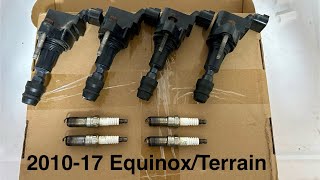
Typical fix: Replace all spark plugs. Use high-quality Iridium plugs for best performance and longevity, such as ACDelco 41-108 for the 2.4L or 41-109 for turbo models.
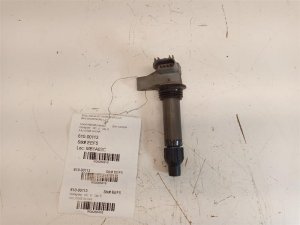
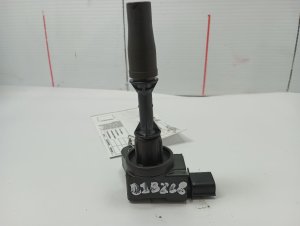
Est. part cost: $40-$100 - Faulty Ignition Coils 🔴 High Probability Ignition coils can fail from heat and age. Using cheap, unbranded replacement coils is a known cause of repeat failures.
How to confirm: Use a scan tool to view live misfire data to see if misfires are concentrated on one cylinder, even with a P0300 code. Swap the suspected bad coil with a known good one from another cylinder. If the misfire follows the coil (e.g., P0302 becomes P0304 after swapping coils from cylinders 2 and 4), the coil is bad.
Typical fix: Replace the faulty ignition coil. It is highly recommended to use OEM (ACDelco) or reputable aftermarket brands to avoid premature failure. For the 1.5L Turbo, the part number is often ACDelco 12697989.
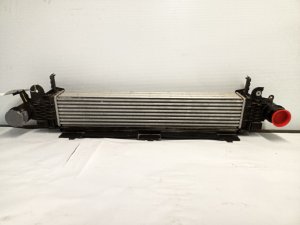
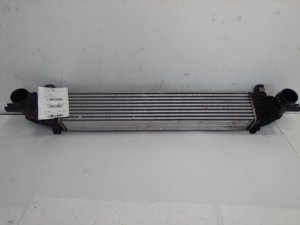
Est. part cost: $50-$120 per coil - Moisture in Charge Air Cooler (Turbo Engines) 🔴 High Probability On 2018-2020 models with 1.5L and 2.0L turbo engines, moisture can accumulate in the charge air cooler during long drives in high humidity or rain. A sudden acceleration can pull this water into the engine, causing a misfire. This is a known issue documented in GM TSB 18-NA-020.
How to confirm: This issue is diagnosed based on the conditions when the code sets (rain/humidity, extended highway driving) and by checking for the presence of related TSBs. A technician may need to inspect the charge air cooler system for water.
Typical fix: GM has issued several corrective actions under TSB 18-NA-020, which may include replacing the charge air cooler with an updated design, installing a lower grill shutter, or adding a soft grill cover for use in cold weather or high humidity to prevent over-cooling and condensation.
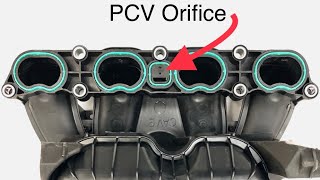
Est. part cost: $200-$500 for a new CAC, plus labor. - Excessive Oil Consumption / PCV Issues (2.4L Engine) 🟡 Medium Probability The 2.4L Ecotec engine is notorious for piston rings that get stuck with carbon, often related to a faulty PCV system, leading to high oil consumption. This fouls spark plugs, causes carbon buildup, and can lead to a P0300 code. The PCV orifice in the intake manifold can clog, increasing crankcase pressure.
How to confirm: Monitor oil levels frequently. If you are adding more than a quart of oil every 2,000-3,000 miles, this is the likely root cause. A compression or leak-down test can confirm poor piston ring seal; results like 120-90-90-180 psi across cylinders indicate a severe internal engine problem.
Typical fix: A temporary fix involves cleaning the PCV orifice in the intake manifold and the breather hose. Some owners perform an overnight 'piston soak' with a product like Seafoam to free stuck rings before an oil change. Installing a vented oil cap (ACDelco FC219) can help relieve pressure as a preventative measure. The permanent fix requires replacing the pistons and rings with updated parts, a major engine repair costing $2,500-$4,000+.
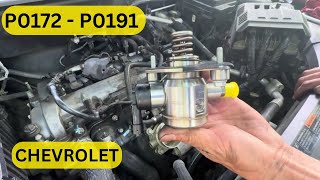
Est. part cost: $10 (PCV cleaning) - $3500+ (piston/ring replacement) - Clogged or Faulty Fuel Injectors 🟡 Medium Probability Fuel injectors can become clogged with carbon deposits over time, especially with direct injection engines, disrupting the fuel spray pattern and causing a lean misfire.
How to confirm: A professional can perform a fuel injector balance test using a high-end scan tool. An AFIT (Active Fuel Injector Tester) is the preferred GM diagnostic tool. Examining the spark plugs can give clues; a white, ashy plug can indicate a lean condition from a clogged injector.
Typical fix: Replace the faulty fuel injector(s). It's often recommended to replace them as a set, especially on high-mileage vehicles.
Est. part cost: $60-$150 per injector, plus labor which can be significant on direct injection engines.
Rare But Worth Checking
- Vacuum Leak: A leak in a vacuum hose or intake manifold gasket can introduce unmetered air, throwing off the air-fuel ratio and causing random misfires, particularly at idle.
- Low Fuel Pressure: A weak fuel pump or clogged fuel filter can starve the engine for fuel, leading to misfires under load. This was suggested as a possible cause in a forum discussion for a miss at low RPMs.
- Stretched Timing Chain or Failed Guide: On the 2.4L engine, timing chain issues can cause camshaft correlation problems, leading to misfires. This is often accompanied by a distinct rattling noise on startup and may set other timing-related codes like P0016 or P0017.
- Clogged Catalytic Converter: While a misfire can damage a catalytic converter, a clogged converter can also create excessive exhaust backpressure, leading to misfires. This is often accompanied by code P0420 (Catalyst System Efficiency Below Threshold).
- Engine Block Porosity (Cold Start Misfire): GM TSB 18-NA-115 describes a rare condition where porosity in the engine block allows a small amount of coolant to leak into a cylinder when cold, causing a misfire (P0300) that disappears as the engine warms up. Diagnosis requires a cooling system pressure test and borescope inspection. The fix is engine replacement.
Diagnosis Steps

- Read all fault codes with an OBD-II scanner. Note any accompanying codes (e.g., P0299, P0420) as they provide critical clues.
- Check for a flashing check engine light. If flashing, avoid driving to prevent catalytic converter damage.
- For 2.4L engines (2013-2017), immediately check the engine oil level. A low level is a strong indicator of the common oil consumption problem.
- Inspect spark plugs. Remove them and look for signs of wear, heavy carbon, or wet oil deposits which confirm fouling.
- Test the ignition coils. Use a scan tool with live data to identify a consistently misfiring cylinder. Swap that cylinder's coil with a known good one and see if the misfire code follows the coil.
- For turbo engines (2018-2020), consider the weather conditions. If the misfire occurred during or after driving in heavy rain or high humidity, the charge air cooler moisture issue (TSB 18-NA-020) is the prime suspect.
- For 2.4L engines, inspect the PCV orifice in the intake manifold for blockages, a common and often overlooked cause of increased crankcase pressure and oil consumption.
Parts You'll Likely Need
- Spark Plugs — These are a primary wear item and are often the first parts to fail or become fouled, causing a misfire.
Trusted brands: ACDelco, NGK
OEM price range: $60-$100
Aftermarket price range: $40-$80 - Ignition Coil — A common failure point in the ignition system that directly causes misfires.
Trusted brands: ACDelco, Delphi
OEM price range: $80-$120
Aftermarket price range: $50-$90 - Charge Air Cooler — For 2018-2020 turbo models, the original design is prone to moisture buildup, requiring replacement with an updated part as per GM service bulletins.
Trusted brands: ACDelco (OEM)
OEM price range: $300-$500
Aftermarket price range: $200-$400 - Pistons and Piston Rings — For 2.4L engines with severe oil consumption, replacing the pistons and rings is often the only permanent solution.
Trusted brands: ACDelco (OEM), Mahle
OEM price range: $400-$700
Aftermarket price range: $250-$500
Related Codes That Often Appear With This One
- P0301-P0306 — If the random misfire becomes isolated to a specific cylinder, the code will change to reflect that cylinder number (e.g., P0302 for cylinder 2).
- P0299 / P2227 — These codes (Turbocharger Underboost and Barometric Pressure Sensor Performance) often appear with P0300 on turbo models when the cause is moisture freezing or accumulating in the charge air cooler, as noted in TSB #18-NA-020.
- P0420 — This code (Catalyst System Efficiency Below Threshold) can appear because a persistent misfire allows unburnt fuel to enter the exhaust and damage the catalytic converter.
- P050D — This code (Rough Idle After Cold Start) is mentioned alongside P0300 in TSB #PIP5628G, indicating they can be related to a common diagnostic path for misfires.
Technical Service Bulletins (TSBs) & Recalls
- 18-NA-020: Details the diagnosis and correction for moisture buildup in the charge air cooler on 1.5L and 2.0L turbo engines, which causes P0300, P0299, and P2227.
- PIP5628G: A preliminary information bulletin for technicians on gathering data (using scan tools like GDS2 and PicoScope) when diagnosing misfire codes P0300-P0308 and P050D.
- 18-NA-115: Addresses a cold start misfire with P0300 that resolves when warm, potentially caused by engine block porosity allowing coolant into a cylinder.
- GM Bulletin 14882: An older bulletin referenced by owners regarding the PCV system freezing issue on 2.4L engines.
Platform-Specific Known Issues
- 2.4L Ecotec Oil Consumption & PCV System Failure (2013-2017): The most significant issue for the second-generation Equinox is the 2.4L engine's tendency to consume excessive amounts of oil. This is primarily caused by carbon buildup on the piston rings, causing them to stick and lose their seal. A contributing factor is the PCV system's fixed orifice, located inside the intake manifold, which clogs with carbon and sludge. This increases crankcase pressure, exacerbates oil consumption, and can cause the rear main seal to fail. The consumed oil fouls spark plugs, leading directly to a P0300 misfire code. Owners report adding a quart of oil every 1,000-3,000 miles. While some attempt temporary fixes like piston soaks or PCV orifice cleaning, the only permanent repair is an expensive engine rebuild with updated pistons and rings.
- 1.5L/2.0L Turbo Charge Air Cooler (CAC) Moisture Ingestion (2018-2020): The third-generation Equinox with turbo engines is prone to a P0300 misfire caused by an entirely different mechanism. As detailed in GM TSB 18-NA-020, the charge air cooler (intercooler) can accumulate condensation from ambient humidity, especially during long highway drives. When the driver accelerates suddenly, this collected water is pulled into the engine, causing a momentary, violent misfire that sets the P0300 code. In cold weather, this moisture can freeze, restricting airflow and causing other codes like P0299 (Turbo Underboost). GM's solution involves several steps depending on the vehicle's build date and climate, including installing a grill cover to reduce cooling efficiency, or replacing the CAC with an improved design.
Mechanic-Grade Diagnostic Values
- Low-Side Fuel Pressure (Tank Pump) — expected: 53-55 PSI. Failure: Pressure significantly below 50 PSI indicates a weak in-tank fuel pump or clogged filter.
- High-Side Fuel Pressure (Direct Injection Pump) at idle — expected: Around 500 PSI, but can be commanded up to 700+ PSI by the ECM.. Failure: A rapid drop in pressure after shutting off the engine, or long-term fuel trims showing a high negative value (e.g., -20%) as the ECM tries to compensate for a leaking high-pressure pump.
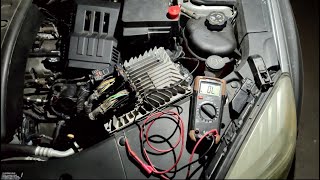
- ECM/PCM Ground Circuit Resistance — expected: Less than 1.0 ohm. Failure: Higher resistance indicates a poor ground connection, which can cause erratic sensor readings and misfires. Test from the PCM connector pin to the negative battery terminal.
- Compression Test (1.5L Turbo) — expected: Approximately 200-215 PSI per cylinder. Failure: Significant variation between cylinders or readings below specification can indicate mechanical engine damage.
Hidden / Shadow Codes Worth Checking
- P0302 (in OBD-II) vs P0300 (in manufacturer-enhanced data): A specific cylinder misfire code (like P0302) may be stored in the generic OBD-II data while a more general random misfire code (P0300) is stored in the manufacturer-specific data. This can happen when one cylinder is the primary culprit but others are also misfiring intermittently. (see via A professional scan tool capable of reading both generic OBD-II and GM-specific manufacturer codes.)
Scan Tool Commands That Help
- GDS2 / Professional Scan Tool: Misfire Data / Misfire History — This is a critical first step. Viewing live and historical misfire counts for each cylinder can quickly show if a P0300 is truly random or heavily biased towards one or two cylinders, guiding the diagnosis towards a specific coil, plug, or injector.
- GDS2 / Professional Scan Tool: Fuel Injector Balance Test — Used to identify a clogged or faulty fuel injector. The tool commands each injector to flow for a set amount of time, and the resulting pressure drop is measured. Inconsistent drops point to a problematic injector.
- GDS2 / Professional Scan Tool: Cylinder Power Balance — This function disables one cylinder at a time and measures the corresponding drop in engine RPM. A cylinder that causes a smaller RPM drop when disabled is contributing less power, indicating a potential misfire-related issue.
Wiring & Ground Locations
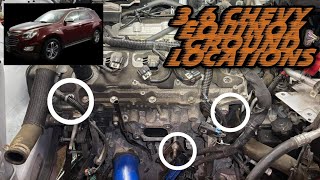
- G112 (2.4L Engine) — Location for the two main PCM grounds on the 2.4L engine.. A poor connection at this ground point can cause the PCM to receive incorrect sensor data or send weak signals to the ignition coils, leading to random misfires that are difficult to trace.
- G103 — Located at the left rear of the engine compartment on the cowl, above the brake booster.. This ground serves the Body Control Module (BCM) and Data Link Connector (DLC). While not a direct cause of misfire, a poor connection here can cause communication issues with scan tools, hindering diagnosis.
- G105 — Located at the left front of the engine compartment, behind the cooling fan relays.. Grounds several components in the engine bay. While not directly tied to the ignition system, poor engine bay grounds can introduce electrical noise that may affect sensor readings.
- PCM Connector Pins (2.4L) — The large black and white wires in the top left terminal of the gray and black PCM connectors.. These are the specific pins to probe when performing a resistance test on the PCM ground circuit to verify its integrity.
Real Owner Repair Stories
- YouTube user comment (2012 Chevy Equinox) — P0300 code with 11-16 misfires per cylinder logged over ~100 miles. No other codes were present.
❌ Tried (didn't work) Replaced all spark plugs, Replaced all ignition coils, Replaced MAP sensor, Cleaned Mass Air Flow (MAF) sensor, Cleaned Throttle Position Sensor
✅ What actually fixed it Using a bottle of 'Gum Out Multi System Tune-up' fuel system cleaner in the gas tank. The user drove 600+ miles after the treatment with no return of the fault code, suggesting the issue was likely caused by dirty fuel injectors. - Reddit user r/AskAMechanic (2019 Equinox 1.5L Turbo AWD) — Started with a misfire on cylinder 1, then progressed to P0300 after replacing the first plug/coil. Thick white, acrid smoke from exhaust. All 4 spark plugs were coated in oil. Significant puffs of air from oil cap/dipstick tube.
❌ Tried (didn't work) Replacing spark plug and coil on cylinder 1, Replacing all remaining spark plugs
✅ What actually fixed it The user's detailed symptoms (oil on all plugs, significant crankcase pressure, oil in the air intake originating from the PCV line before the turbo) strongly point towards a failure of the PCV system or internal engine damage (like piston rings) causing excessive blow-by and oil contamination of the intake tract, leading to the misfires. The final fix was not posted, but the diagnosis points away from a simple ignition problem.
OEM Part Supersession History
12611828→12616006, then 12634977— Standard part updates over the vehicle's production life.
Heads up: All three part numbers for the 2.4L Ecotec engine cover are functionally identical and interchangeable.12620540→41-108— Part number update for ACDelco Iridium spark plugs for the 2.4L engine.
Model Year Variations Within This Range
- 2018-2020: The 2018 model year marked a major redesign. The previous 2.4L I4 and 3.6L V6 engines were replaced entirely with a new lineup of smaller, turbocharged engines (1.5L Turbo, 2.0L Turbo, and a 1.6L Turbo Diesel). This change is critical for P0300 diagnosis, as the common causes shifted from oil consumption/PCV issues on the 2.4L to issues like moisture in the charge air cooler on the new turbo engines.
- 2018-2020: The 2018+ models introduced a driver-selectable AWD system on some trims, allowing the driver to switch between FWD and AWD to save fuel, a feature not present on the 2013-2017 models. While not directly related to P0300, it is a key generational difference.
Helpful Videos



We Have This Part in Stock



The information in this article is provided for general reference and educational purposes only. Vehicle specifications, procedures, and part compatibility can vary by production date, trim level, and region. Always consult your vehicle's factory service manual and verify part numbers before purchasing or performing repairs. Safety-critical components such as airbags, seat belts, and braking systems should be installed by a qualified professional.
- Chevrolet EQUINOX:
- 🎬 Helpful Videos
- 🛍️ Shop This Part
- What's Unique About the 2013-2020 Chevrolet EQUINOX
- Diagnostic Flowchart
- Symptoms You May Notice
- Most Likely Causes
- Rare But Worth Checking
- Diagnosis Steps
- Parts You'll Likely Need
- Related Codes That Often Appear With This One
- Technical Service Bulletins (TSBs) & Recalls
- Platform-Specific Known Issues
- Mechanic-Grade Diagnostic Values
- Hidden / Shadow Codes Worth Checking
- Scan Tool Commands That Help
- Wiring & Ground Locations
- Real Owner Repair Stories
- OEM Part Supersession History
- Model Year Variations Within This Range
- 🎟️ Get 5% Off