

P0300 on 2013-2020 Chevrolet Corvette: Random Misfire Causes and Fixes
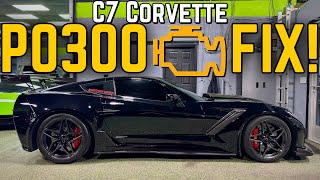
P0300 on a 2013-2020 Corvette indicates random cylinder misfires. The most common causes are worn spark plugs and wires, often accelerated by high-performance use. Vehicle-specific issues include a bad batch of valve springs on some 2020 models (TSB #PIP5752M), air in the supercharger cooling system on C7 Z06/ZR1 models after service (TSB #17-NA-408), and potential false misfires caused by torque tube vibrations.
- P0300 is a random misfire code; start your diagnosis with the basics: spark plugs and wires, which are common wear items.
- For C7 Z06/ZR1 models, especially after service, be aware of TSB #17-NA-408. The misfire may be caused by air in the supercharger cooling system, not bad ignition parts.
- For 2020 C8 models, listen for engine noise. TSB #PIP5752M points to potential valve spring failures as a cause for P0300.
- A flashing check engine light is serious. Avoid heavy acceleration and have the vehicle serviced promptly to prevent catalytic converter damage.
What's Unique About the 2013-2020 Chevrolet CORVETTE

The 2013-2020 Corvette range spans three distinct generations (C6, C7, C8) with different V8 engines (LS and LT series). High-performance driving can accelerate wear on ignition components. Specific known issues contribute to this code, such as air trapped in the supercharger's cooling system on C7 Z06/ZR1 models (LT4/LT5 engines) and a bad batch of valve springs affecting some 2020 C8 models (LT2 engine), as documented in official GM Technical Service Bulletins. Additionally, C7 models can suffer from collapsed Active Fuel Management (AFM) lifters and vibrations from worn torque tube couplers that the crankshaft sensor can misinterpret as a misfire.
Diagnostic Flowchart
Tap your situation to follow the diagnostic path that matches what you're seeing on this vehicle.
Generation note: This range covers the last year of the C6 (2013, LS-series engines), the full C7 generation (2014-2019, LT-series engines), and the first year of the C8 (2020, LT2 engine). Causes can vary; for example, supercharger-related issues are specific to C7 Z06/ZR1 models, documented valve spring issues are linked to some 2020 C8s built between June and September 2020, and torque tube issues are a known potential cause on C6 and C7 models.
Symptoms You May Notice
- Flashing or solid Check Engine Light
- Rough or unstable idle
- Engine hesitation or stumbling during acceleration
- Noticeable loss of power
- Engine shaking or vibrating
- Increased fuel consumption
- Backfiring or popping from the exhaust
- Unusual ticking or mechanical noise from the engine bay
- Replacing only one spark plug or coil when a full set is due.
- Replacing ignition components on a C7 Z06/ZR1 when the root cause is air in the supercharger cooling system.
- Repeatedly replacing parts ('firing the parts cannon') when the issue is a false misfire caused by torque tube vibrations.
- Assuming a low-mileage car doesn't need spark plugs, as fouling can occur from short trips or sitting over winter.
Most Likely Causes

- Worn Spark Plugs or Defective Spark Plug Wires 🔴 High Probability High-performance engines place greater stress on ignition components. Forum discussions and repair stories are filled with owners who resolved a P0300 by replacing plugs and wires, even on low-mileage cars. Plugs can become fouled from short trips or develop internal cracks not visible to the eye, while wires can have their connections loosen or degrade from heat. A loose wire is a very common culprit.
How to confirm: Inspect spark plugs for wear, fouling (wet with fuel or oil), or cracked porcelain. A cracked plug might not be visibly apparent. Check that spark plug wires are fully seated on both the plugs and coils, as a loose connection is a very common culprit. Wires can be tested for resistance with a multimeter; values are typically in the 250-750 ohm range.
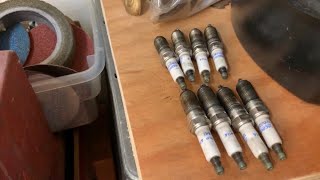
Typical fix: Replace all spark plugs and spark plug wires as a set. It is highly recommended to use high-quality OEM ACDelco parts (e.g., 41-148 for C7 models) 🎬 Watch: Step-by-step guide to changing spark plugs on a C7 for best performance and to avoid issues seen with some aftermarket brands. Ensure wires 'click' into place on both the coil and plug.
Est. part cost: $100-$300 - Air in Supercharger Cooling System (C7 Z06/ZR1) 🟡 Medium Probability Per TSB #17-NA-408, if the supercharger's separate cooling system is serviced and not properly vacuum-filled, trapped air can cause the intercooler pump to cavitate and shut down during high-load driving. This spikes intake air temperatures (IAT2), causing the ECM to pull timing and trigger a P0300, often on the track.
How to confirm: This issue typically occurs on a track or during aggressive driving in high ambient temperatures. A technician can confirm by monitoring IAT2 (Manifold Air Temperature) with a scan tool to see if it spikes above 140°F, and then properly bleeding the system.
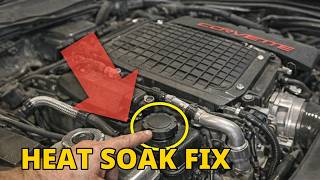
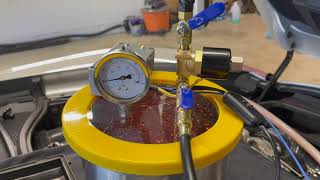
Typical fix: The supercharger cooling system must be properly evacuated and refilled using a vacuum-fill tool (like GM tool GE-47716) to remove all trapped air. 🎬 See how to fix heat soak misfires by bleeding the intercooler This is a specific procedure that a GM dealer or Corvette specialist shop should perform.
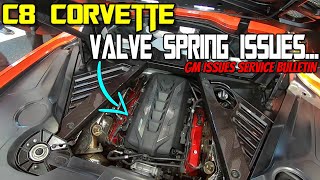
Est. part cost: $0 (labor-only procedure) - Faulty Valve Spring(s) 🟡 Medium Probability TSB #PIP5752M directly links P0300 to a "possible valve spring concern," sometimes accompanied by engine noise. This was a known issue for some 2020 Corvettes built between June 1 and September 15, 2020, due to a bad batch of springs from a supplier. The issue affected multiple GM V8 engines, not just the Corvette's LT2.
How to confirm: Listen for unusual valve train noise. A technician must perform a cylinder leakage test on the affected cylinders. If no leakage is found on a vehicle built within the specified 2020 date range, the TSB instructs to replace all valve springs on both banks.
Typical fix: If a broken spring is found, all valve springs on both cylinder banks should be replaced for vehicles within the affected 2020 production window. For other vehicles, only the broken spring may be replaced. This is a labor-intensive repair covered under warranty for affected vehicles.
Est. part cost: $200-$400 - Faulty Ignition Coil(s) ⚪ Low Probability
How to confirm: With the engine running, carefully unplug the electrical connector to each coil one by one. If unplugging a coil causes no change in the engine's idle, that coil's cylinder is likely the one misfiring. Swap the suspected bad coil with a known good one to see if the misfire follows the coil. A spark tester can also be used to verify spark output from the coil.
Typical fix: Replace the faulty ignition coil. It's often wise to replace the corresponding spark plug at the same time.
Est. part cost: $50-$100 per coil - Clogged or Faulty Fuel Injectors ⚪ Low Probability Direct injection systems on LT-series engines can be sensitive to fuel quality and may suffer from sticking or clogged injectors. In some cases, a single faulty injector has been the cause of a P0300 code.
How to confirm: A professional can perform a fuel injector balance test using a bidirectional scan tool. You can also listen to each injector with a mechanic's stethoscope; a healthy injector will have a consistent clicking sound. A scan tool can also be used to monitor fuel trims, which may indicate an issue.
Typical fix: Replace the faulty fuel injector(s). Sometimes a professional fuel system cleaning or using a quality fuel additive like Techron can resolve minor clogs or sticking.
Est. part cost: $70-$150 per injector
Rare But Worth Checking
- Collapsed Active Fuel Management (AFM) Lifter: On C7 models with AFM, a lifter can become mechanically collapsed or stuck, often due to oil aeration issues. This causes a persistent misfire on one cylinder that may initially present as a P0300, often accompanied by a distinct ticking or knocking noise. TSB #15-06-01-002K addresses this, noting it can lead to bent pushrods and camshaft damage if not addressed.
- Torque Tube Issues: On C6 and C7 models, worn torque tube couplers (bushings) or bearings can create a drivetrain vibration at certain RPMs. The crankshaft position sensor, which is the primary monitor for misfires, can misinterpret this vibration as an engine misfire, falsely triggering a P0300 code. TSB #PIP5067A describes this for 2001-2013 models, but forum members report the same phenomenon on C7s. The tell-tale sign is often misfire counts that appear at idle in Park or Neutral but disappear when the transmission is put in gear, loading the driveshaft.
- Vacuum Leak: A leak in the intake manifold gasket or a cracked vacuum hose can introduce unmetered air, leaning out the air/fuel mixture and causing random misfires. A smoke test is the most effective way to find the source of the leak.
- Crankshaft Position Sensor Variation: Sometimes, the ECM needs to re-learn the precise position of the crankshaft reluctor wheel. If misfires are being logged by a scan tool but are not felt by the driver, a 'Crankshaft Variation Relearn' procedure performed with a dealer-level scan tool can sometimes resolve false P0300 codes.
Diagnosis Steps
- Read all stored fault codes with an OBD-II scanner. Note any codes accompanying P0300.
- Check freeze frame data to see the engine conditions (RPM, load, temperature) when the misfire occurred.
- Visually inspect and physically check all spark plug wires to ensure they are fully seated and 'clicked' on both the plugs and coils. This is a common and simple fix.
- Inspect spark plugs for age, wear, or fouling. Even if they look good, consider replacing them if their age is unknown, as it's a common fix.
- Use a scan tool to view Mode 6 data to see historical misfire counts per cylinder, which can help narrow down a random misfire to a more specific cylinder or bank.
- If misfires are counted at idle but not when in gear, investigate the torque tube couplers for excessive play.
- Perform a 'Crankshaft Variation Relearn' with a capable scan tool if false misfires are suspected.
- Check for vacuum leaks using a smoke machine.
- Test fuel pressure to rule out a weak pump or clogged filter.
Parts You'll Likely Need
- Spark Plugs
(OEM #ACDelco 41-114 (for LT1) or 41-128 (for LT4))— This is the most common wear item that causes misfires. High-performance engines are sensitive to plug condition. Cracked porcelain is a known issue.
Trusted brands: ACDelco, NGK
OEM price range: $10-$20 per plug
Aftermarket price range: $8-$15 per plug - Spark Plug Wires
(OEM #ACDelco 19301299 or 9748HH (set for C7))— Wires can degrade over time, become loose, or get damaged from heat, causing a weak or intermittent spark. Often replaced with spark plugs.
Trusted brands: ACDelco, MSD
OEM price range: $80-$150 per set
Aftermarket price range: $60-$120 per set - Valve Springs
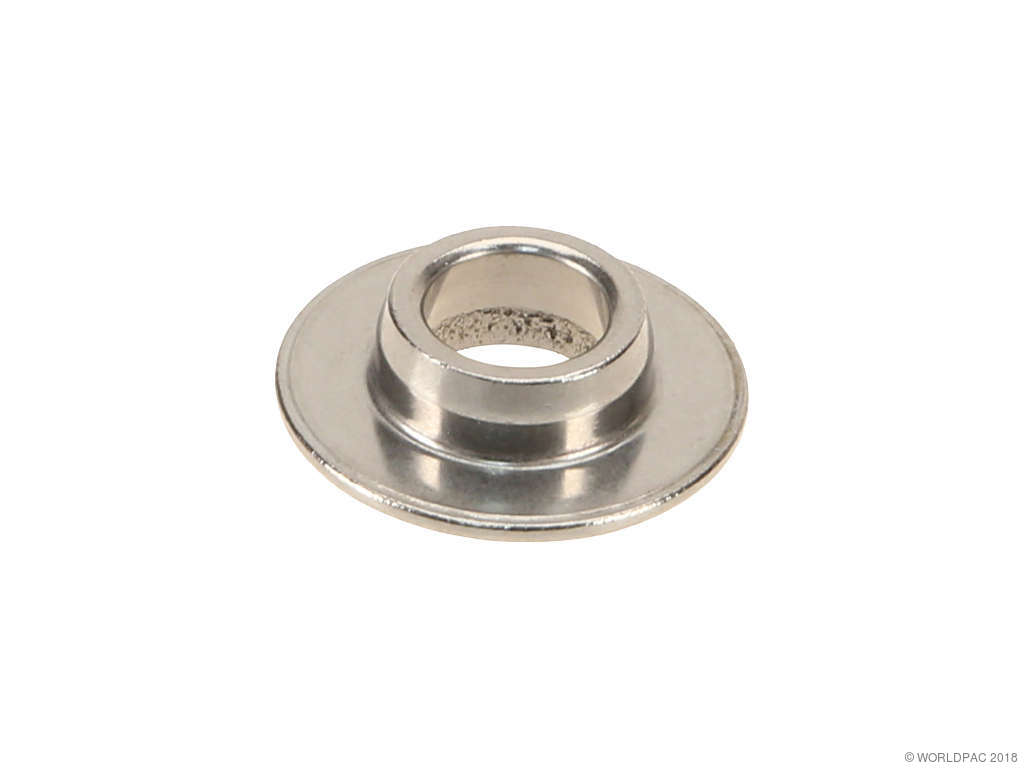
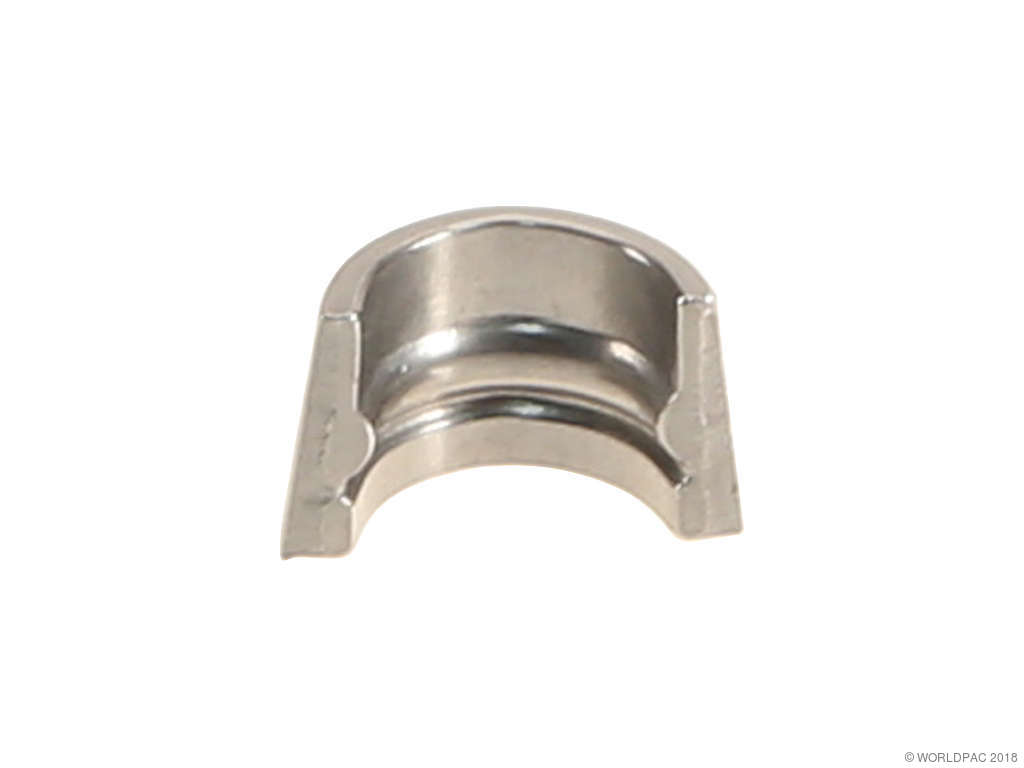
(OEM #12691120)— A known failure point on some 2020 models due to a bad batch from the supplier, as detailed in TSB #PIP5752M.
Trusted brands: ACDelco
OEM price range: $15-$25 per spring
Aftermarket price range: N/A
Related Codes That Often Appear With This One
- P0301-P0308 — These codes indicate a misfire on a specific cylinder (e.g., P0307 for cylinder 7). They often appear with P0300 when the misfire is frequent enough on one cylinder for the ECM to identify it.
- P0106 — Manifold Absolute Pressure (MAP) Sensor Performance. This can be seen with P0300 in cases of valve spring failure, as noted in TSB #PIP5752M.
- P0506 — Idle Air Control System RPM Lower Than Expected. Also associated with valve spring issues per TSB #PIP5752M.
- P050D — Cold Start Rough Idle. This can sometimes accompany a P0300, particularly if fuel injectors or carbon buildup are involved.
Technical Service Bulletins (TSBs) & Recalls

- TSB #PIP5752M: Addresses engine misfire (P0300) and noise on 2020 models due to possible broken valve springs, particularly in vehicles built from June-Sept 2020.
- TSB #17-NA-408: Details the procedure for properly bleeding the supercharger cooling system on LT4/LT5 engines to prevent P0300 caused by high intake air temperatures.
- TSB #15-06-01-002K: Pertains to engine misfire/tick noise from a collapsed or stuck Active Fuel Management (AFM) lifter on C7 models with LT1/LT4 engines.
- TSB #PIP5067A: Describes how worn torque tube couplers can cause false P0300 codes on 2001-2013 Corvettes, a principle that owners report also applies to C7s.
Platform-Specific Known Issues

- 2020 C8 Valve Spring Failure: A batch of defective valve springs installed in 2020 Corvettes (and other GM V8s) built between June 1 and September 15, 2020, can break and cause a P0300 code, often with engine noise. This is documented in TSB #PIP5752M.
- C7 Z06/ZR1 Supercharger Air Bleed: After servicing the intercooler cooling system, trapped air can cause the system to shut down under load, spiking intake air temps and triggering a P0300. This requires a special vacuum-fill procedure outlined in TSB #17-NA-408.
- C7 AFM Lifter Collapse: The Active Fuel Management (AFM) lifters on C7s can collapse or stick, leading to a misfire and a ticking sound. This is a known mechanical issue covered by TSB #15-06-01-002K.
- C6/C7 Torque Tube Vibration: Worn rubber couplers inside the torque tube can create a harmonic vibration that the crankshaft sensor misinterprets as a random misfire, setting a false P0300 code. This often happens at idle and goes away when a load is applied (in gear).
Mechanic-Grade Diagnostic Values
- Long-Term Fuel Trims (LTFT) at idle — expected: Close to 0%, typically within +/- 10%. Failure: Sustained positive fuel trims of 20% or higher on both banks strongly suggest a vacuum leak.
- Upstream Oxygen Sensor Voltage at idle/cruise — expected: Should fluctuate rapidly between approximately 200mV and 800mV (0.2V - 0.8V).. Failure: Stuck low (e.g., well below 450mV) can indicate a lean condition or vacuum leak.
- Spark Plug Wire Resistance — expected: 250-750 ohms per wire.. Failure: Significantly higher resistance or an open circuit (infinite resistance) indicates a bad wire.
Hidden / Shadow Codes Worth Checking
- Mode $06 Data: This is not a specific code, but a diagnostic mode that provides access to test results for non-continuously monitored systems. For P0300, it is invaluable as it contains misfire counts for each individual cylinder, even if they haven't reached the threshold to set a specific P0301-P0308 code. (see via A capable OBD-II scanner with Mode 6 functionality is required. The data is presented as Test IDs (TID) and Component IDs (CID); the scanner must be able to decode this to show misfire counts per cylinder.)
Scan Tool Commands That Help

- GDS2 / Tech 2 / High-End Aftermarket: Crankshaft Position (CKP) Variation Relearn — Use when false misfires are suspected, especially if the misfire counts are high but not felt by the driver. This procedure compensates for minor variations in the crankshaft reluctor wheel and can resolve false P0300 codes after engine work or sensor replacement.
- GDS2 / Autel / High-End Aftermarket: Cylinder Power Balance Test — Use to actively identify which cylinder(s) are contributing less power. The tool sequentially disables fuel or spark to each cylinder and measures the corresponding drop in RPM. A cylinder with a smaller RPM drop is the one misfiring.
- GDS2 / HP Tuners: Misfire History / Misfire Graphic Display — Use to view detailed historical data on which cylinders have misfired, at what RPM, and under what engine load. This is more detailed than Mode 6 and can pinpoint conditions that trigger the misfire.
Wiring & Ground Locations
- G104 / G108 — On the frame rail next to the battery.. This is a primary grounding point for the ECM and other critical sensors. Corrosion or a loose connection here can cause erratic sensor readings and phantom electrical issues, including false misfire codes.
- G105 — On the left lower engine block, serves as an engine ground strap connection point.. A solid engine-to-chassis ground is critical for the ignition system. A poor connection here can weaken spark and lead to misfires.
- G103 — On the left front of the engine.. Another key engine ground point. All engine block grounds should be checked for tightness and corrosion when diagnosing a persistent P0300.
- ECM Ground Pins — Within the ECM connectors. On older models, these are specific pins like D3, D10, and A12 which splice into the main harness and terminate at a ground point like G104.. A fault in the harness or a pin-fit issue at the ECM connector can interrupt the ECM's ground reference, leading to unpredictable behavior including misfire detection.
Real Owner Repair Stories
- CorvetteForum user (C6 Corvette (similar issue applies to C7)) — Persistent P0300 code for 3 months. Car drove fine with no noticeable misfire.
❌ Tried (didn't work) Replaced spark plugs (with correct OEM parts), Replaced spark plug wires, Replaced alternator, Replaced various sensors
✅ What actually fixed it The torque tube couplers were completely worn out. The mechanic was initially hesitant to check them because there was no associated noise, but the excessive play was creating a vibration that the crankshaft sensor misinterpreted as a random misfire. Replacing the torque tube assembly resolved the code. - CorvetteForum user (2007 C6 Corvette Automatic) — P0300 code, transmission jolting and shifting issues.
❌ Tried (didn't work) Replaced engine, Replaced spark plugs and wires, Replaced catalytic converters, Replaced throttle body, Replaced fuel pump
✅ What actually fixed it The root cause was determined to be a transmission fault. When the torque converter would lock up, it created a jolt that momentarily slowed the crankshaft. The crank sensor detected this as a misfire, triggering the P0300. The fix was to diagnose and repair the transmission, not the engine. - YouTube channel HorsePower Obsessed (2019 C7 Corvette ZR1) — P0300 random misfire code.
❌ Tried (didn't work) Initial inspection showed no obvious faults.
✅ What actually fixed it Replacing all eight spark plugs (ACDelco 41-148) and adding dielectric grease to the wire boots resolved the check engine light. The owner noted that this is a very common fix on C7 platforms and that a TSB was supposedly issued regarding issues with the stock plugs.
"I Checked Everything" — The Actual Cause
- A common scenario for a persistent, unfelt P0300 on a Corvette is a worn torque tube coupler. A smoke test for vacuum leaks will come back clean, and ignition/fuel components may test perfectly. The actual cause is drivetrain vibration from the worn coupler being picked up by the crankshaft position sensor and falsely reported as a misfire. A key symptom is having misfire counts appear at idle in Park/Neutral but vanishing once the car is put into Drive, which loads the drivetrain and dampens the vibration.
When the Usual Fixes Don't Work
- In several documented cases, owners have spent thousands of dollars replacing nearly every component of the fuel and ignition system, and in one case the entire engine block, without resolving the P0300 code. The final solution was often found outside the engine itself, pointing to issues like worn torque tube couplers or transmission faults that create vibrations or jolts misinterpreted by the crankshaft position sensor as a misfire. This demonstrates that on this platform, if standard diagnostics (plugs, wires, coils, injectors) do not resolve an unfelt misfire, the next step should be investigating the driveline rather than continuing to replace engine components.
Model Year Variations Within This Range
- 2020: Models built between June 1, 2020, and September 15, 2020, were subject to a TSB (#PIP5752M) for a bad batch of valve springs. For these specific vehicles with an LT2, LT1, LT4, or L87 engine, if one broken spring is found, the procedure is to replace all springs on both banks.
- 2013-2019 (C6/C7): The issue of worn torque tube couplers causing false P0300 codes is officially documented for C6 models (up to 2013) in TSB #PIP5067A. However, owner reports and specialist diagnoses confirm the exact same failure pattern occurs on C7 models (2014-2019), making it a relevant diagnosis for that generation despite the TSB's date range.
- 2015-2019 (C7 Z06/ZR1): Supercharged models (LT4/LT5 engines) have a unique potential cause for P0300 per TSB #17-NA-408: air trapped in the supercharger's dedicated cooling system after service, leading to high intake air temperatures and misfires under load.
Helpful Videos
We Have This Part in Stock


The information in this article is provided for general reference and educational purposes only. Vehicle specifications, procedures, and part compatibility can vary by production date, trim level, and region. Always consult your vehicle's factory service manual and verify part numbers before purchasing or performing repairs. Safety-critical components such as airbags, seat belts, and braking systems should be installed by a qualified professional.
- Chevrolet CORVETTE:
- 🎬 Helpful Videos
- 🛍️ Shop This Part
- What's Unique About the 2013-2020 Chevrolet CORVETTE
- Diagnostic Flowchart
- Symptoms You May Notice
- Most Likely Causes
- Rare But Worth Checking
- Diagnosis Steps
- Parts You'll Likely Need
- Related Codes That Often Appear With This One
- Technical Service Bulletins (TSBs) & Recalls
- Platform-Specific Known Issues
- Mechanic-Grade Diagnostic Values
- Hidden / Shadow Codes Worth Checking
- Scan Tool Commands That Help
- Wiring & Ground Locations
- Real Owner Repair Stories
- "I Checked Everything" — The Actual Cause
- When the Usual Fixes Don't Work
- Model Year Variations Within This Range
- 🎟️ Get 5% Off