

P0300 on 2004-2011 Chevrolet Colorado: Random Misfire Causes and Fixes
On 2004-2011 Colorados, especially early models (2004-2007) with the I4 or I5 engine, a P0300 code is often caused by a serious internal engine issue with valve seats in the cylinder head, requiring a cylinder head replacement. Before suspecting this, first check for simpler causes like worn spark plugs, failing ignition coils, or a faulty VVT solenoid.
- On a 2004-2011 Colorado, P0300 is not a code to ignore and could signal a serious engine problem.
- The most infamous cause for this code on 2004-2007 models is a factory defect with the cylinder head's valve seats.
- A cylinder compression and leak-down test is the most important diagnostic step to rule out the serious head issue before replacing cheaper parts.
- If compression is good, the most likely causes are standard tune-up items: spark plugs and ignition coils.
- Driving with a flashing check engine light can quickly destroy your catalytic converter, adding over $1,000 to the repair bill.
What's Unique About the 2004-2011 Chevrolet COLORADO

For the first-generation Chevrolet Colorado and its platform mates with the Atlas family of engines (2.8L I4, 3.5L I5, 2.9L I4, 3.7L I5), P0300 is a code with a notorious history. Early models, particularly those built before April 2005, were manufactured with cylinder heads that had soft exhaust valve seats. This design flaw, acknowledged by GM in Special Coverage Adjustment #07123, can lead to premature wear and a loss of compression, causing a persistent P0300 misfire that standard tune-ups won't fix. This known issue means a P0300 code on this specific truck, especially if it's an early model year, warrants a more serious initial diagnosis than on many other vehicles.
Diagnostic Flowchart

Tap your situation to follow the diagnostic path that matches what you're seeing on this vehicle.
Symptoms You May Notice
- Rough idle or engine shaking, sometimes only when warm
- Flashing or solid Check Engine Light
- Hesitation or stumbling during acceleration
- Noticeable loss of engine power, especially at highway speeds
- Reduced fuel economy
- Difficulty starting the engine
- A light engine knocking or ticking noise during warm-up or deceleration
- Replacing only spark plugs and coils when the underlying issue is low compression from valve seat failure. This is a common mistake that wastes money and doesn't fix the root cause on these specific trucks.
- Replacing the catalytic converter for a P0420 code without first fixing the P0300 misfire that caused the converter to fail in the first place.
Most Likely Causes

- Worn Valve Guides / Valve Seat Failure 🔴 High Probability A well-documented factory defect on early (2004-2007) Atlas I4 and I5 engines involved improperly hardened exhaust valve seats, leading to accelerated wear and loss of compression. GM issued TSB #07123 and PIP4013D addressing misfires at idle caused by this. The issue was supposedly corrected in the 3.7L LLR engine from 2007 onwards, but owner reports of similar failures exist even in later models.
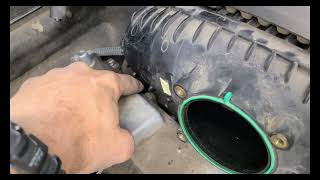
How to confirm: A cylinder compression test is the first step. A healthy cylinder should be ~150-160 PSI or higher; a reading of 120-130 PSI or lower on one or more cylinders is a strong indicator of a problem. 🎬 Watch: How to diagnose low compression on the 3.7L engine. Follow up with a cylinder leak-down test to confirm the leak is past the exhaust valve (air heard hissing from the tailpipe). TSB PIP4013D suggests regulating shop air to 50-60psi for more accurate results on this specific issue.
Typical fix: Replacement of the cylinder head with an updated/remanufactured unit that has hardened valve seats. This is a major repair.
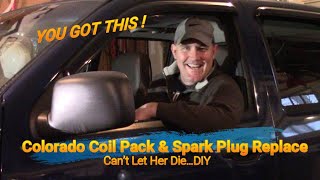
Est. part cost: $500-$1200 - Worn or Fouled Spark Plugs 🟡 Medium Probability Spark plugs are a standard wear item. As they age, the gap widens and electrodes wear out, leading to a weak spark. This is a common cause for misfires on any gasoline engine and should be checked before more complex diagnostics. 🎬 Watch: How to replace coils and spark plugs to fix misfires.
How to confirm: Inspect the spark plugs for wear, carbon fouling, oil, or damage. Ensure they are the correct type (ACDelco Iridium plugs are OEM and highly recommended by owners).
Typical fix: Replace all spark plugs as a set.
Est. part cost: $40-$100 - Faulty Ignition Coils 🟡 Medium Probability These engines use a coil-on-plug ignition system. Heat and age can cause the coils to degrade and fail, producing a weak or inconsistent spark. This is a very common misfire cause.
How to confirm: With the engine misfiring, use a scan tool with live data to see if misfire counts are higher on specific cylinders. Swap a suspected bad coil with a known good one from another cylinder. If the misfire follows the coil (e.g., a P0302 becomes P0304 after swapping coils on cylinders 2 and 4), the coil is bad.
Typical fix: Replace the faulty ignition coil(s). It is often recommended to replace them as a set if they are original and the vehicle has high mileage.
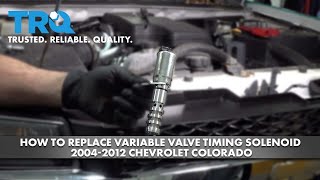
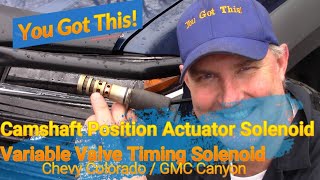
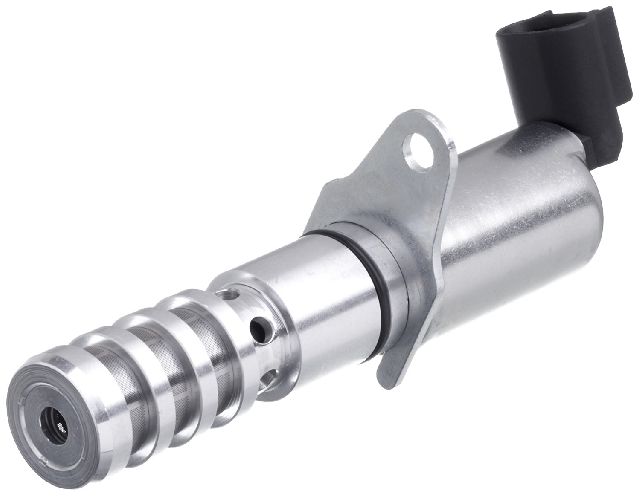
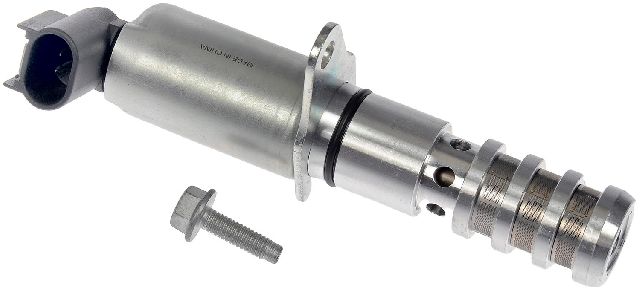
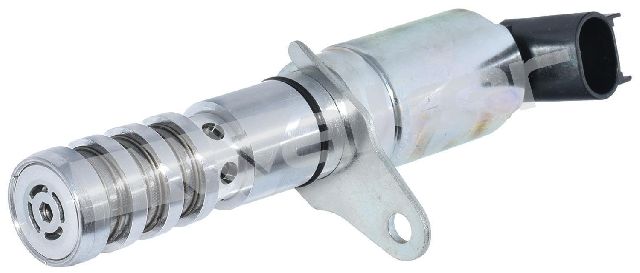
Est. part cost: $30-$70 per coil - Faulty Variable Valve Timing (VVT) Solenoid 🟡 Medium Probability The VVT solenoid (also called a camshaft actuator solenoid) controls oil flow to adjust cam timing. These are known to fail on the Atlas engines. The small filter screens on the solenoid can break off and fall into the oil pan, and the solenoid itself can get stuck, causing erratic cam timing and leading to misfires. 🎬 See why this defective VVT solenoid can ruin your engine.
How to confirm: A failing VVT solenoid often throws its own codes, like P0014 or P0017, but can also just cause a P0300. The part can be removed and inspected for damaged screens. It's a relatively easy part to access and replace for diagnostic purposes.
Typical fix: Replace the VVT solenoid. It is highly recommended to use an OEM ACDelco part, as owners report issues with aftermarket brands.
Est. part cost: $40-$80 - Clogged or Dirty Fuel Injectors ⚪ Low Probability
How to confirm: Perform a fuel injector balance test using a professional scan tool. GM also released TSB #030604030 regarding driveability issues from clogged injectors on these trucks. A fuel system cleaning service can sometimes resolve the issue.
Typical fix: Professional fuel system cleaning or replacement of the clogged injector(s).
Est. part cost: $50-$150 per injector - Vacuum Leak ⚪ Low Probability
How to confirm: Visually inspect all vacuum hoses for cracks or disconnections, paying close attention to the PCV hose that connects the valve cover to the air intake, as it can tear. A smoke test is the most effective way to find a leak; smoke is fed into the intake, and any leaks will be visible.
Typical fix: Replace the leaking hose or gasket. The PCV hose OEM part number is AC Delco 15123628.
Est. part cost: $10-$100
Rare But Worth Checking
- Low Fuel Pressure: Caused by a weak fuel pump or clogged fuel filter. This would typically affect all cylinders and might cause hesitation under load.
- Clogged Catalytic Converter: A clogged exhaust can create backpressure, leading to misfires. This is usually accompanied by a significant loss of power, especially at high RPMs, and potentially a P0420 code.
- Faulty Crankshaft Position Sensor: A failing crankshaft sensor can send erratic signals to the ECU, causing it to misinterpret engine speed and trigger a false P0300. This is rare, and a failing sensor usually has its own trouble code.
- Poor Electrical Ground: These trucks are known for having issues with the main engine compartment grounding blocks coming loose or corroding. This can cause a wide range of bizarre electrical issues, including phantom misfires. Check and tighten the ground nuts.
Diagnosis Steps
- Read all codes: Use an OBD-II scanner to confirm P0300 and check for any other codes (e.g., P030x, P0014, P0420). Note the freeze-frame data to see when the misfire occurred.
- Check for TSBs: Be aware of GM bulletins #07123 (Special Coverage for valve seats), PIP4013D (Misfire at Idle), and 030604030 (Clogged Injectors).
- Inspect Ignition System: Start with the easiest and cheapest parts. Inspect and replace worn spark plugs (ACDelco Iridium recommended). Inspect ignition coils for cracks or damage.
- Test Ignition Coils: If you suspect a coil, swap it to a different cylinder and see if the misfire code follows the coil.
- Perform a Compression Test: This is a critical step for this vehicle. Unscrew all spark plugs, disable fuel, and test each cylinder's compression. A healthy engine should have readings above 150 PSI. A reading below 120-130 PSI on one or more cylinders is a major red flag for valve seat failure.
- Perform a Cylinder Leak-Down Test: If compression is low, this test will pinpoint the cause. Air leaking from the intake indicates an intake valve issue; air from the exhaust indicates an exhaust valve issue (the common failure point); air from the oil cap indicates piston ring issues.
- Inspect VVT System: If compression is good, inspect the VVT solenoid. Remove it and check for damaged screens or stickiness. Given its low cost and high failure rate, some owners replace it preventatively.
- Check Fuel System: If compr
Parts You'll Likely Need

- Cylinder Head Assembly — This is the definitive fix for the common valve seat failure that causes P0300 on early 1st-gen Colorados. Ensure the replacement is an updated or remanufactured version with hardened valve seats.
Trusted brands: ACDelco (OEM), Various aftermarket remanufacturers like Clearwater Cylinder Head or Jasper Engines
OEM price range: $1000-$1500
Aftermarket price range: $500-$900 - Ignition Coil
(OEM #12568062)— A common failure point for ignition systems. Recommended to swap coils to diagnose, and replace in sets if high mileage.
Trusted brands: ACDelco, Delphi, NGK
OEM price range: $50-$80
Aftermarket price range: $30-$60 - Variable Valve Timing (VVT) Solenoid
(OEM #12615873)— A known failure point on Atlas engines that can cause misfires, often with codes P0014/P0017 but sometimes just P0300. Owners strongly recommend using the OEM ACDelco part.
Trusted brands: ACDelco (OEM Recommended), Dorman, SKP
OEM price range: $50-$80
Aftermarket price range: $30-$60
Related Codes That Often Appear With This One
- P0301, P0302, P0303, P0304, P0305 — If the random misfire starts to settle on one or more specific cylinders, these codes will appear alongside P0300.
- P0014, P0017 — As seen in owner complaints, these codes for camshaft position timing can appear with P0300, suggesting a potential issue with the variable valve timing (VVT) system, often a failing VVT solenoid.
- P0420 — If the misfire is severe and prolonged, unburnt fuel enters the exhaust and can damage the catalytic converter, triggering this code for catalyst system efficiency below threshold.
- P0171 — A System Too Lean (Bank 1) code can appear alongside P0300. This can be caused by a vacuum leak or, in the case of a Hummer H3 owner, was a symptom that accompanied the low compression from valve failure.
Technical Service Bulletins (TSBs) & Recalls
- PIP4013D: Engine Misfire At Idle (supersedes PIP4013C)
- 07-06-01-017: Cylinder Head Replacement procedures
- 07123: Special Coverage Adjustment - Engine Intake Valve Seat May Wear
- 030604030: Multiple Driveability Symptoms...Due to Clogged Fuel Injectors
- PIP5628G: Preliminary info for diagnosing P0300-P0308
Platform-Specific Known Issues
- The Definitive Valve Seat Failure: The most significant issue for this platform is the improperly hardened valve seats from the factory on 2004-2006 models. This causes a gradual loss of compression, leading to an idle misfire that eventually gets worse. Owners often spend hundreds of dollars on tune-up parts (plugs, coils, injectors) to no avail before a compression test reveals the true, expensive problem: the need for a new cylinder head.
- VVT Solenoid Screen Failure: A common and less catastrophic issue is the failure of the VVT solenoid. The small mesh screens on the solenoid can disintegrate, sending debris into oil passages, or the solenoid can fail electronically. This can cause rough running and a P0300 code. Many owners on forums like ColoradoFans and 355nation recommend replacing this part preventatively with an OEM part, as it is easy to access and relatively inexpensive.
Mechanic-Grade Diagnostic Values
- Ignition Coil Primary Resistance — expected: 0.4 to 0.6 Ohms. Failure: A reading outside this range indicates a faulty coil.
- Ignition Coil Secondary Resistance — expected: 5,000 to 7,200 Ohms. Failure: A reading outside this range indicates a faulty coil.
- Crankshaft Position Sensor (CKP) Internal Resistance (2.8L) — expected: 1.3K to 1.7K Ohms. Failure: A reading of 0 Ohms (short) or OL (open) indicates a failed sensor.
- Ignition Coil Connector Power (Key On, Engine Off) — expected: 10 to 12 Volts DC. Failure: No voltage indicates a wiring issue upstream of the coil.
- Ignition Coil Connector Ground Check (Voltage) — expected: 10 to 12 Volts DC (when testing between battery positive and the ground wire). Failure: No voltage indicates a bad ground connection for the coil.
Hidden / Shadow Codes Worth Checking
- Historical Misfire Counters: While not a 'code', professional scan tools (like a Tech2) can access historical data showing the exact number of misfires logged for each individual cylinder, even if only a general P0300 is currently set. This is invaluable for focusing diagnosis on the cylinders with the highest counts. (see via Use a professional-grade scan tool with live data capabilities, navigate to the engine control module, and look for 'Misfire Data' or 'Misfire History'.)
Scan Tool Commands That Help
- Tech2 / GDS2 or equivalent professional scanner: Crankshaft Position Variation Learn — This procedure is required after replacing the crankshaft position sensor, PCM, or engine, or if a P1336 or P0315 code is present. It synchronizes the CKP sensor with the PCM to allow for accurate misfire detection. Failure to perform this can be a root cause of a persistent P0300 code after major repairs.
- Professional Scanner: Injector Balance Test — To identify a clogged or failing fuel injector that may be causing a misfire on a specific cylinder, contributing to the random P0300 code. This test measures the pressure drop for each injector to see if one is flowing less than the others.
Wiring & Ground Locations
- SP105 — Driver's side of the engine compartment, near the battery and underhood fuse block.. This splice pack grounds numerous critical components, including the fuel pump and fuel-level sender. Corrosion or a loose connection here can cause intermittent fuel delivery issues, leading to random misfires.
- G102 — Lower left side of the engine block.. This is a primary ground point for the ignition coils. A poor connection here can cause a weak or inconsistent spark across multiple cylinders, directly causing a P0300 code.
- G103 — On the cowl at the left rear of the engine compartment, above the brake booster.. This ground serves the Powertrain Control Module (PCM) and the Data Link Connector (DLC). A fault here can cause a wide array of erratic engine behavior and false codes, including P0300.
- SP106 — Passenger side of the engine compartment, behind the engine airbox.. This ground splice pack serves the HVAC module and Data Link Connector. While less directly related to ignition, poor grounds can introduce electrical noise that affects sensor readings and could contribute to misfire detection issues.
Real Owner Repair Stories
- Reddit User (2005 Chevy Colorado, 5-cylinder, 250k miles) — Truck runs perfectly most of the time. However, if it sits for a week or more, it starts with a severe misfire (P0300) so rough it can't be driven. The issue clears up by itself after a few minutes of running.
❌ Tried (didn't work) Replacing all ignition coils and spark plugs.
✅ What actually fixed it The user was advised by others that the likely cause was leaking intake manifold gaskets, a common issue. The theory is that over time, the gaskets allow a small amount of coolant or unmetered air to seep into the cylinders, causing the severe misfire on startup, which then burns off or seals up as the engine warms. The final resolution was not posted, but this was the primary diagnosis given.
OEM Part Supersession History
12568078, 12576768, 12597025, 12602516→12615873— Standard part evolution and consolidation for the VVT solenoid.
Heads up: The newest part number, 12615873, is often superseded by 12679099 for later model years or other GM applications, but 12615873 remains the correct service part for many first-generation Colorados. Always verify by VIN.
Model Year Variations Within This Range
- 2004-2006: These years used the 2.8L I4 (LK5) and 3.5L I5 (L52) engines. These are the primary models susceptible to the infamous valve seat failure issue, which is a top cause for P0300.
- 2007-2011: For 2007, the engines were updated to the 2.9L I4 (LLV) and 3.7L I5 (LLR), which produced more power. These updated engines received a revised cylinder head design intended to fix the premature valve seat wear seen in earlier models. While less common, similar failures are still reported by owners of these later models.
Helpful Videos
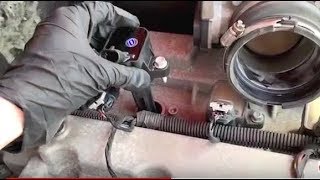
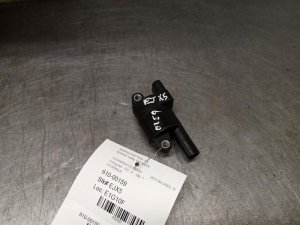
Used OEM Parts in Stock
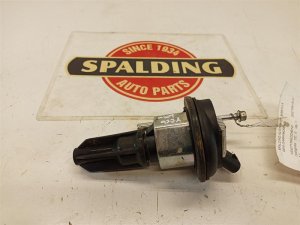
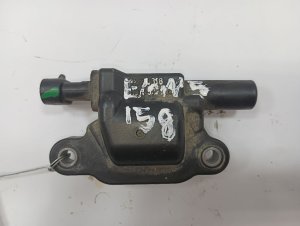



New Aftermarket Parts Available


The information in this article is provided for general reference and educational purposes only. Vehicle specifications, procedures, and part compatibility can vary by production date, trim level, and region. Always consult your vehicle's factory service manual and verify part numbers before purchasing or performing repairs. Safety-critical components such as airbags, seat belts, and braking systems should be installed by a qualified professional.
- Chevrolet COLORADO:
- 🎬 Helpful Videos
- 🛍️ Shop This Part
- What's Unique About the 2004-2011 Chevrolet COLORADO
- Diagnostic Flowchart
- Symptoms You May Notice
- Most Likely Causes
- Rare But Worth Checking
- Diagnosis Steps
- Parts You'll Likely Need
- Related Codes That Often Appear With This One
- Technical Service Bulletins (TSBs) & Recalls
- Platform-Specific Known Issues
- Mechanic-Grade Diagnostic Values
- Hidden / Shadow Codes Worth Checking
- Scan Tool Commands That Help
- Wiring & Ground Locations
- Real Owner Repair Stories
- OEM Part Supersession History
- Model Year Variations Within This Range
- 🎟️ Get 5% Off