

P0300 on 2006-2010 Chevrolet Cobalt: Random Misfire Causes and Fixes
P0300 on a 2006-2010 Chevy Cobalt most often points to a failing ignition control module or the coil pack assembly it controls. This is a very common issue on the 2.2L and 2.4L Ecotec engines, often failing when hot. Expect to pay $100-$200 for the parts, with a DIY difficulty of 2/5.
- P0300 on a 2006-2010 Cobalt is most likely caused by a faulty ignition system.
- The Ignition Control Module (ICM) is a known weak point on these cars and should be the first component you suspect after checking spark plugs.
- Replacing the ICM and the coil pack assembly at the same time is a common and effective repair strategy.
- Do not ignore a flashing check engine light, as it signals a severe misfire that can cause expensive catalytic converter damage.
- While other issues like vacuum leaks or fuel delivery problems can cause P0300, always start your diagnosis with the ignition system on this particular vehicle.
What's Unique About the 2006-2010 Chevrolet COBALT

The 2006-2010 Cobalt, particularly models with the 2.2L and 2.4L Ecotec engines, uses a single ignition control module (ICM) that sits on the valve cover under the coil pack cassette. This ICM is a notorious failure point due to heat soak, causing intermittent, random misfires that are difficult to diagnose because they often occur only when the engine is warm. An owner complaint filed with the NHTSA for a 2006 model specifically cites a P0300 code that was resolved by replacing the ignition coil and module. This centralized ignition system design means a single electronic failure can affect multiple cylinders simultaneously, making the P0300 code a very common sight for this vehicle and its platform mates like the Pontiac G5 and Saturn Ion.
Diagnostic Flowchart
Tap your situation to follow the diagnostic path that matches what you're seeing on this vehicle.
Symptoms You May Notice
- Rough or shaky idle
- Hesitation or stumbling during acceleration
- Flashing or solid Check Engine Light
- Reduced engine power
- Poor fuel economy
- Difficulty starting the engine
- Engine stalling at stops
- Replacing only the spark plugs without inspecting the ignition module and coils, which are the most common points of failure.
- Replacing oxygen sensors. While a faulty O2 sensor can cause fuel trim issues leading to a misfire, it is far less likely than an ignition system fault on this platform.
- Assuming a transmission issue when the car shudders or hesitates, as a severe misfire can feel very similar.
Most Likely Causes

- Faulty Ignition Control Module (ICM) 🔴 High Probability The ICM on the Ecotec engine is the most common failure item for a P0300. It is located under the coil pack where it is exposed to significant heat, causing the internal electronics to fail intermittently, especially after the engine warms up. An NHTSA complaint and numerous forum posts confirm this part as the fix.
How to confirm: Testing can be difficult as the failure is often heat-related and intermittent. A common DIY diagnostic is to see if the misfires start or worsen as the engine reaches operating temperature. If plugs and coils are good, the ICM is the prime suspect. Many owners and mechanics recommend replacing the ICM and coil pack together to avoid repeat failures.
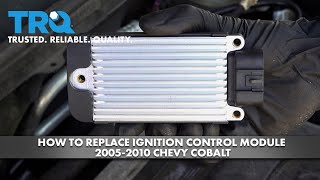
Typical fix: Replace the ignition control module. It is located on top of the valve cover, attached to the coil pack assembly. It is often replaced as a unit with the coil pack. 🎬 Watch: How to test and replace the ICM and coils.
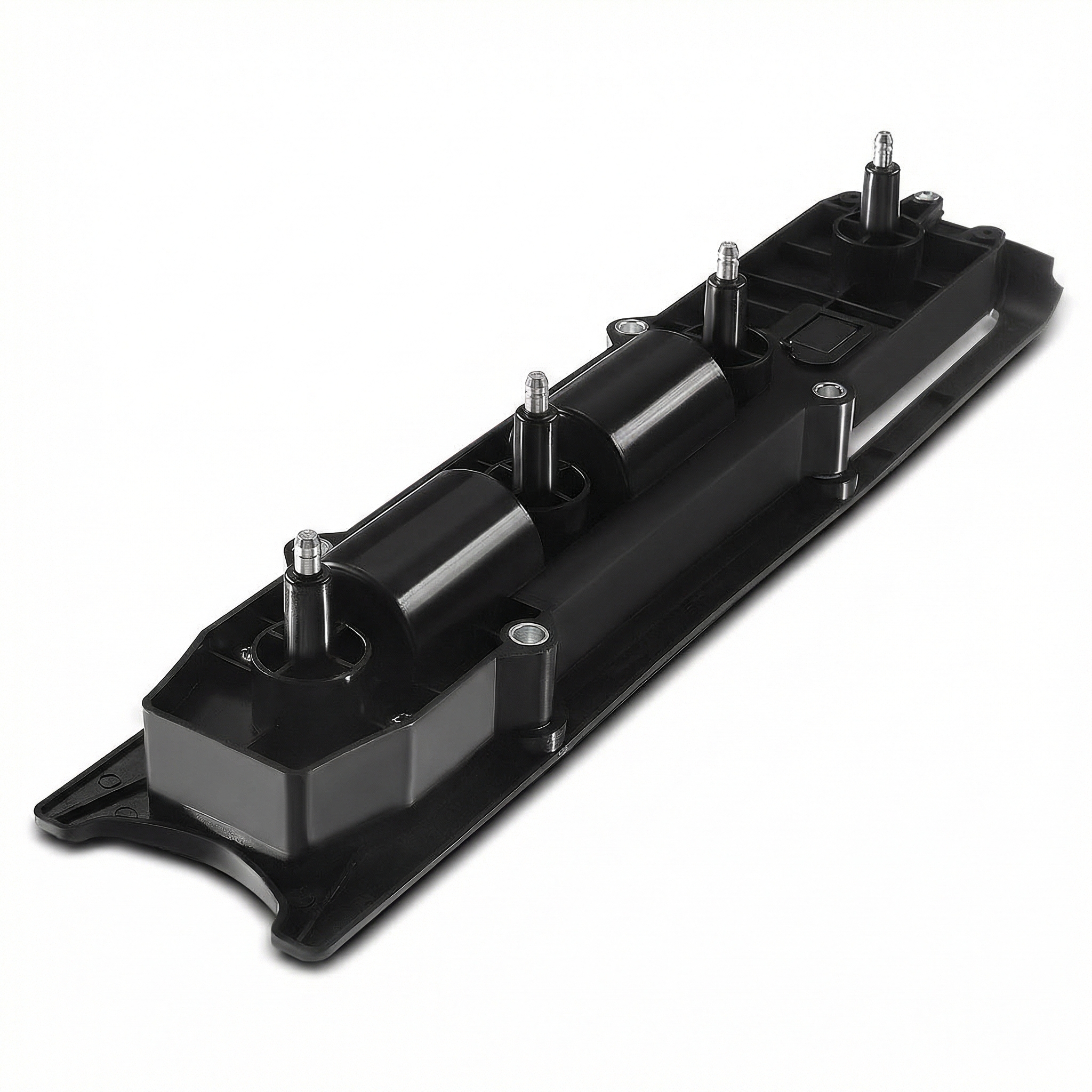
Est. part cost: $50-$120 - Worn or Defective Ignition Coils 🔴 High Probability The Cobalt uses a coil-on-plug cassette that houses all the coils in one assembly. Heat and age cause the internal windings to fail, leading to weak or no spark. The design uses a wasted spark system where one coil fires two cylinders (e.g., 1-4 and 2-3), so a single coil failure can cause a multiple-cylinder misfire.
How to confirm: With the engine running, use a scan tool to monitor misfire data on each cylinder. You can also perform a spark test on each coil output. Since the coils are in a single assembly, swapping them to isolate a bad coil is not possible. Visual inspection may reveal cracks or carbon tracks.
Typical fix: Replace the entire ignition coil pack assembly. This is often done at the same time as the Ignition Control Module for best results.
Est. part cost: $80-$150 - Worn or Fouled Spark Plugs 🟡 Medium Probability As a basic maintenance item, spark plugs wear out. The manufacturer specifies a 100,000-mile replacement interval, but plugs can fail sooner. Incorrectly gapped or low-quality plugs can cause a weak spark and lead to misfires.
How to confirm: Remove the spark plugs and inspect them for wear (worn electrode), oil fouling, or carbon buildup. Check the gap against manufacturer specifications (typically 0.040 inches for the 2.2L/2.4L). A plug with a white, ashy appearance can indicate a lean condition, while a black, sooty plug indicates a rich condition.
Typical fix: Replace all four spark plugs with new, correctly gapped plugs. Use OEM-spec brands like ACDelco or NGK for best results.
Est. part cost: $20-$50 - Vacuum Leak 🟡 Medium Probability The plastic and rubber hoses in the engine bay become brittle over time. A common failure point is the PCV (Positive Crankcase Ventilation) hose, which can crack and create a significant unmetered air leak, leading to a lean condition and random misfires. A leaking intake manifold gasket is also a possible cause.
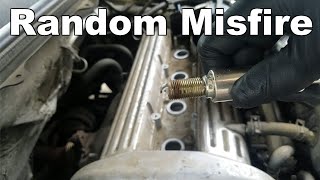
How to confirm: Listen for a hissing sound around the engine bay at idle. Visually inspect all vacuum hoses, especially the PCV hose running from the valve cover 🎬 Watch: Troubleshooting a random misfire on a Cobalt. to the intake, for cracks or disconnections. You can also spray a small amount of brake cleaner or soapy water near suspected leak points; a change in engine idle will confirm a leak.
Typical fix: Replace the cracked or disconnected vacuum hose. The PCV hose is a frequent culprit. If the intake manifold gasket is leaking, it will need to be replaced.
Est. part cost: $10-$100 - Clogged or Faulty Fuel Injectors ⚪ Low Probability Over time, fuel injectors can become clogged with deposits, preventing them from delivering the correct amount of fuel. A forum user on
cobaltss.netreported fixing a persistent P0300 by replacing a bad injector after ignition components were already replaced. TSB #PIP3333C also notes that debris can get trapped in the fuel rail and cause intermittent misfires on cylinders 1 or 4 during turns.
How to confirm: Perform a fuel injector balance test using a professional scan tool and a fuel pressure gauge to measure the pressure drop for each injector. You can also listen to each injector with a mechanic's stethoscope to ensure they are all clicking at a regular rhythm.
Typical fix: Clean or replace the faulty fuel injector(s). It is often recommended to replace them as a set.
Est. part cost: $40-$90 per injector
Rare But Worth Checking
- Low Fuel Pressure: A weak fuel pump or clogged fuel filter can starve the entire engine of fuel, causing random misfires. Check fuel pressure at the fuel rail's Schrader valve to confirm; it should be around 50-60 PSI with the key on, engine off.
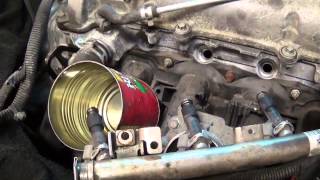
- Internal Engine Mechanical Failure: In high-mileage engines, a loss of compression from a burnt valve or bad piston rings can cause a persistent misfire. A YouTube case study on an '09 Cobalt with P0300 found the cause to be a burnt exhaust valve on cylinder 3, diagnosed via a compression and leak-down test. 🎬 See this case study on fixing a burnt exhaust valve.
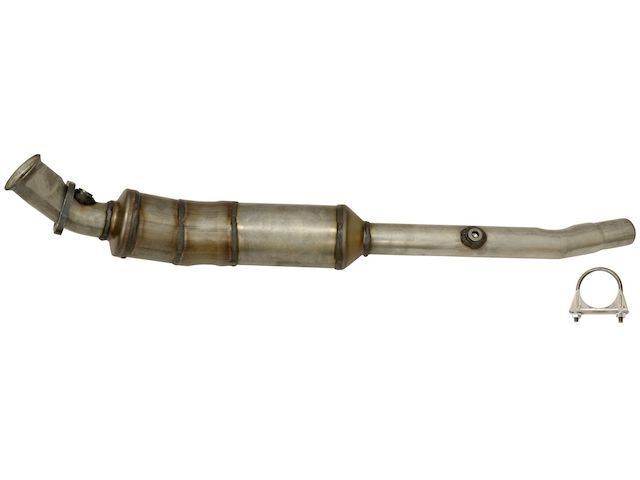
- Clogged Catalytic Converter: A clogged exhaust can create excessive backpressure, leading to misfires, a significant loss of power, and potentially a P0420 code.
- Chafed Wiring Harness: A GM document (PIP3536) mentions that the injector control circuit or ignition control circuit wiring can chafe and short to ground on A/C lines or brackets, causing intermittent misfires on pairs of cylinders (1/4 or 2/3).
Diagnosis Steps
- Read the codes with an OBD-II scanner. Note any other pending or active codes and check freeze frame data to see when the misfire occurs.
- Check for a flashing check engine light. If flashing, avoid driving the vehicle to prevent catalytic converter damage.
- Visually inspect the engine bay for obvious issues, such as a cracked or disconnected PCV hose or other vacuum lines.
- Inspect the spark plugs for wear, damage, or fouling. Replace if they are old, have an incorrect gap, or are in poor condition.
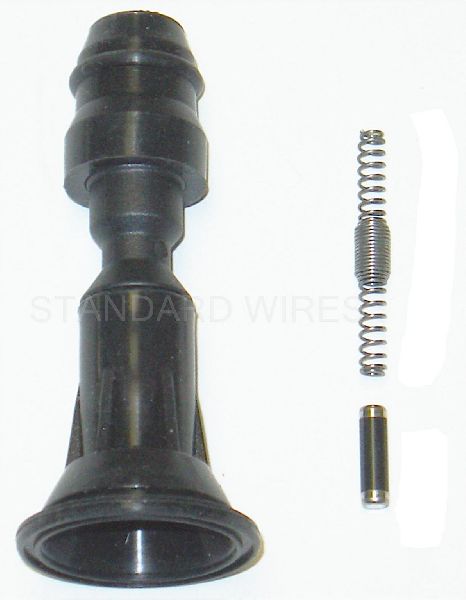
- Inspect the ignition coil pack and boots for any signs of damage, arcing (white marks), or oil contamination from a leaking valve cover gasket.
- Test the Ignition Control Module (ICM). Given its high failure rate, especially when hot, the ICM is the next logical suspect if plugs and coils appear fine.
- Check for vacuum leaks by inspecting all hoses connected to the intake manifold and listening for hissing sounds.
- Test fuel pressure at the fuel rail to rule out a weak fuel pump or clogged filter. Pressure should be stable around 50-60 PSI.
- Inspect wiring harnesses for chafing, particularly near A/C lines and brackets, as noted in service information.
- If all else fails, perform an engine compression test and a cylinder leak-down test to check for mechanical engine problems like a burnt valve or bad head gasket.
Parts You'll Likely Need

- Ignition Control Module
(OEM #ACDelco D521C (GM 19300922, supersedes 12580215))— This is the most frequent cause of P0300 on the 2.2L and 2.4L Ecotec engines in the Cobalt, often failing when hot.
Trusted brands: ACDelco, Delphi, Standard Motor Products
OEM price range: $80-$150
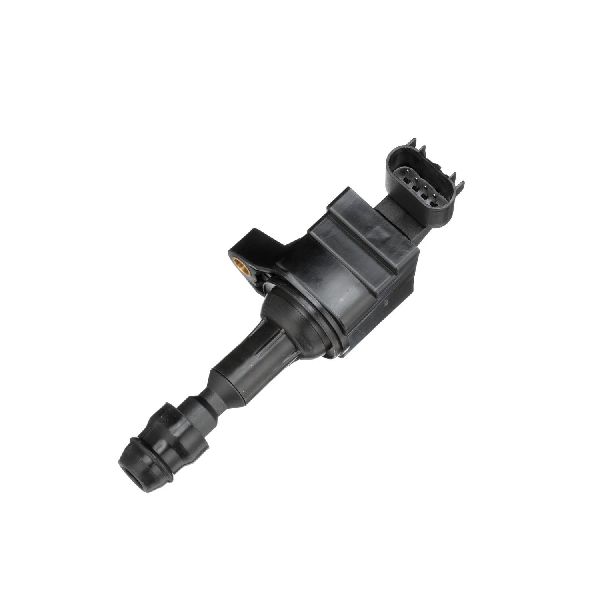
Aftermarket price range: $50-$100 - Ignition Coil Pack Assembly
(OEM #ACDelco D597A (GM 12578224))— The coil pack is the second most likely failure point in the ignition system. It is highly recommended to replace it along with the ICM.
Trusted brands: ACDelco, Delphi, NGK
OEM price range: $100-$160
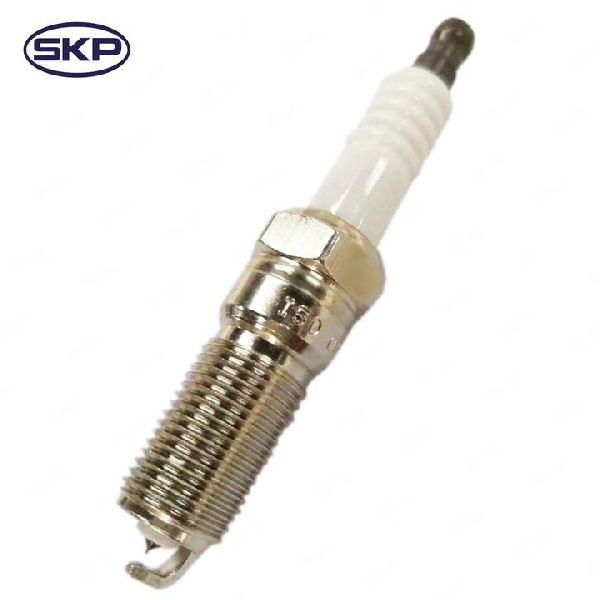
Aftermarket price range: $70-$120 - Spark Plugs
(OEM #ACDelco 41-103 (Iridium))— A basic tune-up item that can cause misfires if worn, fouled, or incorrectly gapped.
Trusted brands: ACDelco, NGK
OEM price range: $25-$50 (set of 4)
Aftermarket price range: $20-$40 (set of 4) - PCV Hose
(OEM #GM 22724246)— This hose is known to become brittle and crack, causing a major vacuum leak that leads to lean misfires.
Trusted brands: ACDelco, Dorman
OEM price range: $15-$30
Aftermarket price range: $10-$20
Related Codes That Often Appear With This One
- P0301-P0304 — If the ECM can eventually pinpoint the misfire to a specific cylinder, it will set a code like P0301, P0302, etc., in addition to or instead of P0300.
- P0340/P0341 — As seen in NHTSA complaint #11139374, camshaft position sensor codes can appear with P0300. On some Ecotec engines, the ICM generates the cam signal, so a failing ICM can trigger these codes.
- P0171 (System Too Lean) — This code often accompanies a P0300 caused by a vacuum leak, as the unmetered air causes the engine to run lean.
Technical Service Bulletins (TSBs) & Recalls
- PIP5628G (Aug 2023): General bulletin for dealers to gather specific information when contacting technical assistance for P0300-P0308 misfire codes.
- PIP3333C (Oct 2014): Describes an unusual cause for P0300, P0301, or P0304 where fuel contamination can slosh in the fuel rail during turns, momentarily starving injector #1 (left turns) or #4 (right turns) and causing a misfire.
- PIP3536 (mentioned in forums): Not an official NHTSA TSB, but a GM document discussed online. It points technicians to inspect for chafed injector or ignition control wiring shorting to ground on A/C lines or brackets as a potential cause for misfires on paired cylinders (1-4 or 2-3).
Platform-Specific Known Issues
- Heat-Related ICM Failure: The most common issue for this platform. The Ignition Control Module (ICM) is mounted directly to the engine under the coil pack, where it gets very hot. Over time, this heat causes the internal electronics to fail, but often only when the engine is at full operating temperature. A car that starts and runs fine when cold but begins to misfire randomly after 15-20 minutes of driving is a classic sign of a failing ICM.
- Brittle PCV Hose: The crankcase ventilation hose that connects the valve cover to the intake manifold is made of plastic that becomes extremely brittle with age and heat cycles. It commonly cracks or breaks entirely, creating a large vacuum leak that the ECM cannot compensate for, resulting in a P0300 and often a P0171 (lean) code.
Mechanic-Grade Diagnostic Values
- Fuel Pressure (Key On, Engine Off) — expected: 345-414 kPa (50-60 psi). Failure: Pressure below 50 psi indicates a potential weak pump or restriction; pressure above 60 psi may indicate a faulty fuel pump module/regulator.
- Fuel Injector Coil Resistance — expected: 11-14 ohms when engine coolant is between 10-32°C (50-90°F). Failure: A resistance reading outside this range indicates a faulty injector. Resistance increases with temperature.
- Engine Compression — expected: Approximately 210 psi on a healthy engine, with all cylinders being within 20% of each other.. Failure: Significantly lower pressure in one or more cylinders (e.g., under 100 psi or 0 psi) points to a mechanical issue like a burnt valve or bad piston rings.
- Ignition Coil Pack Primary Resistance — expected: A good reading, though a specific ohm value is not consistently provided; the test is more for identifying an open circuit. A reading that is significantly different between the two internal coils (1/4 and 2/3) can indicate a problem.. Failure: An open circuit (infinite resistance) or a reading that fluctuates wildly, especially when the component is hot.
Hidden / Shadow Codes Worth Checking
- Mode $06, TID $53: On pre-CAN bus GM vehicles, Test ID $53 tracks cylinder-specific misfire counts that may not be high enough to set a P0301-P0304 code. This allows a technician to see which cylinder is contributing to a P0300 by showing small numbers of misfires. (see via A scan tool capable of displaying Mode $06 data. The value for each cylinder can be compared to the manufacturer's threshold to see if it's passing or failing.)
Scan Tool Commands That Help
- GM Specific Scan Tool (e.g., Tech2, Launch Creader Elite GM): Fuel Pump Relay Control — This bidirectional command allows the technician to manually turn the fuel pump on and off to prime the system and check for stable fuel pressure without starting the engine.
- GM Specific Scan Tool / AFIT CH-47976: Injector Balance Test — This function fires each injector for a specific duration while monitoring fuel pressure drop. It's used to confirm that all injectors are flowing a similar amount of fuel. An inconsistent pressure drop indicates a clogged or faulty injector.
- Generic OBD-II Scanner with Live Data: Misfire Counters — Monitoring live misfire counts for each cylinder is the first step in diagnosis. Even with a P0300, one cylinder will often show significantly more counts, pointing to the primary source of the problem.
Real Owner Repair Stories
- Pine Hollow Auto Diagnostics YouTube Channel (2009 Chevrolet Cobalt, 92k miles) — Shuttering during acceleration (mistaken for a transmission issue), Check Engine Light with P0300. Scan tool showed most misfires on cylinder 3.
❌ Tried (didn't work) Initial diagnosis focused on ignition or fuel, but a relative compression test showed a clear mechanical problem.
✅ What actually fixed it A compression test revealed cylinder 1 at 210 PSI but cylinder 3 had very low compression. A subsequent leak-down test confirmed air was escaping through the exhaust valve. The final fix was a cylinder head valve job to repair the burnt exhaust valve on cylinder 3. - Reddit user /u/ShotPomelo3723 (2005 Cobalt LS) — Intermittent P0300 misfire. The engine would run perfectly, then suddenly start misfiring or stall completely.
❌ Tried (didn't work) New spark plugs (fixed it for 12 hours), New crankshaft position sensor (fixed it for one day)
✅ What actually fixed it The user did not post the final resolution, but the symptoms described (intermittent failure, temporary fixes from replacing unrelated parts) are highly characteristic of a failing ignition control module or coil pack, which was the top suggestion from other users. - Jbolanos10 YouTube Channel (Chevrolet Cobalt (year not specified)) — P0300, flashing check engine light, severe hesitation, car would barely accelerate above 5-10 mph. Also triggered a P0742 transmission code due to the engine performance issue.
❌ Tried (didn't work) Visual inspection of spark plugs showed one was damaged, but replacing it was not the complete fix.
✅ What actually fixed it The problem was resolved by replacing the ignition control module and the ignition coil pack assembly together. After replacement, the hesitation was gone and the car accelerated normally.
"I Checked Everything" — The Actual Cause
- In some cases, a P0300 accompanied by a P0171 (System Too Lean) code may not be caused by a typical vacuum hose leak that a smoke test would find. A less common cause can be a cracked plastic intake manifold, which may only leak under specific temperature or load conditions, making it difficult to diagnose with a standard smoke test at idle.
OEM Part Supersession History
12578224, 12589623→12629646 (ACDelco UF491)— Updates to improve durability and performance of the individual ignition coils within the coil-on-plug assembly.
Heads up: These part numbers apply to the 2007-2010 models with individual coil-on-plug systems (Gen 2 L61, LAP, LE5). The 2006 model uses a different cassette-style coil pack and ICM.
Model Year Variations Within This Range
- 2006-2008 vs 2009-2010 (2.2L Engine): The 2006-2008 models primarily used the 2.2L L61 engine. In 2009, this was replaced by the 2.2L LAP engine. While both are Gen II Ecotecs, the LAP added Variable Valve Timing (VVT). The ignition system also changed in 2007 from a waste-spark cassette to an individual coil-on-plug design, which carried over to the LAP. These changes mean that some sensors, the ECU, and the valve cover are different between the early (L61) and late (LAP) 2.2L engines.
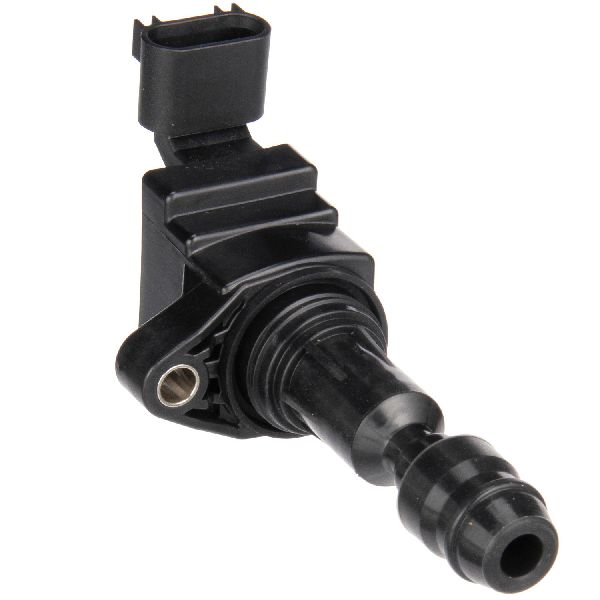
- 2006 vs 2007+: The 2006 2.2L L61 used a single ignition cassette that contained both the coils and the module in one unit. For 2007, the L61 was updated to use four individual coil-on-plug units, similar to the 2.4L LE5 engine, though they are still controlled by a separate ignition control module. This is a key difference when ordering ignition parts.
Helpful Videos
Used OEM Parts in Stock

New Aftermarket Parts Available


The information in this article is provided for general reference and educational purposes only. Vehicle specifications, procedures, and part compatibility can vary by production date, trim level, and region. Always consult your vehicle's factory service manual and verify part numbers before purchasing or performing repairs. Safety-critical components such as airbags, seat belts, and braking systems should be installed by a qualified professional.
- Chevrolet COBALT:
- 🎬 Helpful Videos
- 🛍️ Shop This Part
- What's Unique About the 2006-2010 Chevrolet COBALT
- Diagnostic Flowchart
- Symptoms You May Notice
- Most Likely Causes
- Rare But Worth Checking
- Diagnosis Steps
- Parts You'll Likely Need
- Related Codes That Often Appear With This One
- Technical Service Bulletins (TSBs) & Recalls
- Platform-Specific Known Issues
- Mechanic-Grade Diagnostic Values
- Hidden / Shadow Codes Worth Checking
- Scan Tool Commands That Help
- Real Owner Repair Stories
- "I Checked Everything" — The Actual Cause
- OEM Part Supersession History
- Model Year Variations Within This Range
- 🎟️ Get 5% Off