

P0300 on 2000-2004 Chevrolet Cavalier: Random Misfire Causes and Fixes
For a P0300 code on a 2000-2004 Cavalier, the most common cause is a failing ignition system component. On 2000-2002 models with the 2.2L OHV engine, suspect the ignition control module, coil packs, and spark plug wires. On 2002-2004 models with the 2.2L Ecotec, the integrated coil pack assembly is the most frequent culprit. A basic ignition system repair costs between $100 and $250.
- First, identify your engine. The fix for a P0300 is different for the 2.2L OHV (2000-2002) versus the 2.2L Ecotec (2002-2004).
- The most likely cause is a faulty ignition component. For the OHV engine, focus on the ignition control module and wires; for the Ecotec, the entire coil cassette is the prime suspect.
- Do not ignore a flashing check engine light. This signals a severe misfire that can destroy your catalytic converter, turning a $200 repair into a $1,000+ repair.
- Before buying parts, perform basic checks for vacuum leaks by inspecting hoses for cracks and listening for hissing sounds.
- Always replace spark plugs and spark plug wires (if equipped) as a complete set to ensure balanced performance.
What's Unique About the 2000-2004 Chevrolet CAVALIER

The key challenge with the 2000-2004 Cavalier is the mid-cycle engine change. Early models (2000-2002) use the 2.2L OHV (LN2) engine with a traditional ignition control module, two coil packs, and spark plug wires. Later models (2002-2004) feature the 2.2L DOHC Ecotec (L61) engine, which uses a single, integrated coil-on-plug cassette. While both are prone to ignition failures causing a P0300, the specific parts and diagnostic methods are entirely different, making it crucial to identify your engine before purchasing parts. The Ecotec's ignition cassette is a notoriously common failure point.
Diagnostic Flowchart
Tap your situation to follow the diagnostic path that matches what you're seeing on this vehicle.
Symptoms You May Notice
- Rough or shaking idle
- Hesitation or stumbling during acceleration
- Flashing Check Engine Light (especially under load)
- Reduced engine power
- Poor fuel economy
- Difficulty starting the engine
- Engine stalling, especially when coming to a stop
- Smell of raw fuel from the exhaust
- Replacing oxygen (O2) sensors. While a misfire can affect O2 sensor readings, the sensors themselves are rarely the cause of a P0300 code, though a faulty one *can* cause a misfire in some cases.
- Replacing only one spark plug or wire. Ignition components should be replaced in sets to ensure consistent performance.
- Assuming a new ignition cassette/module is good. A user on a Saturn Vue forum fixed their P0300 by replacing a coil pack that was only a year old, indicating aftermarket parts can fail prematurely.
Most Likely Causes


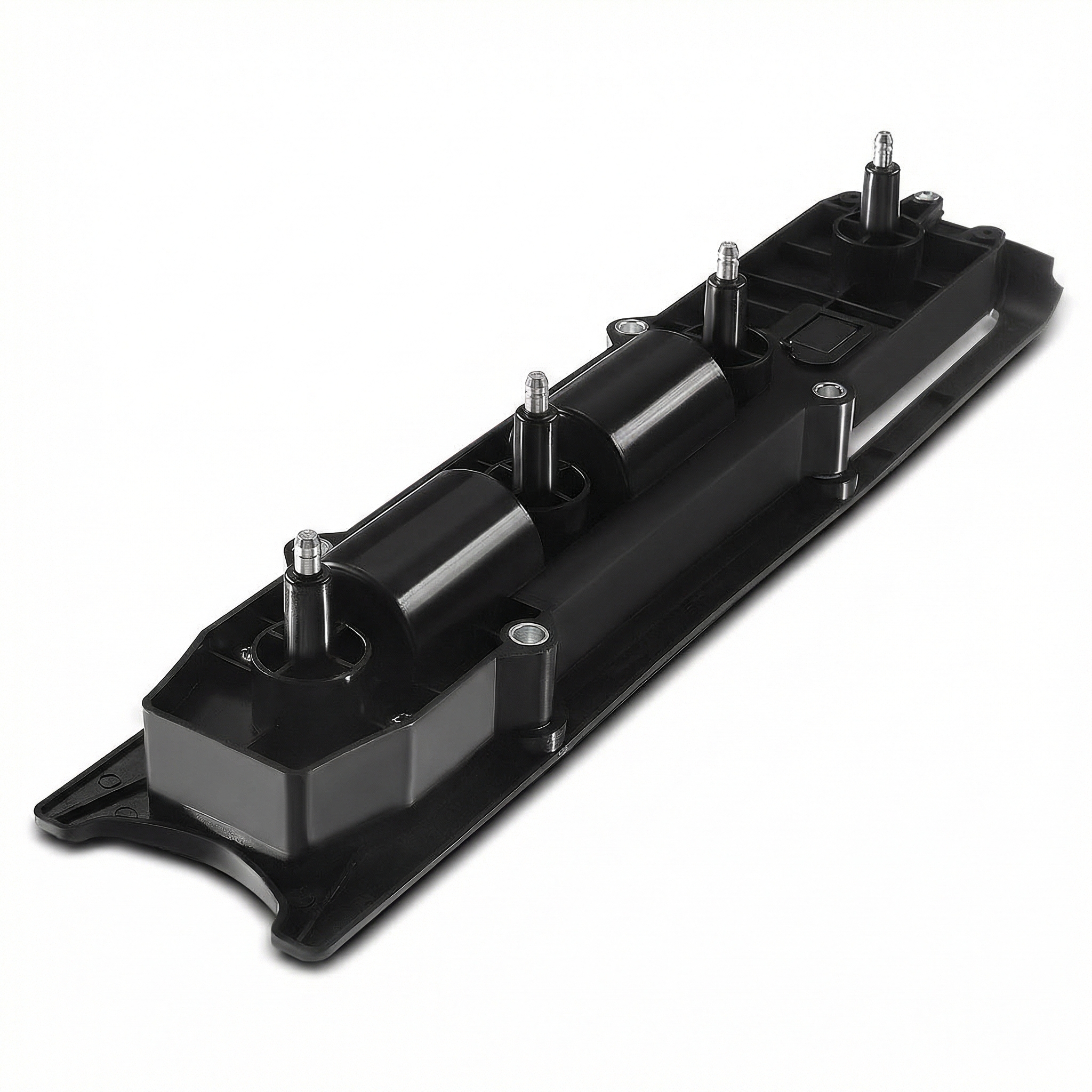
- Faulty Ignition Coil Pack / Module 🔴 High Probability The ignition control module (ICM) and coil packs on the 2.2L OHV engine, and the integrated coil cassette on the 2.2L Ecotec, are well-documented, common failure points that lead to random misfires. Heat soak is a primary killer of these components.
How to confirm: For the 2.2L Ecotec, remove the coil assembly and check for weak or inconsistent spark from each tower. A user on 2CarPros confirmed this method: lay the coil pack near the valve cover, crank the engine, and look for a weak or inconsistent spark from one tower compared to the others. For the 2.2L OHV, check for green corrosion on the coil towers or inside the boots, which indicates spark leakage.
Typical fix: Replace the faulty component. For the 2.2L OHV, this is often the Ignition Control Module (ICM) and/or both coil packs. For the 2.2L Ecotec, the entire ignition coil cassette is replaced as a single unit. 🎬 Watch: How to replace the ignition coil on a 2.2L Ecotec. Always apply dielectric grease to the spark plug boots during installation.
Est. part cost: $70-$200 - Worn Spark Plugs and/or Wires (2.2L OHV only) 🔴 High Probability These are standard maintenance items. Worn plugs or cracked wires cannot deliver a strong spark, leading to incomplete combustion and misfires. Using non-OEM plugs like Autolite has been anecdotally linked to issues.
How to confirm: Visually inspect spark plugs for wear, fouling, or damage. Inspect spark plug wires (on 2.2L OHV engines) for cracks, burns, or corrosion. A user on a Chevrolet Forum noted that changing plugs and wires for a cylinder 3 misfire then resulted in a P0300, indicating a wider issue but starting with basic maintenance is key.
Typical fix: Replace all spark plugs and, if applicable, the spark plug wire set. It's recommended to replace these as a set using OEM-spec parts (ACDelco is recommended).
Est. part cost: $40-$80 - Vacuum Leak 🟡 Medium Probability Rubber vacuum hoses and the intake manifold gasket become brittle and crack with age and heat cycles, allowing unmetered air into the engine. This disrupts the air-fuel ratio and causes misfires.
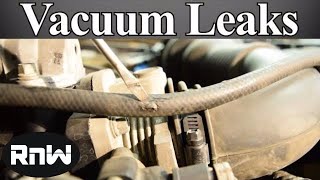
How to confirm: Perform a visual inspection of all vacuum hoses connected to the intake manifold. Listen for a hissing sound at idle. A professional can use a smoke machine to inject smoke into the intake, revealing the exact location of any leaks. 🎬 See this guide on finding vacuum leaks using different methods. A common DIY method is to carefully spray brake cleaner or propane around the intake gasket and vacuum lines; a change in engine idle indicates a leak.
Typical fix: Replace the cracked vacuum hose or leaking gasket. The PCV hose and intake manifold gasket are common culprits on these vehicles.
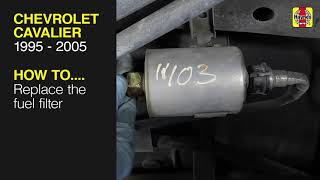
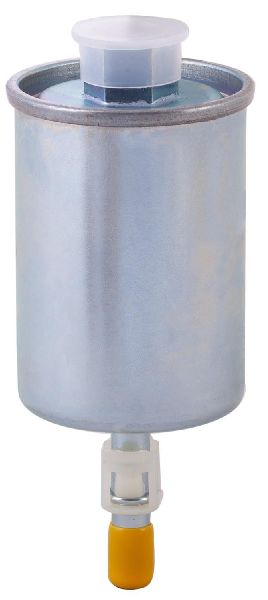
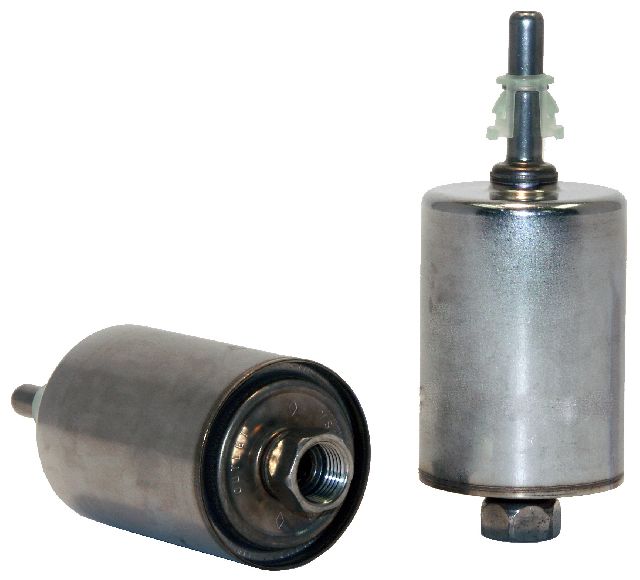
Est. part cost: $5-$100 - Clogged Fuel Injectors or Weak Fuel Pump ⚪ Low Probability Over time, fuel injectors can become clogged with deposits, preventing them from delivering the proper amount of fuel. The fuel filter, located under the rear of the vehicle near the fuel tank, can also become clogged, restricting flow and leading to a lean condition. 🎬 Watch: How to replace the fuel filter on your Cavalier.
How to confirm: Test fuel pressure at the fuel rail to rule out a weak pump or clogged filter; it should be around 58 PSI. A diagnostic scan tool can show fuel trim data that suggests a fueling issue. Unplugging injectors one by one while the engine is running can help identify a clogged one if it makes no change to the idle.
Typical fix: Clean or replace the clogged fuel injectors. Replace the fuel pump and/or fuel filter if pressure is low. A user on BobIsTheOilGuy forums chased a P0300 by replacing injectors one by one.
Est. part cost: $50-$300
Rare But Worth Checking
- Failing Crankshaft Position Sensor (CKP): A failing CKP sensor can send erratic signals to the ECM, causing it to misinterpret engine speed and trigger a P0300 code before the sensor fails completely. After replacement, a 'Crankshaft Variation Relearn' procedure is often required, which may necessitate a capable scan tool.
- Low Engine Compression: Internal engine issues like a leaking head gasket or worn piston rings can cause a loss of compression, leading to misfires. A compression test should be performed if ignition and fuel systems check out. A healthy cylinder should have 160-170 PSI. A YouTube repair video showed a questionable cylinder with pressure under 120 PSI, highlighting the importance of this test.
- Clogged Catalytic Converter: A plugged converter can create excessive backpressure, causing the engine to run poorly and misfire. This is often a result of long-term misfires dumping raw fuel, not the initial cause.
- Poor ECM/BCM Grounds: On the J-body platform, several key ground points (like G110 near the battery tray) can corrode. A bad ground can introduce electrical noise, causing the PCM to receive faulty data and potentially log phantom misfire codes.
Diagnosis Steps

- Read all stored diagnostic trouble codes with an OBD-II scanner. Note if the Check Engine Light is flashing, which indicates a severe, catalyst-damaging misfire.
- Visually inspect the engine bay for obvious issues like cracked or disconnected vacuum hoses, or damaged wiring.
- Identify your engine: 2.2L OHV (pre-2003, has spark plug wires) or 2.2L Ecotec (2002.5+, has a single block over the spark plugs). The parts are different.
- Inspect the ignition system. For the 2.2L OHV, check spark plugs and wires. Pull the boots off the coil packs and check the metal towers for green or white corrosion. For the 2.2L Ecotec, inspect the spark plugs and the integrated coil cassette. Look for carbon tracking, cracks, or corrosion inside the boots.
- If ignition components are old or show signs of wear, replace them as a set (plugs, and wires if applicable). This is a common and relatively inexpensive first step.
- Check for vacuum leaks. Listen for hissing noises at idle. Carefully spray brake cleaner or propane around the intake manifold gasket and vacuum lines; a change in engine idle indicates a leak. A smoke test is the most definitive method.
- Test fuel pressure at the fuel rail using a fuel pressure gauge to ensure it is within specification (should be steady around 58 PSI for the Cavalier).
- If a new Crankshaft Position Sensor (CKP) was installed, perform a 'Crankshaft Variation Relearn' procedure. This may require a specific drive cycle or a scan tool with relearn capabilities.
- If all else fails, perform an engine compression test to check for mechanical issues like a bad head gasket or worn rings. Expect to see readings of 160-170 PSI on healthy cylinders.
Parts You'll Likely Need

- Ignition Control Module (2.2L OHV)
(OEM #ACDelco D1965A (GM #10489421))— This is a very common failure point on the 2.2L OHV engine, directly causing weak or no spark, resulting in a P0300. The aftermarket part number is often DR105.
Trusted brands: ACDelco, Delphi, Standard Motor Products
OEM price range: $60-$90
Aftermarket price range: $40-$70 - Ignition Coil Cassette (2.2L Ecotec)
(OEM #ACDelco D597A (GM #12580537))— This integrated unit contains both the coils and the failure-prone ignition control module. It is the single most common cause of P0300 on Ecotec-equipped Cavaliers. Aftermarket part numbers include UF391.
Trusted brands: ACDelco, Delphi, NGK
OEM price range: $120-$180
Aftermarket price range: $80-$130 - Spark Plugs
(OEM #ACDelco 41-981 (2.2L OHV), ACDelco 41-103 (2.2L Ecotec))— Worn or fouled spark plugs are a fundamental cause of weak spark and misfires. They are a basic maintenance item that should be the first check.
Trusted brands: ACDelco, NGK
OEM price range: $20-$40 (set of 4)
Aftermarket price range: $15-$30 (set of 4) - Spark Plug Wire Set (2.2L OHV)
(OEM #ACDelco 9744K)— Only applicable to the OHV engine, these wires degrade over time, causing spark to leak to ground instead of reaching the plug.
Trusted brands: ACDelco, NGK
OEM price range: $30-$50
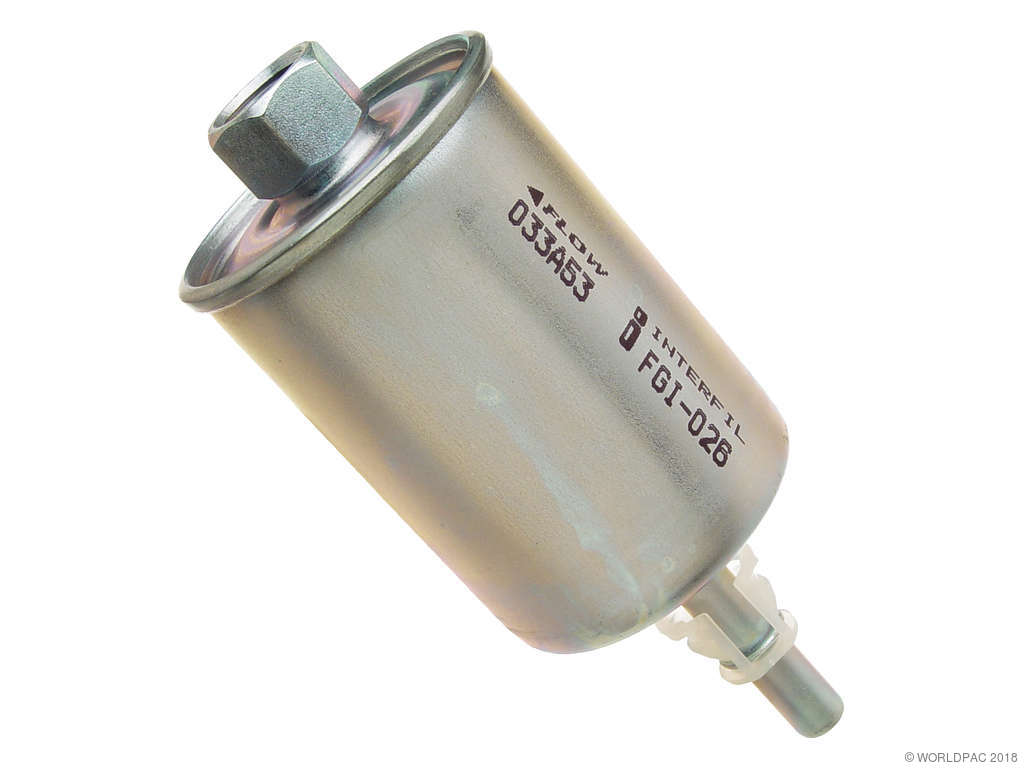
Aftermarket price range: $20-$40 - Fuel Filter
(OEM #ACDelco GF578 (GM #25121293))— A clogged fuel filter can restrict fuel flow, leading to a lean condition across all cylinders and causing a random misfire. It's a maintenance item often overlooked.
Trusted brands: ACDelco, WIX, Purolator
OEM price range: $15-$25
Aftermarket price range: $10-$20
Related Codes That Often Appear With This One
- P0301, P0302, P0303, P0304 — If the random misfire begins to occur more frequently on specific cylinders, the ECM may also store cylinder-specific misfire codes.
- P0171 — A System Too Lean (Bank 1) code often accompanies P0300 when the root cause is a significant vacuum leak or a fuel delivery problem.
- P0420 — A Catalyst System Efficiency Below Threshold code can appear if prolonged misfiring has damaged the catalytic converter by dumping unburnt fuel into it.
- P0340 — A Camshaft Position Sensor Circuit Malfunction code can appear with P0300 on the 2.2L Ecotec, as the ICM is responsible for generating the cam signal. A failing ICM can trigger both codes.
Technical Service Bulletins (TSBs) & Recalls
- PIP5628G: This is a general diagnostic aid from GM for technicians. It provides a checklist of information to gather for GM's Technical Assistance Center (TAC) when diagnosing any P0300-P0308 misfire code. It is not a specific fix.
- PIP3333C: This bulletin describes a rare condition on vehicles with returnless fuel systems where contaminants can get trapped in the fuel rail. During sharp turns, this debris can be ingested by an injector (Cylinder 1 on left turns, Cylinder 4 on right turns), causing a temporary misfire and potentially a P0300. The fix involves cleaning the fuel system.
Platform-Specific Known Issues
- A Technical Service Bulletin (TSB), #PIP5628G, was issued for 2004 models mentioning DTC P0300, indicating it's a recognized issue by the manufacturer.
- Another TSB, #PIP3333C, also for 2004 models, addresses intermittent engine misfires with code P0300, instructing technicians to follow standard diagnostic procedures.
- The ignition system design difference between the 2.2L OHV (distributorless ignition with wires) and the 2.2L Ecotec (coil-on-plug cassette) is the most significant vehicle-specific issue for this code and year range.
Helpful Videos

Used OEM Parts in Stock


New Aftermarket Parts Available



The information in this article is provided for general reference and educational purposes only. Vehicle specifications, procedures, and part compatibility can vary by production date, trim level, and region. Always consult your vehicle's factory service manual and verify part numbers before purchasing or performing repairs. Safety-critical components such as airbags, seat belts, and braking systems should be installed by a qualified professional.
- Chevrolet CAVALIER:
- 🎬 Helpful Videos
- 🛍️ Shop This Part
- What's Unique About the 2000-2004 Chevrolet CAVALIER
- Diagnostic Flowchart
- Symptoms You May Notice
- Most Likely Causes
- Rare But Worth Checking
- Diagnosis Steps
- Parts You'll Likely Need
- Related Codes That Often Appear With This One
- Technical Service Bulletins (TSBs) & Recalls
- Platform-Specific Known Issues
- 🎟️ Get 5% Off