

P0300 on 2013-2017 Chevrolet Caprice: Random Misfire Causes & Fixes
P0300 on a 2013-2017 Chevy Caprice indicates random engine misfires. While common causes include worn spark plugs, wires, or coils, the 6.0L V8 is known for Active Fuel Management (AFM) lifter failures, which is a more serious mechanical issue. Initial diagnosis is simple, but a ticking noise from the engine should immediately point suspicion towards the valvetrain.
- P0300 signifies random misfires; on the Caprice, this can range from simple fixes to major engine work.
- For the 6.0L V8, a P0300 code accompanied by a ticking engine noise strongly suggests a failure of the Active Fuel Management (AFM) lifters, a known issue.
- Always check for the simple causes first: worn spark plugs, bad wires, or a faulty ignition coil are the most common culprits across all engines.
- A flashing check engine light is a serious warning that catalytic converter damage is imminent; minimize driving until the issue is fixed.
- Referencing the specific TSBs for this vehicle is crucial, as they point to known mechanical failures beyond typical tune-up parts.
What's Unique About the 2013-2017 Chevrolet CAPRICE

The 2013-2017 Caprice, primarily the Police Patrol Vehicle (PPV) model, was commonly equipped with the 6.0L L77 V8 engine. This engine features Active Fuel Management (AFM), a system designed to improve fuel economy by deactivating cylinders 1, 4, 6, and 7 under light load. Unfortunately, the specialized AFM lifters are a well-documented failure point, often collapsing or becoming stuck. This failure prevents the valve from opening correctly, causing a misfire and often a distinct ticking noise. Manufacturer bulletins specifically point to these lifter issues and subsequent camshaft damage as a root cause for misfires on this platform.
Diagnostic Flowchart
Tap your situation to follow the diagnostic path that matches what you're seeing on this vehicle.
Symptoms You May Notice
- Rough or shaky engine idle
- Hesitation or stumbling during acceleration
- Noticeable loss of engine power
- Solid or flashing Check Engine Light
- Flashing 'Service Stabilitrak' or Traction Control light accompanying the misfire
- Reduced fuel economy
- Engine ticking or tapping noise that increases with RPM, especially on V8 models
- Replacing all ignition coils when only one is faulty.
- Replacing oxygen (O2) sensors, which are more likely to be a symptom of the misfire (due to unburned fuel) rather than the cause.
- Assuming a major engine overhaul is needed before checking common ignition, fuel, and AFM-related issues. However, on the 6.0L V8, a ticking noise strongly suggests the AFM system is the culprit.
Most Likely Causes


- Worn Spark Plugs, Wires, or Ignition Coils 🔴 High Probability High idle hours, common in police service vehicles, can accelerate wear on ignition components. Oil fouling on spark plugs can also be an issue on AFM engines due to oil consumption.
How to confirm: Inspect spark plugs for wear, fouling, or incorrect gap. Test ignition coils by swapping a suspected bad coil with a known good one from another cylinder and see if the misfire code follows.
Typical fix: Replace the worn spark plugs, wires, and/or the specific faulty ignition coil. It is often recommended to replace all spark plugs at the same time. Use of OEM-spec parts is recommended.
Est. part cost: $50-$250 - Active Fuel Management (AFM) Lifter Failure (6.0L V8) 🔴 High Probability The L77 V8 engine's AFM system uses complex hydraulic lifters that are a known common failure point across many GM platforms. TSBs like #PIP4138R and #15-06-01-002F confirm this is a known issue leading to misfires. High idle hours may contribute to the problem.
How to confirm: Listen for a distinct ticking or knocking noise from the engine's top end. A scan tool may show misfires concentrated on AFM cylinders (1, 4, 6, 7). Diagnosis requires removing the valve covers and running the engine to visually inspect for rockers that are not moving correctly, which indicates a collapsed lifter.
Typical fix: Requires replacing the failed lifter(s). Often, an 'AFM delete kit' is installed, which replaces the problematic AFM lifters, camshaft, Valve Lifter Oil Manifold (VLOM), and other components with standard, more reliable parts. The camshaft must be inspected for lobe damage and replaced if any wear is found.
Est. part cost: $300-$1500 - Clogged or Failing Fuel Injectors 🟡 Medium Probability Fuel injectors can become clogged over time, leading to a lean fuel mixture and misfires. This is a common issue on many Chevrolet vehicles.
How to confirm: Use a scan tool to monitor fuel trims. A mechanic can perform a fuel injector balance test to identify a poorly flowing injector.
Typical fix: Clean or replace the faulty fuel injector(s).
Est. part cost: $50-$150 per injector - Vacuum Leaks 🟡 Medium Probability Cracked hoses or a leaking intake manifold gasket can introduce unmetered air into the engine, disrupting the air-fuel ratio and causing random misfires.
How to confirm: A mechanic can use a smoke machine to pressurize the intake system and visually identify the source of any leaks. A DIY method involves carefully spraying brake cleaner or an unlit propane torch around suspected leak areas and listening for a change in engine idle.
Typical fix: Replace the leaking gasket or vacuum hose.
Est. part cost: $10-$200
Rare But Worth Checking
- Worn Camshaft Lobe: As mentioned in TSB #PIP4138R, this is a serious mechanical failure, often resulting from a collapsed or seized lifter grinding against the camshaft. If a lifter has failed, camshaft inspection is mandatory, as metal shavings can destroy the entire engine.
- Cylinder Head or Head Gasket Coolant Leak: TSB #18-NA-115 (which replaces #PIP4959G) details diagnosing cold start misfires by checking for coolant leaks into the cylinder. The cause can be porosity in the cylinder block itself, which requires engine replacement. The diagnostic procedure involves adding dye to the coolant and using a borescope with a blacklight to check for evidence in the cylinder.
- Low Fuel Pressure: A weak fuel pump or clogged fuel filter can starve the entire engine of fuel, causing random misfires under load. This can be confirmed with a fuel pressure test.
- Fluid in Spark Plug Tubes: TSB #21-NA-147 notes that oil or coolant leaking into the spark plug tubes can cause multiple misfires. If the leak originates from the tube itself (a press-fit issue), the cylinder head may need to be replaced.
Diagnosis Steps
- Use an OBD-II scanner to confirm the P0300 code and check for any other codes, especially specific cylinder misfire codes (P0301-P0308).
- Use the scanner's live data function to monitor the misfire counter for each cylinder. This helps determine if the misfire is truly random or biased towards specific cylinders, like the AFM cylinders (1, 4, 6, 7).
- If the 6.0L V8 is making a rhythmic ticking or knocking noise, immediately suspect a failed AFM lifter. Pull the valve covers and crank the engine to visually inspect for rocker arms that are not moving or have excessive play.
- If no noise is present, inspect the basics: check spark plugs for wear, damage, or fouling. Inspect spark plug wires for cracks or corrosion.
- Test the ignition coils. A common method is to swap the coil from a misfiring cylinder with one from a cylinder that is firing correctly. If the misfire code follows the coil, the coil is bad.
- Check for vacuum leaks. Visually inspect all vacuum hoses and the intake manifold gasket. A smoke test is the most effective way to find leaks.
- Test fuel pressure to rule out a weak fuel pump or clogged filter.
- If a lifter/camshaft issue is confirmed, the cylinder heads must be removed. The camshaft lobes must be carefully inspected for scoring or wear from the failed lifter roller.
- If cold start misfires are the primary symptom, follow the diagnostic path of TSB #18-NA-115, which involves adding UV dye to the coolant and using a borescope to check for coolant intrusion into the cylinders.
Parts You'll Likely Need
- Spark Plugs
(OEM #ACDelco 41-162 (Iridium))— Spark plugs are a routine maintenance item and the most common cause of engine misfires.
Trusted brands: ACDelco, NGK
OEM price range: $10-$18 per plug
Aftermarket price range: $6-$15 per plug - Ignition Coil
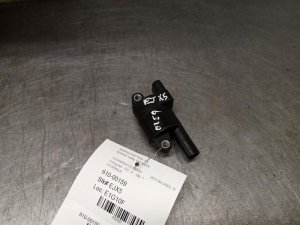
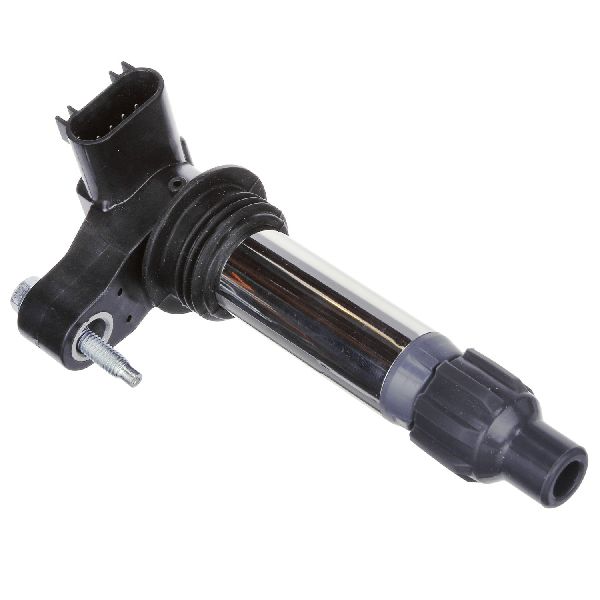
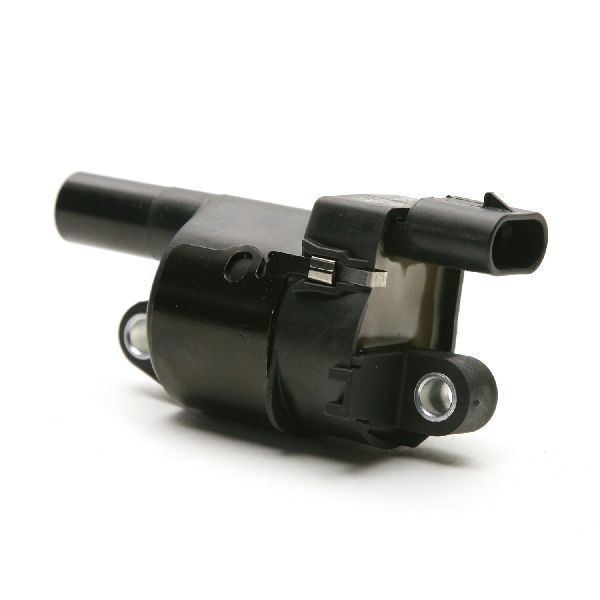
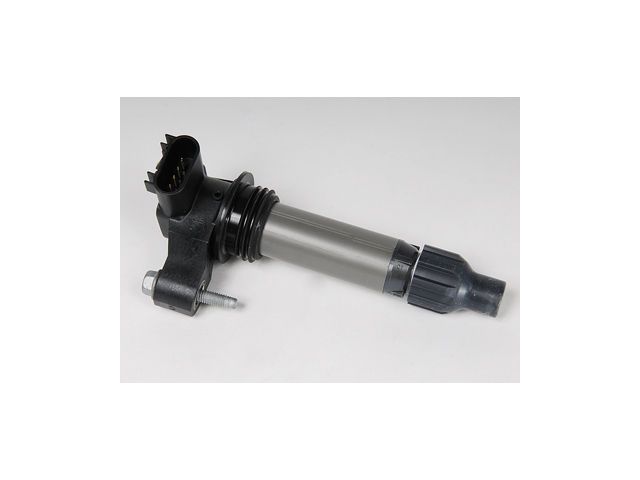
(OEM #ACDelco D510C)— A failing ignition coil cannot produce enough voltage to create a spark, causing a misfire on its corresponding cylinder. This part fits a wide range of GM V8 vehicles.
Trusted brands: ACDelco, Delphi
OEM price range: $60-$127
Aftermarket price range: $40-$80 - AFM Valve Lifter
(OEM #GM 12648846 (Note: This is a standard, non-AFM lifter often used in AFM delete kits. The original AFM lifter part number may vary.))— Specific to the 6.0L V8, the AFM lifters are a known major failure point that directly causes misfires. Part number 12648846 is a genuine GM hydraulic roller lifter.
Trusted brands: ACDelco, Michigan Motorsports
OEM price range: $20-$40 per lifter
Aftermarket price range: $15-$30 per lifter
Related Codes That Often Appear With This One
- P0301-P0308 — These codes specify which cylinder is misfiring (e.g., P0301 for Cylinder 1). A P0300 may appear alongside these if the misfire is severe or moves between cylinders.
- P050D — TSB #PIP5628G links this code, 'Cold Start Rough Idle', with P0300-P0308 misfire codes, indicating they can be related diagnostic issues.
- Various Stabilitrak/Traction Control Codes — An active engine misfire often causes the ECM to disable the traction and stability control systems as a safety precaution, logging related fault codes. The warning light on the dash is a symptom, not a cause.
Technical Service Bulletins (TSBs) & Recalls

- PIP4138R: Advises checking for a worn camshaft lobe if standard diagnostics for P0300-P0308 fail.
- PIP5628G: Notes that P0300-P0308 and P050D codes may require special diagnostic information.
- 18NA115: Provides diagnostic information for a cold start misfire and/or rough idle associated with DTC P0300.
- PIP4959G: Details a diagnostic procedure involving coolant dye for P0300 with misfires on cylinder #1 during cold starts.
Platform-Specific Known Issues
- AFM Lifter Failure (6.0L V8): This is the most significant and well-documented issue for the V8 Caprice. Owners on newcaprice.com report a classic sequence of events: a sudden ticking noise, a flashing check engine light with P0300, and a disabled Stabilitrak system. One owner with a 2012 PPV at 101,500 miles identified a failed lifter after basic ignition part swaps did not resolve the issue. Another long-time owner of 10 PPVs stated that 9 of them eventually had AFM lifter issues, highlighting the pervasiveness of the problem.
- Repair Strategy - AFM Delete: Due to the high failure rate, many owners opt for a permanent solution by installing an 'AFM Delete Kit'. This involves replacing the AFM lifters, the specific AFM camshaft, the Valve Lifter Oil Manifold (VLOM), and reprogramming the ECU to disable the 4-cylinder mode. This is considered a more reliable long-term repair than simply replacing the failed AFM components with identical parts.
- Cold Start Misfire from Coolant Leak: TSB #18-NA-115 describes a rare but severe issue where porosity in the engine block casting allows a small amount of coolant to leak into a cylinder when the engine is cold. This causes a persistent misfire on one or two cylinders at startup that disappears as the engine warms up. The only fix for this verified condition is engine replacement.
Mechanic-Grade Diagnostic Values
- Short Term (STFT) and Long Term (LTFT) Fuel Trims — expected: Within +/- 5% at idle and under load.. Failure: Consistently high positive trims (+10% or more) at idle suggest a vacuum leak. High positive trims under load suggest a fuel delivery issue (weak pump/clogged filter).
- Fuel Pressure (Key on, engine off) — expected: 35-65 PSI (general for port injection systems).. Failure: Pressure below 35 PSI indicates a weak fuel pump or clogged filter. Pressure that holds at idle but drops significantly under load also indicates a failure.
- Ignition Coil Primary Resistance (LS-family V8) — expected: Approximately 0.4 to 0.6 ohms.. Failure: A reading of infinity (OL) indicates an open circuit. A reading significantly outside the expected range indicates a faulty coil.
- Ignition Coil Secondary Resistance (LS-family V8) — expected: Approximately 5,000 to 7,200 ohms (5.0-7.2 kOhms).. Failure: A reading of infinity (OL) indicates an open circuit. A reading significantly outside this range suggests the coil is failing.
Hidden / Shadow Codes Worth Checking
- Mode 6, MID: $A2, TID: $0B: Shows the Exponentially Weighted Moving Average (EWMA) of misfire counts for the last 10 driving cycles for Cylinder 1. MIDs $A3-$A9 correspond to cylinders 2-8. (see via An advanced scan tool (like BlueDriver, GDS2) capable of reading Mode 6 test results. This data can show a cylinder with a high number of misfires even if a specific P030x code has not been set.)
- Mode 6, MID: $A2, TID: $0C: Shows the raw misfire counts for the last or current driving cycle for Cylinder 1. MIDs $A3-$A9 correspond to cylinders 2-8. (see via An advanced scan tool capable of reading Mode 6. This is useful for confirming an active misfire during a test drive.)
Scan Tool Commands That Help
- GDS2 / Tech2 or equivalent professional scan tool: Crankshaft Position (CKP) System Variation Learn — This procedure is mandatory after replacing the crankshaft position sensor, ECM, or performing major engine work like a camshaft swap. It synchronizes the sensor with the physical crankshaft reluctor wheel. Failure to perform the relearn can cause the ECM to falsely detect misfires and set a P0300 or P1336 code.
- GDS2 / Tech2 or equivalent professional scan tool: Injector Balance Test — Used to diagnose a potentially clogged or failing fuel injector when a misfire is isolated to one cylinder but the cause is unclear. The tool commands each injector to fire and measures the corresponding drop in fuel pressure to see if one is flowing less than the others.
- Any scan tool with live data: Misfire Data / Misfire Counters — This is the first step in diagnosing a P0300. By viewing the live misfire count for each cylinder, a technician can determine if the misfire is truly random or if it is concentrated on one or two cylinders, which drastically changes the diagnostic path.
Wiring & Ground Locations
- G107 — On the front of the passenger side cylinder head.. This is a critical grounding point for the ECM, TCM, and ABS module. On the 6.0L V8, this ground is exposed and known to become corroded. A poor connection here can cause erratic ECM behavior, leading to numerous phantom codes, including P0300. Wires at this ground point can become brittle and break.
- Ignition Coil Grounds — On the back of each cylinder head.. Each bank of ignition coils has a dedicated ground. A loose or corroded connection at these points can cause weak or intermittent spark for an entire bank of cylinders, leading to multiple misfires.
Real Owner Repair Stories
- newcaprice.com forum user (2013 Caprice PPV 6.0L V8) — Engine failure requiring replacement.
❌ Tried (didn't work) Not specified, but the failure was catastrophic.
✅ What actually fixed it The user reported that the 'stupid DOD system broke a lifter,' which necessitated a complete crate motor replacement. After the new engine (with a DOD delete) was installed, the car was reliable. - YouTube channel A&M Moto-Works (Chevrolet/GMC Truck with 5.3L V8 with AFM (similar architecture to L77)) — P0300 and a specific cylinder misfire code.
❌ Tried (didn't work) Swapping spark plugs, Swapping ignition coils
✅ What actually fixed it After the initial swaps didn't work, removing the valve cover and running the engine revealed a rocker arm on the misfiring cylinder was completely stationary. This visually confirmed a collapsed AFM lifter was the root cause. - RamForum.com user (Ram Truck (different vehicle, but demonstrates a relevant mechanical failure)) — P0300 and rough running immediately after a camshaft and lifter replacement.
❌ Tried (didn't work) Initial code scanning and diagnosis.
✅ What actually fixed it The owner removed the valve cover and discovered an exhaust rocker arm was misaligned and wedged under a washer on the rocker shaft. After loosening the shaft, realigning the rocker, and re-torquing, the engine ran perfectly and the code was resolved. This highlights how mechanical errors during reassembly can cause a P0300.
"I Checked Everything" — The Actual Cause
- A common scenario for the 6.0L L77 V8 is a persistent P0300 (or a misfire on an AFM cylinder like P0301, P0304, P0306, P0307) accompanied by a ticking noise, where all standard tests come back clean. A smoke test will show no vacuum leaks, fuel pressure will be within spec, and swapping ignition coils and spark plugs will make no difference. The actual cause is an internal mechanical failure of a collapsed Active Fuel Management (AFM) lifter, which prevents the corresponding valve from opening. This cannot be detected by external tests and requires removing the valve cover for visual inspection.
OEM Part Supersession History
12571595, 12619820, 12639516 (and others)→12698946 (for a single AFM/DOD lifter)— GM has updated the AFM lifter design over the years to improve reliability, though failures still occur.
Heads up: When replacing AFM lifters, it is critical to also replace the four plastic lifter guide trays. Failure to do so can lead to repeat lifter failure.
Model Year Variations Within This Range
- 2014-2017: The Caprice received a significant refresh for the 2014 model year. These later models feature an interior based on the Chevrolet SS, a column-mounted shifter (instead of the 2011-2013 floor shifter), and electric power steering (instead of hydraulic). While the L77 and LFX engines remained, the electrical architecture and interior components are different from the earlier models.
Helpful Videos

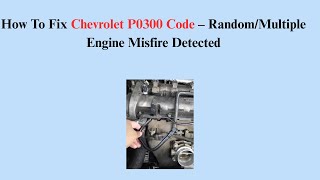
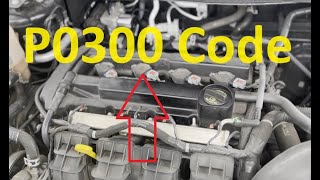

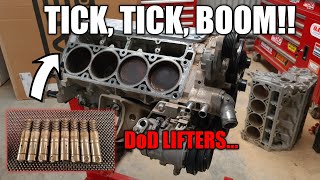
Used OEM Parts in Stock

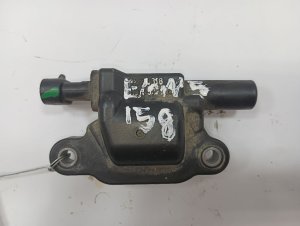
New Aftermarket Parts Available


The information in this article is provided for general reference and educational purposes only. Vehicle specifications, procedures, and part compatibility can vary by production date, trim level, and region. Always consult your vehicle's factory service manual and verify part numbers before purchasing or performing repairs. Safety-critical components such as airbags, seat belts, and braking systems should be installed by a qualified professional.
- Chevrolet CAPRICE:
- 🎬 Helpful Videos
- 🛍️ Shop This Part
- What's Unique About the 2013-2017 Chevrolet CAPRICE
- Diagnostic Flowchart
- Symptoms You May Notice
- Most Likely Causes
- Rare But Worth Checking
- Diagnosis Steps
- Parts You'll Likely Need
- Related Codes That Often Appear With This One
- Technical Service Bulletins (TSBs) & Recalls
- Platform-Specific Known Issues
- Mechanic-Grade Diagnostic Values
- Hidden / Shadow Codes Worth Checking
- Scan Tool Commands That Help
- Wiring & Ground Locations
- Real Owner Repair Stories
- "I Checked Everything" — The Actual Cause
- OEM Part Supersession History
- Model Year Variations Within This Range
- 🎟️ Get 5% Off