

P0300 on 2008-2012 Chevrolet Caprice: Random Misfire Causes and Fixes
On a 2008-2012 Chevrolet Caprice with the 6.0L L77 V8, a P0300 random misfire code is often more than just bad spark plugs. This platform is highly susceptible to collapsed Active Fuel Management (AFM) lifters, which can destroy the camshaft. A ticking engine noise accompanying the misfire is a critical symptom pointing to this serious mechanical failure. Other documented causes include internal coolant leaks and vacuum leaks.
- P0300 on a 2008-2012 Caprice signifies a random misfire affecting multiple cylinders.
- While standard ignition parts like spark plugs and coils are common culprits, do not overlook platform-specific issues documented in TSBs.
- Be aware of more severe potential causes like worn camshaft lobes (TSB #PIP4138R) and internal coolant leaks (TSB #PIP4959G).
- A flashing check engine light indicates a severe misfire; pull over safely and shut off the engine to prevent catalytic converter damage.
- Due to the potential for complex mechanical issues, a professional diagnosis is recommended if basic ignition and fuel system checks don't resolve the problem.
What's Unique About the 2008-2012 Chevrolet CAPRICE
The 2008-2012 Caprice, used extensively as a Police Patrol Vehicle (PPV), is powered by a 6.0L V8 L77 engine featuring Active Fuel Management (AFM), also called Displacement on Demand (DOD). This system deactivates four cylinders under light load to save fuel, but the special hydraulic lifters it uses are a notorious weak point. These AFM lifters are prone to collapsing or sticking, which causes misfires and, if not addressed, can wipe out camshaft lobes, leading to a catastrophic and expensive engine repair. This mechanical vulnerability, confirmed by multiple TSBs, makes a P0300 code on this vehicle potentially much more severe than on a typical passenger car.
Diagnostic Flowchart
Tap your situation to follow the diagnostic path that matches what you're seeing on this vehicle.
Symptoms You May Notice
- Rough or shaky idle
- Hesitation or stumbling during acceleration
- Reduced engine power
- Solid or flashing Check Engine Light
- Poor fuel economy
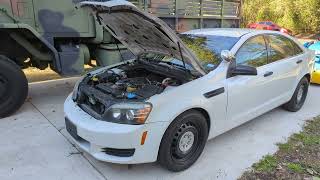
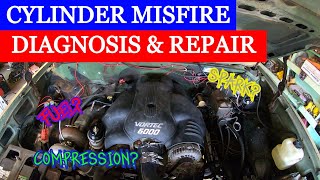
- Ticking, chirping, or squealing noise from engine, often at half engine speed 🎬 Watch: Diagnosing these specific LS engine noises (a key sign of lifter/cam failure) [TSB #PIP4138R].
- Stabilitrak/Traction Control warning lights may illuminate along with the CEL
- Replacing only ignition components when a rhythmic ticking noise is present. The ticking is a strong indicator of a mechanical valvetrain issue (lifter/cam) that must be addressed first.
- Replacing oxygen sensors. O2 sensors will report abnormal readings because of the misfire, but they are rarely the root cause of a P0300.
- Ignoring a flashing check engine light. This can lead to the destruction of expensive catalytic converters as they are flooded with unburnt fuel.
Most Likely Causes
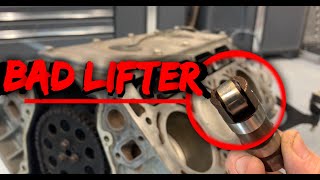
- AFM/DOD Lifter Failure 🔴 High Probability The L77 engine's Active Fuel Management lifters are a well-documented, high-failure item. High idle hours on these police vehicles, oil aeration, or internal part failure can cause a lifter to collapse or become stuck, preventing proper valve operation.
How to confirm: Listen for a distinct ticking or chirping noise. A professional can remove the valve covers and run the engine to observe the rocker arms for lack of movement on the misfiring cylinder, confirming a collapsed lifter. 🎬 See this trick to potentially release a stuck AFM lifter TSB #PIP4568 and others detail this failure mode.
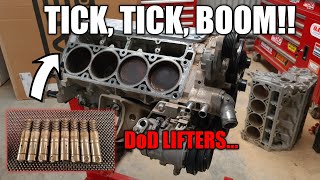
Typical fix: Requires replacement of all 16 lifters (both AFM and standard), lifter guides, and often the camshaft if it has been damaged by the failed lifter. Many owners opt for an 'AFM Delete Kit' which replaces the problematic components with standard, more reliable lifters and requires a corresponding ECU tune. 🎬 Watch: Step-by-step hardware guide for an AFM delete
Est. part cost: $300-$700 for lifters and gaskets, $1000-$1800+ for a full AFM delete kit with camshaft. - Worn or Fouled Spark Plugs 🔴 High Probability Spark plugs are a regular maintenance item. High idle hours and varying fuel quality in police service can accelerate wear and fouling.
How to confirm: Inspect the spark plugs for wear, carbon buildup, or oil fouling. Check the electrode gap. The ACDelco 41-110 or its successor 41-162 are the recommended plugs.
Typical fix: Replace all eight spark plugs. It is recommended to replace them as a set. Some owners report better performance with the older 41-110 plugs over the 41-162.
Est. part cost: $50-$120 - Faulty Ignition Coils or Spark Plug Wires 🟡 Medium Probability Engine bay heat and constant vibration can degrade coils and wires over time, leading to a weak or intermittent spark.
How to confirm: Use a scan tool with live data to monitor misfire counts. Swap a suspected bad coil with a known good one from another cylinder to see if the misfire follows the coil.
Typical fix: Replace the faulty ignition coil(s) or the complete set of spark plug wires. The OEM coil is part number 12611424.
Est. part cost: $40-$80 per coil, $60-$100 for a wire set - Worn Camshaft Lobe 🟡 Medium Probability This is almost always a direct result of a failed AFM lifter. The roller on the lifter stops spinning and grinds against the camshaft lobe, destroying it. TSB #PIP4138R specifically identifies this as a cause for P0300 codes.
How to confirm: This is a complex diagnosis requiring removal of the valve covers and lifters to visually inspect the camshaft lobes for wear. A wiped lobe will appear dull, scored, or visibly flattened.
Typical fix: Requires replacement of the camshaft, all lifters, and associated gaskets and bolts. This is a very labor-intensive job.
Est. part cost: $400-$800+ for camshaft and lifters - Vacuum Leak 🟡 Medium Probability Aging gaskets and hoses, particularly the intake manifold gasket or PCV system hoses, can crack and leak unmetered air, leaning out the fuel mixture and causing misfires.
How to confirm: A mechanic can use a smoke machine to pressurize the intake system and visually identify the source of any leaks. Spraying brake cleaner around suspected areas while the engine is running and listening for an RPM change is a less precise method.
Typical fix: Replace the failed gasket or hose.
Est. part cost: $20-$150 - Clogged or Faulty Fuel Injectors 🟡 Medium Probability Fuel injectors can become clogged with deposits over time, especially with varied fuel quality, leading to a lean condition and misfires.
How to confirm: Test fuel pressure to rule out a pump issue. A professional can perform a fuel injector balance test, or you can swap the suspected injector with one from another cylinder to see if the misfire code follows.
Typical fix: Clean or replace the faulty fuel injectors.
Est. part cost: $50-$100 per injector
Rare But Worth Checking
- Internal Coolant Leak (Block Porosity): TSB #PIP4959G (superseded by #18-NA-115) describes a rare but critical issue where porosity in the engine block casting allows coolant to leak into a cylinder, typically when cold. This causes a cold start misfire that can log a P0300. Diagnosis involves adding UV dye to the coolant and using a borescope to check the cylinder. The only fix is engine replacement.
- Crossed Injector Wiring Harness: TSB #PIP5169 warns that after engine repairs, the injector connectors for cylinders 5-7 and 6-8 can be accidentally swapped due to their proximity, causing a P0300 code immediately on startup.
- Low Fuel Pressure: A weak fuel pump or clogged fuel filter can starve the engine of fuel, causing random misfires, especially under load. A pressure test at the fuel rail is required for diagnosis.
Diagnosis Steps
- Read all trouble codes with an OBD-II scanner and analyze freeze frame data to see the conditions when the misfire occurred.
- Listen carefully for any ticking or chirping noises from the engine bay. A noise at half engine speed is a strong clue for lifter/camshaft issues per TSB #PIP4138R.
- If a ticking noise is present, remove the valve covers and observe rocker arm movement while the engine is running or being cranked. Lack of movement on a rocker indicates a collapsed lifter.
- If no noise is present, perform basic ignition system checks. Inspect all spark plugs, wires, and coils. Swap coils between cylinders to see if the misfire follows.
- Check for vacuum leaks using a smoke machine, paying close attention to the intake manifold gasket and PCV hoses.
- Test fuel pressure at the rail to ensure the pump and filter are functioning correctly. Consider a fuel injector balance test if equipment is available.
- If misfires are primarily on cold start, investigate for coolant intrusion per TSB #PIP4959G. This involves adding UV dye to the coolant and inspecting cylinders with a borescope.
- If recent engine work was performed, verify the fuel injector wiring is correct and not crossed per TSB #PIP5169.
Parts You'll Likely Need
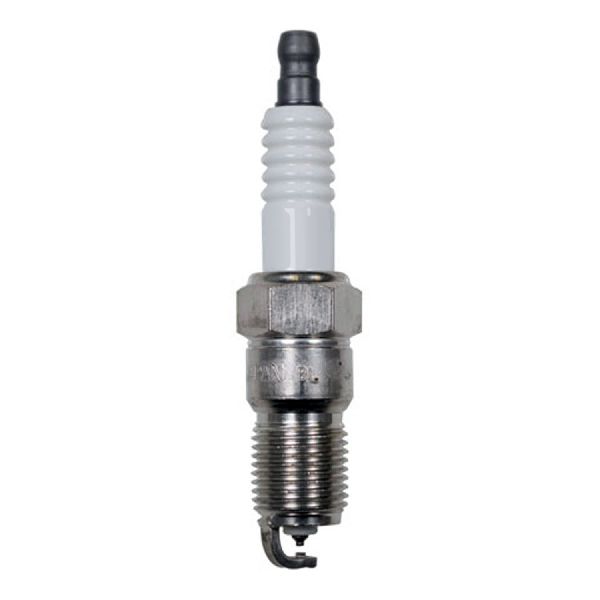
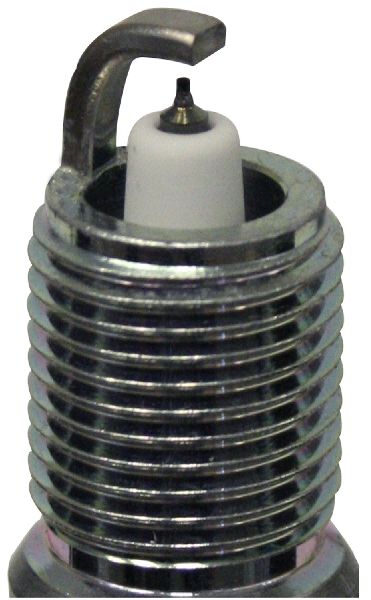
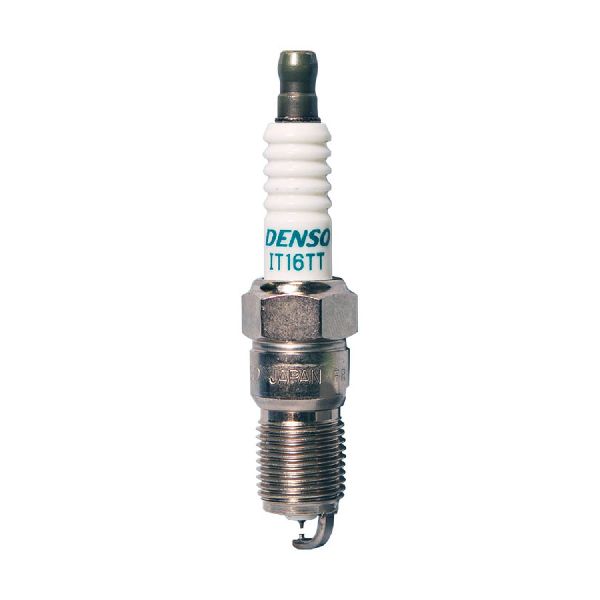
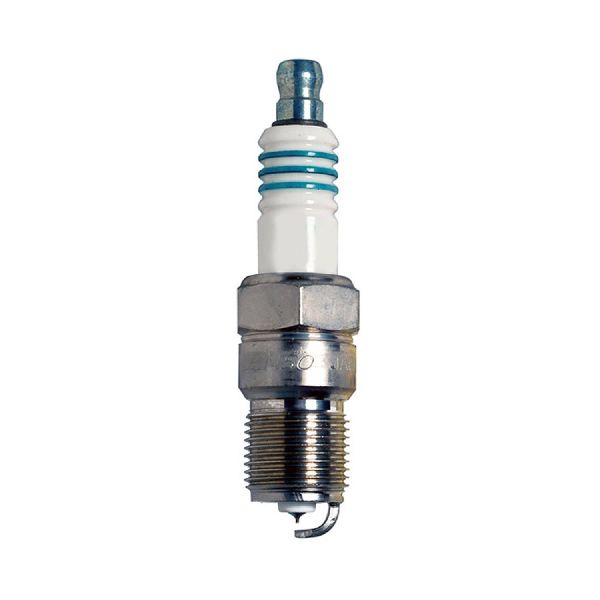
- Iridium Spark Plugs
(OEM #41-110 (Original Spec) / 41-162 (Successor))— Spark plugs are the most common wear item and a primary cause of ignition-related misfires.
Trusted brands: ACDelco, NGK
OEM price range: $8-$15
Related Codes That Often Appear With This One
- P0301-P0308 — If the random misfire begins to occur consistently on one or more specific cylinders, these codes will appear alongside P0300, helping to narrow down the location of the fault.
- P0171/P0174 — These 'System Too Lean' codes often indicate a vacuum leak, which is also a common cause of random misfires as unmetered air disrupts the air/fuel ratio.
- P050D — This code for 'Cold Start Rough Idle' is mentioned in TSB #PIP5628G in conjunction with P0300, pointing to issues like coolant intrusion or carbon buildup that are most apparent before the engine warms up.
Technical Service Bulletins (TSBs) & Recalls
- PIP5628G: Addresses diagnostic information needed for misfire codes P0300-P0308 and P050D.
- PIP4138R: Links P0300-P0308 codes to worn camshaft lobes and engine noise.
- 18NA115: Provides information on diagnosing cold start misfires and rough idle associated with P0300.
- PIP4959G: Details diagnosis for misfires on cylinder #1 due to coolant intrusion, which can cause a P0300.
- PIP5169: Warns about crossed injector connectors causing P0300 after engine repairs.
Platform-Specific Known Issues
- A known issue involves worn camshaft lobes leading to misfires (P0300-P0308) and potential engine noise, as documented in TSB #PIP4138R. The noise is described as a chirp or tick at half engine speed.
- Collapsed or stuck Active Fuel Management (AFM) lifters are a very common cause of P0300, often accompanied by a ticking noise. TSBs #PIP4568 and #15-06-01-002F detail this widespread problem.
- Cold start misfires and rough idle with a P0300 code are addressed in TSB #18-NA-115, which superseded TSB #PIP4959G. It points to potential coolant leaks into a cylinder due to block porosity, a repair that requires engine replacement.
- Following engine repairs, crossed injector connectors for cylinders 5-7 and 6-8 can cause a P0300 code, as warned in TSB #PIP5169.
Mechanic-Grade Diagnostic Values
- Fuel Pressure (at fuel rail, engine running) — expected: 35 - 65 PSI. Failure: Pressure dropping below 35 PSI, especially under load, indicates a weak pump or clogged filter.
- Fuel Injector Coil Resistance — expected: 12.0 - 12.5 Ohms. Failure: A reading significantly outside this range indicates a faulty injector coil.
- Spark Plug Gap (Iridium Plugs) — expected: 1.0mm - 1.1mm (0.039 in. - 0.043 in.). Failure: Gap wider than specified due to wear. Do not re-gap iridium plugs; replace them.
Hidden / Shadow Codes Worth Checking
- P1336: Crankshaft Position (CKP) System Variation Not Learned. This code indicates the mandatory 'Crank Relearn' procedure has not been completed or has failed. (see via Standard OBD-II scan tool. It often appears after replacing an ECM, crankshaft sensor, or performing major engine work.)
- Misfire Counters (Live Data): Not a DTC, but a critical live data parameter showing the number of misfire events per cylinder. This allows a technician to see which cylinders are misfiring even if a specific P030x code has not yet been set. (see via An OBD-II scan tool with live data or Mode 6 capability, such as a GM Tech2 or GDS2.)
Scan Tool Commands That Help
- GM Tech2 / GDS2 or equivalent professional scanner: Crankshaft Position Variation Learn — Required after replacing the ECM, crankshaft sensor, flywheel/flexplate, or crankshaft balancer. Failure to perform this can cause false P0300 codes because the ECM cannot accurately interpret crankshaft speed variations.
- GM Tech2 / GDS2 or equivalent professional scanner: AFM Cylinder Deactivation / Displacement on Demand (DOD) Test — To determine if misfires only occur when AFM is active (V4 mode). This command allows the technician to manually enable and disable AFM to see if the misfire counters increase only during deactivation, strongly pointing to a faulty AFM lifter or solenoid.
- GM Tech2 / GDS2 or equivalent professional scanner: Injector Balance Test / Injector Disable — To isolate a faulty or clogged fuel injector. The 'disable' function turns off one injector at a time, and the corresponding drop in engine RPM should be consistent across all cylinders. An inconsistent drop points to a problem with that cylinder's injector.
Wiring & Ground Locations
- G110 — On the right (passenger side) front cylinder head, connecting the engine harness.. This is a primary engine control ground. A poor connection can cause erratic sensor readings and interfere with ignition and injection signals.
- G112 — On the left (driver side) rear cylinder head, connecting the engine harness.. Another primary engine control ground. Essential for stable operation of sensors and actuators on that cylinder bank.
- G103 — On the cowl in the engine compartment, typically above the brake booster.. Grounds the Body Control Module (BCM), Instrument Panel Cluster (IPC), and Data Link Connector (DLC). A fault here can cause communication issues with scan tools or incorrect data reporting.
- Fuel Rail Ground Strap — A strap connecting the metal fuel rail to the engine.. Ensures the fuel rail and injectors are properly grounded, preventing potential electrical interference that could affect injector performance.
Real Owner Repair Stories
- Tahoe Yukon Forum user 'iamdub' (GM SUV with AFM V8 (e.g., Tahoe)) — P0300 code, erratic oil pressure gauge, random misfire on cylinder #5.
❌ Tried (didn't work) Replaced oil pressure sensor, Replaced spark plugs and wires, Used fuel system cleaner, Replaced ignition coil on misfiring cylinder, Replaced crankshaft position sensor
✅ What actually fixed it The misfire was observed to only happen when the engine entered AFM (V4) mode. The owner had the ECM tuned to permanently disable AFM, which resolved the P0300 code. This points to a failing AFM solenoid or lifter that only caused issues when activated. - RamForum.com user (Truck V8 (principle applies to any OHV V8)) — P0300 code and rough running immediately after a camshaft and lifter replacement.
❌ Tried (didn't work) Initial assumption of faulty new parts.
✅ What actually fixed it Upon removing the valve cover, it was discovered that an exhaust rocker arm had been installed incorrectly and was misaligned. After loosening the rocker shaft, realigning the rocker arm, and re-torquing, the engine ran perfectly and the code was resolved.
"I Checked Everything" — The Actual Cause
- While no specific stories were found, if a smoke test for vacuum leaks comes back clean, diagnosis should immediately pivot to the ignition system or, more critically on this platform, the mechanical valvetrain. A clean smoke test rules out unmetered air as the cause, making AFM lifter failure, worn camshaft lobes, or failing ignition components the next logical suspects.
When the Usual Fixes Don't Work
- A common diagnostic path for P0300 is to replace spark plugs, wires, and coils. However, on the L77 engine, this often fails to fix the problem. A documented case showed a vehicle receiving a new oil pressure sensor, plugs, wires, coil, and crankshaft sensor, yet the P0300 code persisted. The actual cause was a fault in the Active Fuel Management (AFM) system that only triggered the misfire when the engine switched to 4-cylinder mode. Disabling AFM via an ECU tune ultimately resolved the code, proving the issue was mechanical/systemic rather than a simple ignition component failure.
OEM Part Supersession History
ACDelco 41-110→ACDelco 41-162— Supplier and/or design change. The 41-162 is physically shorter than the 41-110.
Heads up: Both plugs are specified to work, but some owners and mechanics express a preference for the older 41-110, citing perceived higher manufacturing quality.Various (e.g., 12571595, 12619820)→Various (e.g., 12698946)— Revisions to address the high failure rate of the AFM/DOD lifters.
Heads up: When replacing failed AFM lifters, it is considered mandatory to also replace the four plastic lifter guide trays (GM P/N 12595365) to prevent repeat failure.
Model Year Variations Within This Range
- 2011-2013: The US-market Chevrolet Caprice PPV was introduced in 2011 with the 6.0L L77 V8. While the provided range is 2008-2012 (likely including international Holden models), the core P0300 causes related to the L77 engine and its AFM system are consistent across all years this engine was used in the platform.
Helpful Videos
We Have This Part in Stock

The information in this article is provided for general reference and educational purposes only. Vehicle specifications, procedures, and part compatibility can vary by production date, trim level, and region. Always consult your vehicle's factory service manual and verify part numbers before purchasing or performing repairs. Safety-critical components such as airbags, seat belts, and braking systems should be installed by a qualified professional.
- Chevrolet CAPRICE:
- 🎬 Helpful Videos
- 🛍️ Shop This Part
- What's Unique About the 2008-2012 Chevrolet CAPRICE
- Diagnostic Flowchart
- Symptoms You May Notice
- Most Likely Causes
- Rare But Worth Checking
- Diagnosis Steps
- Parts You'll Likely Need
- Related Codes That Often Appear With This One
- Technical Service Bulletins (TSBs) & Recalls
- Platform-Specific Known Issues
- Mechanic-Grade Diagnostic Values
- Hidden / Shadow Codes Worth Checking
- Scan Tool Commands That Help
- Wiring & Ground Locations
- Real Owner Repair Stories
- "I Checked Everything" — The Actual Cause
- When the Usual Fixes Don't Work
- OEM Part Supersession History
- Model Year Variations Within This Range
- 🎟️ Get 5% Off