

P0300 on 2003-2007 Chevrolet Caprice: Random Misfire Causes and Fixes
Code P0300 on a 2003-2007 Chevrolet Caprice indicates a random or multiple cylinder misfire. The most common causes are worn spark plugs, faulty ignition coil packs, or a vacuum leak from aged intake manifold gaskets. Addressing this often starts with a basic ignition system tune-up.
- P0300 indicates a random misfire, not tied to one cylinder. Don't immediately suspect a major failure.
- For the V8 models, the most probable causes are worn spark plugs/wires or a vacuum leak from the intake manifold gaskets.
- A flashing check engine light signals a severe misfire that can damage your catalytic converters; reduce speed and have the vehicle checked promptly.
- Because this Caprice is a rebadged Holden, searching for fixes related to the Holden Commodore/Statesman or Pontiac GTO (for LS1 V8) can provide additional, valuable information.
What's Unique About the 2003-2007 Chevrolet CAPRICE
The 2003-2007 Chevrolet Caprice is unique in the North American market as it's a rebadged Australian-built Holden Statesman/Caprice, primarily used for law enforcement and fleet sales. Most are equipped with robust V8 engines like the 5.7L LS1 or 6.0L L98. While these engines are known for reliability, a P0300 code on this platform often points to issues common to the LS engine family, such as vacuum leaks from deteriorating intake manifold gaskets or failing ignition components like spark plugs and coil packs after many years of service. For the less common 3.6L Alloytec V6, P0300 is frequently a symptom of stretched timing chains, a notorious issue for that engine family.
🎬 See common Alloytec V6 problems and timing chain issuesDiagnostic Flowchart
Tap your situation to follow the diagnostic path that matches what you're seeing on this vehicle.
Generation note: This year range covers the Holden WK (2003-2004) and WL (2004-2006) series, which were marketed as the Chevrolet Caprice in Middle Eastern markets and used for police fleets in North America. Engine options included a 3.6L V6 and more commonly the 5.7L LS1 and 6.0L L98 V8s. The diagnostic approach for a P0300 code is similar across these models, focusing on ignition, fuel, and air intake systems common to these GM powerplants.
Symptoms You May Notice
- Rough or shaky engine idle
- Hesitation or stumbling during acceleration
- Flashing or solid Check Engine Light
- Noticeable loss of engine power
- Poor fuel economy
- Difficulty starting the engine
- Engine ticking or tapping noise
- Replacing only one spark plug or coil when a full set is needed.
- Replacing oxygen sensors when they are correctly reporting a problem caused by a vacuum leak or fuel issue.
- Assuming a major engine failure before checking basic ignition and fuel system components.
- On V8s, replacing coils and plugs when the actual cause is a vacuum leak from the intake manifold gaskets that only appears when the engine is warm.
Most Likely Causes
- Vacuum Leak (Intake Manifold Gaskets) 🔴 High Probability The LS-family V8 engines are known for intake manifold gaskets that can become brittle and fail over time, allowing unmetered air to enter. A classic symptom is a misfire that only occurs or worsens after the engine is fully warm and in 'closed loop' fuel mode.
How to confirm: With the engine running, listen for a hissing sound. A definitive check is to monitor Short Term Fuel Trims (STFT) with a scanner; they will be highly positive (e.g., >+15%) at idle but drop near zero when RPMs are raised to ~2000. A smoke test is the most reliable way to pinpoint the leak.
Typical fix: Replace the intake manifold gaskets. This is a very common fix. The OEM ACDelco part is often recommended.
Est. part cost: $30-$80 - Worn or Fouled Spark Plugs 🔴 High Probability Spark plugs are a routine maintenance item. High-mileage fleet vehicles may have extended service intervals, leading to wear. Using counterfeit plugs from online marketplaces is also a known cause of persistent misfires.
How to confirm: Remove and inspect the spark plugs. Look for worn electrodes, oil fouling, or heavy carbon buildup. A very wide gap between electrodes is a clear sign of wear.
Typical fix: Replace all spark plugs as a set, along with spark plug wires if they are old. Use reputable brands like ACDelco or NGK.
Est. part cost: $40-$100 - Stretched Timing Chains (3.6L V6 Only) 🔴 High Probability The 3.6L Alloytec V6 is infamous for premature timing chain stretching. This causes the cam/crank correlation to go out of spec, leading to misfires that the ECU logs as P0300.
How to confirm: A P0300 code on a V6 is often accompanied by cam/crank correlation codes like P0016, P0017, P0018, or P0019. A mechanic can confirm by checking cam/crank correlation with a scope or by physical inspection.
Typical fix: This is a major repair requiring the replacement of all three timing chains, tensioners, and guides with an updated kit.
Est. part cost: $300-$600 - Faulty Ignition Coil(s) 🟡 Medium Probability Each cylinder has its own coil. While durable, heat and age can cause one or more coils to weaken or fail, leading to insufficient spark.
How to confirm: Use a scan tool to find which cylinder has the highest misfire count. Swap the coil from that cylinder with a known good one from another cylinder. If the misfire count follows the coil, the coil is bad.
Typical fix: Replace the faulty ignition coil. It's often wise to replace the corresponding spark plug at the same time.
Est. part cost: $30-$70 per coil - Low Fuel Pressure or Clogged Injectors 🟡 Medium Probability A weak fuel pump or clogged fuel filter can reduce fuel pressure. Individual injectors can also get clogged, especially on high-mileage cars that may have sat for extended periods.
How to confirm: Test the fuel pressure at the fuel rail with a gauge. To test an injector, you can swap it with one from another cylinder and see if the misfire follows, similar to testing a coil.
Typical fix: Replace the fuel pump or fuel filter if pressure is low. Clean or replace clogged fuel injectors.
Est. part cost: $50-$300
Rare But Worth Checking
- Failing Hydraulic Lifter or Worn Valvetrain: A collapsed or stuck hydraulic lifter can cause a persistent misfire on a single cylinder, which may be logged as a P0300. This is often accompanied by a distinct ticking or tapping noise from the upper engine. In severe cases, this can damage the camshaft.
- Clogged Catalytic Converter: A restricted exhaust can create excessive backpressure, causing a random misfire. This is often accompanied by a significant loss of power, especially at higher RPMs, and may trigger a P0420 or P0430 code.
- Faulty Mass Airflow (MAF) Sensor: A dirty or failing MAF sensor can send incorrect airflow data to the PCM, leading to an improper air-fuel mixture across all cylinders. Cleaning the sensor with a dedicated MAF cleaner is a simple first step.
- Faulty Ground Connection or Wiring Harness: Owners on Holden forums have reported that a poor engine-to-chassis ground can cause difficult-to-diagnose random misfires. On the V6, a faulty ignition coil wiring harness ground is known to cause misfires on an entire cylinder bank (e.g., cylinders 1, 3, and 5).
Diagnosis Steps
- Read all trouble codes with an OBD-II scanner. Pay close attention to any other codes besides P0300.
- Use a scan tool with live data to monitor misfire counts per cylinder and short-term fuel trims (STFT). High misfire counts isolate the cylinder; high STFTs at idle that normalize when revved suggest a vacuum leak.
- Inspect the condition of all spark plugs and spark plug wires for wear, damage, or fouling.
- Check for vacuum leaks, paying close attention to the intake manifold gaskets, PCV hoses, and brake booster line. A smoke test is most effective.
- Listen for an audible ticking from the valve cover area, which could point to a collapsed lifter.
- Test fuel pressure to ensure the fuel pump and filter are functioning correctly.
- Test ignition coils by swapping a suspected bad coil with a known good one and seeing if the misfire moves to the new cylinder.
- For V6 models, specifically look for timing-related codes (P001x) as this is a primary failure point.
- Check engine ground straps to ensure they are clean and tight.
Parts You'll Likely Need
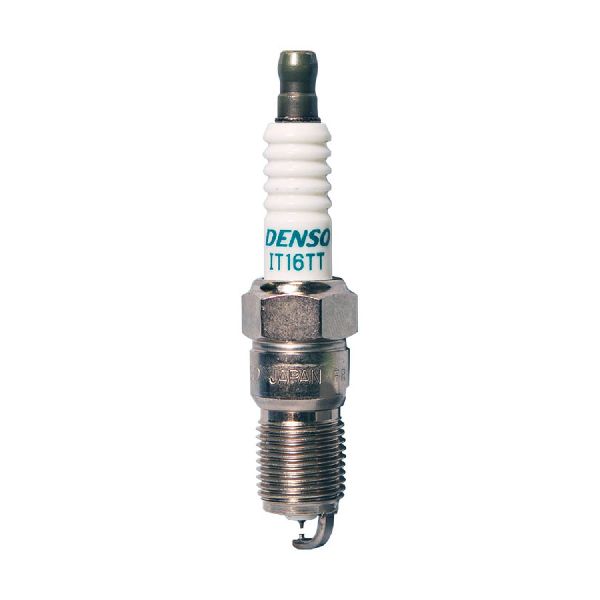
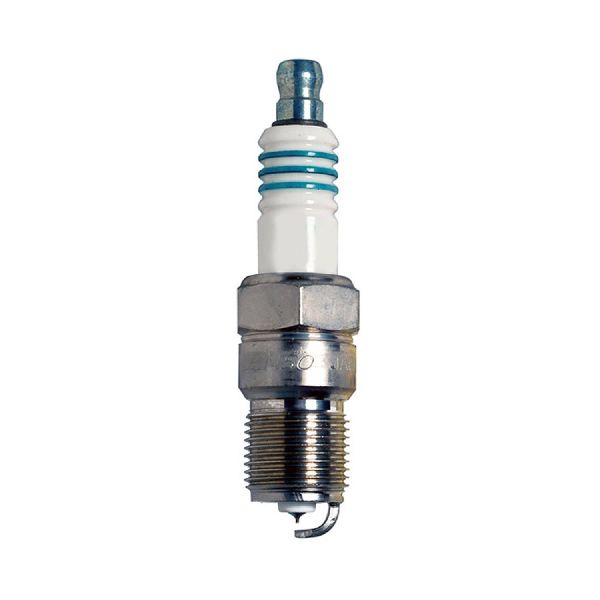
- Spark Plugs — These are a primary wear item and a leading cause of misfires. Replacing them is a fundamental first step in diagnosis.
Trusted brands: ACDelco, NGK
OEM price range: $8-$15 per plug
Aftermarket price range: $5-$12 per plug - Intake Manifold Gaskets (V8)
(OEM #ACDelco 89060413 or 12533587)— A very common failure point on the V8 engines used in this Caprice, causing vacuum leaks that trigger a P0300 code, especially when warm.
Trusted brands: ACDelco, Fel-Pro
OEM price range: $50-$90
Aftermarket price range: $30-$60 - Ignition Coil
(OEM #ACDelco D580 (19421259) or D510C (12611424))— Heat and age can cause coils to fail, resulting in a weak or non-existent spark. Part number depends on the specific LS engine version.
Trusted brands: ACDelco, Delphi
OEM price range: $50-$90
Aftermarket price range: $30-$70
Related Codes That Often Appear With This One
- P0301-P0308 — If the PCM can isolate the misfire to specific cylinders, it will set codes like P0301 (Cylinder 1), P0302 (Cylinder 2), etc., in addition to or instead of P0300.
- P0171 / P0174 — These codes indicate a lean air-fuel mixture on Bank 1 and Bank 2, respectively. They frequently appear with P0300 when the root cause is a vacuum leak affecting the entire engine.
- P0016, P0017, P0018, P0019 — On the 3.6L V6, these camshaft/crankshaft position correlation codes are a strong indicator that the P0300 is being caused by stretched timing chains.
Technical Service Bulletins (TSBs) & Recalls
- PIP5628C: A bulletin from the manufacturer that provides diagnostic aid for technicians when a vehicle presents with misfire DTCs P0300-P0308. It suggests gathering specific information for GM's Technical Assistance Center (TAC), implying these cases can be complex and may stem from non-obvious causes like accessory vibrations.
Platform-Specific Known Issues
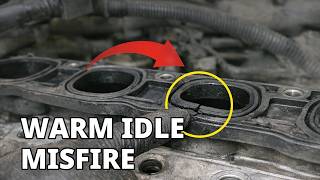
- V8 Warm Idle Misfire: A classic symptom on the 5.7L and 6.0L V8s is a rough idle and misfire that only appears after the engine is fully warmed up. This is almost always caused by leaking intake manifold gaskets creating a vacuum leak that is compensated for during cold-start 'open loop' mode, but causes a lean misfire in 'closed loop' mode.
- V6 Timing Chain Failure: The 3.6L Alloytec V6 is widely known in the Holden/GM community for premature timing chain stretching. This is a very common cause of P0300 on V6 models, often appearing with codes P0016-P0019, and requires a significant repair involving replacement of the chains, guides, and tensioners.
- Vibration-Induced Misfire (TSB): The provided NHTSA Technical Service Bulletin #PIP5628C indicates that diagnosing misfire codes P0300-P0308 can be complex. Some forum discussions on related platforms suggest this can be due to excessive vibration from non-engine sources, like a failing accessory (alternator, water pump). A diagnostic step is to briefly run the engine with the serpentine belt off to see if the misfire code disappears.
Mechanic-Grade Diagnostic Values
- Fuel Pressure (V8 Engines) — expected: 55-62 PSI, holding steady at idle and under load.. Failure: Pressure below 50 PSI can cause stumbling and lean conditions under load. Pressure that drops significantly when the engine is revved indicates a weak pump or clogged filter.
- Fuel Injector Resistance (V8 Engines) — expected: 12-16 Ohms for stock high-impedance injectors. All injectors should have similar readings.. Failure: A reading of 0 Ohms indicates a shorted injector. A reading significantly different from the others suggests a faulty injector.
- Ignition Coil Resistance (LS1-type V8) — expected: Primary: 0.4-0.6 Ohms. Secondary: 5,000-7,200 Ohms (5.0-7.2k Ohms).. Failure: Readings outside of these ranges, or an open circuit (infinite resistance), indicate a bad coil. Note that this test isn't always conclusive for heat-related failures.
Hidden / Shadow Codes Worth Checking
- P1336: Crankshaft Position (CKP) System Variation Not Learned. This code indicates the mandatory relearn procedure has not been completed or has failed. (see via Standard OBD-II scanner. It often appears after replacing a crank sensor or PCM if the relearn procedure is skipped, and can be a root cause for a P0300.)
Scan Tool Commands That Help
- GM Tech 2 / GDS2: Crankshaft Position Variation Relearn (CASE Relearn) — This is mandatory after replacing the crankshaft position sensor, PCM, crankshaft, or balancer. Failure to perform this procedure is a common cause of a persistent P0300 code, as the PCM cannot accurately detect misfires without learning the subtle variations of the crankshaft reluctor wheel.
- GM Tech 2 / GDS2: Misfire Data / Misfire Graph — This is the primary diagnostic screen for a P0300. It displays current and history misfire counts for each individual cylinder, allowing a technician to see if the 'random' misfire is actually concentrated on one or two cylinders, which would guide diagnosis toward a specific coil, plug, or injector.
- GM Tech 2 / GDS2: Injector Balance Test — Used to confirm a suspected faulty fuel injector when a misfire is isolated to a specific cylinder. The tool commands the PCM to fire each injector for a set duration while a fuel pressure gauge is monitored. The injector that causes a significantly different pressure drop compared to the others is faulty.
Wiring & Ground Locations
- G102 — Located at the left rear of the V8 engine.. This is the specific ground point for all eight ignition coils. A loose or corroded connection here can cause weak or intermittent spark across multiple cylinders, leading directly to a P0300 code.
- PCM Grounds (V8) — On the P01/P59 PCM, Pin 1 (Black/White wire) on both the Blue (C1) and Red (C2) connectors are essential grounds.. A poor PCM ground can cause a host of erratic issues, including misfire detection problems and incorrect sensor readings that can lead to a P0300.
- GP5 / GP6 (Holden WL Chassis) — GP5 is on the front right side of the engine block; GP6 is on the rear left side of the engine block.. These are the main engine block ground points shown in the service manual for the Holden equivalent of the Caprice. A poor connection at these points can affect the entire engine management system.
Real Owner Repair Stories
- Just Commodores & YouTube DIY Community (Holden Commodore/Caprice with 3.6L Alloytec V6) — Rough idle, hesitation, poor fuel economy, sometimes a P0300 code. Excessive oil in the intake manifold.
❌ Tried (didn't work) Replacing spark plugs and coils., Cleaning the MAF sensor., Replacing O2 sensors.
✅ What actually fixed it The factory PCV orifice in the driver-side valve cover was clogged. The fix was to remove the PCV nipple and drill out the tiny internal passages to a larger diameter (e.g., from 1.5mm to 2-3mm), which prevents future clogging and restores proper crankcase ventilation. This is a widely documented and successful DIY repair. - LS1Tech Forums (F-Body with LS1 V8 and automatic transmission (mechanically similar to Caprice V8)) — A sporadic knocking or tapping noise that only appears when the engine is fully warmed up, accompanied by a P0300 code. The noise was often mistaken for a collapsed lifter or rod knock.
❌ Tried (didn't work) Replacing spark plugs, wires, and coils., Top-end engine work, including lifter replacement.
✅ What actually fixed it The flexplate (flywheel for automatic) was cracked. The crack would expand when hot, causing the noise and sending false signals to the knock sensors. The PCM would pull timing in response, inducing a misfire. The fix was to replace the cracked factory flexplate with a stronger, SFI-approved aftermarket unit.
"I Checked Everything" — The Actual Cause
- A common scenario for a hard-to-diagnose P0300 on V8 models is a cracked flexplate. All fuel, air, and ignition tests (including a smoke test for vacuum leaks) will come back clean. The root cause is mechanical: the cracked plate creates a knocking sound when hot, which the knock sensors detect. The PCM pulls timing to prevent damage, but this aggressive timing change causes a real misfire, which is then logged as P0300. The key is listening for a temperature-dependent knock from the bellhousing area.
OEM Part Supersession History
Factory 3.6L V6 PCV Nipple (in valve cover)→DIY Modification or Aftermarket Revised Part (e.g., Revhigh)— The original design contains passages that are too small (approx. 1.5mm) and are highly prone to clogging with oil deposits, leading to incorrect crankcase pressure and misfires.
Heads up: The fix is to drill the passages larger (2-3mm). Some aftermarket vendors sell pre-modified or redesigned parts that accomplish the same goal.Factory LS1 Flexplate (esp. 2001-2002 production)→SFI-Approved Aftermarket Flexplate (e.g., TCI, Hughes)— The factory flexplate on some model years was identified by the community as being prone to cracking under stress, especially on higher mileage or modified vehicles.
Heads up: When replacing a cracked flexplate, it is highly recommended to upgrade to a stronger SFI-rated part rather than another OEM unit to prevent recurrence.
Model Year Variations Within This Range
- 2003-2004 (Holden WK Series): These earlier models were most commonly equipped with the 5.7L LS1 V8. P0300 diagnosis should focus on LS1-common issues like intake manifold gaskets, lifters, and ignition components.
- 2004-2007 (Holden WL Series): These later models introduced the 3.6L Alloytec V6 and the 6.0L L98 V8. For a V6, a P0300 is highly suspicious of timing chain or PCV system issues. For the 6.0L V8, diagnosis is similar to the LS1 but may involve parts specific to the later engine.
Helpful Videos


We Have This Part in Stock
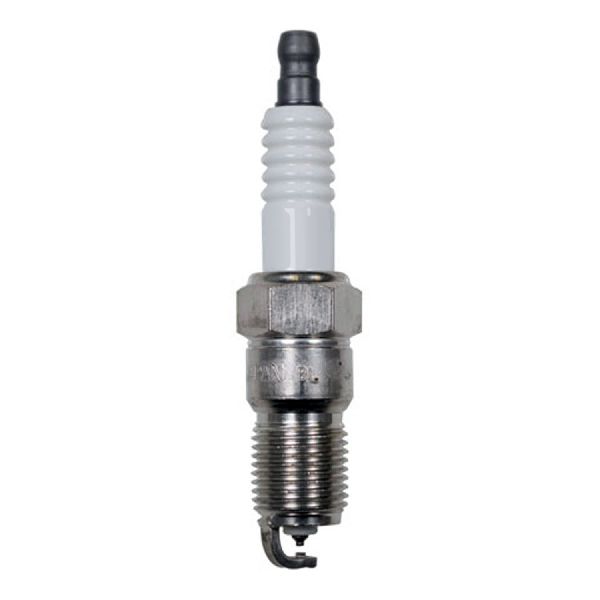
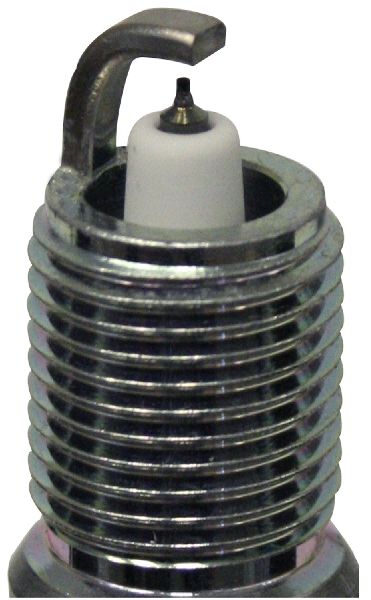

The information in this article is provided for general reference and educational purposes only. Vehicle specifications, procedures, and part compatibility can vary by production date, trim level, and region. Always consult your vehicle's factory service manual and verify part numbers before purchasing or performing repairs. Safety-critical components such as airbags, seat belts, and braking systems should be installed by a qualified professional.
- Chevrolet CAPRICE:
- 🎬 Helpful Videos
- 🛍️ Shop This Part
- What's Unique About the 2003-2007 Chevrolet CAPRICE
- Diagnostic Flowchart
- Symptoms You May Notice
- Most Likely Causes
- Rare But Worth Checking
- Diagnosis Steps
- Parts You'll Likely Need
- Related Codes That Often Appear With This One
- Technical Service Bulletins (TSBs) & Recalls
- Platform-Specific Known Issues
- Mechanic-Grade Diagnostic Values
- Hidden / Shadow Codes Worth Checking
- Scan Tool Commands That Help
- Wiring & Ground Locations
- Real Owner Repair Stories
- "I Checked Everything" — The Actual Cause
- OEM Part Supersession History
- Model Year Variations Within This Range
- 🎟️ Get 5% Off