

P0300 on 2011-2018 Chevrolet Camaro: Random Misfire Causes and Fixes
P0300 on a 2011-2018 Camaro indicates a random or multiple cylinder misfire. The most common causes are worn spark plugs and faulty ignition coils. Depending on the engine, specific issues like AFM lifter failure (V8), OCV solenoid issues (V6/V8), or piston cracks (2.0L Turbo) are also known causes.
- P0300 means a random/multiple cylinder misfire. Do not ignore it, especially if the check engine light is flashing, as this can damage your catalytic converter.
- For all engines, start your diagnosis with the basics: inspect spark plugs and ignition coils, as they are the most common culprits.
- Be aware of your specific engine. V8 models have known AFM lifter issues, and the 2.0L Turbo has a serious documented problem with piston failure.
- Check for Technical Service Bulletins (TSBs) for your specific year and engine, as GM has released several that directly address the causes of P0300 on the Camaro.
- A proper diagnosis is key. Simply replacing parts can get expensive. Use a scan tool, perform tests (compression, leak-down, smoke), and follow a logical diagnostic path.
What's Unique About the 2011-2018 Chevrolet CAMARO

The 2011-2018 Camaro spans two generations (5th and 6th) with multiple engine options (2.0L Turbo, 3.6L V6, 6.2L V8, Supercharged V8s). This variety means a P0300 code can stem from common issues like spark plugs or from problems specific to an engine family. For example, the 2.0L Turbo (LTG) has documented issues with piston failures leading to misfires, while V8 models (L99, LS3, LT1) can suffer from Active Fuel Management (AFM) lifter failures. Manufacturer bulletins point to specific problems like faulty oil control valve (OCV) solenoids and improper supercharger coolant bleeding on ZL1 models, making engine identification a key part of the diagnosis.
Diagnostic Flowchart

Tap your situation to follow the diagnostic path that matches what you're seeing on this vehicle.
Generation note: This range covers the end of the 5th generation (2011-2015) and the beginning of the 6th generation (2016-2018). The 5th gen offered 3.6L V6 (LFX) and 6.2L/7.0L V8s (L99, LS3, LS7). The 6th gen introduced a 2.0L 4-cylinder turbo (LTG) and new versions of the V6 (LGX) and V8 (LT1/LT4). Causes for P0300 can be engine-specific; for example, the severe piston issues noted in TSB PI1178F are for the 6th-gen 2.0L LTG engine. V8 issues often relate to the Active Fuel Management (AFM) system found in L99 and LT1 engines. The 6th generation V6 (LGX) also features AFM, unlike the 5th gen V6 (LFX).
Symptoms You May Notice
- Rough idle or engine stumbling
- Hesitation or jerking during acceleration
- Flashing or solid Check Engine Light
- Reduced engine power
- Poor fuel economy
- Engine is harder to start
- Fuel smell from the exhaust
- Ticking or tapping noise from the engine (common with lifter failure)
- Replacing only one spark plug or coil when others are near the end of their service life.
- Replacing oxygen sensors without first confirming they are the root cause.
- Assuming a vacuum leak without performing a smoke test to confirm.
- Replacing fuel injectors when the issue is actually ignition or compression related.
Most Likely Causes

- Worn or Fouled Spark Plugs 🔴 High Probability Spark plugs are a regular maintenance item. High-performance engines in the Camaro can be demanding on plugs, leading to faster wear. Carbon tracking on plugs is a noted issue on the 2.0L LTG engine.
How to confirm: Inspect spark plugs for wear, incorrect gap, oil fouling, or carbon tracking between the insulator and the shell. A hairline crack in the porcelain can also be the culprit.
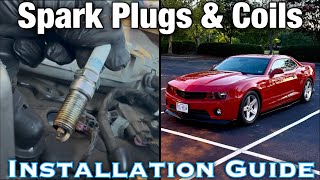
Typical fix: Replace all spark plugs as a set. Use plugs that meet OEM specifications. 🎬 See this step-by-step guide to replacing V6 Camaro spark plugs. Gaps are typically pre-set from the factory and should not be changed on iridium plugs.
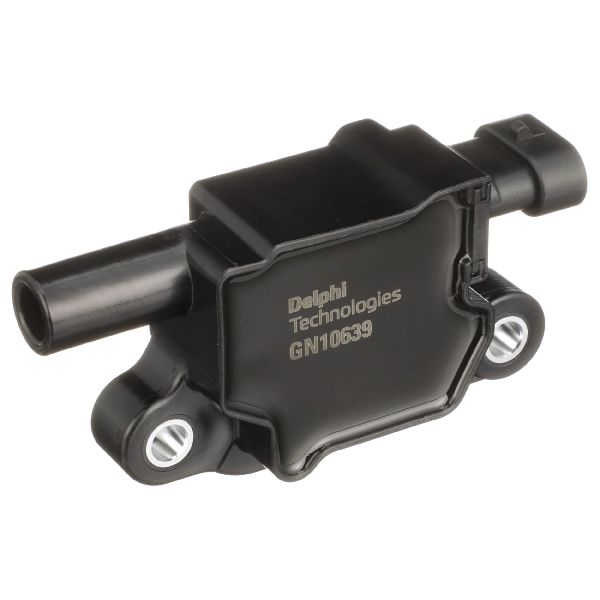
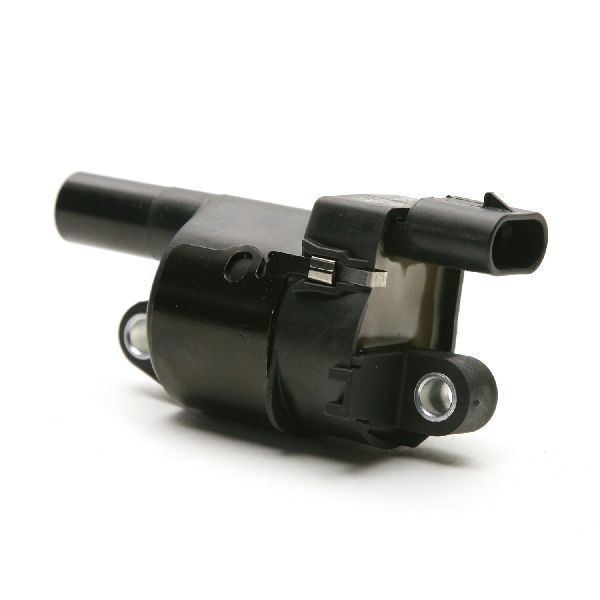
Est. part cost: $40-$150 - Faulty Ignition Coils 🔴 High Probability Coil-on-plug systems are common. Heat and vibration can cause coils to fail over time, leading to weak or no spark.
How to confirm: Use a scan tool with live data to identify which cylinder is misfiring. Swap the suspected bad coil with a known good one from another cylinder and see if the misfire follows the coil.
Typical fix: Replace the faulty ignition coil(s). It's often recommended to replace the corresponding spark plug at the same time.
Est. part cost: $50-$120 per coil - Active Fuel Management (AFM) Lifter Failure (V8 Engines) 🟡 Medium Probability V8 engines with AFM (L99, LT1) use special lifters that can deactivate cylinders to save fuel. These lifters can become mechanically collapsed or stuck due to issues like oil aeration, leading to a persistent misfire and a ticking noise. TSB 15-06-01-002F addresses this known issue.
How to confirm: Listen for a distinct ticking or chirping noise from the top of the engine that follows camshaft speed (half of engine RPM). A technician can remove the valve cover and run the engine to visually confirm if the rocker arms on an AFM cylinder are not moving, indicating a collapsed lifter.
Typical fix: Requires replacing the faulty bank of AFM lifters, lifter guides, and the valve lifter oil manifold (VLOM). The camshaft must be inspected for lobe damage and replaced if necessary. Many owners opt for a full 'AFM delete' during this repair.
Est. part cost: $300-$800 - Cracked Piston (2.0L LTG Engine) 🟡 Medium Probability A known issue documented in TSB PI1178F where a crack can form on the piston between the compression rings. This causes a loss of compression, leading to a misfire (P0300) and rough running.
How to confirm: Perform a cylinder compression test and a cylinder leak-down test. A significant loss of compression or high percentage of leakage into the crankcase on the affected cylinder is a strong indicator.
Typical fix: Requires significant engine disassembly to replace all four piston assemblies and connecting rod bearings as recommended by the TSB.
Est. part cost: $500-$1000+ - Faulty Oil Control Valve (OCV) Solenoid ⚪ Low Probability TSB #21-NA-036 describes how a damaged OCV solenoid (related to the AFM system) can leak oil, causing inadequate oil pressure and deactivating a cylinder, which sets misfire codes like P0300, P0302, and/or P0305.
How to confirm: Inspect the OCV solenoids, located in the camshaft cover, for visible damage, broken ends, or oil leaks as described in the service bulletin.
Typical fix: Replace the damaged OCV solenoid. If the end is broken off inside the bore, it must be carefully removed with a pick tool.
Est. part cost: $50-$150 - Vacuum Leak ⚪ Low Probability A leak in the intake manifold gasket, PCV system, or any vacuum hose can introduce unmetered air, leaning out the air-fuel mixture and causing random misfires.
How to confirm: Visually inspect all vacuum hoses for cracks or loose connections. A smoke test is the most effective method to pinpoint the exact source of a leak. Pay attention to the PCV hoses and valve cover connections.
Typical fix: Replace the leaking hose or gasket.
Est. part cost: $10-$100
Rare But Worth Checking
- Improper Supercharger Coolant System Service (ZL1 Models): TSB #17-NA-408 states that if the supercharger's cooling system has been repaired, it must be properly bled of all air. Air pockets can cause insufficient cooling of the supercharger, leading to the ECU pulling timing and potentially setting a P0300, especially at high ambient temperatures and high speeds (>100 mph).
- Internal Coolant Leak: Another GM bulletin mentions that P0300 and P050D on a cold start can be caused by coolant entering the cylinders, which may require engine replacement if confirmed.
- Clogged or Faulty Fuel Injectors: While less common than ignition issues, dirty or failing fuel injectors can disrupt the fuel spray pattern and cause misfires. This can sometimes be isolated to a single cylinder under heavy load.
- Poor Engine Ground Connection: A loose or corroded engine ground strap can cause a host of electrical issues, including random misfires. On some GM platforms, specific ground points (like G103 or a ground near the starter on 6th gen models) are known weak points that should be inspected, cleaned, and tightened.
- Crankshaft Position Sensor Relearn Needed: Sometimes, especially after other repairs, the crankshaft position sensor variation needs to be relearned by the ECM. If the ECM misinterprets minor variations in crankshaft speed, it can falsely log misfires, often setting a P1336 or P0315 code. A dealer or high-end scan tool is needed for this procedure.
Diagnosis Steps
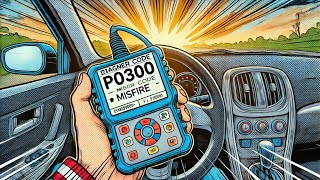
- Read the codes with an OBD-II scanner and check for any other stored codes. Note the freeze-frame data to see engine conditions when the code was set. Use a scan tool with live data to monitor misfire counts per cylinder. 🎬 Watch this diagnostic walkthrough for P0300 codes on 5th gen Camaros.
- Inspect the ignition system. Check spark plugs for wear, damage, or fouling. Ensure they are the correct OEM part number and gapped properly (if applicable).
- Test the ignition coils. Swap coils between cylinders to see if the misfire follows the coil.
- Check for vacuum leaks. Visually inspect all hoses connected to the intake manifold. Perform a smoke test for a definitive diagnosis.
- Test fuel pressure to ensure it is within OEM specifications. A weak fuel pump can cause a lean condition and random misfires.
- If you have a specific engine (V8, 2.0L Turbo), research TSBs related to it. For V8s, listen for lifter tick. For 2.0L Turbos, a compression test is critical.
- Perform a cylinder compression test and a leak-down test, especially if a specific cylinder is suspected or if you have the 2.0L LTG engine.
- Inspect engine ground connections. Ensure the main engine-to-chassis ground straps are clean, tight, and free of corrosion.
- If all else fails, the issue could be with fuel injectors, the crankshaft position sensor (requiring a relearn), or in rare cases, the ECM.
Parts You'll Likely Need
- Spark Plugs
(OEM #ACDelco 41-130 (V6), 41-166 (V8), 41-125 (2.0T))— This is the most common cause of misfires and a routine maintenance item. Worn plugs cannot create a strong enough spark.
Trusted brands: ACDelco, NGK
OEM price range: $60-$120
Aftermarket price range: $40-$80 - Ignition Coil
(OEM #ACDelco D521C (V6/V8), D524C (2.0T))— Ignition coils fail from heat and age, resulting in insufficient spark voltage. This is a very common fix for P0300.
Trusted brands: ACDelco, Delphi
OEM price range: $50-$120 per coil
Aftermarket price range: $30-$80 per coil - AFM Lifters — For V8 models with Active Fuel Management, lifter collapse is a well-documented failure mode that directly causes misfires.
Trusted brands: ACDelco, Johnson Lifters (aftermarket upgrade)
OEM price range: $200-$400 (for a set)
Aftermarket price range: $150-$500
Related Codes That Often Appear With This One
- P0301-P0308 — These codes specify which cylinder is misfiring (e.g., P0301 is cylinder 1). They often appear with P0300 when the misfire is frequent but also moves between cylinders.
- P050D — This code indicates a rough idle after a cold start. It's often seen with P0300, particularly in cases involving internal coolant leaks, carbon buildup, or other cold-start issues.
- P1336 / P0315 — These codes indicate the Crankshaft Position System Variation has not been learned by the ECM. This can occur after replacing an ECM or crankshaft position sensor and can cause the ECM to incorrectly report misfires. A scan tool relearn procedure is required to clear these codes.
Technical Service Bulletins (TSBs) & Recalls

- Concerns rough running and P0300 on 2.0L LTG engines due to a cracked piston between the rings, causing low compression. Affects 2016-2018 Camaro, among other GM vehicles.
- For 6.2L LT4 engines (ZL1), addresses P0300 set at high speeds/temps after a supercharger cooling system repair. Caused by air pockets from improper bleeding.
- Details how a damaged Oil Control Valve (OCV) solenoid can cause oil leaks and misfires (P0300, P0302, P0305) on V6 and V8 engines with AFM.
- Addresses engine tick noise and P0300 on V8 engines, often caused by a mechanically collapsed or stuck AFM lifter due to oil aeration.
Platform-Specific Known Issues
- 2.0L LTG Engine: Prone to cracked pistons leading to low compression and misfires (P0300). This is a serious issue documented in TSB PI1178F and mentioned by owners. TSB #19-NA-246 also notes that talc powder used in ignition coil boots from the factory can lead to carbon tracking and misfires on these engines.
- V8 Engines (5.3L/6.2L): Can suffer from Active Fuel Management (AFM) lifter failure, causing a P0300 code and a distinct engine ticking noise. TSB 15-06-01-002H addresses this.
- Supercharged V8 (ZL1): TSB #17-NA-408 warns that improper bleeding of the supercharger's cooling system after a repair can set a P0300 code.
- V6/V8 Engines: TSB #21-NA-036 identifies a damaged OCV (oil control valve) solenoid as a potential cause for P0300, often accompanied by P0302 or P0305.
- Cold Start Misfire: TSB #18-NA-115 provides diagnostic information for a cold start misfire and/or rough idle that sets a P0300 code.
Mechanic-Grade Diagnostic Values
- Ignition Coil Primary Resistance — expected: 0.4 to 2.0 Ohms. Failure: A reading outside this range, though GM's primary diagnostic method is to swap the coil to another cylinder and see if the misfire follows.
- Ignition Coil Secondary Resistance — expected: 6,000 to 10,000 Ohms. Failure: A reading significantly outside this range suggests a faulty coil.
- Cylinder Power Balance RPM Drop — expected: A relatively consistent RPM drop across all cylinders when each is individually deactivated via a scan tool.. Failure: Little or no RPM drop when a cylinder is deactivated indicates that cylinder was not contributing power, pointing to a misfire cause in that specific cylinder.
Hidden / Shadow Codes Worth Checking
- P1336 / P0315: Crankshaft Position System Variation Not Learned. The ECM has not learned the minor manufacturing variations of the crankshaft reluctor wheel. This can cause false misfire detection. (see via Standard OBD-II scan tool. These codes often appear after replacing the ECM, crankshaft position sensor, or performing major engine work.)
- Misfire Counters (Live Data): Not a DTC, but a live data parameter showing the number of misfire events per cylinder. This is crucial for identifying which cylinder(s) are the primary offenders in a P0300 random misfire scenario. (see via GM's GDS2 software or advanced professional scan tools. Often displayed as a 'Misfire Graphic' or in the engine control module's data list.)
Scan Tool Commands That Help
- GDS2 / Tech2 / Professional Scan Tool: Crankshaft Position Variation Learn — This procedure must be performed after replacing the crankshaft position sensor, the ECM, or after some major engine repairs. Failure to do so can result in a persistent P1336 or P0315 code and false P0300 misfire detection. The procedure involves revving the engine to a specific RPM (e.g., ~4000 RPM) until fuel cut-off occurs, allowing the ECM to learn the crankshaft's profile.
- GDS2 / Professional Scan Tool: Cylinder Power Balance Test — This is a primary diagnostic step for a P0300 code. The tool deactivates one cylinder at a time (by cutting fuel or spark) and measures the corresponding drop in engine RPM. A cylinder with little to no RPM drop is the one misfiring. This helps isolate the problem from random to a specific cylinder.
- GDS2 / Professional Scan Tool: Injector Balance Test — To test if all fuel injectors are delivering a similar amount of fuel. The tool can command each injector to fire for a set duration while measuring the drop in fuel pressure. An inconsistent drop can indicate a clogged or faulty injector.
Wiring & Ground Locations
- G102 (5th Gen) — Located at the left (driver's side) rear of the engine.. This point specifically grounds the 8 ignition coils on V8 models. A poor connection here can cause weak or intermittent spark across multiple cylinders, leading to a P0300 code.
- G103 (5th Gen) — Located on the cowl in the left (driver's side) rear of the engine compartment, above the brake booster.. This is a critical ground for the Body Control Module (BCM) and Engine Control Module (ECM). A loose or corroded G103 can cause a wide range of bizarre electrical issues, including false sensor readings that could trigger a P0300.
- Engine Block Ground (6th Gen) — On the passenger side of the engine block, underneath the exhaust manifold near the starter.. This ground bolt is reportedly not tightened sufficiently from the factory on some 6th gen Camaros. A loose connection here can cause erratic tachometer behavior and various electrical problems, including misfires, especially during hot starts.
- Cylinder Head Grounds (5th/6th Gen) — There are ground points on the back of both passenger and driver side cylinder heads.. These grounds are essential for the engine sensor network. Poor connections can lead to noisy sensor signals, which the ECM might misinterpret as an engine fault like a misfire.
Real Owner Repair Stories
- RamForum.com user 'stc315' (Truck with Hemi V8 (similar valvetrain design to GM LS)) — P0300 code and rough running immediately after a cam and lifter replacement.
❌ Tried (didn't work) Initial assumption was a failed new part (lifter or cam).
✅ What actually fixed it The user removed the valve cover and discovered an exhaust rocker arm on one cylinder was misaligned. After loosening the rocker shaft, realigning the rocker arm, and re-torquing, the engine ran perfectly and the code was resolved. - YouTube video by 'Hardly Moving' (2013 Hyundai Elantra (demonstrates universal diagnostic principle)) — P0300, P0301, P0302 (misfires on cylinders 1 and 2).
❌ Tried (didn't work) Replaced spark plugs (this fixed the P0302, but P0301 remained)., Swapped the ignition coil from cylinder 1 with cylinder 4; the misfire remained on cylinder 1.
✅ What actually fixed it The user swapped the fuel injector from cylinder 1 with cylinder 4. The misfire code then changed to P0304 (cylinder 4 misfire), proving the fuel injector was the faulty component. Replacing the injector fixed the issue.
"I Checked Everything" — The Actual Cause
- In cases where a P0300 is present with lean conditions but a smoke test reveals no vacuum leaks, the Mass Air Flow (MAF) sensor itself could be at fault. A MAF sensor that is under-reporting airflow will cause the ECM to command less fuel, creating a lean mixture and random misfires. A diagnostic step is to disconnect the MAF sensor entirely; if the misfire condition improves (as the ECM reverts to default fueling maps), the MAF sensor is likely faulty and needs replacement.
When the Usual Fixes Don't Work
- While faulty AFM lifters are a common cause of P0300 on V8s, a misfire that appears immediately after a lifter replacement job should not automatically be blamed on another bad lifter. A documented case showed the actual cause was a misaligned rocker arm that was not correctly seated during reassembly. The fix was to simply realign the rocker, which resolved the code without replacing more parts.
OEM Part Supersession History
GM 25198623→ACDelco D521C— Standard part update and rebranding under ACDelco.
Heads up: D521C is the correct replacement for many 2011-2018 V6 and V8 engines, but always verify fitment for the specific engine, as other coils like D524C are used on the 2.0L Turbo.
Model Year Variations Within This Range
- 2016-2018: The 6th generation Camaro is based on the lighter, more compact GM Alpha platform, compared to the 5th gen's Zeta platform.
- 2016-2018 (V6 Models): The V6 engine was updated from the 3.6L LFX to the 3.6L LGX. The new LGX engine features direct injection and, notably, Active Fuel Management (AFM), a system previously reserved for V8s that can cause lifter-related misfires.
- 2016-2018 (SS Models): The SS models received the new 6.2L LT1 V8, replacing the previous LS3/L99 engines. While still a 6.2L pushrod V8, the LT1 is a different engine family with direct injection.
- 2016-2018: The 8-speed (and later 10-speed) automatic transmission was introduced. The 8-speed automatic has a known issue with torque converter shudder that can mimic the feeling of an engine misfire.
Helpful Videos
Used OEM Parts in Stock
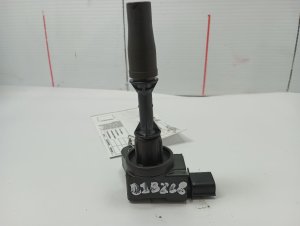

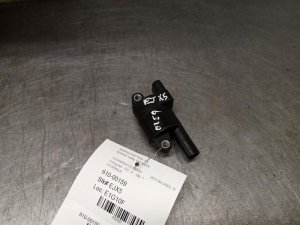
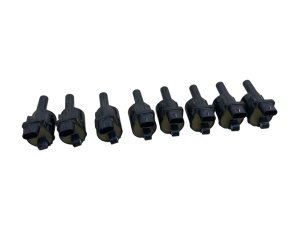
New Aftermarket Parts Available


The information in this article is provided for general reference and educational purposes only. Vehicle specifications, procedures, and part compatibility can vary by production date, trim level, and region. Always consult your vehicle's factory service manual and verify part numbers before purchasing or performing repairs. Safety-critical components such as airbags, seat belts, and braking systems should be installed by a qualified professional.
- Chevrolet CAMARO:
- 🎬 Helpful Videos
- 🛍️ Shop This Part
- What's Unique About the 2011-2018 Chevrolet CAMARO
- Diagnostic Flowchart
- Symptoms You May Notice
- Most Likely Causes
- Rare But Worth Checking
- Diagnosis Steps
- Parts You'll Likely Need
- Related Codes That Often Appear With This One
- Technical Service Bulletins (TSBs) & Recalls
- Platform-Specific Known Issues
- Mechanic-Grade Diagnostic Values
- Hidden / Shadow Codes Worth Checking
- Scan Tool Commands That Help
- Wiring & Ground Locations
- Real Owner Repair Stories
- "I Checked Everything" — The Actual Cause
- When the Usual Fixes Don't Work
- OEM Part Supersession History
- Model Year Variations Within This Range
- 🎟️ Get 5% Off