

P0300 on 2010-2013 Chevrolet Avalanche: Random Misfire Causes and Fixes
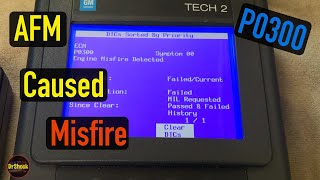
P0300 on a 2010-2013 Avalanche indicates random engine misfires. While basic causes like worn spark plugs are possible, this code is frequently a symptom of a failing Active Fuel Management (AFM) lifter or a vacuum leak from the driver's side valve cover. A flashing check engine light signals a severe misfire requiring immediate attention to prevent catalytic converter damage.
- P0300 on a 2010-2013 Avalanche is a serious code that requires prompt diagnosis.
- Do not drive if the check engine light is flashing, as you risk destroying your catalytic converters.
- Be highly suspicious of platform-specific issues: failed AFM lifters and a leaking PCV baffle in the driver's side valve cover are the most probable causes beyond basic spark plugs.
- A ticking or tapping noise from the engine top-end strongly suggests a mechanical failure with the valvetrain (lifters/camshaft).
- Diagnosis should be systematic, starting with simple items like spark plugs and vacuum leaks before moving to more complex and expensive internal engine repairs.
What's Unique About the 2010-2013 Chevrolet AVALANCHE
The 2010-2013 Avalanche, built on the GMT900 platform with V8 engines, is highly susceptible to specific issues that cause a P0300 code. The most notorious is the failure of the Active Fuel Management (AFM) system lifters, which are designed to deactivate cylinders for better fuel economy but are a well-documented failure point that can collapse or stick. Additionally, GM has issued technical bulletins for problems like PCV system leaks within the driver's side valve cover (TSB #PIP5161) and worn camshafts (TSB #PIP4138R) that specifically lead to misfires on this family of engines.
Diagnostic Flowchart
Tap your situation to follow the diagnostic path that matches what you're seeing on this vehicle.
Symptoms You May Notice
- Rough or uneven engine idle
- Hesitation or stumbling during acceleration
- Noticeable loss of engine power
- Flashing or solid Check Engine Light
- Reduced fuel economy
- Engine shaking or vibrating
- StabiliTrak/Traction Control warning lights may illuminate
- Audible engine ticking or chirping noise that increases with RPM
- Replacing only spark plugs when the underlying cause is a failing AFM lifter or a vacuum leak.
- Replacing oxygen sensors, which are unlikely to be the root cause of a P0300 code, although they may trigger other codes due to the misfire.
- Assuming the StabiliTrak warning indicates a problem with the stability system itself, when it is almost always a secondary warning triggered by the engine misfire. 🎬 Watch: How a misfire triggers the StabiliTrak warning light.
Most Likely Causes
- Failed Active Fuel Management (AFM) Lifter 🔴 High Probability The AFM system deactivates cylinders (1, 4, 6, and 7) to save fuel, but the specialized lifters are a very common failure point on these GM V8 engines. They can collapse, stick, or fail internally due to oil aeration or wear on internal locking pins, causing a persistent misfire and often a ticking noise.
How to confirm: Diagnosis often requires removing the valve covers to observe rocker arm movement while the engine is running. A dead rocker arm indicates a collapsed lifter. A professional may also use a scan tool to monitor misfire data and disable specific cylinders to isolate the fault. TSB #PIP4138R suggests that if the noise is eliminated when commanding AFM on with a scan tool, the issue is likely in the valvetrain of cylinders 1, 4, 6, or 7.
Typical fix: Replace all AFM lifters (not just the failed one), the lifter guides, and often the camshaft, as a failed lifter can cause damage to the cam lobe. Many owners opt to install an 'AFM Delete Kit' to permanently remove the system and prevent future failures. 🎬 See this walkthrough on the permanent fix for AFM lifter failure. This requires reprogramming the ECU.
Est. part cost: $400-$1500 - PCV Baffle / Valve Cover Vacuum Leak 🔴 High Probability GM TSB #PIP5161G specifically identifies a problem where the PCV baffle on the driver's side valve cover can leak, causing unmetered air to enter the engine. This lean condition leads to random misfires. Some owners report this also causes excessive oil consumption that fouls the #1 and #7 spark plugs.
How to confirm: A smoke test is the most effective way to find a vacuum leak. The TSB suggests removing the valve cover, plugging specific ports on the baffle, applying regulated air pressure through the PCV pipe, and spraying soapy water where the baffle meets the valve cover to check for bubbles.
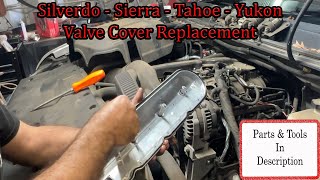
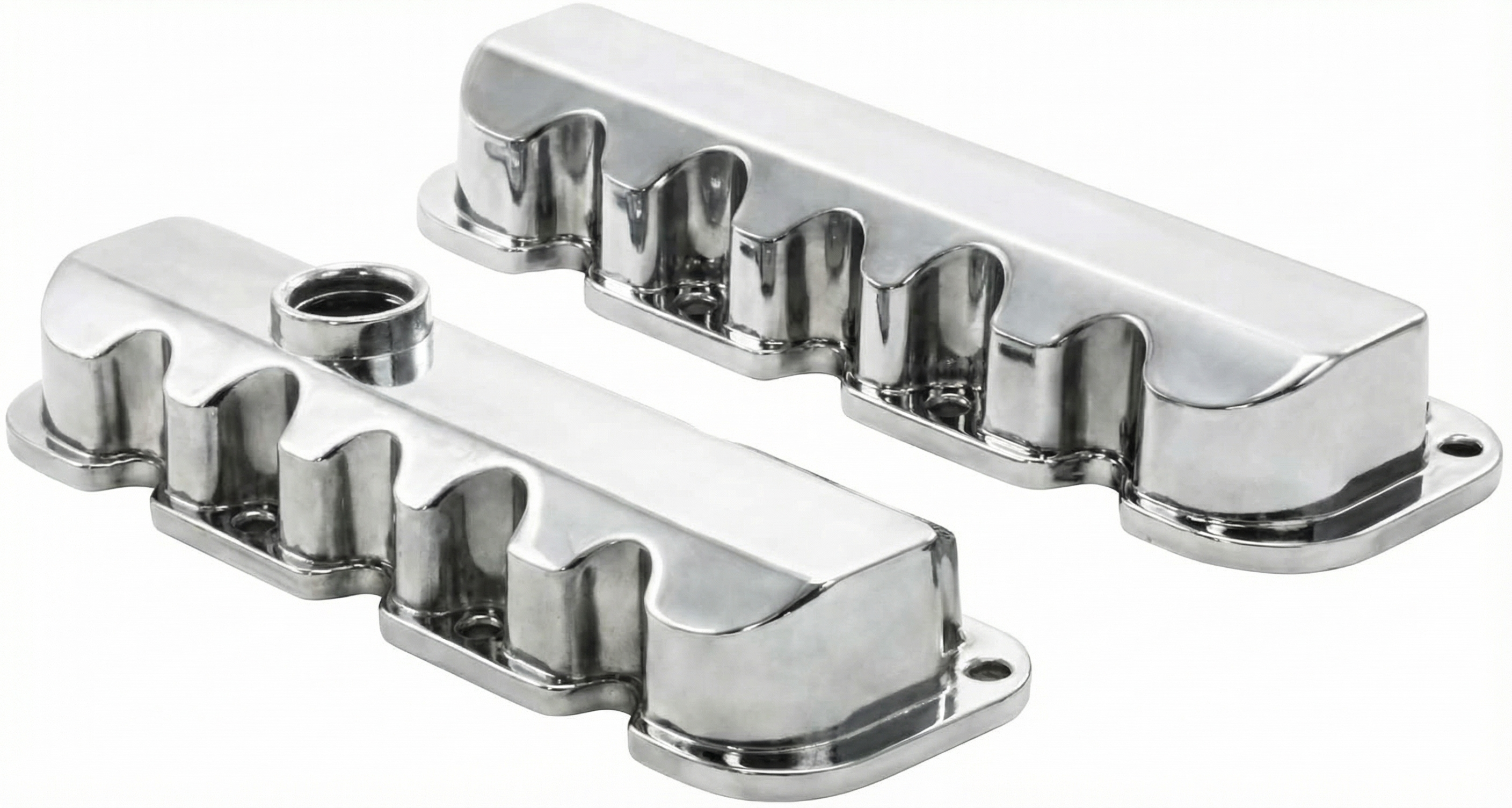
Typical fix: Replace the driver's side valve cover with an updated part that has a redesigned PCV baffle. The updated ACDelco part is often cited as #12642920. 🎬 Watch: Step-by-step guide to replacing the driver's side valve cover. It is recommended to test the new valve cover for leaks before installation.
Est. part cost: $80-$200 - Worn Spark Plugs & Ignition Coils/Wires 🟡 Medium Probability Standard maintenance items. While not a platform-specific flaw, a general lack of maintenance can easily cause random misfires as multiple plugs or coils weaken over time. Oil fouling on plugs (especially on cylinder #1 or #7) is a strong indicator of the PCV/valve cover issue.
How to confirm: Inspect spark plugs for wear, fouling, or incorrect gap. A dark, oily plug (especially on cylinder #1 or #7) can indicate the PCV/valve cover issue. Ignition coils can be tested with a multimeter or swapped between cylinders to see if a specific misfire code (e.g., P0301) appears.
Typical fix: Replace all spark plugs and any faulty ignition coils or wires. Using high-quality OEM-spec parts like ACDelco Iridium plugs (e.g., part #41-110) is recommended. These plugs are pre-gapped and should not be adjusted.
Est. part cost: $100-$400 - Clogged or Faulty Fuel Injectors ⚪ Low Probability Fuel injectors can become clogged over time, leading to a lean condition and misfires. TSB #PIP5169 notes that after engine repairs, the injector connectors for cylinders 5-7 and 6-8 can be accidentally crossed, causing misfires.
How to confirm: A professional can perform a fuel injector balance test. A DIY method is to use a scan tool to monitor fuel trims or swap an injector with one from a known-good cylinder to see if the misfire follows.
Typical fix: Clean or replace the faulty fuel injectors. Ensure wiring connectors are correctly installed per TSB #PIP5169.
Est. part cost: $50-$150 per injector
Rare But Worth Checking
- Worn Camshaft Lobe: TSB #PIP4138R points to a worn camshaft lobe as a potential cause for P0300-P0308 codes, especially if accompanied by engine noise. This is often a consequence of a failed lifter, which can wipe out the corresponding lobe on the camshaft, necessitating replacement of both.
- Low Fuel Pressure: A weak fuel pump or clogged fuel filter can starve the engine of fuel, causing lean conditions and random misfires under load.
- Intake Manifold Gasket Leak: A leak in the intake manifold gasket can introduce unmetered air, similar to the valve cover issue, leading to a lean air-fuel mixture and misfires.
Diagnosis Steps
- Check for a flashing check engine light. If flashing, do not drive the vehicle to prevent catalytic converter damage.
- Scan the ECM for any other trouble codes. Codes for specific cylinders (P0301-P0308) or systems can provide valuable clues.
- Using a scan tool with live data, monitor the misfire counters for each cylinder. This can help identify if one or two cylinders are the primary culprits, even with a P0300 code.
- Perform a thorough visual inspection. Look for cracked vacuum hoses, loose electrical connectors, or signs of oil leaks around the valve covers.
- Inspect the ignition system. Remove and examine all spark plugs for wear, damage, or fouling (especially oil fouling on cylinders #1 and #7). Test or swap ignition coils.
- Perform a smoke test to check for vacuum leaks, paying close attention to the intake manifold gasket and the driver's side valve cover PCV baffle area.
- Check fuel pressure to rule out a weak fuel pump or clogged filter.
- If no external issues are found and a ticking or chirping noise is present, suspect an internal engine problem. Remove valve covers to inspect for collapsed AFM lifters or a worn camshaft.
Parts You'll Likely Need
- Driver's Side Valve Cover
(OEM #12642920)— This is the primary fix for the common PCV baffle vacuum leak described in TSB #PIP5161. The original design is prone to leaking unmetered air.
Trusted brands: ACDelco, Dorman
OEM price range: $100-$150
Aftermarket price range: $70-$120 - AFM Lifters — Failed Active Fuel Management lifters are a very common cause of P0300 on these engines. They collapse or stick, causing misfires and potential camshaft damage.
Trusted brands: ACDelco, Delphi, Melling
OEM price range: $40-$60 per lifter
Aftermarket price range: $25-$50 per lifter
Related Codes That Often Appear With This One
- P0301-P0308 — If the computer can eventually isolate the misfire to a specific cylinder, a cylinder-specific code will accompany or replace the P0300. Misfires on cylinders 1 and 7 are particularly common due to the PCV and AFM issues.
- P050D — TSB #PIP5628G links this code (Cold Start Rough Idle) with misfire codes like P0300, suggesting a potential connection in diagnostic procedures.
- StabiliTrak/Traction Control Warnings — The engine control module communicates with the stability control system. A severe engine misfire can cause the ECM to disable these systems as a precaution, triggering their respective warning lights on the dashboard.
Technical Service Bulletins (TSBs) & Recalls
- PIP5628G
- PIP5169
- PIP4138R
- PIP5161G
- 10-06-01-008K
Platform-Specific Known Issues
- AFM Lifter Failure: The most significant issue for this platform. The hydraulic lifters used for the Active Fuel Management system are prone to failure, causing them to collapse or stick, resulting in a dead cylinder and a P0300 code.
- PCV Valve Cover Leak: TSB #PIP5161 details a known issue where a leak develops in the PCV baffle integrated into the driver's side valve cover, causing a lean condition and random misfires.
- Worn Camshaft: TSB #PIP4138R notes that a worn camshaft lobe can cause misfire codes, often as a result of prolonged contact with a failed lifter.
- Crossed Injector Connectors: TSB #PIP5169 warns technicians that after engine repairs, it's possible to cross the injector wiring for cylinders 5-7 and 6-8, which will set a P0300 code.
Mechanic-Grade Diagnostic Values
- Fuel Pressure (Key On, Engine Off) — expected: 54-56 PSI. Failure: Pressure below this range indicates a weak fuel pump or clogged filter.
- Ignition Coil Primary Resistance — expected: 0.49 - 0.57 ohms. Failure: Readings outside this range suggest a faulty primary winding in the coil.
- Ignition Coil Secondary Resistance — expected: 9.5 - 11.1 kilohms. Failure: Readings outside this range suggest a faulty secondary winding in the coil.
- Long Term Fuel Trim (LTFT) at Idle — expected: Between -10% and +10%. Failure: Consistently high negative values (e.g., -12% to -19%) suggest the PCM is compensating for a rich condition, while high positive values indicate a lean condition (vacuum leak).
Scan Tool Commands That Help
- GDS2 / Tech2: Misfire Graph / Misfire Data — This is the first and most critical diagnostic step. It shows live misfire counts for each cylinder, helping to determine if the 'random' P0300 is actually concentrated on specific cylinders, such as the AFM cylinders (1, 4, 6, 7).
- GDS2 / Tech2: Cylinder Deactivation (AFM Control) — This bidirectional control allows a technician to manually command the AFM system on and off. It is used to confirm if the misfire is directly related to AFM operation and to test the response of the solenoids in the Valve Lifter Oil Manifold (VLOM).
- GDS2 / Tech2: Injector Balance Test — This test systematically fires each injector and measures the drop in fuel pressure to identify a weak or clogged injector that could be causing a misfire on a specific cylinder.
- GDS2 / Tech2: Crankshaft Position (CKP) Variation Relearn — This procedure must be performed after replacing the crankshaft position sensor, flexplate, or performing other major engine work. If not performed, the ECM can falsely detect misfires and set a P0300 code.
Wiring & Ground Locations
- G102 — Located at the left rear of the engine block.. This is the main ground point for all eight ignition coils. A loose or corroded connection here can cause intermittent, random misfires across all cylinders.
- G103 — Located on the front of the passenger side (right) cylinder head.. This ground is for the ECM and other critical sensors. A poor connection can cause erratic sensor readings and misfire detection.
- G104 — Located on the rear of the driver side (left) cylinder head.. This is another critical engine ground. A video guide for GMT900 trucks shows a large ground strap connecting from the firewall to this point (G108 to G104), and a fault here can cause widespread electrical issues.
Real Owner Repair Stories
- Tahoe Yukon Forum user 'iamdub' (GMT900-platform Tahoe with 5.3L V8) — P0300 code, erratic oil pressure gauge, random misfire on cylinder 5.
❌ Tried (didn't work) Replaced oil pressure sensor, Replaced spark plugs and wires, Used fuel system cleaner, Checked grounds, Replaced #5 ignition coil, Replaced crankshaft sensor
✅ What actually fixed it The owner discovered the misfire only occurred when the AFM system activated. The final fix was sending the ECM to be tuned for $50 to permanently disable the AFM system, which resolved the P0300 code. - YouTube video by 'Nathan's DIY Garage' (2007 Chevy Suburban) — Blinking check engine light, StabiliTrak and traction control warnings, rough idle, and rough shifting with a P0300 code.
❌ Tried (didn't work) Previous mechanics had replaced spark plugs and wires multiple times without resolving the intermittent issue.
✅ What actually fixed it The owner replaced the ignition coil pack on the misfiring bank, which finally resolved the persistent P0300 code and associated symptoms.
OEM Part Supersession History
D514A, 12573190→UF413— Standard part evolution and design updates for the common square-style ignition coil.
Heads up: While GM used both round and square coils on the LS engine family, the 2010-2013 Avalanche predominantly uses the square style. It is critical to visually match the old coil to the new one, as the mounting brackets and connectors differ.
Helpful Videos
Used OEM Parts in Stock
New Aftermarket Parts Available


The information in this article is provided for general reference and educational purposes only. Vehicle specifications, procedures, and part compatibility can vary by production date, trim level, and region. Always consult your vehicle's factory service manual and verify part numbers before purchasing or performing repairs. Safety-critical components such as airbags, seat belts, and braking systems should be installed by a qualified professional.
- Chevrolet AVALANCHE:
- 🎬 Helpful Videos
- 🛍️ Shop This Part
- What's Unique About the 2010-2013 Chevrolet AVALANCHE
- Diagnostic Flowchart
- Symptoms You May Notice
- Most Likely Causes
- Rare But Worth Checking
- Diagnosis Steps
- Parts You'll Likely Need
- Related Codes That Often Appear With This One
- Technical Service Bulletins (TSBs) & Recalls
- Platform-Specific Known Issues
- Mechanic-Grade Diagnostic Values
- Scan Tool Commands That Help
- Wiring & Ground Locations
- Real Owner Repair Stories
- OEM Part Supersession History
- 🎟️ Get 5% Off