

P0300 on 2002-2009 Chevrolet Avalanche: Random Misfire Causes & Fixes
P0300 on a Chevy Avalanche indicates a random engine misfire. The most common causes are worn spark plugs (e.g., ACDelco Iridium 41-162), faulty plug wires, or leaking intake manifold gaskets (especially on 2002-2006 models). For 2007 and newer models with the 5.3L or 6.0L V8, a failed Active Fuel Management (AFM) lifter is a very significant possibility, often preceded by a ticking noise. Diagnosis is key to avoid replacing unnecessary parts, starting with a scan tool to check for other codes l
- P0300 means multiple cylinders are misfiring, not just one.
- For 2002-2006 models, the first suspect should be leaking intake manifold gaskets, especially if you also have lean codes (P0171/P0174).
- For 2007-2009 models, a failed Active Fuel Management (AFM) lifter is a very common, and more serious, potential cause.
- Always start with the basics: inspect spark plugs and wires for wear or damage.
- A flashing check engine light is a warning to stop driving immediately to prevent expensive damage to your catalytic converters.
What's Unique About the 2002-2009 Chevrolet AVALANCHE

The 2002-2009 Avalanche spans two distinct generations, each with its own common failure point for a P0300 code. First-generation models (2002-2006, GMT800 platform) are widely known for intake manifold gasket leaks, which create a vacuum leak and cause a lean air-fuel mixture, often triggering P0171 and P0174 codes as well. Second-generation models (2007-2009, GMT900 platform) introduced Active Fuel Management (AFM) on the 5.3L and 6.0L V8s, a system that deactivates cylinders to save fuel. The hydraulic lifters used in this system are a known weak point and can collapse or become stuck due to oiling issues, leading to a persistent misfire on one or more of the AFM cylinders (1, 4, 6, or 7).
Diagnostic Flowchart

Tap your situation to follow the diagnostic path that matches what you're seeing on this vehicle.
Generation note: This range covers two generations of the Chevrolet Avalanche. The first generation (2002-2006) is built on the GMT800 platform. The second generation (2007-2009) is on the GMT900 platform and introduced the 5.3L and 6.0L V8 engines with Active Fuel Management (AFM), which is a key factor in diagnosing misfires on these later models.
Symptoms You May Notice

- Rough or shaking idle
- Hesitation or stumbling during acceleration
- Flashing or solid Check Engine Light
- Noticeable loss of engine power
- Reduced fuel economy
- Engine may be hard to start or stall at stops
- Engine ticking or chirping noise, especially on 2007+ models
- Service Stabilitrak / Traction Control warning light may appear
- Replacing oxygen sensors. While a bad O2 sensor can contribute to fuel trim issues, it's rarely the direct cause of a P0300 misfire and is more often a symptom of the underlying problem (like a vacuum leak or misfires dumping unburned oxygen into the exhaust).
- Replacing only one spark plug or coil when the root cause is a vacuum leak or fuel delivery issue affecting all cylinders.
- Assuming a flashing 'Service Stabilitrak' light is a separate chassis problem, when it is often triggered by the PCM in response to a severe engine misfire.
Most Likely Causes

- Worn Spark Plugs and/or Faulty Spark Plug Wires 🔴 High Probability These are standard maintenance items that wear out over time. Fouled plugs due to oil consumption (an issue on some AFM engines) or simply high mileage can lead to a weak or inconsistent spark.
How to confirm: Inspect the spark plugs for wear (worn electrode), fouling (black, sooty, or oily deposits), and correct gap (typically 0.040 inches). Inspect wires for cracks, burns, or corrosion. A simple inline spark tester can also verify spark delivery.
Typical fix: Replace all spark plugs and spark plug wires as a set. Using quality OEM-spec parts like ACDelco Iridium plugs (e.g., 41-162 or 41-962) and wires is highly recommended for longevity and performance.
Est. part cost: $60-$180 - Leaking Intake Manifold Gaskets 🔴 High Probability The original gaskets on the GMT800 platform (2002-2006) were a plastic-frame design prone to cracking and deterioration from heat cycles, causing unmetered air to enter the engine. This creates a lean condition (often with P0171/P0174 codes) and a random misfire.
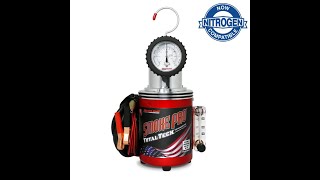
How to confirm: Perform a smoke test to see if smoke escapes from the intake manifold sealing area. Alternatively, with the engine running, carefully spray brake cleaner or a propane torch (unlit) around the intake manifold gaskets; a change in engine RPM or fuel trims indicates a leak.
Typical fix: Replace the intake manifold gaskets. Upgraded metal-frame gaskets, such as Fel-Pro MS98016T, are a popular, more durable replacement that resists heat and provides a better seal.
Est. part cost: $40-$100 - Failed Active Fuel Management (AFM) Lifter 🟡 Medium Probability On 2007-2009 models with AFM, the specialized lifters that deactivate cylinders (1, 4, 6, and 7) can become stuck, collapse, or fail to properly re-engage due to oil pressure/aeration issues or internal wear. This is a very common and well-documented problem on the 5.3L and 6.0L engines.
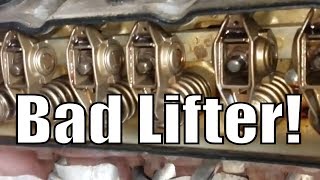
How to confirm: This often starts as a misfire on a single AFM cylinder (e.g., P0301, P0307) but can present as a P0300. A distinct ticking or chirping noise from the top of the engine is a primary symptom. The definitive check is to remove the valve cover and observe the rocker arms on the AFM cylinders while the engine is running; a collapsed lifter will result in a rocker arm that has excessive clearance or does not move as much as the others.
Typical fix: This is a significant repair requiring removal of the cylinder head(s) to replace the faulty lifters and lifter guides. Due to the high likelihood of camshaft damage from the failed lifter, many owners and shops opt to replace the camshaft and all lifters. Some owners choose to install a full AFM-delete kit to prevent future failures. This is often a job for a professional mechanic.
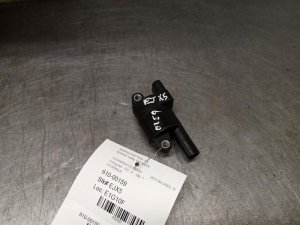
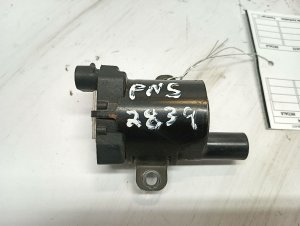
Est. part cost: $300-$1200+ for parts alone (lifters, gaskets, camshaft, delete kit) - Faulty Ignition Coil(s) 🟡 Medium Probability Coils are subjected to extreme heat cycles and can fail with age, producing a weak or no spark. While they typically fail one at a time, multiple weak coils can contribute to a P0300.
How to confirm: Use a scan tool with live data to monitor which cylinders are misfiring most. Swap the ignition coil from a misfiring cylinder with one from a known good cylinder. If the misfire code follows the coil (e.g., P0301 moves to P0303 after swapping coils from cylinder 1 and 3), the coil is bad.
Typical fix: Replace the faulty ignition coil. It's often wise to replace the spark plug at the same time. ACDelco is the OEM supplier.
Est. part cost: $30-$70 per coil - Low Fuel Pressure or Clogged Fuel Injectors ⚪ Low Probability A weak fuel pump, clogged fuel filter, or dirty/clogged injectors can starve the engine of fuel, causing a lean misfire across multiple cylinders.
How to confirm: Connect a fuel pressure gauge to the Schrader valve on the fuel rail. With the key on and engine off, pressure should be within GM specifications (typically 55-62 PSI). Pressure dropping significantly while running or after shutdown can indicate a weak pump. Clogged injectors can sometimes be identified by using an infrared thermometer on the exhaust manifold runners; a cold runner indicates a non-firing (and possibly fuel-starved) cylinder.
Typical fix: Replace the fuel filter first as it's inexpensive maintenance. If pressure is still low, the fuel pump likely needs replacement. Clogged injectors can sometimes be professionally cleaned, but replacement is often the most reliable fix.
Est. part cost: $20 (filter) - $400+ (pump)
Rare But Worth Checking
- Worn Camshaft Lobe: Mentioned in TSB #PIP4138R, this is a serious mechanical failure. It is often a direct result of a failed lifter (especially AFM lifters), where the roller on the lifter seizes and grinds down the camshaft lobe. Diagnosis requires inspecting the valvetrain and measuring valve lift.
- Crossed Fuel Injector Connectors: TSB #PIP5169 warns that after engine repairs, the injector connectors for cylinders 5 & 7 and 6 & 8 can be accidentally swapped due to their proximity. This is a simple visual check to perform if work was recently done on the engine.
- Crankshaft Position Sensor Variation Relearn Needed: After replacing the crankshaft position sensor, PCM, or major engine components, the PCM may need to relearn the precise position of the crankshaft reluctor wheel. Failure to do so can set a P0300 or P0315 code. This procedure requires a bi-directional scan tool to initiate the relearn process, which involves revving the engine to a specific RPM until fuel cut-off.
- Contaminated or Incorrect Fuel: Water in the fuel or using E85 in a non-Flex Fuel vehicle can cause random misfires. On Flex Fuel models, a faulty alcohol sensor or incorrect alcohol percentage reading in the PCM can also lead to improper fuel metering and misfires.
Diagnosis Steps
- Read all stored trouble codes with an OBD-II scanner. Note any other codes, as they provide crucial clues (e.g., P0171/P0174 for vacuum leaks, or a specific cylinder P030X for a component failure).
- Check the check engine light. If it's flashing, avoid driving the vehicle to prevent catalytic converter damage.
- Use a scan tool with live data to monitor misfire counts per cylinder (Mode $06). This can help determine if the misfire is truly random or concentrated on a few cylinders, pointing you in the right direction.
- Monitor Short-Term (STFT) and Long-Term (LTFT) Fuel Trims. High positive numbers (e.g., >10%) at idle that decrease with RPM strongly suggest a vacuum leak.
- Inspect the basics: Check the condition of spark plugs, spark plug wires, and ignition coils. Look for obvious damage, wear, or oil fouling.
- Test for vacuum leaks. A smoke test is the most effective method. Pay close attention to the intake manifold gaskets, PCV hoses, and brake booster line.
- Test fuel pressure. Connect a gauge to the fuel rail and verify the pressure is within the manufacturer's specification (typically 55-62 PSI with key on, engine off).
- On 2007+ models, if a misfire is concentrated on an AFM cylinder (1, 4, 6, or 7) and a ticking noise is present, suspect a failed AFM lifter. Remove the appropriate valve cover and inspect valvetrain movement with the engine running.
Parts You'll Likely Need
- Spark Plugs — Worn or fouled spark plugs are a primary cause of weak spark and misfires. This is a fundamental tune-up item.
Trusted brands: ACDelco, NGK
OEM price range: $6-$15 per plug
Aftermarket price range: $4-$12 per plug - Intake Manifold Gasket Set — A very common failure on 2002-2006 models, causing a vacuum leak that leads to a lean misfire (P0300 with P0171/P0174).
Trusted brands: Fel-Pro, ACDelco
OEM price range: $60-$100
Aftermarket price range: $40-$80 - AFM Lifters and Guide Kit — For 2007+ models, a collapsed AFM lifter is a frequent cause of misfires. Lifters are typically replaced as a set for the affected bank or for the entire engine.
Trusted brands: ACDelco, General Motors
OEM price range: $200-$400
Aftermarket price range: $150-$300 - Ignition Coil — A failing coil provides insufficient energy to the spark plug, causing a misfire. While one can fail, a P0300 might suggest an intermittent issue across multiple coils or a separate root cause.
Trusted brands: ACDelco, Delphi
OEM price range: $50-$90
Aftermarket price range: $30-$60
Related Codes That Often Appear With This One
- P0301-P0308 — If the random misfire begins to occur more frequently on specific cylinders, the PCM will log a cylinder-specific code alongside the P0300. This can help pinpoint a failing coil, injector, or AFM lifter.
- P0171, P0174 — These codes indicate a 'System Too Lean' condition on Bank 1 and Bank 2, respectively. They strongly point towards a vacuum leak (like from intake manifold gaskets) as the cause of the misfire.
- P050D — TSB #PIP5628G specifically links this code for 'Cold Start Rough Idle' with P0300-P0308 misfire codes, indicating they can be related diagnostic clues.
- C0561 — This code for 'System Disabled' in the anti-lock brake module can appear because a severe engine misfire can cause the PCM to disable traction and stability control systems as a safety measure.
Technical Service Bulletins (TSBs) & Recalls
- PIP5628G: Links P0300-P0308 with P050D (Cold Start Rough Idle).
- PIP5169: Warns of crossed fuel injector connectors for cylinders 5&7 and 6&8 after repairs.
- PIP4138R: Details diagnosing misfires related to worn camshaft lobes and failed AFM lifters.
- 10-06-01-007D: Discusses engine valve lifter tick noise on AFM engines caused by aerated or dirty oil.
Platform-Specific Known Issues
- Intake Manifold Gasket Failure (2002-2006): The plastic-framed gaskets on the GMT800 Vortec engines are notorious for failing, causing a significant vacuum leak. This is one of the most common causes of P0300, often accompanied by P0171 and P0174.
- Active Fuel Management (AFM) Lifter Failure (2007-2009): The GMT900 models with AFM are prone to lifter collapse. This can cause a ticking noise and a persistent misfire that may log as P0300 or a specific cylinder code. TSB #PIP4138R points to potential camshaft wear, which is often a direct result of this lifter failure.
Mechanic-Grade Diagnostic Values
- Fuel Pressure (Key On, Engine Off) — expected: 55-62 PSI for standard gasoline engines. 48-54 PSI for Flex Fuel engines.. Failure: Pressure below the specified range, or pressure that drops more than 5 PSI within 10 minutes, can indicate a weak fuel pump, leaking regulator, or leaky injector.
- Fuel Pressure (Engine Idling/Running) — expected: Pressure may drop to around 43-45 PSI while running, which can be normal for these systems.. Failure: A significant drop below 40 PSI while driving under load can indicate a failing fuel pump.
- AFM Lifter Oil Pressure — expected: The AFM system requires a minimum of 22 PSI to release the lifter's locking pins. The normal operating range is 27 to 66 PSI.. Failure: Low oil pressure, often indicated by a P0521 code, can cause AFM lifters to fail to function correctly, leading to misfires.
- Fuel Injector Resistance — expected: Approximately 11-14 Ohms. All injectors should have very similar resistance values.. Failure: An injector with significantly higher or lower resistance compared to the others is likely faulty.
Hidden / Shadow Codes Worth Checking
- Mode $06 Misfire Data: This is not a formal trouble code but a diagnostic function accessible with advanced scan tools. It shows raw misfire counts for each cylinder, even before they are high enough to set a P030x code. It is extremely useful for identifying which cylinders are contributing to a P0300 and how severely. (see via Use a scan tool with Mode $06 capabilities, such as a GM Tech2, or many modern professional-grade scanners and some high-end consumer apps like Torque Pro.)
Scan Tool Commands That Help
- GM Tech2 / GDS2 or equivalent: Crankshaft Position Variation Learn — This procedure is required after replacing the crankshaft position sensor, the PCM, or major engine components like the flexplate. Failure to perform the relearn can cause the PCM to misinterpret minor crankshaft speed variations as misfires, setting a P0300 or P0315. The procedure involves revving the engine to a specific RPM (around 4000 RPM) until the fuel cuts off, allowing the PCM to learn the unique signature of the crankshaft reluctor wheel.
- GM Tech2 / GDS2 or equivalent: Injector Balance Test — This bidirectional test allows the technician to fire each injector individually and measure the corresponding drop in fuel pressure. It's a precise way to identify a clogged or electrically faulty injector that might be contributing to a random misfire.
- GM Tech2 / GDS2 or equivalent: AFM Enable/Disable — For diagnosing AFM-related misfires on 2007+ models, a technician can use the scan tool to command the AFM system on and off. If the misfire only occurs when AFM is active (or disabled), it strongly points to a problem with the AFM lifters, solenoids, or the VLOM (Valve Lifter Oil Manifold).
Wiring & Ground Locations
- G101 / G106 — G101 is located on the lower front of the engine block. It is often jumpered to G106, located on the front center of the frame cross rail under the crank pulley.. This is a primary ground for the Engine Control Module (ECM) and Transmission Control Module (TCM). Corrosion or looseness here can cause a wide range of erratic engine behavior, including random misfires.
- G102 — Located at the left rear of the engine.. This ground is specifically for all eight ignition coils. A poor connection here can weaken spark across all cylinders, leading directly to a P0300 code.
- G103 — Located on the cowl in the engine compartment, above the brake booster.. Grounds the Body Control Module (BCM) and the Data Link Connector (DLC). While not a direct engine ground, a poor connection can cause communication issues between modules, potentially complicating diagnosis.
- Engine Harness Chafe Point — The main engine harness can chafe against the ECM/TCM bracket, the upper control arm, and the shock tower area.. A GM service bulletin mentions that harness chafing in these locations can cause shorts or open circuits for various sensors and actuators, potentially leading to a P0300 among many other codes.
Real Owner Repair Stories
- YouTube Channel 'Best Car Fixes' (2005 Chevrolet Avalanche 5.3L) — P0300 random misfire with a flashing check engine light. Scan tool data showed misfires on cylinders 2, 4, and 6.
❌ Tried (didn't work) The owner had already replaced all spark plugs, wires, and ignition coils before bringing it to the shop.
✅ What actually fixed it The technician diagnosed a fuel delivery issue. After replacing the fuel injector on cylinder #4, the misfire on that cylinder disappeared. They then replaced the injectors for cylinders #2 and #6, which resolved the P0300 code completely. The root cause was multiple failing/clogged fuel injectors. - Chevrolet Forum user (2007 Chevrolet Avalanche 5.3L) — P0300, with cylinder #2 misfiring most. Also had codes P0621 (Generator Circuit) and C0561 (System Disabled).
❌ Tried (didn't work) Swapped fuel injectors to see if the misfire moved, but it did not.
✅ What actually fixed it The technician found a bad lifter. The roller on the lifter was 'chewed up'. The final repair was replacing all lifters and the camshaft, as the bad lifter had likely damaged a cam lobe. The owner also noted a past issue with a low oil pressure message, suspecting a clogged oil valve filter may have started the problem.
"I Checked Everything" — The Actual Cause
- In cases where a smoke test for vacuum leaks comes back clean, but lean codes (P0171/P0174) and a P0300 persist, the cause can be a weak fuel pump or clogged injectors delivering insufficient fuel, which the PCM interprets as a lean condition. Verifying fuel pressure and injector health is the next logical step.
- A cracked flexplate can cause P0300. The crack can cause the crankshaft position sensor to get erratic readings, which the PCM interprets as a misfire. This is often missed because it's a mechanical issue that won't show up on a smoke test and may not be obvious without a visual inspection of the flexplate.
OEM Part Supersession History
12571595 (and others)→12639516, 12645725, 12680871 (and others)— The original AFM (Active Fuel Management) lifters were prone to failure. GM has released several updated part numbers over the years to improve reliability.
Heads up: Newer DFM (Dynamic Fuel Management) lifters (e.g., Elgin HL-7025) are backward compatible with older AFM engines, but original AFM lifters (e.g., Elgin HL-7011) will ONLY fit AFM applications and not the newer DFM engines.GM plastic-frame intake manifold gasket→Fel-Pro MS98016T (Aftermarket Upgrade)— The OEM plastic carrier gasket was prone to cracking and degrading from heat and fuel exposure. The Fel-Pro MS98016T uses a more durable aluminized steel carrier with improved rubber seals.
Heads up: The Fel-Pro gasket is a direct, improved replacement for the OEM part on 1999-2015 GM 4.8L, 5.3L, and 6.2L engines.
Model Year Variations Within This Range
- 2002-2006 (GMT800): These models primarily used a return-style fuel system and did not have Active Fuel Management (AFM). P0300 causes are most frequently related to vacuum leaks from the intake manifold gaskets, or standard ignition/fuel system faults.
- 2007-2009 (GMT900): These models introduced Active Fuel Management (AFM) on the 5.3L (LC9, LY5, LMG) and 6.0L engines, which became a primary cause of P0300 due to lifter failure. They also transitioned to a returnless fuel system. Many of these are also Flex Fuel capable, which adds the fuel composition sensor as a potential point of failure.
Helpful Videos



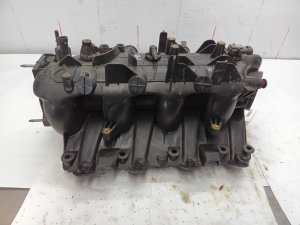
We Have This Part in Stock




The information in this article is provided for general reference and educational purposes only. Vehicle specifications, procedures, and part compatibility can vary by production date, trim level, and region. Always consult your vehicle's factory service manual and verify part numbers before purchasing or performing repairs. Safety-critical components such as airbags, seat belts, and braking systems should be installed by a qualified professional.
- Chevrolet AVALANCHE:
- 🎬 Helpful Videos
- 🛍️ Shop This Part
- What's Unique About the 2002-2009 Chevrolet AVALANCHE
- Diagnostic Flowchart
- Symptoms You May Notice
- Most Likely Causes
- Rare But Worth Checking
- Diagnosis Steps
- Parts You'll Likely Need
- Related Codes That Often Appear With This One
- Technical Service Bulletins (TSBs) & Recalls
- Platform-Specific Known Issues
- Mechanic-Grade Diagnostic Values
- Hidden / Shadow Codes Worth Checking
- Scan Tool Commands That Help
- Wiring & Ground Locations
- Real Owner Repair Stories
- "I Checked Everything" — The Actual Cause
- OEM Part Supersession History
- Model Year Variations Within This Range
- 🎟️ Get 5% Off