

P0300 on 2013-2019 Cadillac XTS: Random Misfire Causes and Fixes
P0300 on a Cadillac XTS often points to worn spark plugs, failing ignition coils, or carbon buildup on the intake valves, a known issue with its direct-injection engines. Replacing spark plugs and coils is a common first step, costing around $150-$400 in parts. More severe cases involving carbon cleaning can cost over $1000.
- P0300 on a 2013-2019 Cadillac XTS indicates a random misfire affecting multiple cylinders.
- The most common fixes are replacing worn spark plugs and/or failing ignition coils.
- A known issue on the 3.6L direct-injection engine is carbon buildup on the intake valves, often causing a misfire that is worse when the engine is cold.
- If the check engine light is flashing, stop driving immediately to prevent expensive damage to the catalytic converters.
- Diagnosis should start with the ignition system before moving to more complex issues like vacuum leaks, fuel delivery, or carbon cleaning.
What's Unique About the 2013-2019 Cadillac XTS

The Cadillac XTS primarily uses 3.6L V6 direct-injection engines (LFX and the twin-turbo LF3). These engines are known to develop significant carbon deposits on the intake valves over time because fuel is injected directly into the cylinder, bypassing the valves and preventing them from being cleaned by gasoline detergents. This buildup can disrupt airflow into the cylinders, especially during a cold start, leading to misfires and triggering a P0300 code. This specific issue is well-documented in General Motors Technical Service Bulletins (TSBs), such as PIP5029, which addresses misfires due to carbon buildup.
Diagnostic Flowchart

Tap your situation to follow the diagnostic path that matches what you're seeing on this vehicle.
Symptoms You May Notice
- Rough or shaky idle, especially when cold.
- Hesitation or stumbling during acceleration.
- Flashing or solid Check Engine Light.
- Noticeable loss of engine power.
- Reduced fuel economy.
- The StabiliTrak warning light may also illuminate, as the engine's instability can be misinterpreted by the traction control system.
- A smell of raw gasoline from the exhaust due to unburnt fuel.
- Replacing only one spark plug or coil when others are near the end of their service life, leading to another failure shortly after.
- Replacing oxygen sensors, as they are more likely to be a symptom of the misfire (due to unburnt fuel) rather than the cause.
- Assuming bad fuel is the cause without further diagnosis. While possible, it's less common than ignition or carbon issues.
Most Likely Causes

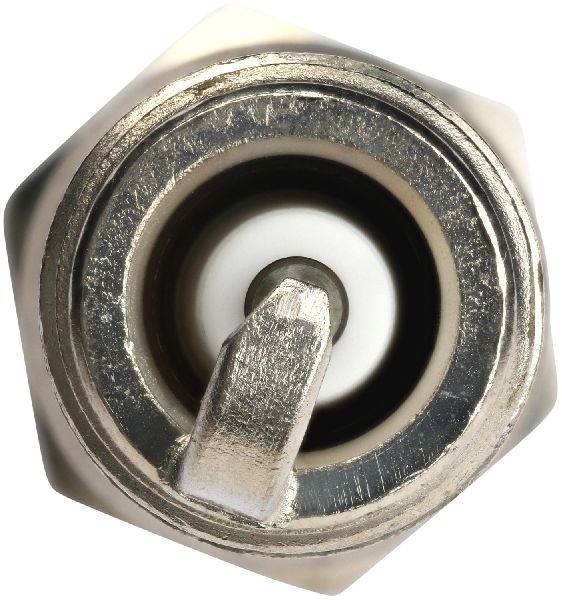
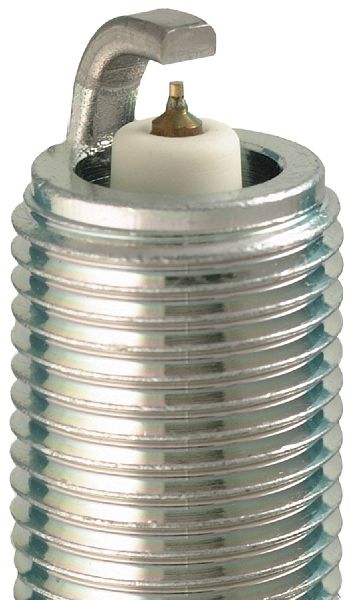
- Worn or Fouled Spark Plugs 🔴 High Probability Spark plugs are a regular maintenance item and a primary cause of misfires on any gasoline engine. The ACDelco iridium plugs used in the XTS are rated for up to 100,000 miles but can fail sooner, leading to a weak or inconsistent spark.
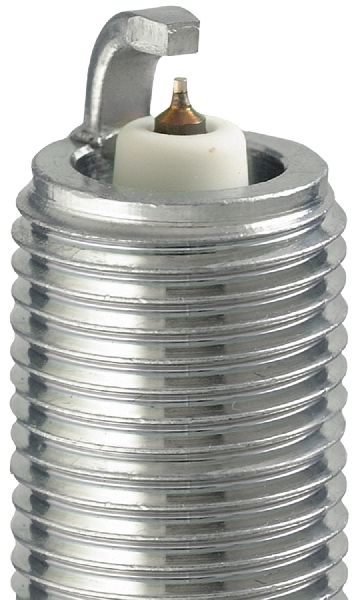
How to confirm: Inspect the spark plugs for wear (worn electrode), fouling (black, sooty, or oily deposits), or an incorrect gap. The OEM ACDelco Iridium plugs (part number 41-109) are pre-gapped to 0.043 inches and should not be adjusted, as this can damage the fine iridium tip.
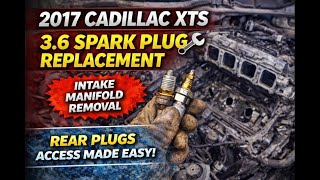
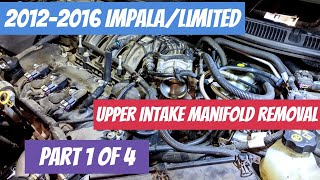
Typical fix: Replace all six spark plugs as a set. 🎬 Watch: Step-by-step spark plug replacement for your Cadillac XTS. It's recommended to use high-quality Iridium plugs from brands like ACDelco or NGK. Due to the labor involved in removing the intake manifold to access 🎬 See this guide on how to remove the LFX intake manifold. the rear bank of cylinders, it is highly recommended to replace coils at the same time.
Est. part cost: $60-$150 - Failing Ignition Coils 🔴 High Probability Ignition coils provide the high voltage needed to create a spark. Over time, engine heat and vibration can cause the coil's internal windings to break down, leading to a weak or no spark condition, especially under load.
How to confirm: Use a scan tool to check for misfire counts on specific cylinders. Swap the ignition coil from a misfiring cylinder with one from a cylinder that is firing correctly. Clear the codes and drive the vehicle. If the misfire code changes to the new cylinder (e.g., P0302 becomes P0304 after swapping coils from cylinder 2 to 4), the coil is bad.
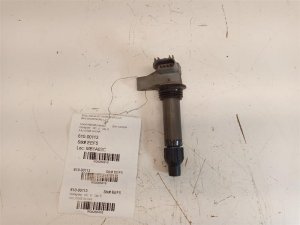
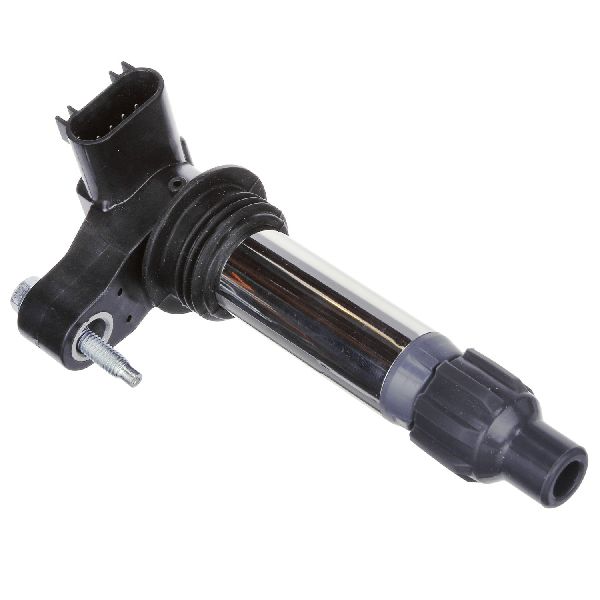
Typical fix: Replace the faulty ignition coil. The OEM part number is 12632479, which may have superseded older numbers like 12590990. Many owners choose to replace all coils at the same time as the spark plugs, especially on higher-mileage vehicles, to avoid repeated labor costs.
Est. part cost: $40-$80 per coil - Carbon Buildup on Intake Valves 🟡 Medium Probability As a direct-injection engine, fuel is sprayed directly into the cylinder, not over the intake valves. This means the cleaning detergents in gasoline never wash over the valves, allowing oil vapor from the PCV system and combustion byproducts to bake on, forming hard carbon deposits. This is a widely recognized issue on GM's LFX engines.
How to confirm: This is difficult to confirm without a borescope to visually inspect the intake valves. Symptoms like a rough idle that is worse when the engine is cold are strong indicators. This issue is cited in GM TSBs #PIP5029D for the XTS, which specifically mentions engine misfires due to carbon deposits.
Typical fix: This requires professional service. The most effective method is walnut shell blasting to physically clean the valves. A chemical induction cleaning service can also be performed but may be less effective for heavy buildup. GM also recommends using Top Tier gasoline to help minimize future deposits. This service can cost between $500 and $1200.
Est. part cost: $0 (service-based) - Vacuum Leaks ⚪ Low Probability Aging plastic and rubber hoses in the engine bay can crack and cause unmetered air to enter the engine, leaning out the air-fuel mixture and causing misfires. A common failure point is the PCV hose assembly, which can become brittle and crack.
How to confirm: A smoke test is the most effective way to find a vacuum leak. Listen for hissing sounds around the intake manifold, PCV hoses, and other vacuum lines. Visually inspect the PCV tubes for visible cracks.
Typical fix: Replace the cracked or broken hose or leaking gasket. The intake manifold gaskets should always be replaced when the manifold is removed for other services like spark plug replacement or valve cleaning.
Est. part cost: $10-$100
Rare But Worth Checking
- Clogged or Failing Fuel Injectors: While less common than ignition issues, a dirty or failing fuel injector can disrupt fuel flow to a cylinder, causing a misfire. This can sometimes be identified by using a scan tool to perform a fuel injector balance test.
- Low Fuel Pressure: A weak high-pressure fuel pump (HPFP) or a clogged in-tank fuel filter can starve the engine of fuel, leading to random misfires across all cylinders, especially under load. A P00C6 code for low fuel rail pressure may accompany the P0300.
- Internal Engine Mechanical Failure: In very rare cases, a severe internal issue like a stretched timing chain, a failed head gasket, or coolant entering a cylinder due to block porosity can cause a P0300 code. TSB 18-NA-115 specifically addresses a rare condition where engine block porosity allows coolant to leak into a cylinder, causing a cold-start misfire.
Diagnosis Steps
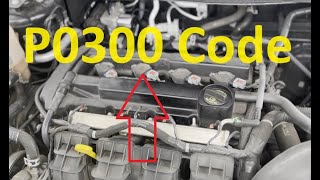
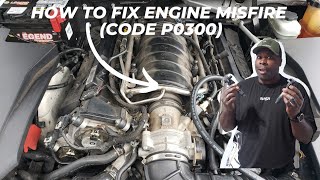
- Read all fault codes using an OBD-II scanner. 🎬 Watch: A helpful breakdown of P0300 causes and common fixes. Note any codes besides P0300, as they can provide valuable clues (e.g., P0171, P00C6).
- Check for a flashing check engine light. If flashing, avoid driving to prevent catalytic converter damage.
- Use the scanner's live data function to monitor misfire counts per cylinder. This can help identify if the misfire is truly random or concentrated on one or two cylinders, even without a specific P030x code.
- Inspect the ignition system. Remove and examine the spark plugs for wear, oil fouling, or damage. Test or swap ignition coils between a known good cylinder and a misfiring one to isolate a faulty coil.
- If ignition components are good, check for vacuum leaks. A smoke test is the most reliable method. Pay close attention to the PCV hoses and intake manifold gaskets.
- Check fuel pressure to ensure the fuel pump is delivering adequate pressure according to manufacturer specifications. Both low pressure (in-tank pump) and high pressure (HPFP) should be checked.
- If misfires are most prominent on cold starts and other causes have been ruled out, suspect carbon buildup. Visually inspect the intake valves with a borescope.
- If a single cylinder consistently misfires on cold starts and then clears up, investigate the possibility of a coolant leak into the cylinder as described in TSB 18-NA-115, which may require a cooling system pressure test and borescope inspection.
- If all else fails, consider a compression test and a cylinder leak-down test to rule out internal engine mechanical problems like worn piston rings or valve issues.
Parts You'll Likely Need

- Iridium Spark Plugs
(OEM #41-109)— Spark plugs are a primary wear item and a leading cause of misfires. Replacing them is a fundamental step in resolving a P0300 code. It is recommended to replace all six.
Trusted brands: ACDelco, NGK
OEM price range: $10-$15 per plug
Aftermarket price range: $8-$12 per plug - Ignition Coil
(OEM #12632479)— Ignition coils fail from heat and age, resulting in a weak or absent spark. They are the second most common cause after spark plugs. This part number supersedes 12610626 and 12590990.
Trusted brands: ACDelco, Delphi, NGK
OEM price range: $50-$80 per coil
Aftermarket price range: $30-$60 per coil - Intake Manifold Gasket Set — These gaskets must be replaced whenever the intake manifold is removed to access the rear bank of spark plugs or for carbon cleaning. A leaking gasket can cause a vacuum leak and a P0300 code.
Trusted brands: Fel-Pro, ACDelco, Mahle
OEM price range: $30-$50
Aftermarket price range: $20-$40
Related Codes That Often Appear With This One
- P0301-P0306 — If the engine computer can eventually isolate the misfire to a specific cylinder, it will set a corresponding code (e.g., P0301 for Cylinder 1).
- P050D — This code for 'Cold Start Rough Idle' is often seen with P0300, especially when the cause is carbon buildup on the intake valves, as noted in TSB #PIP5628G.
- P0171/P0174 — These 'System Too Lean' codes for Bank 1 and Bank 2 can be triggered by a vacuum leak, which is also a potential cause for a P0300 code.
Technical Service Bulletins (TSBs) & Recalls
- 18-NA-115: Provides a diagnostic procedure for a cold start misfire that resolves when warm, potentially caused by coolant entering a cylinder due to block porosity. Recommends using coolant dye and a borescope for inspection.
- PIP5628G: Communicates diagnostic information needed for misfire codes P0300-P0308 and cold start rough idle code P050D.
- PIP5029D: Details engine misfires due to major carbon deposits on the intake and/or exhaust valves on various GM direct-injection engines, including the 3.6L LFX in the XTS. Recommends a chemical cleaning procedure and using Top Tier gasoline.
Platform-Specific Known Issues
- The 3.6L direct-injection engines (LFX, LLT) are subject to significant carbon buildup on intake valves, causing cold start misfires (P0300) and rough idle. This is documented in GM Preliminary Information Bulletin PIP5029D.
- TSB #18-NA-115 specifically addresses a cold start misfire and/or rough idle with DTC P0300 set, pointing to a rare but possible cause of engine block porosity allowing coolant into a cylinder.
- Accessing the rear bank of spark plugs and coils (cylinders 1, 3, 5) requires removing the upper intake manifold, adding significant time and complexity to what is a simple job on other engines.
Mechanic-Grade Diagnostic Values
- Low-Side Fuel Pressure (In-tank pump) — expected: 81-87 psi. Failure: Pressure below this range indicates a weak in-tank fuel pump or clogged filter.
- Spark Plug Gap (ACDelco 41-109 Iridium) — expected: 0.043 inches (1.1 mm). Failure: These plugs are pre-gapped; attempting to adjust the gap can damage the iridium tip, requiring plug replacement.
- Crankshaft Position (CKP) Sensor Retaining Bolt Torque — expected: 8-11 N·m (70-100 lb in). Failure: Improper torque can lead to incorrect sensor reading or damage, potentially causing false misfire detection.
Hidden / Shadow Codes Worth Checking
- P1336: Crankshaft Position (CKP) System Variation Not Learned. This code indicates that the mandatory relearn procedure for the crankshaft position sensor has not been completed or has failed. (see via This code will be stored in memory if the Crankshaft Variation Relearn procedure is unsuccessful and can be read with most standard OBD-II scanners.)
- Mode 6 Misfire Counters: Not a DTC, but a function within the OBD-II system that tracks misfire events per cylinder in the current and last 10 drive cycles. This allows a technician to see which cylinders are misfiring most frequently, even before a specific P030x code is set. (see via Requires a scan tool capable of reading Mode $06 data.)
Scan Tool Commands That Help
- GDS2 / Tech2 or equivalent professional scan tool: Crankshaft Position Variation Learn (CASE Relearn) — This procedure is mandatory after replacing the ECM, crankshaft position sensor, or performing major engine mechanical work. It synchronizes the ECM with the minor variations of the crankshaft reluctor wheel. Failure to perform this can cause the ECM to incorrectly interpret these variations as misfires, setting a false P0300.
- Professional scan tool: Fuel Injector Balance Test — This test commands each injector to fire for a set duration and measures the corresponding drop in fuel pressure. It helps identify a weak or clogged injector that may be causing a misfire on a specific cylinder.
- Professional scan tool: Cylinder Power Balance — This function deactivates one cylinder at a time and measures the drop in engine RPM. A cylinder that produces a smaller RPM drop when deactivated is contributing less power, indicating a potential misfire cause like a bad plug, coil, or injector.
Wiring & Ground Locations
- G102 — Located at the left rear of the engine.. This is the primary ground point for all six ignition coils. A loose or corroded connection here can cause a weak or intermittent spark on multiple cylinders, directly leading to a P0300 code.
- G101 / G103 — G101 is at the lower front of the engine block; G103 is on the cowl, above the brake booster.. These are two of the main grounds for the Engine Control Module (ECM). A poor ground connection at either point can cause erratic ECM behavior, leading to a wide range of false codes, including P0300 and various communication errors.
- G104 — On the front of the right cylinder head (for the 3.6L LFX engine).. Provides a critical ground path for sensors and components on the cylinder head. A poor connection can affect sensor readings used by the ECM for ignition and fuel control.
- Ignition Coil Connector — On top of each ignition coil, connected to the engine wiring harness.. This is a 4-wire connector. The plastic can become brittle from heat cycles and fail to make a secure connection, or the terminals can corrode, causing a misfire on that cylinder. Wiggling this connector while the engine is running can sometimes reveal a poor connection.
Real Owner Repair Stories
- YouTube user 'Handy Val' (2011 Cadillac CTS 3.0L V6 (similar engine architecture)) — Car shaking, solid Check Engine Light, StabiliTrak warning light, P0300 code present.
❌ Tried (didn't work) The owner considered bad fuel, spark plugs, and coils but decided to start with simpler causes first.
✅ What actually fixed it The battery was 8 years old and failing. Replacing the old battery with a new one resolved the random misfire and cleared the P0300 code. - YouTube user 'WTBM123 Car repair' (Cadillac DTS with Northstar V8) — P0300 code, misfire only at idle. Ran fine under load or at any speed above idle.
❌ Tried (didn't work) Fuel trims were slightly high but not out of range.
✅ What actually fixed it The mechanic found a vacuum leak at the PCV hose elbow where it connects to the intake manifold. While watching live misfire data on a scanner, physically pushing the hose into the intake stopped the misfires. Replacing the PCV hose and intake gaskets fixed the issue. - YouTube user 'How To Diagnose & Fix' (2005 Cadillac STS V8) — P0300, P0171 (System Too Lean Bank 1), P0174 (System Too Lean Bank 2), engine hesitation and rough idle.
❌ Tried (didn't work) The owner took the car to a dealer for diagnosis rather than guessing.
✅ What actually fixed it The dealer identified a vacuum leak from the PCV valve and its associated hoses, as well as a dirty electronic throttle body. The owner performed a throttle body cleaning service and repaired the PCV hose connections, which resolved all codes and symptoms.
"I Checked Everything" — The Actual Cause
- A common scenario for the LFX engine is a misfire that only occurs at idle. This can be caused by a small vacuum leak from a hardened or cracked PCV hose elbow where it connects to the intake manifold. This type of leak may not be significant enough to be found with a smoke test when the engine is off, but under engine vacuum and vibration at idle, it can open up and allow unmetered air to enter, causing a lean misfire. The fix is to physically inspect and manipulate the PCV hoses while the engine is running and monitoring misfire data.
When the Usual Fixes Don't Work
- While ignition components and carbon buildup are the most frequent culprits for P0300 on the XTS, several owner-documented repairs show that simpler issues are often the root cause. In one case, an 8-year-old battery that still started the car was providing unstable voltage, and replacing it fixed the misfire. In another instance, a persistent idle-only misfire was traced to a cracked PCV vacuum hose elbow at the intake manifold, a fix costing only a few dollars for a new hose. These cases highlight the importance of checking the basics—battery health and vacuum integrity—before committing to expensive and labor-intensive repairs like carbon cleaning or replacing all coils and plugs.
OEM Part Supersession History
12622561, 12681660→41-109— ACDelco often consolidates part numbers. 41-109 is the current service part number for the original iridium plugs.
Heads up: The ACDelco 41-166 is sometimes listed as an alternative but has a different heat range and is not the specified plug for the LFX/LF3 engines.
Model Year Variations Within This Range
- 2014-2019: The 3.6L Twin-Turbo V6 (LF3) engine was available in the XTS V-Sport model. While it shares the same basic architecture and direct injection design as the LFX, it has a strengthened block, forged internals, and a different fuel and engine management system to handle the boost from the twin turbochargers.
- 2018-2019: The XTS received a mid-cycle refresh with updated exterior styling and a revised CUE infotainment system. No significant changes were made to the LFX or LF3 powertrains that would alter the common causes or diagnosis of a P0300 code.
Helpful Videos
Used OEM Parts in Stock


New Aftermarket Parts Available

The information in this article is provided for general reference and educational purposes only. Vehicle specifications, procedures, and part compatibility can vary by production date, trim level, and region. Always consult your vehicle's factory service manual and verify part numbers before purchasing or performing repairs. Safety-critical components such as airbags, seat belts, and braking systems should be installed by a qualified professional.
- Cadillac XTS:
- 🎬 Helpful Videos
- 🛍️ Shop This Part
- What's Unique About the 2013-2019 Cadillac XTS
- Diagnostic Flowchart
- Symptoms You May Notice
- Most Likely Causes
- Rare But Worth Checking
- Diagnosis Steps
- Parts You'll Likely Need
- Related Codes That Often Appear With This One
- Technical Service Bulletins (TSBs) & Recalls
- Platform-Specific Known Issues
- Mechanic-Grade Diagnostic Values
- Hidden / Shadow Codes Worth Checking
- Scan Tool Commands That Help
- Wiring & Ground Locations
- Real Owner Repair Stories
- "I Checked Everything" — The Actual Cause
- When the Usual Fixes Don't Work
- OEM Part Supersession History
- Model Year Variations Within This Range
- 🎟️ Get 5% Off