

P0300 on 2020-2025 Cadillac XT6: Causes, Fixes, and Engine-Specific Issues
For 3.6L V6 models, P0300 is often caused by a faulty Active Fuel Management (AFM) oil control solenoid or, more severely, coolant leaking into a cylinder on cold starts, which may require engine replacement. For 2.0L Turbo models, check for moisture in the charge air cooler. In all cases, start diagnosis by inspecting basic ignition components like spark plugs and coils.
- P0300 on a Cadillac XT6 is a serious code that requires prompt attention to avoid expensive catalytic converter damage.
- The most likely cause depends heavily on which engine your XT6 has: the 2.0L Turbo or the 3.6L V6.
- For the 3.6L V6, issues with the Active Fuel Management (AFM) system, like a faulty oil control solenoid, are a common, documented cause.
- For the 2.0L Turbo, check for moisture in the charge air cooler, especially if the misfire occurs in cold/humid weather.
- Regardless of the engine, always start with the simplest and most common fixes: inspect and replace worn spark plugs and test ignition coils.
What's Unique About the 2020-2025 Cadillac XT6

The Cadillac XT6 uses two different engines, and the likely causes for P0300 are distinct for each. The 3.6L LGX V6 engine features an Active Fuel Management (AFM) system that can develop issues with oil control solenoids or lifters, leading to misfires specifically documented in service bulletins. This V6 can also suffer from a rare but severe issue of block porosity causing coolant to leak into cylinders, resulting in a cold-start misfire that disappears when warm. The 2.0L LSY turbo engine, on the other hand, has a documented issue where moisture can collect in the charge air cooler (intercooler), causing misfires under acceleration, especially in cold or humid weather. A shudder felt at low speeds (20-40 mph) can also be misdiagnosed as an engine misfire when it is actually a known torque converter clutch (TCC) issue, addressed by TSB 23-NA-072.
Diagnostic Flowchart
Tap your situation to follow the diagnostic path that matches what you're seeing on this vehicle.
Symptoms You May Notice
- Rough or shaky idle
- Noticeable engine hesitation or stumbling during acceleration
- Reduced engine power
- Poor fuel economy
- Solid or flashing Check Engine Light
- Difficulty starting the engine
- A smell of raw fuel from the exhaust
- Replacing only one spark plug or ignition coil when others are near the end of their service life.
- Replacing oxygen sensors without first diagnosing the root cause of the misfire, which is what caused the O2 sensor to report a problem.
- Assuming a catalytic converter is bad due to related symptoms, when the converter is actually being damaged by the unaddressed misfire.
- Mistaking a transmission torque converter shudder for a P0300 engine misfire, leading to unnecessary engine repairs when the issue is in the drivetrain.
Most Likely Causes

- Faulty Ignition Coils or Worn Spark Plugs 🔴 High Probability These are standard wear-and-tear items on any modern engine. Their lifespan can be shortened by other engine issues that cause them to work harder or become fouled by oil or coolant.
How to confirm: Inspect spark plugs for wear, fouling, or damage. Test ignition coils by swapping a suspected bad coil with a known good one to see if the misfire follows the coil (requires a specific cylinder misfire code like P0301, etc.). A scan tool with live data can often show misfire counts per cylinder 🎬 Watch: This guide shows you how to fix a P0300 code. to help isolate the issue.
Typical fix: Replace all spark plugs as a set. Replace the faulty ignition coil(s). It's good practice to replace all coils if they are original and the vehicle has high mileage.
Est. part cost: $100-$400 - Damaged Active Fuel Management (AFM) System Components (3.6L V6 Only) 🔴 High Probability TSB 21-NA-036 specifically identifies a faulty AFM Oil Control Valve (OCV) solenoid for Bank 2 as a cause for misfires, often on cylinders 2 and 5. The system, which deactivates cylinders to save fuel, can also suffer from failing lifters (SHLAs) or rocker arms (SRFFs).
How to confirm: A technician will scan for codes P0302 or P0305 alongside P0300. Diagnosis involves inspecting the AFM OCV solenoid (Bank 2) for damage or leaks. The technician may also inspect the bore in the camshaft cover for scoring where the solenoid sits. Lifter issues may produce a distinct ticking noise. A diagnostic technique is to swap the left and right bank AFM oil control solenoids to see if the misfire moves to the opposite bank.
Typical fix: Replace the damaged AFM OCV solenoid (GM Part #12694590) and its O-rings. If the bore in the camshaft cover is damaged, the cover must also be replaced. In more severe cases, replacement of the lifters and rocker arms for the affected cylinder is required.
Est. part cost: $50-$500 - Carbon Buildup on Intake Valves 🟡 Medium Probability Both the 2.0L and 3.6L engines use Gasoline Direct Injection (GDI), which sprays fuel directly into the cylinder. This design means fuel doesn't wash over the intake valves, allowing oil and combustion byproducts to bake onto them, restricting airflow and causing misfires.
How to confirm: This requires a visual inspection of the intake valves, which usually involves removing the intake manifold. A borescope is the preferred tool for this inspection. A cold compression test may also reveal issues caused by carbon preventing valves from seating properly.
Typical fix: The valves must be cleaned, typically through a process called walnut blasting, where crushed walnut shells are used to scrub the valves without damaging the engine. This service typically costs between $500 and $900 at a repair shop.
Est. part cost: $0 (service cost) - Moisture in Charge Air Cooler (2.0L Turbo Only) 🟡 Medium Probability According to GM TSB 18-NA-020, moisture from the PCV system can accumulate in the charge air cooler, especially in cold or humid weather. Under hard acceleration, this water can be drawn into the engine, causing a severe stumble and setting a P0300 code.
How to confirm: A technician will inspect the charge air cooler and its plumbing for the presence of water. This may involve removing the boost sensor or a low-point hose to check for drainage. An owner of a related GMC Acadia reported this exact issue was resolved by the dealer draining the cooler.
Typical fix: The charge air cooler and associated ducting need to be drained and cleaned. The boost sensor should also be wiped clean. GM has issued various updates, including software recalibrations and physical parts like grille shutters, to mitigate this in different climates.
Est. part cost: $0 (service cost) - Faulty Fuel Injectors ⚪ Low Probability GDI injectors operate under extremely high pressure and can become clogged or fail electronically over time, leading to an improper fuel spray pattern and misfires.
How to confirm: A professional diagnostic tool can perform a fuel injector balance test to see if each injector is flowing correctly. They can also be electrically tested.
Typical fix: Replace the faulty fuel injector. It is often recommended to replace them as a set if the vehicle has high mileage.
Est. part cost: $70-$250 per injector
Rare But Worth Checking
- Internal Coolant Leak due to Engine Block Porosity (3.6L V6 Only): While TSB 18-NA-115 states this is a rare condition, it is critical because the only fix is complete engine replacement. It typically presents as a misfire only on a cold start that disappears once the engine warms up, as coolant seeps into a cylinder overnight and is burned off. Diagnosis requires an overnight 'cold soak' at the dealer, followed by a borescope inspection of the cylinders for coolant droplets on the piston tops before the engine is started. An owner of a Chevy Traverse with the same engine documented this exact process leading to an engine replacement.
- Cracked Cylinder Head / Coolant in Spark Plug Tube (3.6L V6): TSB 21-NA-147 describes a condition where porosity in the cylinder head casting allows coolant or oil to leak into the sealed spark plug tube, fouling the spark plug and coil, causing a persistent misfire. The spark plug tube is not separately serviceable, so the only repair is to replace the entire cylinder head.
- Torque Converter Clutch (TCC) Shudder: A shudder or shake felt at low speeds (e.g., 20-40 mph) can be mistaken for an engine misfire. TSB 23-NA-072 addresses this known issue, which may be caused by contaminated transmission fluid or a damaged torque converter. The fix often involves a specific transmission fluid exchange procedure. 🎬 Watch: How a fluid flush can fix common GM transmission shudders. In more severe cases related to the 9T65 transmission, a broken internal snap ring can cause debris to contaminate the valve body and torque converter, requiring a full transmission teardown to properly repair per TSB 20-NA-136.
Diagnosis Steps

- Read the trouble codes with an OBD-II scanner. Note any other codes present besides P0300, especially cylinder-specific codes (P0301-P0308).
- Check if the Check Engine Light is flashing. If so, minimize driving to prevent catalytic converter damage.
- Start with the basics: Inspect the ignition system. Remove and examine the spark plugs for wear, fouling (oil, fuel, or coolant), or damage. Replace if necessary.
- If specific cylinder misfire codes are present, swap the ignition coil from a misfiring cylinder to a good cylinder. Clear the codes and see if the misfire code follows the coil. If it does, the coil is bad.
- Inspect for vacuum leaks. Check all vacuum hoses for cracks or loose connections. Listen for a hissing sound at idle. A smoke test is the most effective way to find a leak.
- Perform engine-specific checks based on symptoms: If the misfire occurs mainly on a cold start and then resolves when warm (3.6L V6), investigate the possibility of a coolant leak per TSB 18-NA-115. This requires a cold soak and borescope inspection for coolant in the cylinders. If misfires occur on cylinders 2 or 5 (3.6L V6), inspect the Bank 2 AFM OCV solenoid per TSB 21-NA-036. If you have a 2.0L Turbo with misfires under acceleration, check the charge air cooler for moisture per TSB 18-NA-020.
- Test fuel pressure to ensure the fuel pump and regulator are functioning correctly. Low fuel pressure can cause a lean condition and random misfires.
- If all else fails, the issue may be with clogged fuel injectors, a failing crankshaft position sensor, or internal engine mechanical problems like broken rocker arms.
Parts You'll Likely Need
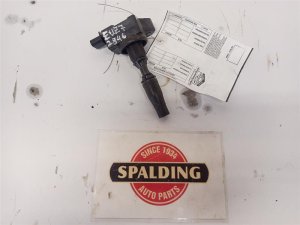
- Ignition Coil (3.6L V6)
- Spark Plug, Iridium (3.6L V6)
- Ignition Coil (2.0L LSY Turbo)
- Spark Plug, Iridium (2.0L LSY Turbo)
- AFM Oil Control Valve Solenoid (3.6L V6, Bank 2)
Related Codes That Often Appear With This One
- P0301-P0308 — These codes specify which cylinder is misfiring. P0300 often appears with one or more of these, helping to narrow down the problem.
- P050D — This code indicates a rough idle on a cold start and is mentioned in TSB PIP5628G along with P0300, pointing towards potential cold-start issues like the block porosity problem.
- P0302, P0305 — TSB 21-NA-036 specifically links these cylinder misfire codes to a faulty AFM Oil Control Valve on the 3.6L V6 engine.
- P0299, P2227 — These codes (Engine Underboost, Barometric Pressure Sensor Performance) can appear with P0300 on the 2.0L Turbo engine, as they are also caused by the moisture accumulation in the charge air cooler described in TSB 18-NA-020.
Technical Service Bulletins (TSBs) & Recalls

- Addresses a rare but critical cold-start misfire (P0300) on 3.6L V6 engines caused by engine block porosity allowing coolant to seep into a cylinder. The only fix is engine replacement.
- Specific to the 3.6L V6, this TSB details diagnosis for a damaged Active Fuel Management (AFM) Oil Control Valve (OCV) solenoid causing misfires on cylinders 2 and/or 5.
- For 2.0L LSY turbo engines, this bulletin explains how moisture from the PCV system can collect in the charge air cooler, causing a misfire (P0300) under acceleration.
- A preliminary bulletin from GM requesting technicians to gather specific data when diagnosing P0300-P0308 codes, indicating active investigation into various misfire causes.
- Addresses misfires caused by coolant or oil leaking into a spark plug tube due to porosity in the cylinder head casting itself. The fix requires cylinder head replacement.
Platform-Specific Known Issues
- TSB 18-NA-115: Documents a cold start misfire on the 3.6L V6 that may be caused by a rare but serious internal coolant leak from engine block porosity, requiring engine replacement.
- TSB 21-NA-036: Details how a damaged Active Fuel Management (AFM) Oil Control Valve (OCV) solenoid can cause misfires on cylinders 2 and/or 5 in the 3.6L V6.
- TSB 18-NA-020: Addresses misfires on the 2.0L LSY turbo engine caused by moisture accumulating and potentially freezing in the charge air cooler.
Mechanic-Grade Diagnostic Values
- Low-Side Fuel Pressure (Key On, Engine Off) — expected: 55-60 PSI. Failure: Pressure below this range indicates a weak in-tank fuel pump or leak.
- High-Side Fuel Pressure (Engine Idling) — expected: 290-750 PSI (2-5 MPa), can exceed 2,000 PSI under load.. Failure: Significantly lower pressure or erratic readings can indicate a failing high-pressure fuel pump (HPFP) or faulty rail pressure sensor.
- Ignition Coil Primary Resistance — expected: 0.4 - 2.0 Ohms. Failure: A reading outside this range (including open loop/infinity) suggests a faulty coil.
- Ignition Coil Secondary Resistance — expected: 6,000 - 15,000 Ohms (6k-15k Ω). Failure: A reading outside this range suggests a breakdown in the secondary windings.
Hidden / Shadow Codes Worth Checking
- Mode 6, Test ID $A2-$AF, Component ID $0C: Provides raw misfire counts for each cylinder (Cylinder 1 is $A2, Cylinder 2 is $A3, etc.) for the last/current driving cycle. This allows a technician to identify which cylinder(s) are misfiring even if the count isn't high enough to set a specific P0301-P0308 trouble code. (see via Requires an advanced OBD-II scan tool that can display Mode 6 diagnostic data. The tool decodes the Manufacturer ID (MID), Test ID (TID), and Component ID (CID) to show the relevant misfire data.)
Scan Tool Commands That Help
- GDS2 (Global Diagnostic System 2): Crankshaft Position Variation Learn — This function must be performed after replacing the crankshaft position sensor, timing components, or the Engine Control Module (ECM). Failure to perform the relearn can result in inaccurate misfire detection and a persistent P0300 code.
- GDS2 (Global Diagnostic System 2): Cylinder Power Balance — This test graphically displays the contribution of each cylinder to engine speed. It helps identify a weak or misfiring cylinder in real-time to narrow down the source of a random P0300 misfire.
- GDS2 (Global Diagnostic System 2): Injector Test — Allows the technician to disable individual fuel injectors one at a time while monitoring engine RPM drop. If disabling an injector causes no change in RPM, that injector or cylinder has a problem. This helps differentiate a fuel issue from a spark issue.
Wiring & Ground Locations
- G102 (or similar) — Typically located at the left rear of the engine block or cylinder head.. This is a common ground point for the ignition coils on GM V6 engines. A loose or corroded connection here can cause weak or intermittent spark to multiple cylinders, leading to a random misfire code.
- Main Engine-to-Frame Ground — A large, braided strap typically running from the engine block (often near the transmission bellhousing) to the vehicle's frame rail.. A poor main engine ground forces the starter and ignition system to find alternative ground paths, which can weaken spark intensity and cause misfires under load.
- ECM/PCM Ground — Often located on the cowl in the engine compartment, near the brake booster (e.g., G103).. The Engine Control Module requires a clean ground reference to accurately control ignition timing and fuel injection. A faulty ground can cause erratic behavior and phantom codes, including P0300.
"I Checked Everything" — The Actual Cause

- A smoke test for vacuum leaks may come back clean, but the P0300 is actually caused by an internal engine issue. On the 3.6L V6, this could be coolant seeping into a cylinder from a porous block (TSB 18-NA-115) or a faulty AFM oil control solenoid (TSB 21-NA-036), neither of which can be found with a smoke test.
When the Usual Fixes Don't Work
- An owner may experience a shudder that feels like a misfire, and a shop may even diagnose a P0300, but the root cause could be a torque converter clutch (TCC) issue as described in TSB 23-NA-072. In this case, replacing ignition or fuel components will not solve the problem. The fix involves a specific transmission fluid exchange or, in severe cases, torque converter replacement.
OEM Part Supersession History
12664124, 12684286→12708493— Standard part revision and consolidation by the manufacturer.
Heads up: Part 12708493 is the correct fuel rail pressure sensor for 2020-2025 Cadillac XT6 models with either the 2.0L or 3.6L engine. Using older part numbers is not advised.
Model Year Variations Within This Range
- 2020-2025: The standard engine varies by trim. Luxury trims typically feature the 2.0L LSY Turbo, while Premium Luxury and Sport trims feature the 3.6L LGX V6. Diagnostic approaches must differ, as major causes like AFM faults and block porosity are specific to the 3.6L V6, while charge air cooler moisture is specific to the 2.0L Turbo.
Helpful Videos
We Have This Part in Stock



The information in this article is provided for general reference and educational purposes only. Vehicle specifications, procedures, and part compatibility can vary by production date, trim level, and region. Always consult your vehicle's factory service manual and verify part numbers before purchasing or performing repairs. Safety-critical components such as airbags, seat belts, and braking systems should be installed by a qualified professional.
- Cadillac XT6:
- 🎬 Helpful Videos
- 🛍️ Shop This Part
- What's Unique About the 2020-2025 Cadillac XT6
- Diagnostic Flowchart
- Symptoms You May Notice
- Most Likely Causes
- Rare But Worth Checking
- Diagnosis Steps
- Parts You'll Likely Need
- Related Codes That Often Appear With This One
- Technical Service Bulletins (TSBs) & Recalls
- Platform-Specific Known Issues
- Mechanic-Grade Diagnostic Values
- Hidden / Shadow Codes Worth Checking
- Scan Tool Commands That Help
- Wiring & Ground Locations
- "I Checked Everything" — The Actual Cause
- When the Usual Fixes Don't Work
- OEM Part Supersession History
- Model Year Variations Within This Range
- 🎟️ Get 5% Off