

P0300 on 2011-2018 Cadillac Escalade ESV: Random Misfire Causes and Fixes
P0300 on a Cadillac Escalade ESV most often points to worn spark plugs and ignition coils. However, if these basic parts don't solve it, the issue is very likely a failed Active Fuel Management (AFM) lifter, a known and more expensive problem with these V8 engines, often accompanied by a distinct ticking noise.
- P0300 means multiple cylinders are misfiring. Start your diagnosis with the cheapest and most common fixes: spark plugs and ignition coils.
- If the check engine light is flashing, pull over and limit driving to prevent catastrophic damage to your catalytic converters.
- Listen for a distinct ticking or tapping noise from the engine. This sound, combined with a P0300 code, strongly suggests a failing AFM lifter, a known issue on this vehicle.
- This repair can be simple (spark plugs) or very complex and expensive (lifters and camshaft). A thorough diagnosis is critical to avoid wasting money on unneeded parts.
What's Unique About the 2011-2018 Cadillac ESCALADE ESV

The 2011-2018 Escalade ESV uses two generations of the 6.2L V8, both equipped with Active Fuel Management (AFM). This system, designed to improve fuel economy by deactivating cylinders, is a notorious weak point. The AFM lifters are prone to mechanical failure, where they can collapse or get stuck, causing a persistent misfire that triggers the P0300 code. This mechanical issue is so prevalent that it's often the root cause after basic ignition components have been ruled out, as highlighted in multiple manufacturer TSBs that point to internal engine wear and valvetrain inspection.
Diagnostic Flowchart

Tap your situation to follow the diagnostic path that matches what you're seeing on this vehicle.
Generation note: This range covers two Escalade generations. The 3rd gen (2011-2014) uses the 6.2L L94 V8. The 4th gen (2015-2018) uses the direct-injected 6.2L L86 V8. While both suffer from AFM lifter issues, the L86's direct injection system can also be prone to carbon buildup on intake valves, which can cause similar misfire symptoms. GM TSBs like 15-06-01-002H specifically cover the L86 engine for these lifter issues.
Symptoms You May Notice
- Flashing or solid Check Engine Light
- Rough or shaky idle
- Engine hesitation or stumbling during acceleration
- Noticeable loss of power
- Poor fuel economy
- Engine ticking or tapping noise, especially on a cold start, that may quiet down as the engine warms up.
- "Service StabiliTrak" warning message appearing on the dash along with the Check Engine Light.
- Replacing oxygen (O2) sensors without confirming they are faulty. O2 sensors often report issues caused by the misfire itself (like a lean or rich condition), but are not the root cause.
- Replacing only one spark plug or coil when multiple are worn or the issue is systemic (like a vacuum leak or fuel pressure problem).
- Ignoring a ticking noise and repeatedly replacing spark plugs and coils, when the actual cause is a mechanical AFM lifter failure.
Most Likely Causes

- Worn Spark Plugs 🔴 High Probability Spark plugs are a standard maintenance item that wear out over time. They are the most common and logical starting point for any misfire diagnosis before moving to more complex issues.
How to confirm: Visually inspect the spark plugs for wear, fouling, or damage to the electrode or porcelain. The recommended service interval is typically around 100,000 miles, but they can fail sooner.
Typical fix: Replace all 8 spark plugs as a set. 🎬 Watch: This easy DIY guide shows how to replace plugs and wires. Using high-quality Iridium plugs like the OEM ACDelco brand is recommended. The original part may be 41-110, which was superseded by 41-162.
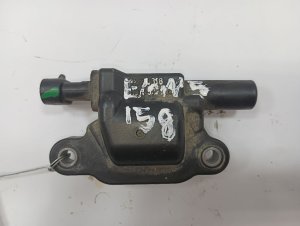
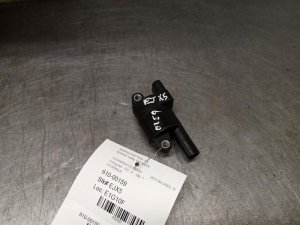
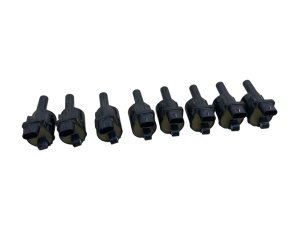
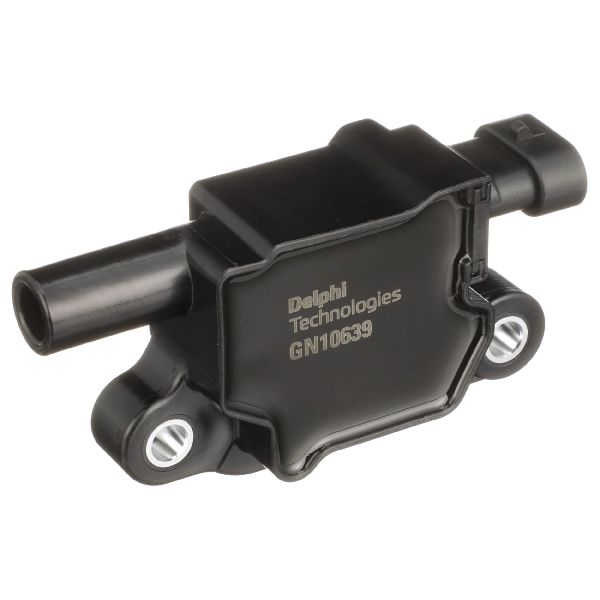
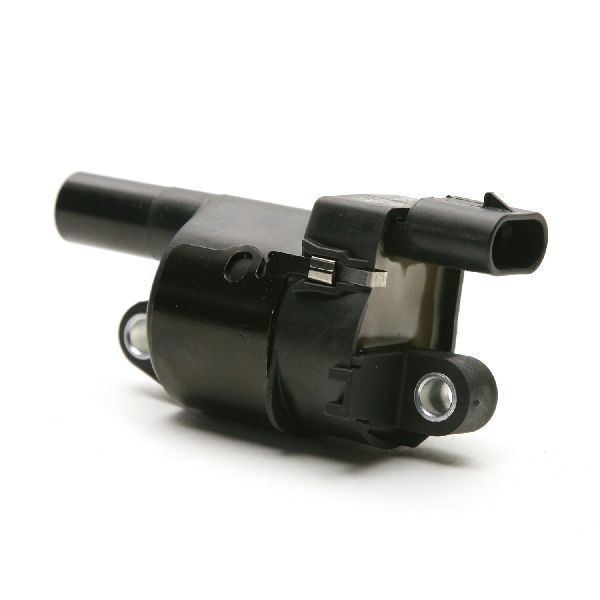
Est. part cost: $80-$120 - Faulty Ignition Coils or Wires 🔴 High Probability Heat and vibration cause ignition coils and the connecting wires/boots to degrade over time, leading to a weak or inconsistent spark.
How to confirm: Use a scan tool to check misfire data while swapping a suspected bad coil with a known good one. If the misfire follows the coil, the coil is bad. Inspect wires for cracks or corrosion.
Typical fix: Replace the faulty ignition coil(s) and/or spark plug wires. It's often wise to replace the corresponding spark plug at the same time.
Est. part cost: $40-$80 per coil - Active Fuel Management (AFM) Lifter Failure 🟡 Medium Probability The AFM system uses special hydraulic lifters that can collapse to deactivate cylinders (1, 4, 6, and 7). These lifters are a well-documented failure point on GM's 6.2L V8s, often getting stuck or collapsing mechanically due to internal pin damage or oiling issues.
How to confirm: This is an advanced diagnosis. It often presents as a persistent misfire with a distinct ticking noise from the top of the engine, which may be louder on a cold start. A mechanic will confirm by performing a compression test, checking for bent pushrods, and ultimately inspecting the valvetrain and camshaft lobes for damage as advised in GM TSBs.
Typical fix: This is a labor-intensive repair requiring replacement of the faulty AFM lifters, lifter guides, and often the camshaft if it has been damaged by the failed lifter. Many owners opt for an 'AFM delete kit' to permanently remove the system and replace all lifters with standard, more reliable ones. 🎬 See a full walkthrough of the AFM lifter replacement process. This requires ECU reprogramming.
Est. part cost: $500-$2000 (OEM replacement vs. full delete kit) - Vacuum Leak ⚪ Low Probability Aging plastic and rubber components can crack. A common failure point is the PCV tube on the driver's side of the intake manifold, which can be rubbed through by the engine cover, causing unmetered air to enter the engine.
How to confirm: A mechanic will use a smoke machine to pressurize the intake system and visually identify where smoke escapes. A hissing sound near the engine or high positive fuel trims at idle can also be clues.
Typical fix: Replace the leaking gasket or hose. If the PCV tube is the cause, it's recommended to cover the new tube with a protective conduit to prevent a repeat failure.
Est. part cost: $20-$150
Rare But Worth Checking
- Worn Camshaft Lobe: Mentioned specifically in GM TSB #PIP4138P and #15-06-01-002H as a potential cause for P0300. This is almost always a direct consequence of a failed AFM lifter grinding down the corresponding lobe, requiring camshaft replacement.
- Clogged or Faulty Fuel Injectors: A dirty or failing injector can disrupt fuel flow to one or more cylinders. This is a more common concern on the direct-injected L86 engine (2015-2018). Diagnosis can involve an injector balance test using a capable scan tool.
- Intake Valve Carbon Buildup: Primarily affects the 2015-2018 direct-injected L86 engine. Because fuel is injected directly into the cylinder, it no longer washes over the intake valves, allowing carbon deposits to accumulate. These deposits can disrupt airflow, causing misfires, especially on a cold start. The required repair is physical cleaning, typically via walnut blasting, 🎬 Watch: How severe carbon buildup affects these engines and how to clean it. which can cost $600-$800.
Diagnosis Steps
- Read the codes with an OBD-II scanner and check for any other accompanying codes, paying close attention to cylinder-specific misfires (P0301-P0308) or lean codes (P0171/P0174).
- Use a scan tool with live data to monitor misfire counts per cylinder. Even with a P0300, the data may show one or two cylinders with significantly higher counts. Note if the misfires are primarily on AFM cylinders (1, 4, 6, 7).
- Listen carefully for engine noises. A distinct, rhythmic ticking or tapping from the upper engine is a strong indicator of a potential AFM lifter failure.
- Inspect the basics: Check the condition of all 8 spark plugs, spark plug wires, and ignition coils. Look for obvious wear, corrosion, or damage. Swap a coil from a misfiring cylinder to a good one and see if the misfire follows the coil.
- If fuel trims are high (positive), check for vacuum leaks. Visually inspect the PCV hose on the driver's side for cracks or use a smoke machine to find the source of the leak.
- Test fuel pressure to ensure the fuel pump is delivering adequate pressure. For L86 engines, consider an injector balance test if injectors are suspected.
- If a ticking noise is present and basic checks don't reveal the cause, suspect a mechanical issue. Perform a compression test to check for internal engine problems. A cylinder with a collapsed lifter will show low compression.
- If a mechanical issue is suspected, follow TSB guidelines (like #15-06-01-002H) to inspect the valvetrain, specifically the AFM lifters, pushrods, and camshaft lobes for wear or damage.
Parts You'll Likely Need
- Iridium Spark Plugs
(OEM #12621258 (41-110) or 12679799 (41-162))— These are the most common cause of misfires and are a routine maintenance item. ACDelco 41-110 was the original plug, often superseded by 41-162.
Trusted brands: ACDelco, NGK
OEM price range: $10-$15 each
Aftermarket price range: $8-$12 each - Ignition Coil
(OEM #12611424 (ACDelco D521C))— Ignition coils fail from heat and age, causing a lack of spark. ACDelco D521C is a common OEM part number.
Trusted brands: ACDelco, Delphi
OEM price range: $60-$130
Aftermarket price range: $40-$90 - Active Fuel Management (AFM) Valve Lifter Kit
(OEM #12645725 (Individual AFM Lifter))— A very common mechanical failure point on these engines that directly causes misfires. A kit usually includes lifters and guides
Related Codes That Often Appear With This One
- P0301-P0308 — These are cylinder-specific misfire codes. A P0300 may be accompanied by these if the random misfire begins to occur more consistently on certain cylinders, often pointing to a specific coil, plug, injector, or a collapsed lifter on that cylinder.
- P050D — This code for 'Cold Start Rough Idle' is mentioned alongside P0300 in TSB #PIP5628G, indicating they can be related symptoms of the same underlying issue, such as carbon buildup or a failing AFM lifter.
- P0171 / P0174 — These 'System Too Lean' codes indicate an excess of air, which often points to a vacuum leak (like a cracked PCV tube) as the root cause of the misfire.
Technical Service Bulletins (TSBs) & Recalls
- PIP5628G
- PIP4138P
- 15-06-01-002F
- 15-06-01-002H
Platform-Specific Known Issues
- Failure of the Active Fuel Management (AFM) system is a primary cause of P0300 on these engines. A stuck or collapsed AFM lifter will cause a misfire and can lead to camshaft damage if not addressed. This is documented extensively in owner forums and GM TSBs.
- GM Technical Service Bulletin #PIP4138P specifically advises technicians to inspect for a worn camshaft lobe if a P0300 misfire cannot be resolved by other means, highlighting this as a known point of failure secondary to a bad lifter.
- For the 2015-2018 L86 models, carbon buildup on the intake valves is a significant issue not present on the earlier port-injected L94, and can be the sole cause of a P0300 code if ignition and mechanical components are healthy.
Mechanic-Grade Diagnostic Values
- Fuel Pressure (2011-2014 L94 V8) — expected: 345-414 kPa (50-60 psi) with key on, engine off, pump commanded on.. Failure: Pressure below 345 kPa (50 psi) indicates a weak pump or leak. Pressure above 414 kPa (60 psi) may indicate a faulty regulator.
- Fuel Pressure (2015-2018 L86 V8, Low Side) — expected: 55-60 psi during key-on prime pulse after a cold soak.. Failure: Pressure dropping rapidly after the pump primes (with test valve closed) can indicate a leaking high-pressure fuel pump or injectors.
- Ignition Coil Primary Resistance — expected: 0.4 to 2 ohms.. Failure: A reading outside this range indicates a faulty coil.
- Ignition Coil Secondary Resistance — expected: 6,000 to 10,000 ohms.. Failure: A reading outside this range indicates a faulty coil.
Scan Tool Commands That Help
- GDS2 (GM Dealer Software): Misfire Graphic — To visually monitor current and historical misfire counts for each cylinder, which helps identify if a 'random' P0300 code is actually biased toward specific cylinders, even if it hasn't set a cylinder-specific code yet.
- GDS2 (GM Dealer Software): Injector Balance Test — For 2015+ L86 direct-injected engines, this test can help identify a clogged or failing fuel injector by measuring the pressure drop for each injector activation.
- GDS2 (GM Dealer Software): Cylinder Deactivation — Allows a technician to manually command the AFM system on and off to see if the misfire is directly related to the activation/deactivation of the AFM lifters.
Wiring & Ground Locations
- G102 — On the lower left front of the engine block (2007-2014 models).. This ground is for the Engine Control Module (ECM). A poor connection here can cause erratic ECM behavior, leading to false misfire detection or other engine management issues.
- G103 — On the front of the right cylinder head (2007-2014 models).. Provides a ground path for various engine components. A loose or corroded G103 can cause intermittent electrical issues that may manifest as a random misfire.
- G104 — On the rear of the left cylinder head (2007-2014 models).. This is a primary ground for the ignition coil harnesses. A compromised G104 ground can directly cause weak or intermittent spark across multiple cylinders, leading to a P0300 code.
- Engine Block Grounds (2015+) — A key ground is located on the front of the passenger side cylinder head.. Similar to earlier models, poor engine grounds are a known cause for a P0300 code on the 2015+ trucks and SUVs. Cleaning this ground location is a recommended first step for unexplained misfires.
Real Owner Repair Stories
- Cadillac Forums user (2015 Cadillac Escalade) — P0300 random misfire, especially under load.
❌ Tried (didn't work) Replaced spark plugs, Replaced ignition coils, Cleaned throttle body, Cleaned MAF sensor
✅ What actually fixed it The final fix was replacing a faulty fuel injector on cylinder #7. Even though the code was for a random misfire, the issue was isolated to a single failing injector. - Reddit r/AskMechanics (2017 Cadillac Escalade) — Transmission shuddering when coming to a stop, feeling like a misfire.
❌ Tried (didn't work) Owner was considering replacing the engine coolant temperature sensor based on other advice.
✅ What actually fixed it The issue was identified by a mechanic as the torque converter clutch sticking while engaged, not an engine misfire. This requires transmission work, not engine work. - GM-Trucks.com Forum user (2015 GMC Yukon Denali (same L86 engine)) — P0300 code, rough idle, ticking noise.
❌ Tried (didn't work) Initial diagnosis focused on spark plugs and coils.
✅ What actually fixed it The cause was a collapsed AFM lifter on cylinder #1. The repair involved replacing all lifters, the camshaft, and the valve lifter oil manifold (VLOM) as per GM TSB 15-06-01-002H.
"I Checked Everything" — The Actual Cause

- In some cases, a P0300 code that appears to be a vacuum leak (accompanied by P0171/P0174) may pass a smoke test. The actual cause can be a faulty or dirty Mass Airflow (MAF) sensor under-reporting airflow, causing the engine to run lean and misfire, even with no physical leak in the intake tract.
When the Usual Fixes Don't Work
- While spark plugs and coils are the most common starting point for a P0300 diagnosis, many owners of 2011-2018 Escalades have found this to be a temporary fix or no fix at all. A recurring P0300, especially when accompanied by a ticking noise, almost invariably points to the more severe underlying issue of AFM lifter failure. In one documented case, a persistent P0300 was ultimately traced to a single faulty fuel injector, even after plugs and coils were replaced. In another instance, symptoms mimicking a misfire were caused by a failing transmission torque converter, highlighting the need to look beyond the engine itself if basic ignition and fuel fixes do not resolve the issue.
OEM Part Supersession History
12571595, 12619820, 12632143, 12645725→12680871, 12698946, 12740071— Multiple revisions of the Active Fuel Management (AFM) lifter have been released by GM to address the high failure rate. Each new number represents an updated design.
Heads up: While newer part numbers are improved, the fundamental design remains a weak point. When replacing, it is critical to also replace the lifter guides and inspect the camshaft for damage.
Model Year Variations Within This Range
- 2015-2018: The L86 V8 engine features direct injection, which introduces a high-pressure fuel pump and makes the intake valves susceptible to carbon buildup since they are no longer cleaned by fuel spray. This can cause a P0300 misfire not typically seen on the earlier L94 port-injected engine.
- 2015-2018: The 2015+ models use an 8-speed (8L90) transmission. Some owners have reported shuddering issues related to the torque converter, which can be mistaken for an engine misfire.
Helpful Videos
Used OEM Parts in Stock
New Aftermarket Parts Available



The information in this article is provided for general reference and educational purposes only. Vehicle specifications, procedures, and part compatibility can vary by production date, trim level, and region. Always consult your vehicle's factory service manual and verify part numbers before purchasing or performing repairs. Safety-critical components such as airbags, seat belts, and braking systems should be installed by a qualified professional.
- Cadillac ESCALADE ESV:
- 🎬 Helpful Videos
- 🛍️ Shop This Part
- What's Unique About the 2011-2018 Cadillac ESCALADE ESV
- Diagnostic Flowchart
- Symptoms You May Notice
- Most Likely Causes
- Rare But Worth Checking
- Diagnosis Steps
- Parts You'll Likely Need
- Related Codes That Often Appear With This One
- Technical Service Bulletins (TSBs) & Recalls
- Platform-Specific Known Issues
- Mechanic-Grade Diagnostic Values
- Scan Tool Commands That Help
- Wiring & Ground Locations
- Real Owner Repair Stories
- "I Checked Everything" — The Actual Cause
- When the Usual Fixes Don't Work
- OEM Part Supersession History
- Model Year Variations Within This Range
- 🎟️ Get 5% Off