

P0300 on 2010-2017 Cadillac Escalade: Random Misfire Causes and Fixes
P0300 on a 2010-2017 Escalade indicates a random misfire. While worn spark plugs or ignition coils are common culprits, this code frequently points to a failed Active Fuel Management (AFM) lifter, a known issue with the 6.2L V8 engine. A ticking noise from the engine is a strong indicator of lifter failure, a problem well-documented in GM service bulletins and owner forums.
- P0300 means your engine has a random misfire affecting multiple cylinders.
- On a 2010-2017 Escalade, DO NOT assume it's just spark plugs. Listen carefully for a ticking noise, which strongly points to a failed AFM lifter.
- A flashing check engine light is a serious warning. Driving with it can destroy your catalytic converters, leading to a much more expensive repair.
- Diagnosis should start with the basics (plugs, coils) but must include checking for the known AFM lifter issue if a simple tune-up doesn't solve the problem.
- Due to the prevalence of lifter failure, this code can lead to a very expensive repair involving significant engine work, including camshaft replacement.
What's Unique About the 2010-2017 Cadillac ESCALADE

The 2010-2017 Escalade spans two generations with different versions of the 6.2L V8, but both are known for issues with the Active Fuel Management (AFM) system. This system deactivates cylinders to save fuel but relies on special lifters that are a common failure point. A collapsed or stuck AFM lifter is a very frequent cause of P0300 on these trucks, often accompanied by a distinct ticking noise and potentially leading to camshaft damage if ignored. GM has released multiple Technical Service Bulletins (TSBs) acknowledging this problem.
Diagnostic Flowchart

Tap your situation to follow the diagnostic path that matches what you're seeing on this vehicle.
Generation note: This range covers two Escalade generations. The 3rd generation (2010-2014) uses the Gen IV 6.2L V8 (L92/L94/L9H), while the 4th generation (2015-2017) uses the Gen V 6.2L V8 EcoTec3 (L86) with direct injection. Both engine families have Active Fuel Management (AFM) and are susceptible to lifter failure, which is a primary cause of P0300. TSBs like 15-06-01-002L specifically cover these engines for this issue.
Symptoms You May Notice

- Rough or shaking idle.
- Hesitation or stumbling during acceleration.
- Flashing or steady Check Engine Light.
- Noticeable loss of engine power.
- Engine ticking or knocking noise, especially from the top end.
- "Service StabiliTrak" message on the dashboard.
- Erratic or low oil pressure reading on the gauge.
- Replacing only spark plugs when an AFM lifter is the true cause. This is a common mistake that wastes time and money, as the misfire will persist.
- Replacing oxygen sensors. While a faulty O2 sensor can affect the air-fuel mixture, it is not a primary or common cause of a P0300 code and is more likely to set other specific codes.
- Attributing the issue to a bad battery or ground. While electrical issues can cause myriad problems, the specific pattern of P0300 on these trucks is overwhelmingly linked to the causes listed above, especially AFM lifters.
Most Likely Causes

- Failed Active Fuel Management (AFM) Lifter(s) 🔴 High Probability The AFM lifters in both Gen IV and Gen V 6.2L V8s are a well-documented weak point. They can become stuck, collapse, or damage the camshaft, causing persistent misfires. GM TSBs #15-06-01-002L and others directly address this failure mode, which can result from internal pin damage or oil aeration.
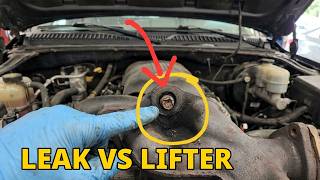
How to confirm: Listen for a distinct ticking or tapping sound 🎬 Watch: How to tell lifter tick from an exhaust leak from the top of the engine. A mechanic can confirm by removing the valve covers to observe rocker arm movement; a stationary rocker indicates a collapsed lifter. This often leads to a bent pushrod as well.
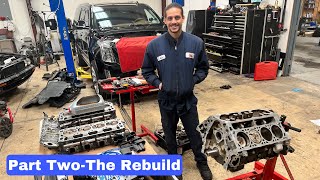
Typical fix: Replacement of the failed lifter(s) and the Valve Lifter Oil Manifold (VLOM). The camshaft is often damaged and requires replacement. Many owners opt for an 'AFM Delete Kit' to permanently remove the problematic components, which requires an ECM tune to disable the system. 🎬 See this step-by-step lifter replacement and engine rebuild walkthrough
Est. part cost: $400-$1500 - Worn Spark Plugs 🟡 Medium Probability Spark plugs are a standard maintenance item. Worn or fouled plugs are a very common cause of misfires. The original OEM plug was ACDelco 41-110, which was later superseded by 41-162. Some owners report better performance and idle quality by reverting to the 41-110 plugs.
How to confirm: Inspect the spark plugs for wear, carbon fouling, or oil contamination. The recommended service interval is typically around 100,000 miles, but they can fail sooner. Check the gap and condition of the iridium tip.
Typical fix: Replace all 8 spark plugs. It's recommended to use high-quality Iridium plugs. The OEM ACDelco 41-110 or the updated 41-162 are common choices.
Est. part cost: $60-$150 - Faulty Ignition Coil(s) 🟡 Medium Probability Coil-on-plug systems are generally reliable, but heat and age can cause coils to fail, leading to a weak or non-existent spark. The OEM part is often an ACDelco D515C.
How to confirm: Use a scan tool with live data to view misfire counts per cylinder. Swap the suspected faulty coil with a coil from a known good cylinder. If the misfire code follows the coil (e.g., P0304 becomes P0302 after swapping coils from cylinders 4 and 2), the coil is bad.
Typical fix: Replace the faulty ignition coil. The ACDelco D515C (GM part #12632479) is a common replacement. It is often wise to replace the corresponding spark plug at the same time.
Est. part cost: $40-$80 per coil - Vacuum Leak ⚪ Low Probability A common source of vacuum leaks on these engines is the driver-side valve cover, which has an integrated, non-serviceable PCV system. A failure here requires replacing the entire valve cover. Intake manifold gaskets and other hoses can also degrade.
How to confirm: Listen for a hissing sound around the engine bay at idle. A mechanic can perform a smoke test, which feeds smoke into the intake system to reveal the source of any leaks. A lean condition (high positive fuel trims) on a scan tool also points to a vacuum leak.
Typical fix: Replace the leaking gasket, hose, or the entire driver-side valve cover if the PCV baffle has failed.
Est. part cost: $20-$250 - Clogged or Faulty Fuel Injectors ⚪ Low Probability On the direct-injected 2015-2017 L86 engines, carbon buildup on injectors is a known issue. A leaking injector can also cause misfires and, in severe cases, hydrolock a cylinder, leading to catastrophic engine damage.
How to confirm: A professional can perform a fuel injector balance test using a high-end scan tool to measure the flow rate of each injector. TSB PIP5498M notes that different flow rate injectors are used on the L86, so care must be taken during replacement.
Typical fix: Clean or replace the faulty fuel injector(s). It is often recommended to replace them as a set on the affected bank.
Est. part cost: $70-$250 per injector
Rare But Worth Checking
- Low Fuel Pressure: A weak fuel pump or clogged fuel filter can starve the entire engine for fuel, causing random misfires across all cylinders. This is less common than individual component failures but should be checked if other causes are ruled out.
- Internal Coolant Leak: As detailed in GM TSB PIP5498M, a P0300 accompanied by P050D (Cold Start Rough Idle) and white exhaust smoke can indicate a coolant leak into a cylinder from a porous cylinder head casting or block deck face. This requires a borescope inspection with coolant dye to confirm.
- Internal Engine Damage: In severe cases, P0300 can be caused by low compression from a damaged piston, piston rings, or a faulty head gasket. A compression test is required to diagnose this.
Diagnosis Steps
- Check for other DTCs. A specific cylinder misfire code (P0301-P0308) can help narrow the search. Note if P050D is also present.
- Listen for engine noises. A distinct ticking or tapping noise strongly suggests a valvetrain or lifter issue.
- Use a Scan Tool. Check live misfire data to see which cylinders are affected. Monitor short-term and long-term fuel trims; high positive numbers suggest a vacuum leak.
- Inspect Spark Plugs and Ignition Coils. Check for wear, damage, or fouling. Swap coils between a misfiring cylinder and a good cylinder to see if the problem moves.
- Check for Vacuum Leaks. Perform a visual inspection of all vacuum hoses, paying close attention to the PCV line on the driver's side valve cover. For a definitive diagnosis, a smoke test is recommended.
- Check Fuel System. Verify fuel pressure is within spec. For direct injection models (2015+), a fuel injector balance test can identify a faulty injector.
- Perform a Compression Test. If the above steps do not reveal the cause, a compression test is necessary to check for mechanical engine problems like bad rings, valves, or a failed head gasket.
- Inspect Valvetrain. If a lifter issue is suspected, the valve covers must be removed to inspect the rocker arms, pushrods, and camshaft for damage. A non-moving rocker arm confirms a collapsed lifter.
Parts You'll Likely Need
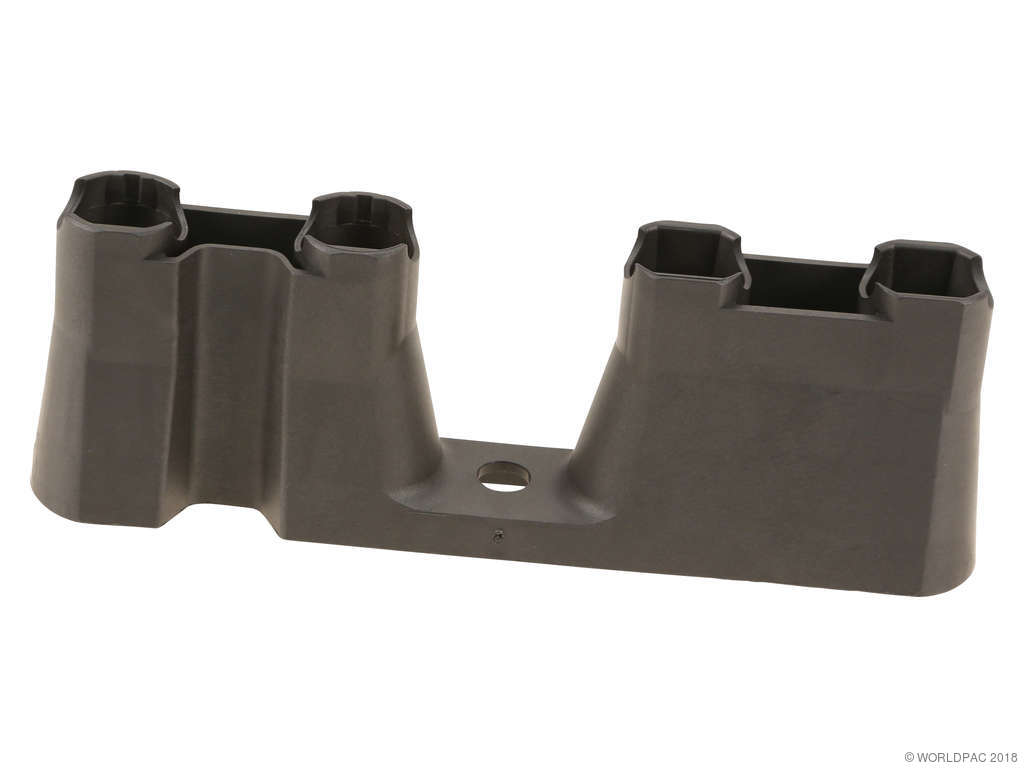
- AFM Lifters and Guide
(OEM #12648846 (Lifter - Example, che)
Related Codes That Often Appear With This One
- P0301-P0308 — These codes indicate a misfire on a specific cylinder (e.g., P0304 for cylinder 4). They often appear with P0300 when the ECM detects both random misfires and a persistent misfire on one or more cylinders, often the one with a collapsed lifter.
- P050D — This code for 'Cold Start Rough Idle' is often associated with misfire codes on these engines, as noted in GM Technical Service Bulletin #PIP5628G and #PIP5498M. It can point towards a coolant intrusion issue or a severe mechanical problem like a faulty injector or lifter.
- P1101 — This code relates to intake air flow performance and can be triggered as a secondary effect of a primary mechanical issue, such as a damaged piston causing blow-by and contaminating sensors.
Technical Service Bulletins (TSBs) & Recalls
- 15-06-01-002L (and previous versions): Details diagnosis and repair for engine misfire/tick noise caused by a collapsed or stuck AFM lifter. Instructs technicians to inspect the camshaft and replace lifters and the VLOM if necessary.
- PIP5628G: A diagnostic aid for technicians dealing with misfire codes P0300-P0308 and/or P050D. Provides a template of information to collect before contacting GM technical assistance (TAC).
- PIP5498M (superseded by 20-NA-166): Addresses P0300 and P050D on cold start, potentially with white smoke. Points to coolant intrusion into the cylinders from the cylinder head or block deck face as a possible cause.
Platform-Specific Known Issues
- The Vicious Cycle of Repeat Lifter Failure: A Reddit user with a 2016 Escalade at 107,000 miles detailed a nightmare scenario where an initial lifter failure led to a replacement of 12 lifters and the camshaft. Soon after, another lifter failed, then another. Even with a new VLOM, the problem persisted, causing a rough run condition and hesitation. This highlights that simply replacing the failed parts may not be enough if there is an underlying oil pressure issue or if metal debris from the initial failure was not completely cleaned from the engine.
- The AFM-Only Misfire: On the Tahoe Yukon Forum, a 2012 Yukon Denali owner chased a P0300 code by replacing the oil pressure sensor, plugs, wires, coil, and crankshaft sensor with no success. They eventually discovered the misfire only happened when the vehicle entered 4-cylinder (AFM) mode. A specialist advised that a solenoid in the VLOM was likely the culprit. The owner ultimately resolved the issue by paying for an ECM tune to permanently disable AFM, which stopped the P0300 code from appearing.
- Leaky Injector Leading to Mechanical Failure: In a diagnostic video, a mechanic explains a scenario on a Gen V GM truck where a leaky fuel injector on cylinder 4 was the root cause. The excess fuel washed out the cylinder and eventually caused the cylinder to hydrolock. This immense pressure destroyed the rocker arm bearings, bent the pushrod, and collapsed the lifter, leading to a P0300 code and low compression. This shows how a fuel system issue can cascade into a major mechanical failure that mimics a primary lifter problem.
Mechanic-Grade Diagnostic Values
- Ignition Coil Primary Resistance — expected: 0.4 to 2.0 ohms. Failure: A reading outside this range indicates a faulty coil.
- Ignition Coil Secondary Resistance — expected: 6,000 to 10,000 ohms. Failure: A reading outside this range suggests the coil is faulty.
- Fuel Pressure (Gen IV L94, 2010-2014) — expected: 50-60 PSI (345-414 kPa) at idle. Failure: Pressure below this range can cause lean misfires across all cylinders.
- Fuel Pressure (Gen V L86, 2015-2017) — expected: Low-pressure side: 50-75 PSI (345-517 kPa); High-pressure side (at idle): 300-750 PSI (2-5 MPa). Failure: Low readings on either side can indicate a failing low-pressure pump, high-pressure pump, or sensor issue.
Scan Tool Commands That Help
- GDS2/Tech2: Cylinder Power Balance — To identify misfiring cylinders by sequentially disabling fuel injectors and observing the RPM drop for each cylinder. A cylinder with a minimal RPM drop indicates a problem.
- GDS2/Tech2: Misfire Graphic — To view live and historical misfire counts for each cylinder, helping to pinpoint if the misfire is truly random or concentrated on specific cylinders.
- GDS2/Tech2: AFM Cylinder Deactivation — To manually command the Active Fuel Management system on and off to test the functionality of the VLOM solenoids and lifters. This can help isolate a stuck lifter or solenoid.
Wiring & Ground Locations
- G102 — Located at the left rear of the engine.. This is the primary ground for all 8 ignition coils. A loose or corroded connection here can cause weak spark and random misfires across multiple cylinders.
- G103 — Located on the front of the right cylinder head (Gen IV) or lower left front of the engine block (Hybrid models).. This ground is crucial for the Engine Control Module (ECM). A poor connection can cause a wide range of erratic engine behaviors, including phantom misfire codes.
- Engine to Frame Ground Strap — Typically runs from the engine block to the vehicle frame, often near the motor mounts.. A corroded or broken main ground strap can cause the electrical system to seek alternative ground paths, leading to voltage drops and unpredictable behavior from the ignition system and ECM.
Real Owner Repair Stories
- Tahoe Yukon Forum user 'rl1856' (2011 Escalade 6.2L, 127k miles) — Rough idle, sluggish acceleration, Check StabiliTrak warning, and a loud ticking/flapping noise from the driver's side top of the engine, with code P0300.
❌ Tried (didn't work) Initial diagnosis at a local shop pointed to a lifter fault but they recommended a dealer visit.
✅ What actually fixed it The user was advised by forum members that the symptoms were classic for a failed AFM lifter, requiring replacement of the lifters, and likely the camshaft, a known design flaw. The story captures the diagnostic phase leading to this conclusion. - CarKiller forum user 'graycady' (2013 Cadillac Escalade ESV 6.2L) — After a lifter replacement job (heads serviced, new plugs, wires, coils, injectors), the engine ran great while driving but would develop a misfire on cylinder #4 at stop lights, triggering a P0300 code that would clear on its own when driving resumed.
❌ Tried (didn't work) New spark plugs, New plug wires, Swapping ignition coils, New fuel injectors, Swapping fuel injectors
✅ What actually fixed it The user was advised that collapsed lifters often damage the camshaft lobes. Even with new lifters, a worn cam lobe would cause a misfire under low RPM/low oil pressure conditions (like idle), which would then seem to resolve at higher RPM. The final fix would be camshaft replacement.
"I Checked Everything" — The Actual Cause
- A common scenario for P0300 on these engines is a smoke test that shows no vacuum leaks, leading mechanics to chase ignition or fuel issues. However, the root cause is often internal, such as a failing AFM lifter which does not create an external vacuum leak. One owner complaint to the NHTSA (ODI #11517422) specifically noted that cylinders #7 and #8 were misfiring with no vacuum leaks found, pointing towards this type of internal mechanical fault.
OEM Part Supersession History
ACDelco 41-110 (Spark Plug)→ACDelco 41-162— Change in manufacturer (e.g., from NGK to Denso) and a slight change in length to position the electrode differently in the combustion chamber.
Heads up: Both plugs work, but they are physically different. The 41-162 is slightly shorter from seat to tip. Some owners report rough idle issues with the 41-162 and have resolved them by switching back to the 41-110, citing better manufacturing quality on the older part number.Elgin HL-7011 (AFM Lifter)→Elgin HL-7025 (DFM Lifter)— The newer HL-7025 lifter was designed for Dynamic Fuel Management (DFM) systems but is backward compatible with older AFM systems.
Heads up: The new DFM lifter (HL-7025) works in older AFM applications, but the original AFM lifter (HL-7011) will NOT work in newer DFM engines.
Model Year Variations Within This Range
- 2010-2014 (Gen 3): These models use the Gen IV 6.2L V8 (L92/L94/L9H) with a 6-speed automatic transmission. The engine has a 10.4:1 compression ratio and produces around 403 hp.
- 2015-2017 (Gen 4): These models use the Gen V 6.2L V8 (L86) with direct injection and a higher 11.5:1 compression ratio, producing 420 hp. They were initially paired with an 8-speed automatic transmission, which was known for some shift quality issues. Direct injection makes these engines more susceptible to carbon buildup on intake valves and injectors as a potential, though less common, cause of misfires.
Helpful Videos
We Have This Part in Stock


The information in this article is provided for general reference and educational purposes only. Vehicle specifications, procedures, and part compatibility can vary by production date, trim level, and region. Always consult your vehicle's factory service manual and verify part numbers before purchasing or performing repairs. Safety-critical components such as airbags, seat belts, and braking systems should be installed by a qualified professional.
- Cadillac ESCALADE:
- 🎬 Helpful Videos
- 🛍️ Shop This Part
- What's Unique About the 2010-2017 Cadillac ESCALADE
- Diagnostic Flowchart
- Symptoms You May Notice
- Most Likely Causes
- Rare But Worth Checking
- Diagnosis Steps
- Parts You'll Likely Need
- Related Codes That Often Appear With This One
- Technical Service Bulletins (TSBs) & Recalls
- Platform-Specific Known Issues
- Mechanic-Grade Diagnostic Values
- Scan Tool Commands That Help
- Wiring & Ground Locations
- Real Owner Repair Stories
- "I Checked Everything" — The Actual Cause
- OEM Part Supersession History
- Model Year Variations Within This Range
- 🎟️ Get 5% Off