

P0300 on 2000-2005 Cadillac DeVille: Random Misfire Causes and Fixes
On a 2000-2005 Cadillac DeVille with the 4.6L Northstar V8, a P0300 code is most often caused by a vacuum leak from a deteriorated intake plenum boot or PCV hose elbow. Worn spark plugs and faulty ignition coil boots are also very common culprits. Expect to spend $20-$100 on parts for these common fixes.
- A P0300 code on a 2000-2005 DeVille is most likely caused by a vacuum leak.
- Before buying expensive parts, thoroughly inspect the intake plenum boot and all PCV hoses for cracks. A smoke test is the best diagnostic tool for this.
- If no vacuum leaks are found, the next most likely culprits are worn spark plugs and/or faulty ignition coil boots.
- Do not immediately assume a catastrophic head gasket failure, as these symptoms are shared by much more common and less expensive problems.
- If the Check Engine Light is flashing, stop driving to avoid costly damage to the catalytic converters.
What's Unique About the 2000-2005 Cadillac DEVILLE

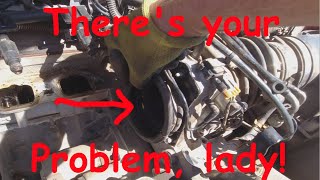
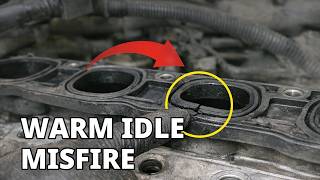
The 2000-2005 DeVille uses the 4.6L Northstar V8, an engine known for specific failure points that lead to a P0300 code. A very common issue is the deterioration of rubber components in the intake system, such as the large plenum boot connecting 🎬 Watch: Step-by-step guide to replacing the intake plenum boot. the throttle body to the intake manifold and various PCV vacuum hose elbows. These create vacuum leaks that throw off the air-fuel mixture for all cylinders. While ignition components are always a possibility, these specific vacuum leaks are a hallmark of the Northstar engine in this chassis and are often the first place to look. The starter motor is also located under the intake manifold, making any repairs in this area a good time for a preventative starter replacement.
Diagnostic Flowchart

Tap your situation to follow the diagnostic path that matches what you're seeing on this vehicle.
Symptoms You May Notice

- Rough or shaking idle
- Hesitation or stumbling during acceleration
- Noticeable loss of engine power
- Flashing Check Engine Light, especially under load
- Stalling
- Hissing sounds from the engine bay
- Reduced fuel economy
- Smell of raw fuel from the exhaust
- Replacing entire ignition coil packs when only the inexpensive rubber boots are faulty.
- Replacing oxygen sensors, which are unlikely to cause a random misfire code on their own, though a faulty O2 sensor *can* contribute to an improper air/fuel ratio that leads to a misfire.
- Assuming a head gasket failure without first thoroughly checking for much more common and cheaper-to-fix vacuum leaks.
Most Likely Causes

- Leaking Intake Plenum Boot 🔴 High Probability The large rubber boot (coupling) connecting the throttle body to the plastic intake manifold is known to crack and deteriorate from age and heat, creating a significant unmetered air leak that affects all cylinders. This is arguably the most common cause for a P0300 on this specific vehicle.
How to confirm: Perform a smoke test on the intake system. Alternatively, with the engine running, carefully spray short bursts of brake cleaner or unlit propane around the boot; a change in engine idle indicates a leak. The boot often tears on the underside, making visual inspection difficult without disassembly.
Typical fix: Replace the intake plenum boot. This requires removing the intake manifold. It's highly recommended to replace the intake manifold gaskets at the same time. The job looks more intimidating than it is.
Est. part cost: $30-$60 for the boot kit. - Leaking PCV Hoses/Elbows 🔴 High Probability The rubber elbows on the PCV (Positive Crankcase Ventilation) system, especially the one under the intake manifold, become soft, brittle, and crack, causing a vacuum leak. This is another extremely common failure point.
How to confirm: Visually inspect the PCV hoses and elbows for cracks or collapse. A smoke test will also quickly reveal these leaks. The elbow under the intake manifold is a frequent culprit and can sometimes be seen with a mirror and flashlight. In one case, a technician could induce a misfire on cylinder 1 by wiggling the faulty PCV hose with the engine running.
Typical fix: Replace the faulty PCV hose or elbow. Access to the elbow under the manifold requires removing the intake manifold itself.
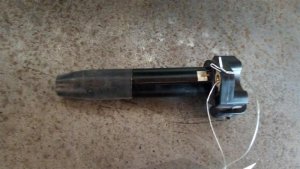
Est. part cost: $10-$25 - Worn Spark Plugs or Faulty Ignition Coil Boots 🟡 Medium Probability While spark plugs are a routine maintenance item, the small rubber boots connecting the coil packs to the spark plugs can degrade, allowing spark to arc to the cylinder head instead of firing the plug. This is a very common issue on many GM vehicles of this era. It is often more cost-effective to replace just the boots rather than the entire coil cassette unless the coil itself has failed.
How to confirm: Inspect the spark plugs for wear and the coil boots for any white or carbon tracking, which indicates spark arcing. The recommended OEM plug is an ACDelco Double Platinum (Part #41-987) with a 0.050" gap. If a specific cylinder is suspected, you can swap the coil/boot assembly with a known good cylinder and see if the misfire follows. In one documented case, a single bad spark plug was the cause of a P0300/P0308, confirmed by swapping it to another cylinder and seeing the misfire move.
Typical fix: Replace all spark plugs and ignition coil boots. Due to the difficult access to the rear bank of cylinders against the firewall, it is highly recommended to use long-life (100,000-mile) platinum or iridium plugs.
Est. part cost: $60-$150 for a set of quality spark plugs (e.g., ACDelco) and boots. - Failing Intake Manifold Gaskets 🟡 Medium Probability The gaskets sealing the plastic intake manifold to the cylinder heads can become hard and brittle, leading to vacuum leaks. This is often diagnosed alongside a leaking plenum boot, and the parts are replaced at the same time since the manifold must be removed for either job.
How to confirm: A smoke test is the most reliable method. Spraying brake cleaner near the gasket sealing surface may also change the engine idle, confirming a leak.
Typical fix: Replace the intake manifold gaskets (e.g., Fel-Pro MS 96432). This is a labor-intensive job that involves removing the fuel rail and intake manifold.
Est. part cost: $40-$80 for a quality gasket set. - Clogged or Failing Fuel Injectors ⚪ Low Probability Over time, injectors can become clogged with deposits or fail electrically, leading to poor fuel atomization and misfires. This can sometimes affect multiple cylinders at once, especially if fuel quality has been poor.
How to confirm: Use a scan tool to monitor misfire counts while swapping injectors between cylinders to see if the misfire moves. A professional can perform a fuel injector balance test using a bidirectional scan tool. In one documented case, replacing the four front injectors resolved a persistent P0300 that remained after a coil pack was replaced.
Typical fix: Clean or replace the faulty fuel injectors. It is often recommended to replace them as a set if they are original and high-mileage.
Est. part cost: $40-$90 per injector for aftermarket; higher for OEM.
Rare But Worth Checking
- Failing Head Gasket: The Northstar engine is notorious for head gasket failure due to head bolts pulling threads from the aluminum engine block. A P0300 can be an early symptom if coolant is leaking into multiple cylinders. Check for coolant loss, milky oil, or use a combustion leak tester ('block tester') to check for exhaust gases in the coolant. GM issued TSB #18-NA-115 regarding cold start misfires (P0300) caused by potential cylinder block porosity allowing coolant into the cylinder.
- Low Fuel Pressure: A weak fuel pump or clogged fuel filter can starve the entire engine for fuel, causing random misfires. Check fuel pressure at the fuel rail's Schrader valve. It should be around 45 PSI. One owner reported a P0300 with fuel pressure reading low at 38-40 PSI. Another reported 38 PSI at idle after replacing a clogged filter, indicating the pump itself was likely weak.
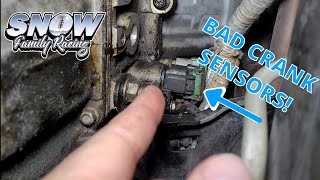
- Failing Crankshaft Position Sensors: This engine uses two crankshaft position sensors. If one or both are failing, they can send erratic signals to the ECM, causing stalling and misfire codes. This is often accompanied by P0385 or P0386 codes. A CASE (Crankshaft Position System Variation) relearn procedure must be performed with a capable scan tool after replacement.
Diagnosis Steps
- Read all stored fault codes with an OBD-II scanner. Pay close attention to any lean codes (P0171, P0174) or specific cylinder misfire codes (P0301-P0308). Use a scan tool with live data to view misfire counts per cylinder.
- With the engine running, listen for hissing sounds. Perform a smoke test or carefully spray brake cleaner to check for vacuum leaks around the intake manifold, the large plenum boot, and all PCV hoses.
- Remove the plastic engine cover and inspect the ignition coil packs and boots. Look for carbon tracks or cracks on the boots, which indicate spark arcing.
- Remove and inspect the spark plugs for wear, fouling, or moisture. A wet plug could indicate a leaking injector or a more serious coolant leak. Ensure the correct ACDelco 41-987 plugs or equivalent are used.
- Test fuel pressure at the fuel rail. It should hold steady around 45 PSI. A significant drop indicates a fuel delivery problem.
- If vacuum leaks and ignition issues are ruled out, and you suspect a head gasket issue, perform a cooling system pressure test and use a block tester to check for combustion gases in the coolant.
- If all else fails, a compression test can identify mechanical engine problems like a bent valve or bad piston rings.
Parts You'll Likely Need

- Intake Plenum Boot
(OEM #12555840)— This is a primary failure point for vacuum leaks on the Northstar V8, directly causing random misfires.
Trusted brands: Dorman (911-010), ACDelco (GM Genuine 12555840)
OEM price range: $50-$80
Aftermarket price range: $30-$60 - Ignition Coil Boots — These rubber boots fail frequently, causing spark to arc to ground instead of firing the plug. It's a common and inexpensive fix compared to replacing the entire coil cassette.
- PCV Hose Elbow — The rubber elbow for the PCV system under the intake manifold is a known weak point that cracks and causes vacuum leaks.
OEM price range: $15-$30
Aftermarket price range: $10-$20 - Intake Manifold Gasket Set — Since the intake manifold often has to be removed to fix the plenum boot or PCV elbow, replacing these gaskets is standard procedure to prevent future vacuum leaks.
Trusted brands: Fel-Pro (MS 96432)
OEM price range: $60-$90
Aftermarket price range: $40-$80
Related Codes That Often Appear With This One
- P0171 and P0174 — These 'System Too Lean' codes for both engine banks are a strong indicator that a vacuum leak (like a bad intake boot or gasket) is the root cause of the P0300 misfire.
- P0301-P0308 — Initially, the computer may log a P0300, but as it isolates the problem, it may also log specific cylinder misfire codes (e.g., P0306 for cylinder 6). A capable scan tool can show misfire counts per cylinder even if only a P0300 is set.
Technical Service Bulletins (TSBs) & Recalls
- PIP5628G
- 18-NA-115 - Cold Start Misfire and/or Rough Idle – DTC P0300 May Be Set
Platform-Specific Known Issues
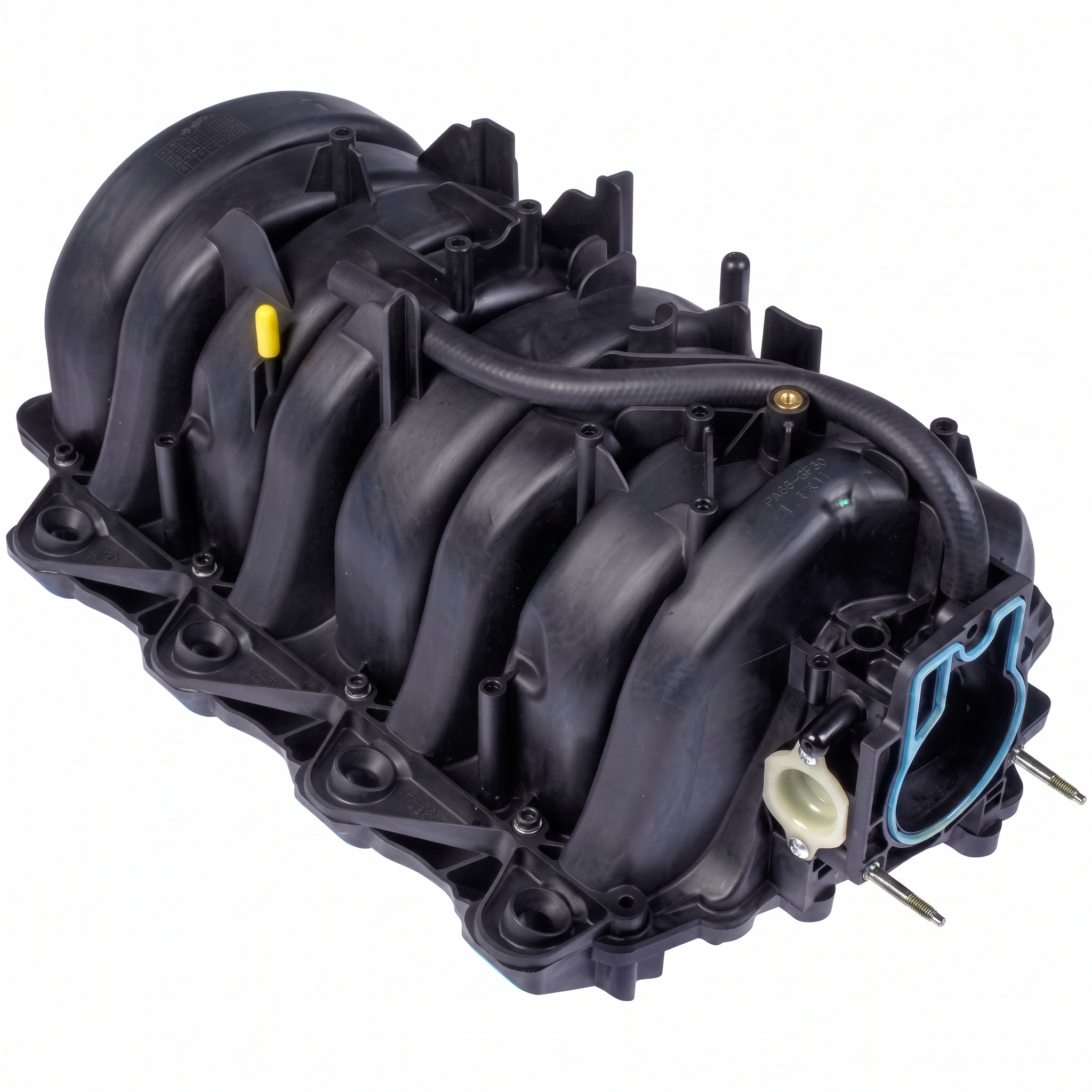
- The plastic intake manifold on the 2000-2005 Northstar engine is prone to developing vacuum leaks from its gaskets and, most notably, the large rubber boot that connects it to the throttle body.
Mechanic-Grade Diagnostic Values
- Fuel Pressure (Key On, Engine Off) — expected: 45 PSI. Failure: Readings of 36-40 PSI or lower suggest a weak fuel pump or clogged filter, even if the car runs. Pressure should not bleed down quickly.
- Fuel Pressure (Engine at Idle) — expected: ~45 PSI. Failure: Sustained readings of 38-40 PSI indicate a fuel delivery issue.
- Short Term Fuel Trim (STFT) at Idle — expected: Close to 0% (+/- 5%). Failure: Sustained positive values above +10% indicate the computer is adding fuel to compensate for a vacuum leak. A scan tool showing 'OL-FAULT' means the system cannot enter closed loop, often due to a major fault.
Scan Tool Commands That Help
- Tech 2 / Professional Scan Tool: Fuel Injector Balance Test — Use this after ruling out vacuum leaks and ignition problems. It allows you to individually fire each injector and measure the corresponding fuel pressure drop, identifying a clogged or dead injector without removing the fuel rail.
- Tech 2 / Professional Scan Tool: CASE Relearn (Crankshaft Position System Variation Learning) — This procedure is mandatory after replacing the crankshaft position sensor, PCM, or engine block/flexplate. Failure to perform the relearn can cause the PCM to misinterpret crankshaft speed variations, leading to a false P0300 code.
- Professional Scan Tool: Live Misfire Data Graph/Counter — This is the first step in diagnosing a P0300. It displays real-time misfire counts for each cylinder, helping to determine if the misfire is truly random or concentrated on one or two cylinders, even if no specific P030x code is set.
Wiring & Ground Locations
- Camshaft Position Sensor Connector — On the front of the engine, typically near the power steering pump area, connecting to the camshaft position sensor.. A poor connection, corrosion, or damaged wires at this connector can send an erratic signal to the PCM, causing a P0300 random misfire without setting a specific camshaft sensor fault code. The wires can become brittle and brown from heat.
Real Owner Repair Stories
- YouTube channel 'dcf garage' (2003 Cadillac DeVille 4.6L V8) — Engine shaking, started with a specific P0306 code which became a P0300 after an initial repair attempt.
❌ Tried (didn't work) Replacing the spark plug., Replacing the ignition coil pack for the affected bank (this improved the misfire but did not eliminate it).
✅ What actually fixed it The four fuel injectors on the front bank of the engine were found to be clogged. Replacing them with used-but-clean injectors from a junkyard completely resolved the misfire and the P0300 code. - YouTube channel 'Nathan's DIY Garage' (Vehicle not specified but general P0300 diagnosis applicable to Northstar) — Persistent P0300 check engine light.
❌ Tried (didn't work) Compression test (was good)., Checking for vacuum leaks (none found initially)., Replacing the camshaft position sensor with a new one.
✅ What actually fixed it After putting the original camshaft position sensor back in, the owner noticed the wiring at the sensor's connector looked brown and brittle. Simply ensuring a solid connection by unplugging and replugging the connector fixed the P0300 code, which did not return after 150 miles of driving. The issue was a poor electrical connection, not a faulty part. - YouTube channel 'WTBM123 Car repair' (2003 Cadillac DTS (DeVille Touring Sedan) with Northstar V8) — P0300, misfire only at idle with a closed throttle. Live data showed misfires concentrated on cylinder #1.
❌ Tried (didn't work) Initial visual inspection did not reveal a major leak.
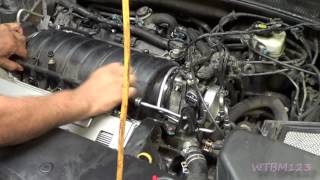
✅ What actually fixed it The technician found a soft, cracking PCV elbow hose under the intake manifold. Wiggling this hose with a screwdriver while the engine was running directly caused the misfire count on cylinder #1 to spike. The final repair involved replacing the PCV elbow, the main intake plenum boot, and the intake manifold gaskets, which resolved the idle misfire.
"I Checked Everything" — The Actual Cause
- Clogged fuel injectors. A smoke test only checks for air leaks and will not identify a fuel delivery problem. In one case, a P0300 persisted after ignition parts were replaced, and the final cause was four clogged injectors on one bank.
- A faulty electrical connection at the camshaft position sensor. This is an electrical fault, not a vacuum leak, so a smoke test would show no issues. A user fixed their P0300 by simply re-seating the connector after noticing discolored wires.
When the Usual Fixes Don't Work
- While vacuum leaks from the intake boot and PCV system are the most common cause of P0300 on this platform, they are not the only cause. In several documented cases, owners have replaced all common vacuum leak components only for the code to remain. In one instance, the final fix was replacing four clogged fuel injectors on the front bank. In another strange case, the root cause was a poor electrical connection at the camshaft position sensor, which did not throw its own specific trouble code. These examples show that if a smoke test is negative and common vacuum parts have been replaced, the next diagnostic steps should focus on the fuel delivery and electrical systems before condemning the engine with a head gasket issue.
Model Year Variations Within This Range
- 2000-2002 (approx.): Earlier models in this range are considered more susceptible to the classic Northstar head gasket failure due to shorter head bolt threads in the aluminum block. While still possible on later models, GM made improvements to the block and bolt design starting around 2003-2004.
Helpful Videos
Used OEM Parts in Stock
New Aftermarket Parts Available



The information in this article is provided for general reference and educational purposes only. Vehicle specifications, procedures, and part compatibility can vary by production date, trim level, and region. Always consult your vehicle's factory service manual and verify part numbers before purchasing or performing repairs. Safety-critical components such as airbags, seat belts, and braking systems should be installed by a qualified professional.
- Cadillac DEVILLE:
- 🎬 Helpful Videos
- 🛍️ Shop This Part
- What's Unique About the 2000-2005 Cadillac DEVILLE
- Diagnostic Flowchart
- Symptoms You May Notice
- Most Likely Causes
- Rare But Worth Checking
- Diagnosis Steps
- Parts You'll Likely Need
- Related Codes That Often Appear With This One
- Technical Service Bulletins (TSBs) & Recalls
- Platform-Specific Known Issues
- Mechanic-Grade Diagnostic Values
- Scan Tool Commands That Help
- Wiring & Ground Locations
- Real Owner Repair Stories
- "I Checked Everything" — The Actual Cause
- When the Usual Fixes Don't Work
- Model Year Variations Within This Range
- 🎟️ Get 5% Off