

P0300 on 2019 Cadillac CTS: Random Misfire Causes and Fixes
On a 2019 Cadillac CTS, a P0300 code is most often caused by worn spark plugs or failing ignition coils. For direct-injection engines (2.0L Turbo, 3.6L V6), carbon buildup on intake valves is another very common cause, especially after 50,000 miles. A weak battery can also trigger this code. A basic tune-up with plugs and coils costs around $200-$500 in parts.
- P0300 means multiple cylinders are misfiring, but the exact cylinders are not specified.
- Start your diagnosis with the most common and affordable fixes: inspect and replace worn spark plugs and test the ignition coils.
- If the check engine light is flashing, stop driving immediately to prevent expensive damage to the catalytic converters.
- Be aware of manufacturer TSBs for the 2019 CTS, which point to specific issues like faulty OCV solenoids and potential coolant leaks causing cold-start misfires.
- On the 2.0L Turbo and 3.6L V6 engines, carbon buildup on the intake valves is a known issue that can cause P0300 and may require professional cleaning.
What's Unique About the 2019-2019 Cadillac CTS
The 2019 Cadillac CTS was the final year of the third generation, primarily using Gasoline Direct Injection (GDI) engines like the 2.0L Turbo (LTG) and 3.6L V6 (LGX). These GDI engines are known to develop carbon deposits on the intake valves, which can disrupt airflow and cause misfires, a common source for P0300 on this platform. Additionally, GM has issued several Technical Service Bulletins (TSBs) for this model year related to P0300. Specific issues include cold start misfires from potential coolant leaks due to engine block porosity (TSB 18-NA-115, superceded by 20-NA-166), damaged Oil Control Valve (OCV) solenoids (TSB 21-NA-036), and a unique issue on the 2.0L LTG where factory-applied talc powder on ignition coil boots can cause arcing and misfires.
Diagnostic Flowchart
Tap your situation to follow the diagnostic path that matches what you're seeing on this vehicle.
Symptoms You May Notice
- Rough or shaky idle
- Hesitation or stumbling during acceleration
- Noticeable loss of engine power
- Flashing or solid Check Engine Light
- Vehicle shaking.
- StabiliTrak warning light may illuminate; this is often a secondary symptom caused by the engine running poorly, which the stability system detects.
- White smoke or coolant odor from exhaust, especially on cold starts (as noted in TSB #PIP5498M and #18-NA-115).
- Reduced fuel economy.
- Replacing only one spark plug or coil when multiple are near the end of their service life.
- Assuming the cause is always spark plugs without checking for TSB-related issues like OCV solenoids or signs of coolant intrusion on cold starts.
- Replacing StabiliTrak or ABS components when the warning light is a secondary symptom of the engine misfire.
- Overlooking a weak battery as the root cause of electronic-related fault codes.
Most Likely Causes
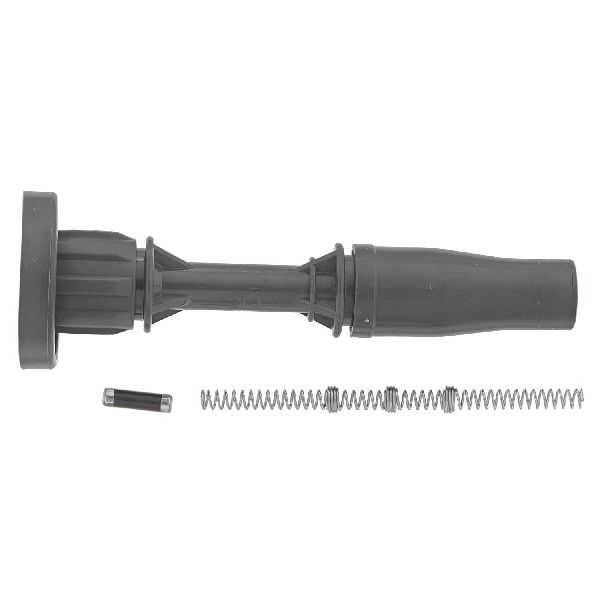
- Worn or Fouled Spark Plugs 🔴 High Probability Spark plugs are a standard maintenance item. The high-pressure environment of direct-injection engines can be demanding on plugs. On the 2.0L LTG engine specifically, GM noted that talc powder used at the factory on ignition coil boots could cause electrical arcing, leaving a carbon track on the plug's insulator and causing a misfire.
How to confirm: Remove and inspect all spark plugs. Look for worn electrodes, heavy carbon deposits, oil fouling, or cracks in the porcelain insulator. On the 2.0L LTG, specifically look for a thin black line (carbon track) on the white porcelain, indicating arcing.
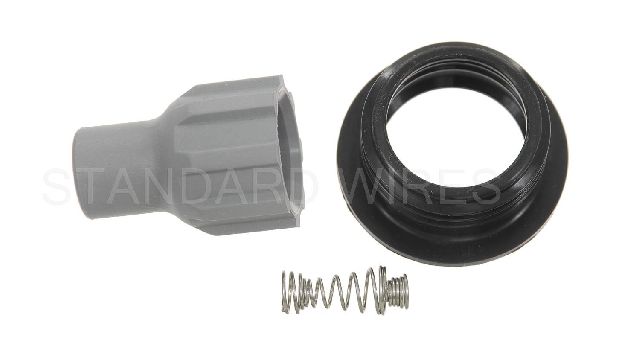
Typical fix: Replace all spark plugs as a set. It's recommended to use high-quality Iridium plugs from brands like ACDelco or NGK. When replacing coils or plugs, applying a small amount of dielectric grease to the inside of the coil boot is best practice to prevent moisture intrusion and future arcing.
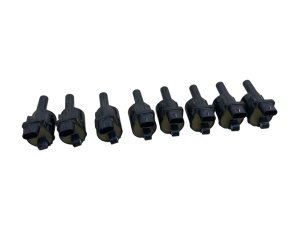
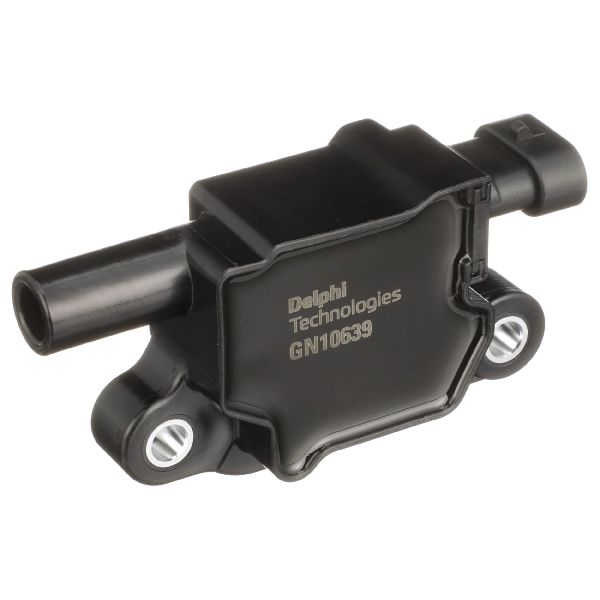
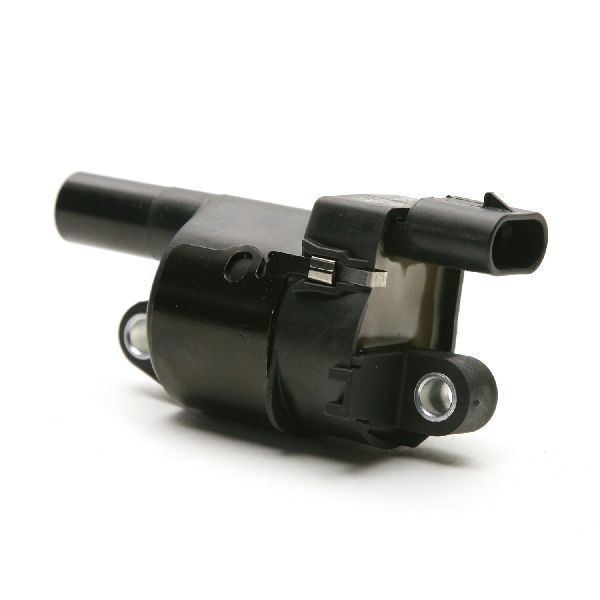
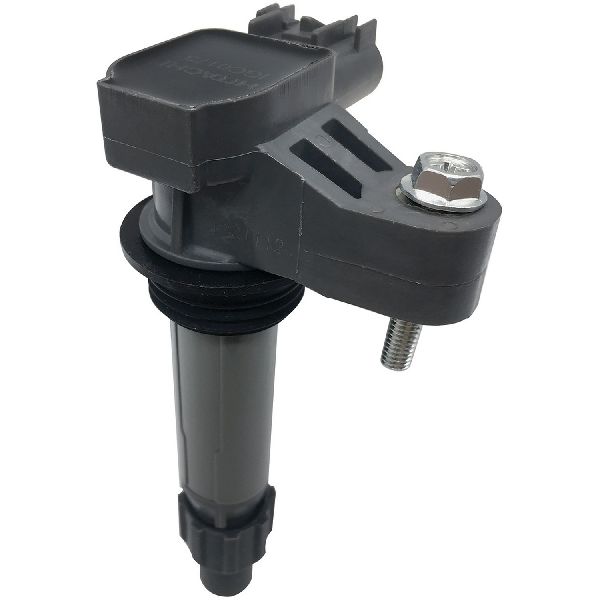
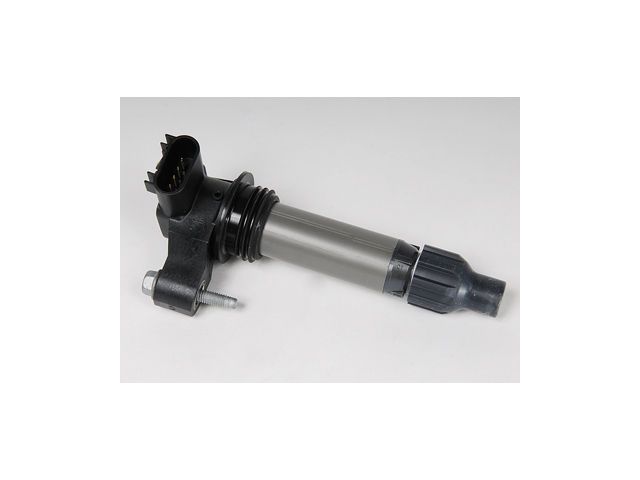
Est. part cost: $60-$150 - Failing Ignition Coils 🔴 High Probability Ignition coils are subjected to high heat cycles in the engine bay and can fail electronically over time, resulting in a weak or nonexistent spark. They are a very common failure point on the 3.6L V6 engines.
How to confirm: Use a scan tool with live data to see misfire counts per cylinder. If a specific cylinder shows high counts, swap its coil with a known good cylinder's coil. If the misfire follows the coil to the new cylinder, the coil is bad.
Typical fix: Replace the faulty ignition coil. Many technicians recommend replacing them as a set if they are original and the vehicle has high mileage, especially on the 3.6L V6 where the rear bank requires removing the intake manifold for access.
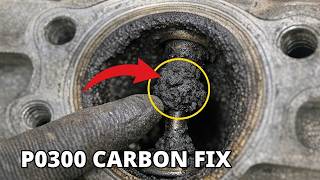
Est. part cost: $50-$100 per coil - Intake Valve Carbon Buildup 🟡 Medium Probability The 2.0L and 3.6L GDI engines spray fuel directly into the cylinder, so fuel detergents don't wash over the intake valves. Oil vapor from the PCV system can bake onto the hot valves, restricting airflow and causing misfires, especially on cold starts. This issue is well-documented by GM (TSB PIP5029A) and often becomes noticeable after 50,000 miles.
How to confirm: This requires visual inspection using a borescope inserted into the intake ports, which typically involves removing the intake manifold.
Typical fix: The valves need to be physically cleaned. The most effective method is walnut shell blasting, a service performed by professional shops. Some shops may also use chemical cleaning methods.
Est. part cost: $600-$1200 (Labor-intensive service) - Vacuum Leaks ⚪ Low Probability Hoses and gaskets can become brittle with age and heat, leading to cracks. A common source is the PCV (Positive Crankcase Ventilation) system hoses or a leaking intake manifold gasket, especially if it was reused after a previous repair.
How to confirm: Perform a smoke test. This involves feeding pressurized, low-pressure smoke into the intake system and watching for where it escapes, revealing the location of the leak. A visual inspection of all accessible vacuum lines for cracks is a good first step.
Typical fix: Replace the cracked hose or failed gasket.
Est. part cost: $20-$200
Rare But Worth Checking
- Internal Coolant Leak (Engine Block/Head Porosity): TSB #18-NA-115 and #20-NA-166 (superceding PIP5498M) describe a serious condition where a cold start misfire (P0300), often with P050D, is caused by coolant leaking into a cylinder due to porosity in the engine block or cylinder head at the liner-to-deck-face casting. Symptoms include white smoke and a coolant smell from the exhaust on cold starts, which may disappear as the engine warms. Diagnosis requires adding UV dye to the coolant, running the engine, letting it cool completely under pressure, and then inspecting the cylinders with a borescope and blacklight. If dye is found, GM's recommended repair is engine replacement.
- Damaged Oil Control Valve (OCV) Solenoid: TSB #21-NA-036 specifically mentions that a damaged OCV solenoid, part of the variable valve timing and Active Fuel Management (AFM) systems, can cause an oil leak and misfires, setting P0300, P0302, and/or P0305. This is a vehicle-specific issue worth checking, particularly on the 3.6L LGX engine.
- Weak or Failing Battery: A battery nearing the end of its life can provide inconsistent or low voltage during startup, causing erratic behavior from the ECM and other modules. This can lead to a P0300 code and other warnings like the StabiliTrak light, even if the engine itself has no mechanical faults. This is a simple but often overlooked cause.
- Moisture in Charge Air Cooler (2.0L LTG Engine): TSB #18-NA-020 describes a condition for the 2.0L Turbo engine where driving in high humidity or rain can cause moisture to collect in the charge air cooler (intercooler). A sudden heavy acceleration can draw this water into the engine, causing a momentary misfire and setting a P0300 code. The fix involves replacing the charge air cooler with an updated design.
- Faulty Fuel Injectors: A clogged or failing fuel injector can disrupt the air-fuel ratio in one or more cylinders. While less common than plugs or coils for a random misfire, a dirty or failing injector is a known cause.
- Low Fuel Pressure: A weak fuel pump or clogged fuel filter can starve the entire engine for fuel, causing misfires across multiple cylinders, especially under load. This can be confirmed with a fuel pressure test at the fuel rail.
Diagnosis Steps
- Read the codes with an OBD-II scanner and check for any other accompanying codes. Note the freeze frame data to see the engine conditions when the code was set.
- Check battery health and alternator output. A weak or failing battery can cause numerous electronic issues, including a P0300. Ensure voltage is stable and above 12V before starting, and 13.5-14.5V while running.
- Check for a flashing check engine light. If flashing, avoid driving to prevent catalytic converter damage.
- Inspect the ignition system. Remove and check all spark plugs for wear, fouling, and correct gap. On 2.0L LTG engines, look for carbon tracking on the insulators.
- Test the ignition coils. The easiest way is to use a scan tool to identify the most frequently misfiring cylinders and swap those coils with known good ones to see if the misfire code follows the coil.
- Check for vacuum leaks. Visually inspect all hoses for cracks, especially the PCV system. A smoke test is the most effective way to find hard-to-see leaks.
- If misfires are worse on a cold start and you notice white smoke, investigate a potential internal coolant leak as described in TSB #20-NA-166.
- For GDI engines (2.0L Turbo, 3.6L V6) with over 50,000 miles, consider carbon buildup on intake valves. A borescope inspection is needed for confirmation.
Parts You'll Likely Need
- Iridium Spark Plugs (3.6L V6)
(OEM #ACDelco 41-123 or 41-130 (Verify by VIN))— Worn spark plugs are the most common maintenance-related cause of misfires.
Trusted brands: ACDelco, NGK
OEM price range: $15-$25 per plug
Aftermarket price range: $10-$20 per plug - Iridium Spark Plugs (2.0L Turbo)
(OEM #ACDelco 41-166 (Verify by VIN))— Standard maintenance item. The 2.0L LTG is sensitive to plug condition, and plugs may be damaged by arcing if the factory talc powder issue is present.
Trusted brands: ACDelco, NGK
OEM price range: $15-$25 per plug
Aftermarket price range: $10-$20 per plug - Ignition Coil (3.6L V6)
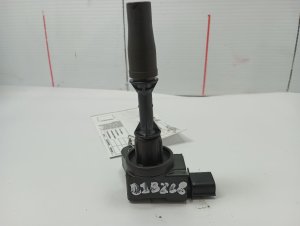
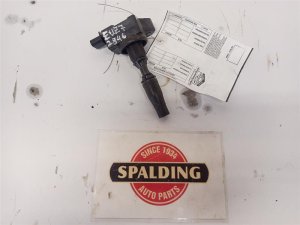
(OEM #ACDelco 12658222 (Verify by VIN))— Ignition coils provide the spark and are a frequent failure point for misfires on the V6 engine.
Trusted brands: ACDelco, Delphi, Denso
OEM price range: $70-$120 per coil
Aftermarket price range: $40-$80 per coil - Ignition Coil (2.0L Turbo)
(OEM #ACDelco 12674754)— Common failure point for misfires. May need replacement due to internal failure or damage from arcing caused by factory talc powder issue.
Trusted brands: ACDelco, Delphi
OEM price range: $60-$100 per coil
Aftermarket price range: $40-$70 per coil
Related Codes That Often Appear With This One
- P0301-P0308 — If the computer can eventually isolate the misfire to specific cylinders, it will set these codes alongside P0300, which helps narrow the diagnosis.
- P050D — This code for 'Cold Start Rough Idle' is specifically mentioned in TSBs #PIP5628G and #PIP5498M in conjunction with P0300. This combination strongly points to cold-start specific issues like coolant leaking into a cylinder or severely carboned intake valves.
- P0171/P0174 — These codes indicate a 'System Too Lean' condition on Bank 1 and Bank 2. A vacuum leak is a common cause for both lean codes and a P0300, as unmetered air throws off the air-fuel ratio across all cylinders.
Technical Service Bulletins (TSBs) & Recalls
- 18-NA-115 / 18NA115: Cold start misfire and/or rough idle with DTC P0300.
- PIP5628G: Diagnostic aid for misfire codes P0300-P0308 and P050D.
- 21-NA-036: Damaged OCV solenoid causing oil leak and misfire DTCs including P0300.
- PIP5498M: P0300 and P050D on cold start with white smoke/coolant odor, pointing to a coolant leak.
Platform-Specific Known Issues
- TSB #18-NA-115 / #18NA115: Addresses a cold start misfire and/or rough idle that can set a P0300 code, potentially related to engine block porosity allowing coolant into a cylinder.
- TSB #21-NA-036: Points to a damaged Oil Control Valve (OCV) solenoid that can cause an oil leak and misfires, triggering P0300, P0302, and/or P0305.
- TSB #PIP5498M: Links P0300 with P050D (Cold Start Rough Idle), white smoke, and coolant odor, suggesting a coolant leak into the combustion chamber at cold start.
Mechanic-Grade Diagnostic Values
- Low-Pressure Fuel System — expected: 65 to 75 gallons/hour at 75 to 85 psi. Failure: Pressure below this range indicates a weak in-tank fuel pump or clogged filter.
- High-Pressure Fuel System (2.0L LTG & 3.6L LGX) — expected: Up to 2,250 PSI (155 bar) for the LTG, and up to 2,800 PSI (193 bar) on some GDI systems.. Failure: Significantly lower pressure under load points to a failing high-pressure fuel pump (HPFP).
- Mode $06 Misfire Counters — expected: Near-zero counts on all cylinders at idle.. Failure: Counts incrementing randomly across multiple cylinders at idle strongly suggests a global issue like carbon buildup or a vacuum leak, rather than a specific component failure.
Hidden / Shadow Codes Worth Checking
- P1336: Crankshaft Position (CKP) System Variation Not Learned. This code can be stored if a crankshaft variation relearn procedure fails or is required after replacing the sensor, ECM, or crankshaft balancer. An unlearned CKP variation can cause the ECM to misinterpret normal crankshaft speed fluctuations as misfires, triggering a P0300. (see via Standard OBD-II scanner.)
- False P0300 (PIP5809): A preliminary bulletin for some 2020-2021 GM vehicles noted that a P0300 could be falsely set under certain driving conditions (long grades, steady throttle) without a true misfire. The bulletin advises against replacing parts and states an updated calibration is the fix. (see via GDS2/Tech2, may be seen on standard scanners. Check against VIN for applicability.)
Scan Tool Commands That Help
- GDS2 (GM Global Diagnostic System 2): Cylinder Balance Test — To help identify a weak or misfiring cylinder when a P0300 is present but specific cylinder codes (P0301-P0308) are not. The tool graphs RPM changes as it deactivates each injector one by one, helping to pinpoint inconsistencies.
- GDS2 or other professional scan tool: Crankshaft Position (CKP) System Variation Learn — This procedure is required after replacing the ECM, crankshaft position sensor, or crankshaft balancer. It allows the ECM to learn the minor variations in the crankshaft reluctor wheel to accurately detect misfires. Failure to perform this can cause a false P0300.
- GDS2 or other professional scan tool: Injector Balance Test — When diagnosing a cold start misfire (P0300/P050D), TSB 20-NA-166 advises checking injector balance rates while the engine is cold to help rule out fuel system issues before suspecting an internal coolant leak.
Wiring & Ground Locations
- G102 — Located at the left rear of the engine.. This is the primary ground point for all ignition coils. A loose or corroded connection here can cause weak or intermittent spark across multiple cylinders, leading to a P0300.
- G103 — Located on the cowl at the left rear of the engine compartment, often near the brake booster.. This ground serves the Engine Control Module (ECM), Body Control Module (BCM), and Data Link Connector (DLC). A poor connection can cause a wide range of erratic electronic behavior, including false sensor readings and misfire codes.
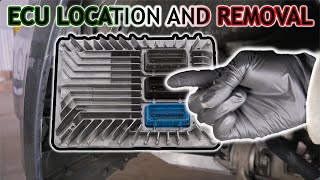
- ECM Location — On the third-generation CTS, the ECM (E92) is located behind the driver-side front wheel well liner, in front of the tire.. Its location makes it susceptible to damage from front-end collisions or corrosion from road salt and water. A visual inspection of the module and its connectors is warranted if other electrical issues are present.
Real Owner Repair Stories
- Go-Parts.com Analysis (GM vehicles with 3.6L LGX V6 engine) — Shuddering feeling similar to a misfire, sometimes setting a P0300 code.
❌ Tried (didn't work) Replacing spark plugs, Replacing ignition coils, Cleaning fuel injectors
✅ What actually fixed it The root cause was a faulty torque converter clutch (TCC), not an engine misfire. The shudder from the TCC engaging/disengaging was misinterpreted by the crankshaft position sensor as an engine speed fluctuation, triggering the P0300. The fix involved a specific transmission fluid flush procedure or torque converter replacement. - YouTube channel "Handy Val" (2011 Cadillac CTS 3.0L V6 (similar principles apply)) — P0300, car shaking, StabiliTrak light on.
❌ Tried (didn't work) Considering more complex repairs like spark plugs, coils, and injectors first.
✅ What actually fixed it The battery was 8 years old and failing. Replacing the old, weak battery resolved the P0300 code and associated electronic warnings. Low system voltage can cause erratic module behavior.
"I Checked Everything" — The Actual Cause
- In cases involving a shudder and a P0300 code, technicians may perform a smoke test to check for vacuum leaks and find none. The actual cause can be a faulty torque converter clutch, which creates a vibration that the crankshaft position sensor incorrectly interprets as a random engine misfire. Disabling the TCC with a scan tool will cause the symptom to disappear, confirming the issue is in the transmission, not the engine.
When the Usual Fixes Don't Work
- While spark plugs and ignition coils are the most common cause of P0300, a significant number of owners have chased these repairs only to find the true cause was unrelated to the ignition system. On the 3.6L LGX engine, a shudder that feels identical to a misfire is frequently caused by the torque converter, a fix that involves the transmission, not the engine. Similarly, on both the 2.0L and 3.6L engines, cold start misfires accompanied by white smoke are often not due to fouling but are a sign of a porous engine block leaking coolant, a known issue (TSB 20-NA-166) that requires engine replacement. These cases highlight the importance of considering TSBs and platform-specific issues before defaulting to a standard tune-up.
OEM Part Supersession History
12631971→12662571— Standard part revision and update by GM.
Heads up: These are OEM fuel injectors for the 2.0L LTG engine. While physically compatible, aftermarket performance injectors with higher flow rates (+20%) are available but require a corresponding ECU tune to function correctly.
Helpful Videos
Used OEM Parts in Stock



New Aftermarket Parts Available

The information in this article is provided for general reference and educational purposes only. Vehicle specifications, procedures, and part compatibility can vary by production date, trim level, and region. Always consult your vehicle's factory service manual and verify part numbers before purchasing or performing repairs. Safety-critical components such as airbags, seat belts, and braking systems should be installed by a qualified professional.
- Cadillac CTS:
- 🎬 Helpful Videos
- 🛍️ Shop This Part
- What's Unique About the 2019-2019 Cadillac CTS
- Diagnostic Flowchart
- Symptoms You May Notice
- Most Likely Causes
- Rare But Worth Checking
- Diagnosis Steps
- Parts You'll Likely Need
- Related Codes That Often Appear With This One
- Technical Service Bulletins (TSBs) & Recalls
- Platform-Specific Known Issues
- Mechanic-Grade Diagnostic Values
- Hidden / Shadow Codes Worth Checking
- Scan Tool Commands That Help
- Wiring & Ground Locations
- Real Owner Repair Stories
- "I Checked Everything" — The Actual Cause
- When the Usual Fixes Don't Work
- OEM Part Supersession History
- 🎟️ Get 5% Off