

P0300 on 2011-2018 Cadillac CTS: Random Misfire Causes and Fixes
For a 2011-2018 Cadillac CTS, a P0300 code is most often caused by worn spark plugs or failing ignition coils. On direct-injection engines like the 3.6L V6 (LFX/LLT) and 2.0L Turbo (LTG), carbon buildup on intake valves is also a very common culprit. A weak battery can also cause various electrical issues, including a P0300 code. Expect to pay $150-$400 for spark plugs and coils, or over $600-$1000 for a professional carbon cleaning service.
- P0300 means multiple cylinders are misfiring, and it requires diagnosis to find the root cause.
- Start with the basics: inspect and replace spark plugs and ignition coils, as these are the most common culprits.
- On direct-injection engines (3.6L V6, 2.0T), carbon buildup on intake valves is a very likely cause, especially on higher-mileage vehicles.
- A flashing check engine light is a serious warning that catalytic converter damage is imminent; avoid driving the vehicle.
- Check for vacuum leaks using a smoke machine, as cracked hoses and gaskets are a frequent cause of lean conditions and misfires.
What's Unique About the 2011-2018 Cadillac CTS

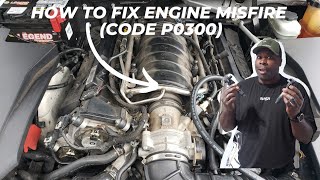
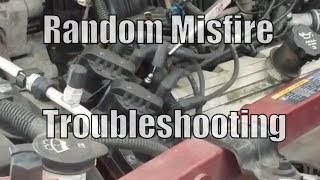
The 2011-2018 Cadillac CTS spans two generations and primarily uses Gasoline Direct Injection (GDI) engines, such as the 3.6L V6 (LFX/LLT) and 2.0L Turbo (LTG). While efficient, GDI engines are known for developing carbon deposits on the intake valves, which doesn't get washed away by fuel as in traditional port-injected engines. This carbon buildup is a frequent cause of misfires and the P0300 code 🎬 Watch: Diagnosing a P0300 code and StabiliTrak warning on your CTS on this specific platform, often becoming noticeable after 50,000 miles. Additionally, specific issues are cited in Technical Service Bulletins, like cold start misfires due to engine block porosity (TSB #18-NA-115) and moisture in the charge air cooler on 2.0L LTG engines (TSB #18-NA-020).
Diagnostic Flowchart
Tap your situation to follow the diagnostic path that matches what you're seeing on this vehicle.
Generation note: This range covers the end of the second generation (2011-2014) and the entire third generation (2014-2019). The 2014 model year is an overlap. While many causes are similar, the third generation more heavily features the 2.0L Turbo (LTG) and updated 3.6L V6 (LFX) engines, which are particularly prone to carbon buildup issues. Some TSBs, like one for talc powder from ignition coil boots causing misfires, are specific to later models with the LTG engine.
Symptoms You May Notice
- Rough or shaky idle.
- Hesitation or stumbling during acceleration.
- Flashing or solid Check Engine Light.
- Noticeable loss of engine power.
- Reduced fuel economy.
- "Service StabiliTrak" message may appear on the dash along with the check engine light.
- Engine stalling.
- Difficulty starting the engine.
- Replacing only one spark plug or coil when others are near the end of their life.
- Replacing oxygen sensors, which are more likely to be a symptom of the misfire (due to unburned fuel) rather than the cause.
- Assuming a catalytic converter is bad without first fixing the root cause of the misfire that is damaging it.
- Replacing fuel injectors without performing a balance test to confirm they are faulty.
Most Likely Causes

- Worn or Fouled Spark Plugs 🔴 High Probability Spark plugs are a regular maintenance item. Misfires are a primary symptom of plugs reaching the end of their service life. Carbon tracking on the porcelain insulator can also cause a misfire.
How to confirm: Remove the spark plugs and inspect them for wear, oil fouling, or heavy carbon deposits. A cracked porcelain insulator is a definitive sign of failure. Check for carbon tracking, which looks like a fine black line on the insulator.
Typical fix: Replace all spark plugs as a set. Use high-quality OEM-spec plugs, such as ACDelco Iridium plugs (e.g., part number 41-109). It is also recommended to apply dielectric grease inside the coil boot to prevent corrosion and ensure a good seal.
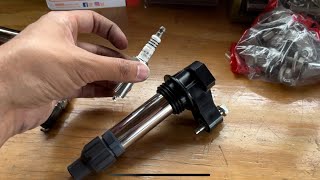
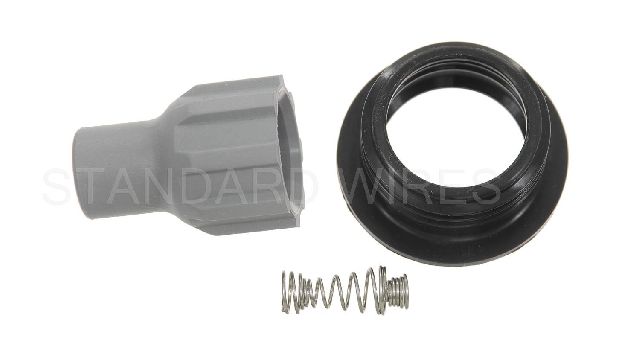
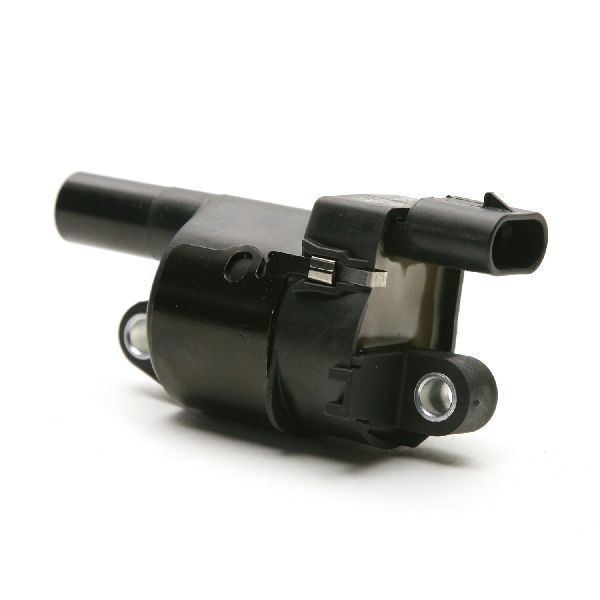
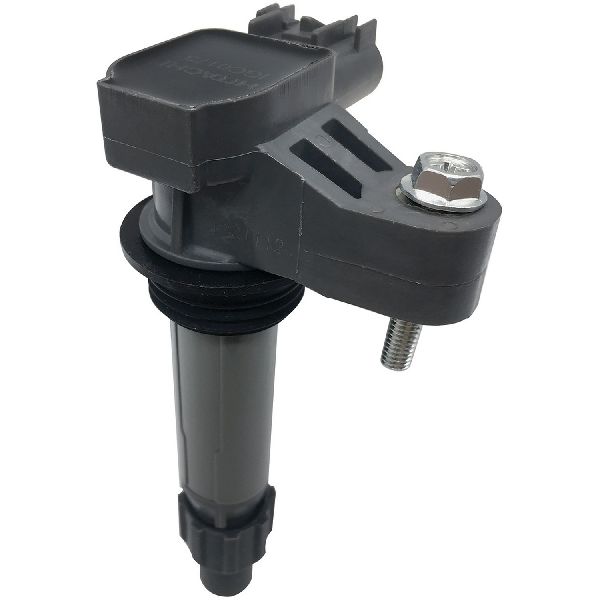
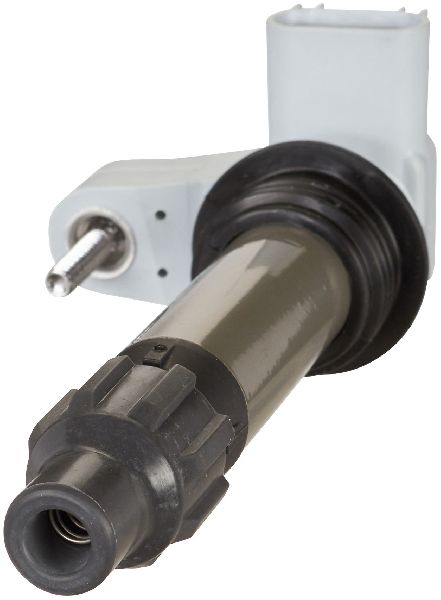
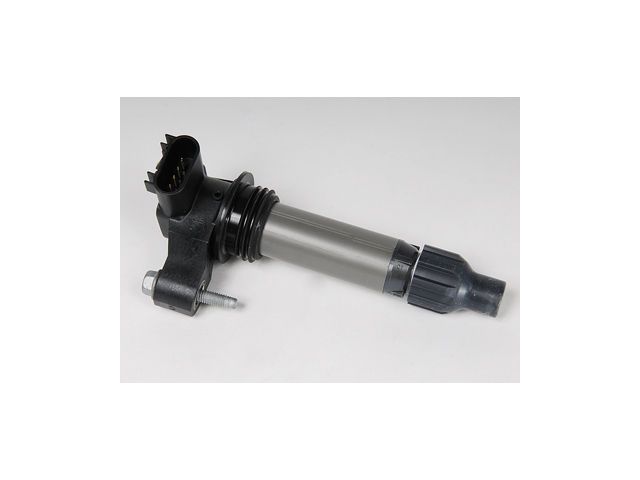
Est. part cost: $60-$150 - Failing Ignition Coil(s) 🔴 High Probability Coil-on-plug systems are common, and heat cycles can cause coils to fail over time. While one failing coil usually sets a specific cylinder code (e.g., P0301), a weak or intermittently failing coil can contribute to a random P0300 before it fails completely or sets a pending code.
How to confirm: Use a scan tool with live data to view misfire counts per cylinder. Swap the suspected failing coil with a known good one from another cylinder and see if the misfire follows the coil.
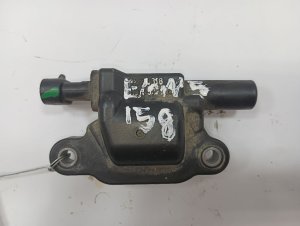
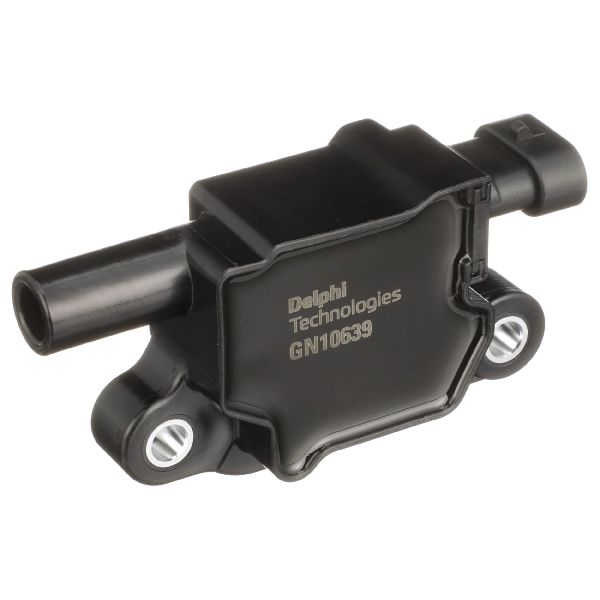
Typical fix: Replace the faulty ignition coil. It is often recommended to replace them as a set if they are original and high-mileage. The common ACDelco OEM part number is 12632479 (also listed as D515C).
Est. part cost: $50-$100 per coil - Intake Valve Carbon Buildup 🟡 Medium Probability The 3.6L (LFX/LLT) and 2.0T (LTG) engines are direct-injected, meaning fuel is sprayed directly into the cylinder. This design allows carbon from the PCV system to bake onto the intake valves, disrupting airflow and causing misfires, especially on cold starts. This issue is well-documented in GM service information.
How to confirm: This requires a borescope to visually inspect the intake valves, which usually involves removing the intake manifold.
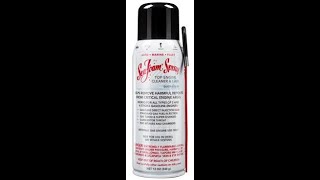
Typical fix: The valves must be physically cleaned, typically through walnut blasting or manual scraping with chemical cleaners. This is a labor-intensive process that can cost over $600. Some owners use a chemical induction cleaning service as a preventative measure.
Est. part cost: $20-$50 in gaskets, but labor is high - Vacuum Leak 🟡 Medium Probability Plastic and rubber vacuum lines, particularly PCV hoses, can become brittle and crack or collapse over time, introducing unmetered air into the engine and disrupting the air-fuel ratio. The intake manifold gaskets can also be a source of leaks.
How to confirm: Perform a smoke test by introducing pressurized smoke into the intake system and watching for leaks from hoses, the intake manifold gasket, or the throttle body. A hissing sound at idle can also indicate a vacuum leak.
Typical fix: Replace the cracked hose or leaking gasket. PCV hoses are a common failure point.
Est. part cost: $10-$150 - Faulty Fuel Injectors ⚪ Low Probability Injectors can become clogged or fail electronically, leading to poor fuel delivery. While less common than ignition issues, it's a known cause of misfires. GM has issued service bulletins regarding proper injector replacement when dealing with misfire codes.
How to confirm: A professional can perform a fuel injector balance test using a capable scan tool. You can also check resistance across the injectors with a multimeter or swap injectors between cylinders to see if the misfire moves.
Typical fix: Replace the faulty fuel injector(s). It's critical to use the correct part number for the specific engine and model year.
Est. part cost: $70-$200 per injector
Rare But Worth Checking
- Damaged Oil Control Valve (OCV) Solenoid: TSB #21-NA-036 specifically mentions that a damaged OCV solenoid can cause an oil leak and misfires, setting DTCs P0300, P0302, and/or P0305. This is a vehicle-specific issue worth checking if other causes are ruled out.
- Low Fuel Pressure: A weak fuel pump or clogged fuel filter can starve the entire engine for fuel, causing random misfires across all cylinders. This is more likely if the misfires occur under load or during acceleration.
- Internal Engine Mechanical Failure: In severe cases, issues like a stretched timing chain (a known issue on some 3.6L engines), low compression from a bad piston or head gasket, or even engine block porosity can cause a P0300 code. TSB #18-NA-115 details a cold-start misfire caused by coolant leaking into a cylinder due to block porosity, which requires engine replacement to fix.
- Weak or Old Battery: A failing battery can provide inconsistent voltage to the vehicle's computer and ignition system, sometimes triggering a random misfire code before other battery symptoms appear. This is a simple and relatively common fix mentioned by owners.
- Moisture in Charge Air Cooler (2.0L LTG Engine): TSB #18-NA-020 addresses an issue on the 2.0L Turbo engine where moisture can collect in the charge air cooler during high humidity or rainy conditions. A heavy acceleration can draw this water into the engine, causing a P0300 misfire. The fix involves replacing the charge air cooler with an updated design.
Diagnosis Steps
- Read all stored fault codes with an OBD-II scanner. Note any codes accompanying P0300 and check freeze frame data to see engine conditions (speed, load, temperature) when the misfire occurred.
- Inspect the ignition system. Remove and check all spark plugs for wear, damage, or fouling (oil or carbon). Test or swap ignition coils between cylinders to isolate a potential failure.
- Check for vacuum leaks. Perform a visual inspection of all vacuum hoses, especially the PCV lines. For a more thorough check, use a smoke machine to find hidden leaks around the intake manifold gasket.
- If the engine is direct-injected (3.6L or 2.0T), consider carbon buildup. If the vehicle has high mileage (over 60,000 miles) and other causes are ruled out, a borescope inspection of the intake valves is the next logical step.
- Test the fuel system. Check fuel pressure to ensure the pump is delivering adequate pressure. A professional can perform a fuel injector balance test.
- If all else fails, consider mechanical engine problems. A compression test or cylinder leak-down test can identify issues like bad piston rings, head gaskets, or valve train problems.
Parts You'll Likely Need
- Spark Plugs
(OEM #ACDelco 41-109 (for many 3.6L models, verify by VIN))— This is the most common maintenance item related to misfires. Worn plugs are a primary cause of weak spark and incomplete combustion.
Trusted brands: ACDelco, NGK
OEM price range: $10-$20 per plug - Ignition Coils
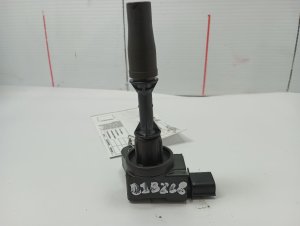
(OEM #ACDelco 12632479 / D515C (for many V6 models, verify by VIN))— Ignition coils fail from heat and age, leading to a weak or nonexistent spark. A failing coil is a very common cause for P0300.
Trusted brands: ACDelco, Delphi
OEM price range: $60-$115 per coil - Intake Manifold Gaskets — These are required when removing the intake manifold to perform a carbon cleaning (walnut blasting) on the intake valves of GDI engines.
Trusted brands: ACDelco, Fel-Pro
OEM price range: $20-$50 for a set - PCV Hoses/Tubes — These rubber and plastic hoses are a frequent source of vacuum leaks as they become brittle and crack or collapse with age.
Trusted brands: ACDelco, GM Genuine
OEM price range: $15-$75 depending on the specific hose
Related Codes That Often Appear With This One
- P0301-P0308 — These codes indicate a misfire on a specific cylinder (e.g., P0301 for cylinder 1). A random P0300 may eventually be joined by or turn into one of these more specific codes as a component fails completely.
- P0171 / P0174 — These are 'System Too Lean' codes. They often appear with P0300 if the misfire is caused by a vacuum leak, which introduces excess unmetered air.
- P050D — This code for 'Cold Start Rough Idle' is specifically mentioned alongside P0300 in TSB #PIP5628G, indicating a known link on these vehicles, often pointing towards diagnostic procedures for persistent misfires.
- P0299 — This 'Turbocharger/Supercharger Underboost' code can appear with P0300 on the 2.0L LTG engine, sometimes related to moisture in the charge air cooler as described in TSB #18-NA-020.
Technical Service Bulletins (TSBs) & Recalls
- Cold Start Misfire and/or Rough Idle – DTC P0300 May Be Set: Addresses a condition where a cold engine misfires due to engine block porosity allowing coolant to leak into a cylinder. This is a severe issue that may require engine replacement.
- MIL Illuminated with Misfire DTCs: Provides diagnostic information for a damaged Oil Control Valve (OCV) solenoid that can cause an oil leak and set a P0300, often with cylinder-specific codes like P0302 or P0305.
- Diagnostic Aids for Gas Engine Misfire/Rough Running with DTC P0300-P0308 and/or DTC P050D: A general diagnostic guide for technicians to follow when diagnosing persistent misfire codes, outlining a template of information to collect before contacting GM's Technical Assistance Center (TAC).
- Malfunction Indicator Lamp Illuminated with DTC P0300 and/or P0299/P2227 Set: Specific to the 2.0L LTG engine, this TSB details how moisture can build up in the charge air cooler and be ingested by the engine during heavy acceleration, causing a P0300 misfire. The fix is an updated charge air cooler.
- Engine Misfires Due To Major Carbon Deposits On The Intake And Or Exhaust Valves: An informational bulletin explaining how direct injection leads to carbon buildup on intake valves, causing cold start misfires and P0300 codes across many GM engines, including the LFX, LLT, and LTG.
Platform-Specific Known Issues

- Cold Start Misfire: TSB #18-NA-115 specifically addresses cold start misfires and rough idle that can set a P0300 code.
- Damaged OCV Solenoid: TSB #21-NA-036 points to a potential issue with a damaged oil control valve (OCV) solenoid causing oil leaks and misfires, including P0300.
- Timing Chain Stretch: Some 3.6L V6 engines (specifically the earlier LLT version) were known for premature timing chain wear, which can alter cam timing and cause misfires.
Mechanic-Grade Diagnostic Values
- Low-Side Fuel Pressure (Key On, Engine Off) — expected: 345-690 kPa (50-100 psi). Failure: Pressure below 345 kPa (50 psi) indicates a weak in-tank fuel pump, clogged filter, or leak. Pressure above 690 kPa (100 psi) may indicate a faulty fuel pump module.
- Low-Side Fuel Pressure (Engine Idling) — expected: 300-400 kPa (43-58 psi). Failure: Readings outside this range suggest a problem with the Fuel Pump Flow Control Module (FPCM) or the in-tank pump.
- Fuel Pressure Leak-Down Test — expected: After priming, pressure should hold and not decrease more than 34 kPa (5 psi) in 1 minute.. Failure: A faster drop indicates a leaking fuel injector, faulty check valve in the fuel pump, or a leak in the fuel lines.
Scan Tool Commands That Help
- GDS2 / Tech2 or equivalent professional scan tool: Crankshaft Position System Variation Learn — This procedure is often required after replacing a crankshaft position sensor, ECM, or making significant engine repairs. It synchronizes the sensor with the crankshaft reluctor wheel to ensure accurate misfire detection. Failure to perform this can cause a persistent P0300 code.
- GDS2 / Tech2 or equivalent professional scan tool: Fuel Injector Balance Test — To identify a leaking or clogged fuel injector that may be causing a misfire on one or more cylinders. This test measures the pressure drop for each injector to ensure they are flowing equally.
- GDS2 / Tech2 or equivalent professional scan tool: Torque Converter Clutch (TCC) Slip Speed & Commanded State — When a shudder is felt that mimics a misfire, especially between 40-50 MPH. Monitoring TCC slip speed while commanding the clutch on and off can determine if the shudder is from the torque converter or the engine.
Wiring & Ground Locations
- G102 / G107 (Varies by year/engine) — On the engine block, often near the generator or ignition coils.. These are primary engine ground points. A loose or corroded ground at these locations can cause insufficient voltage for the ignition coils and ECM, leading to weak spark and random misfires.
- ECM Connector (X1/X2/X3) — The Engine Control Module, located in the engine bay.. Checking for Ignition 1 Voltage at specific pins (e.g., Pin 1, Pin 3 on some models) confirms the ECM and ignition system are receiving proper power from the ignition switch. A loss of voltage here can cause a no-start or random misfire condition.
Real Owner Repair Stories
- YouTube user 'Handy Val' (2011 Cadillac CTS4 3.0L V6 with ~70,000 miles) — Car shaking, solid Check Engine Light, and 'Service StabiliTrak' message. OBD-II scan revealed code P0300.
❌ Tried (didn't work) The owner was hesitant to immediately replace spark plugs, coils, or injectors on a relatively low-mileage car that was running perfectly before the incident.
✅ What actually fixed it The owner identified that the battery was 8 years old and had never been replaced. Replacing the old, weak battery resolved the P0300 code and associated symptoms. The theory is that inconsistent voltage from the failing battery caused electrical issues for the ECM and ignition system.
OEM Part Supersession History
12590990, 12610626, 12618542→12632479 (Also known as D515C)— Standard part evolution for improved durability, reliability, and resistance to internal shorts and dielectric breakdown.12622561→41-109 (ACDelco part number)— Standard part number update and branding alignment. The 41-109 is the common service replacement Iridium plug.
Heads up: Note: These plugs are pre-gapped and should not be re-gapped upon installation.
Model Year Variations Within This Range
- 2016-2018: Models with the 3.6L LGX and 3.0L LGW engines can suffer from broken or dislodged rocker arms (SRFFs) causing a P0300, as detailed in TSB PIP5493D. This is a specific mechanical failure path for these later, updated V6 engines.
- 2016-2019: Models equipped with the 8-speed automatic transmission (8L45) are susceptible to a torque converter shudder that mimics a P0300 misfire. A specific service update (N192217820) calls for replacing the original transmission fluid with a newer Mobil 1 Synthetic LV ATF HP fluid to correct the issue.
Helpful Videos

Used OEM Parts in Stock



New Aftermarket Parts Available

The information in this article is provided for general reference and educational purposes only. Vehicle specifications, procedures, and part compatibility can vary by production date, trim level, and region. Always consult your vehicle's factory service manual and verify part numbers before purchasing or performing repairs. Safety-critical components such as airbags, seat belts, and braking systems should be installed by a qualified professional.
- Cadillac CTS:
- 🎬 Helpful Videos
- 🛍️ Shop This Part
- What's Unique About the 2011-2018 Cadillac CTS
- Diagnostic Flowchart
- Symptoms You May Notice
- Most Likely Causes
- Rare But Worth Checking
- Diagnosis Steps
- Parts You'll Likely Need
- Related Codes That Often Appear With This One
- Technical Service Bulletins (TSBs) & Recalls
- Platform-Specific Known Issues
- Mechanic-Grade Diagnostic Values
- Scan Tool Commands That Help
- Wiring & Ground Locations
- Real Owner Repair Stories
- OEM Part Supersession History
- Model Year Variations Within This Range
- 🎟️ Get 5% Off