

P0300 on 2003-2010 Cadillac CTS: Random Misfire Causes and Fixes
P0300 on a 2003-2010 Cadillac CTS indicates a random multiple cylinder misfire. The most common culprits are worn spark plugs and failing ignition coils. Replacing all spark plugs and the faulty coil(s) is a typical first step, costing around $100-$300 in parts for a DIY repair. On 3.6L V6 engines, this code can also be an early symptom of stretched timing chains, a more serious issue.
- P0300 means your engine is misfiring on multiple cylinders, and a flashing check engine light is a sign to stop driving to avoid expensive catalytic converter damage.
- Start your diagnosis with the most common and affordable fixes: inspect and replace worn spark plugs and faulty ignition coils.
- Check for oil in the spark plug tubes. If you find any, you must replace the valve cover gaskets to protect the new coils.
- On the 3.6L V6 engine, be aware that persistent P0300, especially with codes like P0017, strongly suggests a stretched timing chain, which is a major repair.
- Vacuum leaks from old hoses or intake gaskets are another frequent cause and can be found using a smoke test.
What's Unique About the 2003-2010 Cadillac CTS

The 2003-2010 Cadillac CTS spans two generations, both primarily using V6 engines from GM's High Feature family (LY7 and LLT). While ignition components are a frequent cause of P0300 on many cars, the 3.6L V6 engine, common in these models, is particularly known for premature timing chain stretch. This mechanical issue can cause camshaft correlation codes (like P0008 or P0017) to appear alongside P0300 and requires a more involved repair than a simple tune-up. Additionally, oil leaks from the valve cover gaskets are known to seep into the spark plug tubes, ruining the ignition coils and causing persistent misfires. For the direct-injection 3.6L LLT V6 (2008+), carbon buildup on intake valves is another common cause of misfires, especially on cold starts.
Diagnostic Flowchart
Tap your situation to follow the diagnostic path that matches what you're seeing on this vehicle.
Generation note: This range covers the first generation (2003-2007) and the beginning of the second generation (2008-2010) CTS. The first generation used 3.2L (a GM L81 V6) and later the 2.8L/3.6L LY7 V6 engines. The second generation primarily used 3.0L and 3.6L V6 direct-injection (LLT) engines. While causes are similar, the 3.6L V6 in both generations is noted for timing chain issues. The 2008+ direct injection models are more susceptible to carbon buildup on intake valves.
Symptoms You May Notice
- Rough or shaky idle
- Flashing Check Engine Light
- Hesitation or stumbling during acceleration
- Noticeable loss of engine power
- Reduced fuel economy
- "Service StabiliTrak" or similar warning on the dash
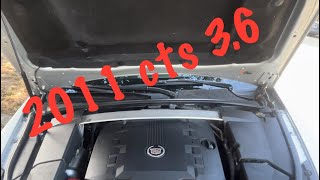
- Engine shaking is physically noticeable in the cabin 🎬 Watch: Diagnosing a P0300 code and StabiliTrak warning
- Replacing only one spark plug or coil when others are near the end of their service life.
- Replacing oxygen sensors, as they may report issues due to the misfire but are not the root cause.
- Assuming it's a simple tune-up when it's a more serious timing chain issue on the 3.6L V6.
- Replacing fuel injectors when the issue is carbon buildup on the intake valves of a direct-injection engine.
Most Likely Causes

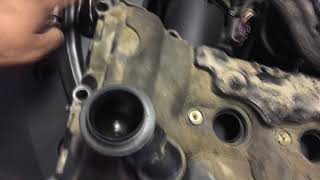
- Worn Spark Plugs or Faulty Ignition Coils 🔴 High Probability Ignition coils are a common failure item. A very frequent issue is oil leaking from the valve cover gaskets, which pools in the spark plug wells and saturates the coil boots and plugs 🎬 See how oil leaks into the spark plug wells, causing them to fail.
How to confirm: Inspect spark plugs for wear, fouling, or oil contamination. If a specific misfire code (e.g., P0301, P0302) is present, swap the ignition coil from the misfiring cylinder with one from a known good cylinder. If the code follows the coil, the coil is bad. An advanced scan tool can show live misfire data to help identify which cylinders are problematic.
Typical fix: Replace all spark plugs as a set. Replace the identified faulty ignition coil(s). It is often recommended to replace all coils at once if they are original and have high mileage. Crucially, if oil is found in the spark plug tubes, the valve cover gaskets must be replaced to prevent repeat failure.
Est. part cost: $80-$300 - Vacuum Leak 🟡 Medium Probability Aging plastic and rubber components, such as the PCV hoses and intake manifold gaskets, can crack and create a leak. The PCV hose that runs behind the passenger side valve cover is a known weak point that can collapse or crack with age.
How to confirm: Listen for a hissing sound around the engine bay at idle. A professional can perform a smoke test to pinpoint the exact location of the leak. You can also carefully spray brake cleaner or a combustible fluid around the intake manifold gaskets and vacuum hoses; a change in engine RPM indicates a leak.
Typical fix: Replace the cracked hose or faulty gasket. The intake manifold gaskets and PCV system hoses are common sources.
Est. part cost: $20-$150 - Stretched Timing Chain 🟡 Medium Probability The 3.6L V6 engine (both LY7 and LLT versions) used in many of these CTS models is notorious for premature timing chain wear and stretching, which affects cam/crank correlation and causes misfires. This was especially an issue on 2007-2011 engines.
How to confirm: This is often accompanied by other codes like P0008, P0017, P0018, or P0019. Diagnosis requires checking camshaft deviation angles with an advanced scan tool. A rattling noise from the front of the engine on startup is also a symptom. A definitive, but advanced, check involves using an oscilloscope to compare cam and crank sensor waveforms to a known-good pattern.
Typical fix: This is a major repair that involves replacing the timing chains, tensioners, and guides. It is labor-intensive and typically requires professional service. 🎬 Watch: Essential parts and specialty tools for timing chain repair The job can cost between $1,500 and $2,500+ at a shop.
Est. part cost: $400-$800 - Dirty or Clogged Fuel Injectors ⚪ Low Probability
How to confirm: A fuel system cleaning service can be attempted first. For definitive diagnosis, a mechanic can perform a fuel injector balance test to measure the flow rate of each injector.
Typical fix: Run a high-quality fuel injector cleaner through the system. If that fails, the injectors may need to be professionally cleaned or replaced.
Est. part cost: $15-$50 (cleaner), $300-$600+ (replacement set)
Rare But Worth Checking
- Low Fuel Pressure: A failing fuel pump or clogged fuel filter can starve the engine for fuel, causing a random misfire under load. Check fuel pressure with a gauge connected to the fuel rail.
- Faulty Crankshaft Position Sensor: A failing crankshaft position sensor can send erratic signals to the ECM, disrupting ignition and injection timing and causing random misfires. This may or may not set a specific sensor code.
- Carbon Buildup on Intake Valves: This is especially relevant for the direct-injection engines (2008+ 3.6L LLT). Carbon deposits can disrupt airflow into the cylinders, causing misfires, particularly on a cold start. GM issued TSB #PIP5029A (later updated) addressing this exact issue, which can require walnut blasting to clean the valves.
- Weak or Failing Battery: A battery nearing the end of its life may not provide stable voltage to the ECM and other modules, which can cause a variety of strange electrical issues, including a P0300 code.
- Engine Block Porosity: A rare but documented issue covered in TSB #18-NA-115 involves microscopic porosity in the engine block, allowing coolant to seep into a cylinder on a cold engine. This causes a cold-start misfire that disappears as the engine warms up and the metal expands. Diagnosis involves adding dye to the coolant and using a borescope to check for it in the cylinders.
Diagnosis Steps
- Read all fault codes with an OBD-II scanner. Note any codes accompanying P0300, such as specific cylinder misfires (P0301-P0306) or timing codes (P0008, P0017).
- If the check engine light is flashing, reduce driving immediately to prevent catalytic converter damage.
- Perform a visual inspection of the engine bay. Look for obvious issues like disconnected or collapsed vacuum hoses (especially the PCV line), cracked air intake boots, or rodent damage to wiring.
- Inspect the ignition system. Remove the ignition coils and spark plugs. Check for oil in the spark plug tubes (indicating a valve cover gasket leak), and inspect plugs for wear, carbon fouling, or damage.
- If a specific cylinder misfire is identified (e.g., P0304), swap the ignition coil and/or spark plug with a known good cylinder and see if the misfire code follows the part.
- Check for vacuum leaks. Listen for hissing sounds. A smoke test is the most effective method to find leaks from gaskets or hoses.
- If equipped with the 3.6L V6 and timing codes (P0008/P0017) are present, investigate the timing chains. This usually requires an advanced scan tool to check cam phase angles or professional diagnosis.
- Test fuel pressure to rule out a weak fuel pump or clogged filter.
- For 2008+ direct-injection models, consider carbon buildup on intake valves, especially if the misfire is worse on cold starts. This may require a borescope inspection.
- If all else fails, consider issues like a faulty crankshaft position sensor, a weak battery, or low engine compression.
Parts You'll Likely Need

- Ignition Coil
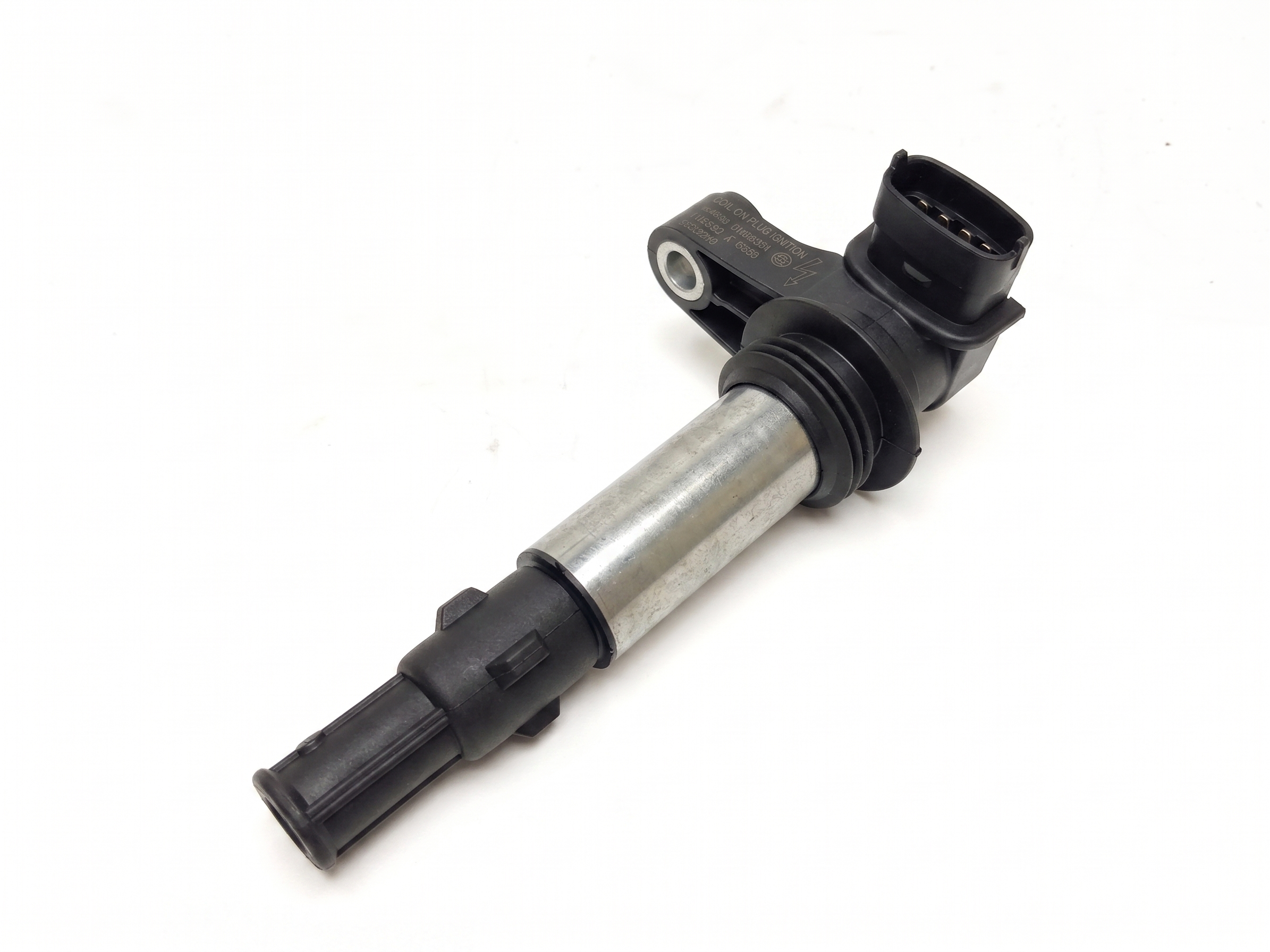
(OEM #ACDelco D515C (or 12713668) for 2008-2010 LLT V6; ACDelco D501C (or 19418102) for 2004-2007 LY7 V6)— This is one of the most common failure points leading to a misfire. Oil leaks from valve cover gaskets often cause premature failure.
Trusted brands: ACDelco, Delphi, Denso
OEM price range: $50-$80 per coil
Aftermarket price range: $30-$60 per coil - Spark Plugs
(OEM #ACDelco 41-107 (or 12627160) for 3.6L V6 models)— Worn or fouled spark plugs are a primary cause of weak spark and misfires. They are a standard maintenance item and the first step in a tune-up.
Trusted brands: ACDelco, NGK, Denso
OEM price range: $10-$15 per plug
Aftermarket price range: $7-$12 per plug - Valve Cover Gasket Set — Required if oil is found in the spark plug tubes. Failing to replace the gaskets will lead to repeated ignition coil failure.
Trusted brands: ACDelco, Fel-Pro
OEM price range: $60-$100
Aftermarket price range: $30-$70 - Timing Chain Kit — A necessary repair for the common stretched timing chain issue on the 3.6L V6 engines, often indicated by codes P0008 or P0017 alongside P0300.
Trusted brands: ACDelco, Cloyes
OEM price range: $400-$600
Aftermarket price range: $250-$450
Related Codes That Often Appear With This One
- P0301-P0306 — These codes specify which cylinder is misfiring (e.g., P0301 for Cylinder 1). They often appear with P0300 before the ECM isolates the problem to a specific cylinder, or if multiple specific cylinders are misfiring.
- P0171 / P0174 — These 'System Too Lean' codes indicate too much unmetered air is entering the engine, which is a classic symptom of a vacuum leak that can also cause a P0300 misfire.
- P0008 / P0017 — These codes indicate a problem with the engine timing correlation between the crankshaft and camshafts, often pointing directly to a stretched timing chain on the 3.6L V6 engine.
Technical Service Bulletins (TSBs) & Recalls
- TSB #18-NA-115: Addresses cold start misfire (P0300) that disappears when warm, potentially caused by engine block porosity allowing coolant into a cylinder.
- TSB #PIP5029A: Discusses engine misfires (P0300-P0306) caused by major carbon buildup on intake and/or exhaust valves on direct-injected engines, including the 3.6L LLT.
- TSB #PIP5628G: Preliminary information for diagnosing misfire codes P0300-P0308.
- TSB #PIP5493B/C/D: Addresses misfire DTCs on later model GM V6 engines, providing diagnostic steps for issues like faulty rocker arms or oil control valves.
Platform-Specific Known Issues

- Timing Chain Stretch (3.6L V6): A widely documented problem where the timing chains stretch over time, causing cam/crank correlation errors (P0008, P0017) and random misfires. This is a costly repair.
- Cold Start Misfire: TSB #18-NA-115 mentions diagnosis for a cold start misfire and/or rough idle that can set a P0300 code, often related to carbon buildup on the intake valves of direct injection engines.
- Oil in Spark Plug Tubes: Leaking valve cover gaskets are a very common issue, allowing oil to flood the spark plug wells and destroy the ignition coils.
Mechanic-Grade Diagnostic Values
- Fuel Pressure (2008+ 3.6L LLT Direct Injection) — expected: Engine Idling: 297-400 kPa (43-58 psi). Key On, Pump Commanded ON: 276-600 kPa (40-87 psi).. Failure: Pressure below specified range indicates a weak pump or clogged filter. Pressure that bleeds down more than 34 kPa (5 psi) in one minute indicates a leak.
- Ignition Coil Primary Resistance (General) — expected: 0.4 to 2.0 ohms.. Failure: A reading outside this range (e.g., OL for open or 0 for shorted) indicates a faulty coil.
- Ignition Coil Secondary Resistance (General) — expected: 6,000 to 15,000 ohms (6k-15k Ω).. Failure: A reading significantly outside this range suggests the coil's secondary winding has failed.
- Ignition Control (IC) Circuit Voltage (2010 3.6L) — expected: 200-400 mV while cranking or starting the engine.. Failure: Voltage below 200mV can indicate an open/high resistance in the control circuit. Voltage above 400mV can indicate a short to voltage. Both may require ECM replacement if the wiring is good.
Hidden / Shadow Codes Worth Checking
- Mode $06 Misfire Counters: Even if a specific P0301-P0306 code is not set, the ECM tracks misfire events for each cylinder. Accessing Mode $06 data with an advanced scan tool can reveal which cylinder(s) are accumulating misfire counts, helping to pinpoint a problem cylinder before it's bad enough to trigger a dedicated code. (see via Advanced OBD-II scanner with Mode $06 functionality or a dealer-level tool like a GM Tech2/GDS2.)
Scan Tool Commands That Help
- GM Tech2 / GDS2 or equivalent: Crankshaft Position System Variation Learn — Required after replacing the crankshaft position sensor, ECM, or crankshaft balancer. Failure to perform this relearn can cause the ECM to inaccurately detect misfires and set a false P0300 or a P0315/P1336 code.
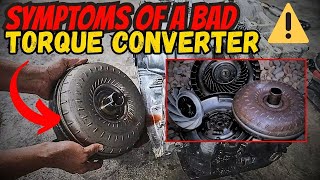
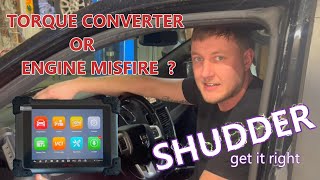
- Advanced Scan Tool: Torque Converter Clutch (TCC) Solenoid Control — To diagnose a shudder that feels like a misfire. A technician can command the TCC ON and OFF to see if the shudder disappears. If the shudder changes with TCC command, the issue is likely in the transmission (torque converter), not an engine misfire.
- Advanced Scan Tool: Fuel Pump ON/OFF Command — For safely and accurately testing fuel pressure without the engine running. This allows for checking maximum pressure and performing leak-down tests.
Wiring & Ground Locations
- G105 / G130 — On the back of the right cylinder head.. This is a primary ground point for the engine control module and ignition system components on both first and second generation models. A loose or corroded connection here can cause erratic ECM behavior and random misfires.
- G106 / G131 — Located on the rear of the engine block (left or right side depending on year).. Provides a critical ground path for ignition coils and other engine sensors. A poor connection can lead to a weak spark and misfires.
- G110 — On the right frame rail, near the ABS module on second generation (2008+) models.. While a known TSB mentions this ground for power steering issues, it is part of the main engine bay grounding scheme. Poor grounding here can contribute to widespread electrical issues, potentially including ECM problems that manifest as a P0300.
Real Owner Repair Stories
- YouTube video by 'Handy Val' (2011 Cadillac CTS4 3.0L V6 with ~70,000 miles) — Car shaking, solid Check Engine Light, 'Service StabiliTrak' warning, P0300 code present.
❌ Tried (didn't work) The owner suspected but did not replace spark plugs, coils, or injectors due to the car's relatively low mileage.
✅ What actually fixed it Replacing the original, 8-year-old battery. The failing battery was not providing stable voltage to the vehicle's computer modules, causing the random misfire code and other electronic warnings. - Cadillac Forums / GM Service Information (Multiple GM vehicles, including Cadillac CTS, with automatic transmissions.) — A shudder feeling when driving, typically between 40-50 mph, that feels exactly like an engine misfire or driving over rumble strips.
❌ Tried (didn't work) Replacing spark plugs, ignition coils, and cleaning fuel systems often have no effect on this specific issue.
✅ What actually fixed it The issue was a torque converter clutch (TCC) shudder, not an engine misfire. The fix involves either replacing the torque converter or, in many cases, performing a transmission fluid flush and replacing the old fluid with a newer-spec fluid (e.g., Mobil 1 Synthetic LV ATF HP).
"I Checked Everything" — The Actual Cause
- A common scenario is a shudder feeling identical to a misfire that occurs at cruising speeds (40-50 mph). All engine diagnostics, including a smoke test for vacuum leaks, will come back clean. The actual cause is often a torque converter clutch (TCC) shudder, a transmission issue that can be diagnosed by using a scan tool to monitor TCC slip speed while driving.
- For a misfire that only occurs on a cold start and vanishes once the engine warms up, a smoke test will be negative. The actual cause can be engine block porosity, a rare defect where coolant seeps into a cylinder overnight. This is confirmed with a borescope inspection after adding UV dye to the coolant, as outlined in TSB #18-NA-115.
When the Usual Fixes Don't Work
- In multiple documented cases, owners have chased a P0300 code by replacing spark plugs, ignition coils, and even fuel injectors with no resolution. The problem was ultimately a shudder from the torque converter clutch that perfectly mimicked a misfire. The final repair was transmission-related, involving a fluid exchange with updated fluid or a new torque converter, completely outside the typical engine-focused diagnosis.
OEM Part Supersession History
Older GM Transmission Fluid→Mobil 1 Synthetic LV ATF HP (e.g., GM P/N 19417577)— To correct torque converter clutch (TCC) shudder issues that mimic an engine misfire. The newer fluid has an updated friction modifier package.
Heads up: Using older spec fluid or a generic equivalent may not resolve the shudder condition.Original 3.6L V6 Timing Chain Kits→Updated GM Timing Chain Kits— The original timing chains on 3.6L LY7 and early LLT engines were prone to premature stretching. Updated kits feature improved chain design and more robust tensioners to increase service life.
Heads up: When performing a timing chain replacement, it is critical to use the latest available OEM or equivalent aftermarket kit to prevent a repeat failure. Using old stock parts is not recommended.
Model Year Variations Within This Range
- 2008-2010: The introduction of the 3.6L LLT direct-injection engine in 2008 brought a high risk of carbon buildup on the back of the intake valves. This is a common cause of cold-start misfires (P0300) on these models that is not as prevalent on the earlier 2003-2007 port-injected engines.
- 2003-2007 vs 2008-2010: The physical locations of key engine grounds changed between the first and second generations. For example, on the 2005 model, G105 (back of right cylinder head) is a key ground, while on 2008+ models, grounds like G106 (right rear of engine) and G110 (right frame rail) are critical. A technician must consult the correct diagram for the specific model year when diagnosing electrical faults.
Helpful Videos
We Have This Part in Stock


The information in this article is provided for general reference and educational purposes only. Vehicle specifications, procedures, and part compatibility can vary by production date, trim level, and region. Always consult your vehicle's factory service manual and verify part numbers before purchasing or performing repairs. Safety-critical components such as airbags, seat belts, and braking systems should be installed by a qualified professional.
- Cadillac CTS:
- 🎬 Helpful Videos
- 🛍️ Shop This Part
- What's Unique About the 2003-2010 Cadillac CTS
- Diagnostic Flowchart
- Symptoms You May Notice
- Most Likely Causes
- Rare But Worth Checking
- Diagnosis Steps
- Parts You'll Likely Need
- Related Codes That Often Appear With This One
- Technical Service Bulletins (TSBs) & Recalls
- Platform-Specific Known Issues
- Mechanic-Grade Diagnostic Values
- Hidden / Shadow Codes Worth Checking
- Scan Tool Commands That Help
- Wiring & Ground Locations
- Real Owner Repair Stories
- "I Checked Everything" — The Actual Cause
- When the Usual Fixes Don't Work
- OEM Part Supersession History
- Model Year Variations Within This Range
- 🎟️ Get 5% Off