

P0300 on 2020-2022 Cadillac CT4: Random Misfire Causes and Fixes
P0300 on a 2020-2022 Cadillac CT4 signifies a random engine misfire, affecting multiple cylinders. The most common causes are worn iridium spark plugs or faulty ignition coils. For the 2.7L L3B engine, inspect for wiring harness chafing per TSB 21-NA-149. If the check engine light is flashing, stop driving immediately to prevent catalytic converter damage.
- P0300 means multiple cylinders are misfiring, pointing to a shared problem, not a single component.
- Start your diagnosis with the most common and affordable fixes: inspect and replace worn spark plugs and test the ignition coils.
- A flashing check engine light is a critical warning. Stop driving immediately to prevent destroying your catalytic converter.
- If the misfire happens mostly on cold starts and is accompanied by code P050D, the problem could be more complex, like carbon buildup or issues mentioned in TSB #PIP5628G.
- For the 2.7L engine, be aware of the possibility of a chafed wiring harness as a rare but documented cause of misfires and other electrical faults.
What's Unique About the 2020-2022 Cadillac CT4
The 2020-2022 Cadillac CT4 primarily uses the 2.0L LSY and 2.7L L3B turbocharged engines. While standard ignition and fuel issues are common causes for P0300, these specific platforms have documented issues. GM has issued a technical service bulletin (TSB #PIP5628G) for this year range concerning misfire diagnosis, which may be accompanied by a P050D (Cold Start Rough Idle) code, suggesting some issues are temperature-related. Additionally, TSB #21-NA-149 is critical for the 2.7L L3B engine, detailing how the engine wiring harness can chafe against components like the camshaft carrier cover, causing shorts and a wide variety of codes, including P0300. Carbon buildup on intake valves is also a known issue for these direct-injection engines.
Diagnostic Flowchart
Tap your situation to follow the diagnostic path that matches what you're seeing on this vehicle.
Symptoms You May Notice
- Check Engine Light (CEL) is on or flashing
- Rough or unstable idle
- Noticeable engine shaking or vibration, especially at idle or under load
- Loss of power and poor, sluggish acceleration
- Reduced fuel economy
- Hard starting
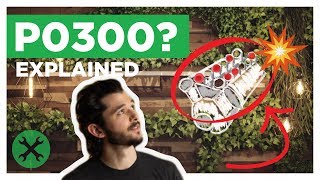
- Slight gasoline smell from the exhaust 🎬 Watch: 10 common misfire symptoms and how to repair them.
- Replacing only one spark plug when the entire set is due for service.
- Replacing oxygen sensors, which are more likely to cause lean/rich codes (P0171/P0174) but are less commonly the root cause of a P0300.
- Replacing the catalytic converter without first diagnosing and fixing the root cause of the misfire. The misfire is what damages the converter, not the other way around.
Most Likely Causes
- Worn or Fouled Spark Plugs 🔴 High Probability Turbocharged, direct-injection engines are demanding on spark plugs, leading to faster wear. The recommended interval can be shorter than on older, naturally aspirated engines. Bad fuel can also foul plugs.
How to confirm: Remove and inspect all spark plugs for wear (rounded electrode), carbon deposits, oil fouling, or white deposits indicating coolant. TSB 21-NA-255 also points to the possibility of a broken center insulator on a spark plug causing a P0300.
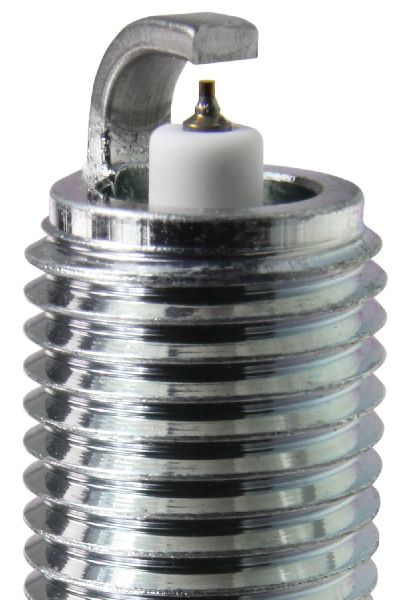
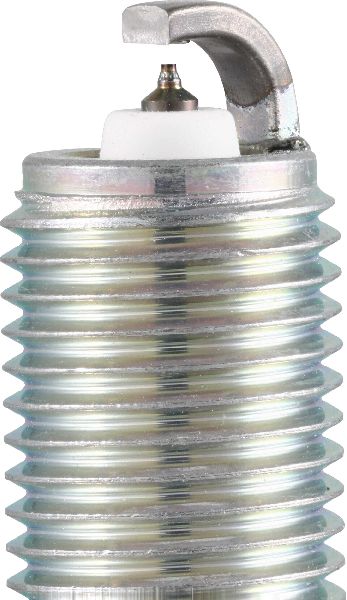
Typical fix: Replace all spark plugs as a set. Use high-quality Iridium plugs for best performance and longevity. For the 2.7L L3B, the OEM part is ACDelco 41-106IP (GM #12688094). For the 2.0L LSY, the OEM part is often ACDelco 41-103IP. 🎬 See this walkthrough for replacing spark plugs on Cadillac turbos.
Est. part cost: $40-$100 - Faulty Ignition Coil(s) 🔴 High Probability Coil-on-plug systems are common failure points. When one coil begins to fail, it can cause intermittent issues that the ECU interprets as a random misfire before it fails completely and sets a cylinder-specific code.
How to confirm: Use a scan tool with live data to monitor misfire counts per cylinder. Swap the ignition coil from a misfiring cylinder to a known good cylinder. If the misfire code follows the coil (e.g., P0302 becomes P0304 after swapping coils on cylinders 2 and 4), the coil is bad.
Typical fix: Replace the faulty ignition coil. It is often recommended to replace all coils if they are original and the vehicle has high mileage. The OEM part number for the 2.7L L3B is GM #12710620. For the 2.0L LSY, a common part number is GM #55511558.
Est. part cost: $50-$120 per coil - Vacuum Leak 🟡 Medium Probability Modern engines have complex PCV and vacuum hose systems. A leak in a hose (e.g., PCV hose) or gasket introduces unmetered air, which creates a lean air/fuel mixture and causes misfires.
How to confirm: Visually inspect all vacuum lines and intake ducting for cracks or loose connections. Listen for a hissing sound at idle. A professional can perform a smoke test, which feeds smoke into the intake system to precisely reveal the source of the leak.
Typical fix: Replace the cracked hose, faulty gasket (e.g., intake manifold gasket), or failed component (e.g., PCV valve).
Est. part cost: $10-$200 - Dirty or Failing Fuel Injectors 🟡 Medium Probability Gasoline Direct Injection (GDI) engines like the LSY and L3B operate at very high fuel pressures, making injectors susceptible to clogging or failure. GM has also issued service bulletins for other vehicles with these engines related to injector flow rates, suggesting it's a known area of concern.
How to confirm: This is more difficult for a DIY diagnosis. A professional can perform a fuel injector balance test to check flow rates. Sometimes, running a quality fuel system cleaner can provide temporary improvement, suggesting a clogging issue.
Typical fix: Professional fuel injector cleaning or replacement of the faulty injector(s).
Est. part cost: $70-$250 per injector - Carbon Buildup on Intake Valves ⚪ Low Probability As GDI engines, the CT4's powerplants spray fuel directly into the cylinder, so gasoline doesn't wash over and clean the intake valves. Over time, oil vapor from the PCV system can bake onto the valves, restricting airflow and causing misfires, especially on cold starts. A teardown of a 2.0L LSY engine with only 24,000 miles showed significant carbon deposits.
How to confirm: Requires a borescope inspection of the intake ports and valves, which usually involves removing the intake manifold.
Typical fix: Manual cleaning of the valves, typically through walnut blasting. This is a labor-intensive job best left to a professional.
Est. part cost: $500-$1000 (shop labor)
Rare But Worth Checking
- Engine Wiring Harness Chafing (2.7L L3B Engine): TSB #21-NA-149 is a critical document for the 2.7L L3B engine. It describes how the engine wiring harness can rub against the camshaft carrier cover, generator bracket, or other components, causing shorts that can trigger a P0300 and a host of other seemingly unrelated electrical codes. Inspection of the harness routing is a key diagnostic step if multiple DTCs are present. 🎬 Watch: A helpful guide on diagnosing and fixing P0300 codes.
- Weak Fuel Pump or Clogged Fuel Filter: If fuel pressure is low, all cylinders can be starved of fuel, leading to a random misfire. A fuel pressure test is required for diagnosis.
- Faulty Crankshaft Position Sensor: The ECM relies on the crankshaft position sensor to detect misfires by monitoring crankshaft speed variations. If the sensor itself is failing, it can send erratic signals that are misinterpreted as a P0300 code. The OEM part number for the 2.7L is GM #12706708.
- Weak or Failing Battery: A battery that is failing or has low voltage can provide unstable power to the ECM and ignition system, leading to a variety of electrical gremlins, including a P0300 code. This is a simple but sometimes overlooked cause.
Diagnosis Steps
- Read the freeze frame data with an OBD-II scanner to see the engine conditions (speed, load, temperature) when the code was set.
- Check for any other stored trouble codes. Codes like P0171, P050D, or cylinder-specific misfires (P0301-P0308) provide critical diagnostic clues.
- Inspect the ignition system. Remove and examine all spark plugs for wear and fouling. Test ignition coils by swapping them between cylinders to see if the misfire follows the coil.
- Check for vacuum leaks. Visually inspect all hoses connected to the intake manifold for cracks or disconnections. Listen for a hissing sound at idle. A professional smoke test is the most effective way to find a leak.
- For the 2.7L L3B engine, carefully inspect the engine wiring harness for any signs of chafing, especially where it crosses the camshaft carrier cover, per TSB 21-NA-149.
- Test the fuel system. Check fuel pressure to ensure the fuel pump is operating correctly. If pressure is good, consider running a high-quality fuel injector cleaner.
- If the misfire is specific to cold starts, investigate causes like carbon buildup on intake valves (requires a borescope) or the rarer issues mentioned in GM TSBs.
- If all else fails, a compression test or cylinder leak-down test may be necessary to check for mechanical engine problems like bad valves or piston rings, though this is less common on a newer vehicle.
Parts You'll Likely Need
- Spark Plugs (Set of 4)
(OEM #ACDelco 41-106IP (2.7L L3B) / 41-103IP (2.0L LSY))— This is the most common maintenance item that causes P0300. They are a primary wear item in the ignition system.
Related Codes That Often Appear With This One
- P0301-P0308 — These are cylinder-specific misfire codes. P0300 may appear initially, and as the ECU isolates the problem, it may be joined by a code for a specific cylinder (e.g., P0302 for Cylinder 2).
- P050D — This code means 'Cold Start Rough Idle.' When seen with P0300, it strongly suggests an issue that is most prominent when the engine is cold, such as carbon buildup, a fuel injector problem, or a rare internal coolant leak. This combination is mentioned in TSB #PIP5628G.
- P0171 / P0174 — 'System Too Lean.' These codes often accompany P0300 when the root cause is a major vacuum leak, as the unmetered air affects the air-fuel ratio for all cylinders.
Technical Service Bulletins (TSBs) & Recalls
- PIP5628G: Diagnostic aid for misfire codes P0300-P0308 and/or P050D (cold start rough idle).
- 21-NA-149: Details engine wiring harness chafing on the 2.7L L3B engine, which can cause P0300 and other DTCs.
- 21-NA-255: Points to a broken spark plug insulator as a potential cause for P0300.
- 18-NA-020: Notes that moisture can accumulate in the charge air cooler, causing misfires.
Platform-Specific Known Issues
- 2.7L L3B Wiring Harness Chafing: A significant known issue for the 2.7L engine is detailed in TSB 21-NA-149. The engine harness can rub through on the camshaft carrier cover or other sharp edges, causing a short circuit. This can manifest as a P0300 code, often accompanied by other seemingly unrelated electrical DTCs. A visual and physical inspection of the harness is a crucial diagnostic step.
- Cold Start Misfires (P050D): The pairing of P0300 and P050D (Cold Start Rough Idle) is common enough that GM issued TSB PIP5628G to aid diagnosis. This combination points towards issues that are more severe when the engine is cold, such as excessive carbon buildup on intake valves, faulty fuel injectors, or, in rare cases on similar GM engines, porosity in the engine block causing a coolant leak.
Mechanic-Grade Diagnostic Values
- Low-Pressure Fuel System (In-Tank Pump) — expected: 55-60 PSI (Key On, Engine Off prime pulse).. Failure: Pressure below this range indicates a weak in-tank pump, clogged filter, or faulty Fuel Pump Driver Control Module (FPDCM).
- High-Pressure Fuel System (Engine-Mounted Pump) — expected: 500 to 3,000 PSI, varies with load.. Failure: Significantly lower pressure than commanded by the ECM, especially under load, points to a failing High-Pressure Fuel Pump (HPFP).
- Long-Term and Short-Term Fuel Trims (LTFT/STFT) — expected: Within +/- 5% at idle and under load.. Failure: Consistently positive values greater than +10% suggest a vacuum leak (if high at idle) or a fuel delivery issue (if high under load).
- Ignition Coil Resistance (Primary) — expected: 0.4 - 2.0 Ohms.. Failure: A reading of 0 ohms (short) or OL/infinite (open) indicates a bad coil. However, a coil can have correct resistance and still fail under load.
Hidden / Shadow Codes Worth Checking
- Misfire History Data: Even when only P0300 is set, the ECM often stores non-DTC historical data of misfire counts for each individual cylinder. This can reveal that a 'random' misfire is actually heavily biased toward one or two cylinders, pointing the diagnosis in that direction. (see via A professional scan tool like the GM GDS2 can access this data in the engine control module's data lists.)
Scan Tool Commands That Help
- GM GDS2 (or equivalent professional scanner): Fuel Injector Balance Test — This automated test helps identify a clogged or failing GDI injector. The tool commands each injector to fire and measures the corresponding drop in fuel rail pressure. A cylinder with a significantly different pressure drop compared to others indicates an injector flow issue.
- GM GDS2 / Tech2 (or equivalent): Crankshaft Position System Variation Learn — This procedure is required after replacing the crankshaft position sensor, ECM, or crankshaft balancer. Failure to perform this relearn can cause the ECM to misinterpret normal crankshaft speed variations as misfires, setting a P0300 or a false P1336/P0315.
- GM GDS2 (or equivalent): Cylinder Power Balance / Injector Kill — This function allows the user to disable one injector at a time while monitoring engine RPM. If disabling a cylinder causes little to no drop in RPM, that cylinder was not contributing effectively, confirming a misfire on that specific cylinder.
Wiring & Ground Locations
- Engine Harness (2.7L L3B) — Multiple locations, specifically inspect where the harness may contact the camshaft carrier cover, generator bracket, and other metallic engine components.. Per TSB 21-NA-149, chafing at these points can cause shorts to ground for various sensor and actuator circuits, including ignition coils and fuel injectors, leading to a P0300 and a wide array of other electrical DTCs.
- Fuel Pump Driver Control Module (FPDCM) — Typically mounted on the vehicle's frame or underbody near the fuel tank.. This module controls the voltage to the in-tank low-pressure fuel pump. A failure in the FPDCM or its wiring/ground can mimic a failed fuel pump, causing low fuel pressure and random misfires. It should be diagnosed before replacing the pump itself.
"I Checked Everything" — The Actual Cause
- A cracked flexplate can cause the crankshaft position sensor to generate an erratic signal as the cracked area passes the sensor. The ECM misinterprets these speed fluctuations as random misfires, setting a P0300. This mechanical issue will not be found with a smoke test, fuel pressure test, or ignition system analysis and is often accompanied by a light ticking or rattling sound from the bellhousing area.
OEM Part Supersession History
12690761, 12697810, 12698497, 12698943→12710620— Standard part evolution for design improvements or manufacturing changes.
Heads up: The newest part number, 12710620, is the correct service replacement for all previous versions for the 2.7L L3B engine in the CT4.
Model Year Variations Within This Range
- 2020-2022: There are no significant documented mechanical changes to the LSY or L3B engines within this specific model year range that would alter the diagnosis of a P0300 code. Minor software and calibration updates may have been released via TSBs to address specific performance characteristics.
Helpful Videos
We Have This Part in Stock

The information in this article is provided for general reference and educational purposes only. Vehicle specifications, procedures, and part compatibility can vary by production date, trim level, and region. Always consult your vehicle's factory service manual and verify part numbers before purchasing or performing repairs. Safety-critical components such as airbags, seat belts, and braking systems should be installed by a qualified professional.
- Cadillac CT4:
- 🎬 Helpful Videos
- 🛍️ Shop This Part
- What's Unique About the 2020-2022 Cadillac CT4
- Diagnostic Flowchart
- Symptoms You May Notice
- Most Likely Causes
- Rare But Worth Checking
- Diagnosis Steps
- Parts You'll Likely Need
- Related Codes That Often Appear With This One
- Technical Service Bulletins (TSBs) & Recalls
- Platform-Specific Known Issues
- Mechanic-Grade Diagnostic Values
- Hidden / Shadow Codes Worth Checking
- Scan Tool Commands That Help
- Wiring & Ground Locations
- "I Checked Everything" — The Actual Cause
- OEM Part Supersession History
- Model Year Variations Within This Range
- 🎟️ Get 5% Off