

P0300 on 2015-2018 Cadillac ATS-V: Random Misfire Causes and Fixes
P0300 on a 2015-2018 Cadillac ATS-V indicates random cylinder misfires. The most common causes are worn spark plugs and failing ignition coils, which are frequent maintenance items on the high-performance LF4 engine. Owners and tuners recommend spark plug changes as often as every 10,000-15,000 miles. A more severe, documented issue is a cold-start misfire caused by coolant leaking into a cylinder due to engine block porosity, which is covered by GM TSB #18-NA-115.
- P0300 on an ATS-V is a serious code that requires prompt attention, especially if the Check Engine Light is flashing.
- Start your diagnosis with the most common and frequent maintenance items: spark plugs and ignition coils.
- Be aware of the specific symptoms of TSB #18-NA-115: if the misfire only happens on a cold start and then vanishes, it could be the more serious coolant leak issue.
- Due to the direct-injection design, carbon buildup on intake valves is a possible cause of misfires over time.
- In rare cases, this code can be a symptom of severe internal engine damage, as documented by an NHTSA owner complaint.
What's Unique About the 2015-2018 Cadillac ATS-V
The Cadillac ATS-V uses the LF4, a high-performance, 464-horsepower, twin-turbocharged, direct-injection V6 engine. This design, with its titanium-aluminide turbine wheels and forged internals, is highly demanding on its ignition system. Owners and performance shops report that spark plugs and ignition coils are regular maintenance items, needed more frequently than on less powerful engines. Additionally, GM has issued a Technical Service Bulletin (TSB #18-NA-115) for this engine family that addresses a P0300 code specifically on cold starts, pointing to a potential manufacturing defect (block porosity) that allows coolant into a cylinder.
Diagnostic Flowchart
Tap your situation to follow the diagnostic path that matches what you're seeing on this vehicle.
Symptoms You May Notice
- Flashing or solid Check Engine Light
- Rough or unstable idle
- Engine hesitation or stumbling during acceleration, sometimes described as a 'fishbite'
- Noticeable loss of power
- Vehicle shaking or vibrating, especially at idle or under load
- StabiliTrak service light may illuminate
- Increased fuel consumption
- Loud popping from the exhaust (backfiring) in some cases
- Replacing only one spark plug or coil when others are near the end of their service life, leading to a repeat failure on a different cylinder soon after.
- Replacing oxygen (O2) sensors, which are unlikely to cause a random misfire code without other accompanying fuel trim or sensor-specific codes.
- Assuming a P0300 is always a simple tune-up issue and not investigating TSB #18-NA-115 when the symptoms (cold start misfire only) match perfectly.
Most Likely Causes
- Worn or Fouled Spark Plugs 🔴 High Probability The high cylinder pressures of the twin-turbo LF4 engine are very hard on spark plugs. Performance tuning shops and owner forums strongly recommend changing them as often as every 10,000-15,000 miles to prevent misfires under load, far more frequently than the standard maintenance schedule.
How to confirm: Visually inspect the spark plugs for wear on the electrode, carbon fouling, or oil contamination. Check the spark plug gap. While the OEM ACDelco Iridium plugs come pre-gapped, tuners often recommend a smaller gap for modified cars. For example, ZZPerformance recommends gapping to .027"-.028" for high-horsepower builds, down from the factory pre-gap of around .035"-.040". ACDelco warns against re-gapping their iridium plugs as it can cause damage.
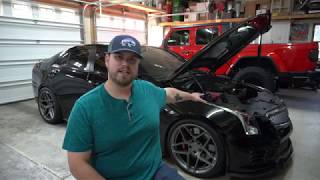
Typical fix: Replace all six spark plugs with high-quality OEM ACDelco Iridium plugs (Part No. 12681660). Ensure they are torqued to specification. 🎬 Watch: Step-by-step spark plug replacement on an ATS-V. For tuned vehicles, consult your tuner for the recommended heat range and gap.
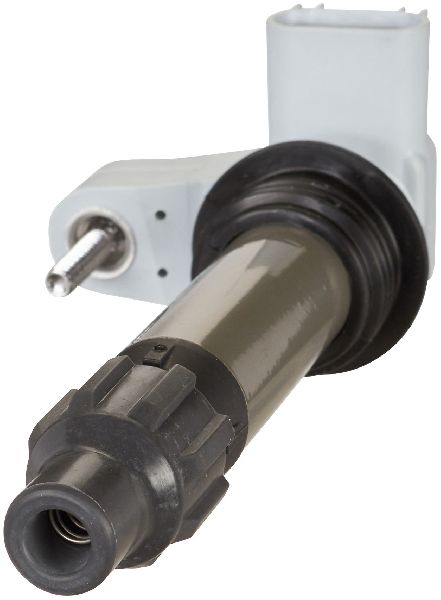
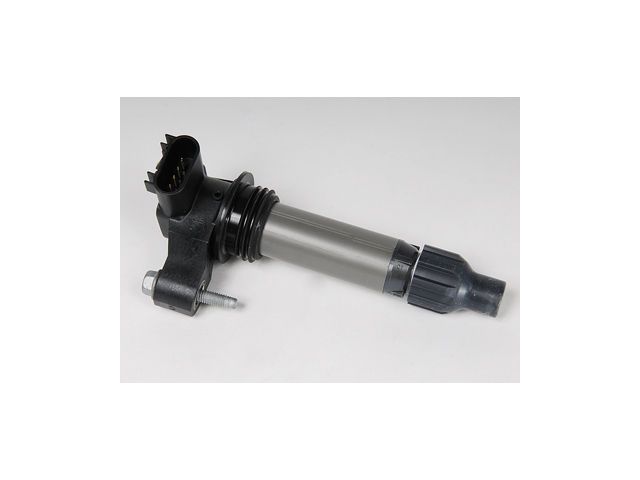
Est. part cost: $60-$120 - Failing Ignition Coils 🔴 High Probability Like the spark plugs, the ignition coils are under high stress from engine heat and high voltage demands. A coil can become weak and fail under load (high boost, low RPM) before it fails completely, causing random misfires that don't immediately set a cylinder-specific code.
How to confirm: Use a scan tool with live data to monitor misfire counts per cylinder. Even with a P0300, the tool may show one cylinder with significantly more misfire events. If a suspect cylinder is identified, swap its ignition coil with a known good cylinder and see if the misfire count follows the coil. A coil can test good externally but still fail under engine compression and heat.
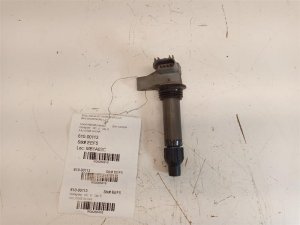
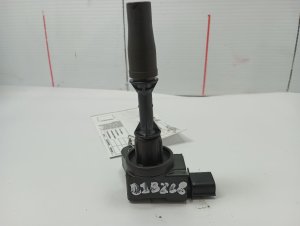
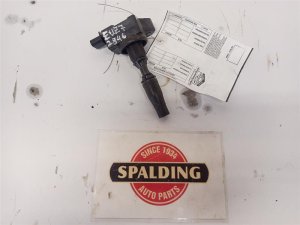
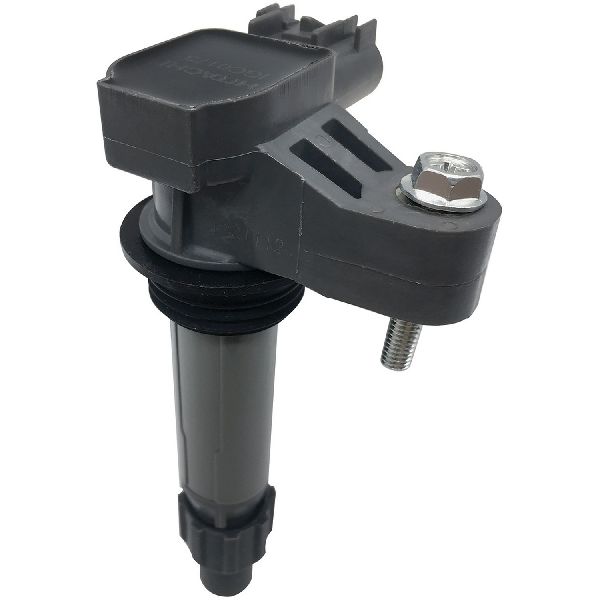
Typical fix: Replace the faulty ignition coil(s). The OEM part is ACDelco 12741091. Many owners and technicians recommend replacing all six coils at the same time as the spark plugs, especially on higher mileage or tuned vehicles, to prevent future failures.
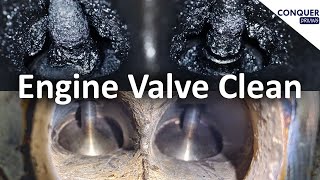
Est. part cost: $50-$100 per coil - Carbon Buildup on Intake Valves 🟡 Medium Probability As a direct-injection (GDI) engine, fuel is sprayed directly into the cylinder, not over the back of the intake valves. This means there is no fuel to wash away oil vapors from the PCV system. These vapors bake onto the hot valves, forming hard carbon deposits that restrict airflow and can cause misfires, especially during cold starts and at idle.
How to confirm: This requires visual inspection of the intake ports and valves with a borescope, which usually means removing the intake manifold.
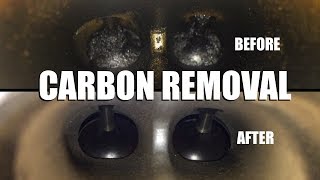
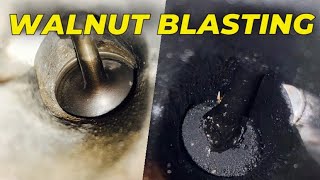
Typical fix: The intake valves must be manually cleaned. The most effective and common method is walnut shell blasting. 🎬 Watch: How to walnut blast your intake valves. Some shops may use chemical soaks and manual scrubbing. Installing a high-quality, baffled oil catch can on the PCV system can help reduce the rate of future buildup.
Est. part cost: $0 (if DIY cleaning) - $800+
Rare But Worth Checking
- Engine Block Porosity (Coolant Leak): This is a known issue documented in TSB #18-NA-115. A porous engine block can allow a tiny amount of coolant to leak into a cylinder when the engine is cold, causing a misfire on startup that may disappear as the engine warms up and the metal expands. Diagnosis involves adding coolant dye, running the engine to temperature, letting it cold soak, and then inspecting the cylinder with a UV borescope for traces of dye. The official fix is a complete engine replacement.
- Internal Engine Damage (Piston/Rings): A 2016 ATS-V owner filed an NHTSA complaint (ODI #11205393) reporting a P0300 code that ultimately required piston and ring replacement at only 70,250 miles. While rare, severe mechanical failure can cause persistent misfires.
- Vacuum Leak: A leak in a vacuum hose, PCV line, or intake manifold gasket can introduce unmetered air, leaning out the air/fuel mixture and causing random misfires, often more noticeable at idle. A smoke test is the most effective way to diagnose a vacuum leak.
- Faulty Fuel Injector(s): A clogged or failing direct fuel injector can disrupt the fuel spray pattern and cause misfires. This can sometimes be diagnosed by using a scan tool to shut off injectors one by one and observing the change in idle.
- Faulty High-Pressure Fuel Pump (HPFP): The direct injection system relies on a high-pressure fuel pump. If the pump is failing, it may not provide adequate fuel pressure under load, leading to lean conditions and random misfires across all cylinders. This will often be accompanied by other fuel pressure-related codes.
Diagnosis Steps
- Check for a flashing vs. solid Check Engine Light. A flashing light indicates a severe, catalyst-damaging misfire and driving should be stopped immediately.
- Use a capable OBD-II scanner to confirm the P0300 code and check for any other stored or pending codes (e.g., P0301-P0306, P0171/P0174). 🎬 See how to diagnose a P0300 random misfire code.
- Use the scanner's live data function to monitor misfire counts for each individual cylinder. Note the engine conditions (cold/hot, idle/load) when misfires occur.
- If misfires occur ONLY on a cold start and then disappear, immediately suspect the coolant leak issue from TSB #18-NA-115. This requires a specific diagnostic procedure with coolant dye and a borescope.
- Inspect the ignition system. Remove and examine all six spark plugs for wear, damage, proper gap, and fouling.
- Test the ignition coils. If the scan tool points to a specific cylinder, swap that coil with one from a non-misfiring cylinder to see if the misfire follows the coil.
- Check for vacuum leaks. Visually inspect all vacuum hoses and intake gaskets. A smoke test is the most effective method to find hidden leaks.
- If ignition and vacuum leaks are ruled out, consider fuel delivery issues. Check fuel pressure (both low and high pressure systems).
- For persistent issues, professional diagnosis is needed to check for carbon buildup on intake valves (requires a borescope) or test for mechanical engine health (compression test, leak-down test).
Parts You'll Likely Need
- Spark Plugs
(OEM #12681660)— These are a frequent wear item on the high-performance LF4 engine and a primary cause of misfires.
Trusted brands: ACDelco (OEM), NGK
OEM price range: $15-$20 per plug
Aftermarket price range: $10-$18 per plug - Ignition Coil
(OEM #12741091)— Subjected to high heat in the engine bay, these can fail and cause misfires. Often replaced with spark plugs.
Trusted brands: ACDelco (OEM), Delphi, Denso
OEM price range: $80-$100 per coil
Aftermarket price range: $50-$85 per coil
Related Codes That Often Appear With This One
- P0301-P0306 — If the misfire becomes consistent on one cylinder, the general P0300 code will be accompanied by a specific cylinder code (e.g., P0304 for cylinder 4). A scan tool can often show pending cylinder-specific codes before they trigger the light.
- StabiliTrak Light — This is not a fault code, but a common secondary warning. The engine's instability from misfires is detected by the chassis control systems, which may disable traction and stability control as a precaution.
- P0171 / P0174 — These codes indicate a 'System Too Lean' condition on Bank 1 and Bank 2, respectively. They often appear with P0300 if the root cause is a large vacuum leak introducing unmetered air.
Technical Service Bulletins (TSBs) & Recalls
- Bulletin #18-NA-115: Provides inspection and diagnostic information for a cold start misfire and/or rough idle accompanied by DTC P0300. It identifies the potential cause as engine cylinder block porosity allowing coolant into a cylinder. The diagnostic procedure involves using coolant dye and a borescope. If the condition is confirmed, engine replacement is the recommended correction.
Platform-Specific Known Issues
- TSB #18-NA-115: Documents an issue where engine block porosity can cause coolant to leak into a cylinder on a cold engine, causing a P0300 misfire that disappears when warm. Diagnosis requires a UV light and borescope to find coolant dye in the cylinder. The official fix is engine replacement.
- NHTSA Owner Complaint #11205393: Describes a 2016 ATS-V with a P0300 code that was diagnosed as needing new pistons and rings at 70,250 miles, highlighting the potential for severe mechanical failure.
- Forum Experience (cadillacforums.com): A user with a P0300 that occurred at wide-open throttle in low RPMs had the issue resolved under warranty by replacing the coil and spark plug on cylinder #4, even though the code was for a random misfire. This shows a single failing coil can initially present as a P0300.
Mechanic-Grade Diagnostic Values
- High-Pressure Fuel Rail Pressure (HPFP) — expected: Up to 250 bar / 3600 psi under load.. Failure: Significantly lower pressure than commanded by the ECM, especially during acceleration, can cause lean misfires across all cylinders.
- Ignition Coil Primary Winding Resistance — expected: 0.49 - 0.57 ohms (general spec, not specific to LF4 but a common range).. Failure: A reading outside this range indicates a faulty coil winding.
- Ignition Coil Secondary Winding Resistance — expected: 9.5 - 11.1 kilohms (general spec, not specific to LF4 but a common range).. Failure: A reading outside this range indicates a faulty coil winding.
Hidden / Shadow Codes Worth Checking
- Misfire Counter History (Live Data): While not a hidden code, professional scan tools like the GM GDS2 can display 'Misfire History' or 'Current Misfire' counters for each cylinder. Even with a generic P0300, these counters will show the exact number of misfire events per cylinder, immediately pinpointing the problem area. (see via GM GDS2/Tech2Win or high-end professional OBD-II scanner with manufacturer-specific live data.)
Scan Tool Commands That Help
- GDS2 / Professional Scan Tool: Crankshaft Position System Variation Learn — Required after replacing the crankshaft position sensor, ECM, or crankshaft balancer. Failure to perform this relearn can cause the ECM to inaccurately detect or report misfires, potentially leading to a P0300 code or misidentifying the misfiring cylinder.
- GDS2 / Professional Scan Tool: Injector Balance Test / Cylinder Power Balance — This function allows a technician to disable one injector at a time to see the corresponding drop in RPMs. If disabling an injector causes little or no change in engine speed, that cylinder was not contributing properly, pointing to a bad injector, or a spark/compression issue in that specific cylinder.
Wiring & Ground Locations
- G101 / G106 — G101 is at the front of the engine on the lower block. It jumpers to G106 at the center of the frame cross rail under the crank pulley.. These grounds are critical for the Engine Control Module (ECM) and Mass Air Flow sensor. A poor connection here can cause erratic sensor readings and incorrect engine calculations, leading to misfires.
- G102 — Located at the left rear of the engine.. This is the primary ground point for all six ignition coils. A loose or corroded G102 is a potential cause for random misfires across multiple cylinders and should be inspected early in the diagnostic process.
- Charge Air Cooler (Intercooler) Hoses — The LF4 engine has two charge air coolers (intercoolers) mounted on the engine with associated ducting from the turbos and to the throttle body.. A crack or leak in the plastic end tanks of the intercoolers or a loose connection in the ducting creates a significant, unmetered air (boost) leak. This leans out the air/fuel mixture under load, causing misfires that may not be present at idle.
Real Owner Repair Stories
- CadillacForums user (2016 Cadillac ATS-V) — P0300 code, misfires under boost/heavy acceleration.
❌ Tried (didn't work) Replaced spark plugs, Replaced ignition coils
✅ What actually fixed it The passenger side charge air cooler (intercooler) had a crack in the plastic end tank, causing a boost leak. The leak was not audible and was only found after a thorough visual inspection. Replacing the intercooler resolved the misfire. - Tapout Tuning Customer (Tuned Cadillac ATS-V) — Misfires under boost after installing new, colder spark plugs for a performance tune.
❌ Tried (didn't work) Initially applying a small amount of dielectric grease to the spark plug boots.
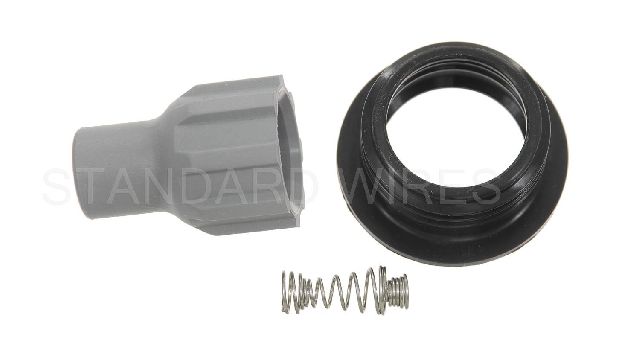
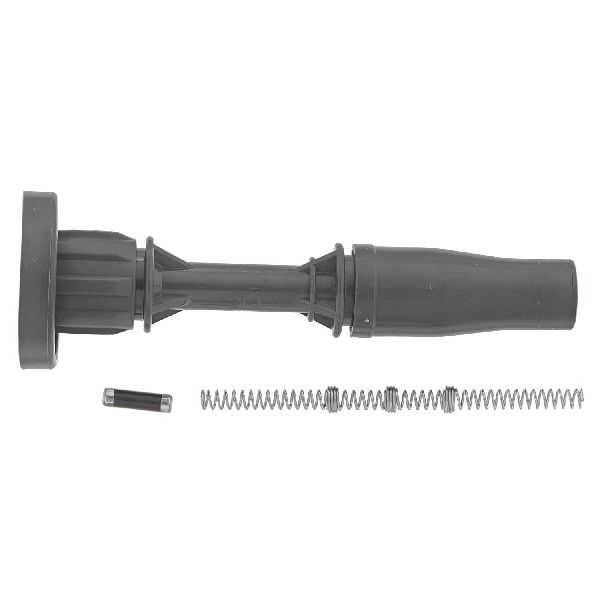
✅ What actually fixed it The issue was resolved by completely filling the ignition coil boot ends with dielectric grease. This prevents the high-voltage spark from 'leaking' or arcing to the cylinder head under high boost pressure, ensuring all energy reaches the spark plug gap.
"I Checked Everything" — The Actual Cause
- A common scenario for the ATS-V is a P0300 that only occurs under boost. A standard smoke test at atmospheric pressure may not reveal a leak in a charge air cooler (intercooler) end tank or a loose charge pipe connection. These leaks only open up under the high pressure of the turbo system. The fix is often a pressure test of the intake system or a very careful visual inspection of all components between the turbos and the throttle body.
OEM Part Supersession History
12666339, 12688894, 12707304→12741091— Standard part evolution for improved reliability or manufacturing changes.
Heads up: The newest part number, 12741091, is the correct replacement for all previous versions and is fully compatible.
Model Year Variations Within This Range
- 2015-2018: There were no significant mechanical changes to the LF4 engine, ignition system, or fuel system within the 2015-2018 model years that would alter the diagnosis of a P0300 code. The primary components remained consistent.
Helpful Videos

Used OEM Parts in Stock
New Aftermarket Parts Available


The information in this article is provided for general reference and educational purposes only. Vehicle specifications, procedures, and part compatibility can vary by production date, trim level, and region. Always consult your vehicle's factory service manual and verify part numbers before purchasing or performing repairs. Safety-critical components such as airbags, seat belts, and braking systems should be installed by a qualified professional.
- Cadillac ATS-V:
- 🎬 Helpful Videos
- 🛍️ Shop This Part
- What's Unique About the 2015-2018 Cadillac ATS-V
- Diagnostic Flowchart
- Symptoms You May Notice
- Most Likely Causes
- Rare But Worth Checking
- Diagnosis Steps
- Parts You'll Likely Need
- Related Codes That Often Appear With This One
- Technical Service Bulletins (TSBs) & Recalls
- Platform-Specific Known Issues
- Mechanic-Grade Diagnostic Values
- Hidden / Shadow Codes Worth Checking
- Scan Tool Commands That Help
- Wiring & Ground Locations
- Real Owner Repair Stories
- "I Checked Everything" — The Actual Cause
- OEM Part Supersession History
- Model Year Variations Within This Range
- 🎟️ Get 5% Off