

P0300 on 2012-2017 Buick Verano: Random Misfire Causes and Fixes
On a 2012-2017 Buick Verano, a P0300 code is most often caused by worn-out spark plugs or failing ignition coils. The 2.4L Ecotec engine is also known for oil consumption issues that can foul spark plugs and a clogged PCV orifice in the intake manifold that creates a vacuum leak. Replacing spark plugs is a common first step and a relatively inexpensive fix, costing around $40-$80 for a set of quality iridium plugs.
- P0300 means multiple cylinders are misfiring randomly.
- The most likely culprits on a 2012-2017 Verano are worn spark plugs and/or bad ignition coils.
- On the 2.4L engine, check engine oil levels, as high consumption can foul spark plugs and cause this code.
- Do not ignore a flashing check engine light, as it signals a severe misfire that can quickly destroy the catalytic converter.
- Start with the cheapest and most common fixes: inspect and replace spark plugs first before moving to more complex diagnostics.
What's Unique About the 2012-2017 Buick VERANO

The Buick Verano from this era primarily uses the 2.4L Ecotec engine, which is known for two specific issues that frequently cause a P0300 code. First, excessive oil consumption due to piston ring problems (addressed in TSB 13-06-01-003J) can lead to spark plugs becoming fouled with oil. Second, the PCV orifice in the plastic intake manifold is prone to clogging, creating a significant vacuum leak that leans out the air-fuel mixture. Additionally, GM has issued bulletins for these engines related to subtle fuel injector flow rate variances and, on turbo models, moisture in the charge air cooler.
Diagnostic Flowchart

Tap your situation to follow the diagnostic path that matches what you're seeing on this vehicle.
Symptoms You May Notice
- Rough or shaking idle.
- Hesitation or stumbling during acceleration.
- Solid or flashing Check Engine Light.
- Noticeable loss of engine power.
- Reduced fuel economy.
- Engine may be hard to start.
- Smell of raw fuel from the exhaust.
- Engine vibrations felt in the cabin.
- Replacing only one spark plug or coil when others are near the end of their service life.
- Replacing oxygen sensors when the root cause is actually a vacuum leak or fuel delivery issue causing a lean/rich condition that the O2 sensor is correctly reporting.
- Assuming a major mechanical failure like a timing chain or head gasket before thoroughly checking the more common and simpler ignition, fuel, and vacuum leak issues.
Most Likely Causes


- Worn or Fouled Spark Plugs 🔴 High Probability Spark plugs are a regular maintenance item. The 2.4L engine's well-documented tendency for oil consumption can foul plugs prematurely, leading to weak or inconsistent spark.
How to confirm: Remove and inspect the spark plugs. Look for worn electrodes, heavy carbon buildup, or black, oily deposits on the tips. Compare the appearance to a spark plug condition chart.
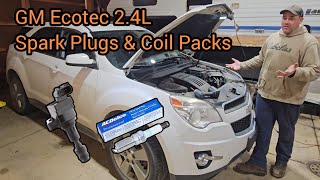
Typical fix: Replace all four spark plugs. 🎬 Watch: Step-by-step guide to replacing spark plugs on a Verano. It is recommended to use the specified ACDelco Iridium plugs (Part No. 12627160, now superseded by 12680074).
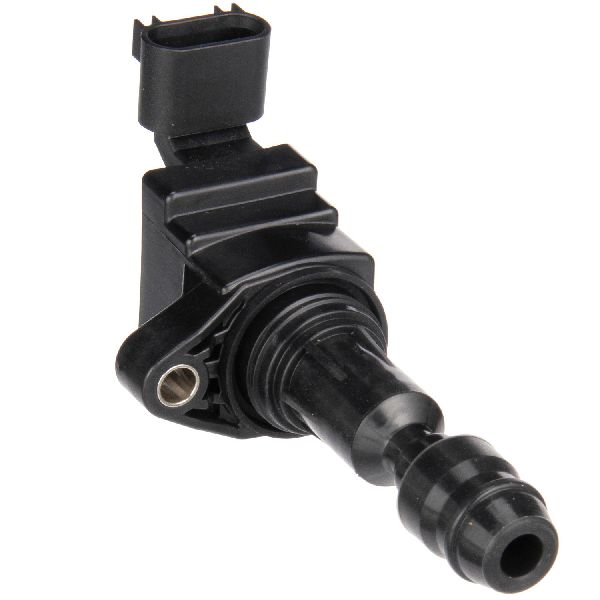
Est. part cost: $40-$80 - Failing Ignition Coils 🔴 High Probability Ignition coils are a common failure point on many modern vehicles as they age. Heat cycles and vibration can cause the internal windings to break down, resulting in a weak or absent spark.
How to confirm: Using a scan tool with live data, monitor misfire counts per cylinder (Mode $06). Swap the ignition coil from a frequently misfiring cylinder with a coil from a cylinder that is not misfiring. If the misfire count follows the coil to the new cylinder, the coil is bad.
Typical fix: Replace the faulty ignition coil. Many owners choose to replace all four at once as a preventative measure, as they tend to fail around the same time.
Est. part cost: $30-$70 per coil - Clogged PCV Orifice / Vacuum Leak 🔴 High Probability The 2.4L Ecotec engine has a small, fixed PCV orifice built into the intake manifold between runners #2 and #3, which is prone to clogging with carbon and sludge. A clog prevents the PCV system from properly ventilating the crankcase, leading to pressure buildup and often causing a vacuum leak elsewhere, such as the valve cover gasket or a cracked PCV hose. This unmetered air leans out the fuel mixture, causing random misfires.
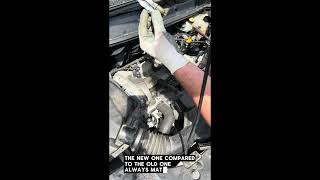
How to confirm: Listen for a hissing sound at idle. A professional can use a smoke machine to pressurize the intake system and visually identify the source of the leak. A clogged orifice can be confirmed by inspecting it after removing the intake manifold, or by drilling a small access hole as shown in some DIY videos. 🎬 See this quick fix for a clogged PCV orifice.
Typical fix: The official fix is to replace the intake manifold. However, a common and effective repair is to remove the intake manifold and clean the orifice using a small drill bit (e.g., 1/16 inch) by hand. The leaking gasket should also be replaced.
Est. part cost: $15-$150 (gasket and cleaning supplies) or $150-$300 (new manifold) - Dirty or Clogged Fuel Injectors 🟡 Medium Probability Fuel deposits can build up over time, restricting flow. GM TSB PIP5301A specifically notes that a flow rate variance as small as 5% between injectors can trigger P0300 and/or P219A on this engine, which may not be detected by a standard injector balance test.
How to confirm: A professional can perform an advanced fuel injector flow test (like the one specified in TSB PIP5301A) to precisely measure and compare flow rates. Monitoring misfire counters on a cold start can also point to a problematic injector.
Typical fix: Professional fuel system cleaning may work, but often the injector with the deviant flow rate must be replaced.
Est. part cost: $50-$150 per injector
Rare But Worth Checking
- Low Fuel Pressure: A weak fuel pump or clogged fuel filter can starve the engine for fuel, causing a lean condition and random misfires, particularly under load. A fuel pressure test at the fuel rail can diagnose this.
- Low Engine Compression: This is a serious mechanical issue. On the 2.4L engine, it is often caused by worn piston rings related to the oil consumption TSB (13-06-01-003J). Other causes include a leaking head gasket or valve train problems. A cylinder compression test is required for diagnosis.
- Moisture in Charge Air Cooler (2.0L Turbo): A TSB for the related 2.0L LTG engine notes that moisture can build up in the charge air cooler and be drawn into the engine during acceleration, causing a stumble and P0300. This can affect the Verano's 2.0L LHU Turbo engine under similar conditions.
- Clogged Catalytic Converter: While often a result of misfires, a clogged converter can also be a cause. If the exhaust is restricted, it creates backpressure that can lead to misfires. This is often a vicious cycle. A backpressure test can confirm a clog.
Diagnosis Steps
- Read the freeze frame data with an OBD-II scanner to understand the engine conditions (RPM, load, temperature) when the code was set.
- Check for any other stored trouble codes that could point to a specific system (e.g., P0171 for vacuum leaks, P219A for injectors).
- Use the scanner's live data (Mode $06) to view the misfire counters for each cylinder. This can help determine if the misfire is truly random or more frequent on certain cylinders.
- Perform a visual inspection of the engine bay. Look for cracked vacuum hoses (especially PCV lines), loose electrical connectors, or signs of oil leaks around the valve cover.
- Inspect the spark plugs. Remove them and check for wear, fouling (especially oil fouling), or incorrect gap. Replace if they are worn or past their service life.
- Test the ignition coils. Swap a coil from a high-misfire cylinder with one from a low-misfire cylinder and see if the misfire follows the coil.
- Check for vacuum leaks. A smoke test is the most effective method. Pay close attention to the intake manifold gasket and the PCV system. A DIY method is to spray carb cleaner near suspected leak points and listen for a change in engine RPM, but this is less precise and carries a fire risk.
- Test fuel pressure to rule out a weak fuel pump or clogged filter.
- If a vacuum leak or ignition issue isn't found, consider more advanced diagnostics like a fuel injector balance/flow test or an engine compression test to check for mechanical problems.
Parts You'll Likely Need
- Iridium Spark Plugs
(OEM #12627160)— Worn or oil-fouled spark plugs are a primary cause of P0300. The 2.4L Ecotec engine specifies iridium plugs for longevity and performance.
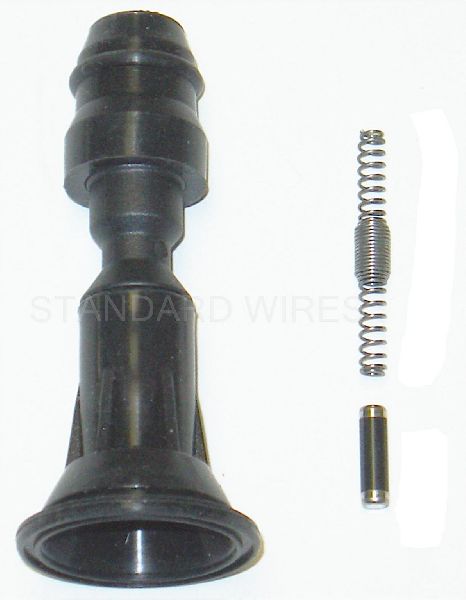
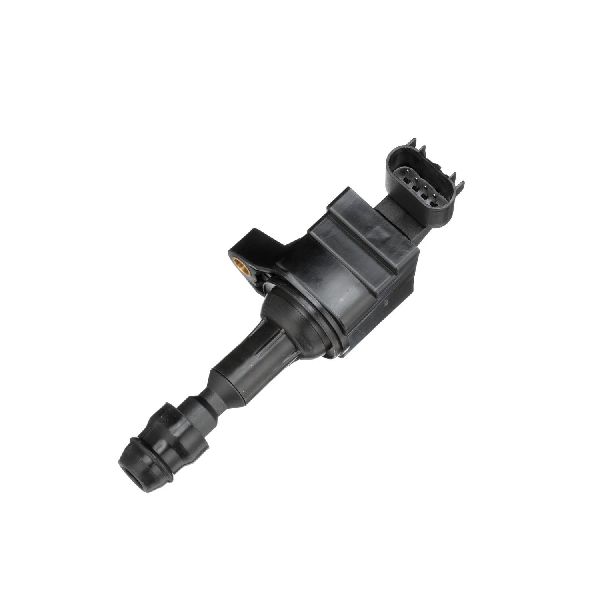
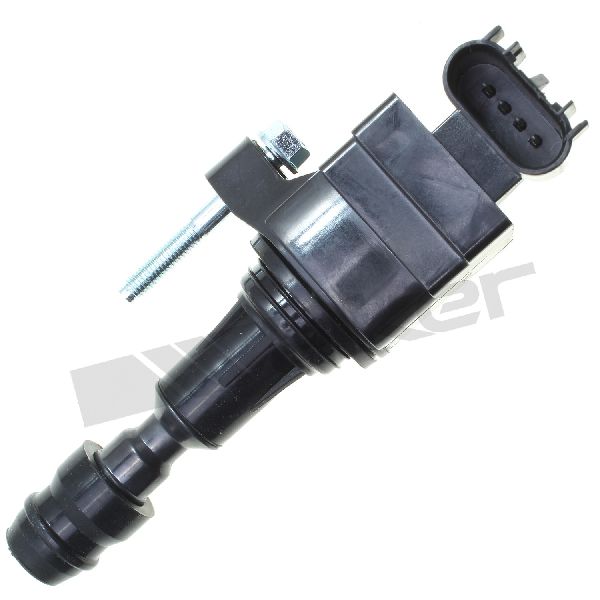
Trusted brands: ACDelco (OEM), NGK, Denso - Ignition Coil — Coils are a common failure item that lead to misfires. They are often replaced as a set with spark plugs.
Trusted brands: ACDelco (OEM), Delphi, Standard Motor Products - Intake Manifold Gasket
(OEM #12650299)— The gasket for the intake manifold fails, causing a vacuum leak. This is a very common issue on the 2.4L engine when the PCV orifice clogs.
Trusted brands: GM Genuine, Fel-Pro, Mahle
Related Codes That Often Appear With This One
- P0301, P0302, P0303, P0304 — These codes indicate a misfire on a specific cylinder. A P0300 may be accompanied by one of these if the misfire is sometimes concentrated on one cylinder before becoming random.
- P0171 — This code means "System Too Lean (Bank 1)" and is a strong indicator that the P0300 is caused by a vacuum leak (like a clogged PCV orifice or bad intake gasket) or a fuel delivery problem.
- P0420 — This code means "Catalyst System Efficiency Below Threshold." It is often a consequence of long-term engine misfires, which allow unburned fuel to damage the catalytic converter.
- P219A — A GM TSB (PIP5301A) notes that P219A (Bank 1 Air-Fuel Ratio Imbalance) can appear with P0300, often pointing to a subtle fuel injector flow rate issue that is difficult to diagnose with standard tests.
- P050D — This code for "Cold Start Rough Idle" can be set alongside P0300. It often points towards a fuel delivery issue, such as a restricted or contaminated fuel injector, that is most noticeable before the engine warms up.
Technical Service Bulletins (TSBs) & Recalls
- PIP5628G: Preliminary information for diagnosing misfire DTCs P0300-P0308.
- 13-06-01-003J: Addresses excessive oil consumption on 2.4L engines, which can cause misfires.
- PIP5301A: Links P0300 with P219A and suggests a potential fuel injector flow rate issue.
- 21-NA-043: Discusses moisture buildup in the charge air cooler on some 2.0L turbo engines causing P0300.
Platform-Specific Known Issues
- Excessive Oil Consumption (2.4L Engine): TSB #13-06-01-003J addresses high oil consumption due to piston ring issues in 2010-2013 models. This can foul spark plugs and lead to P0300. The official fix involves a dealer-performed oil consumption test, and if it fails, installing a new piston and ring kit. This special coverage was extended to 10 years or 120,000 miles.
- Clogged PCV Orifice in Intake Manifold (2.4L Engine): This is a very common failure. TSB #13-06-01-003J also mentions servicing the PCV system by cleaning the orifice between the #2 and #3 intake runners with a 1/16 inch drill bit. A related TSB, #14882, addresses a frozen/plugged PCV system in cold weather on these engines, which can cause seal failure.
- Fuel Injector Imbalance: TSB #PIP5301A points out that P0300 (often with P219A) can be caused by a fuel injector with a slightly different flow rate (as little as 5%) than the others, which may not be caught by a standard balance test. This TSB applies to the 2012-2015 Verano with the 2.4L LEA engine.
Mechanic-Grade Diagnostic Values
- Ignition Coil Primary Resistance — expected: 0.4 to 2.0 Ohms (typical). Failure: A reading outside of the specified range, especially an open circuit (infinite resistance) or a short (zero resistance), indicates a faulty coil.
- Ignition Coil Secondary Resistance — expected: 9.5 to 11.1 kOhms. Failure: A reading outside this range suggests the secondary windings are compromised and the coil should be replaced.
- Spark Plug Gap (2.4L LEA Engine) — expected: 0.040 inches (1.01 mm). Failure: An incorrect gap can lead to a weak or inconsistent spark. The gap widens over time as the electrode wears.
- Spark Plug Gap (2.0L LHU Turbo Engine) — expected: 0.035 inches (0.89 mm). Failure: Turbocharged engines are more sensitive to correct spark plug gaps; an incorrect gap can cause misfires under boost.
- Intake Manifold Bolt Torque (2.0L LHU) — expected: 10 Nm (89 in-lbs). Failure: Improper or uneven torque can cause vacuum leaks at the intake gasket, a common cause of P0300.
Scan Tool Commands That Help
- GDS2 (GM Tech Tool) or equivalent professional scanner: Cylinder Power Balance Test — This test is used to isolate a weak or non-contributing cylinder when P0300 is present but specific cylinder codes (P0301-P0304) are not. The tool sequentially disables the fuel injector to each cylinder and measures the corresponding drop in engine RPM. A cylinder that shows little or no RPM drop when disabled is the one that is misfiring.
Wiring & Ground Locations
- G103 — Typically located at the left rear of the engine compartment on the cowl, sometimes near the brake booster or on the rear of the cylinder head.. This is a critical ground for the Body Control Module (BCM), Instrument Panel Cluster (IPC), and the Data Link Connector (DLC). A poor connection here can cause a wide range of erratic electrical issues and faulty sensor readings that could be misinterpreted by the ECM as a misfire.
- G105 / G106 — Engine compartment grounds, often on the frame rail or strut tower. G105 is often behind the cooling fans, while G106 may be on the front frame cross rail.. These are primary engine and body grounds. Corrosion or a loose connection at these points can affect the performance of the entire engine management system, including the ignition system and sensors that detect misfires.
Real Owner Repair Stories
- Schrodingers Box YouTube Channel (2000 Buick Century (similar GM ignition system principles)) — Rough idle, hesitation, and a P0300/P0301 code.
❌ Tried (didn't work) Swapping spark plug locations to see if the misfire moved.
✅ What actually fixed it The final cause was a cracked spark plug wire that was arcing (jumping spark) to the engine block instead of delivering it to the spark plug. The issue was confirmed visually by seeing the spark jump in a dark engine bay.
OEM Part Supersession History
12627160→12680074— Standard part evolution for improved performance, materials, or manufacturing process.
Heads up: The new part number (12680074) is the correct service replacement for the original. Using old stock of 12627160 is acceptable, but 12680074 is the current OEM recommendation.12481317, 24503507, 24508722→12586144— Consolidation of multiple part numbers into a single, updated gasket kit design.
Model Year Variations Within This Range
- 2013-2017: The optional 2.0L LHU Turbo engine became available. When diagnosing a P0300 on a turbo model, additional components must be considered, such as the charge air cooler (which can accumulate moisture), turbocharger wastegate, and diverter valve. Spark plugs have a different heat range and a smaller gap (0.035") compared to the 2.4L engine (0.040").
Helpful Videos

Used OEM Parts in Stock


New Aftermarket Parts Available


The information in this article is provided for general reference and educational purposes only. Vehicle specifications, procedures, and part compatibility can vary by production date, trim level, and region. Always consult your vehicle's factory service manual and verify part numbers before purchasing or performing repairs. Safety-critical components such as airbags, seat belts, and braking systems should be installed by a qualified professional.
- Buick VERANO:
- 🎬 Helpful Videos
- 🛍️ Shop This Part
- What's Unique About the 2012-2017 Buick VERANO
- Diagnostic Flowchart
- Symptoms You May Notice
- Most Likely Causes
- Rare But Worth Checking
- Diagnosis Steps
- Parts You'll Likely Need
- Related Codes That Often Appear With This One
- Technical Service Bulletins (TSBs) & Recalls
- Platform-Specific Known Issues
- Mechanic-Grade Diagnostic Values
- Scan Tool Commands That Help
- Wiring & Ground Locations
- Real Owner Repair Stories
- OEM Part Supersession History
- Model Year Variations Within This Range
- 🎟️ Get 5% Off