

P0300 on 2011-2018 Buick Regal: Random Misfire Causes and Fixes
P0300 on a 2011-2018 Buick Regal indicates random cylinder misfires. The most common causes are worn spark plugs and failing ignition coils. For direct-injection engines (2.0L Turbo, later 2.4L), carbon buildup on intake valves is also a very frequent culprit. Start with a basic ignition tune-up, which costs around $100-$250 in parts, before moving to more complex diagnostics like the PCV system or timing chain.
- P0300 means multiple cylinders are misfiring randomly, not just one.
- Start your diagnosis with the cheapest and most common culprits: spark plugs and ignition coils.
- If your Regal has a direct-injection engine (2.0L Turbo or later 2.4L), carbon buildup on the intake valves is a strong possibility for high-mileage vehicles.
- A flashing check engine light is a serious warning. Pull over and shut off the engine as soon as safely possible to prevent expensive catalytic converter damage.
- Check for vacuum leaks by listening for a hiss or carefully spraying brake cleaner around the intake manifold.
What's Unique About the 2011-2018 Buick REGAL

The 2011-2018 Buick Regal used Ecotec engines, many with gasoline direct injection (GDI), such as the 2.0L Turbo and later 2.4L models. While efficient, GDI engines are prone to carbon buildup on intake valves, which is a leading cause of P0300 as the vehicle ages. Additionally, some Ecotec engines, particularly the 2.4L, have known issues with a problematic PCV system where an orifice can clog, leading to excessive crankcase pressure, oil leaks, and random misfires. Manufacturer bulletins also point to specific issues like faulty oil control valve (OCV) solenoids and, in rarer cases, engine block porosity causing cold-start misfires.
Diagnostic Flowchart

Tap your situation to follow the diagnostic path that matches what you're seeing on this vehicle.
Generation note: The 2011-2018 range covers two Regal generations. The 5th generation (2011-2017) was a sedan based on the Opel Insignia, offering 2.4L and 2.0L Turbo 4-cylinder engines. The 6th generation (2018) was a new design, offered as a Sportback or TourX wagon, primarily with a 2.0L Turbo engine. While causes are similar, engine-specific issues like carbon buildup are more prevalent on the direct-injection turbo models. The 2.4L Ecotec is particularly noted for PCV system clogging issues.
Symptoms You May Notice

- Flashing or solid check engine light
- Rough or shaky idle
- Engine hesitation or stumbling during acceleration
- Noticeable loss of power
- Poor fuel economy
- Shuddering at stop lights
- Whirring or buzzing noise at lower RPMs
- Engine running extremely rich, noticeable by exhaust smell
- Replacing only one spark plug or coil when others are in similar condition.
- Replacing oxygen sensors, which are more likely to be a symptom than the cause of a P0300.
- Assuming a major engine failure without first checking the simple and common causes like spark plugs, coils, and vacuum leaks.
- Overlooking a clogged PCV orifice on 2.4L engines and proceeding to more expensive, unnecessary repairs.
Most Likely Causes


- Worn or Fouled Spark Plugs 🔴 High Probability Spark plugs are a regular wear item. Turbocharged engines, in particular, can be harder on plugs, reducing their lifespan. A cracked porcelain insulator on a spark plug is a common, simple-to-find cause.
How to confirm: Visually inspect the spark plugs for wear, corrosion, carbon fouling, or cracks in the porcelain. Ensure the gap is correct. A misfire that follows a plug when swapped to another cylinder confirms a bad plug.
Typical fix: Replace all spark plugs as a set. Use high-quality Iridium plugs specified for your engine, such as ACDelco 41-125 for the 2.0L Turbo.
Est. part cost: $40-$100 - Failing Ignition Coil(s) 🔴 High Probability
How to confirm: Use an OBD-II scanner with live data to see misfire counts per cylinder. Swap the suspected failing coil with a known good one from another cylinder. If the misfire code follows the coil (e.g., P0301 changes to P0304), the coil is bad.
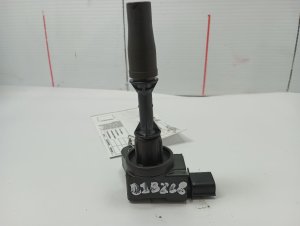
Typical fix: Replace the faulty ignition coil. It is often recommended to replace them all if they are original and the vehicle has high mileage. The ACDelco D522C (GM Part #12638824) is a common OEM replacement for the 2.4L engine.
Est. part cost: $50-$120 per coil - Carbon Buildup on Intake Valves 🟡 Medium Probability The 2.0L Turbo and later 2.4L engines use Direct Injection (GDI), which sprays fuel directly into the cylinder. This design means fuel doesn't wash over the intake valves, allowing carbon deposits to build up, restrict airflow, and cause misfires, especially during cold starts. TSB #18-NA-115 specifically addresses cold start misfires and rough idle due to this issue.
How to confirm: This requires a borescope to visually inspect the intake valves or partial disassembly of the intake manifold. A significant drop in performance and misfires on multiple cylinders without other obvious causes points to this, especially on engines over 80,000 miles.
Typical fix: Perform a walnut blasting service to clean the intake valves and ports. Chemical induction cleaning services (like GM Top Engine Cleaner) are also an option but may be less effective for heavy buildup. This is not a DIY job for most people.
Est. part cost: $0 (service cost is labor, typically $400-$800) - Vacuum Leak 🟡 Medium Probability
How to confirm: Listen for hissing sounds around the engine bay. Spray short bursts of brake cleaner or propane around vacuum lines, the PCV hose, and the intake manifold gasket with the engine running. If the engine idle changes, you've found the leak. A smoke test is the most definitive method.
Typical fix: Replace the cracked or broken vacuum hose or faulty gasket. The PCV hose and intake manifold gaskets are common failure points.
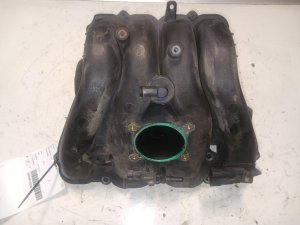
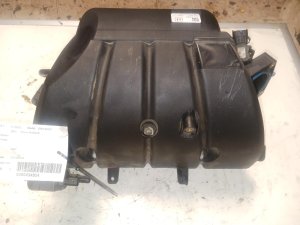
Est. part cost: $10-$50 - Clogged PCV System Orifice 🟡 Medium Probability The 2.4L Ecotec engine is subject to a known issue where the small PCV orifice in the intake manifold becomes clogged with sludge. This increases crankcase pressure, which can force oil past seals and disrupt the air-fuel mixture, causing random misfires. A lawsuit has been filed regarding this alleged design defect.
How to confirm: Symptoms include oil consumption, blown seals (especially the rear main seal), and a milky oil/water substance inside the valve cover or air ducts. The orifice itself is located inside the intake manifold and is difficult to inspect without disassembly. Some mechanics have developed a method to drill a small access hole in the manifold to clean the orifice without full removal.
Typical fix: The official GM procedure involves removing the intake manifold to clean the orifice. A common DIY fix involves drilling an access hole to clean it out with a small drill bit. Replacing a failed PCV valve or hose is also necessary.
Est. part cost: $20-$150 (depending on whether the manifold is replaced) - Stretched Timing Chain ⚪ Low Probability Some GM Ecotec engines are known to have issues with timing chain stretch over 100,000 miles, which can throw off cam/crank correlation and cause random misfires.
How to confirm: Often accompanied by other codes like P0016 or P0017. A rattling noise on startup is a key symptom. Requires checking cam/crank deviation with a capable scan tool or physical inspection of timing marks, which is an advanced diagnostic.
Typical fix: Replace the timing chain, tensioners, and guides. This is a labor-intensive and expensive repair.
Est. part cost: $300-$600 - Damaged OCV Solenoid ⚪ Low Probability A specific TSB (#21-NA-036) mentions that a damaged Oil Control Valve (OCV) solenoid can cause an oil leak and misfires, sometimes setting P0300, P0302, or P0305. The bulletin notes the end of the solenoid can break off and get stuck in the camshaft cover bore.
How to confirm: Inspect the OCV solenoids (also called VVT solenoids) for oil leaks or physical damage. The TSB shows how to identify a broken solenoid tip stuck in the bore. They can be tested for resistance or function with a capable scan tool.
Typical fix: Replace the faulty OCV solenoid. If the tip is broken off, it must be carefully extracted from the bore with a pick tool.
Est. part cost: $40-$80 per solenoid
Rare But Worth Checking
- Clogged or Failing Fuel Injectors: While less common than ignition issues, dirty or failing injectors can disrupt the fuel spray pattern and cause misfires. A professional cleaning or flow test can confirm this. On GDI engines, this is a more involved repair.
- Low Fuel Pressure: A weak fuel pump or clogged fuel filter can starve the engine of fuel, leading to lean conditions and random misfires under load. A fuel pressure test is required for diagnosis.
- Low Engine Compression: Internal engine damage such as worn piston rings, a bad head gasket, or even a cracked piston can cause low compression and persistent misfires. TSB PI1178A and its revisions mention cracked pistons on the 2.0L LTG engine as a cause for P0300.
- Engine Block Porosity: Extremely rare, but TSB 18-NA-115 notes that a porous engine block casting can allow coolant to seep into a cylinder, causing a cold-start misfire that sets P0300 and goes away when warm. Diagnosis involves adding UV dye to the coolant and inspecting the cylinder with a borescope. This requires engine replacement.
Diagnosis Steps
- Read all fault codes with an OBD-II scanner. Note any codes accompanying P0300 and check freeze frame data. Use the scanner's live data to monitor misfire counts per cylinder to isolate the issue if possible.
- Check the basics. Inspect the air filter and ensure all electrical connectors to coils and sensors are secure.
- Inspect the ignition system. Remove and inspect all spark plugs for wear, damage, or fouling. A cracked spark plug is a common find. If plugs are old, replace them with the correct OEM-spec part (e.g., ACDelco Iridium).
- Test the ignition coils. Swap a coil from a misfiring cylinder (identified via live data) with a coil from a good cylinder. If the misfire follows the coil, the coil is bad.
- Check for vacuum leaks. Listen for hissing noises. Carefully spray propane or brake cleaner around vacuum lines, the intake manifold gasket, and PCV hoses. If the idle changes, a leak is present. A smoke test is more definitive.
- Inspect the PCV System (especially on 2.4L). Check for signs of high crankcase pressure like oil leaks or milky residue in the oil cap/hoses. Suspect a clogged PCV orifice in the intake manifold.
- Check fuel pressure. Use a fuel pressure gauge to ensure the pump and regulator are functioning correctly, as low pressure can cause misfires under load.
- Inspect for carbon buildup (GDI Engines). If the vehicle has over 80,000 miles and other causes are ruled out, suspect carbon buildup on intake valves. This requires a borescope for visual confirmation.
- For advanced diagnosis, check OCV solenoids for damage per TSB #21-NA-036, check cam/crank correlation for timing chain stretch, and perform an engine compression/leak-down test to rule out internal mechanical failure.
Parts You'll Likely Need
- Spark Plugs
(OEM #ACDelco 41-125 (for 2.0L LTG))— These are the most common failure point for any misfire code and are a routine maintenance item.
Trusted brands: ACDelco, NGK
OEM price range: $60-$120
Aftermarket price range: $40-$100 - Ignition Coil
(OEM #ACDelco D522C / GM 12638824 (for 2.4L))— A very common cause of misfires. Heat and vibration cause them to fail over time.
Trusted brands: ACDelco, Delphi, Denso
OEM price range: $70-$130
Aftermarket price range: $40-$90 - Intake Manifold Gasket — These gaskets can become brittle and fail, causing a vacuum leak which is a primary cause of P0171 and P0300 codes. Also required if removing the manifold to clean the PCV orifice on a 2.4L.
Trusted brands: ACDelco, Fel-Pro
OEM price range: $30-$60
Aftermarket price range: $15-$40
Related Codes That Often Appear With This One
- P0301-P0308 — These codes specify which cylinder is misfiring (e.g., P0301 is Cylinder 1). They often appear with P0300 when the misfire is frequent but not entirely random.
- P0171 — System Too Lean (Bank 1). A vacuum leak or a faulty PCV system can introduce unmetered air, causing both a lean condition and a random misfire.
- P0016/P0017 — Crankshaft/Camshaft Position Correlation. These codes often point to a stretched timing chain or a problem with the cam/crank sensors, which is a known cause of P0300 on these engines.
Technical Service Bulletins (TSBs) & Recalls
- 18-NA-115: Notes that a cold start misfire and/or rough idle can be a cause for a P0300 code.
- PIP5628G: Implies diagnostic difficulty for P0300-P0308 codes, requiring specific data for technical assistance.
- 21-NA-036: Links a damaged OCV solenoid to oil leaks and misfires setting codes P0300, P0302, and/or P0305.
Platform-Specific Known Issues
- Cold Start Misfire: A TSB specifically mentions that a cold start misfire or rough idle can set a P0300 code, often pointing towards issues like carbon buildup or fuel delivery problems before the engine warms up. [Bulletin #18-NA-115]
- Damaged OCV Solenoid: TSB #21-NA-036 highlights a potential issue with a damaged OCV (VVT) solenoid causing an oil leak and setting P0300, sometimes along with cylinder-specific codes like P0302 or P0305.
- Diagnostic Complexity: TSB #PIP5628G suggests that diagnosing P0300-P0308 codes can be complex enough to require gathering specific information for GM's Technical Assistance Center, indicating that simple fixes aren't always the answer.
Mechanic-Grade Diagnostic Values
- Low-Side Fuel Pressure (Key On, Engine Off) — expected: 55-60 psi. Failure: Pressure below this range indicates a weak in-tank fuel pump or clogged filter.
- Engine Compression (2.4L 4-Cylinder) — expected: 170-200 psi average. Failure: Any cylinder reading less than 100 psi indicates significant mechanical engine wear or damage (piston rings, valves, head gasket).
- Ignition Coil Resistance (2.0L Turbo) — expected: Primary: ~0.38 Ohms, Secondary: ~9.11k Ohms. Failure: Readings significantly outside these values suggest a failing coil winding.
- Long Term and Short Term Fuel Trims at Idle — expected: Within +/- 5% after learning. Failure: Consistently high positive trims (>10%) suggest a vacuum leak; high negative trims suggest a leaking injector or other rich condition.
Scan Tool Commands That Help
- GDS2 / Tech2 / Professional Scan Tool: Crankshaft Position System Variation Learn (Crank Relearn) — After replacing a crankshaft position sensor, ECM, or major engine components. Failure to perform the relearn can cause the ECM to incorrectly interpret minor crankshaft speed variations as misfires, setting a false P0300.
- GDS2 / Professional Scan Tool: Cylinder Power Balance — To graphically identify which cylinder(s) are contributing less power, helping to isolate a random misfire when specific P030x codes are not present.
- GDS2 / Professional Scan Tool: VVT Solenoid Control — To command the intake and exhaust camshaft solenoids on and off at idle to check for response. A lack of change in engine RPM or stalling can indicate a stuck solenoid.
Wiring & Ground Locations
- Engine Harness Chafe Points — Check wiring harness for contact at: 1) the ECM/TCM bracket, 2) the driver's side upper control arm, and 3) the shock tower bolt.. A known issue documented in GM bulletin #21-NA-149 shows the harness can rub through at these points, causing intermittent shorts on sensor or actuator circuits, which can trigger a random misfire that is difficult to trace.
- G103 — On the cowl in the left rear of the engine compartment, typically above the brake booster.. This is a primary ground for the Body Control Module (BCM) and Data Link Connector (DLC). A poor connection can cause a variety of communication and sensor-related issues.
- G105 / G106 — G105 is at the left front of the engine bay behind fan relays; G106 is on the front center of the frame cross rail under the crank pulley.. These ground points are critical for the ECM, TCM, and Mass Air Flow sensor. Corrosion or a loose connection here can directly cause erratic engine behavior and misfires.
- Ignition Coil Connector — Directly on top of each ignition coil.. The 4-pin connectors can become brittle from heat cycles. A poor connection or broken wire on the pigtail can interrupt power or the trigger signal to a coil, causing a misfire. Repair pigtails are available with 14-gauge wires.
Real Owner Repair Stories
- AliExpress Reviewer (2010 Buick LaCrosse 2.4L (Same Ecotec family)) — Intermittent P0300 (random misfire) and P0304 (cylinder 4 misfire), especially during cold starts and highway cruising.
❌ Tried (didn't work) Replaced spark plugs, Checked fuel injectors
✅ What actually fixed it Replacing the ignition coil on the specified misfiring cylinder (Cylinder 4) resolved the codes and symptoms.
"I Checked Everything" — The Actual Cause
- A common scenario on the 2.4L Ecotec is a P0300 with no vacuum leaks found during a smoke test. The actual cause is often the PCV orifice *inside* the intake manifold becoming clogged with oil sludge. This does not create an external vacuum leak that a smoke test can find, but it severely disrupts crankcase pressure and the air/fuel mixture, leading to random misfires. The fix requires cleaning or replacing the entire intake manifold.
OEM Part Supersession History
ACDelco D522C / GM 12638824→GM 25206788— Standard part lifecycle update. The new part number is the current official GM replacement.GM 12590301→GM 12637620— Likely a design revision for the 2.4L Ecotec intake manifold, possibly to address the PCV orifice clogging issue.
Heads up: While they may physically bolt on, using the wrong manifold version could lead to mismatched port designs or PCV system issues. Always verify the correct part number for your specific engine code (LAF, LEA, LUK).
Model Year Variations Within This Range
- 2011: The 2011 Regal primarily used the 2.4L LAF Ecotec engine.
- 2012-2017: Models from 2012 onward used the updated 2.4L LEA (FlexFuel capable) and LUK (for eAssist hybrid) Ecotec engines. All three (LAF, LEA, LUK) are direct-injection and prone to carbon buildup, which was not a primary concern on pre-Ecotec or non-GDI engines.
We Have This Part in Stock

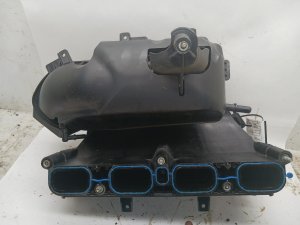

The information in this article is provided for general reference and educational purposes only. Vehicle specifications, procedures, and part compatibility can vary by production date, trim level, and region. Always consult your vehicle's factory service manual and verify part numbers before purchasing or performing repairs. Safety-critical components such as airbags, seat belts, and braking systems should be installed by a qualified professional.
- Buick REGAL:
- 🛍️ Shop This Part
- What's Unique About the 2011-2018 Buick REGAL
- Diagnostic Flowchart
- Symptoms You May Notice
- Most Likely Causes
- Rare But Worth Checking
- Diagnosis Steps
- Parts You'll Likely Need
- Related Codes That Often Appear With This One
- Technical Service Bulletins (TSBs) & Recalls
- Platform-Specific Known Issues
- Mechanic-Grade Diagnostic Values
- Scan Tool Commands That Help
- Wiring & Ground Locations
- Real Owner Repair Stories
- "I Checked Everything" — The Actual Cause
- OEM Part Supersession History
- Model Year Variations Within This Range
- 🎟️ Get 5% Off